جدیدترین مطالب

The Outlook for Iran-US Tensions

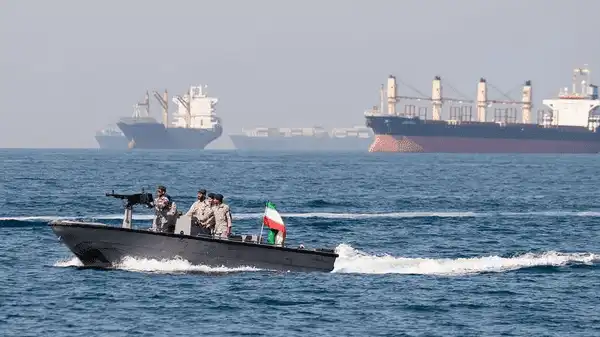
SCFR Online – Opinion: After months of war and economic pressure, the situation between Iran and the United States has been placed between two conflicting logics; Washington insists on intensifying pressure to gain concessions, and Tehran does not accept negotiations under pressure.

Loading

Politics

Greece, North Macedonia; Five Years after Prespa Agreement

Greece, North Macedonia; Five Years after Prespa Agreement

Strategic Council Online – Opinion: In his third visit to Athens in the past seven months, Boyar Osmani, the Foreign Minister of North Macedonia, while expressing full satisfaction over the process of bilateral relations between Skopje and Athens, described the relations as a model of good neighborliness and spoke about the foundation of sustainable cooperation based on trust and mutual respect. Referring to the Prespa Agreement between Greece and North Macedonia in 2018, he referred to it as the basis for further strengthening bilateral relations and cooperation, and appreciated Greece’s support for its country’s accession to the European Union.
Mahmoud Fazeli – Analyst of international affairs

Behind the Scenes of Venezuelan Government’s Negotiations with Opposition

Behind the Scenes of Venezuelan Government’s Negotiations with Opposition

Strategic Council Online – Interview: An expert on Latin America affairs commenting on the resumption of negotiations between the Venezuelan government and political opposition after a year-long suspension and the subsequent reduction of some US sanctions against Nicolas Maduro’s government, said: These days, in terms of the American foreign policy, Venezuela is preferred in comparison to many countries, including some countries in the Middle East; because they can deal with this country more easily and due to its proximity, they buy cheaper oil from Caracas.

An analysis of Zionist regime’s attempt to form Cyber Iron Dome

An analysis of Zionist regime’s attempt to form Cyber Iron Dome

Strategic Council Online – Interview: An expert on the Middle East affairs pointing out that the media of the Zionist regime claimed that in recent weeks the authorities of the regime held meetings with the representatives of the United Arab Emirates, Bahrain and Morocco to define a joint defense mechanism called the Cyber Iron Dome, said: Although the location of the quadrilateral meeting has not been specified by the media of the Zionist regime, it seems that the regime, after failing to form a Hebrew-Arab front against Iran, is now seeking to infiltrate and conduct electronic espionage activities in Arab countries in the region.

An Analysis of New Russian Foreign Policy Doctrine, Its Strategic Consequences

An Analysis of New Russian Foreign Policy Doctrine, Its Strategic Consequences

Strategic Council Online – Interview: An expert on Russian affairs emphasized: Based on the new doctrine of Russian foreign policy in the strategic approaches of that country, while trying to improve the status, we will be witness to the increase and expansion of ties with the East. It seems that Russia does not have a plan to change the level of its relations with Europe and the United States, and it pursues the reduction of dependence on Western countries, especially Europe.

Zionist Regime’s Crisis Making Plans in the Region

Zionist Regime’s Crisis Making Plans in the Region

Strategic Council Online – Opinion: In recent years, the Zionist regime has tried on the one hand to be accepted politically at the regional level, or as the American officials put it, to “merge into” the Middle East region, and on the other hand, to enter into economic, political and security arrangements at the regional level and beyond.
Fatemeh Nekoolal Azad – Expert in international affairs

Shaky Steps without a Clear Vision Taken by Taliban to Acquire Political Legitimacy

Shaky Steps without a Clear Vision Taken by Taliban to Acquire Political Legitimacy

Strategic Council Online – Opinion: Although the recent meeting of Taliban elders and religious leaders was held in Kabul aimed at expediting the recognition of Taliban government at regional and international levels, but the government performance within the past months was in a way that makes the realization of such an objective as unachievable.
Samaa Farkhondeh Nejad, Expert of International Affairs

NATO summit in Spain; Europe’s Greater Adherence to US in Confrontation with Russia, China

NATO summit in Spain; Europe’s Greater Adherence to US in Confrontation with Russia, China

Strategic Council Online – Interview: An expert on Europe affairs saying that the US used the opportunity to confront Russia and pulled Europe towards itself in the new cold war it has started with China, added: At the Madrid summit, with a harsh and clear language, NATO called China its strategic priority for the next decade and declared Russia a direct inherent threat against the organization.

Evolution in NATO’s Attitude towards Asia-Pacific

Evolution in NATO’s Attitude towards Asia-Pacific

Strategic Council Online – Opinion: The recent NATO meeting in Spain on 29-30 of June 2022, regardless of the fact that it was held during the Ukraine crisis and the approach of the alliance to that crisis, reveals the issue of joining new members and the future direction of the alliance is important for another reason which is the presence of heads of four the Asian countries, namely Australia, South Korea, Japan and New Zealand, in that meeting, which are considered as being among NATO’s global partners. This shows the importance of examining NATO’s attitude towards the Asia-Pacific region.
Mohammad Javad Ghahermani – Expert on China issues

G-7 Looks at China Differently; from Competitor to Threat

G-7 Looks at China Differently; from Competitor to Threat

Strategic Council online – Opinion: In its recent meeting in Germany, G-7 has introduced a new infra-structural plan which is considered, in a way, as a competitor to China’s One Belt – One Road initiative. The objective of the Partnership for Global Infrastructure and Investment (PGII) is to allocate $ 600 billion for global infrastructural projects in countries with low and medium-income within the next five years.
Alireza Samoudi, Expert on European Affairs

أحدث الوظائف

The Outlook for Iran-US Tensions

SCFR Online – Opinion: After months of war and economic pressure, the situation between Iran and the United States has been placed between two conflicting logics; Washington insists on intensifying pressure to gain concessions, and Tehran does not accept negotiations under pressure.

Loading

Politics

Greece, North Macedonia; Five Years after Prespa Agreement

Greece, North Macedonia; Five Years after Prespa Agreement

Strategic Council Online – Opinion: In his third visit to Athens in the past seven months, Boyar Osmani, the Foreign Minister of North Macedonia, while expressing full satisfaction over the process of bilateral relations between Skopje and Athens, described the relations as a model of good neighborliness and spoke about the foundation of sustainable cooperation based on trust and mutual respect. Referring to the Prespa Agreement between Greece and North Macedonia in 2018, he referred to it as the basis for further strengthening bilateral relations and cooperation, and appreciated Greece’s support for its country’s accession to the European Union.
Mahmoud Fazeli – Analyst of international affairs

Behind the Scenes of Venezuelan Government’s Negotiations with Opposition

Behind the Scenes of Venezuelan Government’s Negotiations with Opposition

Strategic Council Online – Interview: An expert on Latin America affairs commenting on the resumption of negotiations between the Venezuelan government and political opposition after a year-long suspension and the subsequent reduction of some US sanctions against Nicolas Maduro’s government, said: These days, in terms of the American foreign policy, Venezuela is preferred in comparison to many countries, including some countries in the Middle East; because they can deal with this country more easily and due to its proximity, they buy cheaper oil from Caracas.

An analysis of Zionist regime’s attempt to form Cyber Iron Dome

An analysis of Zionist regime’s attempt to form Cyber Iron Dome

Strategic Council Online – Interview: An expert on the Middle East affairs pointing out that the media of the Zionist regime claimed that in recent weeks the authorities of the regime held meetings with the representatives of the United Arab Emirates, Bahrain and Morocco to define a joint defense mechanism called the Cyber Iron Dome, said: Although the location of the quadrilateral meeting has not been specified by the media of the Zionist regime, it seems that the regime, after failing to form a Hebrew-Arab front against Iran, is now seeking to infiltrate and conduct electronic espionage activities in Arab countries in the region.

An Analysis of New Russian Foreign Policy Doctrine, Its Strategic Consequences

An Analysis of New Russian Foreign Policy Doctrine, Its Strategic Consequences

Strategic Council Online – Interview: An expert on Russian affairs emphasized: Based on the new doctrine of Russian foreign policy in the strategic approaches of that country, while trying to improve the status, we will be witness to the increase and expansion of ties with the East. It seems that Russia does not have a plan to change the level of its relations with Europe and the United States, and it pursues the reduction of dependence on Western countries, especially Europe.

Zionist Regime’s Crisis Making Plans in the Region

Zionist Regime’s Crisis Making Plans in the Region

Strategic Council Online – Opinion: In recent years, the Zionist regime has tried on the one hand to be accepted politically at the regional level, or as the American officials put it, to “merge into” the Middle East region, and on the other hand, to enter into economic, political and security arrangements at the regional level and beyond.
Fatemeh Nekoolal Azad – Expert in international affairs

Shaky Steps without a Clear Vision Taken by Taliban to Acquire Political Legitimacy

Shaky Steps without a Clear Vision Taken by Taliban to Acquire Political Legitimacy

Strategic Council Online – Opinion: Although the recent meeting of Taliban elders and religious leaders was held in Kabul aimed at expediting the recognition of Taliban government at regional and international levels, but the government performance within the past months was in a way that makes the realization of such an objective as unachievable.
Samaa Farkhondeh Nejad, Expert of International Affairs

NATO summit in Spain; Europe’s Greater Adherence to US in Confrontation with Russia, China

NATO summit in Spain; Europe’s Greater Adherence to US in Confrontation with Russia, China

Strategic Council Online – Interview: An expert on Europe affairs saying that the US used the opportunity to confront Russia and pulled Europe towards itself in the new cold war it has started with China, added: At the Madrid summit, with a harsh and clear language, NATO called China its strategic priority for the next decade and declared Russia a direct inherent threat against the organization.

Evolution in NATO’s Attitude towards Asia-Pacific

Evolution in NATO’s Attitude towards Asia-Pacific

Strategic Council Online – Opinion: The recent NATO meeting in Spain on 29-30 of June 2022, regardless of the fact that it was held during the Ukraine crisis and the approach of the alliance to that crisis, reveals the issue of joining new members and the future direction of the alliance is important for another reason which is the presence of heads of four the Asian countries, namely Australia, South Korea, Japan and New Zealand, in that meeting, which are considered as being among NATO’s global partners. This shows the importance of examining NATO’s attitude towards the Asia-Pacific region.
Mohammad Javad Ghahermani – Expert on China issues

G-7 Looks at China Differently; from Competitor to Threat

G-7 Looks at China Differently; from Competitor to Threat

Strategic Council online – Opinion: In its recent meeting in Germany, G-7 has introduced a new infra-structural plan which is considered, in a way, as a competitor to China’s One Belt – One Road initiative. The objective of the Partnership for Global Infrastructure and Investment (PGII) is to allocate $ 600 billion for global infrastructural projects in countries with low and medium-income within the next five years.
Alireza Samoudi, Expert on European Affairs

LATEST CONTENT

The Outlook for Iran-US Tensions

SCFR Online – Opinion: After months of war and economic pressure, the situation between Iran and the United States has been placed between two conflicting logics; Washington insists on intensifying pressure to gain concessions, and Tehran does not accept negotiations under pressure.

Loading

Politics

Greece, North Macedonia; Five Years after Prespa Agreement

Greece, North Macedonia; Five Years after Prespa Agreement

Strategic Council Online – Opinion: In his third visit to Athens in the past seven months, Boyar Osmani, the Foreign Minister of North Macedonia, while expressing full satisfaction over the process of bilateral relations between Skopje and Athens, described the relations as a model of good neighborliness and spoke about the foundation of sustainable cooperation based on trust and mutual respect. Referring to the Prespa Agreement between Greece and North Macedonia in 2018, he referred to it as the basis for further strengthening bilateral relations and cooperation, and appreciated Greece’s support for its country’s accession to the European Union.
Mahmoud Fazeli – Analyst of international affairs

Behind the Scenes of Venezuelan Government’s Negotiations with Opposition

Behind the Scenes of Venezuelan Government’s Negotiations with Opposition

Strategic Council Online – Interview: An expert on Latin America affairs commenting on the resumption of negotiations between the Venezuelan government and political opposition after a year-long suspension and the subsequent reduction of some US sanctions against Nicolas Maduro’s government, said: These days, in terms of the American foreign policy, Venezuela is preferred in comparison to many countries, including some countries in the Middle East; because they can deal with this country more easily and due to its proximity, they buy cheaper oil from Caracas.

An analysis of Zionist regime’s attempt to form Cyber Iron Dome

An analysis of Zionist regime’s attempt to form Cyber Iron Dome

Strategic Council Online – Interview: An expert on the Middle East affairs pointing out that the media of the Zionist regime claimed that in recent weeks the authorities of the regime held meetings with the representatives of the United Arab Emirates, Bahrain and Morocco to define a joint defense mechanism called the Cyber Iron Dome, said: Although the location of the quadrilateral meeting has not been specified by the media of the Zionist regime, it seems that the regime, after failing to form a Hebrew-Arab front against Iran, is now seeking to infiltrate and conduct electronic espionage activities in Arab countries in the region.

An Analysis of New Russian Foreign Policy Doctrine, Its Strategic Consequences

An Analysis of New Russian Foreign Policy Doctrine, Its Strategic Consequences

Strategic Council Online – Interview: An expert on Russian affairs emphasized: Based on the new doctrine of Russian foreign policy in the strategic approaches of that country, while trying to improve the status, we will be witness to the increase and expansion of ties with the East. It seems that Russia does not have a plan to change the level of its relations with Europe and the United States, and it pursues the reduction of dependence on Western countries, especially Europe.

Zionist Regime’s Crisis Making Plans in the Region

Zionist Regime’s Crisis Making Plans in the Region

Strategic Council Online – Opinion: In recent years, the Zionist regime has tried on the one hand to be accepted politically at the regional level, or as the American officials put it, to “merge into” the Middle East region, and on the other hand, to enter into economic, political and security arrangements at the regional level and beyond.
Fatemeh Nekoolal Azad – Expert in international affairs

Shaky Steps without a Clear Vision Taken by Taliban to Acquire Political Legitimacy

Shaky Steps without a Clear Vision Taken by Taliban to Acquire Political Legitimacy

Strategic Council Online – Opinion: Although the recent meeting of Taliban elders and religious leaders was held in Kabul aimed at expediting the recognition of Taliban government at regional and international levels, but the government performance within the past months was in a way that makes the realization of such an objective as unachievable.
Samaa Farkhondeh Nejad, Expert of International Affairs

NATO summit in Spain; Europe’s Greater Adherence to US in Confrontation with Russia, China

NATO summit in Spain; Europe’s Greater Adherence to US in Confrontation with Russia, China

Strategic Council Online – Interview: An expert on Europe affairs saying that the US used the opportunity to confront Russia and pulled Europe towards itself in the new cold war it has started with China, added: At the Madrid summit, with a harsh and clear language, NATO called China its strategic priority for the next decade and declared Russia a direct inherent threat against the organization.

Evolution in NATO’s Attitude towards Asia-Pacific

Evolution in NATO’s Attitude towards Asia-Pacific

Strategic Council Online – Opinion: The recent NATO meeting in Spain on 29-30 of June 2022, regardless of the fact that it was held during the Ukraine crisis and the approach of the alliance to that crisis, reveals the issue of joining new members and the future direction of the alliance is important for another reason which is the presence of heads of four the Asian countries, namely Australia, South Korea, Japan and New Zealand, in that meeting, which are considered as being among NATO’s global partners. This shows the importance of examining NATO’s attitude towards the Asia-Pacific region.
Mohammad Javad Ghahermani – Expert on China issues

G-7 Looks at China Differently; from Competitor to Threat

G-7 Looks at China Differently; from Competitor to Threat

Strategic Council online – Opinion: In its recent meeting in Germany, G-7 has introduced a new infra-structural plan which is considered, in a way, as a competitor to China’s One Belt – One Road initiative. The objective of the Partnership for Global Infrastructure and Investment (PGII) is to allocate $ 600 billion for global infrastructural projects in countries with low and medium-income within the next five years.
Alireza Samoudi, Expert on European Affairs

ÚLTIMAS PUBLICACIONES

The Outlook for Iran-US Tensions

SCFR Online – Opinion: After months of war and economic pressure, the situation between Iran and the United States has been placed between two conflicting logics; Washington insists on intensifying pressure to gain concessions, and Tehran does not accept negotiations under pressure.

Loading