جدیدترین مطالب

Indicators for Choosing Between War and Diplomacy

SCFR Online – Opinion: Foreign policy analysis is valid when it evaluates decisions based on the information and circumstances prevailing at the time they were made, not on the basis of outcomes that only become apparent after the crisis has ended.

The war of narratives; a tool for geopolitical competition

Strategic Council Online – Note: In today’s global politics, the creation of narratives has become as important as territorial control and economic management, and has turned into the main tool of great power competition.

Analysis of the Recognition of the Armenian Genocide by the Zionist Regime

SCFR Online – Opinion: At a time when the West Asia region, particularly in recent months, has been undergoing the most complex political and security developments of the past half-century, the sudden decision by the cabinet of the Zionist regime to recognize the Armenian genocide committed by Turkey, which has faced strong condemnation and opposition from Ankara and Baku, raises questions.

Loading

USA

U.S.-Imposed Conditions Hinder Appropriate Regional Responses to the Zionist Regime

U.S.-Imposed Conditions Hinder Appropriate Regional Responses to the Zionist Regime

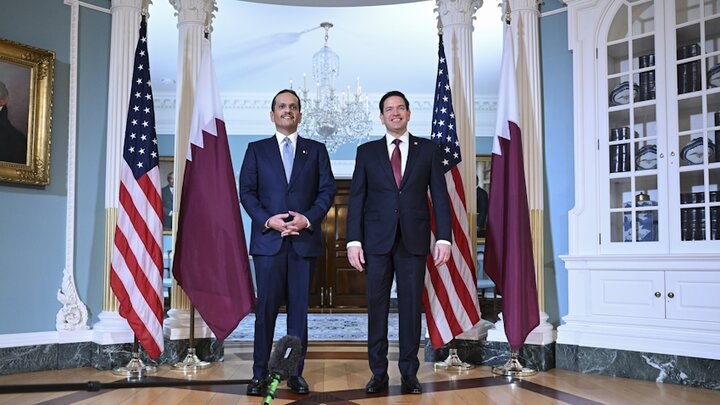
Strategic Council Online – Opinion: Contrary to the Trump administration’s claim that it was unaware of and had no role in the Israeli regime’s attack on Qatar, the reality is that the Zionist regime, with the U.S. green light, targeted a country that was a pioneer in normalizing relations with this regime. It is a given that the Zionist regime, especially regarding military and security actions against a U.S. ally, takes no action without coordination with the U.S. government.

Challenges Facing NATO in the Ukraine Crisis

Challenges Facing NATO in the Ukraine Crisis

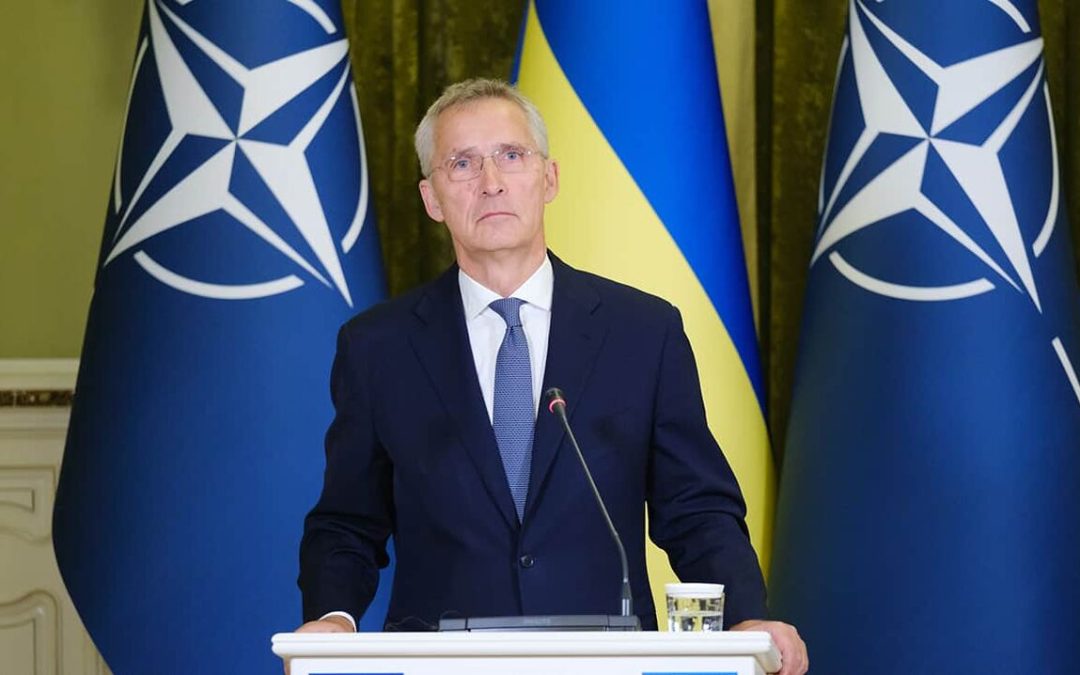
Strategic Council Online – Interview: An international affairs expert stated that the flight of unidentified drones over Polish airspace has sounded a new alarm for European security; an incident that, despite its limited scale, sent severe tremors through the foundations of NATO and U.S.-Europe relations. The situation became more complicated when Polish officials accused Russia of violating its airspace. At the same time, the Kremlin denied such accusations, and some sources even suggested that Ukraine was the origin of these drones. The importance of the issue lies in the fact that Poland, unlike Ukraine, is a member of NATO, and any attack on its territory could trigger the alliance’s collective defense clause. However, Donald Trump’s cold and ambiguous reaction to the drone incident left Europeans questioning whether Washington would be willing to defend its allies if the crisis escalates. Meanwhile, NATO has launched the “Eastern Guardian” operation to demonstrate its strength on its eastern borders. Still, at the same time, there are signs of hesitation and division among Western countries. These developments have shifted the balance of power in the Ukraine war into a new phase; a war in which Moscow is not retreating from its positions, Europe has no clear strategy to contain the crisis, and the U.S. shows no willingness to confront Russia directly.

A Look at Recent UNSC Resolution Against the Israeli Regime’s Military Aggression on Qatar

A Look at Recent UNSC Resolution Against the Israeli Regime’s Military Aggression on Qatar

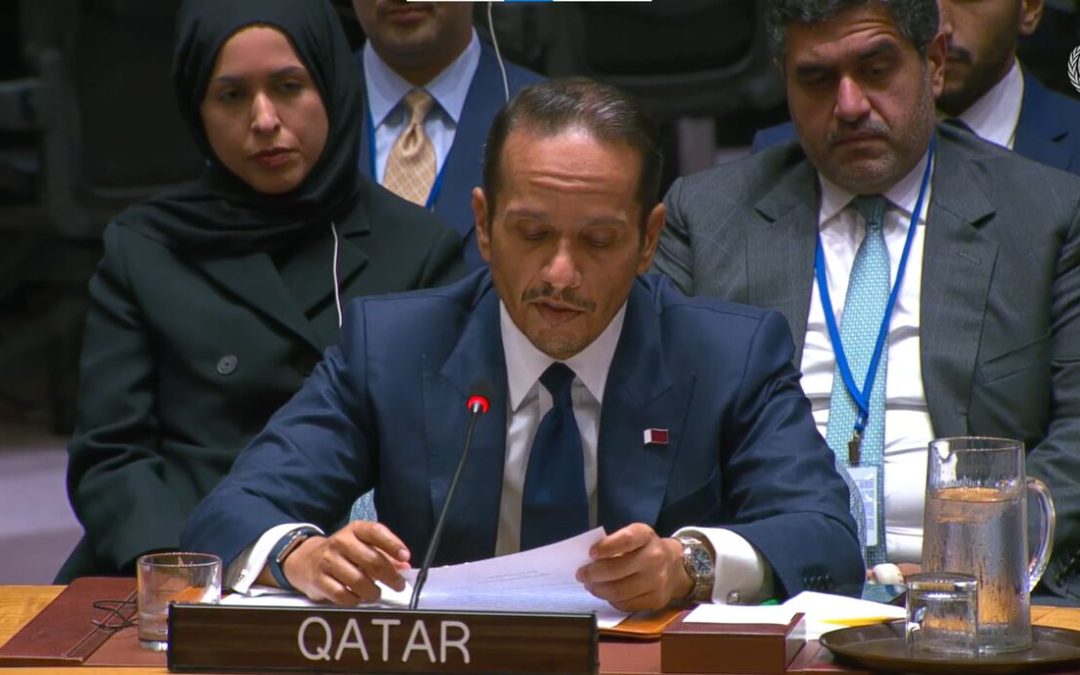
Strategic Council Online – Interview: An international affairs expert stated: The United Nations Security Council recently, in an emergency meeting, condemned the Israeli regime’s attack on Doha and, in a joint statement, called for an immediate cessation of tensions and full respect for Qatar’s national sovereignty. This statement, issued by consensus of all 15 Security Council members, while declaring solidarity with Qatar and speaking about the victimization of civilians and the necessity of a ceasefire in Gaza, did not mention the Israeli regime by name; a silence that itself carries contradictory messages. In other words, this statement was more of a political message to Tel Aviv than a legally binding instrument against the Israeli regime, stating that the international community considers attacking peace mediators a red line. However, currently, there is no will to exert practical pressure on this regime.

Europe and Russia Confront Each Other Over Allocating Russian Assets to Arm Ukraine

Europe and Russia Confront Each Other Over Allocating Russian Assets to Arm Ukraine

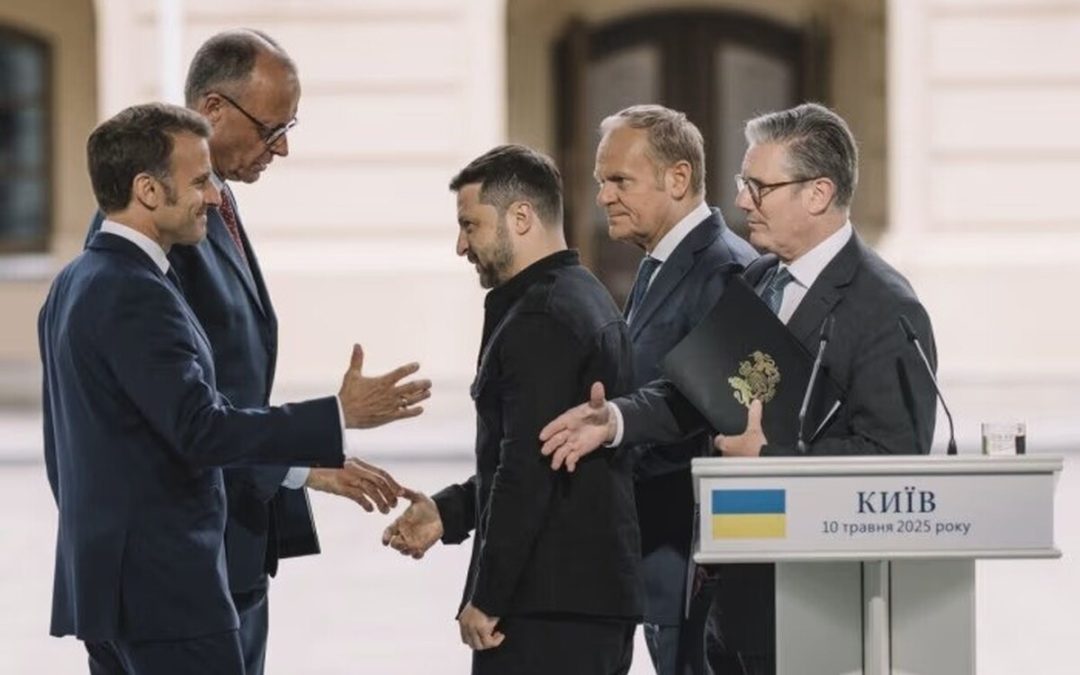
Strategic Council Online – Interview: A senior European affairs analyst stated that Russia’s sharp reaction to the decision by Britain and the European Union to use Moscow’s frozen assets in favor of Ukraine has once again revealed new dimensions of the West’s economic war against Russia. The Russian embassy in London described the allocation of over one billion pounds of its blocked funds to purchase weapons for Ukraine as a “criminal act”. It warned that such policies would not only weaken London’s financial and political credibility in the world but would also not go unanswered. Simultaneously, the European Commission is also considering transferring 200 billion euros of Russian assets for the reconstruction of Ukraine—a decision that Moscow has described as a clear violation of international law.
Experts believe that by arming Ukraine using Russia’s frozen resources, the West has not only escalated the level of economic confrontation but has also challenged the traditional rules of the international financial and trade system. While Russia is seeking ways to circumvent sanctions through some of its partners, Europe and Britain are also determined to maintain pressure. It appears that this economic war is no longer confined to the conflict over Ukraine, and its effects will continue for years to come, redefining international relations and creating new geopolitical blocs.

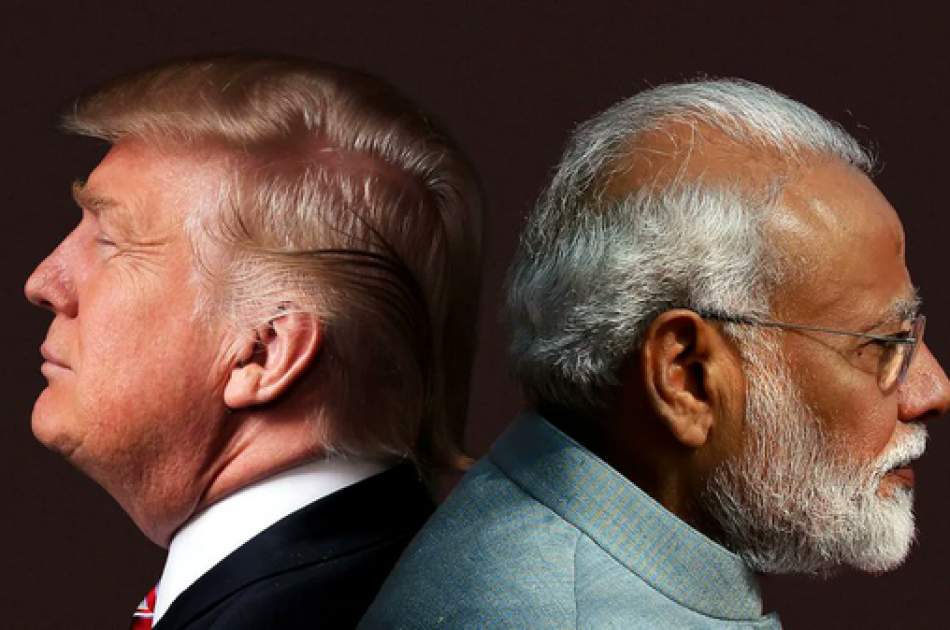
India-US Relations: Strategic Distance or Tactical?

India-US Relations: Strategic Distance or Tactical?

Strategic Council Online – Interview: A former Iranian diplomat stated that India will keep its differences with the United States limited and at the bilateral level, and will not join any power bloc against other powers.

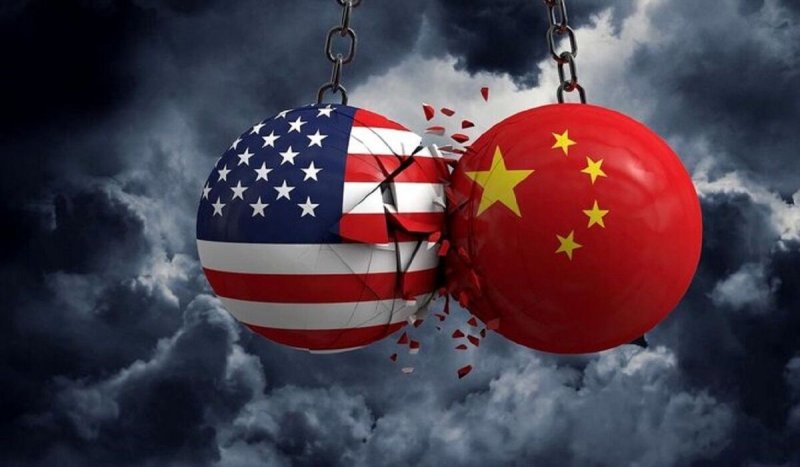
Prospect of a Multipolar Order and the Future of Beijing-Washington Confrontation

Prospect of a Multipolar Order and the Future of Beijing-Washington Confrontation

Strategic Council Online – Interview: A senior analyst on South Asian affairs stated that China’s grand military parade on September 3, 2025, was not merely a display of power; instead, it will mark the beginning of a new chapter in global geopolitical equations. The simultaneous presence of the leaders of China, Russia, and North Korea before the cameras, especially against the backdrop of Beijing’s “nuclear strategic triangle” unveiling, sent a clear message to Washington and its allies that the past unipolar order is collapsing and the world is moving toward multipolarity. China’s new land-based, sea-based, and air-launched missile systems have elevated its nuclear deterrent capability to an unprecedented level, and the sharp reactions from the United States—from Donald Trump’s sarcastic remarks to the Pentagon’s alert—indicate that Washington views these developments as a strategic threat. Many analysts believe that this event, beyond its military dimension, symbolizes the formation of new alliances among Eastern powers against the West. Simultaneously, the arms race and diplomatic pressures in the Asia-Pacific region have accelerated, and security equations in Taiwan and beyond have entered a new phase. It seems that the Beijing parade was not just a military ceremony but the beginning of an era in which the redefinition of power in the twenty-first century will accelerate.

Attack by the Israeli Regime on Qatar and the Collapse of American Security Guarantees

Attack by the Israeli Regime on Qatar and the Collapse of American Security Guarantees

Strategic Council Online – Interview: An international affairs analyst stated that the Israeli regime’s airstrike on Qatar, under the pretext of targeting Hamas leaders, could be a turning point in the security and diplomatic equations of the Persian Gulf. This action not only challenged Qatar’s sovereignty but also raised questions about the security of the member states of the Persian Gulf Cooperation Council. Given that the Israeli regime is considered a close ally of the United States, this aggression has heightened sensitivities and increased doubts about Washington’s commitment to ensuring the security and protection of its regional partners. Under such circumstances, Iran can pursue regional dialogues and cooperation in the Persian Gulf, considering the Arab countries’ concerns about the ineffectiveness of American security guarantees. On the other hand, the Israeli regime’s aggression against Qatar has practically endangered normalization agreements, including the Abraham Accords, and reduced the chances of developing cooperation between Tel Aviv and some Arab countries. Internal pressure on the UAE and Bahrain to reconsider their relations with this regime has increased. Thus, the Israeli regime’s attack on Doha has not only complicated the security equations but also plunged the region’s political and diplomatic prospects into a complex phase, indicating that regional actors must reconsider traditional approaches dependent on extra-regional powers.

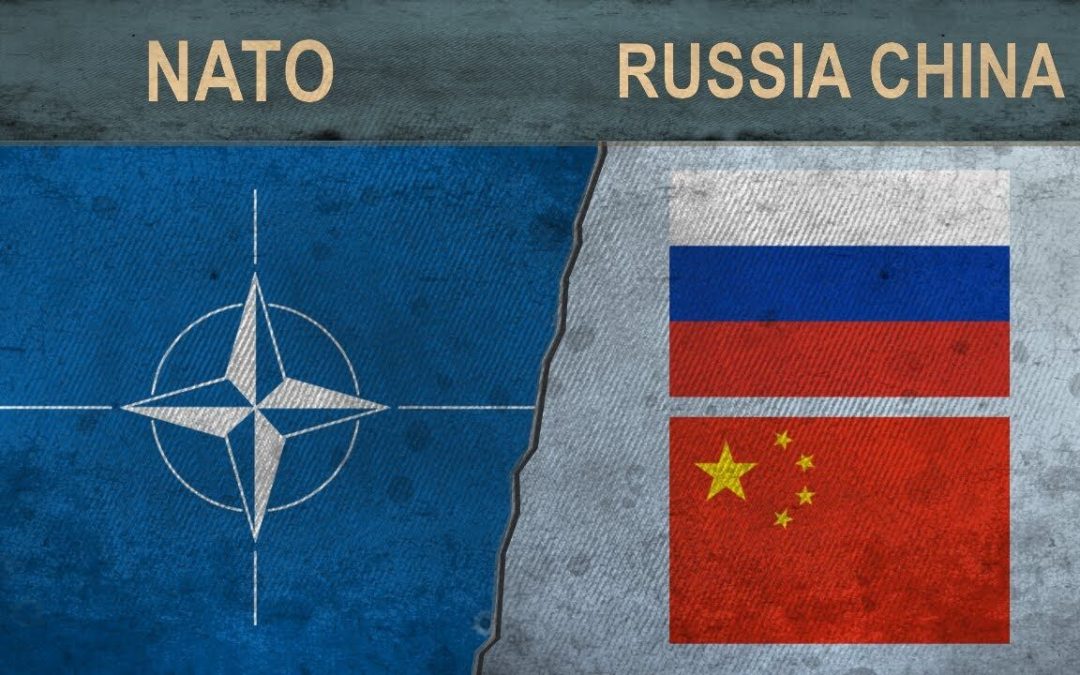
Prospect of a Potential NATO Confrontation with Russia and China

Prospect of a Potential NATO Confrontation with Russia and China

Strategic Council Online – Opinion: The escalating possibility of confrontation between the world’s Eastern and Western powers, particularly after the Russia-Ukraine war, along with the consolidation of China’s narrative of itself as the largest developing country with the capacity to lead the Global South, has become a threatening issue for the West, led by America and Europe. In this context, Mark Rutte, the Secretary-General of NATO, recently spoke at a press conference in Berlin about the necessity of European military modernization and called for “changing defense postures” in line with the increasing international military threats.

America’s Aggressive Commercial Strategy and Imposing a Trade Agreement on the EU

America’s Aggressive Commercial Strategy and Imposing a Trade Agreement on the EU

Strategic Council Online – Interview: An international affairs analyst stated that the recent trade agreement between the United States and the European Union, signed on July 28, 2025, in Scotland, appears to have averted a full-scale tariff war. However, this agreement, shaped by Donald Trump’s pressures and threats to raise tariffs by up to 30%, reflects U.S. economic dominance over Europe more than it signifies mutual cooperation. The European Union’s commitment to purchasing $750 billion worth of energy and investing $600 billion in the U.S., along with accepting a 15% tariff on most European exports, raises serious questions about Europe’s economic independence and its implications for the global economy. Does this agreement mean stability for European trade, or does it represent a strategic surrender to the United States that will deepen existing rifts in the global order?

أحدث الوظائف

Indicators for Choosing Between War and Diplomacy

SCFR Online – Opinion: Foreign policy analysis is valid when it evaluates decisions based on the information and circumstances prevailing at the time they were made, not on the basis of outcomes that only become apparent after the crisis has ended.

The war of narratives; a tool for geopolitical competition

Strategic Council Online – Note: In today’s global politics, the creation of narratives has become as important as territorial control and economic management, and has turned into the main tool of great power competition.

Analysis of the Recognition of the Armenian Genocide by the Zionist Regime

SCFR Online – Opinion: At a time when the West Asia region, particularly in recent months, has been undergoing the most complex political and security developments of the past half-century, the sudden decision by the cabinet of the Zionist regime to recognize the Armenian genocide committed by Turkey, which has faced strong condemnation and opposition from Ankara and Baku, raises questions.

Loading

USA

U.S.-Imposed Conditions Hinder Appropriate Regional Responses to the Zionist Regime

U.S.-Imposed Conditions Hinder Appropriate Regional Responses to the Zionist Regime

Strategic Council Online – Opinion: Contrary to the Trump administration’s claim that it was unaware of and had no role in the Israeli regime’s attack on Qatar, the reality is that the Zionist regime, with the U.S. green light, targeted a country that was a pioneer in normalizing relations with this regime. It is a given that the Zionist regime, especially regarding military and security actions against a U.S. ally, takes no action without coordination with the U.S. government.

Challenges Facing NATO in the Ukraine Crisis

Challenges Facing NATO in the Ukraine Crisis

Strategic Council Online – Interview: An international affairs expert stated that the flight of unidentified drones over Polish airspace has sounded a new alarm for European security; an incident that, despite its limited scale, sent severe tremors through the foundations of NATO and U.S.-Europe relations. The situation became more complicated when Polish officials accused Russia of violating its airspace. At the same time, the Kremlin denied such accusations, and some sources even suggested that Ukraine was the origin of these drones. The importance of the issue lies in the fact that Poland, unlike Ukraine, is a member of NATO, and any attack on its territory could trigger the alliance’s collective defense clause. However, Donald Trump’s cold and ambiguous reaction to the drone incident left Europeans questioning whether Washington would be willing to defend its allies if the crisis escalates. Meanwhile, NATO has launched the “Eastern Guardian” operation to demonstrate its strength on its eastern borders. Still, at the same time, there are signs of hesitation and division among Western countries. These developments have shifted the balance of power in the Ukraine war into a new phase; a war in which Moscow is not retreating from its positions, Europe has no clear strategy to contain the crisis, and the U.S. shows no willingness to confront Russia directly.

A Look at Recent UNSC Resolution Against the Israeli Regime’s Military Aggression on Qatar

A Look at Recent UNSC Resolution Against the Israeli Regime’s Military Aggression on Qatar

Strategic Council Online – Interview: An international affairs expert stated: The United Nations Security Council recently, in an emergency meeting, condemned the Israeli regime’s attack on Doha and, in a joint statement, called for an immediate cessation of tensions and full respect for Qatar’s national sovereignty. This statement, issued by consensus of all 15 Security Council members, while declaring solidarity with Qatar and speaking about the victimization of civilians and the necessity of a ceasefire in Gaza, did not mention the Israeli regime by name; a silence that itself carries contradictory messages. In other words, this statement was more of a political message to Tel Aviv than a legally binding instrument against the Israeli regime, stating that the international community considers attacking peace mediators a red line. However, currently, there is no will to exert practical pressure on this regime.

Europe and Russia Confront Each Other Over Allocating Russian Assets to Arm Ukraine

Europe and Russia Confront Each Other Over Allocating Russian Assets to Arm Ukraine

Strategic Council Online – Interview: A senior European affairs analyst stated that Russia’s sharp reaction to the decision by Britain and the European Union to use Moscow’s frozen assets in favor of Ukraine has once again revealed new dimensions of the West’s economic war against Russia. The Russian embassy in London described the allocation of over one billion pounds of its blocked funds to purchase weapons for Ukraine as a “criminal act”. It warned that such policies would not only weaken London’s financial and political credibility in the world but would also not go unanswered. Simultaneously, the European Commission is also considering transferring 200 billion euros of Russian assets for the reconstruction of Ukraine—a decision that Moscow has described as a clear violation of international law.
Experts believe that by arming Ukraine using Russia’s frozen resources, the West has not only escalated the level of economic confrontation but has also challenged the traditional rules of the international financial and trade system. While Russia is seeking ways to circumvent sanctions through some of its partners, Europe and Britain are also determined to maintain pressure. It appears that this economic war is no longer confined to the conflict over Ukraine, and its effects will continue for years to come, redefining international relations and creating new geopolitical blocs.

India-US Relations: Strategic Distance or Tactical?

India-US Relations: Strategic Distance or Tactical?

Strategic Council Online – Interview: A former Iranian diplomat stated that India will keep its differences with the United States limited and at the bilateral level, and will not join any power bloc against other powers.

Prospect of a Multipolar Order and the Future of Beijing-Washington Confrontation

Prospect of a Multipolar Order and the Future of Beijing-Washington Confrontation

Strategic Council Online – Interview: A senior analyst on South Asian affairs stated that China’s grand military parade on September 3, 2025, was not merely a display of power; instead, it will mark the beginning of a new chapter in global geopolitical equations. The simultaneous presence of the leaders of China, Russia, and North Korea before the cameras, especially against the backdrop of Beijing’s “nuclear strategic triangle” unveiling, sent a clear message to Washington and its allies that the past unipolar order is collapsing and the world is moving toward multipolarity. China’s new land-based, sea-based, and air-launched missile systems have elevated its nuclear deterrent capability to an unprecedented level, and the sharp reactions from the United States—from Donald Trump’s sarcastic remarks to the Pentagon’s alert—indicate that Washington views these developments as a strategic threat. Many analysts believe that this event, beyond its military dimension, symbolizes the formation of new alliances among Eastern powers against the West. Simultaneously, the arms race and diplomatic pressures in the Asia-Pacific region have accelerated, and security equations in Taiwan and beyond have entered a new phase. It seems that the Beijing parade was not just a military ceremony but the beginning of an era in which the redefinition of power in the twenty-first century will accelerate.

Attack by the Israeli Regime on Qatar and the Collapse of American Security Guarantees

Attack by the Israeli Regime on Qatar and the Collapse of American Security Guarantees

Strategic Council Online – Interview: An international affairs analyst stated that the Israeli regime’s airstrike on Qatar, under the pretext of targeting Hamas leaders, could be a turning point in the security and diplomatic equations of the Persian Gulf. This action not only challenged Qatar’s sovereignty but also raised questions about the security of the member states of the Persian Gulf Cooperation Council. Given that the Israeli regime is considered a close ally of the United States, this aggression has heightened sensitivities and increased doubts about Washington’s commitment to ensuring the security and protection of its regional partners. Under such circumstances, Iran can pursue regional dialogues and cooperation in the Persian Gulf, considering the Arab countries’ concerns about the ineffectiveness of American security guarantees. On the other hand, the Israeli regime’s aggression against Qatar has practically endangered normalization agreements, including the Abraham Accords, and reduced the chances of developing cooperation between Tel Aviv and some Arab countries. Internal pressure on the UAE and Bahrain to reconsider their relations with this regime has increased. Thus, the Israeli regime’s attack on Doha has not only complicated the security equations but also plunged the region’s political and diplomatic prospects into a complex phase, indicating that regional actors must reconsider traditional approaches dependent on extra-regional powers.

Prospect of a Potential NATO Confrontation with Russia and China

Prospect of a Potential NATO Confrontation with Russia and China

Strategic Council Online – Opinion: The escalating possibility of confrontation between the world’s Eastern and Western powers, particularly after the Russia-Ukraine war, along with the consolidation of China’s narrative of itself as the largest developing country with the capacity to lead the Global South, has become a threatening issue for the West, led by America and Europe. In this context, Mark Rutte, the Secretary-General of NATO, recently spoke at a press conference in Berlin about the necessity of European military modernization and called for “changing defense postures” in line with the increasing international military threats.

America’s Aggressive Commercial Strategy and Imposing a Trade Agreement on the EU

America’s Aggressive Commercial Strategy and Imposing a Trade Agreement on the EU

Strategic Council Online – Interview: An international affairs analyst stated that the recent trade agreement between the United States and the European Union, signed on July 28, 2025, in Scotland, appears to have averted a full-scale tariff war. However, this agreement, shaped by Donald Trump’s pressures and threats to raise tariffs by up to 30%, reflects U.S. economic dominance over Europe more than it signifies mutual cooperation. The European Union’s commitment to purchasing $750 billion worth of energy and investing $600 billion in the U.S., along with accepting a 15% tariff on most European exports, raises serious questions about Europe’s economic independence and its implications for the global economy. Does this agreement mean stability for European trade, or does it represent a strategic surrender to the United States that will deepen existing rifts in the global order?

USA

U.S.-Imposed Conditions Hinder Appropriate Regional Responses to the Zionist Regime

U.S.-Imposed Conditions Hinder Appropriate Regional Responses to the Zionist Regime

Strategic Council Online – Opinion: Contrary to the Trump administration’s claim that it was unaware of and had no role in the Israeli regime’s attack on Qatar, the reality is that the Zionist regime, with the U.S. green light, targeted a country that was a pioneer in normalizing relations with this regime. It is a given that the Zionist regime, especially regarding military and security actions against a U.S. ally, takes no action without coordination with the U.S. government.

Challenges Facing NATO in the Ukraine Crisis

Challenges Facing NATO in the Ukraine Crisis

Strategic Council Online – Interview: An international affairs expert stated that the flight of unidentified drones over Polish airspace has sounded a new alarm for European security; an incident that, despite its limited scale, sent severe tremors through the foundations of NATO and U.S.-Europe relations. The situation became more complicated when Polish officials accused Russia of violating its airspace. At the same time, the Kremlin denied such accusations, and some sources even suggested that Ukraine was the origin of these drones. The importance of the issue lies in the fact that Poland, unlike Ukraine, is a member of NATO, and any attack on its territory could trigger the alliance’s collective defense clause. However, Donald Trump’s cold and ambiguous reaction to the drone incident left Europeans questioning whether Washington would be willing to defend its allies if the crisis escalates. Meanwhile, NATO has launched the “Eastern Guardian” operation to demonstrate its strength on its eastern borders. Still, at the same time, there are signs of hesitation and division among Western countries. These developments have shifted the balance of power in the Ukraine war into a new phase; a war in which Moscow is not retreating from its positions, Europe has no clear strategy to contain the crisis, and the U.S. shows no willingness to confront Russia directly.

A Look at Recent UNSC Resolution Against the Israeli Regime’s Military Aggression on Qatar

A Look at Recent UNSC Resolution Against the Israeli Regime’s Military Aggression on Qatar

Strategic Council Online – Interview: An international affairs expert stated: The United Nations Security Council recently, in an emergency meeting, condemned the Israeli regime’s attack on Doha and, in a joint statement, called for an immediate cessation of tensions and full respect for Qatar’s national sovereignty. This statement, issued by consensus of all 15 Security Council members, while declaring solidarity with Qatar and speaking about the victimization of civilians and the necessity of a ceasefire in Gaza, did not mention the Israeli regime by name; a silence that itself carries contradictory messages. In other words, this statement was more of a political message to Tel Aviv than a legally binding instrument against the Israeli regime, stating that the international community considers attacking peace mediators a red line. However, currently, there is no will to exert practical pressure on this regime.

Europe and Russia Confront Each Other Over Allocating Russian Assets to Arm Ukraine

Europe and Russia Confront Each Other Over Allocating Russian Assets to Arm Ukraine

Strategic Council Online – Interview: A senior European affairs analyst stated that Russia’s sharp reaction to the decision by Britain and the European Union to use Moscow’s frozen assets in favor of Ukraine has once again revealed new dimensions of the West’s economic war against Russia. The Russian embassy in London described the allocation of over one billion pounds of its blocked funds to purchase weapons for Ukraine as a “criminal act”. It warned that such policies would not only weaken London’s financial and political credibility in the world but would also not go unanswered. Simultaneously, the European Commission is also considering transferring 200 billion euros of Russian assets for the reconstruction of Ukraine—a decision that Moscow has described as a clear violation of international law.
Experts believe that by arming Ukraine using Russia’s frozen resources, the West has not only escalated the level of economic confrontation but has also challenged the traditional rules of the international financial and trade system. While Russia is seeking ways to circumvent sanctions through some of its partners, Europe and Britain are also determined to maintain pressure. It appears that this economic war is no longer confined to the conflict over Ukraine, and its effects will continue for years to come, redefining international relations and creating new geopolitical blocs.

India-US Relations: Strategic Distance or Tactical?

India-US Relations: Strategic Distance or Tactical?

Strategic Council Online – Interview: A former Iranian diplomat stated that India will keep its differences with the United States limited and at the bilateral level, and will not join any power bloc against other powers.

Prospect of a Multipolar Order and the Future of Beijing-Washington Confrontation

Prospect of a Multipolar Order and the Future of Beijing-Washington Confrontation

Strategic Council Online – Interview: A senior analyst on South Asian affairs stated that China’s grand military parade on September 3, 2025, was not merely a display of power; instead, it will mark the beginning of a new chapter in global geopolitical equations. The simultaneous presence of the leaders of China, Russia, and North Korea before the cameras, especially against the backdrop of Beijing’s “nuclear strategic triangle” unveiling, sent a clear message to Washington and its allies that the past unipolar order is collapsing and the world is moving toward multipolarity. China’s new land-based, sea-based, and air-launched missile systems have elevated its nuclear deterrent capability to an unprecedented level, and the sharp reactions from the United States—from Donald Trump’s sarcastic remarks to the Pentagon’s alert—indicate that Washington views these developments as a strategic threat. Many analysts believe that this event, beyond its military dimension, symbolizes the formation of new alliances among Eastern powers against the West. Simultaneously, the arms race and diplomatic pressures in the Asia-Pacific region have accelerated, and security equations in Taiwan and beyond have entered a new phase. It seems that the Beijing parade was not just a military ceremony but the beginning of an era in which the redefinition of power in the twenty-first century will accelerate.

Attack by the Israeli Regime on Qatar and the Collapse of American Security Guarantees

Attack by the Israeli Regime on Qatar and the Collapse of American Security Guarantees

Strategic Council Online – Interview: An international affairs analyst stated that the Israeli regime’s airstrike on Qatar, under the pretext of targeting Hamas leaders, could be a turning point in the security and diplomatic equations of the Persian Gulf. This action not only challenged Qatar’s sovereignty but also raised questions about the security of the member states of the Persian Gulf Cooperation Council. Given that the Israeli regime is considered a close ally of the United States, this aggression has heightened sensitivities and increased doubts about Washington’s commitment to ensuring the security and protection of its regional partners. Under such circumstances, Iran can pursue regional dialogues and cooperation in the Persian Gulf, considering the Arab countries’ concerns about the ineffectiveness of American security guarantees. On the other hand, the Israeli regime’s aggression against Qatar has practically endangered normalization agreements, including the Abraham Accords, and reduced the chances of developing cooperation between Tel Aviv and some Arab countries. Internal pressure on the UAE and Bahrain to reconsider their relations with this regime has increased. Thus, the Israeli regime’s attack on Doha has not only complicated the security equations but also plunged the region’s political and diplomatic prospects into a complex phase, indicating that regional actors must reconsider traditional approaches dependent on extra-regional powers.

Prospect of a Potential NATO Confrontation with Russia and China

Prospect of a Potential NATO Confrontation with Russia and China

Strategic Council Online – Opinion: The escalating possibility of confrontation between the world’s Eastern and Western powers, particularly after the Russia-Ukraine war, along with the consolidation of China’s narrative of itself as the largest developing country with the capacity to lead the Global South, has become a threatening issue for the West, led by America and Europe. In this context, Mark Rutte, the Secretary-General of NATO, recently spoke at a press conference in Berlin about the necessity of European military modernization and called for “changing defense postures” in line with the increasing international military threats.

America’s Aggressive Commercial Strategy and Imposing a Trade Agreement on the EU

America’s Aggressive Commercial Strategy and Imposing a Trade Agreement on the EU

Strategic Council Online – Interview: An international affairs analyst stated that the recent trade agreement between the United States and the European Union, signed on July 28, 2025, in Scotland, appears to have averted a full-scale tariff war. However, this agreement, shaped by Donald Trump’s pressures and threats to raise tariffs by up to 30%, reflects U.S. economic dominance over Europe more than it signifies mutual cooperation. The European Union’s commitment to purchasing $750 billion worth of energy and investing $600 billion in the U.S., along with accepting a 15% tariff on most European exports, raises serious questions about Europe’s economic independence and its implications for the global economy. Does this agreement mean stability for European trade, or does it represent a strategic surrender to the United States that will deepen existing rifts in the global order?

LATEST CONTENT

Indicators for Choosing Between War and Diplomacy

SCFR Online – Opinion: Foreign policy analysis is valid when it evaluates decisions based on the information and circumstances prevailing at the time they were made, not on the basis of outcomes that only become apparent after the crisis has ended.

The war of narratives; a tool for geopolitical competition

Strategic Council Online – Note: In today’s global politics, the creation of narratives has become as important as territorial control and economic management, and has turned into the main tool of great power competition.

Analysis of the Recognition of the Armenian Genocide by the Zionist Regime

SCFR Online – Opinion: At a time when the West Asia region, particularly in recent months, has been undergoing the most complex political and security developments of the past half-century, the sudden decision by the cabinet of the Zionist regime to recognize the Armenian genocide committed by Turkey, which has faced strong condemnation and opposition from Ankara and Baku, raises questions.

Loading

USA

U.S.-Imposed Conditions Hinder Appropriate Regional Responses to the Zionist Regime

U.S.-Imposed Conditions Hinder Appropriate Regional Responses to the Zionist Regime

Strategic Council Online – Opinion: Contrary to the Trump administration’s claim that it was unaware of and had no role in the Israeli regime’s attack on Qatar, the reality is that the Zionist regime, with the U.S. green light, targeted a country that was a pioneer in normalizing relations with this regime. It is a given that the Zionist regime, especially regarding military and security actions against a U.S. ally, takes no action without coordination with the U.S. government.

Challenges Facing NATO in the Ukraine Crisis

Challenges Facing NATO in the Ukraine Crisis

Strategic Council Online – Interview: An international affairs expert stated that the flight of unidentified drones over Polish airspace has sounded a new alarm for European security; an incident that, despite its limited scale, sent severe tremors through the foundations of NATO and U.S.-Europe relations. The situation became more complicated when Polish officials accused Russia of violating its airspace. At the same time, the Kremlin denied such accusations, and some sources even suggested that Ukraine was the origin of these drones. The importance of the issue lies in the fact that Poland, unlike Ukraine, is a member of NATO, and any attack on its territory could trigger the alliance’s collective defense clause. However, Donald Trump’s cold and ambiguous reaction to the drone incident left Europeans questioning whether Washington would be willing to defend its allies if the crisis escalates. Meanwhile, NATO has launched the “Eastern Guardian” operation to demonstrate its strength on its eastern borders. Still, at the same time, there are signs of hesitation and division among Western countries. These developments have shifted the balance of power in the Ukraine war into a new phase; a war in which Moscow is not retreating from its positions, Europe has no clear strategy to contain the crisis, and the U.S. shows no willingness to confront Russia directly.

A Look at Recent UNSC Resolution Against the Israeli Regime’s Military Aggression on Qatar

A Look at Recent UNSC Resolution Against the Israeli Regime’s Military Aggression on Qatar

Strategic Council Online – Interview: An international affairs expert stated: The United Nations Security Council recently, in an emergency meeting, condemned the Israeli regime’s attack on Doha and, in a joint statement, called for an immediate cessation of tensions and full respect for Qatar’s national sovereignty. This statement, issued by consensus of all 15 Security Council members, while declaring solidarity with Qatar and speaking about the victimization of civilians and the necessity of a ceasefire in Gaza, did not mention the Israeli regime by name; a silence that itself carries contradictory messages. In other words, this statement was more of a political message to Tel Aviv than a legally binding instrument against the Israeli regime, stating that the international community considers attacking peace mediators a red line. However, currently, there is no will to exert practical pressure on this regime.

Europe and Russia Confront Each Other Over Allocating Russian Assets to Arm Ukraine

Europe and Russia Confront Each Other Over Allocating Russian Assets to Arm Ukraine

Strategic Council Online – Interview: A senior European affairs analyst stated that Russia’s sharp reaction to the decision by Britain and the European Union to use Moscow’s frozen assets in favor of Ukraine has once again revealed new dimensions of the West’s economic war against Russia. The Russian embassy in London described the allocation of over one billion pounds of its blocked funds to purchase weapons for Ukraine as a “criminal act”. It warned that such policies would not only weaken London’s financial and political credibility in the world but would also not go unanswered. Simultaneously, the European Commission is also considering transferring 200 billion euros of Russian assets for the reconstruction of Ukraine—a decision that Moscow has described as a clear violation of international law.
Experts believe that by arming Ukraine using Russia’s frozen resources, the West has not only escalated the level of economic confrontation but has also challenged the traditional rules of the international financial and trade system. While Russia is seeking ways to circumvent sanctions through some of its partners, Europe and Britain are also determined to maintain pressure. It appears that this economic war is no longer confined to the conflict over Ukraine, and its effects will continue for years to come, redefining international relations and creating new geopolitical blocs.

India-US Relations: Strategic Distance or Tactical?

India-US Relations: Strategic Distance or Tactical?

Strategic Council Online – Interview: A former Iranian diplomat stated that India will keep its differences with the United States limited and at the bilateral level, and will not join any power bloc against other powers.

Prospect of a Multipolar Order and the Future of Beijing-Washington Confrontation

Prospect of a Multipolar Order and the Future of Beijing-Washington Confrontation

Strategic Council Online – Interview: A senior analyst on South Asian affairs stated that China’s grand military parade on September 3, 2025, was not merely a display of power; instead, it will mark the beginning of a new chapter in global geopolitical equations. The simultaneous presence of the leaders of China, Russia, and North Korea before the cameras, especially against the backdrop of Beijing’s “nuclear strategic triangle” unveiling, sent a clear message to Washington and its allies that the past unipolar order is collapsing and the world is moving toward multipolarity. China’s new land-based, sea-based, and air-launched missile systems have elevated its nuclear deterrent capability to an unprecedented level, and the sharp reactions from the United States—from Donald Trump’s sarcastic remarks to the Pentagon’s alert—indicate that Washington views these developments as a strategic threat. Many analysts believe that this event, beyond its military dimension, symbolizes the formation of new alliances among Eastern powers against the West. Simultaneously, the arms race and diplomatic pressures in the Asia-Pacific region have accelerated, and security equations in Taiwan and beyond have entered a new phase. It seems that the Beijing parade was not just a military ceremony but the beginning of an era in which the redefinition of power in the twenty-first century will accelerate.

Attack by the Israeli Regime on Qatar and the Collapse of American Security Guarantees

Attack by the Israeli Regime on Qatar and the Collapse of American Security Guarantees

Strategic Council Online – Interview: An international affairs analyst stated that the Israeli regime’s airstrike on Qatar, under the pretext of targeting Hamas leaders, could be a turning point in the security and diplomatic equations of the Persian Gulf. This action not only challenged Qatar’s sovereignty but also raised questions about the security of the member states of the Persian Gulf Cooperation Council. Given that the Israeli regime is considered a close ally of the United States, this aggression has heightened sensitivities and increased doubts about Washington’s commitment to ensuring the security and protection of its regional partners. Under such circumstances, Iran can pursue regional dialogues and cooperation in the Persian Gulf, considering the Arab countries’ concerns about the ineffectiveness of American security guarantees. On the other hand, the Israeli regime’s aggression against Qatar has practically endangered normalization agreements, including the Abraham Accords, and reduced the chances of developing cooperation between Tel Aviv and some Arab countries. Internal pressure on the UAE and Bahrain to reconsider their relations with this regime has increased. Thus, the Israeli regime’s attack on Doha has not only complicated the security equations but also plunged the region’s political and diplomatic prospects into a complex phase, indicating that regional actors must reconsider traditional approaches dependent on extra-regional powers.

Prospect of a Potential NATO Confrontation with Russia and China

Prospect of a Potential NATO Confrontation with Russia and China

Strategic Council Online – Opinion: The escalating possibility of confrontation between the world’s Eastern and Western powers, particularly after the Russia-Ukraine war, along with the consolidation of China’s narrative of itself as the largest developing country with the capacity to lead the Global South, has become a threatening issue for the West, led by America and Europe. In this context, Mark Rutte, the Secretary-General of NATO, recently spoke at a press conference in Berlin about the necessity of European military modernization and called for “changing defense postures” in line with the increasing international military threats.

America’s Aggressive Commercial Strategy and Imposing a Trade Agreement on the EU

America’s Aggressive Commercial Strategy and Imposing a Trade Agreement on the EU

Strategic Council Online – Interview: An international affairs analyst stated that the recent trade agreement between the United States and the European Union, signed on July 28, 2025, in Scotland, appears to have averted a full-scale tariff war. However, this agreement, shaped by Donald Trump’s pressures and threats to raise tariffs by up to 30%, reflects U.S. economic dominance over Europe more than it signifies mutual cooperation. The European Union’s commitment to purchasing $750 billion worth of energy and investing $600 billion in the U.S., along with accepting a 15% tariff on most European exports, raises serious questions about Europe’s economic independence and its implications for the global economy. Does this agreement mean stability for European trade, or does it represent a strategic surrender to the United States that will deepen existing rifts in the global order?

ÚLTIMAS PUBLICACIONES

Indicators for Choosing Between War and Diplomacy

SCFR Online – Opinion: Foreign policy analysis is valid when it evaluates decisions based on the information and circumstances prevailing at the time they were made, not on the basis of outcomes that only become apparent after the crisis has ended.

The war of narratives; a tool for geopolitical competition

Strategic Council Online – Note: In today’s global politics, the creation of narratives has become as important as territorial control and economic management, and has turned into the main tool of great power competition.

Analysis of the Recognition of the Armenian Genocide by the Zionist Regime

SCFR Online – Opinion: At a time when the West Asia region, particularly in recent months, has been undergoing the most complex political and security developments of the past half-century, the sudden decision by the cabinet of the Zionist regime to recognize the Armenian genocide committed by Turkey, which has faced strong condemnation and opposition from Ankara and Baku, raises questions.

Loading

USA

U.S.-Imposed Conditions Hinder Appropriate Regional Responses to the Zionist Regime

U.S.-Imposed Conditions Hinder Appropriate Regional Responses to the Zionist Regime

Strategic Council Online – Opinion: Contrary to the Trump administration’s claim that it was unaware of and had no role in the Israeli regime’s attack on Qatar, the reality is that the Zionist regime, with the U.S. green light, targeted a country that was a pioneer in normalizing relations with this regime. It is a given that the Zionist regime, especially regarding military and security actions against a U.S. ally, takes no action without coordination with the U.S. government.

Challenges Facing NATO in the Ukraine Crisis

Challenges Facing NATO in the Ukraine Crisis

Strategic Council Online – Interview: An international affairs expert stated that the flight of unidentified drones over Polish airspace has sounded a new alarm for European security; an incident that, despite its limited scale, sent severe tremors through the foundations of NATO and U.S.-Europe relations. The situation became more complicated when Polish officials accused Russia of violating its airspace. At the same time, the Kremlin denied such accusations, and some sources even suggested that Ukraine was the origin of these drones. The importance of the issue lies in the fact that Poland, unlike Ukraine, is a member of NATO, and any attack on its territory could trigger the alliance’s collective defense clause. However, Donald Trump’s cold and ambiguous reaction to the drone incident left Europeans questioning whether Washington would be willing to defend its allies if the crisis escalates. Meanwhile, NATO has launched the “Eastern Guardian” operation to demonstrate its strength on its eastern borders. Still, at the same time, there are signs of hesitation and division among Western countries. These developments have shifted the balance of power in the Ukraine war into a new phase; a war in which Moscow is not retreating from its positions, Europe has no clear strategy to contain the crisis, and the U.S. shows no willingness to confront Russia directly.

A Look at Recent UNSC Resolution Against the Israeli Regime’s Military Aggression on Qatar

A Look at Recent UNSC Resolution Against the Israeli Regime’s Military Aggression on Qatar

Strategic Council Online – Interview: An international affairs expert stated: The United Nations Security Council recently, in an emergency meeting, condemned the Israeli regime’s attack on Doha and, in a joint statement, called for an immediate cessation of tensions and full respect for Qatar’s national sovereignty. This statement, issued by consensus of all 15 Security Council members, while declaring solidarity with Qatar and speaking about the victimization of civilians and the necessity of a ceasefire in Gaza, did not mention the Israeli regime by name; a silence that itself carries contradictory messages. In other words, this statement was more of a political message to Tel Aviv than a legally binding instrument against the Israeli regime, stating that the international community considers attacking peace mediators a red line. However, currently, there is no will to exert practical pressure on this regime.

Europe and Russia Confront Each Other Over Allocating Russian Assets to Arm Ukraine

Europe and Russia Confront Each Other Over Allocating Russian Assets to Arm Ukraine

Strategic Council Online – Interview: A senior European affairs analyst stated that Russia’s sharp reaction to the decision by Britain and the European Union to use Moscow’s frozen assets in favor of Ukraine has once again revealed new dimensions of the West’s economic war against Russia. The Russian embassy in London described the allocation of over one billion pounds of its blocked funds to purchase weapons for Ukraine as a “criminal act”. It warned that such policies would not only weaken London’s financial and political credibility in the world but would also not go unanswered. Simultaneously, the European Commission is also considering transferring 200 billion euros of Russian assets for the reconstruction of Ukraine—a decision that Moscow has described as a clear violation of international law.
Experts believe that by arming Ukraine using Russia’s frozen resources, the West has not only escalated the level of economic confrontation but has also challenged the traditional rules of the international financial and trade system. While Russia is seeking ways to circumvent sanctions through some of its partners, Europe and Britain are also determined to maintain pressure. It appears that this economic war is no longer confined to the conflict over Ukraine, and its effects will continue for years to come, redefining international relations and creating new geopolitical blocs.

India-US Relations: Strategic Distance or Tactical?

India-US Relations: Strategic Distance or Tactical?

Strategic Council Online – Interview: A former Iranian diplomat stated that India will keep its differences with the United States limited and at the bilateral level, and will not join any power bloc against other powers.

Prospect of a Multipolar Order and the Future of Beijing-Washington Confrontation

Prospect of a Multipolar Order and the Future of Beijing-Washington Confrontation

Strategic Council Online – Interview: A senior analyst on South Asian affairs stated that China’s grand military parade on September 3, 2025, was not merely a display of power; instead, it will mark the beginning of a new chapter in global geopolitical equations. The simultaneous presence of the leaders of China, Russia, and North Korea before the cameras, especially against the backdrop of Beijing’s “nuclear strategic triangle” unveiling, sent a clear message to Washington and its allies that the past unipolar order is collapsing and the world is moving toward multipolarity. China’s new land-based, sea-based, and air-launched missile systems have elevated its nuclear deterrent capability to an unprecedented level, and the sharp reactions from the United States—from Donald Trump’s sarcastic remarks to the Pentagon’s alert—indicate that Washington views these developments as a strategic threat. Many analysts believe that this event, beyond its military dimension, symbolizes the formation of new alliances among Eastern powers against the West. Simultaneously, the arms race and diplomatic pressures in the Asia-Pacific region have accelerated, and security equations in Taiwan and beyond have entered a new phase. It seems that the Beijing parade was not just a military ceremony but the beginning of an era in which the redefinition of power in the twenty-first century will accelerate.

Attack by the Israeli Regime on Qatar and the Collapse of American Security Guarantees

Attack by the Israeli Regime on Qatar and the Collapse of American Security Guarantees

Strategic Council Online – Interview: An international affairs analyst stated that the Israeli regime’s airstrike on Qatar, under the pretext of targeting Hamas leaders, could be a turning point in the security and diplomatic equations of the Persian Gulf. This action not only challenged Qatar’s sovereignty but also raised questions about the security of the member states of the Persian Gulf Cooperation Council. Given that the Israeli regime is considered a close ally of the United States, this aggression has heightened sensitivities and increased doubts about Washington’s commitment to ensuring the security and protection of its regional partners. Under such circumstances, Iran can pursue regional dialogues and cooperation in the Persian Gulf, considering the Arab countries’ concerns about the ineffectiveness of American security guarantees. On the other hand, the Israeli regime’s aggression against Qatar has practically endangered normalization agreements, including the Abraham Accords, and reduced the chances of developing cooperation between Tel Aviv and some Arab countries. Internal pressure on the UAE and Bahrain to reconsider their relations with this regime has increased. Thus, the Israeli regime’s attack on Doha has not only complicated the security equations but also plunged the region’s political and diplomatic prospects into a complex phase, indicating that regional actors must reconsider traditional approaches dependent on extra-regional powers.

Prospect of a Potential NATO Confrontation with Russia and China

Prospect of a Potential NATO Confrontation with Russia and China

Strategic Council Online – Opinion: The escalating possibility of confrontation between the world’s Eastern and Western powers, particularly after the Russia-Ukraine war, along with the consolidation of China’s narrative of itself as the largest developing country with the capacity to lead the Global South, has become a threatening issue for the West, led by America and Europe. In this context, Mark Rutte, the Secretary-General of NATO, recently spoke at a press conference in Berlin about the necessity of European military modernization and called for “changing defense postures” in line with the increasing international military threats.

America’s Aggressive Commercial Strategy and Imposing a Trade Agreement on the EU

America’s Aggressive Commercial Strategy and Imposing a Trade Agreement on the EU

Strategic Council Online – Interview: An international affairs analyst stated that the recent trade agreement between the United States and the European Union, signed on July 28, 2025, in Scotland, appears to have averted a full-scale tariff war. However, this agreement, shaped by Donald Trump’s pressures and threats to raise tariffs by up to 30%, reflects U.S. economic dominance over Europe more than it signifies mutual cooperation. The European Union’s commitment to purchasing $750 billion worth of energy and investing $600 billion in the U.S., along with accepting a 15% tariff on most European exports, raises serious questions about Europe’s economic independence and its implications for the global economy. Does this agreement mean stability for European trade, or does it represent a strategic surrender to the United States that will deepen existing rifts in the global order?

ÚLTIMAS PUBLICACIONES

Indicators for Choosing Between War and Diplomacy

SCFR Online – Opinion: Foreign policy analysis is valid when it evaluates decisions based on the information and circumstances prevailing at the time they were made, not on the basis of outcomes that only become apparent after the crisis has ended.

The war of narratives; a tool for geopolitical competition

Strategic Council Online – Note: In today’s global politics, the creation of narratives has become as important as territorial control and economic management, and has turned into the main tool of great power competition.

Analysis of the Recognition of the Armenian Genocide by the Zionist Regime

SCFR Online – Opinion: At a time when the West Asia region, particularly in recent months, has been undergoing the most complex political and security developments of the past half-century, the sudden decision by the cabinet of the Zionist regime to recognize the Armenian genocide committed by Turkey, which has faced strong condemnation and opposition from Ankara and Baku, raises questions.

Loading

USA

U.S.-Imposed Conditions Hinder Appropriate Regional Responses to the Zionist Regime

U.S.-Imposed Conditions Hinder Appropriate Regional Responses to the Zionist Regime

Strategic Council Online – Opinion: Contrary to the Trump administration’s claim that it was unaware of and had no role in the Israeli regime’s attack on Qatar, the reality is that the Zionist regime, with the U.S. green light, targeted a country that was a pioneer in normalizing relations with this regime. It is a given that the Zionist regime, especially regarding military and security actions against a U.S. ally, takes no action without coordination with the U.S. government.

Challenges Facing NATO in the Ukraine Crisis

Challenges Facing NATO in the Ukraine Crisis

Strategic Council Online – Interview: An international affairs expert stated that the flight of unidentified drones over Polish airspace has sounded a new alarm for European security; an incident that, despite its limited scale, sent severe tremors through the foundations of NATO and U.S.-Europe relations. The situation became more complicated when Polish officials accused Russia of violating its airspace. At the same time, the Kremlin denied such accusations, and some sources even suggested that Ukraine was the origin of these drones. The importance of the issue lies in the fact that Poland, unlike Ukraine, is a member of NATO, and any attack on its territory could trigger the alliance’s collective defense clause. However, Donald Trump’s cold and ambiguous reaction to the drone incident left Europeans questioning whether Washington would be willing to defend its allies if the crisis escalates. Meanwhile, NATO has launched the “Eastern Guardian” operation to demonstrate its strength on its eastern borders. Still, at the same time, there are signs of hesitation and division among Western countries. These developments have shifted the balance of power in the Ukraine war into a new phase; a war in which Moscow is not retreating from its positions, Europe has no clear strategy to contain the crisis, and the U.S. shows no willingness to confront Russia directly.

A Look at Recent UNSC Resolution Against the Israeli Regime’s Military Aggression on Qatar

A Look at Recent UNSC Resolution Against the Israeli Regime’s Military Aggression on Qatar

Strategic Council Online – Interview: An international affairs expert stated: The United Nations Security Council recently, in an emergency meeting, condemned the Israeli regime’s attack on Doha and, in a joint statement, called for an immediate cessation of tensions and full respect for Qatar’s national sovereignty. This statement, issued by consensus of all 15 Security Council members, while declaring solidarity with Qatar and speaking about the victimization of civilians and the necessity of a ceasefire in Gaza, did not mention the Israeli regime by name; a silence that itself carries contradictory messages. In other words, this statement was more of a political message to Tel Aviv than a legally binding instrument against the Israeli regime, stating that the international community considers attacking peace mediators a red line. However, currently, there is no will to exert practical pressure on this regime.

Europe and Russia Confront Each Other Over Allocating Russian Assets to Arm Ukraine

Europe and Russia Confront Each Other Over Allocating Russian Assets to Arm Ukraine

Strategic Council Online – Interview: A senior European affairs analyst stated that Russia’s sharp reaction to the decision by Britain and the European Union to use Moscow’s frozen assets in favor of Ukraine has once again revealed new dimensions of the West’s economic war against Russia. The Russian embassy in London described the allocation of over one billion pounds of its blocked funds to purchase weapons for Ukraine as a “criminal act”. It warned that such policies would not only weaken London’s financial and political credibility in the world but would also not go unanswered. Simultaneously, the European Commission is also considering transferring 200 billion euros of Russian assets for the reconstruction of Ukraine—a decision that Moscow has described as a clear violation of international law.
Experts believe that by arming Ukraine using Russia’s frozen resources, the West has not only escalated the level of economic confrontation but has also challenged the traditional rules of the international financial and trade system. While Russia is seeking ways to circumvent sanctions through some of its partners, Europe and Britain are also determined to maintain pressure. It appears that this economic war is no longer confined to the conflict over Ukraine, and its effects will continue for years to come, redefining international relations and creating new geopolitical blocs.

India-US Relations: Strategic Distance or Tactical?

India-US Relations: Strategic Distance or Tactical?

Strategic Council Online – Interview: A former Iranian diplomat stated that India will keep its differences with the United States limited and at the bilateral level, and will not join any power bloc against other powers.

Prospect of a Multipolar Order and the Future of Beijing-Washington Confrontation

Prospect of a Multipolar Order and the Future of Beijing-Washington Confrontation

Strategic Council Online – Interview: A senior analyst on South Asian affairs stated that China’s grand military parade on September 3, 2025, was not merely a display of power; instead, it will mark the beginning of a new chapter in global geopolitical equations. The simultaneous presence of the leaders of China, Russia, and North Korea before the cameras, especially against the backdrop of Beijing’s “nuclear strategic triangle” unveiling, sent a clear message to Washington and its allies that the past unipolar order is collapsing and the world is moving toward multipolarity. China’s new land-based, sea-based, and air-launched missile systems have elevated its nuclear deterrent capability to an unprecedented level, and the sharp reactions from the United States—from Donald Trump’s sarcastic remarks to the Pentagon’s alert—indicate that Washington views these developments as a strategic threat. Many analysts believe that this event, beyond its military dimension, symbolizes the formation of new alliances among Eastern powers against the West. Simultaneously, the arms race and diplomatic pressures in the Asia-Pacific region have accelerated, and security equations in Taiwan and beyond have entered a new phase. It seems that the Beijing parade was not just a military ceremony but the beginning of an era in which the redefinition of power in the twenty-first century will accelerate.

Attack by the Israeli Regime on Qatar and the Collapse of American Security Guarantees

Attack by the Israeli Regime on Qatar and the Collapse of American Security Guarantees

Strategic Council Online – Interview: An international affairs analyst stated that the Israeli regime’s airstrike on Qatar, under the pretext of targeting Hamas leaders, could be a turning point in the security and diplomatic equations of the Persian Gulf. This action not only challenged Qatar’s sovereignty but also raised questions about the security of the member states of the Persian Gulf Cooperation Council. Given that the Israeli regime is considered a close ally of the United States, this aggression has heightened sensitivities and increased doubts about Washington’s commitment to ensuring the security and protection of its regional partners. Under such circumstances, Iran can pursue regional dialogues and cooperation in the Persian Gulf, considering the Arab countries’ concerns about the ineffectiveness of American security guarantees. On the other hand, the Israeli regime’s aggression against Qatar has practically endangered normalization agreements, including the Abraham Accords, and reduced the chances of developing cooperation between Tel Aviv and some Arab countries. Internal pressure on the UAE and Bahrain to reconsider their relations with this regime has increased. Thus, the Israeli regime’s attack on Doha has not only complicated the security equations but also plunged the region’s political and diplomatic prospects into a complex phase, indicating that regional actors must reconsider traditional approaches dependent on extra-regional powers.

Prospect of a Potential NATO Confrontation with Russia and China

Prospect of a Potential NATO Confrontation with Russia and China

Strategic Council Online – Opinion: The escalating possibility of confrontation between the world’s Eastern and Western powers, particularly after the Russia-Ukraine war, along with the consolidation of China’s narrative of itself as the largest developing country with the capacity to lead the Global South, has become a threatening issue for the West, led by America and Europe. In this context, Mark Rutte, the Secretary-General of NATO, recently spoke at a press conference in Berlin about the necessity of European military modernization and called for “changing defense postures” in line with the increasing international military threats.

America’s Aggressive Commercial Strategy and Imposing a Trade Agreement on the EU

America’s Aggressive Commercial Strategy and Imposing a Trade Agreement on the EU

Strategic Council Online – Interview: An international affairs analyst stated that the recent trade agreement between the United States and the European Union, signed on July 28, 2025, in Scotland, appears to have averted a full-scale tariff war. However, this agreement, shaped by Donald Trump’s pressures and threats to raise tariffs by up to 30%, reflects U.S. economic dominance over Europe more than it signifies mutual cooperation. The European Union’s commitment to purchasing $750 billion worth of energy and investing $600 billion in the U.S., along with accepting a 15% tariff on most European exports, raises serious questions about Europe’s economic independence and its implications for the global economy. Does this agreement mean stability for European trade, or does it represent a strategic surrender to the United States that will deepen existing rifts in the global order?

ÚLTIMAS PUBLICACIONES

Indicators for Choosing Between War and Diplomacy

SCFR Online – Opinion: Foreign policy analysis is valid when it evaluates decisions based on the information and circumstances prevailing at the time they were made, not on the basis of outcomes that only become apparent after the crisis has ended.

The war of narratives; a tool for geopolitical competition

Strategic Council Online – Note: In today’s global politics, the creation of narratives has become as important as territorial control and economic management, and has turned into the main tool of great power competition.

Analysis of the Recognition of the Armenian Genocide by the Zionist Regime

SCFR Online – Opinion: At a time when the West Asia region, particularly in recent months, has been undergoing the most complex political and security developments of the past half-century, the sudden decision by the cabinet of the Zionist regime to recognize the Armenian genocide committed by Turkey, which has faced strong condemnation and opposition from Ankara and Baku, raises questions.

Loading

USA

U.S.-Imposed Conditions Hinder Appropriate Regional Responses to the Zionist Regime

U.S.-Imposed Conditions Hinder Appropriate Regional Responses to the Zionist Regime

Strategic Council Online – Opinion: Contrary to the Trump administration’s claim that it was unaware of and had no role in the Israeli regime’s attack on Qatar, the reality is that the Zionist regime, with the U.S. green light, targeted a country that was a pioneer in normalizing relations with this regime. It is a given that the Zionist regime, especially regarding military and security actions against a U.S. ally, takes no action without coordination with the U.S. government.

Challenges Facing NATO in the Ukraine Crisis

Challenges Facing NATO in the Ukraine Crisis

Strategic Council Online – Interview: An international affairs expert stated that the flight of unidentified drones over Polish airspace has sounded a new alarm for European security; an incident that, despite its limited scale, sent severe tremors through the foundations of NATO and U.S.-Europe relations. The situation became more complicated when Polish officials accused Russia of violating its airspace. At the same time, the Kremlin denied such accusations, and some sources even suggested that Ukraine was the origin of these drones. The importance of the issue lies in the fact that Poland, unlike Ukraine, is a member of NATO, and any attack on its territory could trigger the alliance’s collective defense clause. However, Donald Trump’s cold and ambiguous reaction to the drone incident left Europeans questioning whether Washington would be willing to defend its allies if the crisis escalates. Meanwhile, NATO has launched the “Eastern Guardian” operation to demonstrate its strength on its eastern borders. Still, at the same time, there are signs of hesitation and division among Western countries. These developments have shifted the balance of power in the Ukraine war into a new phase; a war in which Moscow is not retreating from its positions, Europe has no clear strategy to contain the crisis, and the U.S. shows no willingness to confront Russia directly.

A Look at Recent UNSC Resolution Against the Israeli Regime’s Military Aggression on Qatar

A Look at Recent UNSC Resolution Against the Israeli Regime’s Military Aggression on Qatar

Strategic Council Online – Interview: An international affairs expert stated: The United Nations Security Council recently, in an emergency meeting, condemned the Israeli regime’s attack on Doha and, in a joint statement, called for an immediate cessation of tensions and full respect for Qatar’s national sovereignty. This statement, issued by consensus of all 15 Security Council members, while declaring solidarity with Qatar and speaking about the victimization of civilians and the necessity of a ceasefire in Gaza, did not mention the Israeli regime by name; a silence that itself carries contradictory messages. In other words, this statement was more of a political message to Tel Aviv than a legally binding instrument against the Israeli regime, stating that the international community considers attacking peace mediators a red line. However, currently, there is no will to exert practical pressure on this regime.

Europe and Russia Confront Each Other Over Allocating Russian Assets to Arm Ukraine

Europe and Russia Confront Each Other Over Allocating Russian Assets to Arm Ukraine

Strategic Council Online – Interview: A senior European affairs analyst stated that Russia’s sharp reaction to the decision by Britain and the European Union to use Moscow’s frozen assets in favor of Ukraine has once again revealed new dimensions of the West’s economic war against Russia. The Russian embassy in London described the allocation of over one billion pounds of its blocked funds to purchase weapons for Ukraine as a “criminal act”. It warned that such policies would not only weaken London’s financial and political credibility in the world but would also not go unanswered. Simultaneously, the European Commission is also considering transferring 200 billion euros of Russian assets for the reconstruction of Ukraine—a decision that Moscow has described as a clear violation of international law.
Experts believe that by arming Ukraine using Russia’s frozen resources, the West has not only escalated the level of economic confrontation but has also challenged the traditional rules of the international financial and trade system. While Russia is seeking ways to circumvent sanctions through some of its partners, Europe and Britain are also determined to maintain pressure. It appears that this economic war is no longer confined to the conflict over Ukraine, and its effects will continue for years to come, redefining international relations and creating new geopolitical blocs.

India-US Relations: Strategic Distance or Tactical?

India-US Relations: Strategic Distance or Tactical?

Strategic Council Online – Interview: A former Iranian diplomat stated that India will keep its differences with the United States limited and at the bilateral level, and will not join any power bloc against other powers.

Prospect of a Multipolar Order and the Future of Beijing-Washington Confrontation

Prospect of a Multipolar Order and the Future of Beijing-Washington Confrontation

Strategic Council Online – Interview: A senior analyst on South Asian affairs stated that China’s grand military parade on September 3, 2025, was not merely a display of power; instead, it will mark the beginning of a new chapter in global geopolitical equations. The simultaneous presence of the leaders of China, Russia, and North Korea before the cameras, especially against the backdrop of Beijing’s “nuclear strategic triangle” unveiling, sent a clear message to Washington and its allies that the past unipolar order is collapsing and the world is moving toward multipolarity. China’s new land-based, sea-based, and air-launched missile systems have elevated its nuclear deterrent capability to an unprecedented level, and the sharp reactions from the United States—from Donald Trump’s sarcastic remarks to the Pentagon’s alert—indicate that Washington views these developments as a strategic threat. Many analysts believe that this event, beyond its military dimension, symbolizes the formation of new alliances among Eastern powers against the West. Simultaneously, the arms race and diplomatic pressures in the Asia-Pacific region have accelerated, and security equations in Taiwan and beyond have entered a new phase. It seems that the Beijing parade was not just a military ceremony but the beginning of an era in which the redefinition of power in the twenty-first century will accelerate.

Attack by the Israeli Regime on Qatar and the Collapse of American Security Guarantees

Attack by the Israeli Regime on Qatar and the Collapse of American Security Guarantees

Strategic Council Online – Interview: An international affairs analyst stated that the Israeli regime’s airstrike on Qatar, under the pretext of targeting Hamas leaders, could be a turning point in the security and diplomatic equations of the Persian Gulf. This action not only challenged Qatar’s sovereignty but also raised questions about the security of the member states of the Persian Gulf Cooperation Council. Given that the Israeli regime is considered a close ally of the United States, this aggression has heightened sensitivities and increased doubts about Washington’s commitment to ensuring the security and protection of its regional partners. Under such circumstances, Iran can pursue regional dialogues and cooperation in the Persian Gulf, considering the Arab countries’ concerns about the ineffectiveness of American security guarantees. On the other hand, the Israeli regime’s aggression against Qatar has practically endangered normalization agreements, including the Abraham Accords, and reduced the chances of developing cooperation between Tel Aviv and some Arab countries. Internal pressure on the UAE and Bahrain to reconsider their relations with this regime has increased. Thus, the Israeli regime’s attack on Doha has not only complicated the security equations but also plunged the region’s political and diplomatic prospects into a complex phase, indicating that regional actors must reconsider traditional approaches dependent on extra-regional powers.

Prospect of a Potential NATO Confrontation with Russia and China

Prospect of a Potential NATO Confrontation with Russia and China

Strategic Council Online – Opinion: The escalating possibility of confrontation between the world’s Eastern and Western powers, particularly after the Russia-Ukraine war, along with the consolidation of China’s narrative of itself as the largest developing country with the capacity to lead the Global South, has become a threatening issue for the West, led by America and Europe. In this context, Mark Rutte, the Secretary-General of NATO, recently spoke at a press conference in Berlin about the necessity of European military modernization and called for “changing defense postures” in line with the increasing international military threats.

America’s Aggressive Commercial Strategy and Imposing a Trade Agreement on the EU

America’s Aggressive Commercial Strategy and Imposing a Trade Agreement on the EU

Strategic Council Online – Interview: An international affairs analyst stated that the recent trade agreement between the United States and the European Union, signed on July 28, 2025, in Scotland, appears to have averted a full-scale tariff war. However, this agreement, shaped by Donald Trump’s pressures and threats to raise tariffs by up to 30%, reflects U.S. economic dominance over Europe more than it signifies mutual cooperation. The European Union’s commitment to purchasing $750 billion worth of energy and investing $600 billion in the U.S., along with accepting a 15% tariff on most European exports, raises serious questions about Europe’s economic independence and its implications for the global economy. Does this agreement mean stability for European trade, or does it represent a strategic surrender to the United States that will deepen existing rifts in the global order?

ÚLTIMAS PUBLICACIONES

Indicators for Choosing Between War and Diplomacy

SCFR Online – Opinion: Foreign policy analysis is valid when it evaluates decisions based on the information and circumstances prevailing at the time they were made, not on the basis of outcomes that only become apparent after the crisis has ended.

The war of narratives; a tool for geopolitical competition

Strategic Council Online – Note: In today’s global politics, the creation of narratives has become as important as territorial control and economic management, and has turned into the main tool of great power competition.

Analysis of the Recognition of the Armenian Genocide by the Zionist Regime

SCFR Online – Opinion: At a time when the West Asia region, particularly in recent months, has been undergoing the most complex political and security developments of the past half-century, the sudden decision by the cabinet of the Zionist regime to recognize the Armenian genocide committed by Turkey, which has faced strong condemnation and opposition from Ankara and Baku, raises questions.

Loading