جدیدترین مطالب

The Makkah Pact; Reasons for its Formation and Challenges Ahead

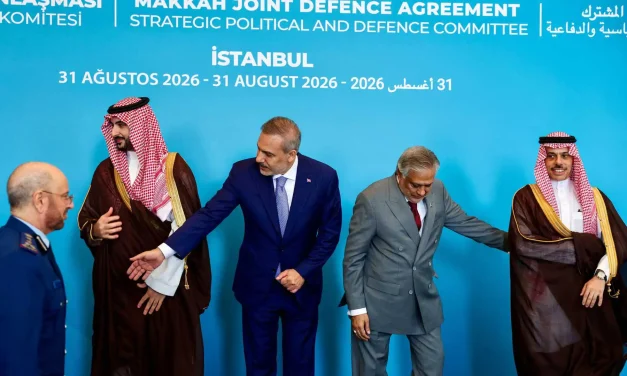
SCFR Online – Opinion: The Makkah Pact, signed between Saudi Arabia, Pakistan, and Turkey under the motto “an attack on one is an attack on all,” is viewed by some analysts less as a full-fledged military coalition and more as an attempt to reduce security dependence on an external power and to establish a regional security mechanism.

Implications of the US-Saudi Nuclear Agreement

SCFR Online – Opinion: The new US-Saudi nuclear agreement, despite legal and political ambiguities, could alter previous non-proliferation standards in West Asia and intensify nuclear competition, ushering it into a new phase.

An Analysis of Recent Turkey-Israeli Regime Tensions

SCFR Online – Opinion: Recent developments in Syria indicate an intensification of strategic rivalry between Turkey and the Israeli regime, but mutual considerations and the role of the United States have limited the likelihood of direct war.

Increasing criticism of the extensive Zionist lobby network

SCFR Online – Opinion: An examination of the mechanisms of the Israeli regime’s influence in the United States depicts a complex picture of shared interests, strategic dependencies, and the limitations of this relationship.

Realities of the Tripartite Makkah Pact

SCFR Online – Interview: The signing of the Makkah agreement between Saudi Arabia, Pakistan, and Turkey has raised questions about the future of the region’s security structure and the position of these countries in West Asian equations. Can this agreement become a genuine collective defense mechanism, or does it have more of a political and deterrent function than creating new military capacity?

Loading

Abraham Accords

Obstacles, Prospect of Normalization of Riyadh-Tel Aviv Relations

Obstacles, Prospect of Normalization of Riyadh-Tel Aviv Relations

Strategic Council Online – Opinion: Normalization and recognition of relations between the Zionist regime and Saudi Arabia is still at the focal point of the political circles of the Zionist regime. Israel and, recently, the United States administration have focused on this issue and are discussing the imminent compromise between Tel Aviv and Riyadh, which is unrealistic.
Hamid Khoshayand – Expert on regional affairs

Dimensions, goals and consequences of Judaization of Bahraini textbooks

Dimensions, goals and consequences of Judaization of Bahraini textbooks

Strategic Council Online—Opinion: In September 2020, the Kingdom of Bahrain signed a reconciliation plan with the Zionist regime known as the “Abraham Accords”. Bahrain is the fourth Arab regime that has recognized the Zionist regime. During the past two years, Bahrain has been one of the Arab regimes that has continued to expand bilateral relations with Tel Aviv despite widespread domestic opposition.
Hamid Khoshayand- Expert of regional issues

Prospect of Legislation on Banning Normalization of Relations with Zionist Regime in Certain Arab Countries

Prospect of Legislation on Banning Normalization of Relations with Zionist Regime in Certain Arab Countries

Strategic Council Online – Opinion: Under circumstances that the Zionist regime is in a difficult situation in terms of security, political, economic, social … issues which, as admitted by the leaders of that regime, has been unprecedented in the past 75 years, we are witnessing actions taken by certain important Arab states, including Iraq, for confronting the strategy of normalization of the Zionist regime’s relations with Arab and Islamic countries.
Hamid Khoshayand – Expert on regional affairs

Prospects of UAE-Zionist Regime Free Trade Agreement

Prospects of UAE-Zionist Regime Free Trade Agreement

Strategic Council Online – Interview: An expert on the Middle East affairs commenting on the signing of a free trade agreement between the Zionist regime and the UAE, which covers 96 percent of trade volume between the two sides, said: The purpose of such contacts under the economic banner is to create a Hebrew-Arab coalition in the region and because the borders of the Axis of Resistance have expanded to the borders of the Occupied Territories and pose security risks to Tel Aviv, the regime is trying to change this balance of power in its own favor through political and security ties with the UAE, Bahrain and even Morocco.

Objectives & Consequences of the Trip of the Zionist Regime President to UAE

Objectives & Consequences of the Trip of the Zionist Regime President to UAE

Strategic Council Online – Interview: Having referred to the visit of the Zionist regime president to UAE, an analyst on the Zionist regime affairs called the trip as a show off visit in an effort to present the Abraham Accord as successful, to which the Axis of Resistance should be vigilant.

US Approach & the Process of Normalization of Ties with Zionist Regime

US Approach & the Process of Normalization of Ties with Zionist Regime

Strategic Council Online – Opinion: The Zionist regime’s conflict with Palestine and the Arabs is the main focus of the conflict in the Middle East and has played a major role in the US involvement in various issues in the region.
Dr. Fatemeh Nekoolal Azad – Expert on West Asia affairs

UAE Failure to Buy US Fighter Jets despite Betraying Palestinians

UAE Failure to Buy US Fighter Jets despite Betraying Palestinians

Strategic Council Online – Opinion: The UAE recently announced that it has suspended negotiations on a 23 billion dollar arms deal with the United States. An Emirati official has told The Wall Street Journal that “technical requirements, operational restrictions on sovereignty and cost-benefit analysis have led to a major revision in its decision by the country”.
Barsam Mohammadi – Expert on regional affairs

Vulnerability of Interests of Zionist Regime and Host Countries in Persian Gulf

Vulnerability of Interests of Zionist Regime and Host Countries in Persian Gulf

Strategic Council Online – The illegitimate presence of the Zionists in the Persian Gulf will increase vulnerability of these forces; as the Arab nations of the region are not psychologically and culturally ready to accept the citizens of the Israeli regime and this is considered a serious challenge for Tel Aviv. There may also be underground movements in the future to strike at the interests of the Israeli regime in the Arab countries.
Hassan Hanizadeh – Expert of the Middle East

أحدث الوظائف

The Makkah Pact; Reasons for its Formation and Challenges Ahead

SCFR Online – Opinion: The Makkah Pact, signed between Saudi Arabia, Pakistan, and Turkey under the motto “an attack on one is an attack on all,” is viewed by some analysts less as a full-fledged military coalition and more as an attempt to reduce security dependence on an external power and to establish a regional security mechanism.

Implications of the US-Saudi Nuclear Agreement

SCFR Online – Opinion: The new US-Saudi nuclear agreement, despite legal and political ambiguities, could alter previous non-proliferation standards in West Asia and intensify nuclear competition, ushering it into a new phase.

An Analysis of Recent Turkey-Israeli Regime Tensions

SCFR Online – Opinion: Recent developments in Syria indicate an intensification of strategic rivalry between Turkey and the Israeli regime, but mutual considerations and the role of the United States have limited the likelihood of direct war.

Increasing criticism of the extensive Zionist lobby network

SCFR Online – Opinion: An examination of the mechanisms of the Israeli regime’s influence in the United States depicts a complex picture of shared interests, strategic dependencies, and the limitations of this relationship.

Realities of the Tripartite Makkah Pact

SCFR Online – Interview: The signing of the Makkah agreement between Saudi Arabia, Pakistan, and Turkey has raised questions about the future of the region’s security structure and the position of these countries in West Asian equations. Can this agreement become a genuine collective defense mechanism, or does it have more of a political and deterrent function than creating new military capacity?

Loading

Abraham Accords

Obstacles, Prospect of Normalization of Riyadh-Tel Aviv Relations

Obstacles, Prospect of Normalization of Riyadh-Tel Aviv Relations

Strategic Council Online – Opinion: Normalization and recognition of relations between the Zionist regime and Saudi Arabia is still at the focal point of the political circles of the Zionist regime. Israel and, recently, the United States administration have focused on this issue and are discussing the imminent compromise between Tel Aviv and Riyadh, which is unrealistic.
Hamid Khoshayand – Expert on regional affairs

Dimensions, goals and consequences of Judaization of Bahraini textbooks

Dimensions, goals and consequences of Judaization of Bahraini textbooks

Strategic Council Online—Opinion: In September 2020, the Kingdom of Bahrain signed a reconciliation plan with the Zionist regime known as the “Abraham Accords”. Bahrain is the fourth Arab regime that has recognized the Zionist regime. During the past two years, Bahrain has been one of the Arab regimes that has continued to expand bilateral relations with Tel Aviv despite widespread domestic opposition.
Hamid Khoshayand- Expert of regional issues

Prospect of Legislation on Banning Normalization of Relations with Zionist Regime in Certain Arab Countries

Prospect of Legislation on Banning Normalization of Relations with Zionist Regime in Certain Arab Countries

Strategic Council Online – Opinion: Under circumstances that the Zionist regime is in a difficult situation in terms of security, political, economic, social … issues which, as admitted by the leaders of that regime, has been unprecedented in the past 75 years, we are witnessing actions taken by certain important Arab states, including Iraq, for confronting the strategy of normalization of the Zionist regime’s relations with Arab and Islamic countries.
Hamid Khoshayand – Expert on regional affairs

Prospects of UAE-Zionist Regime Free Trade Agreement

Prospects of UAE-Zionist Regime Free Trade Agreement

Strategic Council Online – Interview: An expert on the Middle East affairs commenting on the signing of a free trade agreement between the Zionist regime and the UAE, which covers 96 percent of trade volume between the two sides, said: The purpose of such contacts under the economic banner is to create a Hebrew-Arab coalition in the region and because the borders of the Axis of Resistance have expanded to the borders of the Occupied Territories and pose security risks to Tel Aviv, the regime is trying to change this balance of power in its own favor through political and security ties with the UAE, Bahrain and even Morocco.

Objectives & Consequences of the Trip of the Zionist Regime President to UAE

Objectives & Consequences of the Trip of the Zionist Regime President to UAE

Strategic Council Online – Interview: Having referred to the visit of the Zionist regime president to UAE, an analyst on the Zionist regime affairs called the trip as a show off visit in an effort to present the Abraham Accord as successful, to which the Axis of Resistance should be vigilant.

US Approach & the Process of Normalization of Ties with Zionist Regime

US Approach & the Process of Normalization of Ties with Zionist Regime

Strategic Council Online – Opinion: The Zionist regime’s conflict with Palestine and the Arabs is the main focus of the conflict in the Middle East and has played a major role in the US involvement in various issues in the region.
Dr. Fatemeh Nekoolal Azad – Expert on West Asia affairs

UAE Failure to Buy US Fighter Jets despite Betraying Palestinians

UAE Failure to Buy US Fighter Jets despite Betraying Palestinians

Strategic Council Online – Opinion: The UAE recently announced that it has suspended negotiations on a 23 billion dollar arms deal with the United States. An Emirati official has told The Wall Street Journal that “technical requirements, operational restrictions on sovereignty and cost-benefit analysis have led to a major revision in its decision by the country”.
Barsam Mohammadi – Expert on regional affairs

Vulnerability of Interests of Zionist Regime and Host Countries in Persian Gulf

Vulnerability of Interests of Zionist Regime and Host Countries in Persian Gulf

Strategic Council Online – The illegitimate presence of the Zionists in the Persian Gulf will increase vulnerability of these forces; as the Arab nations of the region are not psychologically and culturally ready to accept the citizens of the Israeli regime and this is considered a serious challenge for Tel Aviv. There may also be underground movements in the future to strike at the interests of the Israeli regime in the Arab countries.
Hassan Hanizadeh – Expert of the Middle East

Abraham Accords

Obstacles, Prospect of Normalization of Riyadh-Tel Aviv Relations

Obstacles, Prospect of Normalization of Riyadh-Tel Aviv Relations

Strategic Council Online – Opinion: Normalization and recognition of relations between the Zionist regime and Saudi Arabia is still at the focal point of the political circles of the Zionist regime. Israel and, recently, the United States administration have focused on this issue and are discussing the imminent compromise between Tel Aviv and Riyadh, which is unrealistic.
Hamid Khoshayand – Expert on regional affairs

Dimensions, goals and consequences of Judaization of Bahraini textbooks

Dimensions, goals and consequences of Judaization of Bahraini textbooks

Strategic Council Online—Opinion: In September 2020, the Kingdom of Bahrain signed a reconciliation plan with the Zionist regime known as the “Abraham Accords”. Bahrain is the fourth Arab regime that has recognized the Zionist regime. During the past two years, Bahrain has been one of the Arab regimes that has continued to expand bilateral relations with Tel Aviv despite widespread domestic opposition.
Hamid Khoshayand- Expert of regional issues

Prospect of Legislation on Banning Normalization of Relations with Zionist Regime in Certain Arab Countries

Prospect of Legislation on Banning Normalization of Relations with Zionist Regime in Certain Arab Countries

Strategic Council Online – Opinion: Under circumstances that the Zionist regime is in a difficult situation in terms of security, political, economic, social … issues which, as admitted by the leaders of that regime, has been unprecedented in the past 75 years, we are witnessing actions taken by certain important Arab states, including Iraq, for confronting the strategy of normalization of the Zionist regime’s relations with Arab and Islamic countries.
Hamid Khoshayand – Expert on regional affairs

Prospects of UAE-Zionist Regime Free Trade Agreement

Prospects of UAE-Zionist Regime Free Trade Agreement

Strategic Council Online – Interview: An expert on the Middle East affairs commenting on the signing of a free trade agreement between the Zionist regime and the UAE, which covers 96 percent of trade volume between the two sides, said: The purpose of such contacts under the economic banner is to create a Hebrew-Arab coalition in the region and because the borders of the Axis of Resistance have expanded to the borders of the Occupied Territories and pose security risks to Tel Aviv, the regime is trying to change this balance of power in its own favor through political and security ties with the UAE, Bahrain and even Morocco.

Objectives & Consequences of the Trip of the Zionist Regime President to UAE

Objectives & Consequences of the Trip of the Zionist Regime President to UAE

Strategic Council Online – Interview: Having referred to the visit of the Zionist regime president to UAE, an analyst on the Zionist regime affairs called the trip as a show off visit in an effort to present the Abraham Accord as successful, to which the Axis of Resistance should be vigilant.

US Approach & the Process of Normalization of Ties with Zionist Regime

US Approach & the Process of Normalization of Ties with Zionist Regime

Strategic Council Online – Opinion: The Zionist regime’s conflict with Palestine and the Arabs is the main focus of the conflict in the Middle East and has played a major role in the US involvement in various issues in the region.
Dr. Fatemeh Nekoolal Azad – Expert on West Asia affairs

UAE Failure to Buy US Fighter Jets despite Betraying Palestinians

UAE Failure to Buy US Fighter Jets despite Betraying Palestinians

Strategic Council Online – Opinion: The UAE recently announced that it has suspended negotiations on a 23 billion dollar arms deal with the United States. An Emirati official has told The Wall Street Journal that “technical requirements, operational restrictions on sovereignty and cost-benefit analysis have led to a major revision in its decision by the country”.
Barsam Mohammadi – Expert on regional affairs

Vulnerability of Interests of Zionist Regime and Host Countries in Persian Gulf

Vulnerability of Interests of Zionist Regime and Host Countries in Persian Gulf

Strategic Council Online – The illegitimate presence of the Zionists in the Persian Gulf will increase vulnerability of these forces; as the Arab nations of the region are not psychologically and culturally ready to accept the citizens of the Israeli regime and this is considered a serious challenge for Tel Aviv. There may also be underground movements in the future to strike at the interests of the Israeli regime in the Arab countries.
Hassan Hanizadeh – Expert of the Middle East

LATEST CONTENT

The Makkah Pact; Reasons for its Formation and Challenges Ahead

SCFR Online – Opinion: The Makkah Pact, signed between Saudi Arabia, Pakistan, and Turkey under the motto “an attack on one is an attack on all,” is viewed by some analysts less as a full-fledged military coalition and more as an attempt to reduce security dependence on an external power and to establish a regional security mechanism.

Implications of the US-Saudi Nuclear Agreement

SCFR Online – Opinion: The new US-Saudi nuclear agreement, despite legal and political ambiguities, could alter previous non-proliferation standards in West Asia and intensify nuclear competition, ushering it into a new phase.

An Analysis of Recent Turkey-Israeli Regime Tensions

SCFR Online – Opinion: Recent developments in Syria indicate an intensification of strategic rivalry between Turkey and the Israeli regime, but mutual considerations and the role of the United States have limited the likelihood of direct war.

Increasing criticism of the extensive Zionist lobby network

SCFR Online – Opinion: An examination of the mechanisms of the Israeli regime’s influence in the United States depicts a complex picture of shared interests, strategic dependencies, and the limitations of this relationship.

Realities of the Tripartite Makkah Pact

SCFR Online – Interview: The signing of the Makkah agreement between Saudi Arabia, Pakistan, and Turkey has raised questions about the future of the region’s security structure and the position of these countries in West Asian equations. Can this agreement become a genuine collective defense mechanism, or does it have more of a political and deterrent function than creating new military capacity?

Loading

Abraham Accords

Obstacles, Prospect of Normalization of Riyadh-Tel Aviv Relations

Obstacles, Prospect of Normalization of Riyadh-Tel Aviv Relations

Strategic Council Online – Opinion: Normalization and recognition of relations between the Zionist regime and Saudi Arabia is still at the focal point of the political circles of the Zionist regime. Israel and, recently, the United States administration have focused on this issue and are discussing the imminent compromise between Tel Aviv and Riyadh, which is unrealistic.
Hamid Khoshayand – Expert on regional affairs

Dimensions, goals and consequences of Judaization of Bahraini textbooks

Dimensions, goals and consequences of Judaization of Bahraini textbooks

Strategic Council Online—Opinion: In September 2020, the Kingdom of Bahrain signed a reconciliation plan with the Zionist regime known as the “Abraham Accords”. Bahrain is the fourth Arab regime that has recognized the Zionist regime. During the past two years, Bahrain has been one of the Arab regimes that has continued to expand bilateral relations with Tel Aviv despite widespread domestic opposition.
Hamid Khoshayand- Expert of regional issues

Prospect of Legislation on Banning Normalization of Relations with Zionist Regime in Certain Arab Countries

Prospect of Legislation on Banning Normalization of Relations with Zionist Regime in Certain Arab Countries

Strategic Council Online – Opinion: Under circumstances that the Zionist regime is in a difficult situation in terms of security, political, economic, social … issues which, as admitted by the leaders of that regime, has been unprecedented in the past 75 years, we are witnessing actions taken by certain important Arab states, including Iraq, for confronting the strategy of normalization of the Zionist regime’s relations with Arab and Islamic countries.
Hamid Khoshayand – Expert on regional affairs

Prospects of UAE-Zionist Regime Free Trade Agreement

Prospects of UAE-Zionist Regime Free Trade Agreement

Strategic Council Online – Interview: An expert on the Middle East affairs commenting on the signing of a free trade agreement between the Zionist regime and the UAE, which covers 96 percent of trade volume between the two sides, said: The purpose of such contacts under the economic banner is to create a Hebrew-Arab coalition in the region and because the borders of the Axis of Resistance have expanded to the borders of the Occupied Territories and pose security risks to Tel Aviv, the regime is trying to change this balance of power in its own favor through political and security ties with the UAE, Bahrain and even Morocco.

Objectives & Consequences of the Trip of the Zionist Regime President to UAE

Objectives & Consequences of the Trip of the Zionist Regime President to UAE

Strategic Council Online – Interview: Having referred to the visit of the Zionist regime president to UAE, an analyst on the Zionist regime affairs called the trip as a show off visit in an effort to present the Abraham Accord as successful, to which the Axis of Resistance should be vigilant.

US Approach & the Process of Normalization of Ties with Zionist Regime

US Approach & the Process of Normalization of Ties with Zionist Regime

Strategic Council Online – Opinion: The Zionist regime’s conflict with Palestine and the Arabs is the main focus of the conflict in the Middle East and has played a major role in the US involvement in various issues in the region.
Dr. Fatemeh Nekoolal Azad – Expert on West Asia affairs

UAE Failure to Buy US Fighter Jets despite Betraying Palestinians

UAE Failure to Buy US Fighter Jets despite Betraying Palestinians

Strategic Council Online – Opinion: The UAE recently announced that it has suspended negotiations on a 23 billion dollar arms deal with the United States. An Emirati official has told The Wall Street Journal that “technical requirements, operational restrictions on sovereignty and cost-benefit analysis have led to a major revision in its decision by the country”.
Barsam Mohammadi – Expert on regional affairs

Vulnerability of Interests of Zionist Regime and Host Countries in Persian Gulf

Vulnerability of Interests of Zionist Regime and Host Countries in Persian Gulf

Strategic Council Online – The illegitimate presence of the Zionists in the Persian Gulf will increase vulnerability of these forces; as the Arab nations of the region are not psychologically and culturally ready to accept the citizens of the Israeli regime and this is considered a serious challenge for Tel Aviv. There may also be underground movements in the future to strike at the interests of the Israeli regime in the Arab countries.
Hassan Hanizadeh – Expert of the Middle East

ÚLTIMAS PUBLICACIONES

The Makkah Pact; Reasons for its Formation and Challenges Ahead

SCFR Online – Opinion: The Makkah Pact, signed between Saudi Arabia, Pakistan, and Turkey under the motto “an attack on one is an attack on all,” is viewed by some analysts less as a full-fledged military coalition and more as an attempt to reduce security dependence on an external power and to establish a regional security mechanism.

Implications of the US-Saudi Nuclear Agreement

SCFR Online – Opinion: The new US-Saudi nuclear agreement, despite legal and political ambiguities, could alter previous non-proliferation standards in West Asia and intensify nuclear competition, ushering it into a new phase.

An Analysis of Recent Turkey-Israeli Regime Tensions

SCFR Online – Opinion: Recent developments in Syria indicate an intensification of strategic rivalry between Turkey and the Israeli regime, but mutual considerations and the role of the United States have limited the likelihood of direct war.

Increasing criticism of the extensive Zionist lobby network

SCFR Online – Opinion: An examination of the mechanisms of the Israeli regime’s influence in the United States depicts a complex picture of shared interests, strategic dependencies, and the limitations of this relationship.

Realities of the Tripartite Makkah Pact

SCFR Online – Interview: The signing of the Makkah agreement between Saudi Arabia, Pakistan, and Turkey has raised questions about the future of the region’s security structure and the position of these countries in West Asian equations. Can this agreement become a genuine collective defense mechanism, or does it have more of a political and deterrent function than creating new military capacity?

Loading

Abraham Accords

Obstacles, Prospect of Normalization of Riyadh-Tel Aviv Relations

Obstacles, Prospect of Normalization of Riyadh-Tel Aviv Relations

Strategic Council Online – Opinion: Normalization and recognition of relations between the Zionist regime and Saudi Arabia is still at the focal point of the political circles of the Zionist regime. Israel and, recently, the United States administration have focused on this issue and are discussing the imminent compromise between Tel Aviv and Riyadh, which is unrealistic.
Hamid Khoshayand – Expert on regional affairs

Dimensions, goals and consequences of Judaization of Bahraini textbooks

Dimensions, goals and consequences of Judaization of Bahraini textbooks

Strategic Council Online—Opinion: In September 2020, the Kingdom of Bahrain signed a reconciliation plan with the Zionist regime known as the “Abraham Accords”. Bahrain is the fourth Arab regime that has recognized the Zionist regime. During the past two years, Bahrain has been one of the Arab regimes that has continued to expand bilateral relations with Tel Aviv despite widespread domestic opposition.
Hamid Khoshayand- Expert of regional issues

Prospect of Legislation on Banning Normalization of Relations with Zionist Regime in Certain Arab Countries

Prospect of Legislation on Banning Normalization of Relations with Zionist Regime in Certain Arab Countries

Strategic Council Online – Opinion: Under circumstances that the Zionist regime is in a difficult situation in terms of security, political, economic, social … issues which, as admitted by the leaders of that regime, has been unprecedented in the past 75 years, we are witnessing actions taken by certain important Arab states, including Iraq, for confronting the strategy of normalization of the Zionist regime’s relations with Arab and Islamic countries.
Hamid Khoshayand – Expert on regional affairs

Prospects of UAE-Zionist Regime Free Trade Agreement

Prospects of UAE-Zionist Regime Free Trade Agreement

Strategic Council Online – Interview: An expert on the Middle East affairs commenting on the signing of a free trade agreement between the Zionist regime and the UAE, which covers 96 percent of trade volume between the two sides, said: The purpose of such contacts under the economic banner is to create a Hebrew-Arab coalition in the region and because the borders of the Axis of Resistance have expanded to the borders of the Occupied Territories and pose security risks to Tel Aviv, the regime is trying to change this balance of power in its own favor through political and security ties with the UAE, Bahrain and even Morocco.

Objectives & Consequences of the Trip of the Zionist Regime President to UAE

Objectives & Consequences of the Trip of the Zionist Regime President to UAE

Strategic Council Online – Interview: Having referred to the visit of the Zionist regime president to UAE, an analyst on the Zionist regime affairs called the trip as a show off visit in an effort to present the Abraham Accord as successful, to which the Axis of Resistance should be vigilant.

US Approach & the Process of Normalization of Ties with Zionist Regime

US Approach & the Process of Normalization of Ties with Zionist Regime

Strategic Council Online – Opinion: The Zionist regime’s conflict with Palestine and the Arabs is the main focus of the conflict in the Middle East and has played a major role in the US involvement in various issues in the region.
Dr. Fatemeh Nekoolal Azad – Expert on West Asia affairs

UAE Failure to Buy US Fighter Jets despite Betraying Palestinians

UAE Failure to Buy US Fighter Jets despite Betraying Palestinians

Strategic Council Online – Opinion: The UAE recently announced that it has suspended negotiations on a 23 billion dollar arms deal with the United States. An Emirati official has told The Wall Street Journal that “technical requirements, operational restrictions on sovereignty and cost-benefit analysis have led to a major revision in its decision by the country”.
Barsam Mohammadi – Expert on regional affairs

Vulnerability of Interests of Zionist Regime and Host Countries in Persian Gulf

Vulnerability of Interests of Zionist Regime and Host Countries in Persian Gulf

Strategic Council Online – The illegitimate presence of the Zionists in the Persian Gulf will increase vulnerability of these forces; as the Arab nations of the region are not psychologically and culturally ready to accept the citizens of the Israeli regime and this is considered a serious challenge for Tel Aviv. There may also be underground movements in the future to strike at the interests of the Israeli regime in the Arab countries.
Hassan Hanizadeh – Expert of the Middle East

ÚLTIMAS PUBLICACIONES

The Makkah Pact; Reasons for its Formation and Challenges Ahead

SCFR Online – Opinion: The Makkah Pact, signed between Saudi Arabia, Pakistan, and Turkey under the motto “an attack on one is an attack on all,” is viewed by some analysts less as a full-fledged military coalition and more as an attempt to reduce security dependence on an external power and to establish a regional security mechanism.

Implications of the US-Saudi Nuclear Agreement

SCFR Online – Opinion: The new US-Saudi nuclear agreement, despite legal and political ambiguities, could alter previous non-proliferation standards in West Asia and intensify nuclear competition, ushering it into a new phase.

An Analysis of Recent Turkey-Israeli Regime Tensions

SCFR Online – Opinion: Recent developments in Syria indicate an intensification of strategic rivalry between Turkey and the Israeli regime, but mutual considerations and the role of the United States have limited the likelihood of direct war.

Increasing criticism of the extensive Zionist lobby network

SCFR Online – Opinion: An examination of the mechanisms of the Israeli regime’s influence in the United States depicts a complex picture of shared interests, strategic dependencies, and the limitations of this relationship.

Realities of the Tripartite Makkah Pact

SCFR Online – Interview: The signing of the Makkah agreement between Saudi Arabia, Pakistan, and Turkey has raised questions about the future of the region’s security structure and the position of these countries in West Asian equations. Can this agreement become a genuine collective defense mechanism, or does it have more of a political and deterrent function than creating new military capacity?

Loading

Abraham Accords

Obstacles, Prospect of Normalization of Riyadh-Tel Aviv Relations

Obstacles, Prospect of Normalization of Riyadh-Tel Aviv Relations

Strategic Council Online – Opinion: Normalization and recognition of relations between the Zionist regime and Saudi Arabia is still at the focal point of the political circles of the Zionist regime. Israel and, recently, the United States administration have focused on this issue and are discussing the imminent compromise between Tel Aviv and Riyadh, which is unrealistic.
Hamid Khoshayand – Expert on regional affairs

Dimensions, goals and consequences of Judaization of Bahraini textbooks

Dimensions, goals and consequences of Judaization of Bahraini textbooks

Strategic Council Online—Opinion: In September 2020, the Kingdom of Bahrain signed a reconciliation plan with the Zionist regime known as the “Abraham Accords”. Bahrain is the fourth Arab regime that has recognized the Zionist regime. During the past two years, Bahrain has been one of the Arab regimes that has continued to expand bilateral relations with Tel Aviv despite widespread domestic opposition.
Hamid Khoshayand- Expert of regional issues

Prospect of Legislation on Banning Normalization of Relations with Zionist Regime in Certain Arab Countries

Prospect of Legislation on Banning Normalization of Relations with Zionist Regime in Certain Arab Countries

Strategic Council Online – Opinion: Under circumstances that the Zionist regime is in a difficult situation in terms of security, political, economic, social … issues which, as admitted by the leaders of that regime, has been unprecedented in the past 75 years, we are witnessing actions taken by certain important Arab states, including Iraq, for confronting the strategy of normalization of the Zionist regime’s relations with Arab and Islamic countries.
Hamid Khoshayand – Expert on regional affairs

Prospects of UAE-Zionist Regime Free Trade Agreement

Prospects of UAE-Zionist Regime Free Trade Agreement

Strategic Council Online – Interview: An expert on the Middle East affairs commenting on the signing of a free trade agreement between the Zionist regime and the UAE, which covers 96 percent of trade volume between the two sides, said: The purpose of such contacts under the economic banner is to create a Hebrew-Arab coalition in the region and because the borders of the Axis of Resistance have expanded to the borders of the Occupied Territories and pose security risks to Tel Aviv, the regime is trying to change this balance of power in its own favor through political and security ties with the UAE, Bahrain and even Morocco.

Objectives & Consequences of the Trip of the Zionist Regime President to UAE

Objectives & Consequences of the Trip of the Zionist Regime President to UAE

Strategic Council Online – Interview: Having referred to the visit of the Zionist regime president to UAE, an analyst on the Zionist regime affairs called the trip as a show off visit in an effort to present the Abraham Accord as successful, to which the Axis of Resistance should be vigilant.

US Approach & the Process of Normalization of Ties with Zionist Regime

US Approach & the Process of Normalization of Ties with Zionist Regime

Strategic Council Online – Opinion: The Zionist regime’s conflict with Palestine and the Arabs is the main focus of the conflict in the Middle East and has played a major role in the US involvement in various issues in the region.
Dr. Fatemeh Nekoolal Azad – Expert on West Asia affairs

UAE Failure to Buy US Fighter Jets despite Betraying Palestinians

UAE Failure to Buy US Fighter Jets despite Betraying Palestinians

Strategic Council Online – Opinion: The UAE recently announced that it has suspended negotiations on a 23 billion dollar arms deal with the United States. An Emirati official has told The Wall Street Journal that “technical requirements, operational restrictions on sovereignty and cost-benefit analysis have led to a major revision in its decision by the country”.
Barsam Mohammadi – Expert on regional affairs

Vulnerability of Interests of Zionist Regime and Host Countries in Persian Gulf

Vulnerability of Interests of Zionist Regime and Host Countries in Persian Gulf

Strategic Council Online – The illegitimate presence of the Zionists in the Persian Gulf will increase vulnerability of these forces; as the Arab nations of the region are not psychologically and culturally ready to accept the citizens of the Israeli regime and this is considered a serious challenge for Tel Aviv. There may also be underground movements in the future to strike at the interests of the Israeli regime in the Arab countries.
Hassan Hanizadeh – Expert of the Middle East

ÚLTIMAS PUBLICACIONES

The Makkah Pact; Reasons for its Formation and Challenges Ahead

SCFR Online – Opinion: The Makkah Pact, signed between Saudi Arabia, Pakistan, and Turkey under the motto “an attack on one is an attack on all,” is viewed by some analysts less as a full-fledged military coalition and more as an attempt to reduce security dependence on an external power and to establish a regional security mechanism.

Implications of the US-Saudi Nuclear Agreement

SCFR Online – Opinion: The new US-Saudi nuclear agreement, despite legal and political ambiguities, could alter previous non-proliferation standards in West Asia and intensify nuclear competition, ushering it into a new phase.

An Analysis of Recent Turkey-Israeli Regime Tensions

SCFR Online – Opinion: Recent developments in Syria indicate an intensification of strategic rivalry between Turkey and the Israeli regime, but mutual considerations and the role of the United States have limited the likelihood of direct war.

Increasing criticism of the extensive Zionist lobby network

SCFR Online – Opinion: An examination of the mechanisms of the Israeli regime’s influence in the United States depicts a complex picture of shared interests, strategic dependencies, and the limitations of this relationship.

Realities of the Tripartite Makkah Pact

SCFR Online – Interview: The signing of the Makkah agreement between Saudi Arabia, Pakistan, and Turkey has raised questions about the future of the region’s security structure and the position of these countries in West Asian equations. Can this agreement become a genuine collective defense mechanism, or does it have more of a political and deterrent function than creating new military capacity?

Loading

Abraham Accords

Obstacles, Prospect of Normalization of Riyadh-Tel Aviv Relations

Obstacles, Prospect of Normalization of Riyadh-Tel Aviv Relations

Strategic Council Online – Opinion: Normalization and recognition of relations between the Zionist regime and Saudi Arabia is still at the focal point of the political circles of the Zionist regime. Israel and, recently, the United States administration have focused on this issue and are discussing the imminent compromise between Tel Aviv and Riyadh, which is unrealistic.
Hamid Khoshayand – Expert on regional affairs

Dimensions, goals and consequences of Judaization of Bahraini textbooks

Dimensions, goals and consequences of Judaization of Bahraini textbooks

Strategic Council Online—Opinion: In September 2020, the Kingdom of Bahrain signed a reconciliation plan with the Zionist regime known as the “Abraham Accords”. Bahrain is the fourth Arab regime that has recognized the Zionist regime. During the past two years, Bahrain has been one of the Arab regimes that has continued to expand bilateral relations with Tel Aviv despite widespread domestic opposition.
Hamid Khoshayand- Expert of regional issues

Prospect of Legislation on Banning Normalization of Relations with Zionist Regime in Certain Arab Countries

Prospect of Legislation on Banning Normalization of Relations with Zionist Regime in Certain Arab Countries

Strategic Council Online – Opinion: Under circumstances that the Zionist regime is in a difficult situation in terms of security, political, economic, social … issues which, as admitted by the leaders of that regime, has been unprecedented in the past 75 years, we are witnessing actions taken by certain important Arab states, including Iraq, for confronting the strategy of normalization of the Zionist regime’s relations with Arab and Islamic countries.
Hamid Khoshayand – Expert on regional affairs

Prospects of UAE-Zionist Regime Free Trade Agreement

Prospects of UAE-Zionist Regime Free Trade Agreement

Strategic Council Online – Interview: An expert on the Middle East affairs commenting on the signing of a free trade agreement between the Zionist regime and the UAE, which covers 96 percent of trade volume between the two sides, said: The purpose of such contacts under the economic banner is to create a Hebrew-Arab coalition in the region and because the borders of the Axis of Resistance have expanded to the borders of the Occupied Territories and pose security risks to Tel Aviv, the regime is trying to change this balance of power in its own favor through political and security ties with the UAE, Bahrain and even Morocco.

Objectives & Consequences of the Trip of the Zionist Regime President to UAE

Objectives & Consequences of the Trip of the Zionist Regime President to UAE

Strategic Council Online – Interview: Having referred to the visit of the Zionist regime president to UAE, an analyst on the Zionist regime affairs called the trip as a show off visit in an effort to present the Abraham Accord as successful, to which the Axis of Resistance should be vigilant.

US Approach & the Process of Normalization of Ties with Zionist Regime

US Approach & the Process of Normalization of Ties with Zionist Regime

Strategic Council Online – Opinion: The Zionist regime’s conflict with Palestine and the Arabs is the main focus of the conflict in the Middle East and has played a major role in the US involvement in various issues in the region.
Dr. Fatemeh Nekoolal Azad – Expert on West Asia affairs

UAE Failure to Buy US Fighter Jets despite Betraying Palestinians

UAE Failure to Buy US Fighter Jets despite Betraying Palestinians

Strategic Council Online – Opinion: The UAE recently announced that it has suspended negotiations on a 23 billion dollar arms deal with the United States. An Emirati official has told The Wall Street Journal that “technical requirements, operational restrictions on sovereignty and cost-benefit analysis have led to a major revision in its decision by the country”.
Barsam Mohammadi – Expert on regional affairs

Vulnerability of Interests of Zionist Regime and Host Countries in Persian Gulf

Vulnerability of Interests of Zionist Regime and Host Countries in Persian Gulf

Strategic Council Online – The illegitimate presence of the Zionists in the Persian Gulf will increase vulnerability of these forces; as the Arab nations of the region are not psychologically and culturally ready to accept the citizens of the Israeli regime and this is considered a serious challenge for Tel Aviv. There may also be underground movements in the future to strike at the interests of the Israeli regime in the Arab countries.
Hassan Hanizadeh – Expert of the Middle East

ÚLTIMAS PUBLICACIONES

The Makkah Pact; Reasons for its Formation and Challenges Ahead

SCFR Online – Opinion: The Makkah Pact, signed between Saudi Arabia, Pakistan, and Turkey under the motto “an attack on one is an attack on all,” is viewed by some analysts less as a full-fledged military coalition and more as an attempt to reduce security dependence on an external power and to establish a regional security mechanism.

Implications of the US-Saudi Nuclear Agreement

SCFR Online – Opinion: The new US-Saudi nuclear agreement, despite legal and political ambiguities, could alter previous non-proliferation standards in West Asia and intensify nuclear competition, ushering it into a new phase.

An Analysis of Recent Turkey-Israeli Regime Tensions

SCFR Online – Opinion: Recent developments in Syria indicate an intensification of strategic rivalry between Turkey and the Israeli regime, but mutual considerations and the role of the United States have limited the likelihood of direct war.

Increasing criticism of the extensive Zionist lobby network

SCFR Online – Opinion: An examination of the mechanisms of the Israeli regime’s influence in the United States depicts a complex picture of shared interests, strategic dependencies, and the limitations of this relationship.

Realities of the Tripartite Makkah Pact

SCFR Online – Interview: The signing of the Makkah agreement between Saudi Arabia, Pakistan, and Turkey has raised questions about the future of the region’s security structure and the position of these countries in West Asian equations. Can this agreement become a genuine collective defense mechanism, or does it have more of a political and deterrent function than creating new military capacity?

Loading