جدیدترین مطالب

The Inseparability of the Lebanese Front from the Axis of Resistance

SCFR Online–Opinion: By providing an extensive network of social, healthcare, educational, and post-war reconstruction services, Hezbollah has established a strong social base for itself among Lebanon’s Shiites and Sunnis, and even beyond that, among other segments of Lebanese society, including Christians. Hezbollah has never been an external actor imposed upon Lebanon; rather, it is a phenomenon fundamentally born out of the occupation and crimes of the Zionist regime and itself influenced by popular resistance.

The Increasing Efforts of the Zionist Regime to Redefine Borders and the Regional Order and Its Consequences

SCFR Online– Opinion: Security and military developments in the region over recent months indicate that the ongoing crises and wars in Gaza, southern Lebanon, and parts of Syrian territory encompass broader dimensions of geopolitical and geostrategic transformations. In this context, the increased military presence and control of the Zionist regime over parts of the territories of these areas, along with proposals regarding the creation of buffer zones or even the expansion of security borders, have raised serious questions about the future of the regional order and its consequences for the countries of West Asia.

The Components of Iran’s Deterrence Power

SCFR Online – Opinion: At a time when regional security equations have reached a sensitive stage under the influence of Iran’s strategic confrontation with the United States and the Zionist regime, the question of the nature of Tehran’s defensive power has gained greater significance than ever before. While Washington and Tel Aviv rely on their technological superiority, the Islamic Republic of Iran has presented a model of deterrence that extends beyond the material calculations of the world’s classical militaries. This power, rooted in the connection between “the field” and “the people,” has not only altered the balance of power in recent conflicts but has also disrupted adversaries’ calculations when confronting Iran’s strategic depth.

The Persian Gulf; A Cold Battlefield Between Beijing and Washington

SCFR Online – Opinion: The competition in recent years between the United States and China encompasses various geographical regions—including the Indo-Pacific, West Asia, the Arctic and Antarctic, and Africa—as well as multiple domains such as economics and technology. Within this context, a strategic competition has also emerged in the Persian Gulf region across economic, technological, and military spheres.

Europe’s Enduring Dependence on Persian Gulf Energy

SCFR Online – Opinion: The dominant discourse in the field of European energy security over the past two decades has revolved around diversification of supply sources and the gradual reduction of dependence on fossil fuels. This narrative, which gained particular momentum after the Ukraine gas crisis in 2006 and its intensification in 2014 and 2022, was based on the assumption that Europe could free itself from the geopolitical vulnerabilities arising from dependence on specific suppliers through investment in renewable energy, imports of liquefied natural gas from diversified sources, and the establishment of new infrastructure. However, a closer analysis of energy trade data and the structure of the global oil and gas supply chain presents a different picture. Europe has not only failed to meaningfully reduce its dependence on the Persian Gulf, but in some sectors — particularly in liquefied natural gas imports — this dependence has deepened. This reality, which is often overlooked in public discourse, raises fundamental questions about the sustainability of Europe’s energy security strategies and their impact on regional power equations.

Loading

Al-Aqsa Storm

Continuity and Increasing Growth of the Resistance Despite Developments in Syria

Continuity and Increasing Growth of the Resistance Despite Developments in Syria

Strategic Council Online—Opinion: It is noteworthy that Bashar al-Assad’s government was an ally of the Islamic Resistance Front and that his fall from power is a challenge to this front. However, for various reasons, such an event can never be considered a “defeat” for the Resistance Front in the region.

France and the Two-State Solution in Occupied Territories

France and the Two-State Solution in Occupied Territories

Strategic Council Online – Interview: An expert on regional issues said: The announcement of France’s agreement with the formation of two states in the Occupied Territories is a measure to raise the international image of France and reduce domestic pressure on the Macron government for inaction against the Israeli crimes in Gaza.

Biden’s Gamble to Revive Process of Normalizing Relations between Saudi Arabia and Zionist regime

Biden’s Gamble to Revive Process of Normalizing Relations between Saudi Arabia and Zionist regime

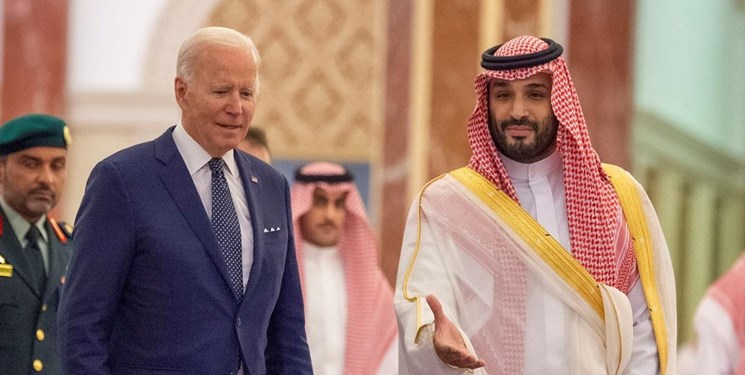
Strategic Council Online – Note: Since the beginning of the Gaza war, the US Secretary of State has visited Saudi Arabia twice and met and conferred with the kingdom officials. Tel Aviv Riyadh’s “reconciliation process” and the establishment of diplomatic relations were the most important agenda of the US secretary of state in his recent meeting with Saudi authorities (January 6, 2024).
Hamid Khoshayand – expert on regional issues

Sinwar Message; Document of Authority of Palestinian Resistance

Sinwar Message; Document of Authority of Palestinian Resistance

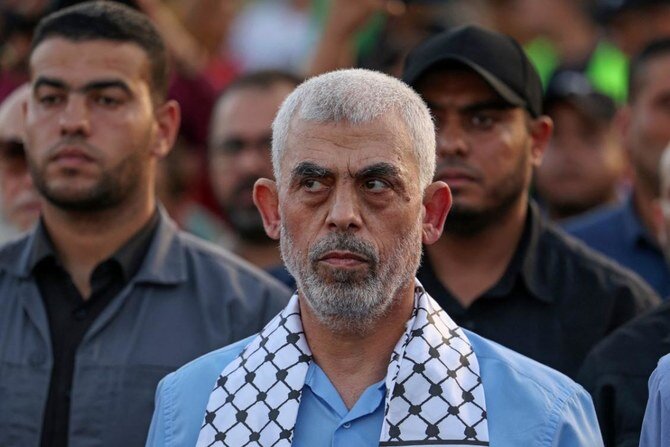
Strategic Council Online – Interview: An expert on Palestine affairs said: Yahya Sinwar, the head of the Islamic Resistance Movement (Hamas) in the Gaza Strip, has recently sent an important and long message to the head and members of the political bureau of the movement, in which he mentioned that the Izz ad-Din al-Qassam Brigades (IQB) have launched an intense, harsh and unprecedented battle against the usurper forces, and the Zionist army has suffered heavy losses of life and equipment. In that message, Sinwar added: Al-Qassam brigades targeted at least 5,000 soldiers and officers during the ground war, one-third of whom were killed, one-third were seriously injured, and the last one-third suffered permanent disabilities. 750 units have been completely or partially destroyed at the level of military equipment and vehicles.

Brain Death of New US Middle East Plan

Brain Death of New US Middle East Plan

Strategic Council Online – Opinion: There are various signs that indicate the failure of the US “New Middle East” plan in the region, as the Al-Aqsa Storm is the last sign of the failure of the old US plan to create a new Middle East, which could have unprecedented consequences in geostrategic and geopolitical dimensions. Barsam Mohammadi – Expert on regional affairs

Al-Aqsa Storm, Defeat of Misconceptions of Arab States about Normalization

Al-Aqsa Storm, Defeat of Misconceptions of Arab States about Normalization

Strategic Council Online – Interview: An expert on Israeli affairs, saying that the blow the Zionist regime has received from the “Al-Aqsa Storm” operation severely shattered the notion that the regime is an immutable reality that must be dealt with in the region noted: The crimes committed by the Zionist regime in Gaza will remain in the minds of the people of Islamic countries for a long time and will be a serious challenge for normalization.

The President of the Strategic Council on Foreign Relations emphasized in an interview with Al-Alam Network:The Desperation and Confusion of the Zionist Regime Against the Strategic Victory of the Resistance

The President of the Strategic Council on Foreign Relations emphasized in an interview with Al-Alam Network:
The Desperation and Confusion of the Zionist Regime Against the Strategic Victory of the Resistance

Strategic Council Online: In an interview with Al-Alam Network, the President of the Strategic Council on Foreign Relations emphasized that in the current situation, the policy pursued by the allies of the Zionist regime is to prevent the spread of war and the collapse of Israel, and said: United States should prevent the continuation of Israeli crimes because if the current trend continues, there is a high possibility of the spread of the war.

Reasons for Shaping Al-Aqsa Storm; Upcoming Scenarios

Reasons for Shaping Al-Aqsa Storm; Upcoming Scenarios

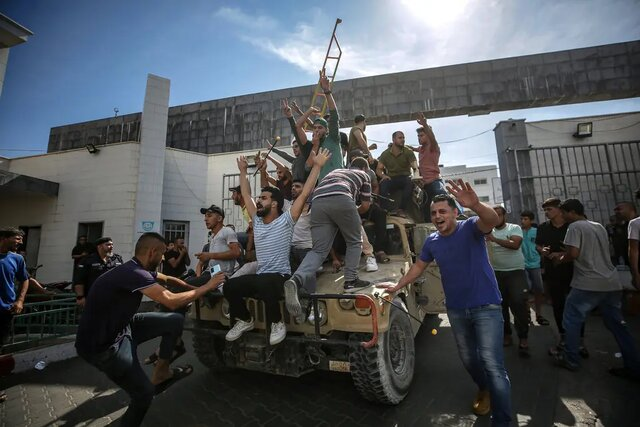
Strategic Council Online – Opinion: In a situation where, in recent months, the United States made extensive efforts to establish relations between Saudi Arabia and the Zionist regime, and a few Arab governments in the region also started their relations with Tel Aviv, on the anniversary of Yom Kippur War, the surprise and large-scale attack by Hamas forces on occupied territories were carried out under the codename “Al-Aqsa Storm” and by launching five thousand rockets to nearby Jewish settlements and some areas in the center of Israel. In the meantime, Hamas forces entered the areas occupied by the Israelis – an attack that caught the world by surprise and overshadowed other important crises and wars, such as the Russia-Ukraine war and the Karabakh crisis.
Dr. Mohammad Mehdi Mazaheri – University professor

Dr. Kharrazi: Israel Is a Regime Beyond Apartheid

Dr. Kharrazi: Israel Is a Regime Beyond Apartheid

Strategic Council Online – Interview: The president of the Strategic Council on Foreign Relations said: The Israeli regime is not only an apartheid regime but also a child-killing regime, which is committing genocide by continuing its war crimes in Gaza.

Al-Aqsa Storm, Vanishing of Normalization of Relations with Zionist Regime

Al-Aqsa Storm, Vanishing of Normalization of Relations with Zionist Regime

Strategic Council Online – Interview: An expert on international affairs stated that due to the ongoing conflict between Hamas and Palestine, the normalization of relations with the Zionist regime will be suspended and seriously challenged, adding: In this situation, with an increase of conflicts and human casualties, considering the sensitivity of public opinion, in the short term, less governments in the region will dare to raise the issue of normalization.

أحدث الوظائف

The Inseparability of the Lebanese Front from the Axis of Resistance

SCFR Online–Opinion: By providing an extensive network of social, healthcare, educational, and post-war reconstruction services, Hezbollah has established a strong social base for itself among Lebanon’s Shiites and Sunnis, and even beyond that, among other segments of Lebanese society, including Christians. Hezbollah has never been an external actor imposed upon Lebanon; rather, it is a phenomenon fundamentally born out of the occupation and crimes of the Zionist regime and itself influenced by popular resistance.

The Increasing Efforts of the Zionist Regime to Redefine Borders and the Regional Order and Its Consequences

SCFR Online– Opinion: Security and military developments in the region over recent months indicate that the ongoing crises and wars in Gaza, southern Lebanon, and parts of Syrian territory encompass broader dimensions of geopolitical and geostrategic transformations. In this context, the increased military presence and control of the Zionist regime over parts of the territories of these areas, along with proposals regarding the creation of buffer zones or even the expansion of security borders, have raised serious questions about the future of the regional order and its consequences for the countries of West Asia.

The Components of Iran’s Deterrence Power

SCFR Online – Opinion: At a time when regional security equations have reached a sensitive stage under the influence of Iran’s strategic confrontation with the United States and the Zionist regime, the question of the nature of Tehran’s defensive power has gained greater significance than ever before. While Washington and Tel Aviv rely on their technological superiority, the Islamic Republic of Iran has presented a model of deterrence that extends beyond the material calculations of the world’s classical militaries. This power, rooted in the connection between “the field” and “the people,” has not only altered the balance of power in recent conflicts but has also disrupted adversaries’ calculations when confronting Iran’s strategic depth.

The Persian Gulf; A Cold Battlefield Between Beijing and Washington

SCFR Online – Opinion: The competition in recent years between the United States and China encompasses various geographical regions—including the Indo-Pacific, West Asia, the Arctic and Antarctic, and Africa—as well as multiple domains such as economics and technology. Within this context, a strategic competition has also emerged in the Persian Gulf region across economic, technological, and military spheres.

Europe’s Enduring Dependence on Persian Gulf Energy

SCFR Online – Opinion: The dominant discourse in the field of European energy security over the past two decades has revolved around diversification of supply sources and the gradual reduction of dependence on fossil fuels. This narrative, which gained particular momentum after the Ukraine gas crisis in 2006 and its intensification in 2014 and 2022, was based on the assumption that Europe could free itself from the geopolitical vulnerabilities arising from dependence on specific suppliers through investment in renewable energy, imports of liquefied natural gas from diversified sources, and the establishment of new infrastructure. However, a closer analysis of energy trade data and the structure of the global oil and gas supply chain presents a different picture. Europe has not only failed to meaningfully reduce its dependence on the Persian Gulf, but in some sectors — particularly in liquefied natural gas imports — this dependence has deepened. This reality, which is often overlooked in public discourse, raises fundamental questions about the sustainability of Europe’s energy security strategies and their impact on regional power equations.

Loading

Al-Aqsa Storm

Continuity and Increasing Growth of the Resistance Despite Developments in Syria

Continuity and Increasing Growth of the Resistance Despite Developments in Syria

Strategic Council Online—Opinion: It is noteworthy that Bashar al-Assad’s government was an ally of the Islamic Resistance Front and that his fall from power is a challenge to this front. However, for various reasons, such an event can never be considered a “defeat” for the Resistance Front in the region.

France and the Two-State Solution in Occupied Territories

France and the Two-State Solution in Occupied Territories

Strategic Council Online – Interview: An expert on regional issues said: The announcement of France’s agreement with the formation of two states in the Occupied Territories is a measure to raise the international image of France and reduce domestic pressure on the Macron government for inaction against the Israeli crimes in Gaza.

Biden’s Gamble to Revive Process of Normalizing Relations between Saudi Arabia and Zionist regime

Biden’s Gamble to Revive Process of Normalizing Relations between Saudi Arabia and Zionist regime

Strategic Council Online – Note: Since the beginning of the Gaza war, the US Secretary of State has visited Saudi Arabia twice and met and conferred with the kingdom officials. Tel Aviv Riyadh’s “reconciliation process” and the establishment of diplomatic relations were the most important agenda of the US secretary of state in his recent meeting with Saudi authorities (January 6, 2024).
Hamid Khoshayand – expert on regional issues

Sinwar Message; Document of Authority of Palestinian Resistance

Sinwar Message; Document of Authority of Palestinian Resistance

Strategic Council Online – Interview: An expert on Palestine affairs said: Yahya Sinwar, the head of the Islamic Resistance Movement (Hamas) in the Gaza Strip, has recently sent an important and long message to the head and members of the political bureau of the movement, in which he mentioned that the Izz ad-Din al-Qassam Brigades (IQB) have launched an intense, harsh and unprecedented battle against the usurper forces, and the Zionist army has suffered heavy losses of life and equipment. In that message, Sinwar added: Al-Qassam brigades targeted at least 5,000 soldiers and officers during the ground war, one-third of whom were killed, one-third were seriously injured, and the last one-third suffered permanent disabilities. 750 units have been completely or partially destroyed at the level of military equipment and vehicles.

Brain Death of New US Middle East Plan

Brain Death of New US Middle East Plan

Strategic Council Online – Opinion: There are various signs that indicate the failure of the US “New Middle East” plan in the region, as the Al-Aqsa Storm is the last sign of the failure of the old US plan to create a new Middle East, which could have unprecedented consequences in geostrategic and geopolitical dimensions. Barsam Mohammadi – Expert on regional affairs

Al-Aqsa Storm, Defeat of Misconceptions of Arab States about Normalization

Al-Aqsa Storm, Defeat of Misconceptions of Arab States about Normalization

Strategic Council Online – Interview: An expert on Israeli affairs, saying that the blow the Zionist regime has received from the “Al-Aqsa Storm” operation severely shattered the notion that the regime is an immutable reality that must be dealt with in the region noted: The crimes committed by the Zionist regime in Gaza will remain in the minds of the people of Islamic countries for a long time and will be a serious challenge for normalization.

The President of the Strategic Council on Foreign Relations emphasized in an interview with Al-Alam Network:The Desperation and Confusion of the Zionist Regime Against the Strategic Victory of the Resistance

The President of the Strategic Council on Foreign Relations emphasized in an interview with Al-Alam Network:
The Desperation and Confusion of the Zionist Regime Against the Strategic Victory of the Resistance

Strategic Council Online: In an interview with Al-Alam Network, the President of the Strategic Council on Foreign Relations emphasized that in the current situation, the policy pursued by the allies of the Zionist regime is to prevent the spread of war and the collapse of Israel, and said: United States should prevent the continuation of Israeli crimes because if the current trend continues, there is a high possibility of the spread of the war.

Reasons for Shaping Al-Aqsa Storm; Upcoming Scenarios

Reasons for Shaping Al-Aqsa Storm; Upcoming Scenarios

Strategic Council Online – Opinion: In a situation where, in recent months, the United States made extensive efforts to establish relations between Saudi Arabia and the Zionist regime, and a few Arab governments in the region also started their relations with Tel Aviv, on the anniversary of Yom Kippur War, the surprise and large-scale attack by Hamas forces on occupied territories were carried out under the codename “Al-Aqsa Storm” and by launching five thousand rockets to nearby Jewish settlements and some areas in the center of Israel. In the meantime, Hamas forces entered the areas occupied by the Israelis – an attack that caught the world by surprise and overshadowed other important crises and wars, such as the Russia-Ukraine war and the Karabakh crisis.
Dr. Mohammad Mehdi Mazaheri – University professor

Dr. Kharrazi: Israel Is a Regime Beyond Apartheid

Dr. Kharrazi: Israel Is a Regime Beyond Apartheid

Strategic Council Online – Interview: The president of the Strategic Council on Foreign Relations said: The Israeli regime is not only an apartheid regime but also a child-killing regime, which is committing genocide by continuing its war crimes in Gaza.

Al-Aqsa Storm, Vanishing of Normalization of Relations with Zionist Regime

Al-Aqsa Storm, Vanishing of Normalization of Relations with Zionist Regime

Strategic Council Online – Interview: An expert on international affairs stated that due to the ongoing conflict between Hamas and Palestine, the normalization of relations with the Zionist regime will be suspended and seriously challenged, adding: In this situation, with an increase of conflicts and human casualties, considering the sensitivity of public opinion, in the short term, less governments in the region will dare to raise the issue of normalization.

Al-Aqsa Storm

Continuity and Increasing Growth of the Resistance Despite Developments in Syria

Continuity and Increasing Growth of the Resistance Despite Developments in Syria

Strategic Council Online—Opinion: It is noteworthy that Bashar al-Assad’s government was an ally of the Islamic Resistance Front and that his fall from power is a challenge to this front. However, for various reasons, such an event can never be considered a “defeat” for the Resistance Front in the region.

France and the Two-State Solution in Occupied Territories

France and the Two-State Solution in Occupied Territories

Strategic Council Online – Interview: An expert on regional issues said: The announcement of France’s agreement with the formation of two states in the Occupied Territories is a measure to raise the international image of France and reduce domestic pressure on the Macron government for inaction against the Israeli crimes in Gaza.

Biden’s Gamble to Revive Process of Normalizing Relations between Saudi Arabia and Zionist regime

Biden’s Gamble to Revive Process of Normalizing Relations between Saudi Arabia and Zionist regime

Strategic Council Online – Note: Since the beginning of the Gaza war, the US Secretary of State has visited Saudi Arabia twice and met and conferred with the kingdom officials. Tel Aviv Riyadh’s “reconciliation process” and the establishment of diplomatic relations were the most important agenda of the US secretary of state in his recent meeting with Saudi authorities (January 6, 2024).
Hamid Khoshayand – expert on regional issues

Sinwar Message; Document of Authority of Palestinian Resistance

Sinwar Message; Document of Authority of Palestinian Resistance

Strategic Council Online – Interview: An expert on Palestine affairs said: Yahya Sinwar, the head of the Islamic Resistance Movement (Hamas) in the Gaza Strip, has recently sent an important and long message to the head and members of the political bureau of the movement, in which he mentioned that the Izz ad-Din al-Qassam Brigades (IQB) have launched an intense, harsh and unprecedented battle against the usurper forces, and the Zionist army has suffered heavy losses of life and equipment. In that message, Sinwar added: Al-Qassam brigades targeted at least 5,000 soldiers and officers during the ground war, one-third of whom were killed, one-third were seriously injured, and the last one-third suffered permanent disabilities. 750 units have been completely or partially destroyed at the level of military equipment and vehicles.

Brain Death of New US Middle East Plan

Brain Death of New US Middle East Plan

Strategic Council Online – Opinion: There are various signs that indicate the failure of the US “New Middle East” plan in the region, as the Al-Aqsa Storm is the last sign of the failure of the old US plan to create a new Middle East, which could have unprecedented consequences in geostrategic and geopolitical dimensions. Barsam Mohammadi – Expert on regional affairs

Al-Aqsa Storm, Defeat of Misconceptions of Arab States about Normalization

Al-Aqsa Storm, Defeat of Misconceptions of Arab States about Normalization

Strategic Council Online – Interview: An expert on Israeli affairs, saying that the blow the Zionist regime has received from the “Al-Aqsa Storm” operation severely shattered the notion that the regime is an immutable reality that must be dealt with in the region noted: The crimes committed by the Zionist regime in Gaza will remain in the minds of the people of Islamic countries for a long time and will be a serious challenge for normalization.

The President of the Strategic Council on Foreign Relations emphasized in an interview with Al-Alam Network:The Desperation and Confusion of the Zionist Regime Against the Strategic Victory of the Resistance

The President of the Strategic Council on Foreign Relations emphasized in an interview with Al-Alam Network:
The Desperation and Confusion of the Zionist Regime Against the Strategic Victory of the Resistance

Strategic Council Online: In an interview with Al-Alam Network, the President of the Strategic Council on Foreign Relations emphasized that in the current situation, the policy pursued by the allies of the Zionist regime is to prevent the spread of war and the collapse of Israel, and said: United States should prevent the continuation of Israeli crimes because if the current trend continues, there is a high possibility of the spread of the war.

Reasons for Shaping Al-Aqsa Storm; Upcoming Scenarios

Reasons for Shaping Al-Aqsa Storm; Upcoming Scenarios

Strategic Council Online – Opinion: In a situation where, in recent months, the United States made extensive efforts to establish relations between Saudi Arabia and the Zionist regime, and a few Arab governments in the region also started their relations with Tel Aviv, on the anniversary of Yom Kippur War, the surprise and large-scale attack by Hamas forces on occupied territories were carried out under the codename “Al-Aqsa Storm” and by launching five thousand rockets to nearby Jewish settlements and some areas in the center of Israel. In the meantime, Hamas forces entered the areas occupied by the Israelis – an attack that caught the world by surprise and overshadowed other important crises and wars, such as the Russia-Ukraine war and the Karabakh crisis.
Dr. Mohammad Mehdi Mazaheri – University professor

Dr. Kharrazi: Israel Is a Regime Beyond Apartheid

Dr. Kharrazi: Israel Is a Regime Beyond Apartheid

Strategic Council Online – Interview: The president of the Strategic Council on Foreign Relations said: The Israeli regime is not only an apartheid regime but also a child-killing regime, which is committing genocide by continuing its war crimes in Gaza.

Al-Aqsa Storm, Vanishing of Normalization of Relations with Zionist Regime

Al-Aqsa Storm, Vanishing of Normalization of Relations with Zionist Regime

Strategic Council Online – Interview: An expert on international affairs stated that due to the ongoing conflict between Hamas and Palestine, the normalization of relations with the Zionist regime will be suspended and seriously challenged, adding: In this situation, with an increase of conflicts and human casualties, considering the sensitivity of public opinion, in the short term, less governments in the region will dare to raise the issue of normalization.

LATEST CONTENT

The Inseparability of the Lebanese Front from the Axis of Resistance

SCFR Online–Opinion: By providing an extensive network of social, healthcare, educational, and post-war reconstruction services, Hezbollah has established a strong social base for itself among Lebanon’s Shiites and Sunnis, and even beyond that, among other segments of Lebanese society, including Christians. Hezbollah has never been an external actor imposed upon Lebanon; rather, it is a phenomenon fundamentally born out of the occupation and crimes of the Zionist regime and itself influenced by popular resistance.

The Increasing Efforts of the Zionist Regime to Redefine Borders and the Regional Order and Its Consequences

SCFR Online– Opinion: Security and military developments in the region over recent months indicate that the ongoing crises and wars in Gaza, southern Lebanon, and parts of Syrian territory encompass broader dimensions of geopolitical and geostrategic transformations. In this context, the increased military presence and control of the Zionist regime over parts of the territories of these areas, along with proposals regarding the creation of buffer zones or even the expansion of security borders, have raised serious questions about the future of the regional order and its consequences for the countries of West Asia.

The Components of Iran’s Deterrence Power

SCFR Online – Opinion: At a time when regional security equations have reached a sensitive stage under the influence of Iran’s strategic confrontation with the United States and the Zionist regime, the question of the nature of Tehran’s defensive power has gained greater significance than ever before. While Washington and Tel Aviv rely on their technological superiority, the Islamic Republic of Iran has presented a model of deterrence that extends beyond the material calculations of the world’s classical militaries. This power, rooted in the connection between “the field” and “the people,” has not only altered the balance of power in recent conflicts but has also disrupted adversaries’ calculations when confronting Iran’s strategic depth.

The Persian Gulf; A Cold Battlefield Between Beijing and Washington

SCFR Online – Opinion: The competition in recent years between the United States and China encompasses various geographical regions—including the Indo-Pacific, West Asia, the Arctic and Antarctic, and Africa—as well as multiple domains such as economics and technology. Within this context, a strategic competition has also emerged in the Persian Gulf region across economic, technological, and military spheres.

Europe’s Enduring Dependence on Persian Gulf Energy

SCFR Online – Opinion: The dominant discourse in the field of European energy security over the past two decades has revolved around diversification of supply sources and the gradual reduction of dependence on fossil fuels. This narrative, which gained particular momentum after the Ukraine gas crisis in 2006 and its intensification in 2014 and 2022, was based on the assumption that Europe could free itself from the geopolitical vulnerabilities arising from dependence on specific suppliers through investment in renewable energy, imports of liquefied natural gas from diversified sources, and the establishment of new infrastructure. However, a closer analysis of energy trade data and the structure of the global oil and gas supply chain presents a different picture. Europe has not only failed to meaningfully reduce its dependence on the Persian Gulf, but in some sectors — particularly in liquefied natural gas imports — this dependence has deepened. This reality, which is often overlooked in public discourse, raises fundamental questions about the sustainability of Europe’s energy security strategies and their impact on regional power equations.

Loading

Al-Aqsa Storm

Continuity and Increasing Growth of the Resistance Despite Developments in Syria

Continuity and Increasing Growth of the Resistance Despite Developments in Syria

Strategic Council Online—Opinion: It is noteworthy that Bashar al-Assad’s government was an ally of the Islamic Resistance Front and that his fall from power is a challenge to this front. However, for various reasons, such an event can never be considered a “defeat” for the Resistance Front in the region.

France and the Two-State Solution in Occupied Territories

France and the Two-State Solution in Occupied Territories

Strategic Council Online – Interview: An expert on regional issues said: The announcement of France’s agreement with the formation of two states in the Occupied Territories is a measure to raise the international image of France and reduce domestic pressure on the Macron government for inaction against the Israeli crimes in Gaza.

Biden’s Gamble to Revive Process of Normalizing Relations between Saudi Arabia and Zionist regime

Biden’s Gamble to Revive Process of Normalizing Relations between Saudi Arabia and Zionist regime

Strategic Council Online – Note: Since the beginning of the Gaza war, the US Secretary of State has visited Saudi Arabia twice and met and conferred with the kingdom officials. Tel Aviv Riyadh’s “reconciliation process” and the establishment of diplomatic relations were the most important agenda of the US secretary of state in his recent meeting with Saudi authorities (January 6, 2024).
Hamid Khoshayand – expert on regional issues

Sinwar Message; Document of Authority of Palestinian Resistance

Sinwar Message; Document of Authority of Palestinian Resistance

Strategic Council Online – Interview: An expert on Palestine affairs said: Yahya Sinwar, the head of the Islamic Resistance Movement (Hamas) in the Gaza Strip, has recently sent an important and long message to the head and members of the political bureau of the movement, in which he mentioned that the Izz ad-Din al-Qassam Brigades (IQB) have launched an intense, harsh and unprecedented battle against the usurper forces, and the Zionist army has suffered heavy losses of life and equipment. In that message, Sinwar added: Al-Qassam brigades targeted at least 5,000 soldiers and officers during the ground war, one-third of whom were killed, one-third were seriously injured, and the last one-third suffered permanent disabilities. 750 units have been completely or partially destroyed at the level of military equipment and vehicles.

Brain Death of New US Middle East Plan

Brain Death of New US Middle East Plan

Strategic Council Online – Opinion: There are various signs that indicate the failure of the US “New Middle East” plan in the region, as the Al-Aqsa Storm is the last sign of the failure of the old US plan to create a new Middle East, which could have unprecedented consequences in geostrategic and geopolitical dimensions. Barsam Mohammadi – Expert on regional affairs

Al-Aqsa Storm, Defeat of Misconceptions of Arab States about Normalization

Al-Aqsa Storm, Defeat of Misconceptions of Arab States about Normalization

Strategic Council Online – Interview: An expert on Israeli affairs, saying that the blow the Zionist regime has received from the “Al-Aqsa Storm” operation severely shattered the notion that the regime is an immutable reality that must be dealt with in the region noted: The crimes committed by the Zionist regime in Gaza will remain in the minds of the people of Islamic countries for a long time and will be a serious challenge for normalization.

The President of the Strategic Council on Foreign Relations emphasized in an interview with Al-Alam Network:The Desperation and Confusion of the Zionist Regime Against the Strategic Victory of the Resistance

The President of the Strategic Council on Foreign Relations emphasized in an interview with Al-Alam Network:
The Desperation and Confusion of the Zionist Regime Against the Strategic Victory of the Resistance

Strategic Council Online: In an interview with Al-Alam Network, the President of the Strategic Council on Foreign Relations emphasized that in the current situation, the policy pursued by the allies of the Zionist regime is to prevent the spread of war and the collapse of Israel, and said: United States should prevent the continuation of Israeli crimes because if the current trend continues, there is a high possibility of the spread of the war.

Reasons for Shaping Al-Aqsa Storm; Upcoming Scenarios

Reasons for Shaping Al-Aqsa Storm; Upcoming Scenarios

Strategic Council Online – Opinion: In a situation where, in recent months, the United States made extensive efforts to establish relations between Saudi Arabia and the Zionist regime, and a few Arab governments in the region also started their relations with Tel Aviv, on the anniversary of Yom Kippur War, the surprise and large-scale attack by Hamas forces on occupied territories were carried out under the codename “Al-Aqsa Storm” and by launching five thousand rockets to nearby Jewish settlements and some areas in the center of Israel. In the meantime, Hamas forces entered the areas occupied by the Israelis – an attack that caught the world by surprise and overshadowed other important crises and wars, such as the Russia-Ukraine war and the Karabakh crisis.
Dr. Mohammad Mehdi Mazaheri – University professor

Dr. Kharrazi: Israel Is a Regime Beyond Apartheid

Dr. Kharrazi: Israel Is a Regime Beyond Apartheid

Strategic Council Online – Interview: The president of the Strategic Council on Foreign Relations said: The Israeli regime is not only an apartheid regime but also a child-killing regime, which is committing genocide by continuing its war crimes in Gaza.

Al-Aqsa Storm, Vanishing of Normalization of Relations with Zionist Regime

Al-Aqsa Storm, Vanishing of Normalization of Relations with Zionist Regime

Strategic Council Online – Interview: An expert on international affairs stated that due to the ongoing conflict between Hamas and Palestine, the normalization of relations with the Zionist regime will be suspended and seriously challenged, adding: In this situation, with an increase of conflicts and human casualties, considering the sensitivity of public opinion, in the short term, less governments in the region will dare to raise the issue of normalization.

ÚLTIMAS PUBLICACIONES

The Inseparability of the Lebanese Front from the Axis of Resistance

SCFR Online–Opinion: By providing an extensive network of social, healthcare, educational, and post-war reconstruction services, Hezbollah has established a strong social base for itself among Lebanon’s Shiites and Sunnis, and even beyond that, among other segments of Lebanese society, including Christians. Hezbollah has never been an external actor imposed upon Lebanon; rather, it is a phenomenon fundamentally born out of the occupation and crimes of the Zionist regime and itself influenced by popular resistance.

The Increasing Efforts of the Zionist Regime to Redefine Borders and the Regional Order and Its Consequences

SCFR Online– Opinion: Security and military developments in the region over recent months indicate that the ongoing crises and wars in Gaza, southern Lebanon, and parts of Syrian territory encompass broader dimensions of geopolitical and geostrategic transformations. In this context, the increased military presence and control of the Zionist regime over parts of the territories of these areas, along with proposals regarding the creation of buffer zones or even the expansion of security borders, have raised serious questions about the future of the regional order and its consequences for the countries of West Asia.

The Components of Iran’s Deterrence Power

SCFR Online – Opinion: At a time when regional security equations have reached a sensitive stage under the influence of Iran’s strategic confrontation with the United States and the Zionist regime, the question of the nature of Tehran’s defensive power has gained greater significance than ever before. While Washington and Tel Aviv rely on their technological superiority, the Islamic Republic of Iran has presented a model of deterrence that extends beyond the material calculations of the world’s classical militaries. This power, rooted in the connection between “the field” and “the people,” has not only altered the balance of power in recent conflicts but has also disrupted adversaries’ calculations when confronting Iran’s strategic depth.

The Persian Gulf; A Cold Battlefield Between Beijing and Washington

SCFR Online – Opinion: The competition in recent years between the United States and China encompasses various geographical regions—including the Indo-Pacific, West Asia, the Arctic and Antarctic, and Africa—as well as multiple domains such as economics and technology. Within this context, a strategic competition has also emerged in the Persian Gulf region across economic, technological, and military spheres.

Europe’s Enduring Dependence on Persian Gulf Energy

SCFR Online – Opinion: The dominant discourse in the field of European energy security over the past two decades has revolved around diversification of supply sources and the gradual reduction of dependence on fossil fuels. This narrative, which gained particular momentum after the Ukraine gas crisis in 2006 and its intensification in 2014 and 2022, was based on the assumption that Europe could free itself from the geopolitical vulnerabilities arising from dependence on specific suppliers through investment in renewable energy, imports of liquefied natural gas from diversified sources, and the establishment of new infrastructure. However, a closer analysis of energy trade data and the structure of the global oil and gas supply chain presents a different picture. Europe has not only failed to meaningfully reduce its dependence on the Persian Gulf, but in some sectors — particularly in liquefied natural gas imports — this dependence has deepened. This reality, which is often overlooked in public discourse, raises fundamental questions about the sustainability of Europe’s energy security strategies and their impact on regional power equations.

Loading

Al-Aqsa Storm

Continuity and Increasing Growth of the Resistance Despite Developments in Syria

Continuity and Increasing Growth of the Resistance Despite Developments in Syria

Strategic Council Online—Opinion: It is noteworthy that Bashar al-Assad’s government was an ally of the Islamic Resistance Front and that his fall from power is a challenge to this front. However, for various reasons, such an event can never be considered a “defeat” for the Resistance Front in the region.

France and the Two-State Solution in Occupied Territories

France and the Two-State Solution in Occupied Territories

Strategic Council Online – Interview: An expert on regional issues said: The announcement of France’s agreement with the formation of two states in the Occupied Territories is a measure to raise the international image of France and reduce domestic pressure on the Macron government for inaction against the Israeli crimes in Gaza.

Biden’s Gamble to Revive Process of Normalizing Relations between Saudi Arabia and Zionist regime

Biden’s Gamble to Revive Process of Normalizing Relations between Saudi Arabia and Zionist regime

Strategic Council Online – Note: Since the beginning of the Gaza war, the US Secretary of State has visited Saudi Arabia twice and met and conferred with the kingdom officials. Tel Aviv Riyadh’s “reconciliation process” and the establishment of diplomatic relations were the most important agenda of the US secretary of state in his recent meeting with Saudi authorities (January 6, 2024).
Hamid Khoshayand – expert on regional issues

Sinwar Message; Document of Authority of Palestinian Resistance

Sinwar Message; Document of Authority of Palestinian Resistance

Strategic Council Online – Interview: An expert on Palestine affairs said: Yahya Sinwar, the head of the Islamic Resistance Movement (Hamas) in the Gaza Strip, has recently sent an important and long message to the head and members of the political bureau of the movement, in which he mentioned that the Izz ad-Din al-Qassam Brigades (IQB) have launched an intense, harsh and unprecedented battle against the usurper forces, and the Zionist army has suffered heavy losses of life and equipment. In that message, Sinwar added: Al-Qassam brigades targeted at least 5,000 soldiers and officers during the ground war, one-third of whom were killed, one-third were seriously injured, and the last one-third suffered permanent disabilities. 750 units have been completely or partially destroyed at the level of military equipment and vehicles.

Brain Death of New US Middle East Plan

Brain Death of New US Middle East Plan

Strategic Council Online – Opinion: There are various signs that indicate the failure of the US “New Middle East” plan in the region, as the Al-Aqsa Storm is the last sign of the failure of the old US plan to create a new Middle East, which could have unprecedented consequences in geostrategic and geopolitical dimensions. Barsam Mohammadi – Expert on regional affairs

Al-Aqsa Storm, Defeat of Misconceptions of Arab States about Normalization

Al-Aqsa Storm, Defeat of Misconceptions of Arab States about Normalization

Strategic Council Online – Interview: An expert on Israeli affairs, saying that the blow the Zionist regime has received from the “Al-Aqsa Storm” operation severely shattered the notion that the regime is an immutable reality that must be dealt with in the region noted: The crimes committed by the Zionist regime in Gaza will remain in the minds of the people of Islamic countries for a long time and will be a serious challenge for normalization.

The President of the Strategic Council on Foreign Relations emphasized in an interview with Al-Alam Network:The Desperation and Confusion of the Zionist Regime Against the Strategic Victory of the Resistance

The President of the Strategic Council on Foreign Relations emphasized in an interview with Al-Alam Network:
The Desperation and Confusion of the Zionist Regime Against the Strategic Victory of the Resistance

Strategic Council Online: In an interview with Al-Alam Network, the President of the Strategic Council on Foreign Relations emphasized that in the current situation, the policy pursued by the allies of the Zionist regime is to prevent the spread of war and the collapse of Israel, and said: United States should prevent the continuation of Israeli crimes because if the current trend continues, there is a high possibility of the spread of the war.

Reasons for Shaping Al-Aqsa Storm; Upcoming Scenarios

Reasons for Shaping Al-Aqsa Storm; Upcoming Scenarios

Strategic Council Online – Opinion: In a situation where, in recent months, the United States made extensive efforts to establish relations between Saudi Arabia and the Zionist regime, and a few Arab governments in the region also started their relations with Tel Aviv, on the anniversary of Yom Kippur War, the surprise and large-scale attack by Hamas forces on occupied territories were carried out under the codename “Al-Aqsa Storm” and by launching five thousand rockets to nearby Jewish settlements and some areas in the center of Israel. In the meantime, Hamas forces entered the areas occupied by the Israelis – an attack that caught the world by surprise and overshadowed other important crises and wars, such as the Russia-Ukraine war and the Karabakh crisis.
Dr. Mohammad Mehdi Mazaheri – University professor

Dr. Kharrazi: Israel Is a Regime Beyond Apartheid

Dr. Kharrazi: Israel Is a Regime Beyond Apartheid

Strategic Council Online – Interview: The president of the Strategic Council on Foreign Relations said: The Israeli regime is not only an apartheid regime but also a child-killing regime, which is committing genocide by continuing its war crimes in Gaza.

Al-Aqsa Storm, Vanishing of Normalization of Relations with Zionist Regime

Al-Aqsa Storm, Vanishing of Normalization of Relations with Zionist Regime

Strategic Council Online – Interview: An expert on international affairs stated that due to the ongoing conflict between Hamas and Palestine, the normalization of relations with the Zionist regime will be suspended and seriously challenged, adding: In this situation, with an increase of conflicts and human casualties, considering the sensitivity of public opinion, in the short term, less governments in the region will dare to raise the issue of normalization.

ÚLTIMAS PUBLICACIONES

The Inseparability of the Lebanese Front from the Axis of Resistance

SCFR Online–Opinion: By providing an extensive network of social, healthcare, educational, and post-war reconstruction services, Hezbollah has established a strong social base for itself among Lebanon’s Shiites and Sunnis, and even beyond that, among other segments of Lebanese society, including Christians. Hezbollah has never been an external actor imposed upon Lebanon; rather, it is a phenomenon fundamentally born out of the occupation and crimes of the Zionist regime and itself influenced by popular resistance.

The Increasing Efforts of the Zionist Regime to Redefine Borders and the Regional Order and Its Consequences

SCFR Online– Opinion: Security and military developments in the region over recent months indicate that the ongoing crises and wars in Gaza, southern Lebanon, and parts of Syrian territory encompass broader dimensions of geopolitical and geostrategic transformations. In this context, the increased military presence and control of the Zionist regime over parts of the territories of these areas, along with proposals regarding the creation of buffer zones or even the expansion of security borders, have raised serious questions about the future of the regional order and its consequences for the countries of West Asia.

The Components of Iran’s Deterrence Power

SCFR Online – Opinion: At a time when regional security equations have reached a sensitive stage under the influence of Iran’s strategic confrontation with the United States and the Zionist regime, the question of the nature of Tehran’s defensive power has gained greater significance than ever before. While Washington and Tel Aviv rely on their technological superiority, the Islamic Republic of Iran has presented a model of deterrence that extends beyond the material calculations of the world’s classical militaries. This power, rooted in the connection between “the field” and “the people,” has not only altered the balance of power in recent conflicts but has also disrupted adversaries’ calculations when confronting Iran’s strategic depth.

The Persian Gulf; A Cold Battlefield Between Beijing and Washington

SCFR Online – Opinion: The competition in recent years between the United States and China encompasses various geographical regions—including the Indo-Pacific, West Asia, the Arctic and Antarctic, and Africa—as well as multiple domains such as economics and technology. Within this context, a strategic competition has also emerged in the Persian Gulf region across economic, technological, and military spheres.

Europe’s Enduring Dependence on Persian Gulf Energy

SCFR Online – Opinion: The dominant discourse in the field of European energy security over the past two decades has revolved around diversification of supply sources and the gradual reduction of dependence on fossil fuels. This narrative, which gained particular momentum after the Ukraine gas crisis in 2006 and its intensification in 2014 and 2022, was based on the assumption that Europe could free itself from the geopolitical vulnerabilities arising from dependence on specific suppliers through investment in renewable energy, imports of liquefied natural gas from diversified sources, and the establishment of new infrastructure. However, a closer analysis of energy trade data and the structure of the global oil and gas supply chain presents a different picture. Europe has not only failed to meaningfully reduce its dependence on the Persian Gulf, but in some sectors — particularly in liquefied natural gas imports — this dependence has deepened. This reality, which is often overlooked in public discourse, raises fundamental questions about the sustainability of Europe’s energy security strategies and their impact on regional power equations.

Loading

Al-Aqsa Storm

Continuity and Increasing Growth of the Resistance Despite Developments in Syria

Continuity and Increasing Growth of the Resistance Despite Developments in Syria

Strategic Council Online—Opinion: It is noteworthy that Bashar al-Assad’s government was an ally of the Islamic Resistance Front and that his fall from power is a challenge to this front. However, for various reasons, such an event can never be considered a “defeat” for the Resistance Front in the region.

France and the Two-State Solution in Occupied Territories

France and the Two-State Solution in Occupied Territories

Strategic Council Online – Interview: An expert on regional issues said: The announcement of France’s agreement with the formation of two states in the Occupied Territories is a measure to raise the international image of France and reduce domestic pressure on the Macron government for inaction against the Israeli crimes in Gaza.

Biden’s Gamble to Revive Process of Normalizing Relations between Saudi Arabia and Zionist regime

Biden’s Gamble to Revive Process of Normalizing Relations between Saudi Arabia and Zionist regime

Strategic Council Online – Note: Since the beginning of the Gaza war, the US Secretary of State has visited Saudi Arabia twice and met and conferred with the kingdom officials. Tel Aviv Riyadh’s “reconciliation process” and the establishment of diplomatic relations were the most important agenda of the US secretary of state in his recent meeting with Saudi authorities (January 6, 2024).
Hamid Khoshayand – expert on regional issues

Sinwar Message; Document of Authority of Palestinian Resistance

Sinwar Message; Document of Authority of Palestinian Resistance

Strategic Council Online – Interview: An expert on Palestine affairs said: Yahya Sinwar, the head of the Islamic Resistance Movement (Hamas) in the Gaza Strip, has recently sent an important and long message to the head and members of the political bureau of the movement, in which he mentioned that the Izz ad-Din al-Qassam Brigades (IQB) have launched an intense, harsh and unprecedented battle against the usurper forces, and the Zionist army has suffered heavy losses of life and equipment. In that message, Sinwar added: Al-Qassam brigades targeted at least 5,000 soldiers and officers during the ground war, one-third of whom were killed, one-third were seriously injured, and the last one-third suffered permanent disabilities. 750 units have been completely or partially destroyed at the level of military equipment and vehicles.

Brain Death of New US Middle East Plan

Brain Death of New US Middle East Plan

Strategic Council Online – Opinion: There are various signs that indicate the failure of the US “New Middle East” plan in the region, as the Al-Aqsa Storm is the last sign of the failure of the old US plan to create a new Middle East, which could have unprecedented consequences in geostrategic and geopolitical dimensions. Barsam Mohammadi – Expert on regional affairs

Al-Aqsa Storm, Defeat of Misconceptions of Arab States about Normalization

Al-Aqsa Storm, Defeat of Misconceptions of Arab States about Normalization

Strategic Council Online – Interview: An expert on Israeli affairs, saying that the blow the Zionist regime has received from the “Al-Aqsa Storm” operation severely shattered the notion that the regime is an immutable reality that must be dealt with in the region noted: The crimes committed by the Zionist regime in Gaza will remain in the minds of the people of Islamic countries for a long time and will be a serious challenge for normalization.

The President of the Strategic Council on Foreign Relations emphasized in an interview with Al-Alam Network:The Desperation and Confusion of the Zionist Regime Against the Strategic Victory of the Resistance

The President of the Strategic Council on Foreign Relations emphasized in an interview with Al-Alam Network:
The Desperation and Confusion of the Zionist Regime Against the Strategic Victory of the Resistance

Strategic Council Online: In an interview with Al-Alam Network, the President of the Strategic Council on Foreign Relations emphasized that in the current situation, the policy pursued by the allies of the Zionist regime is to prevent the spread of war and the collapse of Israel, and said: United States should prevent the continuation of Israeli crimes because if the current trend continues, there is a high possibility of the spread of the war.

Reasons for Shaping Al-Aqsa Storm; Upcoming Scenarios

Reasons for Shaping Al-Aqsa Storm; Upcoming Scenarios

Strategic Council Online – Opinion: In a situation where, in recent months, the United States made extensive efforts to establish relations between Saudi Arabia and the Zionist regime, and a few Arab governments in the region also started their relations with Tel Aviv, on the anniversary of Yom Kippur War, the surprise and large-scale attack by Hamas forces on occupied territories were carried out under the codename “Al-Aqsa Storm” and by launching five thousand rockets to nearby Jewish settlements and some areas in the center of Israel. In the meantime, Hamas forces entered the areas occupied by the Israelis – an attack that caught the world by surprise and overshadowed other important crises and wars, such as the Russia-Ukraine war and the Karabakh crisis.
Dr. Mohammad Mehdi Mazaheri – University professor

Dr. Kharrazi: Israel Is a Regime Beyond Apartheid

Dr. Kharrazi: Israel Is a Regime Beyond Apartheid

Strategic Council Online – Interview: The president of the Strategic Council on Foreign Relations said: The Israeli regime is not only an apartheid regime but also a child-killing regime, which is committing genocide by continuing its war crimes in Gaza.

Al-Aqsa Storm, Vanishing of Normalization of Relations with Zionist Regime

Al-Aqsa Storm, Vanishing of Normalization of Relations with Zionist Regime

Strategic Council Online – Interview: An expert on international affairs stated that due to the ongoing conflict between Hamas and Palestine, the normalization of relations with the Zionist regime will be suspended and seriously challenged, adding: In this situation, with an increase of conflicts and human casualties, considering the sensitivity of public opinion, in the short term, less governments in the region will dare to raise the issue of normalization.

ÚLTIMAS PUBLICACIONES

The Inseparability of the Lebanese Front from the Axis of Resistance

SCFR Online–Opinion: By providing an extensive network of social, healthcare, educational, and post-war reconstruction services, Hezbollah has established a strong social base for itself among Lebanon’s Shiites and Sunnis, and even beyond that, among other segments of Lebanese society, including Christians. Hezbollah has never been an external actor imposed upon Lebanon; rather, it is a phenomenon fundamentally born out of the occupation and crimes of the Zionist regime and itself influenced by popular resistance.

The Increasing Efforts of the Zionist Regime to Redefine Borders and the Regional Order and Its Consequences

SCFR Online– Opinion: Security and military developments in the region over recent months indicate that the ongoing crises and wars in Gaza, southern Lebanon, and parts of Syrian territory encompass broader dimensions of geopolitical and geostrategic transformations. In this context, the increased military presence and control of the Zionist regime over parts of the territories of these areas, along with proposals regarding the creation of buffer zones or even the expansion of security borders, have raised serious questions about the future of the regional order and its consequences for the countries of West Asia.

The Components of Iran’s Deterrence Power

SCFR Online – Opinion: At a time when regional security equations have reached a sensitive stage under the influence of Iran’s strategic confrontation with the United States and the Zionist regime, the question of the nature of Tehran’s defensive power has gained greater significance than ever before. While Washington and Tel Aviv rely on their technological superiority, the Islamic Republic of Iran has presented a model of deterrence that extends beyond the material calculations of the world’s classical militaries. This power, rooted in the connection between “the field” and “the people,” has not only altered the balance of power in recent conflicts but has also disrupted adversaries’ calculations when confronting Iran’s strategic depth.

The Persian Gulf; A Cold Battlefield Between Beijing and Washington

SCFR Online – Opinion: The competition in recent years between the United States and China encompasses various geographical regions—including the Indo-Pacific, West Asia, the Arctic and Antarctic, and Africa—as well as multiple domains such as economics and technology. Within this context, a strategic competition has also emerged in the Persian Gulf region across economic, technological, and military spheres.

Europe’s Enduring Dependence on Persian Gulf Energy

SCFR Online – Opinion: The dominant discourse in the field of European energy security over the past two decades has revolved around diversification of supply sources and the gradual reduction of dependence on fossil fuels. This narrative, which gained particular momentum after the Ukraine gas crisis in 2006 and its intensification in 2014 and 2022, was based on the assumption that Europe could free itself from the geopolitical vulnerabilities arising from dependence on specific suppliers through investment in renewable energy, imports of liquefied natural gas from diversified sources, and the establishment of new infrastructure. However, a closer analysis of energy trade data and the structure of the global oil and gas supply chain presents a different picture. Europe has not only failed to meaningfully reduce its dependence on the Persian Gulf, but in some sectors — particularly in liquefied natural gas imports — this dependence has deepened. This reality, which is often overlooked in public discourse, raises fundamental questions about the sustainability of Europe’s energy security strategies and their impact on regional power equations.

Loading

Al-Aqsa Storm

Continuity and Increasing Growth of the Resistance Despite Developments in Syria

Continuity and Increasing Growth of the Resistance Despite Developments in Syria

Strategic Council Online—Opinion: It is noteworthy that Bashar al-Assad’s government was an ally of the Islamic Resistance Front and that his fall from power is a challenge to this front. However, for various reasons, such an event can never be considered a “defeat” for the Resistance Front in the region.

France and the Two-State Solution in Occupied Territories

France and the Two-State Solution in Occupied Territories

Strategic Council Online – Interview: An expert on regional issues said: The announcement of France’s agreement with the formation of two states in the Occupied Territories is a measure to raise the international image of France and reduce domestic pressure on the Macron government for inaction against the Israeli crimes in Gaza.

Biden’s Gamble to Revive Process of Normalizing Relations between Saudi Arabia and Zionist regime

Biden’s Gamble to Revive Process of Normalizing Relations between Saudi Arabia and Zionist regime

Strategic Council Online – Note: Since the beginning of the Gaza war, the US Secretary of State has visited Saudi Arabia twice and met and conferred with the kingdom officials. Tel Aviv Riyadh’s “reconciliation process” and the establishment of diplomatic relations were the most important agenda of the US secretary of state in his recent meeting with Saudi authorities (January 6, 2024).
Hamid Khoshayand – expert on regional issues

Sinwar Message; Document of Authority of Palestinian Resistance

Sinwar Message; Document of Authority of Palestinian Resistance

Strategic Council Online – Interview: An expert on Palestine affairs said: Yahya Sinwar, the head of the Islamic Resistance Movement (Hamas) in the Gaza Strip, has recently sent an important and long message to the head and members of the political bureau of the movement, in which he mentioned that the Izz ad-Din al-Qassam Brigades (IQB) have launched an intense, harsh and unprecedented battle against the usurper forces, and the Zionist army has suffered heavy losses of life and equipment. In that message, Sinwar added: Al-Qassam brigades targeted at least 5,000 soldiers and officers during the ground war, one-third of whom were killed, one-third were seriously injured, and the last one-third suffered permanent disabilities. 750 units have been completely or partially destroyed at the level of military equipment and vehicles.

Brain Death of New US Middle East Plan

Brain Death of New US Middle East Plan

Strategic Council Online – Opinion: There are various signs that indicate the failure of the US “New Middle East” plan in the region, as the Al-Aqsa Storm is the last sign of the failure of the old US plan to create a new Middle East, which could have unprecedented consequences in geostrategic and geopolitical dimensions. Barsam Mohammadi – Expert on regional affairs

Al-Aqsa Storm, Defeat of Misconceptions of Arab States about Normalization

Al-Aqsa Storm, Defeat of Misconceptions of Arab States about Normalization

Strategic Council Online – Interview: An expert on Israeli affairs, saying that the blow the Zionist regime has received from the “Al-Aqsa Storm” operation severely shattered the notion that the regime is an immutable reality that must be dealt with in the region noted: The crimes committed by the Zionist regime in Gaza will remain in the minds of the people of Islamic countries for a long time and will be a serious challenge for normalization.

The President of the Strategic Council on Foreign Relations emphasized in an interview with Al-Alam Network:The Desperation and Confusion of the Zionist Regime Against the Strategic Victory of the Resistance

The President of the Strategic Council on Foreign Relations emphasized in an interview with Al-Alam Network:
The Desperation and Confusion of the Zionist Regime Against the Strategic Victory of the Resistance

Strategic Council Online: In an interview with Al-Alam Network, the President of the Strategic Council on Foreign Relations emphasized that in the current situation, the policy pursued by the allies of the Zionist regime is to prevent the spread of war and the collapse of Israel, and said: United States should prevent the continuation of Israeli crimes because if the current trend continues, there is a high possibility of the spread of the war.

Reasons for Shaping Al-Aqsa Storm; Upcoming Scenarios

Reasons for Shaping Al-Aqsa Storm; Upcoming Scenarios

Strategic Council Online – Opinion: In a situation where, in recent months, the United States made extensive efforts to establish relations between Saudi Arabia and the Zionist regime, and a few Arab governments in the region also started their relations with Tel Aviv, on the anniversary of Yom Kippur War, the surprise and large-scale attack by Hamas forces on occupied territories were carried out under the codename “Al-Aqsa Storm” and by launching five thousand rockets to nearby Jewish settlements and some areas in the center of Israel. In the meantime, Hamas forces entered the areas occupied by the Israelis – an attack that caught the world by surprise and overshadowed other important crises and wars, such as the Russia-Ukraine war and the Karabakh crisis.
Dr. Mohammad Mehdi Mazaheri – University professor

Dr. Kharrazi: Israel Is a Regime Beyond Apartheid

Dr. Kharrazi: Israel Is a Regime Beyond Apartheid

Strategic Council Online – Interview: The president of the Strategic Council on Foreign Relations said: The Israeli regime is not only an apartheid regime but also a child-killing regime, which is committing genocide by continuing its war crimes in Gaza.

Al-Aqsa Storm, Vanishing of Normalization of Relations with Zionist Regime

Al-Aqsa Storm, Vanishing of Normalization of Relations with Zionist Regime

Strategic Council Online – Interview: An expert on international affairs stated that due to the ongoing conflict between Hamas and Palestine, the normalization of relations with the Zionist regime will be suspended and seriously challenged, adding: In this situation, with an increase of conflicts and human casualties, considering the sensitivity of public opinion, in the short term, less governments in the region will dare to raise the issue of normalization.

ÚLTIMAS PUBLICACIONES

The Inseparability of the Lebanese Front from the Axis of Resistance

SCFR Online–Opinion: By providing an extensive network of social, healthcare, educational, and post-war reconstruction services, Hezbollah has established a strong social base for itself among Lebanon’s Shiites and Sunnis, and even beyond that, among other segments of Lebanese society, including Christians. Hezbollah has never been an external actor imposed upon Lebanon; rather, it is a phenomenon fundamentally born out of the occupation and crimes of the Zionist regime and itself influenced by popular resistance.

The Increasing Efforts of the Zionist Regime to Redefine Borders and the Regional Order and Its Consequences

SCFR Online– Opinion: Security and military developments in the region over recent months indicate that the ongoing crises and wars in Gaza, southern Lebanon, and parts of Syrian territory encompass broader dimensions of geopolitical and geostrategic transformations. In this context, the increased military presence and control of the Zionist regime over parts of the territories of these areas, along with proposals regarding the creation of buffer zones or even the expansion of security borders, have raised serious questions about the future of the regional order and its consequences for the countries of West Asia.

The Components of Iran’s Deterrence Power

SCFR Online – Opinion: At a time when regional security equations have reached a sensitive stage under the influence of Iran’s strategic confrontation with the United States and the Zionist regime, the question of the nature of Tehran’s defensive power has gained greater significance than ever before. While Washington and Tel Aviv rely on their technological superiority, the Islamic Republic of Iran has presented a model of deterrence that extends beyond the material calculations of the world’s classical militaries. This power, rooted in the connection between “the field” and “the people,” has not only altered the balance of power in recent conflicts but has also disrupted adversaries’ calculations when confronting Iran’s strategic depth.

The Persian Gulf; A Cold Battlefield Between Beijing and Washington

SCFR Online – Opinion: The competition in recent years between the United States and China encompasses various geographical regions—including the Indo-Pacific, West Asia, the Arctic and Antarctic, and Africa—as well as multiple domains such as economics and technology. Within this context, a strategic competition has also emerged in the Persian Gulf region across economic, technological, and military spheres.

Europe’s Enduring Dependence on Persian Gulf Energy

SCFR Online – Opinion: The dominant discourse in the field of European energy security over the past two decades has revolved around diversification of supply sources and the gradual reduction of dependence on fossil fuels. This narrative, which gained particular momentum after the Ukraine gas crisis in 2006 and its intensification in 2014 and 2022, was based on the assumption that Europe could free itself from the geopolitical vulnerabilities arising from dependence on specific suppliers through investment in renewable energy, imports of liquefied natural gas from diversified sources, and the establishment of new infrastructure. However, a closer analysis of energy trade data and the structure of the global oil and gas supply chain presents a different picture. Europe has not only failed to meaningfully reduce its dependence on the Persian Gulf, but in some sectors — particularly in liquefied natural gas imports — this dependence has deepened. This reality, which is often overlooked in public discourse, raises fundamental questions about the sustainability of Europe’s energy security strategies and their impact on regional power equations.

Loading