An Analysis of the Makkah Defense Pact
SCFR Online – Opinion: On Friday, August 7, the heads of state of three countries – Saudi Arabia, Turkey, and Pakistan – signed a text under the title “Makkah Joint Defense Agreement.”
Strategic Council Online – Note: The initiative to revive the Hejaz Railway, beyond being a transportation project, constitutes an attempt to redefine geopolitics, the economy, and Turkey’s regional position; however, its realization appears to face significant financial, security, and institutional challenges.
SCFR Online – Opinion: The Strait of Hormuz crisis is no longer merely the consequence of a military confrontation, but rather a sign of the transition from the US-centered maritime order to a new energy security structure involving the participation of emerging and influential powers.
SCFR Online – Opinion: Iran’s active deterrence strategy, while increasing the costs of US intervention, has increasingly exposed the hidden rifts between Washington’s interests and those of the Israeli regime.
SCFR Online – Opinion: The escalation of verbal and strategic tensions between Turkey and the Israeli regime, although not increasing the likelihood of direct war, indicates the formation of a new order in West Asian geopolitical rivalries.
Strategic Council Online – Note: Recent developments in the political geography of West Asia, from rising tensions in the Persian Gulf to missile and drone activities in the Red Sea and the recent warning by Kaja Kallas, the European Union’s foreign policy chief, regarding the threat to freedom of navigation, indicate a key pattern shift; the US-Iran war has moved beyond the scope of a regional and local confrontation and has linked two vital passageways for the global economy: the Strait of Hormuz and the Bab el-Mandeb Strait.
SCFR Online – Opinion: The Ukraine war was not merely a European crisis, but rather the starting point for the rearrangement of the global balance of power and a shift in the strategic behavior of great powers.
SCFR Online – Opinion: Great power competition is now pursued more in trade, currency, technology, and global supply chains than on the battlefields of military confrontation.
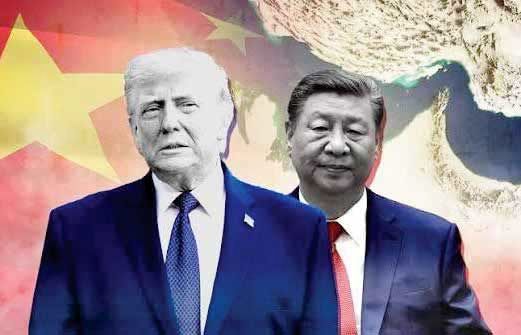
SCFR Online – Opinion: The competition in recent years between the United States and China encompasses various geographical regions—including the Indo-Pacific, West Asia, the Arctic and Antarctic, and Africa—as well as multiple domains such as economics and technology. Within this context, a strategic competition has also emerged in the Persian Gulf region across economic, technological, and military spheres.
Strategic Council Online – Interview: A European-issue researcher said that a three-year agreement was recently signed between Italy and China, and the Italian Prime Minister Giorgio Meloni said she is looking to restore relations with Beijing. Meloni promised to restart cooperation with China during his first visit to Beijing after coming to power. This is even though his government withdrew from China’s Belt and Road infrastructure investment plan last year. Therefore, the question is raised: what is Rome’s view on cooperation with Beijing, and why does it adopt this approach today?
Strategic Council Online—Interview: An expert on European issues said: The British Labor Party, led by Keir Starmer, won the election by winning an overwhelming majority of the seats in the House of Commons. On the other hand, the Conservative party, led by Rishi Sunak, has lost 170 seats and is on the way to its heaviest political defeat since the party was founded in the 19th century.
Strategic Council Online – Interview: An expert on European affairs said: The French foreign minister recently after two Zionist ministers demanded the settlement of the people of Gaza outside of this area, stated that “it’s not up to Israel to determine the future of Gaza, which is Palestinian land.”
Strategic Council online – Opinion: In its recent meeting in Germany, G-7 has introduced a new infra-structural plan which is considered, in a way, as a competitor to China’s One Belt – One Road initiative. The objective of the Partnership for Global Infrastructure and Investment (PGII) is to allocate $ 600 billion for global infrastructural projects in countries with low and medium-income within the next five years.
Alireza Samoudi, Expert on European Affairs
Strategic Council Online – Opinion: After the collapse of the Soviet Union, many in the West thought that the Russians were interested in joining the Western world and would become more like Europeans and Americans, but it soon became clear that centuries of Russian history has given shape to a distinct and unique understanding of the position of that country in the world. Moscow now considers its security zone not the borders of the Russian Federation, but the borders of the Soviet Union, and demands that the United States and Europe accept it.
Alireza Thamoudi -Expert on Europe Affairs
Strategic Council Online – Opinion: The European Union is currently facing an unprecedented rise in energy prices which could hamper economic recovery after the Coronavirus epidemic in the Union, limit household incomes, and even challenge the so-called green transition. A set of market, geographical and political components has created the current unfavorable conditions.
Alireza Thamoudi – Expert on European affairs
Strategic Council Online – Opinion: Although the European Union and India have stepped up their efforts to strengthen trade cooperation in recent months, prospects for economic cooperation between Brussels and Delhi remain unclear.
Alireza Thamoudi – Expert on Europe affairs
Strategic Council Online- Opinion: Joe Biden Administration policy to withdraw his forces from Afghanistan has once again bolded the issue of strategic autonomy of the European Union from the U.S. and setting up of the European army.
Alireza Samoodi, Expert on European Affairs
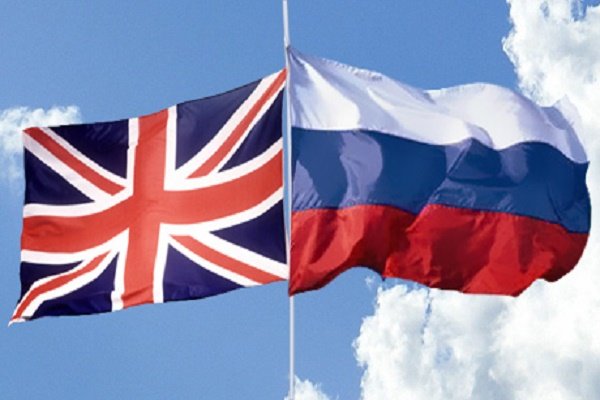
Strategic Council Online—Opinion: Russia’s refusal to extend the visa of a BBC journalist in recent years has caused new tension in the relations between Moscow and London.
Alireza Samoodi-Expert of European issues
SCFR Online – Opinion: On Friday, August 7, the heads of state of three countries – Saudi Arabia, Turkey, and Pakistan – signed a text under the title “Makkah Joint Defense Agreement.”
Strategic Council Online – Note: The initiative to revive the Hejaz Railway, beyond being a transportation project, constitutes an attempt to redefine geopolitics, the economy, and Turkey’s regional position; however, its realization appears to face significant financial, security, and institutional challenges.
SCFR Online – Opinion: The Strait of Hormuz crisis is no longer merely the consequence of a military confrontation, but rather a sign of the transition from the US-centered maritime order to a new energy security structure involving the participation of emerging and influential powers.
SCFR Online – Opinion: Iran’s active deterrence strategy, while increasing the costs of US intervention, has increasingly exposed the hidden rifts between Washington’s interests and those of the Israeli regime.
SCFR Online – Opinion: The escalation of verbal and strategic tensions between Turkey and the Israeli regime, although not increasing the likelihood of direct war, indicates the formation of a new order in West Asian geopolitical rivalries.
Strategic Council Online – Note: Recent developments in the political geography of West Asia, from rising tensions in the Persian Gulf to missile and drone activities in the Red Sea and the recent warning by Kaja Kallas, the European Union’s foreign policy chief, regarding the threat to freedom of navigation, indicate a key pattern shift; the US-Iran war has moved beyond the scope of a regional and local confrontation and has linked two vital passageways for the global economy: the Strait of Hormuz and the Bab el-Mandeb Strait.
SCFR Online – Opinion: The Ukraine war was not merely a European crisis, but rather the starting point for the rearrangement of the global balance of power and a shift in the strategic behavior of great powers.
SCFR Online – Opinion: Great power competition is now pursued more in trade, currency, technology, and global supply chains than on the battlefields of military confrontation.
SCFR Online – Opinion: The competition in recent years between the United States and China encompasses various geographical regions—including the Indo-Pacific, West Asia, the Arctic and Antarctic, and Africa—as well as multiple domains such as economics and technology. Within this context, a strategic competition has also emerged in the Persian Gulf region across economic, technological, and military spheres.
Strategic Council Online – Interview: A European-issue researcher said that a three-year agreement was recently signed between Italy and China, and the Italian Prime Minister Giorgio Meloni said she is looking to restore relations with Beijing. Meloni promised to restart cooperation with China during his first visit to Beijing after coming to power. This is even though his government withdrew from China’s Belt and Road infrastructure investment plan last year. Therefore, the question is raised: what is Rome’s view on cooperation with Beijing, and why does it adopt this approach today?
Strategic Council Online—Interview: An expert on European issues said: The British Labor Party, led by Keir Starmer, won the election by winning an overwhelming majority of the seats in the House of Commons. On the other hand, the Conservative party, led by Rishi Sunak, has lost 170 seats and is on the way to its heaviest political defeat since the party was founded in the 19th century.
Strategic Council Online – Interview: An expert on European affairs said: The French foreign minister recently after two Zionist ministers demanded the settlement of the people of Gaza outside of this area, stated that “it’s not up to Israel to determine the future of Gaza, which is Palestinian land.”
Strategic Council online – Opinion: In its recent meeting in Germany, G-7 has introduced a new infra-structural plan which is considered, in a way, as a competitor to China’s One Belt – One Road initiative. The objective of the Partnership for Global Infrastructure and Investment (PGII) is to allocate $ 600 billion for global infrastructural projects in countries with low and medium-income within the next five years.
Alireza Samoudi, Expert on European Affairs
Strategic Council Online – Opinion: After the collapse of the Soviet Union, many in the West thought that the Russians were interested in joining the Western world and would become more like Europeans and Americans, but it soon became clear that centuries of Russian history has given shape to a distinct and unique understanding of the position of that country in the world. Moscow now considers its security zone not the borders of the Russian Federation, but the borders of the Soviet Union, and demands that the United States and Europe accept it.
Alireza Thamoudi -Expert on Europe Affairs
Strategic Council Online – Opinion: The European Union is currently facing an unprecedented rise in energy prices which could hamper economic recovery after the Coronavirus epidemic in the Union, limit household incomes, and even challenge the so-called green transition. A set of market, geographical and political components has created the current unfavorable conditions.
Alireza Thamoudi – Expert on European affairs
Strategic Council Online – Opinion: Although the European Union and India have stepped up their efforts to strengthen trade cooperation in recent months, prospects for economic cooperation between Brussels and Delhi remain unclear.
Alireza Thamoudi – Expert on Europe affairs
Strategic Council Online- Opinion: Joe Biden Administration policy to withdraw his forces from Afghanistan has once again bolded the issue of strategic autonomy of the European Union from the U.S. and setting up of the European army.
Alireza Samoodi, Expert on European Affairs
Strategic Council Online—Opinion: Russia’s refusal to extend the visa of a BBC journalist in recent years has caused new tension in the relations between Moscow and London.
Alireza Samoodi-Expert of European issues
SCFR Online – Opinion: The competition in recent years between the United States and China encompasses various geographical regions—including the Indo-Pacific, West Asia, the Arctic and Antarctic, and Africa—as well as multiple domains such as economics and technology. Within this context, a strategic competition has also emerged in the Persian Gulf region across economic, technological, and military spheres.
Strategic Council Online – Interview: A European-issue researcher said that a three-year agreement was recently signed between Italy and China, and the Italian Prime Minister Giorgio Meloni said she is looking to restore relations with Beijing. Meloni promised to restart cooperation with China during his first visit to Beijing after coming to power. This is even though his government withdrew from China’s Belt and Road infrastructure investment plan last year. Therefore, the question is raised: what is Rome’s view on cooperation with Beijing, and why does it adopt this approach today?
Strategic Council Online—Interview: An expert on European issues said: The British Labor Party, led by Keir Starmer, won the election by winning an overwhelming majority of the seats in the House of Commons. On the other hand, the Conservative party, led by Rishi Sunak, has lost 170 seats and is on the way to its heaviest political defeat since the party was founded in the 19th century.
Strategic Council Online – Interview: An expert on European affairs said: The French foreign minister recently after two Zionist ministers demanded the settlement of the people of Gaza outside of this area, stated that “it’s not up to Israel to determine the future of Gaza, which is Palestinian land.”
Strategic Council online – Opinion: In its recent meeting in Germany, G-7 has introduced a new infra-structural plan which is considered, in a way, as a competitor to China’s One Belt – One Road initiative. The objective of the Partnership for Global Infrastructure and Investment (PGII) is to allocate $ 600 billion for global infrastructural projects in countries with low and medium-income within the next five years.
Alireza Samoudi, Expert on European Affairs
Strategic Council Online – Opinion: After the collapse of the Soviet Union, many in the West thought that the Russians were interested in joining the Western world and would become more like Europeans and Americans, but it soon became clear that centuries of Russian history has given shape to a distinct and unique understanding of the position of that country in the world. Moscow now considers its security zone not the borders of the Russian Federation, but the borders of the Soviet Union, and demands that the United States and Europe accept it.
Alireza Thamoudi -Expert on Europe Affairs
Strategic Council Online – Opinion: The European Union is currently facing an unprecedented rise in energy prices which could hamper economic recovery after the Coronavirus epidemic in the Union, limit household incomes, and even challenge the so-called green transition. A set of market, geographical and political components has created the current unfavorable conditions.
Alireza Thamoudi – Expert on European affairs
Strategic Council Online – Opinion: Although the European Union and India have stepped up their efforts to strengthen trade cooperation in recent months, prospects for economic cooperation between Brussels and Delhi remain unclear.
Alireza Thamoudi – Expert on Europe affairs
Strategic Council Online- Opinion: Joe Biden Administration policy to withdraw his forces from Afghanistan has once again bolded the issue of strategic autonomy of the European Union from the U.S. and setting up of the European army.
Alireza Samoodi, Expert on European Affairs
Strategic Council Online—Opinion: Russia’s refusal to extend the visa of a BBC journalist in recent years has caused new tension in the relations between Moscow and London.
Alireza Samoodi-Expert of European issues
SCFR Online – Opinion: On Friday, August 7, the heads of state of three countries – Saudi Arabia, Turkey, and Pakistan – signed a text under the title “Makkah Joint Defense Agreement.”
Strategic Council Online – Note: The initiative to revive the Hejaz Railway, beyond being a transportation project, constitutes an attempt to redefine geopolitics, the economy, and Turkey’s regional position; however, its realization appears to face significant financial, security, and institutional challenges.
SCFR Online – Opinion: The Strait of Hormuz crisis is no longer merely the consequence of a military confrontation, but rather a sign of the transition from the US-centered maritime order to a new energy security structure involving the participation of emerging and influential powers.
SCFR Online – Opinion: Iran’s active deterrence strategy, while increasing the costs of US intervention, has increasingly exposed the hidden rifts between Washington’s interests and those of the Israeli regime.
SCFR Online – Opinion: The escalation of verbal and strategic tensions between Turkey and the Israeli regime, although not increasing the likelihood of direct war, indicates the formation of a new order in West Asian geopolitical rivalries.
Strategic Council Online – Note: Recent developments in the political geography of West Asia, from rising tensions in the Persian Gulf to missile and drone activities in the Red Sea and the recent warning by Kaja Kallas, the European Union’s foreign policy chief, regarding the threat to freedom of navigation, indicate a key pattern shift; the US-Iran war has moved beyond the scope of a regional and local confrontation and has linked two vital passageways for the global economy: the Strait of Hormuz and the Bab el-Mandeb Strait.
SCFR Online – Opinion: The Ukraine war was not merely a European crisis, but rather the starting point for the rearrangement of the global balance of power and a shift in the strategic behavior of great powers.
SCFR Online – Opinion: Great power competition is now pursued more in trade, currency, technology, and global supply chains than on the battlefields of military confrontation.
SCFR Online – Opinion: The competition in recent years between the United States and China encompasses various geographical regions—including the Indo-Pacific, West Asia, the Arctic and Antarctic, and Africa—as well as multiple domains such as economics and technology. Within this context, a strategic competition has also emerged in the Persian Gulf region across economic, technological, and military spheres.
Strategic Council Online – Interview: A European-issue researcher said that a three-year agreement was recently signed between Italy and China, and the Italian Prime Minister Giorgio Meloni said she is looking to restore relations with Beijing. Meloni promised to restart cooperation with China during his first visit to Beijing after coming to power. This is even though his government withdrew from China’s Belt and Road infrastructure investment plan last year. Therefore, the question is raised: what is Rome’s view on cooperation with Beijing, and why does it adopt this approach today?
Strategic Council Online—Interview: An expert on European issues said: The British Labor Party, led by Keir Starmer, won the election by winning an overwhelming majority of the seats in the House of Commons. On the other hand, the Conservative party, led by Rishi Sunak, has lost 170 seats and is on the way to its heaviest political defeat since the party was founded in the 19th century.
Strategic Council Online – Interview: An expert on European affairs said: The French foreign minister recently after two Zionist ministers demanded the settlement of the people of Gaza outside of this area, stated that “it’s not up to Israel to determine the future of Gaza, which is Palestinian land.”
Strategic Council online – Opinion: In its recent meeting in Germany, G-7 has introduced a new infra-structural plan which is considered, in a way, as a competitor to China’s One Belt – One Road initiative. The objective of the Partnership for Global Infrastructure and Investment (PGII) is to allocate $ 600 billion for global infrastructural projects in countries with low and medium-income within the next five years.
Alireza Samoudi, Expert on European Affairs
Strategic Council Online – Opinion: After the collapse of the Soviet Union, many in the West thought that the Russians were interested in joining the Western world and would become more like Europeans and Americans, but it soon became clear that centuries of Russian history has given shape to a distinct and unique understanding of the position of that country in the world. Moscow now considers its security zone not the borders of the Russian Federation, but the borders of the Soviet Union, and demands that the United States and Europe accept it.
Alireza Thamoudi -Expert on Europe Affairs
Strategic Council Online – Opinion: The European Union is currently facing an unprecedented rise in energy prices which could hamper economic recovery after the Coronavirus epidemic in the Union, limit household incomes, and even challenge the so-called green transition. A set of market, geographical and political components has created the current unfavorable conditions.
Alireza Thamoudi – Expert on European affairs
Strategic Council Online – Opinion: Although the European Union and India have stepped up their efforts to strengthen trade cooperation in recent months, prospects for economic cooperation between Brussels and Delhi remain unclear.
Alireza Thamoudi – Expert on Europe affairs
Strategic Council Online- Opinion: Joe Biden Administration policy to withdraw his forces from Afghanistan has once again bolded the issue of strategic autonomy of the European Union from the U.S. and setting up of the European army.
Alireza Samoodi, Expert on European Affairs
Strategic Council Online—Opinion: Russia’s refusal to extend the visa of a BBC journalist in recent years has caused new tension in the relations between Moscow and London.
Alireza Samoodi-Expert of European issues
SCFR Online – Opinion: On Friday, August 7, the heads of state of three countries – Saudi Arabia, Turkey, and Pakistan – signed a text under the title “Makkah Joint Defense Agreement.”
Strategic Council Online – Note: The initiative to revive the Hejaz Railway, beyond being a transportation project, constitutes an attempt to redefine geopolitics, the economy, and Turkey’s regional position; however, its realization appears to face significant financial, security, and institutional challenges.
SCFR Online – Opinion: The Strait of Hormuz crisis is no longer merely the consequence of a military confrontation, but rather a sign of the transition from the US-centered maritime order to a new energy security structure involving the participation of emerging and influential powers.
SCFR Online – Opinion: Iran’s active deterrence strategy, while increasing the costs of US intervention, has increasingly exposed the hidden rifts between Washington’s interests and those of the Israeli regime.
SCFR Online – Opinion: The escalation of verbal and strategic tensions between Turkey and the Israeli regime, although not increasing the likelihood of direct war, indicates the formation of a new order in West Asian geopolitical rivalries.
Strategic Council Online – Note: Recent developments in the political geography of West Asia, from rising tensions in the Persian Gulf to missile and drone activities in the Red Sea and the recent warning by Kaja Kallas, the European Union’s foreign policy chief, regarding the threat to freedom of navigation, indicate a key pattern shift; the US-Iran war has moved beyond the scope of a regional and local confrontation and has linked two vital passageways for the global economy: the Strait of Hormuz and the Bab el-Mandeb Strait.
SCFR Online – Opinion: The Ukraine war was not merely a European crisis, but rather the starting point for the rearrangement of the global balance of power and a shift in the strategic behavior of great powers.
SCFR Online – Opinion: Great power competition is now pursued more in trade, currency, technology, and global supply chains than on the battlefields of military confrontation.
SCFR Online – Opinion: The competition in recent years between the United States and China encompasses various geographical regions—including the Indo-Pacific, West Asia, the Arctic and Antarctic, and Africa—as well as multiple domains such as economics and technology. Within this context, a strategic competition has also emerged in the Persian Gulf region across economic, technological, and military spheres.
Strategic Council Online – Interview: A European-issue researcher said that a three-year agreement was recently signed between Italy and China, and the Italian Prime Minister Giorgio Meloni said she is looking to restore relations with Beijing. Meloni promised to restart cooperation with China during his first visit to Beijing after coming to power. This is even though his government withdrew from China’s Belt and Road infrastructure investment plan last year. Therefore, the question is raised: what is Rome’s view on cooperation with Beijing, and why does it adopt this approach today?
Strategic Council Online—Interview: An expert on European issues said: The British Labor Party, led by Keir Starmer, won the election by winning an overwhelming majority of the seats in the House of Commons. On the other hand, the Conservative party, led by Rishi Sunak, has lost 170 seats and is on the way to its heaviest political defeat since the party was founded in the 19th century.
Strategic Council Online – Interview: An expert on European affairs said: The French foreign minister recently after two Zionist ministers demanded the settlement of the people of Gaza outside of this area, stated that “it’s not up to Israel to determine the future of Gaza, which is Palestinian land.”
Strategic Council online – Opinion: In its recent meeting in Germany, G-7 has introduced a new infra-structural plan which is considered, in a way, as a competitor to China’s One Belt – One Road initiative. The objective of the Partnership for Global Infrastructure and Investment (PGII) is to allocate $ 600 billion for global infrastructural projects in countries with low and medium-income within the next five years.
Alireza Samoudi, Expert on European Affairs
Strategic Council Online – Opinion: After the collapse of the Soviet Union, many in the West thought that the Russians were interested in joining the Western world and would become more like Europeans and Americans, but it soon became clear that centuries of Russian history has given shape to a distinct and unique understanding of the position of that country in the world. Moscow now considers its security zone not the borders of the Russian Federation, but the borders of the Soviet Union, and demands that the United States and Europe accept it.
Alireza Thamoudi -Expert on Europe Affairs
Strategic Council Online – Opinion: The European Union is currently facing an unprecedented rise in energy prices which could hamper economic recovery after the Coronavirus epidemic in the Union, limit household incomes, and even challenge the so-called green transition. A set of market, geographical and political components has created the current unfavorable conditions.
Alireza Thamoudi – Expert on European affairs
Strategic Council Online – Opinion: Although the European Union and India have stepped up their efforts to strengthen trade cooperation in recent months, prospects for economic cooperation between Brussels and Delhi remain unclear.
Alireza Thamoudi – Expert on Europe affairs
Strategic Council Online- Opinion: Joe Biden Administration policy to withdraw his forces from Afghanistan has once again bolded the issue of strategic autonomy of the European Union from the U.S. and setting up of the European army.
Alireza Samoodi, Expert on European Affairs
Strategic Council Online—Opinion: Russia’s refusal to extend the visa of a BBC journalist in recent years has caused new tension in the relations between Moscow and London.
Alireza Samoodi-Expert of European issues
SCFR Online – Opinion: On Friday, August 7, the heads of state of three countries – Saudi Arabia, Turkey, and Pakistan – signed a text under the title “Makkah Joint Defense Agreement.”
Strategic Council Online – Note: The initiative to revive the Hejaz Railway, beyond being a transportation project, constitutes an attempt to redefine geopolitics, the economy, and Turkey’s regional position; however, its realization appears to face significant financial, security, and institutional challenges.
SCFR Online – Opinion: The Strait of Hormuz crisis is no longer merely the consequence of a military confrontation, but rather a sign of the transition from the US-centered maritime order to a new energy security structure involving the participation of emerging and influential powers.
SCFR Online – Opinion: Iran’s active deterrence strategy, while increasing the costs of US intervention, has increasingly exposed the hidden rifts between Washington’s interests and those of the Israeli regime.
SCFR Online – Opinion: The escalation of verbal and strategic tensions between Turkey and the Israeli regime, although not increasing the likelihood of direct war, indicates the formation of a new order in West Asian geopolitical rivalries.
Strategic Council Online – Note: Recent developments in the political geography of West Asia, from rising tensions in the Persian Gulf to missile and drone activities in the Red Sea and the recent warning by Kaja Kallas, the European Union’s foreign policy chief, regarding the threat to freedom of navigation, indicate a key pattern shift; the US-Iran war has moved beyond the scope of a regional and local confrontation and has linked two vital passageways for the global economy: the Strait of Hormuz and the Bab el-Mandeb Strait.
SCFR Online – Opinion: The Ukraine war was not merely a European crisis, but rather the starting point for the rearrangement of the global balance of power and a shift in the strategic behavior of great powers.
SCFR Online – Opinion: Great power competition is now pursued more in trade, currency, technology, and global supply chains than on the battlefields of military confrontation.
SCFR Online – Opinion: The competition in recent years between the United States and China encompasses various geographical regions—including the Indo-Pacific, West Asia, the Arctic and Antarctic, and Africa—as well as multiple domains such as economics and technology. Within this context, a strategic competition has also emerged in the Persian Gulf region across economic, technological, and military spheres.
Strategic Council Online – Interview: A European-issue researcher said that a three-year agreement was recently signed between Italy and China, and the Italian Prime Minister Giorgio Meloni said she is looking to restore relations with Beijing. Meloni promised to restart cooperation with China during his first visit to Beijing after coming to power. This is even though his government withdrew from China’s Belt and Road infrastructure investment plan last year. Therefore, the question is raised: what is Rome’s view on cooperation with Beijing, and why does it adopt this approach today?
Strategic Council Online—Interview: An expert on European issues said: The British Labor Party, led by Keir Starmer, won the election by winning an overwhelming majority of the seats in the House of Commons. On the other hand, the Conservative party, led by Rishi Sunak, has lost 170 seats and is on the way to its heaviest political defeat since the party was founded in the 19th century.
Strategic Council Online – Interview: An expert on European affairs said: The French foreign minister recently after two Zionist ministers demanded the settlement of the people of Gaza outside of this area, stated that “it’s not up to Israel to determine the future of Gaza, which is Palestinian land.”
Strategic Council online – Opinion: In its recent meeting in Germany, G-7 has introduced a new infra-structural plan which is considered, in a way, as a competitor to China’s One Belt – One Road initiative. The objective of the Partnership for Global Infrastructure and Investment (PGII) is to allocate $ 600 billion for global infrastructural projects in countries with low and medium-income within the next five years.
Alireza Samoudi, Expert on European Affairs
Strategic Council Online – Opinion: After the collapse of the Soviet Union, many in the West thought that the Russians were interested in joining the Western world and would become more like Europeans and Americans, but it soon became clear that centuries of Russian history has given shape to a distinct and unique understanding of the position of that country in the world. Moscow now considers its security zone not the borders of the Russian Federation, but the borders of the Soviet Union, and demands that the United States and Europe accept it.
Alireza Thamoudi -Expert on Europe Affairs
Strategic Council Online – Opinion: The European Union is currently facing an unprecedented rise in energy prices which could hamper economic recovery after the Coronavirus epidemic in the Union, limit household incomes, and even challenge the so-called green transition. A set of market, geographical and political components has created the current unfavorable conditions.
Alireza Thamoudi – Expert on European affairs
Strategic Council Online – Opinion: Although the European Union and India have stepped up their efforts to strengthen trade cooperation in recent months, prospects for economic cooperation between Brussels and Delhi remain unclear.
Alireza Thamoudi – Expert on Europe affairs
Strategic Council Online- Opinion: Joe Biden Administration policy to withdraw his forces from Afghanistan has once again bolded the issue of strategic autonomy of the European Union from the U.S. and setting up of the European army.
Alireza Samoodi, Expert on European Affairs
Strategic Council Online—Opinion: Russia’s refusal to extend the visa of a BBC journalist in recent years has caused new tension in the relations between Moscow and London.
Alireza Samoodi-Expert of European issues
SCFR Online – Opinion: On Friday, August 7, the heads of state of three countries – Saudi Arabia, Turkey, and Pakistan – signed a text under the title “Makkah Joint Defense Agreement.”
Strategic Council Online – Note: The initiative to revive the Hejaz Railway, beyond being a transportation project, constitutes an attempt to redefine geopolitics, the economy, and Turkey’s regional position; however, its realization appears to face significant financial, security, and institutional challenges.
SCFR Online – Opinion: The Strait of Hormuz crisis is no longer merely the consequence of a military confrontation, but rather a sign of the transition from the US-centered maritime order to a new energy security structure involving the participation of emerging and influential powers.
SCFR Online – Opinion: Iran’s active deterrence strategy, while increasing the costs of US intervention, has increasingly exposed the hidden rifts between Washington’s interests and those of the Israeli regime.
SCFR Online – Opinion: The escalation of verbal and strategic tensions between Turkey and the Israeli regime, although not increasing the likelihood of direct war, indicates the formation of a new order in West Asian geopolitical rivalries.
Strategic Council Online – Note: Recent developments in the political geography of West Asia, from rising tensions in the Persian Gulf to missile and drone activities in the Red Sea and the recent warning by Kaja Kallas, the European Union’s foreign policy chief, regarding the threat to freedom of navigation, indicate a key pattern shift; the US-Iran war has moved beyond the scope of a regional and local confrontation and has linked two vital passageways for the global economy: the Strait of Hormuz and the Bab el-Mandeb Strait.
SCFR Online – Opinion: The Ukraine war was not merely a European crisis, but rather the starting point for the rearrangement of the global balance of power and a shift in the strategic behavior of great powers.
SCFR Online – Opinion: Great power competition is now pursued more in trade, currency, technology, and global supply chains than on the battlefields of military confrontation.
SCFR Online – Opinion: The competition in recent years between the United States and China encompasses various geographical regions—including the Indo-Pacific, West Asia, the Arctic and Antarctic, and Africa—as well as multiple domains such as economics and technology. Within this context, a strategic competition has also emerged in the Persian Gulf region across economic, technological, and military spheres.
Strategic Council Online – Interview: A European-issue researcher said that a three-year agreement was recently signed between Italy and China, and the Italian Prime Minister Giorgio Meloni said she is looking to restore relations with Beijing. Meloni promised to restart cooperation with China during his first visit to Beijing after coming to power. This is even though his government withdrew from China’s Belt and Road infrastructure investment plan last year. Therefore, the question is raised: what is Rome’s view on cooperation with Beijing, and why does it adopt this approach today?
Strategic Council Online—Interview: An expert on European issues said: The British Labor Party, led by Keir Starmer, won the election by winning an overwhelming majority of the seats in the House of Commons. On the other hand, the Conservative party, led by Rishi Sunak, has lost 170 seats and is on the way to its heaviest political defeat since the party was founded in the 19th century.
Strategic Council Online – Interview: An expert on European affairs said: The French foreign minister recently after two Zionist ministers demanded the settlement of the people of Gaza outside of this area, stated that “it’s not up to Israel to determine the future of Gaza, which is Palestinian land.”
Strategic Council online – Opinion: In its recent meeting in Germany, G-7 has introduced a new infra-structural plan which is considered, in a way, as a competitor to China’s One Belt – One Road initiative. The objective of the Partnership for Global Infrastructure and Investment (PGII) is to allocate $ 600 billion for global infrastructural projects in countries with low and medium-income within the next five years.
Alireza Samoudi, Expert on European Affairs
Strategic Council Online – Opinion: After the collapse of the Soviet Union, many in the West thought that the Russians were interested in joining the Western world and would become more like Europeans and Americans, but it soon became clear that centuries of Russian history has given shape to a distinct and unique understanding of the position of that country in the world. Moscow now considers its security zone not the borders of the Russian Federation, but the borders of the Soviet Union, and demands that the United States and Europe accept it.
Alireza Thamoudi -Expert on Europe Affairs
Strategic Council Online – Opinion: The European Union is currently facing an unprecedented rise in energy prices which could hamper economic recovery after the Coronavirus epidemic in the Union, limit household incomes, and even challenge the so-called green transition. A set of market, geographical and political components has created the current unfavorable conditions.
Alireza Thamoudi – Expert on European affairs
Strategic Council Online – Opinion: Although the European Union and India have stepped up their efforts to strengthen trade cooperation in recent months, prospects for economic cooperation between Brussels and Delhi remain unclear.
Alireza Thamoudi – Expert on Europe affairs
Strategic Council Online- Opinion: Joe Biden Administration policy to withdraw his forces from Afghanistan has once again bolded the issue of strategic autonomy of the European Union from the U.S. and setting up of the European army.
Alireza Samoodi, Expert on European Affairs
Strategic Council Online—Opinion: Russia’s refusal to extend the visa of a BBC journalist in recent years has caused new tension in the relations between Moscow and London.
Alireza Samoodi-Expert of European issues
SCFR Online – Opinion: On Friday, August 7, the heads of state of three countries – Saudi Arabia, Turkey, and Pakistan – signed a text under the title “Makkah Joint Defense Agreement.”
Strategic Council Online – Note: The initiative to revive the Hejaz Railway, beyond being a transportation project, constitutes an attempt to redefine geopolitics, the economy, and Turkey’s regional position; however, its realization appears to face significant financial, security, and institutional challenges.
SCFR Online – Opinion: The Strait of Hormuz crisis is no longer merely the consequence of a military confrontation, but rather a sign of the transition from the US-centered maritime order to a new energy security structure involving the participation of emerging and influential powers.
SCFR Online – Opinion: Iran’s active deterrence strategy, while increasing the costs of US intervention, has increasingly exposed the hidden rifts between Washington’s interests and those of the Israeli regime.
SCFR Online – Opinion: The escalation of verbal and strategic tensions between Turkey and the Israeli regime, although not increasing the likelihood of direct war, indicates the formation of a new order in West Asian geopolitical rivalries.
Strategic Council Online – Note: Recent developments in the political geography of West Asia, from rising tensions in the Persian Gulf to missile and drone activities in the Red Sea and the recent warning by Kaja Kallas, the European Union’s foreign policy chief, regarding the threat to freedom of navigation, indicate a key pattern shift; the US-Iran war has moved beyond the scope of a regional and local confrontation and has linked two vital passageways for the global economy: the Strait of Hormuz and the Bab el-Mandeb Strait.
SCFR Online – Opinion: The Ukraine war was not merely a European crisis, but rather the starting point for the rearrangement of the global balance of power and a shift in the strategic behavior of great powers.
SCFR Online – Opinion: Great power competition is now pursued more in trade, currency, technology, and global supply chains than on the battlefields of military confrontation.