An Analysis of the Makkah Defense Pact
SCFR Online – Opinion: On Friday, August 7, the heads of state of three countries – Saudi Arabia, Turkey, and Pakistan – signed a text under the title “Makkah Joint Defense Agreement.”
Strategic Council Online – Note: The initiative to revive the Hejaz Railway, beyond being a transportation project, constitutes an attempt to redefine geopolitics, the economy, and Turkey’s regional position; however, its realization appears to face significant financial, security, and institutional challenges.
SCFR Online – Opinion: The Strait of Hormuz crisis is no longer merely the consequence of a military confrontation, but rather a sign of the transition from the US-centered maritime order to a new energy security structure involving the participation of emerging and influential powers.
SCFR Online – Opinion: Iran’s active deterrence strategy, while increasing the costs of US intervention, has increasingly exposed the hidden rifts between Washington’s interests and those of the Israeli regime.
SCFR Online – Opinion: The escalation of verbal and strategic tensions between Turkey and the Israeli regime, although not increasing the likelihood of direct war, indicates the formation of a new order in West Asian geopolitical rivalries.
Strategic Council Online – Note: Recent developments in the political geography of West Asia, from rising tensions in the Persian Gulf to missile and drone activities in the Red Sea and the recent warning by Kaja Kallas, the European Union’s foreign policy chief, regarding the threat to freedom of navigation, indicate a key pattern shift; the US-Iran war has moved beyond the scope of a regional and local confrontation and has linked two vital passageways for the global economy: the Strait of Hormuz and the Bab el-Mandeb Strait.
SCFR Online – Opinion: The Ukraine war was not merely a European crisis, but rather the starting point for the rearrangement of the global balance of power and a shift in the strategic behavior of great powers.
SCFR Online – Opinion: Great power competition is now pursued more in trade, currency, technology, and global supply chains than on the battlefields of military confrontation.
Strategic Council Online– Opinion: Netanyahu, the Prime Minister of the Zionist regime, in an interview with the i24 network, while receiving the “Promised Land” talisman from Sharon Gal, a former representative of the right-wing faction, said he is very attached to the ideal of “Greater Israel.” In this interview, he emphasized that he sees himself on a historical and spiritual mission that includes generations of Jews who dreamed of coming here and generations of Jews who will come after us.
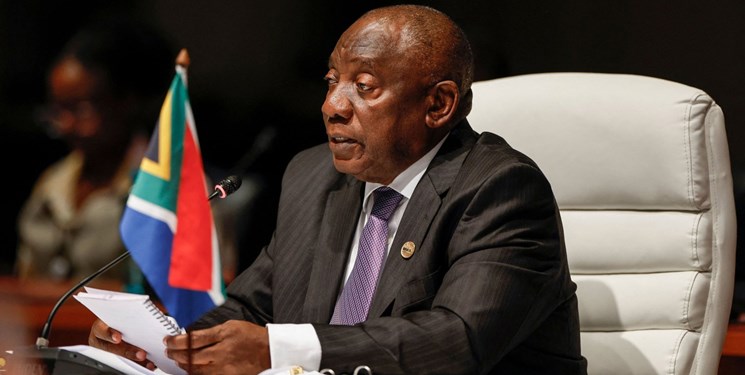
Strategic Council Online – Interview: An international lawyer said: South Africa’s success in filing a lawsuit against the Zionist regime in the International Court of Justice is capable of immediate destruction of the image of that regime, the tool to maintain it, justification of the crimes of the regime, the main lever of its lobbies, achievements of its propaganda and psychological warfare, its “security building” capacity and the political future of its statesmen.
Strategic Council Online – Opinion: The disclosure of the news on the meeting of the Libyan foreign minister with her Israeli counterpart has sparked a wave of protests in various Libyan cities, including Misrata, Al-Zantan, and Tripoli.
Barsam Mohammadi – Expert on regional affairs
Strategic Council Online – Interview: An expert on Syrian affairs, saying that a major part of the decision to normalize relations between Arab countries and Syria goes back to their competition with Iran and Turkey, noted: The Axis of Resistance should activate economic mechanisms in the region and in Syria; otherwise it will face a reduction in influence and will be severely caught by surprise.
Strategic Council Online—Interview: An analyst of West Asian affairs said that the Tehran summit and the Idlib issue would be two important agendas for the Astana summit, adding that if countries move to revive relations with Syria and with the return of Syria to the Arab world, economic and political pressures are reduced, political realities and the realities on the ground will force the occupiers of Syria to admit realities.
Strategic Council Online – Opinion: Contacts and talks of high-ranking officials of some Arab countries with the Syrian government have increased in recent weeks. The tendency of Arab countries to resume diplomatic relations with Damascus is one of the important “milestones” in the political developments in Syria, which can provide valuable opportunities for that country to strengthen its international position “rebuild” and rehabilitate its economy and foreign trade.
Hamid Khoshayand – Researcher on regional affairs
Strategic Council Online—Interview: A professor of the College of Law and Political Sciences of the University of Tehran says the presence of the US in Syria has not been taken place with the request of the Syrian government and does not aim at providing aid for the people of Syria but it is a bullying presence which is in violation of the Charter of the United Nations and the international law.
Strategic Council Online – An expert on West Asia affairs said that the Zionist regime has been pursuing military and security goals in the Persian Gulf since the day it normalized relations with the UAE, Bahrain and Sudan, adding: The regime wants to be part of the region but public opinion in the region opposes it and does not accept it.
Strategic Council Online—Interview: An expert of West Asia affairs referred to the 12-day war of the Zionist army against the people of Gaza and said even though the war on Gaza finished with the victory of the Palestinian resistance, many financial damages were inflicted on the infrastructure of this region.
Strategic Council Online – In recent weeks, clear signs are emerging for the gradual change in Saudi Arabia’s foreign policy approach to Syria. There are several reports indicating that bin Salman is seeking to “open diplomatic channels” with Syria. In recent weeks, secret meetings between Saudi and Syrian officials have taken place in Damascus, which have been unprecedented since 2011.
Barsam Mohammadi – analyst of international affairs
SCFR Online – Opinion: On Friday, August 7, the heads of state of three countries – Saudi Arabia, Turkey, and Pakistan – signed a text under the title “Makkah Joint Defense Agreement.”
Strategic Council Online – Note: The initiative to revive the Hejaz Railway, beyond being a transportation project, constitutes an attempt to redefine geopolitics, the economy, and Turkey’s regional position; however, its realization appears to face significant financial, security, and institutional challenges.
SCFR Online – Opinion: The Strait of Hormuz crisis is no longer merely the consequence of a military confrontation, but rather a sign of the transition from the US-centered maritime order to a new energy security structure involving the participation of emerging and influential powers.
SCFR Online – Opinion: Iran’s active deterrence strategy, while increasing the costs of US intervention, has increasingly exposed the hidden rifts between Washington’s interests and those of the Israeli regime.
SCFR Online – Opinion: The escalation of verbal and strategic tensions between Turkey and the Israeli regime, although not increasing the likelihood of direct war, indicates the formation of a new order in West Asian geopolitical rivalries.
Strategic Council Online – Note: Recent developments in the political geography of West Asia, from rising tensions in the Persian Gulf to missile and drone activities in the Red Sea and the recent warning by Kaja Kallas, the European Union’s foreign policy chief, regarding the threat to freedom of navigation, indicate a key pattern shift; the US-Iran war has moved beyond the scope of a regional and local confrontation and has linked two vital passageways for the global economy: the Strait of Hormuz and the Bab el-Mandeb Strait.
SCFR Online – Opinion: The Ukraine war was not merely a European crisis, but rather the starting point for the rearrangement of the global balance of power and a shift in the strategic behavior of great powers.
SCFR Online – Opinion: Great power competition is now pursued more in trade, currency, technology, and global supply chains than on the battlefields of military confrontation.
Strategic Council Online– Opinion: Netanyahu, the Prime Minister of the Zionist regime, in an interview with the i24 network, while receiving the “Promised Land” talisman from Sharon Gal, a former representative of the right-wing faction, said he is very attached to the ideal of “Greater Israel.” In this interview, he emphasized that he sees himself on a historical and spiritual mission that includes generations of Jews who dreamed of coming here and generations of Jews who will come after us.
Strategic Council Online – Interview: An international lawyer said: South Africa’s success in filing a lawsuit against the Zionist regime in the International Court of Justice is capable of immediate destruction of the image of that regime, the tool to maintain it, justification of the crimes of the regime, the main lever of its lobbies, achievements of its propaganda and psychological warfare, its “security building” capacity and the political future of its statesmen.
Strategic Council Online – Opinion: The disclosure of the news on the meeting of the Libyan foreign minister with her Israeli counterpart has sparked a wave of protests in various Libyan cities, including Misrata, Al-Zantan, and Tripoli.
Barsam Mohammadi – Expert on regional affairs
Strategic Council Online – Interview: An expert on Syrian affairs, saying that a major part of the decision to normalize relations between Arab countries and Syria goes back to their competition with Iran and Turkey, noted: The Axis of Resistance should activate economic mechanisms in the region and in Syria; otherwise it will face a reduction in influence and will be severely caught by surprise.
Strategic Council Online—Interview: An analyst of West Asian affairs said that the Tehran summit and the Idlib issue would be two important agendas for the Astana summit, adding that if countries move to revive relations with Syria and with the return of Syria to the Arab world, economic and political pressures are reduced, political realities and the realities on the ground will force the occupiers of Syria to admit realities.
Strategic Council Online – Opinion: Contacts and talks of high-ranking officials of some Arab countries with the Syrian government have increased in recent weeks. The tendency of Arab countries to resume diplomatic relations with Damascus is one of the important “milestones” in the political developments in Syria, which can provide valuable opportunities for that country to strengthen its international position “rebuild” and rehabilitate its economy and foreign trade.
Hamid Khoshayand – Researcher on regional affairs
Strategic Council Online—Interview: A professor of the College of Law and Political Sciences of the University of Tehran says the presence of the US in Syria has not been taken place with the request of the Syrian government and does not aim at providing aid for the people of Syria but it is a bullying presence which is in violation of the Charter of the United Nations and the international law.
Strategic Council Online – An expert on West Asia affairs said that the Zionist regime has been pursuing military and security goals in the Persian Gulf since the day it normalized relations with the UAE, Bahrain and Sudan, adding: The regime wants to be part of the region but public opinion in the region opposes it and does not accept it.
Strategic Council Online—Interview: An expert of West Asia affairs referred to the 12-day war of the Zionist army against the people of Gaza and said even though the war on Gaza finished with the victory of the Palestinian resistance, many financial damages were inflicted on the infrastructure of this region.
Strategic Council Online – In recent weeks, clear signs are emerging for the gradual change in Saudi Arabia’s foreign policy approach to Syria. There are several reports indicating that bin Salman is seeking to “open diplomatic channels” with Syria. In recent weeks, secret meetings between Saudi and Syrian officials have taken place in Damascus, which have been unprecedented since 2011.
Barsam Mohammadi – analyst of international affairs
Strategic Council Online– Opinion: Netanyahu, the Prime Minister of the Zionist regime, in an interview with the i24 network, while receiving the “Promised Land” talisman from Sharon Gal, a former representative of the right-wing faction, said he is very attached to the ideal of “Greater Israel.” In this interview, he emphasized that he sees himself on a historical and spiritual mission that includes generations of Jews who dreamed of coming here and generations of Jews who will come after us.
Strategic Council Online – Interview: An international lawyer said: South Africa’s success in filing a lawsuit against the Zionist regime in the International Court of Justice is capable of immediate destruction of the image of that regime, the tool to maintain it, justification of the crimes of the regime, the main lever of its lobbies, achievements of its propaganda and psychological warfare, its “security building” capacity and the political future of its statesmen.
Strategic Council Online – Opinion: The disclosure of the news on the meeting of the Libyan foreign minister with her Israeli counterpart has sparked a wave of protests in various Libyan cities, including Misrata, Al-Zantan, and Tripoli.
Barsam Mohammadi – Expert on regional affairs
Strategic Council Online – Interview: An expert on Syrian affairs, saying that a major part of the decision to normalize relations between Arab countries and Syria goes back to their competition with Iran and Turkey, noted: The Axis of Resistance should activate economic mechanisms in the region and in Syria; otherwise it will face a reduction in influence and will be severely caught by surprise.
Strategic Council Online—Interview: An analyst of West Asian affairs said that the Tehran summit and the Idlib issue would be two important agendas for the Astana summit, adding that if countries move to revive relations with Syria and with the return of Syria to the Arab world, economic and political pressures are reduced, political realities and the realities on the ground will force the occupiers of Syria to admit realities.
Strategic Council Online – Opinion: Contacts and talks of high-ranking officials of some Arab countries with the Syrian government have increased in recent weeks. The tendency of Arab countries to resume diplomatic relations with Damascus is one of the important “milestones” in the political developments in Syria, which can provide valuable opportunities for that country to strengthen its international position “rebuild” and rehabilitate its economy and foreign trade.
Hamid Khoshayand – Researcher on regional affairs
Strategic Council Online—Interview: A professor of the College of Law and Political Sciences of the University of Tehran says the presence of the US in Syria has not been taken place with the request of the Syrian government and does not aim at providing aid for the people of Syria but it is a bullying presence which is in violation of the Charter of the United Nations and the international law.
Strategic Council Online – An expert on West Asia affairs said that the Zionist regime has been pursuing military and security goals in the Persian Gulf since the day it normalized relations with the UAE, Bahrain and Sudan, adding: The regime wants to be part of the region but public opinion in the region opposes it and does not accept it.
Strategic Council Online—Interview: An expert of West Asia affairs referred to the 12-day war of the Zionist army against the people of Gaza and said even though the war on Gaza finished with the victory of the Palestinian resistance, many financial damages were inflicted on the infrastructure of this region.
Strategic Council Online – In recent weeks, clear signs are emerging for the gradual change in Saudi Arabia’s foreign policy approach to Syria. There are several reports indicating that bin Salman is seeking to “open diplomatic channels” with Syria. In recent weeks, secret meetings between Saudi and Syrian officials have taken place in Damascus, which have been unprecedented since 2011.
Barsam Mohammadi – analyst of international affairs
SCFR Online – Opinion: On Friday, August 7, the heads of state of three countries – Saudi Arabia, Turkey, and Pakistan – signed a text under the title “Makkah Joint Defense Agreement.”
Strategic Council Online – Note: The initiative to revive the Hejaz Railway, beyond being a transportation project, constitutes an attempt to redefine geopolitics, the economy, and Turkey’s regional position; however, its realization appears to face significant financial, security, and institutional challenges.
SCFR Online – Opinion: The Strait of Hormuz crisis is no longer merely the consequence of a military confrontation, but rather a sign of the transition from the US-centered maritime order to a new energy security structure involving the participation of emerging and influential powers.
SCFR Online – Opinion: Iran’s active deterrence strategy, while increasing the costs of US intervention, has increasingly exposed the hidden rifts between Washington’s interests and those of the Israeli regime.
SCFR Online – Opinion: The escalation of verbal and strategic tensions between Turkey and the Israeli regime, although not increasing the likelihood of direct war, indicates the formation of a new order in West Asian geopolitical rivalries.
Strategic Council Online – Note: Recent developments in the political geography of West Asia, from rising tensions in the Persian Gulf to missile and drone activities in the Red Sea and the recent warning by Kaja Kallas, the European Union’s foreign policy chief, regarding the threat to freedom of navigation, indicate a key pattern shift; the US-Iran war has moved beyond the scope of a regional and local confrontation and has linked two vital passageways for the global economy: the Strait of Hormuz and the Bab el-Mandeb Strait.
SCFR Online – Opinion: The Ukraine war was not merely a European crisis, but rather the starting point for the rearrangement of the global balance of power and a shift in the strategic behavior of great powers.
SCFR Online – Opinion: Great power competition is now pursued more in trade, currency, technology, and global supply chains than on the battlefields of military confrontation.
Strategic Council Online– Opinion: Netanyahu, the Prime Minister of the Zionist regime, in an interview with the i24 network, while receiving the “Promised Land” talisman from Sharon Gal, a former representative of the right-wing faction, said he is very attached to the ideal of “Greater Israel.” In this interview, he emphasized that he sees himself on a historical and spiritual mission that includes generations of Jews who dreamed of coming here and generations of Jews who will come after us.
Strategic Council Online – Interview: An international lawyer said: South Africa’s success in filing a lawsuit against the Zionist regime in the International Court of Justice is capable of immediate destruction of the image of that regime, the tool to maintain it, justification of the crimes of the regime, the main lever of its lobbies, achievements of its propaganda and psychological warfare, its “security building” capacity and the political future of its statesmen.
Strategic Council Online – Opinion: The disclosure of the news on the meeting of the Libyan foreign minister with her Israeli counterpart has sparked a wave of protests in various Libyan cities, including Misrata, Al-Zantan, and Tripoli.
Barsam Mohammadi – Expert on regional affairs
Strategic Council Online – Interview: An expert on Syrian affairs, saying that a major part of the decision to normalize relations between Arab countries and Syria goes back to their competition with Iran and Turkey, noted: The Axis of Resistance should activate economic mechanisms in the region and in Syria; otherwise it will face a reduction in influence and will be severely caught by surprise.
Strategic Council Online—Interview: An analyst of West Asian affairs said that the Tehran summit and the Idlib issue would be two important agendas for the Astana summit, adding that if countries move to revive relations with Syria and with the return of Syria to the Arab world, economic and political pressures are reduced, political realities and the realities on the ground will force the occupiers of Syria to admit realities.
Strategic Council Online – Opinion: Contacts and talks of high-ranking officials of some Arab countries with the Syrian government have increased in recent weeks. The tendency of Arab countries to resume diplomatic relations with Damascus is one of the important “milestones” in the political developments in Syria, which can provide valuable opportunities for that country to strengthen its international position “rebuild” and rehabilitate its economy and foreign trade.
Hamid Khoshayand – Researcher on regional affairs
Strategic Council Online—Interview: A professor of the College of Law and Political Sciences of the University of Tehran says the presence of the US in Syria has not been taken place with the request of the Syrian government and does not aim at providing aid for the people of Syria but it is a bullying presence which is in violation of the Charter of the United Nations and the international law.
Strategic Council Online – An expert on West Asia affairs said that the Zionist regime has been pursuing military and security goals in the Persian Gulf since the day it normalized relations with the UAE, Bahrain and Sudan, adding: The regime wants to be part of the region but public opinion in the region opposes it and does not accept it.
Strategic Council Online—Interview: An expert of West Asia affairs referred to the 12-day war of the Zionist army against the people of Gaza and said even though the war on Gaza finished with the victory of the Palestinian resistance, many financial damages were inflicted on the infrastructure of this region.
Strategic Council Online – In recent weeks, clear signs are emerging for the gradual change in Saudi Arabia’s foreign policy approach to Syria. There are several reports indicating that bin Salman is seeking to “open diplomatic channels” with Syria. In recent weeks, secret meetings between Saudi and Syrian officials have taken place in Damascus, which have been unprecedented since 2011.
Barsam Mohammadi – analyst of international affairs
SCFR Online – Opinion: On Friday, August 7, the heads of state of three countries – Saudi Arabia, Turkey, and Pakistan – signed a text under the title “Makkah Joint Defense Agreement.”
Strategic Council Online – Note: The initiative to revive the Hejaz Railway, beyond being a transportation project, constitutes an attempt to redefine geopolitics, the economy, and Turkey’s regional position; however, its realization appears to face significant financial, security, and institutional challenges.
SCFR Online – Opinion: The Strait of Hormuz crisis is no longer merely the consequence of a military confrontation, but rather a sign of the transition from the US-centered maritime order to a new energy security structure involving the participation of emerging and influential powers.
SCFR Online – Opinion: Iran’s active deterrence strategy, while increasing the costs of US intervention, has increasingly exposed the hidden rifts between Washington’s interests and those of the Israeli regime.
SCFR Online – Opinion: The escalation of verbal and strategic tensions between Turkey and the Israeli regime, although not increasing the likelihood of direct war, indicates the formation of a new order in West Asian geopolitical rivalries.
Strategic Council Online – Note: Recent developments in the political geography of West Asia, from rising tensions in the Persian Gulf to missile and drone activities in the Red Sea and the recent warning by Kaja Kallas, the European Union’s foreign policy chief, regarding the threat to freedom of navigation, indicate a key pattern shift; the US-Iran war has moved beyond the scope of a regional and local confrontation and has linked two vital passageways for the global economy: the Strait of Hormuz and the Bab el-Mandeb Strait.
SCFR Online – Opinion: The Ukraine war was not merely a European crisis, but rather the starting point for the rearrangement of the global balance of power and a shift in the strategic behavior of great powers.
SCFR Online – Opinion: Great power competition is now pursued more in trade, currency, technology, and global supply chains than on the battlefields of military confrontation.
Strategic Council Online– Opinion: Netanyahu, the Prime Minister of the Zionist regime, in an interview with the i24 network, while receiving the “Promised Land” talisman from Sharon Gal, a former representative of the right-wing faction, said he is very attached to the ideal of “Greater Israel.” In this interview, he emphasized that he sees himself on a historical and spiritual mission that includes generations of Jews who dreamed of coming here and generations of Jews who will come after us.
Strategic Council Online – Interview: An international lawyer said: South Africa’s success in filing a lawsuit against the Zionist regime in the International Court of Justice is capable of immediate destruction of the image of that regime, the tool to maintain it, justification of the crimes of the regime, the main lever of its lobbies, achievements of its propaganda and psychological warfare, its “security building” capacity and the political future of its statesmen.
Strategic Council Online – Opinion: The disclosure of the news on the meeting of the Libyan foreign minister with her Israeli counterpart has sparked a wave of protests in various Libyan cities, including Misrata, Al-Zantan, and Tripoli.
Barsam Mohammadi – Expert on regional affairs
Strategic Council Online – Interview: An expert on Syrian affairs, saying that a major part of the decision to normalize relations between Arab countries and Syria goes back to their competition with Iran and Turkey, noted: The Axis of Resistance should activate economic mechanisms in the region and in Syria; otherwise it will face a reduction in influence and will be severely caught by surprise.
Strategic Council Online—Interview: An analyst of West Asian affairs said that the Tehran summit and the Idlib issue would be two important agendas for the Astana summit, adding that if countries move to revive relations with Syria and with the return of Syria to the Arab world, economic and political pressures are reduced, political realities and the realities on the ground will force the occupiers of Syria to admit realities.
Strategic Council Online – Opinion: Contacts and talks of high-ranking officials of some Arab countries with the Syrian government have increased in recent weeks. The tendency of Arab countries to resume diplomatic relations with Damascus is one of the important “milestones” in the political developments in Syria, which can provide valuable opportunities for that country to strengthen its international position “rebuild” and rehabilitate its economy and foreign trade.
Hamid Khoshayand – Researcher on regional affairs
Strategic Council Online—Interview: A professor of the College of Law and Political Sciences of the University of Tehran says the presence of the US in Syria has not been taken place with the request of the Syrian government and does not aim at providing aid for the people of Syria but it is a bullying presence which is in violation of the Charter of the United Nations and the international law.
Strategic Council Online – An expert on West Asia affairs said that the Zionist regime has been pursuing military and security goals in the Persian Gulf since the day it normalized relations with the UAE, Bahrain and Sudan, adding: The regime wants to be part of the region but public opinion in the region opposes it and does not accept it.
Strategic Council Online—Interview: An expert of West Asia affairs referred to the 12-day war of the Zionist army against the people of Gaza and said even though the war on Gaza finished with the victory of the Palestinian resistance, many financial damages were inflicted on the infrastructure of this region.
Strategic Council Online – In recent weeks, clear signs are emerging for the gradual change in Saudi Arabia’s foreign policy approach to Syria. There are several reports indicating that bin Salman is seeking to “open diplomatic channels” with Syria. In recent weeks, secret meetings between Saudi and Syrian officials have taken place in Damascus, which have been unprecedented since 2011.
Barsam Mohammadi – analyst of international affairs
SCFR Online – Opinion: On Friday, August 7, the heads of state of three countries – Saudi Arabia, Turkey, and Pakistan – signed a text under the title “Makkah Joint Defense Agreement.”
Strategic Council Online – Note: The initiative to revive the Hejaz Railway, beyond being a transportation project, constitutes an attempt to redefine geopolitics, the economy, and Turkey’s regional position; however, its realization appears to face significant financial, security, and institutional challenges.
SCFR Online – Opinion: The Strait of Hormuz crisis is no longer merely the consequence of a military confrontation, but rather a sign of the transition from the US-centered maritime order to a new energy security structure involving the participation of emerging and influential powers.
SCFR Online – Opinion: Iran’s active deterrence strategy, while increasing the costs of US intervention, has increasingly exposed the hidden rifts between Washington’s interests and those of the Israeli regime.
SCFR Online – Opinion: The escalation of verbal and strategic tensions between Turkey and the Israeli regime, although not increasing the likelihood of direct war, indicates the formation of a new order in West Asian geopolitical rivalries.
Strategic Council Online – Note: Recent developments in the political geography of West Asia, from rising tensions in the Persian Gulf to missile and drone activities in the Red Sea and the recent warning by Kaja Kallas, the European Union’s foreign policy chief, regarding the threat to freedom of navigation, indicate a key pattern shift; the US-Iran war has moved beyond the scope of a regional and local confrontation and has linked two vital passageways for the global economy: the Strait of Hormuz and the Bab el-Mandeb Strait.
SCFR Online – Opinion: The Ukraine war was not merely a European crisis, but rather the starting point for the rearrangement of the global balance of power and a shift in the strategic behavior of great powers.
SCFR Online – Opinion: Great power competition is now pursued more in trade, currency, technology, and global supply chains than on the battlefields of military confrontation.
Strategic Council Online– Opinion: Netanyahu, the Prime Minister of the Zionist regime, in an interview with the i24 network, while receiving the “Promised Land” talisman from Sharon Gal, a former representative of the right-wing faction, said he is very attached to the ideal of “Greater Israel.” In this interview, he emphasized that he sees himself on a historical and spiritual mission that includes generations of Jews who dreamed of coming here and generations of Jews who will come after us.
Strategic Council Online – Interview: An international lawyer said: South Africa’s success in filing a lawsuit against the Zionist regime in the International Court of Justice is capable of immediate destruction of the image of that regime, the tool to maintain it, justification of the crimes of the regime, the main lever of its lobbies, achievements of its propaganda and psychological warfare, its “security building” capacity and the political future of its statesmen.
Strategic Council Online – Opinion: The disclosure of the news on the meeting of the Libyan foreign minister with her Israeli counterpart has sparked a wave of protests in various Libyan cities, including Misrata, Al-Zantan, and Tripoli.
Barsam Mohammadi – Expert on regional affairs
Strategic Council Online – Interview: An expert on Syrian affairs, saying that a major part of the decision to normalize relations between Arab countries and Syria goes back to their competition with Iran and Turkey, noted: The Axis of Resistance should activate economic mechanisms in the region and in Syria; otherwise it will face a reduction in influence and will be severely caught by surprise.
Strategic Council Online—Interview: An analyst of West Asian affairs said that the Tehran summit and the Idlib issue would be two important agendas for the Astana summit, adding that if countries move to revive relations with Syria and with the return of Syria to the Arab world, economic and political pressures are reduced, political realities and the realities on the ground will force the occupiers of Syria to admit realities.
Strategic Council Online – Opinion: Contacts and talks of high-ranking officials of some Arab countries with the Syrian government have increased in recent weeks. The tendency of Arab countries to resume diplomatic relations with Damascus is one of the important “milestones” in the political developments in Syria, which can provide valuable opportunities for that country to strengthen its international position “rebuild” and rehabilitate its economy and foreign trade.
Hamid Khoshayand – Researcher on regional affairs
Strategic Council Online—Interview: A professor of the College of Law and Political Sciences of the University of Tehran says the presence of the US in Syria has not been taken place with the request of the Syrian government and does not aim at providing aid for the people of Syria but it is a bullying presence which is in violation of the Charter of the United Nations and the international law.
Strategic Council Online – An expert on West Asia affairs said that the Zionist regime has been pursuing military and security goals in the Persian Gulf since the day it normalized relations with the UAE, Bahrain and Sudan, adding: The regime wants to be part of the region but public opinion in the region opposes it and does not accept it.
Strategic Council Online—Interview: An expert of West Asia affairs referred to the 12-day war of the Zionist army against the people of Gaza and said even though the war on Gaza finished with the victory of the Palestinian resistance, many financial damages were inflicted on the infrastructure of this region.
Strategic Council Online – In recent weeks, clear signs are emerging for the gradual change in Saudi Arabia’s foreign policy approach to Syria. There are several reports indicating that bin Salman is seeking to “open diplomatic channels” with Syria. In recent weeks, secret meetings between Saudi and Syrian officials have taken place in Damascus, which have been unprecedented since 2011.
Barsam Mohammadi – analyst of international affairs
SCFR Online – Opinion: On Friday, August 7, the heads of state of three countries – Saudi Arabia, Turkey, and Pakistan – signed a text under the title “Makkah Joint Defense Agreement.”
Strategic Council Online – Note: The initiative to revive the Hejaz Railway, beyond being a transportation project, constitutes an attempt to redefine geopolitics, the economy, and Turkey’s regional position; however, its realization appears to face significant financial, security, and institutional challenges.
SCFR Online – Opinion: The Strait of Hormuz crisis is no longer merely the consequence of a military confrontation, but rather a sign of the transition from the US-centered maritime order to a new energy security structure involving the participation of emerging and influential powers.
SCFR Online – Opinion: Iran’s active deterrence strategy, while increasing the costs of US intervention, has increasingly exposed the hidden rifts between Washington’s interests and those of the Israeli regime.
SCFR Online – Opinion: The escalation of verbal and strategic tensions between Turkey and the Israeli regime, although not increasing the likelihood of direct war, indicates the formation of a new order in West Asian geopolitical rivalries.
Strategic Council Online – Note: Recent developments in the political geography of West Asia, from rising tensions in the Persian Gulf to missile and drone activities in the Red Sea and the recent warning by Kaja Kallas, the European Union’s foreign policy chief, regarding the threat to freedom of navigation, indicate a key pattern shift; the US-Iran war has moved beyond the scope of a regional and local confrontation and has linked two vital passageways for the global economy: the Strait of Hormuz and the Bab el-Mandeb Strait.
SCFR Online – Opinion: The Ukraine war was not merely a European crisis, but rather the starting point for the rearrangement of the global balance of power and a shift in the strategic behavior of great powers.
SCFR Online – Opinion: Great power competition is now pursued more in trade, currency, technology, and global supply chains than on the battlefields of military confrontation.
Strategic Council Online– Opinion: Netanyahu, the Prime Minister of the Zionist regime, in an interview with the i24 network, while receiving the “Promised Land” talisman from Sharon Gal, a former representative of the right-wing faction, said he is very attached to the ideal of “Greater Israel.” In this interview, he emphasized that he sees himself on a historical and spiritual mission that includes generations of Jews who dreamed of coming here and generations of Jews who will come after us.
Strategic Council Online – Interview: An international lawyer said: South Africa’s success in filing a lawsuit against the Zionist regime in the International Court of Justice is capable of immediate destruction of the image of that regime, the tool to maintain it, justification of the crimes of the regime, the main lever of its lobbies, achievements of its propaganda and psychological warfare, its “security building” capacity and the political future of its statesmen.
Strategic Council Online – Opinion: The disclosure of the news on the meeting of the Libyan foreign minister with her Israeli counterpart has sparked a wave of protests in various Libyan cities, including Misrata, Al-Zantan, and Tripoli.
Barsam Mohammadi – Expert on regional affairs
Strategic Council Online – Interview: An expert on Syrian affairs, saying that a major part of the decision to normalize relations between Arab countries and Syria goes back to their competition with Iran and Turkey, noted: The Axis of Resistance should activate economic mechanisms in the region and in Syria; otherwise it will face a reduction in influence and will be severely caught by surprise.
Strategic Council Online—Interview: An analyst of West Asian affairs said that the Tehran summit and the Idlib issue would be two important agendas for the Astana summit, adding that if countries move to revive relations with Syria and with the return of Syria to the Arab world, economic and political pressures are reduced, political realities and the realities on the ground will force the occupiers of Syria to admit realities.
Strategic Council Online – Opinion: Contacts and talks of high-ranking officials of some Arab countries with the Syrian government have increased in recent weeks. The tendency of Arab countries to resume diplomatic relations with Damascus is one of the important “milestones” in the political developments in Syria, which can provide valuable opportunities for that country to strengthen its international position “rebuild” and rehabilitate its economy and foreign trade.
Hamid Khoshayand – Researcher on regional affairs
Strategic Council Online—Interview: A professor of the College of Law and Political Sciences of the University of Tehran says the presence of the US in Syria has not been taken place with the request of the Syrian government and does not aim at providing aid for the people of Syria but it is a bullying presence which is in violation of the Charter of the United Nations and the international law.
Strategic Council Online – An expert on West Asia affairs said that the Zionist regime has been pursuing military and security goals in the Persian Gulf since the day it normalized relations with the UAE, Bahrain and Sudan, adding: The regime wants to be part of the region but public opinion in the region opposes it and does not accept it.
Strategic Council Online—Interview: An expert of West Asia affairs referred to the 12-day war of the Zionist army against the people of Gaza and said even though the war on Gaza finished with the victory of the Palestinian resistance, many financial damages were inflicted on the infrastructure of this region.
Strategic Council Online – In recent weeks, clear signs are emerging for the gradual change in Saudi Arabia’s foreign policy approach to Syria. There are several reports indicating that bin Salman is seeking to “open diplomatic channels” with Syria. In recent weeks, secret meetings between Saudi and Syrian officials have taken place in Damascus, which have been unprecedented since 2011.
Barsam Mohammadi – analyst of international affairs
SCFR Online – Opinion: On Friday, August 7, the heads of state of three countries – Saudi Arabia, Turkey, and Pakistan – signed a text under the title “Makkah Joint Defense Agreement.”
Strategic Council Online – Note: The initiative to revive the Hejaz Railway, beyond being a transportation project, constitutes an attempt to redefine geopolitics, the economy, and Turkey’s regional position; however, its realization appears to face significant financial, security, and institutional challenges.
SCFR Online – Opinion: The Strait of Hormuz crisis is no longer merely the consequence of a military confrontation, but rather a sign of the transition from the US-centered maritime order to a new energy security structure involving the participation of emerging and influential powers.
SCFR Online – Opinion: Iran’s active deterrence strategy, while increasing the costs of US intervention, has increasingly exposed the hidden rifts between Washington’s interests and those of the Israeli regime.
SCFR Online – Opinion: The escalation of verbal and strategic tensions between Turkey and the Israeli regime, although not increasing the likelihood of direct war, indicates the formation of a new order in West Asian geopolitical rivalries.
Strategic Council Online – Note: Recent developments in the political geography of West Asia, from rising tensions in the Persian Gulf to missile and drone activities in the Red Sea and the recent warning by Kaja Kallas, the European Union’s foreign policy chief, regarding the threat to freedom of navigation, indicate a key pattern shift; the US-Iran war has moved beyond the scope of a regional and local confrontation and has linked two vital passageways for the global economy: the Strait of Hormuz and the Bab el-Mandeb Strait.
SCFR Online – Opinion: The Ukraine war was not merely a European crisis, but rather the starting point for the rearrangement of the global balance of power and a shift in the strategic behavior of great powers.
SCFR Online – Opinion: Great power competition is now pursued more in trade, currency, technology, and global supply chains than on the battlefields of military confrontation.