جدیدترین مطالب

The Makkah Pact; Reasons for its Formation and Challenges Ahead

SCFR Online – Opinion: The Makkah Pact, signed between Saudi Arabia, Pakistan, and Turkey under the motto “an attack on one is an attack on all,” is viewed by some analysts less as a full-fledged military coalition and more as an attempt to reduce security dependence on an external power and to establish a regional security mechanism.

Implications of the US-Saudi Nuclear Agreement

SCFR Online – Opinion: The new US-Saudi nuclear agreement, despite legal and political ambiguities, could alter previous non-proliferation standards in West Asia and intensify nuclear competition, ushering it into a new phase.

An Analysis of Recent Turkey-Israeli Regime Tensions

SCFR Online – Opinion: Recent developments in Syria indicate an intensification of strategic rivalry between Turkey and the Israeli regime, but mutual considerations and the role of the United States have limited the likelihood of direct war.

Increasing criticism of the extensive Zionist lobby network

SCFR Online – Opinion: An examination of the mechanisms of the Israeli regime’s influence in the United States depicts a complex picture of shared interests, strategic dependencies, and the limitations of this relationship.

Realities of the Tripartite Makkah Pact

SCFR Online – Interview: The signing of the Makkah agreement between Saudi Arabia, Pakistan, and Turkey has raised questions about the future of the region’s security structure and the position of these countries in West Asian equations. Can this agreement become a genuine collective defense mechanism, or does it have more of a political and deterrent function than creating new military capacity?

Loading

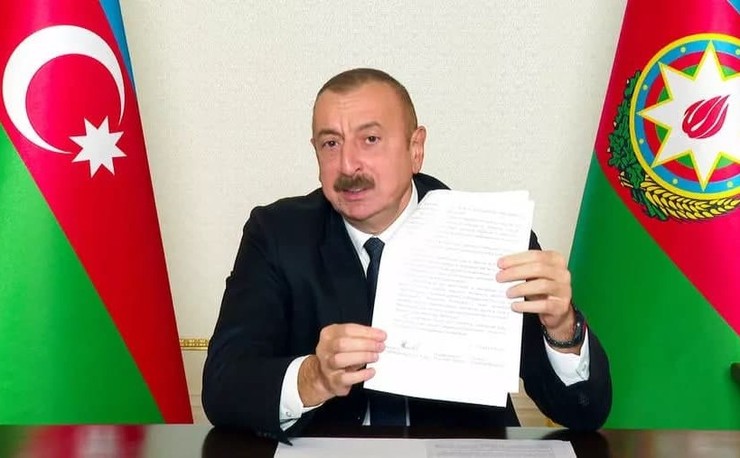
Azerbaijan

Developments in South Caucasus and Possibility of New Tensions

Developments in South Caucasus and Possibility of New Tensions

Strategic Council Online – An expert and analyst on Caucasus affairs, referring to the role of regional and trans-regional powers in the South Caucasus, said: There are issues and crises in the South Caucasus region, tensions have been frozen and if not properly managed, it is likely that the fire of ethnic and regional and perhaps international conflicts in this region would flare up again.

Turkey’s Strategy to Export Military Drones

Turkey’s Strategy to Export Military Drones

Strategic Council Online – Turkey has made significant progress in the military industry, and is known in the world not only in the production of light and heavy weapons, vehicles, ships and military aircraft, but has also outstanding activity in the design and development of missiles, electronic systems and control.
Mahmoud Fazeli – Analyst of international affairs

Political Developments in Armenia and Role of Foreign Powers

Political Developments in Armenia and Role of Foreign Powers

Strategic Council Online – Head of Iran-Armenia Friendship Association, stating that Russia and the United States have not shown opposition to the continuation of Pashinyan’s stay in power, said: In the early elections, Pashinyan will regain the majority and will continue his rule, of course, if there is no coup by the military.

Strategic Developments after Karabakh 2nd War

Strategic Developments after Karabakh 2nd War

Strategic Council Online – An analyst of the Caucasus affairs believes that in negotiations in the aftermath of the second Karabakh war, issues have been taken into consideration that is not in the interest of lasting peace in the region, but in line with addressing the targets and objectives pursued by regional and trans-regional players. According to him, now the main issue has been overshadowed by the secondary issues.

Foreign Policy Doctrine of Justice and Development Party towards Iran

Foreign Policy Doctrine of Justice and Development Party towards Iran

Strategic Council Online – The two governments of Iran and Turkey have been the two balanced, stable and important governments in the region for centuries, and these two governments, within the historical context, have always been the main players in the region.
Dr. Mohsen Eslami – Faculty member of Tarbiat Modarres University

Mutual Turkey-EU Feeling; Too Close, Too Far

Mutual Turkey-EU Feeling; Too Close, Too Far

Strategic Council Online – Europe is pursuing a kind of “tilt but don’t spill” attitude towards Turkey, based on which it is neither indifferent nor reacts harshly.
Afshin Zargar – PhD in International Relations, Faculty Member

Ambiguity Surrounds Turkey’s Goals in 6-Country Regional Coop Platform

Ambiguity Surrounds Turkey’s Goals in 6-Country Regional Coop Platform

Strategic Council Online – A faculty member of Tarbiat Modares University, stating that Turkey seeks to revive its soft power with the idea of regional convergence, said: Details of this plan, its common interests and threats are not clear and there is an ambiguity that basically to what extent bringing those countries together can be realistic and practical.

Inefficiency of Minsk Group and Unclear Prospects of Karabakh Peace Deal

Inefficiency of Minsk Group and Unclear Prospects of Karabakh Peace Deal

Strategic Council Online – An expert on international affairs said: The most important challenge of the Karabakh crisis is that, despite the recent peace agreement, its future status is still ambiguous and unclear, and this could be the source and the beginning of a renewed conflict between Azerbaijan and Armenia.

Turkey on the verge of involvement in the Yemen case

Turkey on the verge of involvement in the Yemen case

Strategic Council Online—Editorial: Turkey is one of the main regional players which has been pursuing an aggressive foreign policy during the past several years—a country which once prioritized in its foreign policy the zero-tension approach with its neighbors but has now turned down that policy by entering into various levels of political, security, military and field operational engagements in the West Asia, the Caucasus and North Africa regions. In fact, you can find very few hot spots in the region in which Turkey has not been actively involved.
Hamid Khoshayand-International issues analyst

أحدث الوظائف

The Makkah Pact; Reasons for its Formation and Challenges Ahead

SCFR Online – Opinion: The Makkah Pact, signed between Saudi Arabia, Pakistan, and Turkey under the motto “an attack on one is an attack on all,” is viewed by some analysts less as a full-fledged military coalition and more as an attempt to reduce security dependence on an external power and to establish a regional security mechanism.

Implications of the US-Saudi Nuclear Agreement

SCFR Online – Opinion: The new US-Saudi nuclear agreement, despite legal and political ambiguities, could alter previous non-proliferation standards in West Asia and intensify nuclear competition, ushering it into a new phase.

An Analysis of Recent Turkey-Israeli Regime Tensions

SCFR Online – Opinion: Recent developments in Syria indicate an intensification of strategic rivalry between Turkey and the Israeli regime, but mutual considerations and the role of the United States have limited the likelihood of direct war.

Increasing criticism of the extensive Zionist lobby network

SCFR Online – Opinion: An examination of the mechanisms of the Israeli regime’s influence in the United States depicts a complex picture of shared interests, strategic dependencies, and the limitations of this relationship.

Realities of the Tripartite Makkah Pact

SCFR Online – Interview: The signing of the Makkah agreement between Saudi Arabia, Pakistan, and Turkey has raised questions about the future of the region’s security structure and the position of these countries in West Asian equations. Can this agreement become a genuine collective defense mechanism, or does it have more of a political and deterrent function than creating new military capacity?

Loading

Azerbaijan

Developments in South Caucasus and Possibility of New Tensions

Developments in South Caucasus and Possibility of New Tensions

Strategic Council Online – An expert and analyst on Caucasus affairs, referring to the role of regional and trans-regional powers in the South Caucasus, said: There are issues and crises in the South Caucasus region, tensions have been frozen and if not properly managed, it is likely that the fire of ethnic and regional and perhaps international conflicts in this region would flare up again.

Turkey’s Strategy to Export Military Drones

Turkey’s Strategy to Export Military Drones

Strategic Council Online – Turkey has made significant progress in the military industry, and is known in the world not only in the production of light and heavy weapons, vehicles, ships and military aircraft, but has also outstanding activity in the design and development of missiles, electronic systems and control.
Mahmoud Fazeli – Analyst of international affairs

Political Developments in Armenia and Role of Foreign Powers

Political Developments in Armenia and Role of Foreign Powers

Strategic Council Online – Head of Iran-Armenia Friendship Association, stating that Russia and the United States have not shown opposition to the continuation of Pashinyan’s stay in power, said: In the early elections, Pashinyan will regain the majority and will continue his rule, of course, if there is no coup by the military.

Strategic Developments after Karabakh 2nd War

Strategic Developments after Karabakh 2nd War

Strategic Council Online – An analyst of the Caucasus affairs believes that in negotiations in the aftermath of the second Karabakh war, issues have been taken into consideration that is not in the interest of lasting peace in the region, but in line with addressing the targets and objectives pursued by regional and trans-regional players. According to him, now the main issue has been overshadowed by the secondary issues.

Foreign Policy Doctrine of Justice and Development Party towards Iran

Foreign Policy Doctrine of Justice and Development Party towards Iran

Strategic Council Online – The two governments of Iran and Turkey have been the two balanced, stable and important governments in the region for centuries, and these two governments, within the historical context, have always been the main players in the region.
Dr. Mohsen Eslami – Faculty member of Tarbiat Modarres University

Mutual Turkey-EU Feeling; Too Close, Too Far

Mutual Turkey-EU Feeling; Too Close, Too Far

Strategic Council Online – Europe is pursuing a kind of “tilt but don’t spill” attitude towards Turkey, based on which it is neither indifferent nor reacts harshly.
Afshin Zargar – PhD in International Relations, Faculty Member

Ambiguity Surrounds Turkey’s Goals in 6-Country Regional Coop Platform

Ambiguity Surrounds Turkey’s Goals in 6-Country Regional Coop Platform

Strategic Council Online – A faculty member of Tarbiat Modares University, stating that Turkey seeks to revive its soft power with the idea of regional convergence, said: Details of this plan, its common interests and threats are not clear and there is an ambiguity that basically to what extent bringing those countries together can be realistic and practical.

Inefficiency of Minsk Group and Unclear Prospects of Karabakh Peace Deal

Inefficiency of Minsk Group and Unclear Prospects of Karabakh Peace Deal

Strategic Council Online – An expert on international affairs said: The most important challenge of the Karabakh crisis is that, despite the recent peace agreement, its future status is still ambiguous and unclear, and this could be the source and the beginning of a renewed conflict between Azerbaijan and Armenia.

Turkey on the verge of involvement in the Yemen case

Turkey on the verge of involvement in the Yemen case

Strategic Council Online—Editorial: Turkey is one of the main regional players which has been pursuing an aggressive foreign policy during the past several years—a country which once prioritized in its foreign policy the zero-tension approach with its neighbors but has now turned down that policy by entering into various levels of political, security, military and field operational engagements in the West Asia, the Caucasus and North Africa regions. In fact, you can find very few hot spots in the region in which Turkey has not been actively involved.
Hamid Khoshayand-International issues analyst

Azerbaijan

Developments in South Caucasus and Possibility of New Tensions

Developments in South Caucasus and Possibility of New Tensions

Strategic Council Online – An expert and analyst on Caucasus affairs, referring to the role of regional and trans-regional powers in the South Caucasus, said: There are issues and crises in the South Caucasus region, tensions have been frozen and if not properly managed, it is likely that the fire of ethnic and regional and perhaps international conflicts in this region would flare up again.

Turkey’s Strategy to Export Military Drones

Turkey’s Strategy to Export Military Drones

Strategic Council Online – Turkey has made significant progress in the military industry, and is known in the world not only in the production of light and heavy weapons, vehicles, ships and military aircraft, but has also outstanding activity in the design and development of missiles, electronic systems and control.
Mahmoud Fazeli – Analyst of international affairs

Political Developments in Armenia and Role of Foreign Powers

Political Developments in Armenia and Role of Foreign Powers

Strategic Council Online – Head of Iran-Armenia Friendship Association, stating that Russia and the United States have not shown opposition to the continuation of Pashinyan’s stay in power, said: In the early elections, Pashinyan will regain the majority and will continue his rule, of course, if there is no coup by the military.

Strategic Developments after Karabakh 2nd War

Strategic Developments after Karabakh 2nd War

Strategic Council Online – An analyst of the Caucasus affairs believes that in negotiations in the aftermath of the second Karabakh war, issues have been taken into consideration that is not in the interest of lasting peace in the region, but in line with addressing the targets and objectives pursued by regional and trans-regional players. According to him, now the main issue has been overshadowed by the secondary issues.

Foreign Policy Doctrine of Justice and Development Party towards Iran

Foreign Policy Doctrine of Justice and Development Party towards Iran

Strategic Council Online – The two governments of Iran and Turkey have been the two balanced, stable and important governments in the region for centuries, and these two governments, within the historical context, have always been the main players in the region.
Dr. Mohsen Eslami – Faculty member of Tarbiat Modarres University

Mutual Turkey-EU Feeling; Too Close, Too Far

Mutual Turkey-EU Feeling; Too Close, Too Far

Strategic Council Online – Europe is pursuing a kind of “tilt but don’t spill” attitude towards Turkey, based on which it is neither indifferent nor reacts harshly.
Afshin Zargar – PhD in International Relations, Faculty Member

Ambiguity Surrounds Turkey’s Goals in 6-Country Regional Coop Platform

Ambiguity Surrounds Turkey’s Goals in 6-Country Regional Coop Platform

Strategic Council Online – A faculty member of Tarbiat Modares University, stating that Turkey seeks to revive its soft power with the idea of regional convergence, said: Details of this plan, its common interests and threats are not clear and there is an ambiguity that basically to what extent bringing those countries together can be realistic and practical.

Inefficiency of Minsk Group and Unclear Prospects of Karabakh Peace Deal

Inefficiency of Minsk Group and Unclear Prospects of Karabakh Peace Deal

Strategic Council Online – An expert on international affairs said: The most important challenge of the Karabakh crisis is that, despite the recent peace agreement, its future status is still ambiguous and unclear, and this could be the source and the beginning of a renewed conflict between Azerbaijan and Armenia.

Turkey on the verge of involvement in the Yemen case

Turkey on the verge of involvement in the Yemen case

Strategic Council Online—Editorial: Turkey is one of the main regional players which has been pursuing an aggressive foreign policy during the past several years—a country which once prioritized in its foreign policy the zero-tension approach with its neighbors but has now turned down that policy by entering into various levels of political, security, military and field operational engagements in the West Asia, the Caucasus and North Africa regions. In fact, you can find very few hot spots in the region in which Turkey has not been actively involved.
Hamid Khoshayand-International issues analyst

LATEST CONTENT

The Makkah Pact; Reasons for its Formation and Challenges Ahead

SCFR Online – Opinion: The Makkah Pact, signed between Saudi Arabia, Pakistan, and Turkey under the motto “an attack on one is an attack on all,” is viewed by some analysts less as a full-fledged military coalition and more as an attempt to reduce security dependence on an external power and to establish a regional security mechanism.

Implications of the US-Saudi Nuclear Agreement

SCFR Online – Opinion: The new US-Saudi nuclear agreement, despite legal and political ambiguities, could alter previous non-proliferation standards in West Asia and intensify nuclear competition, ushering it into a new phase.

An Analysis of Recent Turkey-Israeli Regime Tensions

SCFR Online – Opinion: Recent developments in Syria indicate an intensification of strategic rivalry between Turkey and the Israeli regime, but mutual considerations and the role of the United States have limited the likelihood of direct war.

Increasing criticism of the extensive Zionist lobby network

SCFR Online – Opinion: An examination of the mechanisms of the Israeli regime’s influence in the United States depicts a complex picture of shared interests, strategic dependencies, and the limitations of this relationship.

Realities of the Tripartite Makkah Pact

SCFR Online – Interview: The signing of the Makkah agreement between Saudi Arabia, Pakistan, and Turkey has raised questions about the future of the region’s security structure and the position of these countries in West Asian equations. Can this agreement become a genuine collective defense mechanism, or does it have more of a political and deterrent function than creating new military capacity?

Loading

Azerbaijan

Developments in South Caucasus and Possibility of New Tensions

Developments in South Caucasus and Possibility of New Tensions

Strategic Council Online – An expert and analyst on Caucasus affairs, referring to the role of regional and trans-regional powers in the South Caucasus, said: There are issues and crises in the South Caucasus region, tensions have been frozen and if not properly managed, it is likely that the fire of ethnic and regional and perhaps international conflicts in this region would flare up again.

Turkey’s Strategy to Export Military Drones

Turkey’s Strategy to Export Military Drones

Strategic Council Online – Turkey has made significant progress in the military industry, and is known in the world not only in the production of light and heavy weapons, vehicles, ships and military aircraft, but has also outstanding activity in the design and development of missiles, electronic systems and control.
Mahmoud Fazeli – Analyst of international affairs

Political Developments in Armenia and Role of Foreign Powers

Political Developments in Armenia and Role of Foreign Powers

Strategic Council Online – Head of Iran-Armenia Friendship Association, stating that Russia and the United States have not shown opposition to the continuation of Pashinyan’s stay in power, said: In the early elections, Pashinyan will regain the majority and will continue his rule, of course, if there is no coup by the military.

Strategic Developments after Karabakh 2nd War

Strategic Developments after Karabakh 2nd War

Strategic Council Online – An analyst of the Caucasus affairs believes that in negotiations in the aftermath of the second Karabakh war, issues have been taken into consideration that is not in the interest of lasting peace in the region, but in line with addressing the targets and objectives pursued by regional and trans-regional players. According to him, now the main issue has been overshadowed by the secondary issues.

Foreign Policy Doctrine of Justice and Development Party towards Iran

Foreign Policy Doctrine of Justice and Development Party towards Iran

Strategic Council Online – The two governments of Iran and Turkey have been the two balanced, stable and important governments in the region for centuries, and these two governments, within the historical context, have always been the main players in the region.
Dr. Mohsen Eslami – Faculty member of Tarbiat Modarres University

Mutual Turkey-EU Feeling; Too Close, Too Far

Mutual Turkey-EU Feeling; Too Close, Too Far

Strategic Council Online – Europe is pursuing a kind of “tilt but don’t spill” attitude towards Turkey, based on which it is neither indifferent nor reacts harshly.
Afshin Zargar – PhD in International Relations, Faculty Member

Ambiguity Surrounds Turkey’s Goals in 6-Country Regional Coop Platform

Ambiguity Surrounds Turkey’s Goals in 6-Country Regional Coop Platform

Strategic Council Online – A faculty member of Tarbiat Modares University, stating that Turkey seeks to revive its soft power with the idea of regional convergence, said: Details of this plan, its common interests and threats are not clear and there is an ambiguity that basically to what extent bringing those countries together can be realistic and practical.

Inefficiency of Minsk Group and Unclear Prospects of Karabakh Peace Deal

Inefficiency of Minsk Group and Unclear Prospects of Karabakh Peace Deal

Strategic Council Online – An expert on international affairs said: The most important challenge of the Karabakh crisis is that, despite the recent peace agreement, its future status is still ambiguous and unclear, and this could be the source and the beginning of a renewed conflict between Azerbaijan and Armenia.

Turkey on the verge of involvement in the Yemen case

Turkey on the verge of involvement in the Yemen case

Strategic Council Online—Editorial: Turkey is one of the main regional players which has been pursuing an aggressive foreign policy during the past several years—a country which once prioritized in its foreign policy the zero-tension approach with its neighbors but has now turned down that policy by entering into various levels of political, security, military and field operational engagements in the West Asia, the Caucasus and North Africa regions. In fact, you can find very few hot spots in the region in which Turkey has not been actively involved.
Hamid Khoshayand-International issues analyst

ÚLTIMAS PUBLICACIONES

The Makkah Pact; Reasons for its Formation and Challenges Ahead

SCFR Online – Opinion: The Makkah Pact, signed between Saudi Arabia, Pakistan, and Turkey under the motto “an attack on one is an attack on all,” is viewed by some analysts less as a full-fledged military coalition and more as an attempt to reduce security dependence on an external power and to establish a regional security mechanism.

Implications of the US-Saudi Nuclear Agreement

SCFR Online – Opinion: The new US-Saudi nuclear agreement, despite legal and political ambiguities, could alter previous non-proliferation standards in West Asia and intensify nuclear competition, ushering it into a new phase.

An Analysis of Recent Turkey-Israeli Regime Tensions

SCFR Online – Opinion: Recent developments in Syria indicate an intensification of strategic rivalry between Turkey and the Israeli regime, but mutual considerations and the role of the United States have limited the likelihood of direct war.

Increasing criticism of the extensive Zionist lobby network

SCFR Online – Opinion: An examination of the mechanisms of the Israeli regime’s influence in the United States depicts a complex picture of shared interests, strategic dependencies, and the limitations of this relationship.

Realities of the Tripartite Makkah Pact

SCFR Online – Interview: The signing of the Makkah agreement between Saudi Arabia, Pakistan, and Turkey has raised questions about the future of the region’s security structure and the position of these countries in West Asian equations. Can this agreement become a genuine collective defense mechanism, or does it have more of a political and deterrent function than creating new military capacity?

Loading

Azerbaijan

Developments in South Caucasus and Possibility of New Tensions

Developments in South Caucasus and Possibility of New Tensions

Strategic Council Online – An expert and analyst on Caucasus affairs, referring to the role of regional and trans-regional powers in the South Caucasus, said: There are issues and crises in the South Caucasus region, tensions have been frozen and if not properly managed, it is likely that the fire of ethnic and regional and perhaps international conflicts in this region would flare up again.

Turkey’s Strategy to Export Military Drones

Turkey’s Strategy to Export Military Drones

Strategic Council Online – Turkey has made significant progress in the military industry, and is known in the world not only in the production of light and heavy weapons, vehicles, ships and military aircraft, but has also outstanding activity in the design and development of missiles, electronic systems and control.
Mahmoud Fazeli – Analyst of international affairs

Political Developments in Armenia and Role of Foreign Powers

Political Developments in Armenia and Role of Foreign Powers

Strategic Council Online – Head of Iran-Armenia Friendship Association, stating that Russia and the United States have not shown opposition to the continuation of Pashinyan’s stay in power, said: In the early elections, Pashinyan will regain the majority and will continue his rule, of course, if there is no coup by the military.

Strategic Developments after Karabakh 2nd War

Strategic Developments after Karabakh 2nd War

Strategic Council Online – An analyst of the Caucasus affairs believes that in negotiations in the aftermath of the second Karabakh war, issues have been taken into consideration that is not in the interest of lasting peace in the region, but in line with addressing the targets and objectives pursued by regional and trans-regional players. According to him, now the main issue has been overshadowed by the secondary issues.

Foreign Policy Doctrine of Justice and Development Party towards Iran

Foreign Policy Doctrine of Justice and Development Party towards Iran

Strategic Council Online – The two governments of Iran and Turkey have been the two balanced, stable and important governments in the region for centuries, and these two governments, within the historical context, have always been the main players in the region.
Dr. Mohsen Eslami – Faculty member of Tarbiat Modarres University

Mutual Turkey-EU Feeling; Too Close, Too Far

Mutual Turkey-EU Feeling; Too Close, Too Far

Strategic Council Online – Europe is pursuing a kind of “tilt but don’t spill” attitude towards Turkey, based on which it is neither indifferent nor reacts harshly.
Afshin Zargar – PhD in International Relations, Faculty Member

Ambiguity Surrounds Turkey’s Goals in 6-Country Regional Coop Platform

Ambiguity Surrounds Turkey’s Goals in 6-Country Regional Coop Platform

Strategic Council Online – A faculty member of Tarbiat Modares University, stating that Turkey seeks to revive its soft power with the idea of regional convergence, said: Details of this plan, its common interests and threats are not clear and there is an ambiguity that basically to what extent bringing those countries together can be realistic and practical.

Inefficiency of Minsk Group and Unclear Prospects of Karabakh Peace Deal

Inefficiency of Minsk Group and Unclear Prospects of Karabakh Peace Deal

Strategic Council Online – An expert on international affairs said: The most important challenge of the Karabakh crisis is that, despite the recent peace agreement, its future status is still ambiguous and unclear, and this could be the source and the beginning of a renewed conflict between Azerbaijan and Armenia.

Turkey on the verge of involvement in the Yemen case

Turkey on the verge of involvement in the Yemen case

Strategic Council Online—Editorial: Turkey is one of the main regional players which has been pursuing an aggressive foreign policy during the past several years—a country which once prioritized in its foreign policy the zero-tension approach with its neighbors but has now turned down that policy by entering into various levels of political, security, military and field operational engagements in the West Asia, the Caucasus and North Africa regions. In fact, you can find very few hot spots in the region in which Turkey has not been actively involved.
Hamid Khoshayand-International issues analyst

ÚLTIMAS PUBLICACIONES

The Makkah Pact; Reasons for its Formation and Challenges Ahead

SCFR Online – Opinion: The Makkah Pact, signed between Saudi Arabia, Pakistan, and Turkey under the motto “an attack on one is an attack on all,” is viewed by some analysts less as a full-fledged military coalition and more as an attempt to reduce security dependence on an external power and to establish a regional security mechanism.

Implications of the US-Saudi Nuclear Agreement

SCFR Online – Opinion: The new US-Saudi nuclear agreement, despite legal and political ambiguities, could alter previous non-proliferation standards in West Asia and intensify nuclear competition, ushering it into a new phase.

An Analysis of Recent Turkey-Israeli Regime Tensions

SCFR Online – Opinion: Recent developments in Syria indicate an intensification of strategic rivalry between Turkey and the Israeli regime, but mutual considerations and the role of the United States have limited the likelihood of direct war.

Increasing criticism of the extensive Zionist lobby network

SCFR Online – Opinion: An examination of the mechanisms of the Israeli regime’s influence in the United States depicts a complex picture of shared interests, strategic dependencies, and the limitations of this relationship.

Realities of the Tripartite Makkah Pact

SCFR Online – Interview: The signing of the Makkah agreement between Saudi Arabia, Pakistan, and Turkey has raised questions about the future of the region’s security structure and the position of these countries in West Asian equations. Can this agreement become a genuine collective defense mechanism, or does it have more of a political and deterrent function than creating new military capacity?

Loading

Azerbaijan

Developments in South Caucasus and Possibility of New Tensions

Developments in South Caucasus and Possibility of New Tensions

Strategic Council Online – An expert and analyst on Caucasus affairs, referring to the role of regional and trans-regional powers in the South Caucasus, said: There are issues and crises in the South Caucasus region, tensions have been frozen and if not properly managed, it is likely that the fire of ethnic and regional and perhaps international conflicts in this region would flare up again.

Turkey’s Strategy to Export Military Drones

Turkey’s Strategy to Export Military Drones

Strategic Council Online – Turkey has made significant progress in the military industry, and is known in the world not only in the production of light and heavy weapons, vehicles, ships and military aircraft, but has also outstanding activity in the design and development of missiles, electronic systems and control.
Mahmoud Fazeli – Analyst of international affairs

Political Developments in Armenia and Role of Foreign Powers

Political Developments in Armenia and Role of Foreign Powers

Strategic Council Online – Head of Iran-Armenia Friendship Association, stating that Russia and the United States have not shown opposition to the continuation of Pashinyan’s stay in power, said: In the early elections, Pashinyan will regain the majority and will continue his rule, of course, if there is no coup by the military.

Strategic Developments after Karabakh 2nd War

Strategic Developments after Karabakh 2nd War

Strategic Council Online – An analyst of the Caucasus affairs believes that in negotiations in the aftermath of the second Karabakh war, issues have been taken into consideration that is not in the interest of lasting peace in the region, but in line with addressing the targets and objectives pursued by regional and trans-regional players. According to him, now the main issue has been overshadowed by the secondary issues.

Foreign Policy Doctrine of Justice and Development Party towards Iran

Foreign Policy Doctrine of Justice and Development Party towards Iran

Strategic Council Online – The two governments of Iran and Turkey have been the two balanced, stable and important governments in the region for centuries, and these two governments, within the historical context, have always been the main players in the region.
Dr. Mohsen Eslami – Faculty member of Tarbiat Modarres University

Mutual Turkey-EU Feeling; Too Close, Too Far

Mutual Turkey-EU Feeling; Too Close, Too Far

Strategic Council Online – Europe is pursuing a kind of “tilt but don’t spill” attitude towards Turkey, based on which it is neither indifferent nor reacts harshly.
Afshin Zargar – PhD in International Relations, Faculty Member

Ambiguity Surrounds Turkey’s Goals in 6-Country Regional Coop Platform

Ambiguity Surrounds Turkey’s Goals in 6-Country Regional Coop Platform

Strategic Council Online – A faculty member of Tarbiat Modares University, stating that Turkey seeks to revive its soft power with the idea of regional convergence, said: Details of this plan, its common interests and threats are not clear and there is an ambiguity that basically to what extent bringing those countries together can be realistic and practical.

Inefficiency of Minsk Group and Unclear Prospects of Karabakh Peace Deal

Inefficiency of Minsk Group and Unclear Prospects of Karabakh Peace Deal

Strategic Council Online – An expert on international affairs said: The most important challenge of the Karabakh crisis is that, despite the recent peace agreement, its future status is still ambiguous and unclear, and this could be the source and the beginning of a renewed conflict between Azerbaijan and Armenia.

Turkey on the verge of involvement in the Yemen case

Turkey on the verge of involvement in the Yemen case

Strategic Council Online—Editorial: Turkey is one of the main regional players which has been pursuing an aggressive foreign policy during the past several years—a country which once prioritized in its foreign policy the zero-tension approach with its neighbors but has now turned down that policy by entering into various levels of political, security, military and field operational engagements in the West Asia, the Caucasus and North Africa regions. In fact, you can find very few hot spots in the region in which Turkey has not been actively involved.
Hamid Khoshayand-International issues analyst

ÚLTIMAS PUBLICACIONES

The Makkah Pact; Reasons for its Formation and Challenges Ahead

SCFR Online – Opinion: The Makkah Pact, signed between Saudi Arabia, Pakistan, and Turkey under the motto “an attack on one is an attack on all,” is viewed by some analysts less as a full-fledged military coalition and more as an attempt to reduce security dependence on an external power and to establish a regional security mechanism.

Implications of the US-Saudi Nuclear Agreement

SCFR Online – Opinion: The new US-Saudi nuclear agreement, despite legal and political ambiguities, could alter previous non-proliferation standards in West Asia and intensify nuclear competition, ushering it into a new phase.

An Analysis of Recent Turkey-Israeli Regime Tensions

SCFR Online – Opinion: Recent developments in Syria indicate an intensification of strategic rivalry between Turkey and the Israeli regime, but mutual considerations and the role of the United States have limited the likelihood of direct war.

Increasing criticism of the extensive Zionist lobby network

SCFR Online – Opinion: An examination of the mechanisms of the Israeli regime’s influence in the United States depicts a complex picture of shared interests, strategic dependencies, and the limitations of this relationship.

Realities of the Tripartite Makkah Pact

SCFR Online – Interview: The signing of the Makkah agreement between Saudi Arabia, Pakistan, and Turkey has raised questions about the future of the region’s security structure and the position of these countries in West Asian equations. Can this agreement become a genuine collective defense mechanism, or does it have more of a political and deterrent function than creating new military capacity?

Loading

Azerbaijan

Developments in South Caucasus and Possibility of New Tensions

Developments in South Caucasus and Possibility of New Tensions

Strategic Council Online – An expert and analyst on Caucasus affairs, referring to the role of regional and trans-regional powers in the South Caucasus, said: There are issues and crises in the South Caucasus region, tensions have been frozen and if not properly managed, it is likely that the fire of ethnic and regional and perhaps international conflicts in this region would flare up again.

Turkey’s Strategy to Export Military Drones

Turkey’s Strategy to Export Military Drones

Strategic Council Online – Turkey has made significant progress in the military industry, and is known in the world not only in the production of light and heavy weapons, vehicles, ships and military aircraft, but has also outstanding activity in the design and development of missiles, electronic systems and control.
Mahmoud Fazeli – Analyst of international affairs

Political Developments in Armenia and Role of Foreign Powers

Political Developments in Armenia and Role of Foreign Powers

Strategic Council Online – Head of Iran-Armenia Friendship Association, stating that Russia and the United States have not shown opposition to the continuation of Pashinyan’s stay in power, said: In the early elections, Pashinyan will regain the majority and will continue his rule, of course, if there is no coup by the military.

Strategic Developments after Karabakh 2nd War

Strategic Developments after Karabakh 2nd War

Strategic Council Online – An analyst of the Caucasus affairs believes that in negotiations in the aftermath of the second Karabakh war, issues have been taken into consideration that is not in the interest of lasting peace in the region, but in line with addressing the targets and objectives pursued by regional and trans-regional players. According to him, now the main issue has been overshadowed by the secondary issues.

Foreign Policy Doctrine of Justice and Development Party towards Iran

Foreign Policy Doctrine of Justice and Development Party towards Iran

Strategic Council Online – The two governments of Iran and Turkey have been the two balanced, stable and important governments in the region for centuries, and these two governments, within the historical context, have always been the main players in the region.
Dr. Mohsen Eslami – Faculty member of Tarbiat Modarres University

Mutual Turkey-EU Feeling; Too Close, Too Far

Mutual Turkey-EU Feeling; Too Close, Too Far

Strategic Council Online – Europe is pursuing a kind of “tilt but don’t spill” attitude towards Turkey, based on which it is neither indifferent nor reacts harshly.
Afshin Zargar – PhD in International Relations, Faculty Member

Ambiguity Surrounds Turkey’s Goals in 6-Country Regional Coop Platform

Ambiguity Surrounds Turkey’s Goals in 6-Country Regional Coop Platform

Strategic Council Online – A faculty member of Tarbiat Modares University, stating that Turkey seeks to revive its soft power with the idea of regional convergence, said: Details of this plan, its common interests and threats are not clear and there is an ambiguity that basically to what extent bringing those countries together can be realistic and practical.

Inefficiency of Minsk Group and Unclear Prospects of Karabakh Peace Deal

Inefficiency of Minsk Group and Unclear Prospects of Karabakh Peace Deal

Strategic Council Online – An expert on international affairs said: The most important challenge of the Karabakh crisis is that, despite the recent peace agreement, its future status is still ambiguous and unclear, and this could be the source and the beginning of a renewed conflict between Azerbaijan and Armenia.

Turkey on the verge of involvement in the Yemen case

Turkey on the verge of involvement in the Yemen case

Strategic Council Online—Editorial: Turkey is one of the main regional players which has been pursuing an aggressive foreign policy during the past several years—a country which once prioritized in its foreign policy the zero-tension approach with its neighbors but has now turned down that policy by entering into various levels of political, security, military and field operational engagements in the West Asia, the Caucasus and North Africa regions. In fact, you can find very few hot spots in the region in which Turkey has not been actively involved.
Hamid Khoshayand-International issues analyst

ÚLTIMAS PUBLICACIONES

The Makkah Pact; Reasons for its Formation and Challenges Ahead

SCFR Online – Opinion: The Makkah Pact, signed between Saudi Arabia, Pakistan, and Turkey under the motto “an attack on one is an attack on all,” is viewed by some analysts less as a full-fledged military coalition and more as an attempt to reduce security dependence on an external power and to establish a regional security mechanism.

Implications of the US-Saudi Nuclear Agreement

SCFR Online – Opinion: The new US-Saudi nuclear agreement, despite legal and political ambiguities, could alter previous non-proliferation standards in West Asia and intensify nuclear competition, ushering it into a new phase.

An Analysis of Recent Turkey-Israeli Regime Tensions

SCFR Online – Opinion: Recent developments in Syria indicate an intensification of strategic rivalry between Turkey and the Israeli regime, but mutual considerations and the role of the United States have limited the likelihood of direct war.

Increasing criticism of the extensive Zionist lobby network

SCFR Online – Opinion: An examination of the mechanisms of the Israeli regime’s influence in the United States depicts a complex picture of shared interests, strategic dependencies, and the limitations of this relationship.

Realities of the Tripartite Makkah Pact

SCFR Online – Interview: The signing of the Makkah agreement between Saudi Arabia, Pakistan, and Turkey has raised questions about the future of the region’s security structure and the position of these countries in West Asian equations. Can this agreement become a genuine collective defense mechanism, or does it have more of a political and deterrent function than creating new military capacity?

Loading