An Analysis of the Makkah Defense Pact
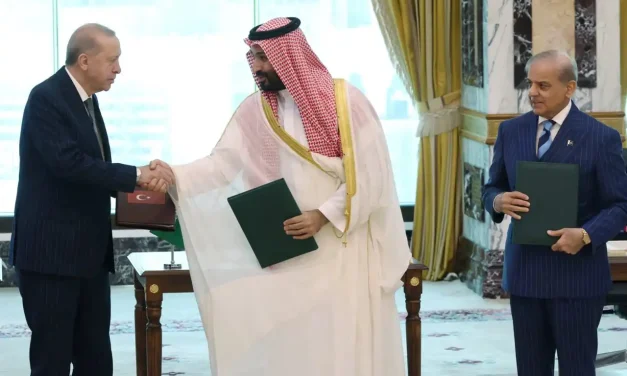
SCFR Online – Opinion: On Friday, August 7, the heads of state of three countries – Saudi Arabia, Turkey, and Pakistan – signed a text under the title “Makkah Joint Defense Agreement.”
Strategic Council Online – Note: The initiative to revive the Hejaz Railway, beyond being a transportation project, constitutes an attempt to redefine geopolitics, the economy, and Turkey’s regional position; however, its realization appears to face significant financial, security, and institutional challenges.
SCFR Online – Opinion: The Strait of Hormuz crisis is no longer merely the consequence of a military confrontation, but rather a sign of the transition from the US-centered maritime order to a new energy security structure involving the participation of emerging and influential powers.
SCFR Online – Opinion: Iran’s active deterrence strategy, while increasing the costs of US intervention, has increasingly exposed the hidden rifts between Washington’s interests and those of the Israeli regime.
SCFR Online – Opinion: The escalation of verbal and strategic tensions between Turkey and the Israeli regime, although not increasing the likelihood of direct war, indicates the formation of a new order in West Asian geopolitical rivalries.
Strategic Council Online – Note: Recent developments in the political geography of West Asia, from rising tensions in the Persian Gulf to missile and drone activities in the Red Sea and the recent warning by Kaja Kallas, the European Union’s foreign policy chief, regarding the threat to freedom of navigation, indicate a key pattern shift; the US-Iran war has moved beyond the scope of a regional and local confrontation and has linked two vital passageways for the global economy: the Strait of Hormuz and the Bab el-Mandeb Strait.
SCFR Online – Opinion: The Ukraine war was not merely a European crisis, but rather the starting point for the rearrangement of the global balance of power and a shift in the strategic behavior of great powers.
SCFR Online – Opinion: Great power competition is now pursued more in trade, currency, technology, and global supply chains than on the battlefields of military confrontation.
Strategic Council Online – Interview: A faculty member of the Research Institute for Strategic Studies, emphasizing that we should consider Wagner as being finished and annihilated, said: Wagner has handed over his weapons to Russia, and Moscow is closely monitoring them, therefore under the current situation taking organized measures against Kremlin is impossible, and the new leader of that group, in fact; is supposed to follow the plan for the integration of those people in the Ministry of Defense.
Strategic Council Online – Interview: An expert on international affairs stated that by withdrawing from the Treaty on Conventional Armed Forces in Europe and other military pacts, Russia is creating a kind of ambiguity in the scope of its military power, adding: Ambiguity in military power also occurred in the Cold War, and we are now witnessing a new Cold War between Russia and the West.
Strategic Council Online – Opinion: The placement of nuclear weapons of NATO and Russia near each other’s borders will increase the risk of tensions and entry of the US and Russia into a hot war and face the non-proliferation and progress in the field of nuclear disarmament with serious risks. Meantime, Non-nuclear countries are forced to take countermeasures to ensure their security.
Pouria Nabipour – Ph.D. in political science and international relations
Strategic Council Online-opinion: The recent elections in Hungary, concurrent with the war in Ukraine, caused great sensitivities in this country and in the European Union. In this election, Victor Urban, the leader of Fitz ruling party, ran against Peter Marquise, the leader of a six-party coalition opposition. All opposition parties seemed to see the defeat of Urban and Fitz in the parliamentary elections as their common goal. The European Union also followed the elections closely; But despite the predictable outcome of the election, little hope for Hungarian reformists as well as Brussels leaders was dashed, and the Fitz party was declared the winner with more than half of the vote.
Hossein Sayyahi—Researcher of international issue
Strategic Council Online – Opinion: Russia’s military invasion of Ukraine showed that most of the predictions that considered the idea of an attack a mere propaganda ploy and the conspiracy of Western media or regarded the interwoven global economy an obstacle hindering outbreak of war were not accurate enough.
Seyed Nader Nourbakhsh – Expert on Europe affairs
Strategic Council Online – Opinion: Tension between Russia and NATO has entered into new stage during the recent months. Verbal assaults of NATO and EU members against Russia continue in different ways. Russia opponents believe that Putin who misses the former Soviet Union is recreating Russian influenced region in the East. As they believe, he who considers the dismemberment of the Soviet Union as Geopolitical Tragedy knows that he intends to review the post-Soviet Union international order and acquires his clout over the former Soviet Union republics.
Mahmoud Fazeli, Analyst of International Issues
Strategic Council Online- Opinion: In addition to bilateral relations, regionalism as well as linking the economic interests of Northern neighbors to Iran’s potentials can bring more achievements.
Mehdi Khoorsand, Expert on China and Eurasia affairs
Strategic Council Online – Interview: An analyst of Europe affairs, while pointing to the dire condition of asylum seekers and human rights abuses in Europe against them, said: Far right-wing tendencies and partisan and national interests are very strong in the behavior of the EU which has endangered the lives of many asylum seekers.
Strategic Council Online – Opinion: A new wave of migration has been formed in the eastern borders of the European Union once again in recent days. Immigrants from predominantly crisis-hit countries such as Iraq, Afghanistan and Syria are trying to reach the EU member states, but what seems different this time from other cases is Europe’s finger of accusation which is pointed at Belarus.
Hossein Sayyahi – Researcher on international affairs
Strategic Council Online—Opinion: There are a lot of speculations about the future of relations between China and Russia. Some describe it as a “pseudo-unity” and some as a “marriage of convenience”.
Mohammad Javad Qahremani- PhD in international relations
SCFR Online – Opinion: On Friday, August 7, the heads of state of three countries – Saudi Arabia, Turkey, and Pakistan – signed a text under the title “Makkah Joint Defense Agreement.”
Strategic Council Online – Note: The initiative to revive the Hejaz Railway, beyond being a transportation project, constitutes an attempt to redefine geopolitics, the economy, and Turkey’s regional position; however, its realization appears to face significant financial, security, and institutional challenges.
SCFR Online – Opinion: The Strait of Hormuz crisis is no longer merely the consequence of a military confrontation, but rather a sign of the transition from the US-centered maritime order to a new energy security structure involving the participation of emerging and influential powers.
SCFR Online – Opinion: Iran’s active deterrence strategy, while increasing the costs of US intervention, has increasingly exposed the hidden rifts between Washington’s interests and those of the Israeli regime.
SCFR Online – Opinion: The escalation of verbal and strategic tensions between Turkey and the Israeli regime, although not increasing the likelihood of direct war, indicates the formation of a new order in West Asian geopolitical rivalries.
Strategic Council Online – Note: Recent developments in the political geography of West Asia, from rising tensions in the Persian Gulf to missile and drone activities in the Red Sea and the recent warning by Kaja Kallas, the European Union’s foreign policy chief, regarding the threat to freedom of navigation, indicate a key pattern shift; the US-Iran war has moved beyond the scope of a regional and local confrontation and has linked two vital passageways for the global economy: the Strait of Hormuz and the Bab el-Mandeb Strait.
SCFR Online – Opinion: The Ukraine war was not merely a European crisis, but rather the starting point for the rearrangement of the global balance of power and a shift in the strategic behavior of great powers.
SCFR Online – Opinion: Great power competition is now pursued more in trade, currency, technology, and global supply chains than on the battlefields of military confrontation.
Strategic Council Online – Interview: A faculty member of the Research Institute for Strategic Studies, emphasizing that we should consider Wagner as being finished and annihilated, said: Wagner has handed over his weapons to Russia, and Moscow is closely monitoring them, therefore under the current situation taking organized measures against Kremlin is impossible, and the new leader of that group, in fact; is supposed to follow the plan for the integration of those people in the Ministry of Defense.
Strategic Council Online – Interview: An expert on international affairs stated that by withdrawing from the Treaty on Conventional Armed Forces in Europe and other military pacts, Russia is creating a kind of ambiguity in the scope of its military power, adding: Ambiguity in military power also occurred in the Cold War, and we are now witnessing a new Cold War between Russia and the West.
Strategic Council Online – Opinion: The placement of nuclear weapons of NATO and Russia near each other’s borders will increase the risk of tensions and entry of the US and Russia into a hot war and face the non-proliferation and progress in the field of nuclear disarmament with serious risks. Meantime, Non-nuclear countries are forced to take countermeasures to ensure their security.
Pouria Nabipour – Ph.D. in political science and international relations
Strategic Council Online-opinion: The recent elections in Hungary, concurrent with the war in Ukraine, caused great sensitivities in this country and in the European Union. In this election, Victor Urban, the leader of Fitz ruling party, ran against Peter Marquise, the leader of a six-party coalition opposition. All opposition parties seemed to see the defeat of Urban and Fitz in the parliamentary elections as their common goal. The European Union also followed the elections closely; But despite the predictable outcome of the election, little hope for Hungarian reformists as well as Brussels leaders was dashed, and the Fitz party was declared the winner with more than half of the vote.
Hossein Sayyahi—Researcher of international issue
Strategic Council Online – Opinion: Russia’s military invasion of Ukraine showed that most of the predictions that considered the idea of an attack a mere propaganda ploy and the conspiracy of Western media or regarded the interwoven global economy an obstacle hindering outbreak of war were not accurate enough.
Seyed Nader Nourbakhsh – Expert on Europe affairs
Strategic Council Online – Opinion: Tension between Russia and NATO has entered into new stage during the recent months. Verbal assaults of NATO and EU members against Russia continue in different ways. Russia opponents believe that Putin who misses the former Soviet Union is recreating Russian influenced region in the East. As they believe, he who considers the dismemberment of the Soviet Union as Geopolitical Tragedy knows that he intends to review the post-Soviet Union international order and acquires his clout over the former Soviet Union republics.
Mahmoud Fazeli, Analyst of International Issues
Strategic Council Online- Opinion: In addition to bilateral relations, regionalism as well as linking the economic interests of Northern neighbors to Iran’s potentials can bring more achievements.
Mehdi Khoorsand, Expert on China and Eurasia affairs
Strategic Council Online – Interview: An analyst of Europe affairs, while pointing to the dire condition of asylum seekers and human rights abuses in Europe against them, said: Far right-wing tendencies and partisan and national interests are very strong in the behavior of the EU which has endangered the lives of many asylum seekers.
Strategic Council Online – Opinion: A new wave of migration has been formed in the eastern borders of the European Union once again in recent days. Immigrants from predominantly crisis-hit countries such as Iraq, Afghanistan and Syria are trying to reach the EU member states, but what seems different this time from other cases is Europe’s finger of accusation which is pointed at Belarus.
Hossein Sayyahi – Researcher on international affairs
Strategic Council Online—Opinion: There are a lot of speculations about the future of relations between China and Russia. Some describe it as a “pseudo-unity” and some as a “marriage of convenience”.
Mohammad Javad Qahremani- PhD in international relations
Strategic Council Online – Interview: A faculty member of the Research Institute for Strategic Studies, emphasizing that we should consider Wagner as being finished and annihilated, said: Wagner has handed over his weapons to Russia, and Moscow is closely monitoring them, therefore under the current situation taking organized measures against Kremlin is impossible, and the new leader of that group, in fact; is supposed to follow the plan for the integration of those people in the Ministry of Defense.
Strategic Council Online – Interview: An expert on international affairs stated that by withdrawing from the Treaty on Conventional Armed Forces in Europe and other military pacts, Russia is creating a kind of ambiguity in the scope of its military power, adding: Ambiguity in military power also occurred in the Cold War, and we are now witnessing a new Cold War between Russia and the West.
Strategic Council Online – Opinion: The placement of nuclear weapons of NATO and Russia near each other’s borders will increase the risk of tensions and entry of the US and Russia into a hot war and face the non-proliferation and progress in the field of nuclear disarmament with serious risks. Meantime, Non-nuclear countries are forced to take countermeasures to ensure their security.
Pouria Nabipour – Ph.D. in political science and international relations
Strategic Council Online-opinion: The recent elections in Hungary, concurrent with the war in Ukraine, caused great sensitivities in this country and in the European Union. In this election, Victor Urban, the leader of Fitz ruling party, ran against Peter Marquise, the leader of a six-party coalition opposition. All opposition parties seemed to see the defeat of Urban and Fitz in the parliamentary elections as their common goal. The European Union also followed the elections closely; But despite the predictable outcome of the election, little hope for Hungarian reformists as well as Brussels leaders was dashed, and the Fitz party was declared the winner with more than half of the vote.
Hossein Sayyahi—Researcher of international issue
Strategic Council Online – Opinion: Russia’s military invasion of Ukraine showed that most of the predictions that considered the idea of an attack a mere propaganda ploy and the conspiracy of Western media or regarded the interwoven global economy an obstacle hindering outbreak of war were not accurate enough.
Seyed Nader Nourbakhsh – Expert on Europe affairs
Strategic Council Online – Opinion: Tension between Russia and NATO has entered into new stage during the recent months. Verbal assaults of NATO and EU members against Russia continue in different ways. Russia opponents believe that Putin who misses the former Soviet Union is recreating Russian influenced region in the East. As they believe, he who considers the dismemberment of the Soviet Union as Geopolitical Tragedy knows that he intends to review the post-Soviet Union international order and acquires his clout over the former Soviet Union republics.
Mahmoud Fazeli, Analyst of International Issues
Strategic Council Online- Opinion: In addition to bilateral relations, regionalism as well as linking the economic interests of Northern neighbors to Iran’s potentials can bring more achievements.
Mehdi Khoorsand, Expert on China and Eurasia affairs
Strategic Council Online – Interview: An analyst of Europe affairs, while pointing to the dire condition of asylum seekers and human rights abuses in Europe against them, said: Far right-wing tendencies and partisan and national interests are very strong in the behavior of the EU which has endangered the lives of many asylum seekers.
Strategic Council Online – Opinion: A new wave of migration has been formed in the eastern borders of the European Union once again in recent days. Immigrants from predominantly crisis-hit countries such as Iraq, Afghanistan and Syria are trying to reach the EU member states, but what seems different this time from other cases is Europe’s finger of accusation which is pointed at Belarus.
Hossein Sayyahi – Researcher on international affairs
Strategic Council Online—Opinion: There are a lot of speculations about the future of relations between China and Russia. Some describe it as a “pseudo-unity” and some as a “marriage of convenience”.
Mohammad Javad Qahremani- PhD in international relations
SCFR Online – Opinion: On Friday, August 7, the heads of state of three countries – Saudi Arabia, Turkey, and Pakistan – signed a text under the title “Makkah Joint Defense Agreement.”
Strategic Council Online – Note: The initiative to revive the Hejaz Railway, beyond being a transportation project, constitutes an attempt to redefine geopolitics, the economy, and Turkey’s regional position; however, its realization appears to face significant financial, security, and institutional challenges.
SCFR Online – Opinion: The Strait of Hormuz crisis is no longer merely the consequence of a military confrontation, but rather a sign of the transition from the US-centered maritime order to a new energy security structure involving the participation of emerging and influential powers.
SCFR Online – Opinion: Iran’s active deterrence strategy, while increasing the costs of US intervention, has increasingly exposed the hidden rifts between Washington’s interests and those of the Israeli regime.
SCFR Online – Opinion: The escalation of verbal and strategic tensions between Turkey and the Israeli regime, although not increasing the likelihood of direct war, indicates the formation of a new order in West Asian geopolitical rivalries.
Strategic Council Online – Note: Recent developments in the political geography of West Asia, from rising tensions in the Persian Gulf to missile and drone activities in the Red Sea and the recent warning by Kaja Kallas, the European Union’s foreign policy chief, regarding the threat to freedom of navigation, indicate a key pattern shift; the US-Iran war has moved beyond the scope of a regional and local confrontation and has linked two vital passageways for the global economy: the Strait of Hormuz and the Bab el-Mandeb Strait.
SCFR Online – Opinion: The Ukraine war was not merely a European crisis, but rather the starting point for the rearrangement of the global balance of power and a shift in the strategic behavior of great powers.
SCFR Online – Opinion: Great power competition is now pursued more in trade, currency, technology, and global supply chains than on the battlefields of military confrontation.
Strategic Council Online – Interview: A faculty member of the Research Institute for Strategic Studies, emphasizing that we should consider Wagner as being finished and annihilated, said: Wagner has handed over his weapons to Russia, and Moscow is closely monitoring them, therefore under the current situation taking organized measures against Kremlin is impossible, and the new leader of that group, in fact; is supposed to follow the plan for the integration of those people in the Ministry of Defense.
Strategic Council Online – Interview: An expert on international affairs stated that by withdrawing from the Treaty on Conventional Armed Forces in Europe and other military pacts, Russia is creating a kind of ambiguity in the scope of its military power, adding: Ambiguity in military power also occurred in the Cold War, and we are now witnessing a new Cold War between Russia and the West.
Strategic Council Online – Opinion: The placement of nuclear weapons of NATO and Russia near each other’s borders will increase the risk of tensions and entry of the US and Russia into a hot war and face the non-proliferation and progress in the field of nuclear disarmament with serious risks. Meantime, Non-nuclear countries are forced to take countermeasures to ensure their security.
Pouria Nabipour – Ph.D. in political science and international relations
Strategic Council Online-opinion: The recent elections in Hungary, concurrent with the war in Ukraine, caused great sensitivities in this country and in the European Union. In this election, Victor Urban, the leader of Fitz ruling party, ran against Peter Marquise, the leader of a six-party coalition opposition. All opposition parties seemed to see the defeat of Urban and Fitz in the parliamentary elections as their common goal. The European Union also followed the elections closely; But despite the predictable outcome of the election, little hope for Hungarian reformists as well as Brussels leaders was dashed, and the Fitz party was declared the winner with more than half of the vote.
Hossein Sayyahi—Researcher of international issue
Strategic Council Online – Opinion: Russia’s military invasion of Ukraine showed that most of the predictions that considered the idea of an attack a mere propaganda ploy and the conspiracy of Western media or regarded the interwoven global economy an obstacle hindering outbreak of war were not accurate enough.
Seyed Nader Nourbakhsh – Expert on Europe affairs
Strategic Council Online – Opinion: Tension between Russia and NATO has entered into new stage during the recent months. Verbal assaults of NATO and EU members against Russia continue in different ways. Russia opponents believe that Putin who misses the former Soviet Union is recreating Russian influenced region in the East. As they believe, he who considers the dismemberment of the Soviet Union as Geopolitical Tragedy knows that he intends to review the post-Soviet Union international order and acquires his clout over the former Soviet Union republics.
Mahmoud Fazeli, Analyst of International Issues
Strategic Council Online- Opinion: In addition to bilateral relations, regionalism as well as linking the economic interests of Northern neighbors to Iran’s potentials can bring more achievements.
Mehdi Khoorsand, Expert on China and Eurasia affairs
Strategic Council Online – Interview: An analyst of Europe affairs, while pointing to the dire condition of asylum seekers and human rights abuses in Europe against them, said: Far right-wing tendencies and partisan and national interests are very strong in the behavior of the EU which has endangered the lives of many asylum seekers.
Strategic Council Online – Opinion: A new wave of migration has been formed in the eastern borders of the European Union once again in recent days. Immigrants from predominantly crisis-hit countries such as Iraq, Afghanistan and Syria are trying to reach the EU member states, but what seems different this time from other cases is Europe’s finger of accusation which is pointed at Belarus.
Hossein Sayyahi – Researcher on international affairs
Strategic Council Online—Opinion: There are a lot of speculations about the future of relations between China and Russia. Some describe it as a “pseudo-unity” and some as a “marriage of convenience”.
Mohammad Javad Qahremani- PhD in international relations
SCFR Online – Opinion: On Friday, August 7, the heads of state of three countries – Saudi Arabia, Turkey, and Pakistan – signed a text under the title “Makkah Joint Defense Agreement.”
Strategic Council Online – Note: The initiative to revive the Hejaz Railway, beyond being a transportation project, constitutes an attempt to redefine geopolitics, the economy, and Turkey’s regional position; however, its realization appears to face significant financial, security, and institutional challenges.
SCFR Online – Opinion: The Strait of Hormuz crisis is no longer merely the consequence of a military confrontation, but rather a sign of the transition from the US-centered maritime order to a new energy security structure involving the participation of emerging and influential powers.
SCFR Online – Opinion: Iran’s active deterrence strategy, while increasing the costs of US intervention, has increasingly exposed the hidden rifts between Washington’s interests and those of the Israeli regime.
SCFR Online – Opinion: The escalation of verbal and strategic tensions between Turkey and the Israeli regime, although not increasing the likelihood of direct war, indicates the formation of a new order in West Asian geopolitical rivalries.
Strategic Council Online – Note: Recent developments in the political geography of West Asia, from rising tensions in the Persian Gulf to missile and drone activities in the Red Sea and the recent warning by Kaja Kallas, the European Union’s foreign policy chief, regarding the threat to freedom of navigation, indicate a key pattern shift; the US-Iran war has moved beyond the scope of a regional and local confrontation and has linked two vital passageways for the global economy: the Strait of Hormuz and the Bab el-Mandeb Strait.
SCFR Online – Opinion: The Ukraine war was not merely a European crisis, but rather the starting point for the rearrangement of the global balance of power and a shift in the strategic behavior of great powers.
SCFR Online – Opinion: Great power competition is now pursued more in trade, currency, technology, and global supply chains than on the battlefields of military confrontation.
Strategic Council Online – Interview: A faculty member of the Research Institute for Strategic Studies, emphasizing that we should consider Wagner as being finished and annihilated, said: Wagner has handed over his weapons to Russia, and Moscow is closely monitoring them, therefore under the current situation taking organized measures against Kremlin is impossible, and the new leader of that group, in fact; is supposed to follow the plan for the integration of those people in the Ministry of Defense.
Strategic Council Online – Interview: An expert on international affairs stated that by withdrawing from the Treaty on Conventional Armed Forces in Europe and other military pacts, Russia is creating a kind of ambiguity in the scope of its military power, adding: Ambiguity in military power also occurred in the Cold War, and we are now witnessing a new Cold War between Russia and the West.
Strategic Council Online – Opinion: The placement of nuclear weapons of NATO and Russia near each other’s borders will increase the risk of tensions and entry of the US and Russia into a hot war and face the non-proliferation and progress in the field of nuclear disarmament with serious risks. Meantime, Non-nuclear countries are forced to take countermeasures to ensure their security.
Pouria Nabipour – Ph.D. in political science and international relations
Strategic Council Online-opinion: The recent elections in Hungary, concurrent with the war in Ukraine, caused great sensitivities in this country and in the European Union. In this election, Victor Urban, the leader of Fitz ruling party, ran against Peter Marquise, the leader of a six-party coalition opposition. All opposition parties seemed to see the defeat of Urban and Fitz in the parliamentary elections as their common goal. The European Union also followed the elections closely; But despite the predictable outcome of the election, little hope for Hungarian reformists as well as Brussels leaders was dashed, and the Fitz party was declared the winner with more than half of the vote.
Hossein Sayyahi—Researcher of international issue
Strategic Council Online – Opinion: Russia’s military invasion of Ukraine showed that most of the predictions that considered the idea of an attack a mere propaganda ploy and the conspiracy of Western media or regarded the interwoven global economy an obstacle hindering outbreak of war were not accurate enough.
Seyed Nader Nourbakhsh – Expert on Europe affairs
Strategic Council Online – Opinion: Tension between Russia and NATO has entered into new stage during the recent months. Verbal assaults of NATO and EU members against Russia continue in different ways. Russia opponents believe that Putin who misses the former Soviet Union is recreating Russian influenced region in the East. As they believe, he who considers the dismemberment of the Soviet Union as Geopolitical Tragedy knows that he intends to review the post-Soviet Union international order and acquires his clout over the former Soviet Union republics.
Mahmoud Fazeli, Analyst of International Issues
Strategic Council Online- Opinion: In addition to bilateral relations, regionalism as well as linking the economic interests of Northern neighbors to Iran’s potentials can bring more achievements.
Mehdi Khoorsand, Expert on China and Eurasia affairs
Strategic Council Online – Interview: An analyst of Europe affairs, while pointing to the dire condition of asylum seekers and human rights abuses in Europe against them, said: Far right-wing tendencies and partisan and national interests are very strong in the behavior of the EU which has endangered the lives of many asylum seekers.
Strategic Council Online – Opinion: A new wave of migration has been formed in the eastern borders of the European Union once again in recent days. Immigrants from predominantly crisis-hit countries such as Iraq, Afghanistan and Syria are trying to reach the EU member states, but what seems different this time from other cases is Europe’s finger of accusation which is pointed at Belarus.
Hossein Sayyahi – Researcher on international affairs
Strategic Council Online—Opinion: There are a lot of speculations about the future of relations between China and Russia. Some describe it as a “pseudo-unity” and some as a “marriage of convenience”.
Mohammad Javad Qahremani- PhD in international relations
SCFR Online – Opinion: On Friday, August 7, the heads of state of three countries – Saudi Arabia, Turkey, and Pakistan – signed a text under the title “Makkah Joint Defense Agreement.”
Strategic Council Online – Note: The initiative to revive the Hejaz Railway, beyond being a transportation project, constitutes an attempt to redefine geopolitics, the economy, and Turkey’s regional position; however, its realization appears to face significant financial, security, and institutional challenges.
SCFR Online – Opinion: The Strait of Hormuz crisis is no longer merely the consequence of a military confrontation, but rather a sign of the transition from the US-centered maritime order to a new energy security structure involving the participation of emerging and influential powers.
SCFR Online – Opinion: Iran’s active deterrence strategy, while increasing the costs of US intervention, has increasingly exposed the hidden rifts between Washington’s interests and those of the Israeli regime.
SCFR Online – Opinion: The escalation of verbal and strategic tensions between Turkey and the Israeli regime, although not increasing the likelihood of direct war, indicates the formation of a new order in West Asian geopolitical rivalries.
Strategic Council Online – Note: Recent developments in the political geography of West Asia, from rising tensions in the Persian Gulf to missile and drone activities in the Red Sea and the recent warning by Kaja Kallas, the European Union’s foreign policy chief, regarding the threat to freedom of navigation, indicate a key pattern shift; the US-Iran war has moved beyond the scope of a regional and local confrontation and has linked two vital passageways for the global economy: the Strait of Hormuz and the Bab el-Mandeb Strait.
SCFR Online – Opinion: The Ukraine war was not merely a European crisis, but rather the starting point for the rearrangement of the global balance of power and a shift in the strategic behavior of great powers.
SCFR Online – Opinion: Great power competition is now pursued more in trade, currency, technology, and global supply chains than on the battlefields of military confrontation.
Strategic Council Online – Interview: A faculty member of the Research Institute for Strategic Studies, emphasizing that we should consider Wagner as being finished and annihilated, said: Wagner has handed over his weapons to Russia, and Moscow is closely monitoring them, therefore under the current situation taking organized measures against Kremlin is impossible, and the new leader of that group, in fact; is supposed to follow the plan for the integration of those people in the Ministry of Defense.
Strategic Council Online – Interview: An expert on international affairs stated that by withdrawing from the Treaty on Conventional Armed Forces in Europe and other military pacts, Russia is creating a kind of ambiguity in the scope of its military power, adding: Ambiguity in military power also occurred in the Cold War, and we are now witnessing a new Cold War between Russia and the West.
Strategic Council Online – Opinion: The placement of nuclear weapons of NATO and Russia near each other’s borders will increase the risk of tensions and entry of the US and Russia into a hot war and face the non-proliferation and progress in the field of nuclear disarmament with serious risks. Meantime, Non-nuclear countries are forced to take countermeasures to ensure their security.
Pouria Nabipour – Ph.D. in political science and international relations
Strategic Council Online-opinion: The recent elections in Hungary, concurrent with the war in Ukraine, caused great sensitivities in this country and in the European Union. In this election, Victor Urban, the leader of Fitz ruling party, ran against Peter Marquise, the leader of a six-party coalition opposition. All opposition parties seemed to see the defeat of Urban and Fitz in the parliamentary elections as their common goal. The European Union also followed the elections closely; But despite the predictable outcome of the election, little hope for Hungarian reformists as well as Brussels leaders was dashed, and the Fitz party was declared the winner with more than half of the vote.
Hossein Sayyahi—Researcher of international issue
Strategic Council Online – Opinion: Russia’s military invasion of Ukraine showed that most of the predictions that considered the idea of an attack a mere propaganda ploy and the conspiracy of Western media or regarded the interwoven global economy an obstacle hindering outbreak of war were not accurate enough.
Seyed Nader Nourbakhsh – Expert on Europe affairs
Strategic Council Online – Opinion: Tension between Russia and NATO has entered into new stage during the recent months. Verbal assaults of NATO and EU members against Russia continue in different ways. Russia opponents believe that Putin who misses the former Soviet Union is recreating Russian influenced region in the East. As they believe, he who considers the dismemberment of the Soviet Union as Geopolitical Tragedy knows that he intends to review the post-Soviet Union international order and acquires his clout over the former Soviet Union republics.
Mahmoud Fazeli, Analyst of International Issues
Strategic Council Online- Opinion: In addition to bilateral relations, regionalism as well as linking the economic interests of Northern neighbors to Iran’s potentials can bring more achievements.
Mehdi Khoorsand, Expert on China and Eurasia affairs
Strategic Council Online – Interview: An analyst of Europe affairs, while pointing to the dire condition of asylum seekers and human rights abuses in Europe against them, said: Far right-wing tendencies and partisan and national interests are very strong in the behavior of the EU which has endangered the lives of many asylum seekers.
Strategic Council Online – Opinion: A new wave of migration has been formed in the eastern borders of the European Union once again in recent days. Immigrants from predominantly crisis-hit countries such as Iraq, Afghanistan and Syria are trying to reach the EU member states, but what seems different this time from other cases is Europe’s finger of accusation which is pointed at Belarus.
Hossein Sayyahi – Researcher on international affairs
Strategic Council Online—Opinion: There are a lot of speculations about the future of relations between China and Russia. Some describe it as a “pseudo-unity” and some as a “marriage of convenience”.
Mohammad Javad Qahremani- PhD in international relations
SCFR Online – Opinion: On Friday, August 7, the heads of state of three countries – Saudi Arabia, Turkey, and Pakistan – signed a text under the title “Makkah Joint Defense Agreement.”
Strategic Council Online – Note: The initiative to revive the Hejaz Railway, beyond being a transportation project, constitutes an attempt to redefine geopolitics, the economy, and Turkey’s regional position; however, its realization appears to face significant financial, security, and institutional challenges.
SCFR Online – Opinion: The Strait of Hormuz crisis is no longer merely the consequence of a military confrontation, but rather a sign of the transition from the US-centered maritime order to a new energy security structure involving the participation of emerging and influential powers.
SCFR Online – Opinion: Iran’s active deterrence strategy, while increasing the costs of US intervention, has increasingly exposed the hidden rifts between Washington’s interests and those of the Israeli regime.
SCFR Online – Opinion: The escalation of verbal and strategic tensions between Turkey and the Israeli regime, although not increasing the likelihood of direct war, indicates the formation of a new order in West Asian geopolitical rivalries.
Strategic Council Online – Note: Recent developments in the political geography of West Asia, from rising tensions in the Persian Gulf to missile and drone activities in the Red Sea and the recent warning by Kaja Kallas, the European Union’s foreign policy chief, regarding the threat to freedom of navigation, indicate a key pattern shift; the US-Iran war has moved beyond the scope of a regional and local confrontation and has linked two vital passageways for the global economy: the Strait of Hormuz and the Bab el-Mandeb Strait.
SCFR Online – Opinion: The Ukraine war was not merely a European crisis, but rather the starting point for the rearrangement of the global balance of power and a shift in the strategic behavior of great powers.
SCFR Online – Opinion: Great power competition is now pursued more in trade, currency, technology, and global supply chains than on the battlefields of military confrontation.
Strategic Council Online – Interview: A faculty member of the Research Institute for Strategic Studies, emphasizing that we should consider Wagner as being finished and annihilated, said: Wagner has handed over his weapons to Russia, and Moscow is closely monitoring them, therefore under the current situation taking organized measures against Kremlin is impossible, and the new leader of that group, in fact; is supposed to follow the plan for the integration of those people in the Ministry of Defense.
Strategic Council Online – Interview: An expert on international affairs stated that by withdrawing from the Treaty on Conventional Armed Forces in Europe and other military pacts, Russia is creating a kind of ambiguity in the scope of its military power, adding: Ambiguity in military power also occurred in the Cold War, and we are now witnessing a new Cold War between Russia and the West.
Strategic Council Online – Opinion: The placement of nuclear weapons of NATO and Russia near each other’s borders will increase the risk of tensions and entry of the US and Russia into a hot war and face the non-proliferation and progress in the field of nuclear disarmament with serious risks. Meantime, Non-nuclear countries are forced to take countermeasures to ensure their security.
Pouria Nabipour – Ph.D. in political science and international relations
Strategic Council Online-opinion: The recent elections in Hungary, concurrent with the war in Ukraine, caused great sensitivities in this country and in the European Union. In this election, Victor Urban, the leader of Fitz ruling party, ran against Peter Marquise, the leader of a six-party coalition opposition. All opposition parties seemed to see the defeat of Urban and Fitz in the parliamentary elections as their common goal. The European Union also followed the elections closely; But despite the predictable outcome of the election, little hope for Hungarian reformists as well as Brussels leaders was dashed, and the Fitz party was declared the winner with more than half of the vote.
Hossein Sayyahi—Researcher of international issue
Strategic Council Online – Opinion: Russia’s military invasion of Ukraine showed that most of the predictions that considered the idea of an attack a mere propaganda ploy and the conspiracy of Western media or regarded the interwoven global economy an obstacle hindering outbreak of war were not accurate enough.
Seyed Nader Nourbakhsh – Expert on Europe affairs
Strategic Council Online – Opinion: Tension between Russia and NATO has entered into new stage during the recent months. Verbal assaults of NATO and EU members against Russia continue in different ways. Russia opponents believe that Putin who misses the former Soviet Union is recreating Russian influenced region in the East. As they believe, he who considers the dismemberment of the Soviet Union as Geopolitical Tragedy knows that he intends to review the post-Soviet Union international order and acquires his clout over the former Soviet Union republics.
Mahmoud Fazeli, Analyst of International Issues
Strategic Council Online- Opinion: In addition to bilateral relations, regionalism as well as linking the economic interests of Northern neighbors to Iran’s potentials can bring more achievements.
Mehdi Khoorsand, Expert on China and Eurasia affairs
Strategic Council Online – Interview: An analyst of Europe affairs, while pointing to the dire condition of asylum seekers and human rights abuses in Europe against them, said: Far right-wing tendencies and partisan and national interests are very strong in the behavior of the EU which has endangered the lives of many asylum seekers.
Strategic Council Online – Opinion: A new wave of migration has been formed in the eastern borders of the European Union once again in recent days. Immigrants from predominantly crisis-hit countries such as Iraq, Afghanistan and Syria are trying to reach the EU member states, but what seems different this time from other cases is Europe’s finger of accusation which is pointed at Belarus.
Hossein Sayyahi – Researcher on international affairs
Strategic Council Online—Opinion: There are a lot of speculations about the future of relations between China and Russia. Some describe it as a “pseudo-unity” and some as a “marriage of convenience”.
Mohammad Javad Qahremani- PhD in international relations
SCFR Online – Opinion: On Friday, August 7, the heads of state of three countries – Saudi Arabia, Turkey, and Pakistan – signed a text under the title “Makkah Joint Defense Agreement.”
Strategic Council Online – Note: The initiative to revive the Hejaz Railway, beyond being a transportation project, constitutes an attempt to redefine geopolitics, the economy, and Turkey’s regional position; however, its realization appears to face significant financial, security, and institutional challenges.
SCFR Online – Opinion: The Strait of Hormuz crisis is no longer merely the consequence of a military confrontation, but rather a sign of the transition from the US-centered maritime order to a new energy security structure involving the participation of emerging and influential powers.
SCFR Online – Opinion: Iran’s active deterrence strategy, while increasing the costs of US intervention, has increasingly exposed the hidden rifts between Washington’s interests and those of the Israeli regime.
SCFR Online – Opinion: The escalation of verbal and strategic tensions between Turkey and the Israeli regime, although not increasing the likelihood of direct war, indicates the formation of a new order in West Asian geopolitical rivalries.
Strategic Council Online – Note: Recent developments in the political geography of West Asia, from rising tensions in the Persian Gulf to missile and drone activities in the Red Sea and the recent warning by Kaja Kallas, the European Union’s foreign policy chief, regarding the threat to freedom of navigation, indicate a key pattern shift; the US-Iran war has moved beyond the scope of a regional and local confrontation and has linked two vital passageways for the global economy: the Strait of Hormuz and the Bab el-Mandeb Strait.
SCFR Online – Opinion: The Ukraine war was not merely a European crisis, but rather the starting point for the rearrangement of the global balance of power and a shift in the strategic behavior of great powers.
SCFR Online – Opinion: Great power competition is now pursued more in trade, currency, technology, and global supply chains than on the battlefields of military confrontation.