جدیدترین مطالب

The Makkah Pact; Reasons for its Formation and Challenges Ahead

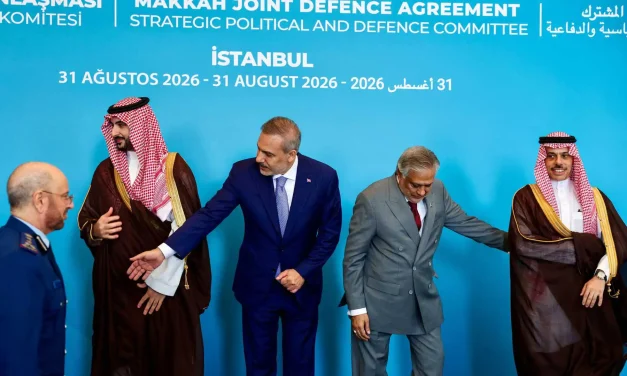
SCFR Online – Opinion: The Makkah Pact, signed between Saudi Arabia, Pakistan, and Turkey under the motto “an attack on one is an attack on all,” is viewed by some analysts less as a full-fledged military coalition and more as an attempt to reduce security dependence on an external power and to establish a regional security mechanism.

Implications of the US-Saudi Nuclear Agreement

SCFR Online – Opinion: The new US-Saudi nuclear agreement, despite legal and political ambiguities, could alter previous non-proliferation standards in West Asia and intensify nuclear competition, ushering it into a new phase.

An Analysis of Recent Turkey-Israeli Regime Tensions

SCFR Online – Opinion: Recent developments in Syria indicate an intensification of strategic rivalry between Turkey and the Israeli regime, but mutual considerations and the role of the United States have limited the likelihood of direct war.

Increasing criticism of the extensive Zionist lobby network

SCFR Online – Opinion: An examination of the mechanisms of the Israeli regime’s influence in the United States depicts a complex picture of shared interests, strategic dependencies, and the limitations of this relationship.

Realities of the Tripartite Makkah Pact

SCFR Online – Interview: The signing of the Makkah agreement between Saudi Arabia, Pakistan, and Turkey has raised questions about the future of the region’s security structure and the position of these countries in West Asian equations. Can this agreement become a genuine collective defense mechanism, or does it have more of a political and deterrent function than creating new military capacity?

Loading

Black Sea

Strategic considerations in Russia’s attacks and defenses against Ukraine

Strategic considerations in Russia’s attacks and defenses against Ukraine

Strategic Council Online—Interview: An analyst of Russia affairs says the recent military movements of Russia near the border with Ukraine were a reaction to the feeling of threat posed by Washington against Moscow, adding that Russian officials tried to preempt what they had predicated about a change in the US policy towards Moscow during the Biden presidency.

Effects of Second Karabakh War on Energy Equations in the Caucasus

Effects of Second Karabakh War on Energy Equations in the Caucasus

Strategic Council Online – An analyst on Caucasus affairs said: It seems that one of the consequences of the Second Karabakh War and lack of the Russian support for Armenia was that Russia, under geopolitical and territorial pressure, influenced the energy transfer issue and brought the war to a point to play its role in the ceasefire.

Implications of Turkish Military Movements

Implications of Turkish Military Movements

Strategic Council Online: At present, part of Turkey’s tensions with neighbouring countries and its surrounding areas are rooted in the “geopolitical coordinates and characteristics” of that country.

Reasons for OPEC’s Failure to Reduce production &  Supply

Reasons for OPEC’s Failure to Reduce production & Supply

Strategic Council Online: Russia’s creeping penetration in OPEC as a mate to OPEC and its non-cooperation with OPEC in its latest bid to avert further damage to member states shows that OPEC’s monopoly power in the oil market before being defeated by America’s growing power in production and extraction of Shale oil is struck by the double standards strategy and unilateralism of its members with non-member allies.

Reza Majidzadeh – Researcher in Political Economy of Development

أحدث الوظائف

The Makkah Pact; Reasons for its Formation and Challenges Ahead

SCFR Online – Opinion: The Makkah Pact, signed between Saudi Arabia, Pakistan, and Turkey under the motto “an attack on one is an attack on all,” is viewed by some analysts less as a full-fledged military coalition and more as an attempt to reduce security dependence on an external power and to establish a regional security mechanism.

Implications of the US-Saudi Nuclear Agreement

SCFR Online – Opinion: The new US-Saudi nuclear agreement, despite legal and political ambiguities, could alter previous non-proliferation standards in West Asia and intensify nuclear competition, ushering it into a new phase.

An Analysis of Recent Turkey-Israeli Regime Tensions

SCFR Online – Opinion: Recent developments in Syria indicate an intensification of strategic rivalry between Turkey and the Israeli regime, but mutual considerations and the role of the United States have limited the likelihood of direct war.

Increasing criticism of the extensive Zionist lobby network

SCFR Online – Opinion: An examination of the mechanisms of the Israeli regime’s influence in the United States depicts a complex picture of shared interests, strategic dependencies, and the limitations of this relationship.

Realities of the Tripartite Makkah Pact

SCFR Online – Interview: The signing of the Makkah agreement between Saudi Arabia, Pakistan, and Turkey has raised questions about the future of the region’s security structure and the position of these countries in West Asian equations. Can this agreement become a genuine collective defense mechanism, or does it have more of a political and deterrent function than creating new military capacity?

Loading

Black Sea

Strategic considerations in Russia’s attacks and defenses against Ukraine

Strategic considerations in Russia’s attacks and defenses against Ukraine

Strategic Council Online—Interview: An analyst of Russia affairs says the recent military movements of Russia near the border with Ukraine were a reaction to the feeling of threat posed by Washington against Moscow, adding that Russian officials tried to preempt what they had predicated about a change in the US policy towards Moscow during the Biden presidency.

Effects of Second Karabakh War on Energy Equations in the Caucasus

Effects of Second Karabakh War on Energy Equations in the Caucasus

Strategic Council Online – An analyst on Caucasus affairs said: It seems that one of the consequences of the Second Karabakh War and lack of the Russian support for Armenia was that Russia, under geopolitical and territorial pressure, influenced the energy transfer issue and brought the war to a point to play its role in the ceasefire.

Implications of Turkish Military Movements

Implications of Turkish Military Movements

Strategic Council Online: At present, part of Turkey’s tensions with neighbouring countries and its surrounding areas are rooted in the “geopolitical coordinates and characteristics” of that country.

Reasons for OPEC’s Failure to Reduce production &  Supply

Reasons for OPEC’s Failure to Reduce production & Supply

Strategic Council Online: Russia’s creeping penetration in OPEC as a mate to OPEC and its non-cooperation with OPEC in its latest bid to avert further damage to member states shows that OPEC’s monopoly power in the oil market before being defeated by America’s growing power in production and extraction of Shale oil is struck by the double standards strategy and unilateralism of its members with non-member allies.

Reza Majidzadeh – Researcher in Political Economy of Development

Black Sea

Strategic considerations in Russia’s attacks and defenses against Ukraine

Strategic considerations in Russia’s attacks and defenses against Ukraine

Strategic Council Online—Interview: An analyst of Russia affairs says the recent military movements of Russia near the border with Ukraine were a reaction to the feeling of threat posed by Washington against Moscow, adding that Russian officials tried to preempt what they had predicated about a change in the US policy towards Moscow during the Biden presidency.

Effects of Second Karabakh War on Energy Equations in the Caucasus

Effects of Second Karabakh War on Energy Equations in the Caucasus

Strategic Council Online – An analyst on Caucasus affairs said: It seems that one of the consequences of the Second Karabakh War and lack of the Russian support for Armenia was that Russia, under geopolitical and territorial pressure, influenced the energy transfer issue and brought the war to a point to play its role in the ceasefire.

Implications of Turkish Military Movements

Implications of Turkish Military Movements

Strategic Council Online: At present, part of Turkey’s tensions with neighbouring countries and its surrounding areas are rooted in the “geopolitical coordinates and characteristics” of that country.

Reasons for OPEC’s Failure to Reduce production &  Supply

Reasons for OPEC’s Failure to Reduce production & Supply

Strategic Council Online: Russia’s creeping penetration in OPEC as a mate to OPEC and its non-cooperation with OPEC in its latest bid to avert further damage to member states shows that OPEC’s monopoly power in the oil market before being defeated by America’s growing power in production and extraction of Shale oil is struck by the double standards strategy and unilateralism of its members with non-member allies.

Reza Majidzadeh – Researcher in Political Economy of Development

LATEST CONTENT

The Makkah Pact; Reasons for its Formation and Challenges Ahead

SCFR Online – Opinion: The Makkah Pact, signed between Saudi Arabia, Pakistan, and Turkey under the motto “an attack on one is an attack on all,” is viewed by some analysts less as a full-fledged military coalition and more as an attempt to reduce security dependence on an external power and to establish a regional security mechanism.

Implications of the US-Saudi Nuclear Agreement

SCFR Online – Opinion: The new US-Saudi nuclear agreement, despite legal and political ambiguities, could alter previous non-proliferation standards in West Asia and intensify nuclear competition, ushering it into a new phase.

An Analysis of Recent Turkey-Israeli Regime Tensions

SCFR Online – Opinion: Recent developments in Syria indicate an intensification of strategic rivalry between Turkey and the Israeli regime, but mutual considerations and the role of the United States have limited the likelihood of direct war.

Increasing criticism of the extensive Zionist lobby network

SCFR Online – Opinion: An examination of the mechanisms of the Israeli regime’s influence in the United States depicts a complex picture of shared interests, strategic dependencies, and the limitations of this relationship.

Realities of the Tripartite Makkah Pact

SCFR Online – Interview: The signing of the Makkah agreement between Saudi Arabia, Pakistan, and Turkey has raised questions about the future of the region’s security structure and the position of these countries in West Asian equations. Can this agreement become a genuine collective defense mechanism, or does it have more of a political and deterrent function than creating new military capacity?

Loading

Black Sea

Strategic considerations in Russia’s attacks and defenses against Ukraine

Strategic considerations in Russia’s attacks and defenses against Ukraine

Strategic Council Online—Interview: An analyst of Russia affairs says the recent military movements of Russia near the border with Ukraine were a reaction to the feeling of threat posed by Washington against Moscow, adding that Russian officials tried to preempt what they had predicated about a change in the US policy towards Moscow during the Biden presidency.

Effects of Second Karabakh War on Energy Equations in the Caucasus

Effects of Second Karabakh War on Energy Equations in the Caucasus

Strategic Council Online – An analyst on Caucasus affairs said: It seems that one of the consequences of the Second Karabakh War and lack of the Russian support for Armenia was that Russia, under geopolitical and territorial pressure, influenced the energy transfer issue and brought the war to a point to play its role in the ceasefire.

Implications of Turkish Military Movements

Implications of Turkish Military Movements

Strategic Council Online: At present, part of Turkey’s tensions with neighbouring countries and its surrounding areas are rooted in the “geopolitical coordinates and characteristics” of that country.

Reasons for OPEC’s Failure to Reduce production &  Supply

Reasons for OPEC’s Failure to Reduce production & Supply

Strategic Council Online: Russia’s creeping penetration in OPEC as a mate to OPEC and its non-cooperation with OPEC in its latest bid to avert further damage to member states shows that OPEC’s monopoly power in the oil market before being defeated by America’s growing power in production and extraction of Shale oil is struck by the double standards strategy and unilateralism of its members with non-member allies.

Reza Majidzadeh – Researcher in Political Economy of Development

ÚLTIMAS PUBLICACIONES

The Makkah Pact; Reasons for its Formation and Challenges Ahead

SCFR Online – Opinion: The Makkah Pact, signed between Saudi Arabia, Pakistan, and Turkey under the motto “an attack on one is an attack on all,” is viewed by some analysts less as a full-fledged military coalition and more as an attempt to reduce security dependence on an external power and to establish a regional security mechanism.

Implications of the US-Saudi Nuclear Agreement

SCFR Online – Opinion: The new US-Saudi nuclear agreement, despite legal and political ambiguities, could alter previous non-proliferation standards in West Asia and intensify nuclear competition, ushering it into a new phase.

An Analysis of Recent Turkey-Israeli Regime Tensions

SCFR Online – Opinion: Recent developments in Syria indicate an intensification of strategic rivalry between Turkey and the Israeli regime, but mutual considerations and the role of the United States have limited the likelihood of direct war.

Increasing criticism of the extensive Zionist lobby network

SCFR Online – Opinion: An examination of the mechanisms of the Israeli regime’s influence in the United States depicts a complex picture of shared interests, strategic dependencies, and the limitations of this relationship.

Realities of the Tripartite Makkah Pact

SCFR Online – Interview: The signing of the Makkah agreement between Saudi Arabia, Pakistan, and Turkey has raised questions about the future of the region’s security structure and the position of these countries in West Asian equations. Can this agreement become a genuine collective defense mechanism, or does it have more of a political and deterrent function than creating new military capacity?

Loading

Black Sea

Strategic considerations in Russia’s attacks and defenses against Ukraine

Strategic considerations in Russia’s attacks and defenses against Ukraine

Strategic Council Online—Interview: An analyst of Russia affairs says the recent military movements of Russia near the border with Ukraine were a reaction to the feeling of threat posed by Washington against Moscow, adding that Russian officials tried to preempt what they had predicated about a change in the US policy towards Moscow during the Biden presidency.

Effects of Second Karabakh War on Energy Equations in the Caucasus

Effects of Second Karabakh War on Energy Equations in the Caucasus

Strategic Council Online – An analyst on Caucasus affairs said: It seems that one of the consequences of the Second Karabakh War and lack of the Russian support for Armenia was that Russia, under geopolitical and territorial pressure, influenced the energy transfer issue and brought the war to a point to play its role in the ceasefire.

Implications of Turkish Military Movements

Implications of Turkish Military Movements

Strategic Council Online: At present, part of Turkey’s tensions with neighbouring countries and its surrounding areas are rooted in the “geopolitical coordinates and characteristics” of that country.

Reasons for OPEC’s Failure to Reduce production &  Supply

Reasons for OPEC’s Failure to Reduce production & Supply

Strategic Council Online: Russia’s creeping penetration in OPEC as a mate to OPEC and its non-cooperation with OPEC in its latest bid to avert further damage to member states shows that OPEC’s monopoly power in the oil market before being defeated by America’s growing power in production and extraction of Shale oil is struck by the double standards strategy and unilateralism of its members with non-member allies.

Reza Majidzadeh – Researcher in Political Economy of Development

ÚLTIMAS PUBLICACIONES

The Makkah Pact; Reasons for its Formation and Challenges Ahead

SCFR Online – Opinion: The Makkah Pact, signed between Saudi Arabia, Pakistan, and Turkey under the motto “an attack on one is an attack on all,” is viewed by some analysts less as a full-fledged military coalition and more as an attempt to reduce security dependence on an external power and to establish a regional security mechanism.

Implications of the US-Saudi Nuclear Agreement

SCFR Online – Opinion: The new US-Saudi nuclear agreement, despite legal and political ambiguities, could alter previous non-proliferation standards in West Asia and intensify nuclear competition, ushering it into a new phase.

An Analysis of Recent Turkey-Israeli Regime Tensions

SCFR Online – Opinion: Recent developments in Syria indicate an intensification of strategic rivalry between Turkey and the Israeli regime, but mutual considerations and the role of the United States have limited the likelihood of direct war.

Increasing criticism of the extensive Zionist lobby network

SCFR Online – Opinion: An examination of the mechanisms of the Israeli regime’s influence in the United States depicts a complex picture of shared interests, strategic dependencies, and the limitations of this relationship.

Realities of the Tripartite Makkah Pact

SCFR Online – Interview: The signing of the Makkah agreement between Saudi Arabia, Pakistan, and Turkey has raised questions about the future of the region’s security structure and the position of these countries in West Asian equations. Can this agreement become a genuine collective defense mechanism, or does it have more of a political and deterrent function than creating new military capacity?

Loading

Black Sea

Strategic considerations in Russia’s attacks and defenses against Ukraine

Strategic considerations in Russia’s attacks and defenses against Ukraine

Strategic Council Online—Interview: An analyst of Russia affairs says the recent military movements of Russia near the border with Ukraine were a reaction to the feeling of threat posed by Washington against Moscow, adding that Russian officials tried to preempt what they had predicated about a change in the US policy towards Moscow during the Biden presidency.

Effects of Second Karabakh War on Energy Equations in the Caucasus

Effects of Second Karabakh War on Energy Equations in the Caucasus

Strategic Council Online – An analyst on Caucasus affairs said: It seems that one of the consequences of the Second Karabakh War and lack of the Russian support for Armenia was that Russia, under geopolitical and territorial pressure, influenced the energy transfer issue and brought the war to a point to play its role in the ceasefire.

Implications of Turkish Military Movements

Implications of Turkish Military Movements

Strategic Council Online: At present, part of Turkey’s tensions with neighbouring countries and its surrounding areas are rooted in the “geopolitical coordinates and characteristics” of that country.

Reasons for OPEC’s Failure to Reduce production &  Supply

Reasons for OPEC’s Failure to Reduce production & Supply

Strategic Council Online: Russia’s creeping penetration in OPEC as a mate to OPEC and its non-cooperation with OPEC in its latest bid to avert further damage to member states shows that OPEC’s monopoly power in the oil market before being defeated by America’s growing power in production and extraction of Shale oil is struck by the double standards strategy and unilateralism of its members with non-member allies.

Reza Majidzadeh – Researcher in Political Economy of Development

ÚLTIMAS PUBLICACIONES

The Makkah Pact; Reasons for its Formation and Challenges Ahead

SCFR Online – Opinion: The Makkah Pact, signed between Saudi Arabia, Pakistan, and Turkey under the motto “an attack on one is an attack on all,” is viewed by some analysts less as a full-fledged military coalition and more as an attempt to reduce security dependence on an external power and to establish a regional security mechanism.

Implications of the US-Saudi Nuclear Agreement

SCFR Online – Opinion: The new US-Saudi nuclear agreement, despite legal and political ambiguities, could alter previous non-proliferation standards in West Asia and intensify nuclear competition, ushering it into a new phase.

An Analysis of Recent Turkey-Israeli Regime Tensions

SCFR Online – Opinion: Recent developments in Syria indicate an intensification of strategic rivalry between Turkey and the Israeli regime, but mutual considerations and the role of the United States have limited the likelihood of direct war.

Increasing criticism of the extensive Zionist lobby network

SCFR Online – Opinion: An examination of the mechanisms of the Israeli regime’s influence in the United States depicts a complex picture of shared interests, strategic dependencies, and the limitations of this relationship.

Realities of the Tripartite Makkah Pact

SCFR Online – Interview: The signing of the Makkah agreement between Saudi Arabia, Pakistan, and Turkey has raised questions about the future of the region’s security structure and the position of these countries in West Asian equations. Can this agreement become a genuine collective defense mechanism, or does it have more of a political and deterrent function than creating new military capacity?

Loading

Black Sea

Strategic considerations in Russia’s attacks and defenses against Ukraine

Strategic considerations in Russia’s attacks and defenses against Ukraine

Strategic Council Online—Interview: An analyst of Russia affairs says the recent military movements of Russia near the border with Ukraine were a reaction to the feeling of threat posed by Washington against Moscow, adding that Russian officials tried to preempt what they had predicated about a change in the US policy towards Moscow during the Biden presidency.

Effects of Second Karabakh War on Energy Equations in the Caucasus

Effects of Second Karabakh War on Energy Equations in the Caucasus

Strategic Council Online – An analyst on Caucasus affairs said: It seems that one of the consequences of the Second Karabakh War and lack of the Russian support for Armenia was that Russia, under geopolitical and territorial pressure, influenced the energy transfer issue and brought the war to a point to play its role in the ceasefire.

Implications of Turkish Military Movements

Implications of Turkish Military Movements

Strategic Council Online: At present, part of Turkey’s tensions with neighbouring countries and its surrounding areas are rooted in the “geopolitical coordinates and characteristics” of that country.

Reasons for OPEC’s Failure to Reduce production &  Supply

Reasons for OPEC’s Failure to Reduce production & Supply

Strategic Council Online: Russia’s creeping penetration in OPEC as a mate to OPEC and its non-cooperation with OPEC in its latest bid to avert further damage to member states shows that OPEC’s monopoly power in the oil market before being defeated by America’s growing power in production and extraction of Shale oil is struck by the double standards strategy and unilateralism of its members with non-member allies.

Reza Majidzadeh – Researcher in Political Economy of Development

ÚLTIMAS PUBLICACIONES

The Makkah Pact; Reasons for its Formation and Challenges Ahead

SCFR Online – Opinion: The Makkah Pact, signed between Saudi Arabia, Pakistan, and Turkey under the motto “an attack on one is an attack on all,” is viewed by some analysts less as a full-fledged military coalition and more as an attempt to reduce security dependence on an external power and to establish a regional security mechanism.

Implications of the US-Saudi Nuclear Agreement

SCFR Online – Opinion: The new US-Saudi nuclear agreement, despite legal and political ambiguities, could alter previous non-proliferation standards in West Asia and intensify nuclear competition, ushering it into a new phase.

An Analysis of Recent Turkey-Israeli Regime Tensions

SCFR Online – Opinion: Recent developments in Syria indicate an intensification of strategic rivalry between Turkey and the Israeli regime, but mutual considerations and the role of the United States have limited the likelihood of direct war.

Increasing criticism of the extensive Zionist lobby network

SCFR Online – Opinion: An examination of the mechanisms of the Israeli regime’s influence in the United States depicts a complex picture of shared interests, strategic dependencies, and the limitations of this relationship.

Realities of the Tripartite Makkah Pact

SCFR Online – Interview: The signing of the Makkah agreement between Saudi Arabia, Pakistan, and Turkey has raised questions about the future of the region’s security structure and the position of these countries in West Asian equations. Can this agreement become a genuine collective defense mechanism, or does it have more of a political and deterrent function than creating new military capacity?

Loading