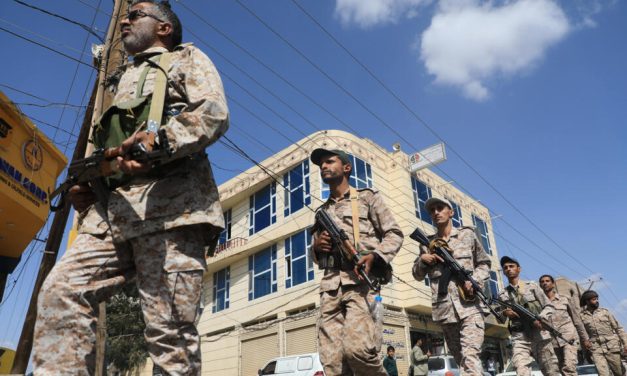
An Analysis of the Makkah Defense Pact
SCFR Online – Opinion: On Friday, August 7, the heads of state of three countries – Saudi Arabia, Turkey, and Pakistan – signed a text under the title “Makkah Joint Defense Agreement.”
Strategic Council Online – Note: The initiative to revive the Hejaz Railway, beyond being a transportation project, constitutes an attempt to redefine geopolitics, the economy, and Turkey’s regional position; however, its realization appears to face significant financial, security, and institutional challenges.
SCFR Online – Opinion: The Strait of Hormuz crisis is no longer merely the consequence of a military confrontation, but rather a sign of the transition from the US-centered maritime order to a new energy security structure involving the participation of emerging and influential powers.
SCFR Online – Opinion: Iran’s active deterrence strategy, while increasing the costs of US intervention, has increasingly exposed the hidden rifts between Washington’s interests and those of the Israeli regime.
SCFR Online – Opinion: The escalation of verbal and strategic tensions between Turkey and the Israeli regime, although not increasing the likelihood of direct war, indicates the formation of a new order in West Asian geopolitical rivalries.
Strategic Council Online – Note: Recent developments in the political geography of West Asia, from rising tensions in the Persian Gulf to missile and drone activities in the Red Sea and the recent warning by Kaja Kallas, the European Union’s foreign policy chief, regarding the threat to freedom of navigation, indicate a key pattern shift; the US-Iran war has moved beyond the scope of a regional and local confrontation and has linked two vital passageways for the global economy: the Strait of Hormuz and the Bab el-Mandeb Strait.
SCFR Online – Opinion: The Ukraine war was not merely a European crisis, but rather the starting point for the rearrangement of the global balance of power and a shift in the strategic behavior of great powers.
SCFR Online – Opinion: Great power competition is now pursued more in trade, currency, technology, and global supply chains than on the battlefields of military confrontation.
Strategic Council Online: Dr. Seyed Kamal Kharrazi emphasized that any negotiation with the United States must be based on equal footing and mutual respect, and its agenda must be agreed upon in advance.
Strategic Council Online: The president of the Strategic Council on Foreign Relations said in a meeting with Hans Grundberg, the UN Special Envoy for Yemen that the restoration of diplomatic relations between Iran and Saudi Arabia, which was mediated by China, will contribute to ending the war in Yemen.
Online Strategic Council: The President of Iran’s Strategic Council on Foreign Relations emphasized the necessity of cooperation and coordination between Afghanistan’s neighboring countries to contribute to stability, peace and prosperity in that country.
Strategic Council Online – President of the Strategic Council on Foreign Relations Dr. Kamal Kharazi Sunday met with Lebanese Prime Minister Najib Mikati on the sidelines of the 2022 Doha Forum.
Strategic Council Online: President of the Strategic Council on Foreign Relations said the solution to the Yemen crisis is to end the siege, establish a ceasefire and hold Yemeni-Yemeni talks, adding: The United Nations must, in this way, show its goodwill by avoiding double standards and gain the trust of the Yemeni National Salvation Government.
Strategic Council Online: The President of Strategic Council on Foreign Relations who participated in the 4th Meeting of the Leaders for Peace Foundation chaired by former Prime Minister of France Mr. Raffarin said confrontation with the challenges of the present world requires a “new multilateral order” on the basis of new realities and reform of the United Nations and Security Council, as well as dis-interference of great powers in international organizations.
Strategic Council Online: President of the Strategic Council on Foreign Relations, in response to our reporter’s question about Iran-China Comprehensive Cooperation Plan document, said: This document is not a contract nor an agreement to contain details of cooperation between the two countries in the next 25 years; it is rather a letter of intent and roadmap to guide cooperation between the two countries in various fields over the coming years and, as the Ministry of Foreign Affairs has explained in its factsheet, it contains outlines of long-term cooperation between the two countries in political, strategic, economic and cultural fields.
Strategic Council Online: President of the Strategic Council for Foreign Relations Dr. Kamal Kharrazi pointing to the recent developments and Iran’s suspension decision said the deal’s rescue will depend on the European efforts within the next two months to make up for past procrastination in fulfilling their commitments.
Strategic Council Online: President of the Strategic Council on Foreign Relations Dr. Kamal Kharrazi says Europe’s implementation of its commitments in the Joint Comprehensive Plan of Action (JCPOA) and accelerating the conditions for Iran to benefit from economic and trade exchanges with Europe is an important test for Europe’s independence, because the United States is trying to destroy the JCPOA by threatening Iran and humiliating Europe at the same time.
Strategic Council Online: President of the Strategic Council on Foreign Relations Dr Kamal Kharrazi says multilateralism is now on the brink of extinction as a result of the unilateral measures of the US administration. Therefore, he stressed, it is necessary to identify the roots of the failure of multilateralism and make collective efforts to give birth to neo-multilateralism.
SCFR Online – Opinion: On Friday, August 7, the heads of state of three countries – Saudi Arabia, Turkey, and Pakistan – signed a text under the title “Makkah Joint Defense Agreement.”
Strategic Council Online – Note: The initiative to revive the Hejaz Railway, beyond being a transportation project, constitutes an attempt to redefine geopolitics, the economy, and Turkey’s regional position; however, its realization appears to face significant financial, security, and institutional challenges.
SCFR Online – Opinion: The Strait of Hormuz crisis is no longer merely the consequence of a military confrontation, but rather a sign of the transition from the US-centered maritime order to a new energy security structure involving the participation of emerging and influential powers.
SCFR Online – Opinion: Iran’s active deterrence strategy, while increasing the costs of US intervention, has increasingly exposed the hidden rifts between Washington’s interests and those of the Israeli regime.
SCFR Online – Opinion: The escalation of verbal and strategic tensions between Turkey and the Israeli regime, although not increasing the likelihood of direct war, indicates the formation of a new order in West Asian geopolitical rivalries.
Strategic Council Online – Note: Recent developments in the political geography of West Asia, from rising tensions in the Persian Gulf to missile and drone activities in the Red Sea and the recent warning by Kaja Kallas, the European Union’s foreign policy chief, regarding the threat to freedom of navigation, indicate a key pattern shift; the US-Iran war has moved beyond the scope of a regional and local confrontation and has linked two vital passageways for the global economy: the Strait of Hormuz and the Bab el-Mandeb Strait.
SCFR Online – Opinion: The Ukraine war was not merely a European crisis, but rather the starting point for the rearrangement of the global balance of power and a shift in the strategic behavior of great powers.
SCFR Online – Opinion: Great power competition is now pursued more in trade, currency, technology, and global supply chains than on the battlefields of military confrontation.
Strategic Council Online: Dr. Seyed Kamal Kharrazi emphasized that any negotiation with the United States must be based on equal footing and mutual respect, and its agenda must be agreed upon in advance.
Strategic Council Online: The president of the Strategic Council on Foreign Relations said in a meeting with Hans Grundberg, the UN Special Envoy for Yemen that the restoration of diplomatic relations between Iran and Saudi Arabia, which was mediated by China, will contribute to ending the war in Yemen.
Online Strategic Council: The President of Iran’s Strategic Council on Foreign Relations emphasized the necessity of cooperation and coordination between Afghanistan’s neighboring countries to contribute to stability, peace and prosperity in that country.
Strategic Council Online – President of the Strategic Council on Foreign Relations Dr. Kamal Kharazi Sunday met with Lebanese Prime Minister Najib Mikati on the sidelines of the 2022 Doha Forum.
Strategic Council Online: President of the Strategic Council on Foreign Relations said the solution to the Yemen crisis is to end the siege, establish a ceasefire and hold Yemeni-Yemeni talks, adding: The United Nations must, in this way, show its goodwill by avoiding double standards and gain the trust of the Yemeni National Salvation Government.
Strategic Council Online: The President of Strategic Council on Foreign Relations who participated in the 4th Meeting of the Leaders for Peace Foundation chaired by former Prime Minister of France Mr. Raffarin said confrontation with the challenges of the present world requires a “new multilateral order” on the basis of new realities and reform of the United Nations and Security Council, as well as dis-interference of great powers in international organizations.
Strategic Council Online: President of the Strategic Council on Foreign Relations, in response to our reporter’s question about Iran-China Comprehensive Cooperation Plan document, said: This document is not a contract nor an agreement to contain details of cooperation between the two countries in the next 25 years; it is rather a letter of intent and roadmap to guide cooperation between the two countries in various fields over the coming years and, as the Ministry of Foreign Affairs has explained in its factsheet, it contains outlines of long-term cooperation between the two countries in political, strategic, economic and cultural fields.
Strategic Council Online: President of the Strategic Council for Foreign Relations Dr. Kamal Kharrazi pointing to the recent developments and Iran’s suspension decision said the deal’s rescue will depend on the European efforts within the next two months to make up for past procrastination in fulfilling their commitments.
Strategic Council Online: President of the Strategic Council on Foreign Relations Dr. Kamal Kharrazi says Europe’s implementation of its commitments in the Joint Comprehensive Plan of Action (JCPOA) and accelerating the conditions for Iran to benefit from economic and trade exchanges with Europe is an important test for Europe’s independence, because the United States is trying to destroy the JCPOA by threatening Iran and humiliating Europe at the same time.
Strategic Council Online: President of the Strategic Council on Foreign Relations Dr Kamal Kharrazi says multilateralism is now on the brink of extinction as a result of the unilateral measures of the US administration. Therefore, he stressed, it is necessary to identify the roots of the failure of multilateralism and make collective efforts to give birth to neo-multilateralism.
Strategic Council Online: Dr. Seyed Kamal Kharrazi emphasized that any negotiation with the United States must be based on equal footing and mutual respect, and its agenda must be agreed upon in advance.
Strategic Council Online: The president of the Strategic Council on Foreign Relations said in a meeting with Hans Grundberg, the UN Special Envoy for Yemen that the restoration of diplomatic relations between Iran and Saudi Arabia, which was mediated by China, will contribute to ending the war in Yemen.
Online Strategic Council: The President of Iran’s Strategic Council on Foreign Relations emphasized the necessity of cooperation and coordination between Afghanistan’s neighboring countries to contribute to stability, peace and prosperity in that country.
Strategic Council Online – President of the Strategic Council on Foreign Relations Dr. Kamal Kharazi Sunday met with Lebanese Prime Minister Najib Mikati on the sidelines of the 2022 Doha Forum.
Strategic Council Online: President of the Strategic Council on Foreign Relations said the solution to the Yemen crisis is to end the siege, establish a ceasefire and hold Yemeni-Yemeni talks, adding: The United Nations must, in this way, show its goodwill by avoiding double standards and gain the trust of the Yemeni National Salvation Government.
Strategic Council Online: The President of Strategic Council on Foreign Relations who participated in the 4th Meeting of the Leaders for Peace Foundation chaired by former Prime Minister of France Mr. Raffarin said confrontation with the challenges of the present world requires a “new multilateral order” on the basis of new realities and reform of the United Nations and Security Council, as well as dis-interference of great powers in international organizations.
Strategic Council Online: President of the Strategic Council on Foreign Relations, in response to our reporter’s question about Iran-China Comprehensive Cooperation Plan document, said: This document is not a contract nor an agreement to contain details of cooperation between the two countries in the next 25 years; it is rather a letter of intent and roadmap to guide cooperation between the two countries in various fields over the coming years and, as the Ministry of Foreign Affairs has explained in its factsheet, it contains outlines of long-term cooperation between the two countries in political, strategic, economic and cultural fields.
Strategic Council Online: President of the Strategic Council for Foreign Relations Dr. Kamal Kharrazi pointing to the recent developments and Iran’s suspension decision said the deal’s rescue will depend on the European efforts within the next two months to make up for past procrastination in fulfilling their commitments.
Strategic Council Online: President of the Strategic Council on Foreign Relations Dr. Kamal Kharrazi says Europe’s implementation of its commitments in the Joint Comprehensive Plan of Action (JCPOA) and accelerating the conditions for Iran to benefit from economic and trade exchanges with Europe is an important test for Europe’s independence, because the United States is trying to destroy the JCPOA by threatening Iran and humiliating Europe at the same time.
Strategic Council Online: President of the Strategic Council on Foreign Relations Dr Kamal Kharrazi says multilateralism is now on the brink of extinction as a result of the unilateral measures of the US administration. Therefore, he stressed, it is necessary to identify the roots of the failure of multilateralism and make collective efforts to give birth to neo-multilateralism.
SCFR Online – Opinion: On Friday, August 7, the heads of state of three countries – Saudi Arabia, Turkey, and Pakistan – signed a text under the title “Makkah Joint Defense Agreement.”
Strategic Council Online – Note: The initiative to revive the Hejaz Railway, beyond being a transportation project, constitutes an attempt to redefine geopolitics, the economy, and Turkey’s regional position; however, its realization appears to face significant financial, security, and institutional challenges.
SCFR Online – Opinion: The Strait of Hormuz crisis is no longer merely the consequence of a military confrontation, but rather a sign of the transition from the US-centered maritime order to a new energy security structure involving the participation of emerging and influential powers.
SCFR Online – Opinion: Iran’s active deterrence strategy, while increasing the costs of US intervention, has increasingly exposed the hidden rifts between Washington’s interests and those of the Israeli regime.
SCFR Online – Opinion: The escalation of verbal and strategic tensions between Turkey and the Israeli regime, although not increasing the likelihood of direct war, indicates the formation of a new order in West Asian geopolitical rivalries.
Strategic Council Online – Note: Recent developments in the political geography of West Asia, from rising tensions in the Persian Gulf to missile and drone activities in the Red Sea and the recent warning by Kaja Kallas, the European Union’s foreign policy chief, regarding the threat to freedom of navigation, indicate a key pattern shift; the US-Iran war has moved beyond the scope of a regional and local confrontation and has linked two vital passageways for the global economy: the Strait of Hormuz and the Bab el-Mandeb Strait.
SCFR Online – Opinion: The Ukraine war was not merely a European crisis, but rather the starting point for the rearrangement of the global balance of power and a shift in the strategic behavior of great powers.
SCFR Online – Opinion: Great power competition is now pursued more in trade, currency, technology, and global supply chains than on the battlefields of military confrontation.
Strategic Council Online: Dr. Seyed Kamal Kharrazi emphasized that any negotiation with the United States must be based on equal footing and mutual respect, and its agenda must be agreed upon in advance.
Strategic Council Online: The president of the Strategic Council on Foreign Relations said in a meeting with Hans Grundberg, the UN Special Envoy for Yemen that the restoration of diplomatic relations between Iran and Saudi Arabia, which was mediated by China, will contribute to ending the war in Yemen.
Online Strategic Council: The President of Iran’s Strategic Council on Foreign Relations emphasized the necessity of cooperation and coordination between Afghanistan’s neighboring countries to contribute to stability, peace and prosperity in that country.
Strategic Council Online – President of the Strategic Council on Foreign Relations Dr. Kamal Kharazi Sunday met with Lebanese Prime Minister Najib Mikati on the sidelines of the 2022 Doha Forum.
Strategic Council Online: President of the Strategic Council on Foreign Relations said the solution to the Yemen crisis is to end the siege, establish a ceasefire and hold Yemeni-Yemeni talks, adding: The United Nations must, in this way, show its goodwill by avoiding double standards and gain the trust of the Yemeni National Salvation Government.
Strategic Council Online: The President of Strategic Council on Foreign Relations who participated in the 4th Meeting of the Leaders for Peace Foundation chaired by former Prime Minister of France Mr. Raffarin said confrontation with the challenges of the present world requires a “new multilateral order” on the basis of new realities and reform of the United Nations and Security Council, as well as dis-interference of great powers in international organizations.
Strategic Council Online: President of the Strategic Council on Foreign Relations, in response to our reporter’s question about Iran-China Comprehensive Cooperation Plan document, said: This document is not a contract nor an agreement to contain details of cooperation between the two countries in the next 25 years; it is rather a letter of intent and roadmap to guide cooperation between the two countries in various fields over the coming years and, as the Ministry of Foreign Affairs has explained in its factsheet, it contains outlines of long-term cooperation between the two countries in political, strategic, economic and cultural fields.
Strategic Council Online: President of the Strategic Council for Foreign Relations Dr. Kamal Kharrazi pointing to the recent developments and Iran’s suspension decision said the deal’s rescue will depend on the European efforts within the next two months to make up for past procrastination in fulfilling their commitments.
Strategic Council Online: President of the Strategic Council on Foreign Relations Dr. Kamal Kharrazi says Europe’s implementation of its commitments in the Joint Comprehensive Plan of Action (JCPOA) and accelerating the conditions for Iran to benefit from economic and trade exchanges with Europe is an important test for Europe’s independence, because the United States is trying to destroy the JCPOA by threatening Iran and humiliating Europe at the same time.
Strategic Council Online: President of the Strategic Council on Foreign Relations Dr Kamal Kharrazi says multilateralism is now on the brink of extinction as a result of the unilateral measures of the US administration. Therefore, he stressed, it is necessary to identify the roots of the failure of multilateralism and make collective efforts to give birth to neo-multilateralism.
SCFR Online – Opinion: On Friday, August 7, the heads of state of three countries – Saudi Arabia, Turkey, and Pakistan – signed a text under the title “Makkah Joint Defense Agreement.”
Strategic Council Online – Note: The initiative to revive the Hejaz Railway, beyond being a transportation project, constitutes an attempt to redefine geopolitics, the economy, and Turkey’s regional position; however, its realization appears to face significant financial, security, and institutional challenges.
SCFR Online – Opinion: The Strait of Hormuz crisis is no longer merely the consequence of a military confrontation, but rather a sign of the transition from the US-centered maritime order to a new energy security structure involving the participation of emerging and influential powers.
SCFR Online – Opinion: Iran’s active deterrence strategy, while increasing the costs of US intervention, has increasingly exposed the hidden rifts between Washington’s interests and those of the Israeli regime.
SCFR Online – Opinion: The escalation of verbal and strategic tensions between Turkey and the Israeli regime, although not increasing the likelihood of direct war, indicates the formation of a new order in West Asian geopolitical rivalries.
Strategic Council Online – Note: Recent developments in the political geography of West Asia, from rising tensions in the Persian Gulf to missile and drone activities in the Red Sea and the recent warning by Kaja Kallas, the European Union’s foreign policy chief, regarding the threat to freedom of navigation, indicate a key pattern shift; the US-Iran war has moved beyond the scope of a regional and local confrontation and has linked two vital passageways for the global economy: the Strait of Hormuz and the Bab el-Mandeb Strait.
SCFR Online – Opinion: The Ukraine war was not merely a European crisis, but rather the starting point for the rearrangement of the global balance of power and a shift in the strategic behavior of great powers.
SCFR Online – Opinion: Great power competition is now pursued more in trade, currency, technology, and global supply chains than on the battlefields of military confrontation.
Strategic Council Online: Dr. Seyed Kamal Kharrazi emphasized that any negotiation with the United States must be based on equal footing and mutual respect, and its agenda must be agreed upon in advance.
Strategic Council Online: The president of the Strategic Council on Foreign Relations said in a meeting with Hans Grundberg, the UN Special Envoy for Yemen that the restoration of diplomatic relations between Iran and Saudi Arabia, which was mediated by China, will contribute to ending the war in Yemen.
Online Strategic Council: The President of Iran’s Strategic Council on Foreign Relations emphasized the necessity of cooperation and coordination between Afghanistan’s neighboring countries to contribute to stability, peace and prosperity in that country.
Strategic Council Online – President of the Strategic Council on Foreign Relations Dr. Kamal Kharazi Sunday met with Lebanese Prime Minister Najib Mikati on the sidelines of the 2022 Doha Forum.
Strategic Council Online: President of the Strategic Council on Foreign Relations said the solution to the Yemen crisis is to end the siege, establish a ceasefire and hold Yemeni-Yemeni talks, adding: The United Nations must, in this way, show its goodwill by avoiding double standards and gain the trust of the Yemeni National Salvation Government.
Strategic Council Online: The President of Strategic Council on Foreign Relations who participated in the 4th Meeting of the Leaders for Peace Foundation chaired by former Prime Minister of France Mr. Raffarin said confrontation with the challenges of the present world requires a “new multilateral order” on the basis of new realities and reform of the United Nations and Security Council, as well as dis-interference of great powers in international organizations.
Strategic Council Online: President of the Strategic Council on Foreign Relations, in response to our reporter’s question about Iran-China Comprehensive Cooperation Plan document, said: This document is not a contract nor an agreement to contain details of cooperation between the two countries in the next 25 years; it is rather a letter of intent and roadmap to guide cooperation between the two countries in various fields over the coming years and, as the Ministry of Foreign Affairs has explained in its factsheet, it contains outlines of long-term cooperation between the two countries in political, strategic, economic and cultural fields.
Strategic Council Online: President of the Strategic Council for Foreign Relations Dr. Kamal Kharrazi pointing to the recent developments and Iran’s suspension decision said the deal’s rescue will depend on the European efforts within the next two months to make up for past procrastination in fulfilling their commitments.
Strategic Council Online: President of the Strategic Council on Foreign Relations Dr. Kamal Kharrazi says Europe’s implementation of its commitments in the Joint Comprehensive Plan of Action (JCPOA) and accelerating the conditions for Iran to benefit from economic and trade exchanges with Europe is an important test for Europe’s independence, because the United States is trying to destroy the JCPOA by threatening Iran and humiliating Europe at the same time.
Strategic Council Online: President of the Strategic Council on Foreign Relations Dr Kamal Kharrazi says multilateralism is now on the brink of extinction as a result of the unilateral measures of the US administration. Therefore, he stressed, it is necessary to identify the roots of the failure of multilateralism and make collective efforts to give birth to neo-multilateralism.
SCFR Online – Opinion: On Friday, August 7, the heads of state of three countries – Saudi Arabia, Turkey, and Pakistan – signed a text under the title “Makkah Joint Defense Agreement.”
Strategic Council Online – Note: The initiative to revive the Hejaz Railway, beyond being a transportation project, constitutes an attempt to redefine geopolitics, the economy, and Turkey’s regional position; however, its realization appears to face significant financial, security, and institutional challenges.
SCFR Online – Opinion: The Strait of Hormuz crisis is no longer merely the consequence of a military confrontation, but rather a sign of the transition from the US-centered maritime order to a new energy security structure involving the participation of emerging and influential powers.
SCFR Online – Opinion: Iran’s active deterrence strategy, while increasing the costs of US intervention, has increasingly exposed the hidden rifts between Washington’s interests and those of the Israeli regime.
SCFR Online – Opinion: The escalation of verbal and strategic tensions between Turkey and the Israeli regime, although not increasing the likelihood of direct war, indicates the formation of a new order in West Asian geopolitical rivalries.
Strategic Council Online – Note: Recent developments in the political geography of West Asia, from rising tensions in the Persian Gulf to missile and drone activities in the Red Sea and the recent warning by Kaja Kallas, the European Union’s foreign policy chief, regarding the threat to freedom of navigation, indicate a key pattern shift; the US-Iran war has moved beyond the scope of a regional and local confrontation and has linked two vital passageways for the global economy: the Strait of Hormuz and the Bab el-Mandeb Strait.
SCFR Online – Opinion: The Ukraine war was not merely a European crisis, but rather the starting point for the rearrangement of the global balance of power and a shift in the strategic behavior of great powers.
SCFR Online – Opinion: Great power competition is now pursued more in trade, currency, technology, and global supply chains than on the battlefields of military confrontation.
Strategic Council Online: Dr. Seyed Kamal Kharrazi emphasized that any negotiation with the United States must be based on equal footing and mutual respect, and its agenda must be agreed upon in advance.
Strategic Council Online: The president of the Strategic Council on Foreign Relations said in a meeting with Hans Grundberg, the UN Special Envoy for Yemen that the restoration of diplomatic relations between Iran and Saudi Arabia, which was mediated by China, will contribute to ending the war in Yemen.
Online Strategic Council: The President of Iran’s Strategic Council on Foreign Relations emphasized the necessity of cooperation and coordination between Afghanistan’s neighboring countries to contribute to stability, peace and prosperity in that country.
Strategic Council Online – President of the Strategic Council on Foreign Relations Dr. Kamal Kharazi Sunday met with Lebanese Prime Minister Najib Mikati on the sidelines of the 2022 Doha Forum.
Strategic Council Online: President of the Strategic Council on Foreign Relations said the solution to the Yemen crisis is to end the siege, establish a ceasefire and hold Yemeni-Yemeni talks, adding: The United Nations must, in this way, show its goodwill by avoiding double standards and gain the trust of the Yemeni National Salvation Government.
Strategic Council Online: The President of Strategic Council on Foreign Relations who participated in the 4th Meeting of the Leaders for Peace Foundation chaired by former Prime Minister of France Mr. Raffarin said confrontation with the challenges of the present world requires a “new multilateral order” on the basis of new realities and reform of the United Nations and Security Council, as well as dis-interference of great powers in international organizations.
Strategic Council Online: President of the Strategic Council on Foreign Relations, in response to our reporter’s question about Iran-China Comprehensive Cooperation Plan document, said: This document is not a contract nor an agreement to contain details of cooperation between the two countries in the next 25 years; it is rather a letter of intent and roadmap to guide cooperation between the two countries in various fields over the coming years and, as the Ministry of Foreign Affairs has explained in its factsheet, it contains outlines of long-term cooperation between the two countries in political, strategic, economic and cultural fields.
Strategic Council Online: President of the Strategic Council for Foreign Relations Dr. Kamal Kharrazi pointing to the recent developments and Iran’s suspension decision said the deal’s rescue will depend on the European efforts within the next two months to make up for past procrastination in fulfilling their commitments.
Strategic Council Online: President of the Strategic Council on Foreign Relations Dr. Kamal Kharrazi says Europe’s implementation of its commitments in the Joint Comprehensive Plan of Action (JCPOA) and accelerating the conditions for Iran to benefit from economic and trade exchanges with Europe is an important test for Europe’s independence, because the United States is trying to destroy the JCPOA by threatening Iran and humiliating Europe at the same time.
Strategic Council Online: President of the Strategic Council on Foreign Relations Dr Kamal Kharrazi says multilateralism is now on the brink of extinction as a result of the unilateral measures of the US administration. Therefore, he stressed, it is necessary to identify the roots of the failure of multilateralism and make collective efforts to give birth to neo-multilateralism.
SCFR Online – Opinion: On Friday, August 7, the heads of state of three countries – Saudi Arabia, Turkey, and Pakistan – signed a text under the title “Makkah Joint Defense Agreement.”
Strategic Council Online – Note: The initiative to revive the Hejaz Railway, beyond being a transportation project, constitutes an attempt to redefine geopolitics, the economy, and Turkey’s regional position; however, its realization appears to face significant financial, security, and institutional challenges.
SCFR Online – Opinion: The Strait of Hormuz crisis is no longer merely the consequence of a military confrontation, but rather a sign of the transition from the US-centered maritime order to a new energy security structure involving the participation of emerging and influential powers.
SCFR Online – Opinion: Iran’s active deterrence strategy, while increasing the costs of US intervention, has increasingly exposed the hidden rifts between Washington’s interests and those of the Israeli regime.
SCFR Online – Opinion: The escalation of verbal and strategic tensions between Turkey and the Israeli regime, although not increasing the likelihood of direct war, indicates the formation of a new order in West Asian geopolitical rivalries.
Strategic Council Online – Note: Recent developments in the political geography of West Asia, from rising tensions in the Persian Gulf to missile and drone activities in the Red Sea and the recent warning by Kaja Kallas, the European Union’s foreign policy chief, regarding the threat to freedom of navigation, indicate a key pattern shift; the US-Iran war has moved beyond the scope of a regional and local confrontation and has linked two vital passageways for the global economy: the Strait of Hormuz and the Bab el-Mandeb Strait.
SCFR Online – Opinion: The Ukraine war was not merely a European crisis, but rather the starting point for the rearrangement of the global balance of power and a shift in the strategic behavior of great powers.
SCFR Online – Opinion: Great power competition is now pursued more in trade, currency, technology, and global supply chains than on the battlefields of military confrontation.
Strategic Council Online: Dr. Seyed Kamal Kharrazi emphasized that any negotiation with the United States must be based on equal footing and mutual respect, and its agenda must be agreed upon in advance.
Strategic Council Online: The president of the Strategic Council on Foreign Relations said in a meeting with Hans Grundberg, the UN Special Envoy for Yemen that the restoration of diplomatic relations between Iran and Saudi Arabia, which was mediated by China, will contribute to ending the war in Yemen.
Online Strategic Council: The President of Iran’s Strategic Council on Foreign Relations emphasized the necessity of cooperation and coordination between Afghanistan’s neighboring countries to contribute to stability, peace and prosperity in that country.
Strategic Council Online – President of the Strategic Council on Foreign Relations Dr. Kamal Kharazi Sunday met with Lebanese Prime Minister Najib Mikati on the sidelines of the 2022 Doha Forum.
Strategic Council Online: President of the Strategic Council on Foreign Relations said the solution to the Yemen crisis is to end the siege, establish a ceasefire and hold Yemeni-Yemeni talks, adding: The United Nations must, in this way, show its goodwill by avoiding double standards and gain the trust of the Yemeni National Salvation Government.
Strategic Council Online: The President of Strategic Council on Foreign Relations who participated in the 4th Meeting of the Leaders for Peace Foundation chaired by former Prime Minister of France Mr. Raffarin said confrontation with the challenges of the present world requires a “new multilateral order” on the basis of new realities and reform of the United Nations and Security Council, as well as dis-interference of great powers in international organizations.
Strategic Council Online: President of the Strategic Council on Foreign Relations, in response to our reporter’s question about Iran-China Comprehensive Cooperation Plan document, said: This document is not a contract nor an agreement to contain details of cooperation between the two countries in the next 25 years; it is rather a letter of intent and roadmap to guide cooperation between the two countries in various fields over the coming years and, as the Ministry of Foreign Affairs has explained in its factsheet, it contains outlines of long-term cooperation between the two countries in political, strategic, economic and cultural fields.
Strategic Council Online: President of the Strategic Council for Foreign Relations Dr. Kamal Kharrazi pointing to the recent developments and Iran’s suspension decision said the deal’s rescue will depend on the European efforts within the next two months to make up for past procrastination in fulfilling their commitments.
Strategic Council Online: President of the Strategic Council on Foreign Relations Dr. Kamal Kharrazi says Europe’s implementation of its commitments in the Joint Comprehensive Plan of Action (JCPOA) and accelerating the conditions for Iran to benefit from economic and trade exchanges with Europe is an important test for Europe’s independence, because the United States is trying to destroy the JCPOA by threatening Iran and humiliating Europe at the same time.
Strategic Council Online: President of the Strategic Council on Foreign Relations Dr Kamal Kharrazi says multilateralism is now on the brink of extinction as a result of the unilateral measures of the US administration. Therefore, he stressed, it is necessary to identify the roots of the failure of multilateralism and make collective efforts to give birth to neo-multilateralism.
SCFR Online – Opinion: On Friday, August 7, the heads of state of three countries – Saudi Arabia, Turkey, and Pakistan – signed a text under the title “Makkah Joint Defense Agreement.”
Strategic Council Online – Note: The initiative to revive the Hejaz Railway, beyond being a transportation project, constitutes an attempt to redefine geopolitics, the economy, and Turkey’s regional position; however, its realization appears to face significant financial, security, and institutional challenges.
SCFR Online – Opinion: The Strait of Hormuz crisis is no longer merely the consequence of a military confrontation, but rather a sign of the transition from the US-centered maritime order to a new energy security structure involving the participation of emerging and influential powers.
SCFR Online – Opinion: Iran’s active deterrence strategy, while increasing the costs of US intervention, has increasingly exposed the hidden rifts between Washington’s interests and those of the Israeli regime.
SCFR Online – Opinion: The escalation of verbal and strategic tensions between Turkey and the Israeli regime, although not increasing the likelihood of direct war, indicates the formation of a new order in West Asian geopolitical rivalries.
Strategic Council Online – Note: Recent developments in the political geography of West Asia, from rising tensions in the Persian Gulf to missile and drone activities in the Red Sea and the recent warning by Kaja Kallas, the European Union’s foreign policy chief, regarding the threat to freedom of navigation, indicate a key pattern shift; the US-Iran war has moved beyond the scope of a regional and local confrontation and has linked two vital passageways for the global economy: the Strait of Hormuz and the Bab el-Mandeb Strait.
SCFR Online – Opinion: The Ukraine war was not merely a European crisis, but rather the starting point for the rearrangement of the global balance of power and a shift in the strategic behavior of great powers.
SCFR Online – Opinion: Great power competition is now pursued more in trade, currency, technology, and global supply chains than on the battlefields of military confrontation.