جدیدترین مطالب

Increasing criticism of the extensive Zionist lobby network

SCFR Online – Opinion: An examination of the mechanisms of the Israeli regime’s influence in the United States depicts a complex picture of shared interests, strategic dependencies, and the limitations of this relationship.

Realities of the Tripartite Makkah Pact

SCFR Online – Interview: The signing of the Makkah agreement between Saudi Arabia, Pakistan, and Turkey has raised questions about the future of the region’s security structure and the position of these countries in West Asian equations. Can this agreement become a genuine collective defense mechanism, or does it have more of a political and deterrent function than creating new military capacity?

Strategic Implications of the Reduction of US Weapons Stockpiles

SCFR Online – Opinion: The continuation of the US war against Iran, in addition to increasing operational costs, has called into question the actual capacity of the American arsenal to simultaneously fulfill security commitments on multiple fronts; an issue that affects deterrence, defense production capacity, and Washington’s resource prioritization.

The Formation of a New Order in Relations Between Powers

SCFR Online – Opinion: The Russia-Ukraine war and the war of the United States and the Israeli regime against Iran have been formed with different objectives and actors, but field and political developments indicate that they are not entirely separate from one another.

An Analysis of the Makkah Defense Pact

SCFR Online – Opinion: On Friday, August 7, the heads of state of three countries – Saudi Arabia, Turkey, and Pakistan – signed a text under the title “Makkah Joint Defense Agreement.”

Dimensions and challenges of the initiative to revive the Hejaz Railway

Strategic Council Online – Note: The initiative to revive the Hejaz Railway, beyond being a transportation project, constitutes an attempt to redefine geopolitics, the economy, and Turkey’s regional position; however, its realization appears to face significant financial, security, and institutional challenges.

Loading

Fayez al Sarraj

Prospects of Political Developments in Libya

Prospects of Political Developments in Libya

Strategic Council Online – An expert on Africa affairs commenting on the current situation in Libya and the transitional government said: The government that is currently in power in Libya is known as the transitional government or the government of national unity, and is the result of a process that the United Nations initiated several years ago for state-building in Libya.

Strategic Importance of Libyan Developments for Turkey and Greece

Strategic Importance of Libyan Developments for Turkey and Greece

Strategic Council Online – The Eastern Mediterranean, border issues as well as the maritime agreement between Turkey and Libya are among the axes that have caused tensions between Greece and Turkey over the past two years. One of the contentious issues between the two neighbors is the internal developments in Libya. The visits of the leaders of both Libyan factions to Turkey and Greece have been met with fringe and controversy, and the crisis in Libya has practically added to the scope of the traditional rivalry between Athens and Ankara. Libya is in a geopolitically sensitive position, and its developments directly affect the security of Africa, the Middle East and Europe. If the Libyan crisis is resolved, the country can increase its oil production in 2 to 3 years and start oil trade with southern Europe.
Mahmoud Fazeli – Analyst of international affairs

Prospects for negotiations to resolve the Libya crisis in Morocco

Prospects for negotiations to resolve the Libya crisis in Morocco

Strategic Council Online-Interview: A university professor says participants in the negotiations in Morocco are serious and determined to resolve the crisis in Libya, adding however that one cannot be optimistic about the outcome of the negotiations as there are ups and downs in the talks and the two sides are aware of the consequences of a war of attrition.

Possibility of Libya’s Disintegration Due to Foreign Intervention

Possibility of Libya’s Disintegration Due to Foreign Intervention

Strategic Council Online – Regional players such as Saudi Arabia, the United Arab Emirates and Turkey are attempting to break up Libya and establish two different sovereignties in the country. Therefore, if the war continues, Libya like Sudan, may be divided into the two eastern and western parts.
Hassan Hanizadeh – Expert on Asian Affairs

Libya eyeing lengthy and difficult negotiations

Libya eyeing lengthy and difficult negotiations

Strategic Council Online – Interview: The two sides of the war in Libya have ceased the conflict under the present circumstances and are calling for political talks to end the deadlock, an expert of international relations said, adding that they face lengthy and difficult negotiations.

$16 Billion Agreement Guarantees Turkey’s Long-Term Interests in Libya

$16 Billion Agreement Guarantees Turkey’s Long-Term Interests in Libya

Strategic Council Online – Explaining Turkey’s military and economic actions in Libya, an international affairs expert said that by abandoning diplomacy in Libya, Turkey and Qatar were following the “courage is the fastest way to victory” theory. The two countries have relied on the skeptics of the warring parties and their fear of the human and material consequences and costs of the war.

Egypt-Turkey Rivalry in Libya

Egypt-Turkey Rivalry in Libya

Strategic Council Online – A university professor said that Turkey’s sphere of influence and territorialization in Libya is approaching the strategic depth and the first influence of Egypt, and in some cases they overlap. He added that at the beginning outbreak of clashes between Egypt and Turkey exists on the battlefield, but after a while when the two sides reach a balance in interests and the war turns into one of attrition they will go for negotiations.

Libya; Scene of Turkey-Egypt Proxy War

Libya; Scene of Turkey-Egypt Proxy War

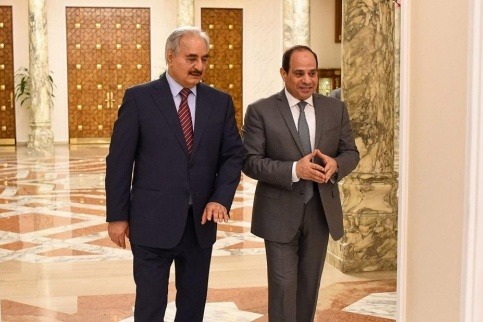
Strategic Council Online – For the Westerners, any defeat and retreat of General Haftar’s forces mean the defeat of Egypt and the Arab reactionary states, which have sought to secure Western interests in Libya on a proxy basis, and now with the big defeat of Khalifa Haftar’s forces, have left the battlefield to the rival forces supported by Turkey.
Jafar Qanadbashi – African Affairs Expert

Stability Challenges in Libya Despite Haftar’s Field Setback

Stability Challenges in Libya Despite Haftar’s Field Setback

Strategic Council Online – Talking about the field progress of the National Unity Government and the defeats of Khalifa Haftar in Libya, a university professor said it is unlikely that peace will be achieved in Libya in the current situation. He stressed that other agreements should be reached in addition to the Skhirat peace agreement another deal must be forged taking into account the demands of the political groups because if the government of national unity fails to meet the people’s demands we may see extremist groups emerge in the country.

أحدث الوظائف

Increasing criticism of the extensive Zionist lobby network

SCFR Online – Opinion: An examination of the mechanisms of the Israeli regime’s influence in the United States depicts a complex picture of shared interests, strategic dependencies, and the limitations of this relationship.

Realities of the Tripartite Makkah Pact

SCFR Online – Interview: The signing of the Makkah agreement between Saudi Arabia, Pakistan, and Turkey has raised questions about the future of the region’s security structure and the position of these countries in West Asian equations. Can this agreement become a genuine collective defense mechanism, or does it have more of a political and deterrent function than creating new military capacity?

Strategic Implications of the Reduction of US Weapons Stockpiles

SCFR Online – Opinion: The continuation of the US war against Iran, in addition to increasing operational costs, has called into question the actual capacity of the American arsenal to simultaneously fulfill security commitments on multiple fronts; an issue that affects deterrence, defense production capacity, and Washington’s resource prioritization.

The Formation of a New Order in Relations Between Powers

SCFR Online – Opinion: The Russia-Ukraine war and the war of the United States and the Israeli regime against Iran have been formed with different objectives and actors, but field and political developments indicate that they are not entirely separate from one another.

An Analysis of the Makkah Defense Pact

SCFR Online – Opinion: On Friday, August 7, the heads of state of three countries – Saudi Arabia, Turkey, and Pakistan – signed a text under the title “Makkah Joint Defense Agreement.”

Dimensions and challenges of the initiative to revive the Hejaz Railway

Strategic Council Online – Note: The initiative to revive the Hejaz Railway, beyond being a transportation project, constitutes an attempt to redefine geopolitics, the economy, and Turkey’s regional position; however, its realization appears to face significant financial, security, and institutional challenges.

Loading

Fayez al Sarraj

Prospects of Political Developments in Libya

Prospects of Political Developments in Libya

Strategic Council Online – An expert on Africa affairs commenting on the current situation in Libya and the transitional government said: The government that is currently in power in Libya is known as the transitional government or the government of national unity, and is the result of a process that the United Nations initiated several years ago for state-building in Libya.

Strategic Importance of Libyan Developments for Turkey and Greece

Strategic Importance of Libyan Developments for Turkey and Greece

Strategic Council Online – The Eastern Mediterranean, border issues as well as the maritime agreement between Turkey and Libya are among the axes that have caused tensions between Greece and Turkey over the past two years. One of the contentious issues between the two neighbors is the internal developments in Libya. The visits of the leaders of both Libyan factions to Turkey and Greece have been met with fringe and controversy, and the crisis in Libya has practically added to the scope of the traditional rivalry between Athens and Ankara. Libya is in a geopolitically sensitive position, and its developments directly affect the security of Africa, the Middle East and Europe. If the Libyan crisis is resolved, the country can increase its oil production in 2 to 3 years and start oil trade with southern Europe.
Mahmoud Fazeli – Analyst of international affairs

Prospects for negotiations to resolve the Libya crisis in Morocco

Prospects for negotiations to resolve the Libya crisis in Morocco

Strategic Council Online-Interview: A university professor says participants in the negotiations in Morocco are serious and determined to resolve the crisis in Libya, adding however that one cannot be optimistic about the outcome of the negotiations as there are ups and downs in the talks and the two sides are aware of the consequences of a war of attrition.

Possibility of Libya’s Disintegration Due to Foreign Intervention

Possibility of Libya’s Disintegration Due to Foreign Intervention

Strategic Council Online – Regional players such as Saudi Arabia, the United Arab Emirates and Turkey are attempting to break up Libya and establish two different sovereignties in the country. Therefore, if the war continues, Libya like Sudan, may be divided into the two eastern and western parts.
Hassan Hanizadeh – Expert on Asian Affairs

Libya eyeing lengthy and difficult negotiations

Libya eyeing lengthy and difficult negotiations

Strategic Council Online – Interview: The two sides of the war in Libya have ceased the conflict under the present circumstances and are calling for political talks to end the deadlock, an expert of international relations said, adding that they face lengthy and difficult negotiations.

$16 Billion Agreement Guarantees Turkey’s Long-Term Interests in Libya

$16 Billion Agreement Guarantees Turkey’s Long-Term Interests in Libya

Strategic Council Online – Explaining Turkey’s military and economic actions in Libya, an international affairs expert said that by abandoning diplomacy in Libya, Turkey and Qatar were following the “courage is the fastest way to victory” theory. The two countries have relied on the skeptics of the warring parties and their fear of the human and material consequences and costs of the war.

Egypt-Turkey Rivalry in Libya

Egypt-Turkey Rivalry in Libya

Strategic Council Online – A university professor said that Turkey’s sphere of influence and territorialization in Libya is approaching the strategic depth and the first influence of Egypt, and in some cases they overlap. He added that at the beginning outbreak of clashes between Egypt and Turkey exists on the battlefield, but after a while when the two sides reach a balance in interests and the war turns into one of attrition they will go for negotiations.

Libya; Scene of Turkey-Egypt Proxy War

Libya; Scene of Turkey-Egypt Proxy War

Strategic Council Online – For the Westerners, any defeat and retreat of General Haftar’s forces mean the defeat of Egypt and the Arab reactionary states, which have sought to secure Western interests in Libya on a proxy basis, and now with the big defeat of Khalifa Haftar’s forces, have left the battlefield to the rival forces supported by Turkey.
Jafar Qanadbashi – African Affairs Expert

Stability Challenges in Libya Despite Haftar’s Field Setback

Stability Challenges in Libya Despite Haftar’s Field Setback

Strategic Council Online – Talking about the field progress of the National Unity Government and the defeats of Khalifa Haftar in Libya, a university professor said it is unlikely that peace will be achieved in Libya in the current situation. He stressed that other agreements should be reached in addition to the Skhirat peace agreement another deal must be forged taking into account the demands of the political groups because if the government of national unity fails to meet the people’s demands we may see extremist groups emerge in the country.

Fayez al Sarraj

Prospects of Political Developments in Libya

Prospects of Political Developments in Libya

Strategic Council Online – An expert on Africa affairs commenting on the current situation in Libya and the transitional government said: The government that is currently in power in Libya is known as the transitional government or the government of national unity, and is the result of a process that the United Nations initiated several years ago for state-building in Libya.

Strategic Importance of Libyan Developments for Turkey and Greece

Strategic Importance of Libyan Developments for Turkey and Greece

Strategic Council Online – The Eastern Mediterranean, border issues as well as the maritime agreement between Turkey and Libya are among the axes that have caused tensions between Greece and Turkey over the past two years. One of the contentious issues between the two neighbors is the internal developments in Libya. The visits of the leaders of both Libyan factions to Turkey and Greece have been met with fringe and controversy, and the crisis in Libya has practically added to the scope of the traditional rivalry between Athens and Ankara. Libya is in a geopolitically sensitive position, and its developments directly affect the security of Africa, the Middle East and Europe. If the Libyan crisis is resolved, the country can increase its oil production in 2 to 3 years and start oil trade with southern Europe.
Mahmoud Fazeli – Analyst of international affairs

Prospects for negotiations to resolve the Libya crisis in Morocco

Prospects for negotiations to resolve the Libya crisis in Morocco

Strategic Council Online-Interview: A university professor says participants in the negotiations in Morocco are serious and determined to resolve the crisis in Libya, adding however that one cannot be optimistic about the outcome of the negotiations as there are ups and downs in the talks and the two sides are aware of the consequences of a war of attrition.

Possibility of Libya’s Disintegration Due to Foreign Intervention

Possibility of Libya’s Disintegration Due to Foreign Intervention

Strategic Council Online – Regional players such as Saudi Arabia, the United Arab Emirates and Turkey are attempting to break up Libya and establish two different sovereignties in the country. Therefore, if the war continues, Libya like Sudan, may be divided into the two eastern and western parts.
Hassan Hanizadeh – Expert on Asian Affairs

Libya eyeing lengthy and difficult negotiations

Libya eyeing lengthy and difficult negotiations

Strategic Council Online – Interview: The two sides of the war in Libya have ceased the conflict under the present circumstances and are calling for political talks to end the deadlock, an expert of international relations said, adding that they face lengthy and difficult negotiations.

$16 Billion Agreement Guarantees Turkey’s Long-Term Interests in Libya

$16 Billion Agreement Guarantees Turkey’s Long-Term Interests in Libya

Strategic Council Online – Explaining Turkey’s military and economic actions in Libya, an international affairs expert said that by abandoning diplomacy in Libya, Turkey and Qatar were following the “courage is the fastest way to victory” theory. The two countries have relied on the skeptics of the warring parties and their fear of the human and material consequences and costs of the war.

Egypt-Turkey Rivalry in Libya

Egypt-Turkey Rivalry in Libya

Strategic Council Online – A university professor said that Turkey’s sphere of influence and territorialization in Libya is approaching the strategic depth and the first influence of Egypt, and in some cases they overlap. He added that at the beginning outbreak of clashes between Egypt and Turkey exists on the battlefield, but after a while when the two sides reach a balance in interests and the war turns into one of attrition they will go for negotiations.

Libya; Scene of Turkey-Egypt Proxy War

Libya; Scene of Turkey-Egypt Proxy War

Strategic Council Online – For the Westerners, any defeat and retreat of General Haftar’s forces mean the defeat of Egypt and the Arab reactionary states, which have sought to secure Western interests in Libya on a proxy basis, and now with the big defeat of Khalifa Haftar’s forces, have left the battlefield to the rival forces supported by Turkey.
Jafar Qanadbashi – African Affairs Expert

Stability Challenges in Libya Despite Haftar’s Field Setback

Stability Challenges in Libya Despite Haftar’s Field Setback

Strategic Council Online – Talking about the field progress of the National Unity Government and the defeats of Khalifa Haftar in Libya, a university professor said it is unlikely that peace will be achieved in Libya in the current situation. He stressed that other agreements should be reached in addition to the Skhirat peace agreement another deal must be forged taking into account the demands of the political groups because if the government of national unity fails to meet the people’s demands we may see extremist groups emerge in the country.

LATEST CONTENT

Increasing criticism of the extensive Zionist lobby network

SCFR Online – Opinion: An examination of the mechanisms of the Israeli regime’s influence in the United States depicts a complex picture of shared interests, strategic dependencies, and the limitations of this relationship.

Realities of the Tripartite Makkah Pact

SCFR Online – Interview: The signing of the Makkah agreement between Saudi Arabia, Pakistan, and Turkey has raised questions about the future of the region’s security structure and the position of these countries in West Asian equations. Can this agreement become a genuine collective defense mechanism, or does it have more of a political and deterrent function than creating new military capacity?

Strategic Implications of the Reduction of US Weapons Stockpiles

SCFR Online – Opinion: The continuation of the US war against Iran, in addition to increasing operational costs, has called into question the actual capacity of the American arsenal to simultaneously fulfill security commitments on multiple fronts; an issue that affects deterrence, defense production capacity, and Washington’s resource prioritization.

The Formation of a New Order in Relations Between Powers

SCFR Online – Opinion: The Russia-Ukraine war and the war of the United States and the Israeli regime against Iran have been formed with different objectives and actors, but field and political developments indicate that they are not entirely separate from one another.

An Analysis of the Makkah Defense Pact

SCFR Online – Opinion: On Friday, August 7, the heads of state of three countries – Saudi Arabia, Turkey, and Pakistan – signed a text under the title “Makkah Joint Defense Agreement.”

Dimensions and challenges of the initiative to revive the Hejaz Railway

Strategic Council Online – Note: The initiative to revive the Hejaz Railway, beyond being a transportation project, constitutes an attempt to redefine geopolitics, the economy, and Turkey’s regional position; however, its realization appears to face significant financial, security, and institutional challenges.

Loading

Fayez al Sarraj

Prospects of Political Developments in Libya

Prospects of Political Developments in Libya

Strategic Council Online – An expert on Africa affairs commenting on the current situation in Libya and the transitional government said: The government that is currently in power in Libya is known as the transitional government or the government of national unity, and is the result of a process that the United Nations initiated several years ago for state-building in Libya.

Strategic Importance of Libyan Developments for Turkey and Greece

Strategic Importance of Libyan Developments for Turkey and Greece

Strategic Council Online – The Eastern Mediterranean, border issues as well as the maritime agreement between Turkey and Libya are among the axes that have caused tensions between Greece and Turkey over the past two years. One of the contentious issues between the two neighbors is the internal developments in Libya. The visits of the leaders of both Libyan factions to Turkey and Greece have been met with fringe and controversy, and the crisis in Libya has practically added to the scope of the traditional rivalry between Athens and Ankara. Libya is in a geopolitically sensitive position, and its developments directly affect the security of Africa, the Middle East and Europe. If the Libyan crisis is resolved, the country can increase its oil production in 2 to 3 years and start oil trade with southern Europe.
Mahmoud Fazeli – Analyst of international affairs

Prospects for negotiations to resolve the Libya crisis in Morocco

Prospects for negotiations to resolve the Libya crisis in Morocco

Strategic Council Online-Interview: A university professor says participants in the negotiations in Morocco are serious and determined to resolve the crisis in Libya, adding however that one cannot be optimistic about the outcome of the negotiations as there are ups and downs in the talks and the two sides are aware of the consequences of a war of attrition.

Possibility of Libya’s Disintegration Due to Foreign Intervention

Possibility of Libya’s Disintegration Due to Foreign Intervention

Strategic Council Online – Regional players such as Saudi Arabia, the United Arab Emirates and Turkey are attempting to break up Libya and establish two different sovereignties in the country. Therefore, if the war continues, Libya like Sudan, may be divided into the two eastern and western parts.
Hassan Hanizadeh – Expert on Asian Affairs

Libya eyeing lengthy and difficult negotiations

Libya eyeing lengthy and difficult negotiations

Strategic Council Online – Interview: The two sides of the war in Libya have ceased the conflict under the present circumstances and are calling for political talks to end the deadlock, an expert of international relations said, adding that they face lengthy and difficult negotiations.

$16 Billion Agreement Guarantees Turkey’s Long-Term Interests in Libya

$16 Billion Agreement Guarantees Turkey’s Long-Term Interests in Libya

Strategic Council Online – Explaining Turkey’s military and economic actions in Libya, an international affairs expert said that by abandoning diplomacy in Libya, Turkey and Qatar were following the “courage is the fastest way to victory” theory. The two countries have relied on the skeptics of the warring parties and their fear of the human and material consequences and costs of the war.

Egypt-Turkey Rivalry in Libya

Egypt-Turkey Rivalry in Libya

Strategic Council Online – A university professor said that Turkey’s sphere of influence and territorialization in Libya is approaching the strategic depth and the first influence of Egypt, and in some cases they overlap. He added that at the beginning outbreak of clashes between Egypt and Turkey exists on the battlefield, but after a while when the two sides reach a balance in interests and the war turns into one of attrition they will go for negotiations.

Libya; Scene of Turkey-Egypt Proxy War

Libya; Scene of Turkey-Egypt Proxy War

Strategic Council Online – For the Westerners, any defeat and retreat of General Haftar’s forces mean the defeat of Egypt and the Arab reactionary states, which have sought to secure Western interests in Libya on a proxy basis, and now with the big defeat of Khalifa Haftar’s forces, have left the battlefield to the rival forces supported by Turkey.
Jafar Qanadbashi – African Affairs Expert

Stability Challenges in Libya Despite Haftar’s Field Setback

Stability Challenges in Libya Despite Haftar’s Field Setback

Strategic Council Online – Talking about the field progress of the National Unity Government and the defeats of Khalifa Haftar in Libya, a university professor said it is unlikely that peace will be achieved in Libya in the current situation. He stressed that other agreements should be reached in addition to the Skhirat peace agreement another deal must be forged taking into account the demands of the political groups because if the government of national unity fails to meet the people’s demands we may see extremist groups emerge in the country.

ÚLTIMAS PUBLICACIONES

Increasing criticism of the extensive Zionist lobby network

SCFR Online – Opinion: An examination of the mechanisms of the Israeli regime’s influence in the United States depicts a complex picture of shared interests, strategic dependencies, and the limitations of this relationship.

Realities of the Tripartite Makkah Pact

SCFR Online – Interview: The signing of the Makkah agreement between Saudi Arabia, Pakistan, and Turkey has raised questions about the future of the region’s security structure and the position of these countries in West Asian equations. Can this agreement become a genuine collective defense mechanism, or does it have more of a political and deterrent function than creating new military capacity?

Strategic Implications of the Reduction of US Weapons Stockpiles

SCFR Online – Opinion: The continuation of the US war against Iran, in addition to increasing operational costs, has called into question the actual capacity of the American arsenal to simultaneously fulfill security commitments on multiple fronts; an issue that affects deterrence, defense production capacity, and Washington’s resource prioritization.

The Formation of a New Order in Relations Between Powers

SCFR Online – Opinion: The Russia-Ukraine war and the war of the United States and the Israeli regime against Iran have been formed with different objectives and actors, but field and political developments indicate that they are not entirely separate from one another.

An Analysis of the Makkah Defense Pact

SCFR Online – Opinion: On Friday, August 7, the heads of state of three countries – Saudi Arabia, Turkey, and Pakistan – signed a text under the title “Makkah Joint Defense Agreement.”

Dimensions and challenges of the initiative to revive the Hejaz Railway

Strategic Council Online – Note: The initiative to revive the Hejaz Railway, beyond being a transportation project, constitutes an attempt to redefine geopolitics, the economy, and Turkey’s regional position; however, its realization appears to face significant financial, security, and institutional challenges.

Loading

Fayez al Sarraj

Prospects of Political Developments in Libya

Prospects of Political Developments in Libya

Strategic Council Online – An expert on Africa affairs commenting on the current situation in Libya and the transitional government said: The government that is currently in power in Libya is known as the transitional government or the government of national unity, and is the result of a process that the United Nations initiated several years ago for state-building in Libya.

Strategic Importance of Libyan Developments for Turkey and Greece

Strategic Importance of Libyan Developments for Turkey and Greece

Strategic Council Online – The Eastern Mediterranean, border issues as well as the maritime agreement between Turkey and Libya are among the axes that have caused tensions between Greece and Turkey over the past two years. One of the contentious issues between the two neighbors is the internal developments in Libya. The visits of the leaders of both Libyan factions to Turkey and Greece have been met with fringe and controversy, and the crisis in Libya has practically added to the scope of the traditional rivalry between Athens and Ankara. Libya is in a geopolitically sensitive position, and its developments directly affect the security of Africa, the Middle East and Europe. If the Libyan crisis is resolved, the country can increase its oil production in 2 to 3 years and start oil trade with southern Europe.
Mahmoud Fazeli – Analyst of international affairs

Prospects for negotiations to resolve the Libya crisis in Morocco

Prospects for negotiations to resolve the Libya crisis in Morocco

Strategic Council Online-Interview: A university professor says participants in the negotiations in Morocco are serious and determined to resolve the crisis in Libya, adding however that one cannot be optimistic about the outcome of the negotiations as there are ups and downs in the talks and the two sides are aware of the consequences of a war of attrition.

Possibility of Libya’s Disintegration Due to Foreign Intervention

Possibility of Libya’s Disintegration Due to Foreign Intervention

Strategic Council Online – Regional players such as Saudi Arabia, the United Arab Emirates and Turkey are attempting to break up Libya and establish two different sovereignties in the country. Therefore, if the war continues, Libya like Sudan, may be divided into the two eastern and western parts.
Hassan Hanizadeh – Expert on Asian Affairs

Libya eyeing lengthy and difficult negotiations

Libya eyeing lengthy and difficult negotiations

Strategic Council Online – Interview: The two sides of the war in Libya have ceased the conflict under the present circumstances and are calling for political talks to end the deadlock, an expert of international relations said, adding that they face lengthy and difficult negotiations.

$16 Billion Agreement Guarantees Turkey’s Long-Term Interests in Libya

$16 Billion Agreement Guarantees Turkey’s Long-Term Interests in Libya

Strategic Council Online – Explaining Turkey’s military and economic actions in Libya, an international affairs expert said that by abandoning diplomacy in Libya, Turkey and Qatar were following the “courage is the fastest way to victory” theory. The two countries have relied on the skeptics of the warring parties and their fear of the human and material consequences and costs of the war.

Egypt-Turkey Rivalry in Libya

Egypt-Turkey Rivalry in Libya

Strategic Council Online – A university professor said that Turkey’s sphere of influence and territorialization in Libya is approaching the strategic depth and the first influence of Egypt, and in some cases they overlap. He added that at the beginning outbreak of clashes between Egypt and Turkey exists on the battlefield, but after a while when the two sides reach a balance in interests and the war turns into one of attrition they will go for negotiations.

Libya; Scene of Turkey-Egypt Proxy War

Libya; Scene of Turkey-Egypt Proxy War

Strategic Council Online – For the Westerners, any defeat and retreat of General Haftar’s forces mean the defeat of Egypt and the Arab reactionary states, which have sought to secure Western interests in Libya on a proxy basis, and now with the big defeat of Khalifa Haftar’s forces, have left the battlefield to the rival forces supported by Turkey.
Jafar Qanadbashi – African Affairs Expert

Stability Challenges in Libya Despite Haftar’s Field Setback

Stability Challenges in Libya Despite Haftar’s Field Setback

Strategic Council Online – Talking about the field progress of the National Unity Government and the defeats of Khalifa Haftar in Libya, a university professor said it is unlikely that peace will be achieved in Libya in the current situation. He stressed that other agreements should be reached in addition to the Skhirat peace agreement another deal must be forged taking into account the demands of the political groups because if the government of national unity fails to meet the people’s demands we may see extremist groups emerge in the country.

ÚLTIMAS PUBLICACIONES

Increasing criticism of the extensive Zionist lobby network

SCFR Online – Opinion: An examination of the mechanisms of the Israeli regime’s influence in the United States depicts a complex picture of shared interests, strategic dependencies, and the limitations of this relationship.

Realities of the Tripartite Makkah Pact

SCFR Online – Interview: The signing of the Makkah agreement between Saudi Arabia, Pakistan, and Turkey has raised questions about the future of the region’s security structure and the position of these countries in West Asian equations. Can this agreement become a genuine collective defense mechanism, or does it have more of a political and deterrent function than creating new military capacity?

Strategic Implications of the Reduction of US Weapons Stockpiles

SCFR Online – Opinion: The continuation of the US war against Iran, in addition to increasing operational costs, has called into question the actual capacity of the American arsenal to simultaneously fulfill security commitments on multiple fronts; an issue that affects deterrence, defense production capacity, and Washington’s resource prioritization.

The Formation of a New Order in Relations Between Powers

SCFR Online – Opinion: The Russia-Ukraine war and the war of the United States and the Israeli regime against Iran have been formed with different objectives and actors, but field and political developments indicate that they are not entirely separate from one another.

An Analysis of the Makkah Defense Pact

SCFR Online – Opinion: On Friday, August 7, the heads of state of three countries – Saudi Arabia, Turkey, and Pakistan – signed a text under the title “Makkah Joint Defense Agreement.”

Dimensions and challenges of the initiative to revive the Hejaz Railway

Strategic Council Online – Note: The initiative to revive the Hejaz Railway, beyond being a transportation project, constitutes an attempt to redefine geopolitics, the economy, and Turkey’s regional position; however, its realization appears to face significant financial, security, and institutional challenges.

Loading

Fayez al Sarraj

Prospects of Political Developments in Libya

Prospects of Political Developments in Libya

Strategic Council Online – An expert on Africa affairs commenting on the current situation in Libya and the transitional government said: The government that is currently in power in Libya is known as the transitional government or the government of national unity, and is the result of a process that the United Nations initiated several years ago for state-building in Libya.

Strategic Importance of Libyan Developments for Turkey and Greece

Strategic Importance of Libyan Developments for Turkey and Greece

Strategic Council Online – The Eastern Mediterranean, border issues as well as the maritime agreement between Turkey and Libya are among the axes that have caused tensions between Greece and Turkey over the past two years. One of the contentious issues between the two neighbors is the internal developments in Libya. The visits of the leaders of both Libyan factions to Turkey and Greece have been met with fringe and controversy, and the crisis in Libya has practically added to the scope of the traditional rivalry between Athens and Ankara. Libya is in a geopolitically sensitive position, and its developments directly affect the security of Africa, the Middle East and Europe. If the Libyan crisis is resolved, the country can increase its oil production in 2 to 3 years and start oil trade with southern Europe.
Mahmoud Fazeli – Analyst of international affairs

Prospects for negotiations to resolve the Libya crisis in Morocco

Prospects for negotiations to resolve the Libya crisis in Morocco

Strategic Council Online-Interview: A university professor says participants in the negotiations in Morocco are serious and determined to resolve the crisis in Libya, adding however that one cannot be optimistic about the outcome of the negotiations as there are ups and downs in the talks and the two sides are aware of the consequences of a war of attrition.

Possibility of Libya’s Disintegration Due to Foreign Intervention

Possibility of Libya’s Disintegration Due to Foreign Intervention

Strategic Council Online – Regional players such as Saudi Arabia, the United Arab Emirates and Turkey are attempting to break up Libya and establish two different sovereignties in the country. Therefore, if the war continues, Libya like Sudan, may be divided into the two eastern and western parts.
Hassan Hanizadeh – Expert on Asian Affairs

Libya eyeing lengthy and difficult negotiations

Libya eyeing lengthy and difficult negotiations

Strategic Council Online – Interview: The two sides of the war in Libya have ceased the conflict under the present circumstances and are calling for political talks to end the deadlock, an expert of international relations said, adding that they face lengthy and difficult negotiations.

$16 Billion Agreement Guarantees Turkey’s Long-Term Interests in Libya

$16 Billion Agreement Guarantees Turkey’s Long-Term Interests in Libya

Strategic Council Online – Explaining Turkey’s military and economic actions in Libya, an international affairs expert said that by abandoning diplomacy in Libya, Turkey and Qatar were following the “courage is the fastest way to victory” theory. The two countries have relied on the skeptics of the warring parties and their fear of the human and material consequences and costs of the war.

Egypt-Turkey Rivalry in Libya

Egypt-Turkey Rivalry in Libya

Strategic Council Online – A university professor said that Turkey’s sphere of influence and territorialization in Libya is approaching the strategic depth and the first influence of Egypt, and in some cases they overlap. He added that at the beginning outbreak of clashes between Egypt and Turkey exists on the battlefield, but after a while when the two sides reach a balance in interests and the war turns into one of attrition they will go for negotiations.

Libya; Scene of Turkey-Egypt Proxy War

Libya; Scene of Turkey-Egypt Proxy War

Strategic Council Online – For the Westerners, any defeat and retreat of General Haftar’s forces mean the defeat of Egypt and the Arab reactionary states, which have sought to secure Western interests in Libya on a proxy basis, and now with the big defeat of Khalifa Haftar’s forces, have left the battlefield to the rival forces supported by Turkey.
Jafar Qanadbashi – African Affairs Expert

Stability Challenges in Libya Despite Haftar’s Field Setback

Stability Challenges in Libya Despite Haftar’s Field Setback

Strategic Council Online – Talking about the field progress of the National Unity Government and the defeats of Khalifa Haftar in Libya, a university professor said it is unlikely that peace will be achieved in Libya in the current situation. He stressed that other agreements should be reached in addition to the Skhirat peace agreement another deal must be forged taking into account the demands of the political groups because if the government of national unity fails to meet the people’s demands we may see extremist groups emerge in the country.

ÚLTIMAS PUBLICACIONES

Increasing criticism of the extensive Zionist lobby network

SCFR Online – Opinion: An examination of the mechanisms of the Israeli regime’s influence in the United States depicts a complex picture of shared interests, strategic dependencies, and the limitations of this relationship.

Realities of the Tripartite Makkah Pact

SCFR Online – Interview: The signing of the Makkah agreement between Saudi Arabia, Pakistan, and Turkey has raised questions about the future of the region’s security structure and the position of these countries in West Asian equations. Can this agreement become a genuine collective defense mechanism, or does it have more of a political and deterrent function than creating new military capacity?

Strategic Implications of the Reduction of US Weapons Stockpiles

SCFR Online – Opinion: The continuation of the US war against Iran, in addition to increasing operational costs, has called into question the actual capacity of the American arsenal to simultaneously fulfill security commitments on multiple fronts; an issue that affects deterrence, defense production capacity, and Washington’s resource prioritization.

The Formation of a New Order in Relations Between Powers

SCFR Online – Opinion: The Russia-Ukraine war and the war of the United States and the Israeli regime against Iran have been formed with different objectives and actors, but field and political developments indicate that they are not entirely separate from one another.

An Analysis of the Makkah Defense Pact

SCFR Online – Opinion: On Friday, August 7, the heads of state of three countries – Saudi Arabia, Turkey, and Pakistan – signed a text under the title “Makkah Joint Defense Agreement.”

Dimensions and challenges of the initiative to revive the Hejaz Railway

Strategic Council Online – Note: The initiative to revive the Hejaz Railway, beyond being a transportation project, constitutes an attempt to redefine geopolitics, the economy, and Turkey’s regional position; however, its realization appears to face significant financial, security, and institutional challenges.

Loading

Fayez al Sarraj

Prospects of Political Developments in Libya

Prospects of Political Developments in Libya

Strategic Council Online – An expert on Africa affairs commenting on the current situation in Libya and the transitional government said: The government that is currently in power in Libya is known as the transitional government or the government of national unity, and is the result of a process that the United Nations initiated several years ago for state-building in Libya.

Strategic Importance of Libyan Developments for Turkey and Greece

Strategic Importance of Libyan Developments for Turkey and Greece

Strategic Council Online – The Eastern Mediterranean, border issues as well as the maritime agreement between Turkey and Libya are among the axes that have caused tensions between Greece and Turkey over the past two years. One of the contentious issues between the two neighbors is the internal developments in Libya. The visits of the leaders of both Libyan factions to Turkey and Greece have been met with fringe and controversy, and the crisis in Libya has practically added to the scope of the traditional rivalry between Athens and Ankara. Libya is in a geopolitically sensitive position, and its developments directly affect the security of Africa, the Middle East and Europe. If the Libyan crisis is resolved, the country can increase its oil production in 2 to 3 years and start oil trade with southern Europe.
Mahmoud Fazeli – Analyst of international affairs

Prospects for negotiations to resolve the Libya crisis in Morocco

Prospects for negotiations to resolve the Libya crisis in Morocco

Strategic Council Online-Interview: A university professor says participants in the negotiations in Morocco are serious and determined to resolve the crisis in Libya, adding however that one cannot be optimistic about the outcome of the negotiations as there are ups and downs in the talks and the two sides are aware of the consequences of a war of attrition.

Possibility of Libya’s Disintegration Due to Foreign Intervention

Possibility of Libya’s Disintegration Due to Foreign Intervention

Strategic Council Online – Regional players such as Saudi Arabia, the United Arab Emirates and Turkey are attempting to break up Libya and establish two different sovereignties in the country. Therefore, if the war continues, Libya like Sudan, may be divided into the two eastern and western parts.
Hassan Hanizadeh – Expert on Asian Affairs

Libya eyeing lengthy and difficult negotiations

Libya eyeing lengthy and difficult negotiations

Strategic Council Online – Interview: The two sides of the war in Libya have ceased the conflict under the present circumstances and are calling for political talks to end the deadlock, an expert of international relations said, adding that they face lengthy and difficult negotiations.

$16 Billion Agreement Guarantees Turkey’s Long-Term Interests in Libya

$16 Billion Agreement Guarantees Turkey’s Long-Term Interests in Libya

Strategic Council Online – Explaining Turkey’s military and economic actions in Libya, an international affairs expert said that by abandoning diplomacy in Libya, Turkey and Qatar were following the “courage is the fastest way to victory” theory. The two countries have relied on the skeptics of the warring parties and their fear of the human and material consequences and costs of the war.

Egypt-Turkey Rivalry in Libya

Egypt-Turkey Rivalry in Libya

Strategic Council Online – A university professor said that Turkey’s sphere of influence and territorialization in Libya is approaching the strategic depth and the first influence of Egypt, and in some cases they overlap. He added that at the beginning outbreak of clashes between Egypt and Turkey exists on the battlefield, but after a while when the two sides reach a balance in interests and the war turns into one of attrition they will go for negotiations.

Libya; Scene of Turkey-Egypt Proxy War

Libya; Scene of Turkey-Egypt Proxy War

Strategic Council Online – For the Westerners, any defeat and retreat of General Haftar’s forces mean the defeat of Egypt and the Arab reactionary states, which have sought to secure Western interests in Libya on a proxy basis, and now with the big defeat of Khalifa Haftar’s forces, have left the battlefield to the rival forces supported by Turkey.
Jafar Qanadbashi – African Affairs Expert

Stability Challenges in Libya Despite Haftar’s Field Setback

Stability Challenges in Libya Despite Haftar’s Field Setback

Strategic Council Online – Talking about the field progress of the National Unity Government and the defeats of Khalifa Haftar in Libya, a university professor said it is unlikely that peace will be achieved in Libya in the current situation. He stressed that other agreements should be reached in addition to the Skhirat peace agreement another deal must be forged taking into account the demands of the political groups because if the government of national unity fails to meet the people’s demands we may see extremist groups emerge in the country.

ÚLTIMAS PUBLICACIONES

Increasing criticism of the extensive Zionist lobby network

SCFR Online – Opinion: An examination of the mechanisms of the Israeli regime’s influence in the United States depicts a complex picture of shared interests, strategic dependencies, and the limitations of this relationship.

Realities of the Tripartite Makkah Pact

SCFR Online – Interview: The signing of the Makkah agreement between Saudi Arabia, Pakistan, and Turkey has raised questions about the future of the region’s security structure and the position of these countries in West Asian equations. Can this agreement become a genuine collective defense mechanism, or does it have more of a political and deterrent function than creating new military capacity?

Strategic Implications of the Reduction of US Weapons Stockpiles

SCFR Online – Opinion: The continuation of the US war against Iran, in addition to increasing operational costs, has called into question the actual capacity of the American arsenal to simultaneously fulfill security commitments on multiple fronts; an issue that affects deterrence, defense production capacity, and Washington’s resource prioritization.

The Formation of a New Order in Relations Between Powers

SCFR Online – Opinion: The Russia-Ukraine war and the war of the United States and the Israeli regime against Iran have been formed with different objectives and actors, but field and political developments indicate that they are not entirely separate from one another.

An Analysis of the Makkah Defense Pact

SCFR Online – Opinion: On Friday, August 7, the heads of state of three countries – Saudi Arabia, Turkey, and Pakistan – signed a text under the title “Makkah Joint Defense Agreement.”

Dimensions and challenges of the initiative to revive the Hejaz Railway

Strategic Council Online – Note: The initiative to revive the Hejaz Railway, beyond being a transportation project, constitutes an attempt to redefine geopolitics, the economy, and Turkey’s regional position; however, its realization appears to face significant financial, security, and institutional challenges.

Loading