جدیدترین مطالب

The Makkah Pact; Reasons for its Formation and Challenges Ahead

SCFR Online – Opinion: The Makkah Pact, signed between Saudi Arabia, Pakistan, and Turkey under the motto “an attack on one is an attack on all,” is viewed by some analysts less as a full-fledged military coalition and more as an attempt to reduce security dependence on an external power and to establish a regional security mechanism.

Implications of the US-Saudi Nuclear Agreement

SCFR Online – Opinion: The new US-Saudi nuclear agreement, despite legal and political ambiguities, could alter previous non-proliferation standards in West Asia and intensify nuclear competition, ushering it into a new phase.

An Analysis of Recent Turkey-Israeli Regime Tensions

SCFR Online – Opinion: Recent developments in Syria indicate an intensification of strategic rivalry between Turkey and the Israeli regime, but mutual considerations and the role of the United States have limited the likelihood of direct war.

Increasing criticism of the extensive Zionist lobby network

SCFR Online – Opinion: An examination of the mechanisms of the Israeli regime’s influence in the United States depicts a complex picture of shared interests, strategic dependencies, and the limitations of this relationship.

Realities of the Tripartite Makkah Pact

SCFR Online – Interview: The signing of the Makkah agreement between Saudi Arabia, Pakistan, and Turkey has raised questions about the future of the region’s security structure and the position of these countries in West Asian equations. Can this agreement become a genuine collective defense mechanism, or does it have more of a political and deterrent function than creating new military capacity?

Strategic Implications of the Reduction of US Weapons Stockpiles

SCFR Online – Opinion: The continuation of the US war against Iran, in addition to increasing operational costs, has called into question the actual capacity of the American arsenal to simultaneously fulfill security commitments on multiple fronts; an issue that affects deterrence, defense production capacity, and Washington’s resource prioritization.

Loading

Hassan Diab

Interventionist Approach of the West to Lebanese Crisis

Interventionist Approach of the West to Lebanese Crisis

Strategic Council Online – Opinion: Joe Biden’s administration, in coordination with France, has been pushing for structural reform in Lebanon since taking office. The Biden’s administration supports Emmanuel Macron’s policy in Lebanon, while maintaining economic pressures and sanctions on Hezbollah.
Fatemeh Nekoo Lal Azad – Tehran International Studies and Research Institute (Abrar)

Statelessness in Lebanon, Role of Regional and Trans-Regional Governments

Statelessness in Lebanon, Role of Regional and Trans-Regional Governments

Strategic Council Online – An expert on West Asian affairs referring to the intensification of foreign interference in Lebanon and the problems of the country’s political structure in preparing the grounds for forming a government, said: It seems that some parties are either seeking to engage Lebanon in civil war or leave the country in a vacuum so that the people stop supporting the Resistance.

Reasons for Not Forming a Government in Lebanon

Reasons for Not Forming a Government in Lebanon

Strategic Council Online – Interview: An expert on the Middle East affairs commenting on the reasons for Saad Hariri’s delay in forming the Lebanese government said: The Lebanese government has suffered from an internal crisis in recent years, especially after the 2018 elections; in this way, the governments that came to power could not form a cabinet or continue to work due to some issues such as internal protests or lack of internal political understanding.

Attempts of Foreign Players to Form Lebanese Gov’twithout Hezbollah

Attempts of Foreign Players to Form Lebanese Gov’twithout Hezbollah

Strategic Council Online – Foreign players are making attempts for the formation of Saad Hariri’s government before US President Donald Trump leaves the White House so that the new Lebanese cabinet would be in their favor, said a university professor, adding: But it seems that if the interests of Hezbollah and its allies are ignored in the formation of the government, the Lebanese cabinet will not be formed within the next two to three months.

Lebanon’s government crisis: consequences and dimensions

Lebanon’s government crisis: consequences and dimensions

Strategic Council Online: Editorial—Under the present circumstances, we may witness once again a crisis in the formation of the Lebanese cabinet. With increasing foreign interference in Lebanon, it seems this crisis would be extended and prolonged more than the previous occasions as each of the foreign players are seeking to advance their own objectives and want to set the pieces of government in their own favour. This is while Lebanon is not a country to be settled with instruction issued from abroad.
Hossein Ajorloo – Expert of Middle East affairs

Players behind Resignation of Mustapha Adib

Players behind Resignation of Mustapha Adib

Strategic Council Online – The most likely scenario Lebanon is presently faced with is not to allow the prime minister proposed by Michel Aoun to form government in the absence of the consent of Saad Hariri, Fouad Siniora and Samir Geagea, and finally, with the widening of political vacuum, the Lebanese President will be forced to appoint Saad Hariri to form the government.
Hassan Hanizadeh – Expert on Middle East Affairs

Western-Arab-Hebrew Axis Interests in Lebanese Crisis

Western-Arab-Hebrew Axis Interests in Lebanese Crisis

Strategic Council Online – A university professor stressed that creating a political vacuum in Lebanon is the desire of the Western-Arab-Hebrew axis, saying that the instability of Lebanon is the main goal of foreign actors; because the instability of this country is directly related to the security of the Zionist regime.

West’s Agenda to Exploit Lebanese Bombing

West’s Agenda to Exploit Lebanese Bombing

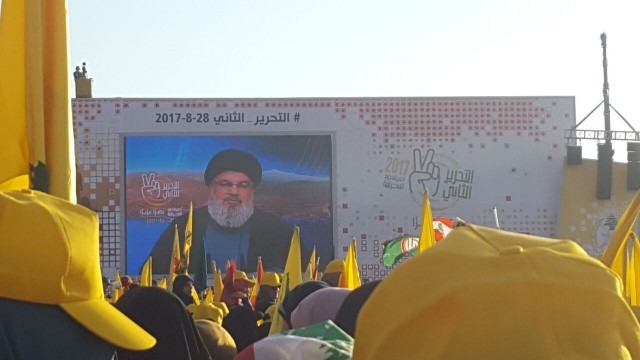
Strategic Council Online – After the recent deadly blasts in Beirut, a clear scenario was followed by the Western media, including the American, as well as Zionist and Arab media to the effect that Hezbollah missiles were being kept in the said warehouse, which exploded due to heat. Riyadh even claimed that Hezbollah missiles had exploded following the Israeli missile strike, sparking propaganda that was denied by Seyed Hassan Nasrallah.
Hassan Hanizadeh – Middle East Affairs Expert

Escalation of Foreign Interventions in Lebanon and the Need to Maintain Internal Solidarity

Escalation of Foreign Interventions in Lebanon and the Need to Maintain Internal Solidarity

Strategic Council Online – A Middle East affairs analyst believes that the United States is trying to change the political map in Lebanon, saying that under the status quo the conspiracy against Lebanon is pursued economically and with political goals, but people are largely patient and are trying to change these conditions with the help of the independent ruling government and Hezbollah.

Enemies of Resistance Axis Agenda to Confront Lebanese Hezbollah

Enemies of Resistance Axis Agenda to Confront Lebanese Hezbollah

Strategic Council Online – The United States, Britain, France and Saudi Arabia are now trying to create conditions to render the government of Hassan Diab ineffective through outside economic pressure and to provoke the people inside so that Lebanon’s Hezbollah too will come under pressure.
Hassan Hanizadeh – Middle East Affairs Expert

أحدث الوظائف

The Makkah Pact; Reasons for its Formation and Challenges Ahead

SCFR Online – Opinion: The Makkah Pact, signed between Saudi Arabia, Pakistan, and Turkey under the motto “an attack on one is an attack on all,” is viewed by some analysts less as a full-fledged military coalition and more as an attempt to reduce security dependence on an external power and to establish a regional security mechanism.

Implications of the US-Saudi Nuclear Agreement

SCFR Online – Opinion: The new US-Saudi nuclear agreement, despite legal and political ambiguities, could alter previous non-proliferation standards in West Asia and intensify nuclear competition, ushering it into a new phase.

An Analysis of Recent Turkey-Israeli Regime Tensions

SCFR Online – Opinion: Recent developments in Syria indicate an intensification of strategic rivalry between Turkey and the Israeli regime, but mutual considerations and the role of the United States have limited the likelihood of direct war.

Increasing criticism of the extensive Zionist lobby network

SCFR Online – Opinion: An examination of the mechanisms of the Israeli regime’s influence in the United States depicts a complex picture of shared interests, strategic dependencies, and the limitations of this relationship.

Realities of the Tripartite Makkah Pact

SCFR Online – Interview: The signing of the Makkah agreement between Saudi Arabia, Pakistan, and Turkey has raised questions about the future of the region’s security structure and the position of these countries in West Asian equations. Can this agreement become a genuine collective defense mechanism, or does it have more of a political and deterrent function than creating new military capacity?

Strategic Implications of the Reduction of US Weapons Stockpiles

SCFR Online – Opinion: The continuation of the US war against Iran, in addition to increasing operational costs, has called into question the actual capacity of the American arsenal to simultaneously fulfill security commitments on multiple fronts; an issue that affects deterrence, defense production capacity, and Washington’s resource prioritization.

Loading

Hassan Diab

Interventionist Approach of the West to Lebanese Crisis

Interventionist Approach of the West to Lebanese Crisis

Strategic Council Online – Opinion: Joe Biden’s administration, in coordination with France, has been pushing for structural reform in Lebanon since taking office. The Biden’s administration supports Emmanuel Macron’s policy in Lebanon, while maintaining economic pressures and sanctions on Hezbollah.
Fatemeh Nekoo Lal Azad – Tehran International Studies and Research Institute (Abrar)

Statelessness in Lebanon, Role of Regional and Trans-Regional Governments

Statelessness in Lebanon, Role of Regional and Trans-Regional Governments

Strategic Council Online – An expert on West Asian affairs referring to the intensification of foreign interference in Lebanon and the problems of the country’s political structure in preparing the grounds for forming a government, said: It seems that some parties are either seeking to engage Lebanon in civil war or leave the country in a vacuum so that the people stop supporting the Resistance.

Reasons for Not Forming a Government in Lebanon

Reasons for Not Forming a Government in Lebanon

Strategic Council Online – Interview: An expert on the Middle East affairs commenting on the reasons for Saad Hariri’s delay in forming the Lebanese government said: The Lebanese government has suffered from an internal crisis in recent years, especially after the 2018 elections; in this way, the governments that came to power could not form a cabinet or continue to work due to some issues such as internal protests or lack of internal political understanding.

Attempts of Foreign Players to Form Lebanese Gov’twithout Hezbollah

Attempts of Foreign Players to Form Lebanese Gov’twithout Hezbollah

Strategic Council Online – Foreign players are making attempts for the formation of Saad Hariri’s government before US President Donald Trump leaves the White House so that the new Lebanese cabinet would be in their favor, said a university professor, adding: But it seems that if the interests of Hezbollah and its allies are ignored in the formation of the government, the Lebanese cabinet will not be formed within the next two to three months.

Lebanon’s government crisis: consequences and dimensions

Lebanon’s government crisis: consequences and dimensions

Strategic Council Online: Editorial—Under the present circumstances, we may witness once again a crisis in the formation of the Lebanese cabinet. With increasing foreign interference in Lebanon, it seems this crisis would be extended and prolonged more than the previous occasions as each of the foreign players are seeking to advance their own objectives and want to set the pieces of government in their own favour. This is while Lebanon is not a country to be settled with instruction issued from abroad.
Hossein Ajorloo – Expert of Middle East affairs

Players behind Resignation of Mustapha Adib

Players behind Resignation of Mustapha Adib

Strategic Council Online – The most likely scenario Lebanon is presently faced with is not to allow the prime minister proposed by Michel Aoun to form government in the absence of the consent of Saad Hariri, Fouad Siniora and Samir Geagea, and finally, with the widening of political vacuum, the Lebanese President will be forced to appoint Saad Hariri to form the government.
Hassan Hanizadeh – Expert on Middle East Affairs

Western-Arab-Hebrew Axis Interests in Lebanese Crisis

Western-Arab-Hebrew Axis Interests in Lebanese Crisis

Strategic Council Online – A university professor stressed that creating a political vacuum in Lebanon is the desire of the Western-Arab-Hebrew axis, saying that the instability of Lebanon is the main goal of foreign actors; because the instability of this country is directly related to the security of the Zionist regime.

West’s Agenda to Exploit Lebanese Bombing

West’s Agenda to Exploit Lebanese Bombing

Strategic Council Online – After the recent deadly blasts in Beirut, a clear scenario was followed by the Western media, including the American, as well as Zionist and Arab media to the effect that Hezbollah missiles were being kept in the said warehouse, which exploded due to heat. Riyadh even claimed that Hezbollah missiles had exploded following the Israeli missile strike, sparking propaganda that was denied by Seyed Hassan Nasrallah.
Hassan Hanizadeh – Middle East Affairs Expert

Escalation of Foreign Interventions in Lebanon and the Need to Maintain Internal Solidarity

Escalation of Foreign Interventions in Lebanon and the Need to Maintain Internal Solidarity

Strategic Council Online – A Middle East affairs analyst believes that the United States is trying to change the political map in Lebanon, saying that under the status quo the conspiracy against Lebanon is pursued economically and with political goals, but people are largely patient and are trying to change these conditions with the help of the independent ruling government and Hezbollah.

Enemies of Resistance Axis Agenda to Confront Lebanese Hezbollah

Enemies of Resistance Axis Agenda to Confront Lebanese Hezbollah

Strategic Council Online – The United States, Britain, France and Saudi Arabia are now trying to create conditions to render the government of Hassan Diab ineffective through outside economic pressure and to provoke the people inside so that Lebanon’s Hezbollah too will come under pressure.
Hassan Hanizadeh – Middle East Affairs Expert

Hassan Diab

Interventionist Approach of the West to Lebanese Crisis

Interventionist Approach of the West to Lebanese Crisis

Strategic Council Online – Opinion: Joe Biden’s administration, in coordination with France, has been pushing for structural reform in Lebanon since taking office. The Biden’s administration supports Emmanuel Macron’s policy in Lebanon, while maintaining economic pressures and sanctions on Hezbollah.
Fatemeh Nekoo Lal Azad – Tehran International Studies and Research Institute (Abrar)

Statelessness in Lebanon, Role of Regional and Trans-Regional Governments

Statelessness in Lebanon, Role of Regional and Trans-Regional Governments

Strategic Council Online – An expert on West Asian affairs referring to the intensification of foreign interference in Lebanon and the problems of the country’s political structure in preparing the grounds for forming a government, said: It seems that some parties are either seeking to engage Lebanon in civil war or leave the country in a vacuum so that the people stop supporting the Resistance.

Reasons for Not Forming a Government in Lebanon

Reasons for Not Forming a Government in Lebanon

Strategic Council Online – Interview: An expert on the Middle East affairs commenting on the reasons for Saad Hariri’s delay in forming the Lebanese government said: The Lebanese government has suffered from an internal crisis in recent years, especially after the 2018 elections; in this way, the governments that came to power could not form a cabinet or continue to work due to some issues such as internal protests or lack of internal political understanding.

Attempts of Foreign Players to Form Lebanese Gov’twithout Hezbollah

Attempts of Foreign Players to Form Lebanese Gov’twithout Hezbollah

Strategic Council Online – Foreign players are making attempts for the formation of Saad Hariri’s government before US President Donald Trump leaves the White House so that the new Lebanese cabinet would be in their favor, said a university professor, adding: But it seems that if the interests of Hezbollah and its allies are ignored in the formation of the government, the Lebanese cabinet will not be formed within the next two to three months.

Lebanon’s government crisis: consequences and dimensions

Lebanon’s government crisis: consequences and dimensions

Strategic Council Online: Editorial—Under the present circumstances, we may witness once again a crisis in the formation of the Lebanese cabinet. With increasing foreign interference in Lebanon, it seems this crisis would be extended and prolonged more than the previous occasions as each of the foreign players are seeking to advance their own objectives and want to set the pieces of government in their own favour. This is while Lebanon is not a country to be settled with instruction issued from abroad.
Hossein Ajorloo – Expert of Middle East affairs

Players behind Resignation of Mustapha Adib

Players behind Resignation of Mustapha Adib

Strategic Council Online – The most likely scenario Lebanon is presently faced with is not to allow the prime minister proposed by Michel Aoun to form government in the absence of the consent of Saad Hariri, Fouad Siniora and Samir Geagea, and finally, with the widening of political vacuum, the Lebanese President will be forced to appoint Saad Hariri to form the government.
Hassan Hanizadeh – Expert on Middle East Affairs

Western-Arab-Hebrew Axis Interests in Lebanese Crisis

Western-Arab-Hebrew Axis Interests in Lebanese Crisis

Strategic Council Online – A university professor stressed that creating a political vacuum in Lebanon is the desire of the Western-Arab-Hebrew axis, saying that the instability of Lebanon is the main goal of foreign actors; because the instability of this country is directly related to the security of the Zionist regime.

West’s Agenda to Exploit Lebanese Bombing

West’s Agenda to Exploit Lebanese Bombing

Strategic Council Online – After the recent deadly blasts in Beirut, a clear scenario was followed by the Western media, including the American, as well as Zionist and Arab media to the effect that Hezbollah missiles were being kept in the said warehouse, which exploded due to heat. Riyadh even claimed that Hezbollah missiles had exploded following the Israeli missile strike, sparking propaganda that was denied by Seyed Hassan Nasrallah.
Hassan Hanizadeh – Middle East Affairs Expert

Escalation of Foreign Interventions in Lebanon and the Need to Maintain Internal Solidarity

Escalation of Foreign Interventions in Lebanon and the Need to Maintain Internal Solidarity

Strategic Council Online – A Middle East affairs analyst believes that the United States is trying to change the political map in Lebanon, saying that under the status quo the conspiracy against Lebanon is pursued economically and with political goals, but people are largely patient and are trying to change these conditions with the help of the independent ruling government and Hezbollah.

Enemies of Resistance Axis Agenda to Confront Lebanese Hezbollah

Enemies of Resistance Axis Agenda to Confront Lebanese Hezbollah

Strategic Council Online – The United States, Britain, France and Saudi Arabia are now trying to create conditions to render the government of Hassan Diab ineffective through outside economic pressure and to provoke the people inside so that Lebanon’s Hezbollah too will come under pressure.
Hassan Hanizadeh – Middle East Affairs Expert

LATEST CONTENT

The Makkah Pact; Reasons for its Formation and Challenges Ahead

SCFR Online – Opinion: The Makkah Pact, signed between Saudi Arabia, Pakistan, and Turkey under the motto “an attack on one is an attack on all,” is viewed by some analysts less as a full-fledged military coalition and more as an attempt to reduce security dependence on an external power and to establish a regional security mechanism.

Implications of the US-Saudi Nuclear Agreement

SCFR Online – Opinion: The new US-Saudi nuclear agreement, despite legal and political ambiguities, could alter previous non-proliferation standards in West Asia and intensify nuclear competition, ushering it into a new phase.

An Analysis of Recent Turkey-Israeli Regime Tensions

SCFR Online – Opinion: Recent developments in Syria indicate an intensification of strategic rivalry between Turkey and the Israeli regime, but mutual considerations and the role of the United States have limited the likelihood of direct war.

Increasing criticism of the extensive Zionist lobby network

SCFR Online – Opinion: An examination of the mechanisms of the Israeli regime’s influence in the United States depicts a complex picture of shared interests, strategic dependencies, and the limitations of this relationship.

Realities of the Tripartite Makkah Pact

SCFR Online – Interview: The signing of the Makkah agreement between Saudi Arabia, Pakistan, and Turkey has raised questions about the future of the region’s security structure and the position of these countries in West Asian equations. Can this agreement become a genuine collective defense mechanism, or does it have more of a political and deterrent function than creating new military capacity?

Strategic Implications of the Reduction of US Weapons Stockpiles

SCFR Online – Opinion: The continuation of the US war against Iran, in addition to increasing operational costs, has called into question the actual capacity of the American arsenal to simultaneously fulfill security commitments on multiple fronts; an issue that affects deterrence, defense production capacity, and Washington’s resource prioritization.

Loading

Hassan Diab

Interventionist Approach of the West to Lebanese Crisis

Interventionist Approach of the West to Lebanese Crisis

Strategic Council Online – Opinion: Joe Biden’s administration, in coordination with France, has been pushing for structural reform in Lebanon since taking office. The Biden’s administration supports Emmanuel Macron’s policy in Lebanon, while maintaining economic pressures and sanctions on Hezbollah.
Fatemeh Nekoo Lal Azad – Tehran International Studies and Research Institute (Abrar)

Statelessness in Lebanon, Role of Regional and Trans-Regional Governments

Statelessness in Lebanon, Role of Regional and Trans-Regional Governments

Strategic Council Online – An expert on West Asian affairs referring to the intensification of foreign interference in Lebanon and the problems of the country’s political structure in preparing the grounds for forming a government, said: It seems that some parties are either seeking to engage Lebanon in civil war or leave the country in a vacuum so that the people stop supporting the Resistance.

Reasons for Not Forming a Government in Lebanon

Reasons for Not Forming a Government in Lebanon

Strategic Council Online – Interview: An expert on the Middle East affairs commenting on the reasons for Saad Hariri’s delay in forming the Lebanese government said: The Lebanese government has suffered from an internal crisis in recent years, especially after the 2018 elections; in this way, the governments that came to power could not form a cabinet or continue to work due to some issues such as internal protests or lack of internal political understanding.

Attempts of Foreign Players to Form Lebanese Gov’twithout Hezbollah

Attempts of Foreign Players to Form Lebanese Gov’twithout Hezbollah

Strategic Council Online – Foreign players are making attempts for the formation of Saad Hariri’s government before US President Donald Trump leaves the White House so that the new Lebanese cabinet would be in their favor, said a university professor, adding: But it seems that if the interests of Hezbollah and its allies are ignored in the formation of the government, the Lebanese cabinet will not be formed within the next two to three months.

Lebanon’s government crisis: consequences and dimensions

Lebanon’s government crisis: consequences and dimensions

Strategic Council Online: Editorial—Under the present circumstances, we may witness once again a crisis in the formation of the Lebanese cabinet. With increasing foreign interference in Lebanon, it seems this crisis would be extended and prolonged more than the previous occasions as each of the foreign players are seeking to advance their own objectives and want to set the pieces of government in their own favour. This is while Lebanon is not a country to be settled with instruction issued from abroad.
Hossein Ajorloo – Expert of Middle East affairs

Players behind Resignation of Mustapha Adib

Players behind Resignation of Mustapha Adib

Strategic Council Online – The most likely scenario Lebanon is presently faced with is not to allow the prime minister proposed by Michel Aoun to form government in the absence of the consent of Saad Hariri, Fouad Siniora and Samir Geagea, and finally, with the widening of political vacuum, the Lebanese President will be forced to appoint Saad Hariri to form the government.
Hassan Hanizadeh – Expert on Middle East Affairs

Western-Arab-Hebrew Axis Interests in Lebanese Crisis

Western-Arab-Hebrew Axis Interests in Lebanese Crisis

Strategic Council Online – A university professor stressed that creating a political vacuum in Lebanon is the desire of the Western-Arab-Hebrew axis, saying that the instability of Lebanon is the main goal of foreign actors; because the instability of this country is directly related to the security of the Zionist regime.

West’s Agenda to Exploit Lebanese Bombing

West’s Agenda to Exploit Lebanese Bombing

Strategic Council Online – After the recent deadly blasts in Beirut, a clear scenario was followed by the Western media, including the American, as well as Zionist and Arab media to the effect that Hezbollah missiles were being kept in the said warehouse, which exploded due to heat. Riyadh even claimed that Hezbollah missiles had exploded following the Israeli missile strike, sparking propaganda that was denied by Seyed Hassan Nasrallah.
Hassan Hanizadeh – Middle East Affairs Expert

Escalation of Foreign Interventions in Lebanon and the Need to Maintain Internal Solidarity

Escalation of Foreign Interventions in Lebanon and the Need to Maintain Internal Solidarity

Strategic Council Online – A Middle East affairs analyst believes that the United States is trying to change the political map in Lebanon, saying that under the status quo the conspiracy against Lebanon is pursued economically and with political goals, but people are largely patient and are trying to change these conditions with the help of the independent ruling government and Hezbollah.

Enemies of Resistance Axis Agenda to Confront Lebanese Hezbollah

Enemies of Resistance Axis Agenda to Confront Lebanese Hezbollah

Strategic Council Online – The United States, Britain, France and Saudi Arabia are now trying to create conditions to render the government of Hassan Diab ineffective through outside economic pressure and to provoke the people inside so that Lebanon’s Hezbollah too will come under pressure.
Hassan Hanizadeh – Middle East Affairs Expert

ÚLTIMAS PUBLICACIONES

The Makkah Pact; Reasons for its Formation and Challenges Ahead

SCFR Online – Opinion: The Makkah Pact, signed between Saudi Arabia, Pakistan, and Turkey under the motto “an attack on one is an attack on all,” is viewed by some analysts less as a full-fledged military coalition and more as an attempt to reduce security dependence on an external power and to establish a regional security mechanism.

Implications of the US-Saudi Nuclear Agreement

SCFR Online – Opinion: The new US-Saudi nuclear agreement, despite legal and political ambiguities, could alter previous non-proliferation standards in West Asia and intensify nuclear competition, ushering it into a new phase.

An Analysis of Recent Turkey-Israeli Regime Tensions

SCFR Online – Opinion: Recent developments in Syria indicate an intensification of strategic rivalry between Turkey and the Israeli regime, but mutual considerations and the role of the United States have limited the likelihood of direct war.

Increasing criticism of the extensive Zionist lobby network

SCFR Online – Opinion: An examination of the mechanisms of the Israeli regime’s influence in the United States depicts a complex picture of shared interests, strategic dependencies, and the limitations of this relationship.

Realities of the Tripartite Makkah Pact

SCFR Online – Interview: The signing of the Makkah agreement between Saudi Arabia, Pakistan, and Turkey has raised questions about the future of the region’s security structure and the position of these countries in West Asian equations. Can this agreement become a genuine collective defense mechanism, or does it have more of a political and deterrent function than creating new military capacity?

Strategic Implications of the Reduction of US Weapons Stockpiles

SCFR Online – Opinion: The continuation of the US war against Iran, in addition to increasing operational costs, has called into question the actual capacity of the American arsenal to simultaneously fulfill security commitments on multiple fronts; an issue that affects deterrence, defense production capacity, and Washington’s resource prioritization.

Loading

Hassan Diab

Interventionist Approach of the West to Lebanese Crisis

Interventionist Approach of the West to Lebanese Crisis

Strategic Council Online – Opinion: Joe Biden’s administration, in coordination with France, has been pushing for structural reform in Lebanon since taking office. The Biden’s administration supports Emmanuel Macron’s policy in Lebanon, while maintaining economic pressures and sanctions on Hezbollah.
Fatemeh Nekoo Lal Azad – Tehran International Studies and Research Institute (Abrar)

Statelessness in Lebanon, Role of Regional and Trans-Regional Governments

Statelessness in Lebanon, Role of Regional and Trans-Regional Governments

Strategic Council Online – An expert on West Asian affairs referring to the intensification of foreign interference in Lebanon and the problems of the country’s political structure in preparing the grounds for forming a government, said: It seems that some parties are either seeking to engage Lebanon in civil war or leave the country in a vacuum so that the people stop supporting the Resistance.

Reasons for Not Forming a Government in Lebanon

Reasons for Not Forming a Government in Lebanon

Strategic Council Online – Interview: An expert on the Middle East affairs commenting on the reasons for Saad Hariri’s delay in forming the Lebanese government said: The Lebanese government has suffered from an internal crisis in recent years, especially after the 2018 elections; in this way, the governments that came to power could not form a cabinet or continue to work due to some issues such as internal protests or lack of internal political understanding.

Attempts of Foreign Players to Form Lebanese Gov’twithout Hezbollah

Attempts of Foreign Players to Form Lebanese Gov’twithout Hezbollah

Strategic Council Online – Foreign players are making attempts for the formation of Saad Hariri’s government before US President Donald Trump leaves the White House so that the new Lebanese cabinet would be in their favor, said a university professor, adding: But it seems that if the interests of Hezbollah and its allies are ignored in the formation of the government, the Lebanese cabinet will not be formed within the next two to three months.

Lebanon’s government crisis: consequences and dimensions

Lebanon’s government crisis: consequences and dimensions

Strategic Council Online: Editorial—Under the present circumstances, we may witness once again a crisis in the formation of the Lebanese cabinet. With increasing foreign interference in Lebanon, it seems this crisis would be extended and prolonged more than the previous occasions as each of the foreign players are seeking to advance their own objectives and want to set the pieces of government in their own favour. This is while Lebanon is not a country to be settled with instruction issued from abroad.
Hossein Ajorloo – Expert of Middle East affairs

Players behind Resignation of Mustapha Adib

Players behind Resignation of Mustapha Adib

Strategic Council Online – The most likely scenario Lebanon is presently faced with is not to allow the prime minister proposed by Michel Aoun to form government in the absence of the consent of Saad Hariri, Fouad Siniora and Samir Geagea, and finally, with the widening of political vacuum, the Lebanese President will be forced to appoint Saad Hariri to form the government.
Hassan Hanizadeh – Expert on Middle East Affairs

Western-Arab-Hebrew Axis Interests in Lebanese Crisis

Western-Arab-Hebrew Axis Interests in Lebanese Crisis

Strategic Council Online – A university professor stressed that creating a political vacuum in Lebanon is the desire of the Western-Arab-Hebrew axis, saying that the instability of Lebanon is the main goal of foreign actors; because the instability of this country is directly related to the security of the Zionist regime.

West’s Agenda to Exploit Lebanese Bombing

West’s Agenda to Exploit Lebanese Bombing

Strategic Council Online – After the recent deadly blasts in Beirut, a clear scenario was followed by the Western media, including the American, as well as Zionist and Arab media to the effect that Hezbollah missiles were being kept in the said warehouse, which exploded due to heat. Riyadh even claimed that Hezbollah missiles had exploded following the Israeli missile strike, sparking propaganda that was denied by Seyed Hassan Nasrallah.
Hassan Hanizadeh – Middle East Affairs Expert

Escalation of Foreign Interventions in Lebanon and the Need to Maintain Internal Solidarity

Escalation of Foreign Interventions in Lebanon and the Need to Maintain Internal Solidarity

Strategic Council Online – A Middle East affairs analyst believes that the United States is trying to change the political map in Lebanon, saying that under the status quo the conspiracy against Lebanon is pursued economically and with political goals, but people are largely patient and are trying to change these conditions with the help of the independent ruling government and Hezbollah.

Enemies of Resistance Axis Agenda to Confront Lebanese Hezbollah

Enemies of Resistance Axis Agenda to Confront Lebanese Hezbollah

Strategic Council Online – The United States, Britain, France and Saudi Arabia are now trying to create conditions to render the government of Hassan Diab ineffective through outside economic pressure and to provoke the people inside so that Lebanon’s Hezbollah too will come under pressure.
Hassan Hanizadeh – Middle East Affairs Expert

ÚLTIMAS PUBLICACIONES

The Makkah Pact; Reasons for its Formation and Challenges Ahead

SCFR Online – Opinion: The Makkah Pact, signed between Saudi Arabia, Pakistan, and Turkey under the motto “an attack on one is an attack on all,” is viewed by some analysts less as a full-fledged military coalition and more as an attempt to reduce security dependence on an external power and to establish a regional security mechanism.

Implications of the US-Saudi Nuclear Agreement

SCFR Online – Opinion: The new US-Saudi nuclear agreement, despite legal and political ambiguities, could alter previous non-proliferation standards in West Asia and intensify nuclear competition, ushering it into a new phase.

An Analysis of Recent Turkey-Israeli Regime Tensions

SCFR Online – Opinion: Recent developments in Syria indicate an intensification of strategic rivalry between Turkey and the Israeli regime, but mutual considerations and the role of the United States have limited the likelihood of direct war.

Increasing criticism of the extensive Zionist lobby network

SCFR Online – Opinion: An examination of the mechanisms of the Israeli regime’s influence in the United States depicts a complex picture of shared interests, strategic dependencies, and the limitations of this relationship.

Realities of the Tripartite Makkah Pact

SCFR Online – Interview: The signing of the Makkah agreement between Saudi Arabia, Pakistan, and Turkey has raised questions about the future of the region’s security structure and the position of these countries in West Asian equations. Can this agreement become a genuine collective defense mechanism, or does it have more of a political and deterrent function than creating new military capacity?

Strategic Implications of the Reduction of US Weapons Stockpiles

SCFR Online – Opinion: The continuation of the US war against Iran, in addition to increasing operational costs, has called into question the actual capacity of the American arsenal to simultaneously fulfill security commitments on multiple fronts; an issue that affects deterrence, defense production capacity, and Washington’s resource prioritization.

Loading

Hassan Diab

Interventionist Approach of the West to Lebanese Crisis

Interventionist Approach of the West to Lebanese Crisis

Strategic Council Online – Opinion: Joe Biden’s administration, in coordination with France, has been pushing for structural reform in Lebanon since taking office. The Biden’s administration supports Emmanuel Macron’s policy in Lebanon, while maintaining economic pressures and sanctions on Hezbollah.
Fatemeh Nekoo Lal Azad – Tehran International Studies and Research Institute (Abrar)

Statelessness in Lebanon, Role of Regional and Trans-Regional Governments

Statelessness in Lebanon, Role of Regional and Trans-Regional Governments

Strategic Council Online – An expert on West Asian affairs referring to the intensification of foreign interference in Lebanon and the problems of the country’s political structure in preparing the grounds for forming a government, said: It seems that some parties are either seeking to engage Lebanon in civil war or leave the country in a vacuum so that the people stop supporting the Resistance.

Reasons for Not Forming a Government in Lebanon

Reasons for Not Forming a Government in Lebanon

Strategic Council Online – Interview: An expert on the Middle East affairs commenting on the reasons for Saad Hariri’s delay in forming the Lebanese government said: The Lebanese government has suffered from an internal crisis in recent years, especially after the 2018 elections; in this way, the governments that came to power could not form a cabinet or continue to work due to some issues such as internal protests or lack of internal political understanding.

Attempts of Foreign Players to Form Lebanese Gov’twithout Hezbollah

Attempts of Foreign Players to Form Lebanese Gov’twithout Hezbollah

Strategic Council Online – Foreign players are making attempts for the formation of Saad Hariri’s government before US President Donald Trump leaves the White House so that the new Lebanese cabinet would be in their favor, said a university professor, adding: But it seems that if the interests of Hezbollah and its allies are ignored in the formation of the government, the Lebanese cabinet will not be formed within the next two to three months.

Lebanon’s government crisis: consequences and dimensions

Lebanon’s government crisis: consequences and dimensions

Strategic Council Online: Editorial—Under the present circumstances, we may witness once again a crisis in the formation of the Lebanese cabinet. With increasing foreign interference in Lebanon, it seems this crisis would be extended and prolonged more than the previous occasions as each of the foreign players are seeking to advance their own objectives and want to set the pieces of government in their own favour. This is while Lebanon is not a country to be settled with instruction issued from abroad.
Hossein Ajorloo – Expert of Middle East affairs

Players behind Resignation of Mustapha Adib

Players behind Resignation of Mustapha Adib

Strategic Council Online – The most likely scenario Lebanon is presently faced with is not to allow the prime minister proposed by Michel Aoun to form government in the absence of the consent of Saad Hariri, Fouad Siniora and Samir Geagea, and finally, with the widening of political vacuum, the Lebanese President will be forced to appoint Saad Hariri to form the government.
Hassan Hanizadeh – Expert on Middle East Affairs

Western-Arab-Hebrew Axis Interests in Lebanese Crisis

Western-Arab-Hebrew Axis Interests in Lebanese Crisis

Strategic Council Online – A university professor stressed that creating a political vacuum in Lebanon is the desire of the Western-Arab-Hebrew axis, saying that the instability of Lebanon is the main goal of foreign actors; because the instability of this country is directly related to the security of the Zionist regime.

West’s Agenda to Exploit Lebanese Bombing

West’s Agenda to Exploit Lebanese Bombing

Strategic Council Online – After the recent deadly blasts in Beirut, a clear scenario was followed by the Western media, including the American, as well as Zionist and Arab media to the effect that Hezbollah missiles were being kept in the said warehouse, which exploded due to heat. Riyadh even claimed that Hezbollah missiles had exploded following the Israeli missile strike, sparking propaganda that was denied by Seyed Hassan Nasrallah.
Hassan Hanizadeh – Middle East Affairs Expert

Escalation of Foreign Interventions in Lebanon and the Need to Maintain Internal Solidarity

Escalation of Foreign Interventions in Lebanon and the Need to Maintain Internal Solidarity

Strategic Council Online – A Middle East affairs analyst believes that the United States is trying to change the political map in Lebanon, saying that under the status quo the conspiracy against Lebanon is pursued economically and with political goals, but people are largely patient and are trying to change these conditions with the help of the independent ruling government and Hezbollah.

Enemies of Resistance Axis Agenda to Confront Lebanese Hezbollah

Enemies of Resistance Axis Agenda to Confront Lebanese Hezbollah

Strategic Council Online – The United States, Britain, France and Saudi Arabia are now trying to create conditions to render the government of Hassan Diab ineffective through outside economic pressure and to provoke the people inside so that Lebanon’s Hezbollah too will come under pressure.
Hassan Hanizadeh – Middle East Affairs Expert

ÚLTIMAS PUBLICACIONES

The Makkah Pact; Reasons for its Formation and Challenges Ahead

SCFR Online – Opinion: The Makkah Pact, signed between Saudi Arabia, Pakistan, and Turkey under the motto “an attack on one is an attack on all,” is viewed by some analysts less as a full-fledged military coalition and more as an attempt to reduce security dependence on an external power and to establish a regional security mechanism.

Implications of the US-Saudi Nuclear Agreement

SCFR Online – Opinion: The new US-Saudi nuclear agreement, despite legal and political ambiguities, could alter previous non-proliferation standards in West Asia and intensify nuclear competition, ushering it into a new phase.

An Analysis of Recent Turkey-Israeli Regime Tensions

SCFR Online – Opinion: Recent developments in Syria indicate an intensification of strategic rivalry between Turkey and the Israeli regime, but mutual considerations and the role of the United States have limited the likelihood of direct war.

Increasing criticism of the extensive Zionist lobby network

SCFR Online – Opinion: An examination of the mechanisms of the Israeli regime’s influence in the United States depicts a complex picture of shared interests, strategic dependencies, and the limitations of this relationship.

Realities of the Tripartite Makkah Pact

SCFR Online – Interview: The signing of the Makkah agreement between Saudi Arabia, Pakistan, and Turkey has raised questions about the future of the region’s security structure and the position of these countries in West Asian equations. Can this agreement become a genuine collective defense mechanism, or does it have more of a political and deterrent function than creating new military capacity?

Strategic Implications of the Reduction of US Weapons Stockpiles

SCFR Online – Opinion: The continuation of the US war against Iran, in addition to increasing operational costs, has called into question the actual capacity of the American arsenal to simultaneously fulfill security commitments on multiple fronts; an issue that affects deterrence, defense production capacity, and Washington’s resource prioritization.

Loading

Hassan Diab

Interventionist Approach of the West to Lebanese Crisis

Interventionist Approach of the West to Lebanese Crisis

Strategic Council Online – Opinion: Joe Biden’s administration, in coordination with France, has been pushing for structural reform in Lebanon since taking office. The Biden’s administration supports Emmanuel Macron’s policy in Lebanon, while maintaining economic pressures and sanctions on Hezbollah.
Fatemeh Nekoo Lal Azad – Tehran International Studies and Research Institute (Abrar)

Statelessness in Lebanon, Role of Regional and Trans-Regional Governments

Statelessness in Lebanon, Role of Regional and Trans-Regional Governments

Strategic Council Online – An expert on West Asian affairs referring to the intensification of foreign interference in Lebanon and the problems of the country’s political structure in preparing the grounds for forming a government, said: It seems that some parties are either seeking to engage Lebanon in civil war or leave the country in a vacuum so that the people stop supporting the Resistance.

Reasons for Not Forming a Government in Lebanon

Reasons for Not Forming a Government in Lebanon

Strategic Council Online – Interview: An expert on the Middle East affairs commenting on the reasons for Saad Hariri’s delay in forming the Lebanese government said: The Lebanese government has suffered from an internal crisis in recent years, especially after the 2018 elections; in this way, the governments that came to power could not form a cabinet or continue to work due to some issues such as internal protests or lack of internal political understanding.

Attempts of Foreign Players to Form Lebanese Gov’twithout Hezbollah

Attempts of Foreign Players to Form Lebanese Gov’twithout Hezbollah

Strategic Council Online – Foreign players are making attempts for the formation of Saad Hariri’s government before US President Donald Trump leaves the White House so that the new Lebanese cabinet would be in their favor, said a university professor, adding: But it seems that if the interests of Hezbollah and its allies are ignored in the formation of the government, the Lebanese cabinet will not be formed within the next two to three months.

Lebanon’s government crisis: consequences and dimensions

Lebanon’s government crisis: consequences and dimensions

Strategic Council Online: Editorial—Under the present circumstances, we may witness once again a crisis in the formation of the Lebanese cabinet. With increasing foreign interference in Lebanon, it seems this crisis would be extended and prolonged more than the previous occasions as each of the foreign players are seeking to advance their own objectives and want to set the pieces of government in their own favour. This is while Lebanon is not a country to be settled with instruction issued from abroad.
Hossein Ajorloo – Expert of Middle East affairs

Players behind Resignation of Mustapha Adib

Players behind Resignation of Mustapha Adib

Strategic Council Online – The most likely scenario Lebanon is presently faced with is not to allow the prime minister proposed by Michel Aoun to form government in the absence of the consent of Saad Hariri, Fouad Siniora and Samir Geagea, and finally, with the widening of political vacuum, the Lebanese President will be forced to appoint Saad Hariri to form the government.
Hassan Hanizadeh – Expert on Middle East Affairs

Western-Arab-Hebrew Axis Interests in Lebanese Crisis

Western-Arab-Hebrew Axis Interests in Lebanese Crisis

Strategic Council Online – A university professor stressed that creating a political vacuum in Lebanon is the desire of the Western-Arab-Hebrew axis, saying that the instability of Lebanon is the main goal of foreign actors; because the instability of this country is directly related to the security of the Zionist regime.

West’s Agenda to Exploit Lebanese Bombing

West’s Agenda to Exploit Lebanese Bombing

Strategic Council Online – After the recent deadly blasts in Beirut, a clear scenario was followed by the Western media, including the American, as well as Zionist and Arab media to the effect that Hezbollah missiles were being kept in the said warehouse, which exploded due to heat. Riyadh even claimed that Hezbollah missiles had exploded following the Israeli missile strike, sparking propaganda that was denied by Seyed Hassan Nasrallah.
Hassan Hanizadeh – Middle East Affairs Expert

Escalation of Foreign Interventions in Lebanon and the Need to Maintain Internal Solidarity

Escalation of Foreign Interventions in Lebanon and the Need to Maintain Internal Solidarity

Strategic Council Online – A Middle East affairs analyst believes that the United States is trying to change the political map in Lebanon, saying that under the status quo the conspiracy against Lebanon is pursued economically and with political goals, but people are largely patient and are trying to change these conditions with the help of the independent ruling government and Hezbollah.

Enemies of Resistance Axis Agenda to Confront Lebanese Hezbollah

Enemies of Resistance Axis Agenda to Confront Lebanese Hezbollah

Strategic Council Online – The United States, Britain, France and Saudi Arabia are now trying to create conditions to render the government of Hassan Diab ineffective through outside economic pressure and to provoke the people inside so that Lebanon’s Hezbollah too will come under pressure.
Hassan Hanizadeh – Middle East Affairs Expert

ÚLTIMAS PUBLICACIONES

The Makkah Pact; Reasons for its Formation and Challenges Ahead

SCFR Online – Opinion: The Makkah Pact, signed between Saudi Arabia, Pakistan, and Turkey under the motto “an attack on one is an attack on all,” is viewed by some analysts less as a full-fledged military coalition and more as an attempt to reduce security dependence on an external power and to establish a regional security mechanism.

Implications of the US-Saudi Nuclear Agreement

SCFR Online – Opinion: The new US-Saudi nuclear agreement, despite legal and political ambiguities, could alter previous non-proliferation standards in West Asia and intensify nuclear competition, ushering it into a new phase.

An Analysis of Recent Turkey-Israeli Regime Tensions

SCFR Online – Opinion: Recent developments in Syria indicate an intensification of strategic rivalry between Turkey and the Israeli regime, but mutual considerations and the role of the United States have limited the likelihood of direct war.

Increasing criticism of the extensive Zionist lobby network

SCFR Online – Opinion: An examination of the mechanisms of the Israeli regime’s influence in the United States depicts a complex picture of shared interests, strategic dependencies, and the limitations of this relationship.

Realities of the Tripartite Makkah Pact

SCFR Online – Interview: The signing of the Makkah agreement between Saudi Arabia, Pakistan, and Turkey has raised questions about the future of the region’s security structure and the position of these countries in West Asian equations. Can this agreement become a genuine collective defense mechanism, or does it have more of a political and deterrent function than creating new military capacity?

Strategic Implications of the Reduction of US Weapons Stockpiles

SCFR Online – Opinion: The continuation of the US war against Iran, in addition to increasing operational costs, has called into question the actual capacity of the American arsenal to simultaneously fulfill security commitments on multiple fronts; an issue that affects deterrence, defense production capacity, and Washington’s resource prioritization.

Loading