جدیدترین مطالب

Balancing in the chain of chokepoints; from sea-based deterrence to pluralistic diplomacy

Strategic Council Online – Note: Recent developments in the political geography of West Asia, from rising tensions in the Persian Gulf to missile and drone activities in the Red Sea and the recent warning by Kaja Kallas, the European Union’s foreign policy chief, regarding the threat to freedom of navigation, indicate a key pattern shift; the US-Iran war has moved beyond the scope of a regional and local confrontation and has linked two vital passageways for the global economy: the Strait of Hormuz and the Bab el-Mandeb Strait.

Indicators for Choosing Between War and Diplomacy

SCFR Online – Opinion: Foreign policy analysis is valid when it evaluates decisions based on the information and circumstances prevailing at the time they were made, not on the basis of outcomes that only become apparent after the crisis has ended.

Loading

Hezb-e-Mujahideen

The future of Afghanistan and India’s ambiguous relations with it

The future of Afghanistan and India’s ambiguous relations with it

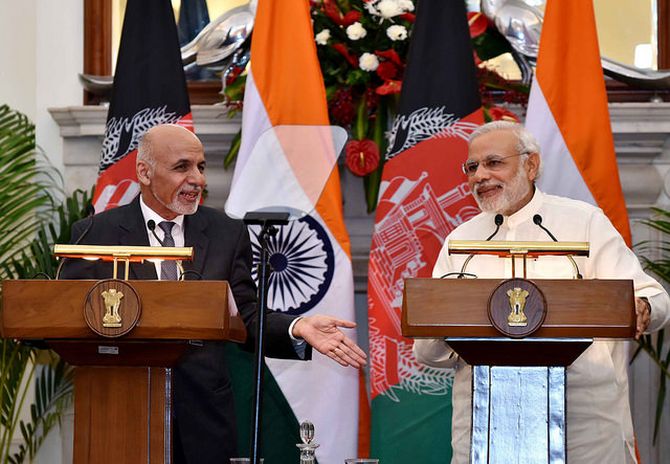
Strategic Council Online—Opinion: If for any reason, the Taliban are successful, either through political means and negotiations or military action, to possess maximum power in Afghanistan, and the two other parties—the North Front and the Liberal Democrats—are consequently placed in the weakness position, India would be definitely a loser as the Taliban’s view is ideological and therefore considers groups such as Lashkar-e-Taiba, Jaish-e-Mohammed and Hizb-ul-Mujahideen against India in Keshmir as its own allies. Therefore, if the Taliban are placed in the position of strength and power in Afghanistan, they would provide such groups with operational bases and India can no longer play a significant role in that country.
Pirmohammad Mollazehi—Expert of the subcontinent

US, Iran Differ on Peace Agreement in Afghanistan

US, Iran Differ on Peace Agreement in Afghanistan

Strategic Council Online – Since the views of the United States and Iran on the Afghan peace process are completely different, it is inconceivable for Iran to stand by the US in the Afghan peace process and help them.
Pir Mohammad Mollazehi – Expert on Subcontinent Issues

أحدث الوظائف

Balancing in the chain of chokepoints; from sea-based deterrence to pluralistic diplomacy

Strategic Council Online – Note: Recent developments in the political geography of West Asia, from rising tensions in the Persian Gulf to missile and drone activities in the Red Sea and the recent warning by Kaja Kallas, the European Union’s foreign policy chief, regarding the threat to freedom of navigation, indicate a key pattern shift; the US-Iran war has moved beyond the scope of a regional and local confrontation and has linked two vital passageways for the global economy: the Strait of Hormuz and the Bab el-Mandeb Strait.

Indicators for Choosing Between War and Diplomacy

SCFR Online – Opinion: Foreign policy analysis is valid when it evaluates decisions based on the information and circumstances prevailing at the time they were made, not on the basis of outcomes that only become apparent after the crisis has ended.

Loading

Hezb-e-Mujahideen

The future of Afghanistan and India’s ambiguous relations with it

The future of Afghanistan and India’s ambiguous relations with it

Strategic Council Online—Opinion: If for any reason, the Taliban are successful, either through political means and negotiations or military action, to possess maximum power in Afghanistan, and the two other parties—the North Front and the Liberal Democrats—are consequently placed in the weakness position, India would be definitely a loser as the Taliban’s view is ideological and therefore considers groups such as Lashkar-e-Taiba, Jaish-e-Mohammed and Hizb-ul-Mujahideen against India in Keshmir as its own allies. Therefore, if the Taliban are placed in the position of strength and power in Afghanistan, they would provide such groups with operational bases and India can no longer play a significant role in that country.
Pirmohammad Mollazehi—Expert of the subcontinent

US, Iran Differ on Peace Agreement in Afghanistan

US, Iran Differ on Peace Agreement in Afghanistan

Strategic Council Online – Since the views of the United States and Iran on the Afghan peace process are completely different, it is inconceivable for Iran to stand by the US in the Afghan peace process and help them.
Pir Mohammad Mollazehi – Expert on Subcontinent Issues

Hezb-e-Mujahideen

The future of Afghanistan and India’s ambiguous relations with it

The future of Afghanistan and India’s ambiguous relations with it

Strategic Council Online—Opinion: If for any reason, the Taliban are successful, either through political means and negotiations or military action, to possess maximum power in Afghanistan, and the two other parties—the North Front and the Liberal Democrats—are consequently placed in the weakness position, India would be definitely a loser as the Taliban’s view is ideological and therefore considers groups such as Lashkar-e-Taiba, Jaish-e-Mohammed and Hizb-ul-Mujahideen against India in Keshmir as its own allies. Therefore, if the Taliban are placed in the position of strength and power in Afghanistan, they would provide such groups with operational bases and India can no longer play a significant role in that country.
Pirmohammad Mollazehi—Expert of the subcontinent

US, Iran Differ on Peace Agreement in Afghanistan

US, Iran Differ on Peace Agreement in Afghanistan

Strategic Council Online – Since the views of the United States and Iran on the Afghan peace process are completely different, it is inconceivable for Iran to stand by the US in the Afghan peace process and help them.
Pir Mohammad Mollazehi – Expert on Subcontinent Issues

LATEST CONTENT

Balancing in the chain of chokepoints; from sea-based deterrence to pluralistic diplomacy

Strategic Council Online – Note: Recent developments in the political geography of West Asia, from rising tensions in the Persian Gulf to missile and drone activities in the Red Sea and the recent warning by Kaja Kallas, the European Union’s foreign policy chief, regarding the threat to freedom of navigation, indicate a key pattern shift; the US-Iran war has moved beyond the scope of a regional and local confrontation and has linked two vital passageways for the global economy: the Strait of Hormuz and the Bab el-Mandeb Strait.

Indicators for Choosing Between War and Diplomacy

SCFR Online – Opinion: Foreign policy analysis is valid when it evaluates decisions based on the information and circumstances prevailing at the time they were made, not on the basis of outcomes that only become apparent after the crisis has ended.

Loading

Hezb-e-Mujahideen

The future of Afghanistan and India’s ambiguous relations with it

The future of Afghanistan and India’s ambiguous relations with it

Strategic Council Online—Opinion: If for any reason, the Taliban are successful, either through political means and negotiations or military action, to possess maximum power in Afghanistan, and the two other parties—the North Front and the Liberal Democrats—are consequently placed in the weakness position, India would be definitely a loser as the Taliban’s view is ideological and therefore considers groups such as Lashkar-e-Taiba, Jaish-e-Mohammed and Hizb-ul-Mujahideen against India in Keshmir as its own allies. Therefore, if the Taliban are placed in the position of strength and power in Afghanistan, they would provide such groups with operational bases and India can no longer play a significant role in that country.
Pirmohammad Mollazehi—Expert of the subcontinent

US, Iran Differ on Peace Agreement in Afghanistan

US, Iran Differ on Peace Agreement in Afghanistan

Strategic Council Online – Since the views of the United States and Iran on the Afghan peace process are completely different, it is inconceivable for Iran to stand by the US in the Afghan peace process and help them.
Pir Mohammad Mollazehi – Expert on Subcontinent Issues

ÚLTIMAS PUBLICACIONES

Balancing in the chain of chokepoints; from sea-based deterrence to pluralistic diplomacy

Strategic Council Online – Note: Recent developments in the political geography of West Asia, from rising tensions in the Persian Gulf to missile and drone activities in the Red Sea and the recent warning by Kaja Kallas, the European Union’s foreign policy chief, regarding the threat to freedom of navigation, indicate a key pattern shift; the US-Iran war has moved beyond the scope of a regional and local confrontation and has linked two vital passageways for the global economy: the Strait of Hormuz and the Bab el-Mandeb Strait.

Indicators for Choosing Between War and Diplomacy

SCFR Online – Opinion: Foreign policy analysis is valid when it evaluates decisions based on the information and circumstances prevailing at the time they were made, not on the basis of outcomes that only become apparent after the crisis has ended.

Loading

Hezb-e-Mujahideen

The future of Afghanistan and India’s ambiguous relations with it

The future of Afghanistan and India’s ambiguous relations with it

Strategic Council Online—Opinion: If for any reason, the Taliban are successful, either through political means and negotiations or military action, to possess maximum power in Afghanistan, and the two other parties—the North Front and the Liberal Democrats—are consequently placed in the weakness position, India would be definitely a loser as the Taliban’s view is ideological and therefore considers groups such as Lashkar-e-Taiba, Jaish-e-Mohammed and Hizb-ul-Mujahideen against India in Keshmir as its own allies. Therefore, if the Taliban are placed in the position of strength and power in Afghanistan, they would provide such groups with operational bases and India can no longer play a significant role in that country.
Pirmohammad Mollazehi—Expert of the subcontinent

US, Iran Differ on Peace Agreement in Afghanistan

US, Iran Differ on Peace Agreement in Afghanistan

Strategic Council Online – Since the views of the United States and Iran on the Afghan peace process are completely different, it is inconceivable for Iran to stand by the US in the Afghan peace process and help them.
Pir Mohammad Mollazehi – Expert on Subcontinent Issues

ÚLTIMAS PUBLICACIONES

Balancing in the chain of chokepoints; from sea-based deterrence to pluralistic diplomacy

Strategic Council Online – Note: Recent developments in the political geography of West Asia, from rising tensions in the Persian Gulf to missile and drone activities in the Red Sea and the recent warning by Kaja Kallas, the European Union’s foreign policy chief, regarding the threat to freedom of navigation, indicate a key pattern shift; the US-Iran war has moved beyond the scope of a regional and local confrontation and has linked two vital passageways for the global economy: the Strait of Hormuz and the Bab el-Mandeb Strait.

Indicators for Choosing Between War and Diplomacy

SCFR Online – Opinion: Foreign policy analysis is valid when it evaluates decisions based on the information and circumstances prevailing at the time they were made, not on the basis of outcomes that only become apparent after the crisis has ended.

Loading

Hezb-e-Mujahideen

The future of Afghanistan and India’s ambiguous relations with it

The future of Afghanistan and India’s ambiguous relations with it

Strategic Council Online—Opinion: If for any reason, the Taliban are successful, either through political means and negotiations or military action, to possess maximum power in Afghanistan, and the two other parties—the North Front and the Liberal Democrats—are consequently placed in the weakness position, India would be definitely a loser as the Taliban’s view is ideological and therefore considers groups such as Lashkar-e-Taiba, Jaish-e-Mohammed and Hizb-ul-Mujahideen against India in Keshmir as its own allies. Therefore, if the Taliban are placed in the position of strength and power in Afghanistan, they would provide such groups with operational bases and India can no longer play a significant role in that country.
Pirmohammad Mollazehi—Expert of the subcontinent

US, Iran Differ on Peace Agreement in Afghanistan

US, Iran Differ on Peace Agreement in Afghanistan

Strategic Council Online – Since the views of the United States and Iran on the Afghan peace process are completely different, it is inconceivable for Iran to stand by the US in the Afghan peace process and help them.
Pir Mohammad Mollazehi – Expert on Subcontinent Issues

ÚLTIMAS PUBLICACIONES

Balancing in the chain of chokepoints; from sea-based deterrence to pluralistic diplomacy

Strategic Council Online – Note: Recent developments in the political geography of West Asia, from rising tensions in the Persian Gulf to missile and drone activities in the Red Sea and the recent warning by Kaja Kallas, the European Union’s foreign policy chief, regarding the threat to freedom of navigation, indicate a key pattern shift; the US-Iran war has moved beyond the scope of a regional and local confrontation and has linked two vital passageways for the global economy: the Strait of Hormuz and the Bab el-Mandeb Strait.

Indicators for Choosing Between War and Diplomacy

SCFR Online – Opinion: Foreign policy analysis is valid when it evaluates decisions based on the information and circumstances prevailing at the time they were made, not on the basis of outcomes that only become apparent after the crisis has ended.

Loading

Hezb-e-Mujahideen

The future of Afghanistan and India’s ambiguous relations with it

The future of Afghanistan and India’s ambiguous relations with it

Strategic Council Online—Opinion: If for any reason, the Taliban are successful, either through political means and negotiations or military action, to possess maximum power in Afghanistan, and the two other parties—the North Front and the Liberal Democrats—are consequently placed in the weakness position, India would be definitely a loser as the Taliban’s view is ideological and therefore considers groups such as Lashkar-e-Taiba, Jaish-e-Mohammed and Hizb-ul-Mujahideen against India in Keshmir as its own allies. Therefore, if the Taliban are placed in the position of strength and power in Afghanistan, they would provide such groups with operational bases and India can no longer play a significant role in that country.
Pirmohammad Mollazehi—Expert of the subcontinent

US, Iran Differ on Peace Agreement in Afghanistan

US, Iran Differ on Peace Agreement in Afghanistan

Strategic Council Online – Since the views of the United States and Iran on the Afghan peace process are completely different, it is inconceivable for Iran to stand by the US in the Afghan peace process and help them.
Pir Mohammad Mollazehi – Expert on Subcontinent Issues

ÚLTIMAS PUBLICACIONES

Balancing in the chain of chokepoints; from sea-based deterrence to pluralistic diplomacy

Strategic Council Online – Note: Recent developments in the political geography of West Asia, from rising tensions in the Persian Gulf to missile and drone activities in the Red Sea and the recent warning by Kaja Kallas, the European Union’s foreign policy chief, regarding the threat to freedom of navigation, indicate a key pattern shift; the US-Iran war has moved beyond the scope of a regional and local confrontation and has linked two vital passageways for the global economy: the Strait of Hormuz and the Bab el-Mandeb Strait.

Indicators for Choosing Between War and Diplomacy

SCFR Online – Opinion: Foreign policy analysis is valid when it evaluates decisions based on the information and circumstances prevailing at the time they were made, not on the basis of outcomes that only become apparent after the crisis has ended.

Loading