2023/03/26
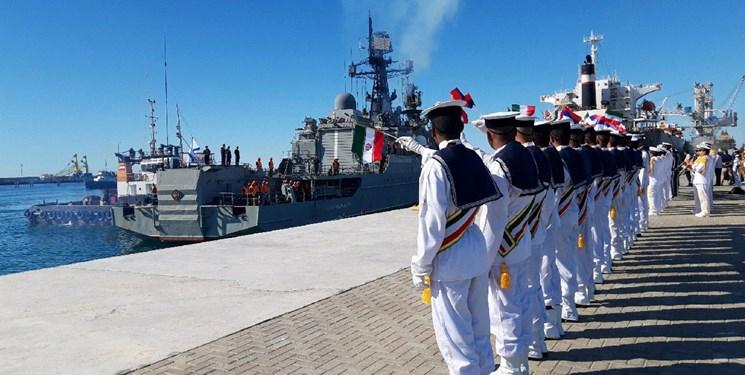
Strategic Council Online – Interview: The commander of the strategic naval forces of the army said that the 2023 marine security belt joint exercise would help to develop cooperation between the naval forces of Iran, China, and Russia, as well as increase the readiness to provide maritime security and safety jointly in line with creating peace and regional stability, announced the efforts being made to have the countries of the region participate in a marine belt exercise as well as the cooperation of the commanders of the Indian Ocean Naval Forces Symposium (IONS) for the following year.

2022/02/16
Strategic Council Online – Guest opinion: The Chinese military plans to become the world’s first naval power by 2050. This is in line with the strategy announced in 2015 that China intends to become a modern socialist country by 2049.
Maryam Varij Kazemi – Researcher on geopolitical issues

2022/02/01
Strategic Council Online – Interview: Commander of the Navy of the Army stated that the joint naval exercise of Iran, Russia and China, by displaying the latest equipment, shows the depth of relations between the three countries. He, added: The exercise reminded the countries of the region as well as the sworn enemies of the IRI revolution, that independent countries by standing beside each other, could present a new model in which their functions are based on ensuring the safety and security of navigation and also leading to world peace.

2021/11/20
Strategic Council Online – Interview: An analyst on West Asia affairs says Iran will in no way detract from its national interests and security and stability in its peripheral waters. ”From the beginning of the victory of the revolution Iran’s principled and strategic policy in the Persian Gulf and the Sea of Oman has been based on creating stability and maintaining sustainable security with the cooperation of the Persian Gulf countries and non-interference of foreign forces.

2021/08/03
Strategic Council Online: Issues such as territorial waters, flight information areas, disputed maritime zones, arming islands, and violation of rights of Turk minority in Thrace (Muslim inhabitant regions of Greece) have been among cases to cause tension between Ankara and Athens within the recent decades. All evidences stipulate that there is no conceivable perspective to de-escalate tensions between the two countries in near future. Despite counselling and agreements already made, yet there is not adequate stability to preserve them. Thus, they can be subject to questions.
Mahmoud Fazeli, International Analyst
