An Analysis of the Makkah Defense Pact
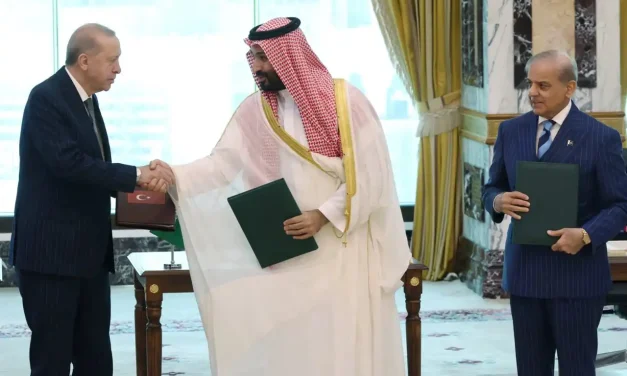
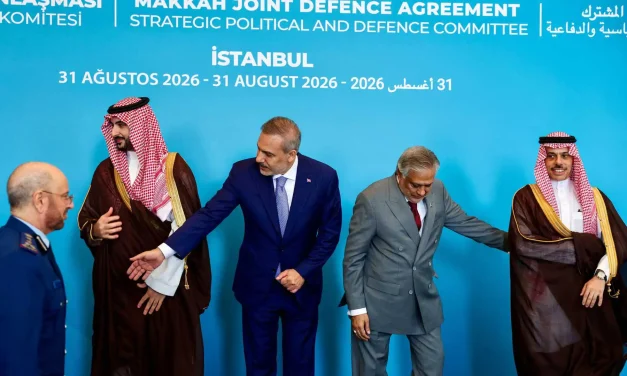
SCFR Online – Opinion: On Friday, August 7, the heads of state of three countries – Saudi Arabia, Turkey, and Pakistan – signed a text under the title “Makkah Joint Defense Agreement.”
Strategic Council Online – Note: The initiative to revive the Hejaz Railway, beyond being a transportation project, constitutes an attempt to redefine geopolitics, the economy, and Turkey’s regional position; however, its realization appears to face significant financial, security, and institutional challenges.
SCFR Online – Opinion: The Strait of Hormuz crisis is no longer merely the consequence of a military confrontation, but rather a sign of the transition from the US-centered maritime order to a new energy security structure involving the participation of emerging and influential powers.
SCFR Online – Opinion: Iran’s active deterrence strategy, while increasing the costs of US intervention, has increasingly exposed the hidden rifts between Washington’s interests and those of the Israeli regime.
SCFR Online – Opinion: The escalation of verbal and strategic tensions between Turkey and the Israeli regime, although not increasing the likelihood of direct war, indicates the formation of a new order in West Asian geopolitical rivalries.
Strategic Council Online – Note: Recent developments in the political geography of West Asia, from rising tensions in the Persian Gulf to missile and drone activities in the Red Sea and the recent warning by Kaja Kallas, the European Union’s foreign policy chief, regarding the threat to freedom of navigation, indicate a key pattern shift; the US-Iran war has moved beyond the scope of a regional and local confrontation and has linked two vital passageways for the global economy: the Strait of Hormuz and the Bab el-Mandeb Strait.
SCFR Online – Opinion: The Ukraine war was not merely a European crisis, but rather the starting point for the rearrangement of the global balance of power and a shift in the strategic behavior of great powers.
SCFR Online – Opinion: Great power competition is now pursued more in trade, currency, technology, and global supply chains than on the battlefields of military confrontation.
Strategic Council Online: An expert on regional issues said: With the start of the Gaza war, many major powers and international organizations not only did not take honest action to support the defenseless Palestinian people, but instead, with their support for the actions of the Zionist regime, they caused their crimes to increase over the past five months.
Strategic Council Online – Interview: An Afghan researcher and journalist, referring to the silence of the international community on the US crimes and attacks on civilian vehicle in Afghanistan, said: If human rights organizations and international forums break their silence, the US will be pressured for paying compensation to the survivors and for punishing the agents involved.
Online Strategic Council–editorial: Even though Donald Trump remains adamant in weakening international organizations with his unilateral thinking, the world stands united in recognizing the role of the United Nations and the Security Council in settling disputes. This seems to be a positive development.
Dr Abdorreza Farajirad- Geopolitical analyst
Strategic Council Online – A European affairs analyst said that the decision by Germany and France to quit talks on reforming the World Health Organization was not only to support the positions of the organization but also to support multilateralism. He said the Europeans have announced that Trump will be in power as the president of the United States only for 100 more days and his position is weaker than he imagines.
Strategic Council Online – A professor of international law said that the report of the UN Human Rights Rapporteur on the assassination of Quds Force Commander Sardar Qasem Soleimani, despite its weaknesses and shortcomings, contains positive points. These positions can provide the possibility of legal and international prosecution as a notable document in international courts and authorities, he added.
Strategic Council Online – Russia’s inference from the German-Belgian resolution proposed at the UN Security Council is that it could be a cover for the destructive activities of various Western countries in Syria, and therefore prevented the adoption of this resolution.
Hassan Beheshtipour – Expert on Russian Affairs
Strategic Council Online: A university professor says Trump believes that there is no institution to create restrictions for the United States, adding if the Republicans come to power for another term, we will see more weakening of international organizations.
Strategic Council Online: Given the recent divergence in Saudi political power system and the opposition of some influential Saudi princes to Mohammed bin Salman’s military strategies, the prolongation of the Yemeni war could intensify competition within the kingdom.
Davoud Ahmadzadeh – Middle East affairs expert
Strategic Council Online: President of the Strategic Council on Foreign Relations said: Asymmetric approaches are needed to solve the region’s problems, both politically and militarily, as the current diplomacy pursued through international organizations or dialogue with global powers is ineffective.
SCFR Online – Opinion: On Friday, August 7, the heads of state of three countries – Saudi Arabia, Turkey, and Pakistan – signed a text under the title “Makkah Joint Defense Agreement.”
Strategic Council Online – Note: The initiative to revive the Hejaz Railway, beyond being a transportation project, constitutes an attempt to redefine geopolitics, the economy, and Turkey’s regional position; however, its realization appears to face significant financial, security, and institutional challenges.
SCFR Online – Opinion: The Strait of Hormuz crisis is no longer merely the consequence of a military confrontation, but rather a sign of the transition from the US-centered maritime order to a new energy security structure involving the participation of emerging and influential powers.
SCFR Online – Opinion: Iran’s active deterrence strategy, while increasing the costs of US intervention, has increasingly exposed the hidden rifts between Washington’s interests and those of the Israeli regime.
SCFR Online – Opinion: The escalation of verbal and strategic tensions between Turkey and the Israeli regime, although not increasing the likelihood of direct war, indicates the formation of a new order in West Asian geopolitical rivalries.
Strategic Council Online – Note: Recent developments in the political geography of West Asia, from rising tensions in the Persian Gulf to missile and drone activities in the Red Sea and the recent warning by Kaja Kallas, the European Union’s foreign policy chief, regarding the threat to freedom of navigation, indicate a key pattern shift; the US-Iran war has moved beyond the scope of a regional and local confrontation and has linked two vital passageways for the global economy: the Strait of Hormuz and the Bab el-Mandeb Strait.
SCFR Online – Opinion: The Ukraine war was not merely a European crisis, but rather the starting point for the rearrangement of the global balance of power and a shift in the strategic behavior of great powers.
SCFR Online – Opinion: Great power competition is now pursued more in trade, currency, technology, and global supply chains than on the battlefields of military confrontation.
Strategic Council Online: An expert on regional issues said: With the start of the Gaza war, many major powers and international organizations not only did not take honest action to support the defenseless Palestinian people, but instead, with their support for the actions of the Zionist regime, they caused their crimes to increase over the past five months.
Strategic Council Online – Interview: An Afghan researcher and journalist, referring to the silence of the international community on the US crimes and attacks on civilian vehicle in Afghanistan, said: If human rights organizations and international forums break their silence, the US will be pressured for paying compensation to the survivors and for punishing the agents involved.
Online Strategic Council–editorial: Even though Donald Trump remains adamant in weakening international organizations with his unilateral thinking, the world stands united in recognizing the role of the United Nations and the Security Council in settling disputes. This seems to be a positive development.
Dr Abdorreza Farajirad- Geopolitical analyst
Strategic Council Online – A European affairs analyst said that the decision by Germany and France to quit talks on reforming the World Health Organization was not only to support the positions of the organization but also to support multilateralism. He said the Europeans have announced that Trump will be in power as the president of the United States only for 100 more days and his position is weaker than he imagines.
Strategic Council Online – A professor of international law said that the report of the UN Human Rights Rapporteur on the assassination of Quds Force Commander Sardar Qasem Soleimani, despite its weaknesses and shortcomings, contains positive points. These positions can provide the possibility of legal and international prosecution as a notable document in international courts and authorities, he added.
Strategic Council Online – Russia’s inference from the German-Belgian resolution proposed at the UN Security Council is that it could be a cover for the destructive activities of various Western countries in Syria, and therefore prevented the adoption of this resolution.
Hassan Beheshtipour – Expert on Russian Affairs
Strategic Council Online: A university professor says Trump believes that there is no institution to create restrictions for the United States, adding if the Republicans come to power for another term, we will see more weakening of international organizations.
Strategic Council Online: Given the recent divergence in Saudi political power system and the opposition of some influential Saudi princes to Mohammed bin Salman’s military strategies, the prolongation of the Yemeni war could intensify competition within the kingdom.
Davoud Ahmadzadeh – Middle East affairs expert
Strategic Council Online: President of the Strategic Council on Foreign Relations said: Asymmetric approaches are needed to solve the region’s problems, both politically and militarily, as the current diplomacy pursued through international organizations or dialogue with global powers is ineffective.
Strategic Council Online: An expert on regional issues said: With the start of the Gaza war, many major powers and international organizations not only did not take honest action to support the defenseless Palestinian people, but instead, with their support for the actions of the Zionist regime, they caused their crimes to increase over the past five months.
Strategic Council Online – Interview: An Afghan researcher and journalist, referring to the silence of the international community on the US crimes and attacks on civilian vehicle in Afghanistan, said: If human rights organizations and international forums break their silence, the US will be pressured for paying compensation to the survivors and for punishing the agents involved.
Online Strategic Council–editorial: Even though Donald Trump remains adamant in weakening international organizations with his unilateral thinking, the world stands united in recognizing the role of the United Nations and the Security Council in settling disputes. This seems to be a positive development.
Dr Abdorreza Farajirad- Geopolitical analyst
Strategic Council Online – A European affairs analyst said that the decision by Germany and France to quit talks on reforming the World Health Organization was not only to support the positions of the organization but also to support multilateralism. He said the Europeans have announced that Trump will be in power as the president of the United States only for 100 more days and his position is weaker than he imagines.
Strategic Council Online – A professor of international law said that the report of the UN Human Rights Rapporteur on the assassination of Quds Force Commander Sardar Qasem Soleimani, despite its weaknesses and shortcomings, contains positive points. These positions can provide the possibility of legal and international prosecution as a notable document in international courts and authorities, he added.
Strategic Council Online – Russia’s inference from the German-Belgian resolution proposed at the UN Security Council is that it could be a cover for the destructive activities of various Western countries in Syria, and therefore prevented the adoption of this resolution.
Hassan Beheshtipour – Expert on Russian Affairs
Strategic Council Online: A university professor says Trump believes that there is no institution to create restrictions for the United States, adding if the Republicans come to power for another term, we will see more weakening of international organizations.
Strategic Council Online: Given the recent divergence in Saudi political power system and the opposition of some influential Saudi princes to Mohammed bin Salman’s military strategies, the prolongation of the Yemeni war could intensify competition within the kingdom.
Davoud Ahmadzadeh – Middle East affairs expert
Strategic Council Online: President of the Strategic Council on Foreign Relations said: Asymmetric approaches are needed to solve the region’s problems, both politically and militarily, as the current diplomacy pursued through international organizations or dialogue with global powers is ineffective.
SCFR Online – Opinion: On Friday, August 7, the heads of state of three countries – Saudi Arabia, Turkey, and Pakistan – signed a text under the title “Makkah Joint Defense Agreement.”
Strategic Council Online – Note: The initiative to revive the Hejaz Railway, beyond being a transportation project, constitutes an attempt to redefine geopolitics, the economy, and Turkey’s regional position; however, its realization appears to face significant financial, security, and institutional challenges.
SCFR Online – Opinion: The Strait of Hormuz crisis is no longer merely the consequence of a military confrontation, but rather a sign of the transition from the US-centered maritime order to a new energy security structure involving the participation of emerging and influential powers.
SCFR Online – Opinion: Iran’s active deterrence strategy, while increasing the costs of US intervention, has increasingly exposed the hidden rifts between Washington’s interests and those of the Israeli regime.
SCFR Online – Opinion: The escalation of verbal and strategic tensions between Turkey and the Israeli regime, although not increasing the likelihood of direct war, indicates the formation of a new order in West Asian geopolitical rivalries.
Strategic Council Online – Note: Recent developments in the political geography of West Asia, from rising tensions in the Persian Gulf to missile and drone activities in the Red Sea and the recent warning by Kaja Kallas, the European Union’s foreign policy chief, regarding the threat to freedom of navigation, indicate a key pattern shift; the US-Iran war has moved beyond the scope of a regional and local confrontation and has linked two vital passageways for the global economy: the Strait of Hormuz and the Bab el-Mandeb Strait.
SCFR Online – Opinion: The Ukraine war was not merely a European crisis, but rather the starting point for the rearrangement of the global balance of power and a shift in the strategic behavior of great powers.
SCFR Online – Opinion: Great power competition is now pursued more in trade, currency, technology, and global supply chains than on the battlefields of military confrontation.
Strategic Council Online: An expert on regional issues said: With the start of the Gaza war, many major powers and international organizations not only did not take honest action to support the defenseless Palestinian people, but instead, with their support for the actions of the Zionist regime, they caused their crimes to increase over the past five months.
Strategic Council Online – Interview: An Afghan researcher and journalist, referring to the silence of the international community on the US crimes and attacks on civilian vehicle in Afghanistan, said: If human rights organizations and international forums break their silence, the US will be pressured for paying compensation to the survivors and for punishing the agents involved.
Online Strategic Council–editorial: Even though Donald Trump remains adamant in weakening international organizations with his unilateral thinking, the world stands united in recognizing the role of the United Nations and the Security Council in settling disputes. This seems to be a positive development.
Dr Abdorreza Farajirad- Geopolitical analyst
Strategic Council Online – A European affairs analyst said that the decision by Germany and France to quit talks on reforming the World Health Organization was not only to support the positions of the organization but also to support multilateralism. He said the Europeans have announced that Trump will be in power as the president of the United States only for 100 more days and his position is weaker than he imagines.
Strategic Council Online – A professor of international law said that the report of the UN Human Rights Rapporteur on the assassination of Quds Force Commander Sardar Qasem Soleimani, despite its weaknesses and shortcomings, contains positive points. These positions can provide the possibility of legal and international prosecution as a notable document in international courts and authorities, he added.
Strategic Council Online – Russia’s inference from the German-Belgian resolution proposed at the UN Security Council is that it could be a cover for the destructive activities of various Western countries in Syria, and therefore prevented the adoption of this resolution.
Hassan Beheshtipour – Expert on Russian Affairs
Strategic Council Online: A university professor says Trump believes that there is no institution to create restrictions for the United States, adding if the Republicans come to power for another term, we will see more weakening of international organizations.
Strategic Council Online: Given the recent divergence in Saudi political power system and the opposition of some influential Saudi princes to Mohammed bin Salman’s military strategies, the prolongation of the Yemeni war could intensify competition within the kingdom.
Davoud Ahmadzadeh – Middle East affairs expert
Strategic Council Online: President of the Strategic Council on Foreign Relations said: Asymmetric approaches are needed to solve the region’s problems, both politically and militarily, as the current diplomacy pursued through international organizations or dialogue with global powers is ineffective.
SCFR Online – Opinion: On Friday, August 7, the heads of state of three countries – Saudi Arabia, Turkey, and Pakistan – signed a text under the title “Makkah Joint Defense Agreement.”
Strategic Council Online – Note: The initiative to revive the Hejaz Railway, beyond being a transportation project, constitutes an attempt to redefine geopolitics, the economy, and Turkey’s regional position; however, its realization appears to face significant financial, security, and institutional challenges.
SCFR Online – Opinion: The Strait of Hormuz crisis is no longer merely the consequence of a military confrontation, but rather a sign of the transition from the US-centered maritime order to a new energy security structure involving the participation of emerging and influential powers.
SCFR Online – Opinion: Iran’s active deterrence strategy, while increasing the costs of US intervention, has increasingly exposed the hidden rifts between Washington’s interests and those of the Israeli regime.
SCFR Online – Opinion: The escalation of verbal and strategic tensions between Turkey and the Israeli regime, although not increasing the likelihood of direct war, indicates the formation of a new order in West Asian geopolitical rivalries.
Strategic Council Online – Note: Recent developments in the political geography of West Asia, from rising tensions in the Persian Gulf to missile and drone activities in the Red Sea and the recent warning by Kaja Kallas, the European Union’s foreign policy chief, regarding the threat to freedom of navigation, indicate a key pattern shift; the US-Iran war has moved beyond the scope of a regional and local confrontation and has linked two vital passageways for the global economy: the Strait of Hormuz and the Bab el-Mandeb Strait.
SCFR Online – Opinion: The Ukraine war was not merely a European crisis, but rather the starting point for the rearrangement of the global balance of power and a shift in the strategic behavior of great powers.
SCFR Online – Opinion: Great power competition is now pursued more in trade, currency, technology, and global supply chains than on the battlefields of military confrontation.
Strategic Council Online: An expert on regional issues said: With the start of the Gaza war, many major powers and international organizations not only did not take honest action to support the defenseless Palestinian people, but instead, with their support for the actions of the Zionist regime, they caused their crimes to increase over the past five months.
Strategic Council Online – Interview: An Afghan researcher and journalist, referring to the silence of the international community on the US crimes and attacks on civilian vehicle in Afghanistan, said: If human rights organizations and international forums break their silence, the US will be pressured for paying compensation to the survivors and for punishing the agents involved.
Online Strategic Council–editorial: Even though Donald Trump remains adamant in weakening international organizations with his unilateral thinking, the world stands united in recognizing the role of the United Nations and the Security Council in settling disputes. This seems to be a positive development.
Dr Abdorreza Farajirad- Geopolitical analyst
Strategic Council Online – A European affairs analyst said that the decision by Germany and France to quit talks on reforming the World Health Organization was not only to support the positions of the organization but also to support multilateralism. He said the Europeans have announced that Trump will be in power as the president of the United States only for 100 more days and his position is weaker than he imagines.
Strategic Council Online – A professor of international law said that the report of the UN Human Rights Rapporteur on the assassination of Quds Force Commander Sardar Qasem Soleimani, despite its weaknesses and shortcomings, contains positive points. These positions can provide the possibility of legal and international prosecution as a notable document in international courts and authorities, he added.
Strategic Council Online – Russia’s inference from the German-Belgian resolution proposed at the UN Security Council is that it could be a cover for the destructive activities of various Western countries in Syria, and therefore prevented the adoption of this resolution.
Hassan Beheshtipour – Expert on Russian Affairs
Strategic Council Online: A university professor says Trump believes that there is no institution to create restrictions for the United States, adding if the Republicans come to power for another term, we will see more weakening of international organizations.
Strategic Council Online: Given the recent divergence in Saudi political power system and the opposition of some influential Saudi princes to Mohammed bin Salman’s military strategies, the prolongation of the Yemeni war could intensify competition within the kingdom.
Davoud Ahmadzadeh – Middle East affairs expert
Strategic Council Online: President of the Strategic Council on Foreign Relations said: Asymmetric approaches are needed to solve the region’s problems, both politically and militarily, as the current diplomacy pursued through international organizations or dialogue with global powers is ineffective.
SCFR Online – Opinion: On Friday, August 7, the heads of state of three countries – Saudi Arabia, Turkey, and Pakistan – signed a text under the title “Makkah Joint Defense Agreement.”
Strategic Council Online – Note: The initiative to revive the Hejaz Railway, beyond being a transportation project, constitutes an attempt to redefine geopolitics, the economy, and Turkey’s regional position; however, its realization appears to face significant financial, security, and institutional challenges.
SCFR Online – Opinion: The Strait of Hormuz crisis is no longer merely the consequence of a military confrontation, but rather a sign of the transition from the US-centered maritime order to a new energy security structure involving the participation of emerging and influential powers.
SCFR Online – Opinion: Iran’s active deterrence strategy, while increasing the costs of US intervention, has increasingly exposed the hidden rifts between Washington’s interests and those of the Israeli regime.
SCFR Online – Opinion: The escalation of verbal and strategic tensions between Turkey and the Israeli regime, although not increasing the likelihood of direct war, indicates the formation of a new order in West Asian geopolitical rivalries.
Strategic Council Online – Note: Recent developments in the political geography of West Asia, from rising tensions in the Persian Gulf to missile and drone activities in the Red Sea and the recent warning by Kaja Kallas, the European Union’s foreign policy chief, regarding the threat to freedom of navigation, indicate a key pattern shift; the US-Iran war has moved beyond the scope of a regional and local confrontation and has linked two vital passageways for the global economy: the Strait of Hormuz and the Bab el-Mandeb Strait.
SCFR Online – Opinion: The Ukraine war was not merely a European crisis, but rather the starting point for the rearrangement of the global balance of power and a shift in the strategic behavior of great powers.
SCFR Online – Opinion: Great power competition is now pursued more in trade, currency, technology, and global supply chains than on the battlefields of military confrontation.
Strategic Council Online: An expert on regional issues said: With the start of the Gaza war, many major powers and international organizations not only did not take honest action to support the defenseless Palestinian people, but instead, with their support for the actions of the Zionist regime, they caused their crimes to increase over the past five months.
Strategic Council Online – Interview: An Afghan researcher and journalist, referring to the silence of the international community on the US crimes and attacks on civilian vehicle in Afghanistan, said: If human rights organizations and international forums break their silence, the US will be pressured for paying compensation to the survivors and for punishing the agents involved.
Online Strategic Council–editorial: Even though Donald Trump remains adamant in weakening international organizations with his unilateral thinking, the world stands united in recognizing the role of the United Nations and the Security Council in settling disputes. This seems to be a positive development.
Dr Abdorreza Farajirad- Geopolitical analyst
Strategic Council Online – A European affairs analyst said that the decision by Germany and France to quit talks on reforming the World Health Organization was not only to support the positions of the organization but also to support multilateralism. He said the Europeans have announced that Trump will be in power as the president of the United States only for 100 more days and his position is weaker than he imagines.
Strategic Council Online – A professor of international law said that the report of the UN Human Rights Rapporteur on the assassination of Quds Force Commander Sardar Qasem Soleimani, despite its weaknesses and shortcomings, contains positive points. These positions can provide the possibility of legal and international prosecution as a notable document in international courts and authorities, he added.
Strategic Council Online – Russia’s inference from the German-Belgian resolution proposed at the UN Security Council is that it could be a cover for the destructive activities of various Western countries in Syria, and therefore prevented the adoption of this resolution.
Hassan Beheshtipour – Expert on Russian Affairs
Strategic Council Online: A university professor says Trump believes that there is no institution to create restrictions for the United States, adding if the Republicans come to power for another term, we will see more weakening of international organizations.
Strategic Council Online: Given the recent divergence in Saudi political power system and the opposition of some influential Saudi princes to Mohammed bin Salman’s military strategies, the prolongation of the Yemeni war could intensify competition within the kingdom.
Davoud Ahmadzadeh – Middle East affairs expert
Strategic Council Online: President of the Strategic Council on Foreign Relations said: Asymmetric approaches are needed to solve the region’s problems, both politically and militarily, as the current diplomacy pursued through international organizations or dialogue with global powers is ineffective.
SCFR Online – Opinion: On Friday, August 7, the heads of state of three countries – Saudi Arabia, Turkey, and Pakistan – signed a text under the title “Makkah Joint Defense Agreement.”
Strategic Council Online – Note: The initiative to revive the Hejaz Railway, beyond being a transportation project, constitutes an attempt to redefine geopolitics, the economy, and Turkey’s regional position; however, its realization appears to face significant financial, security, and institutional challenges.
SCFR Online – Opinion: The Strait of Hormuz crisis is no longer merely the consequence of a military confrontation, but rather a sign of the transition from the US-centered maritime order to a new energy security structure involving the participation of emerging and influential powers.
SCFR Online – Opinion: Iran’s active deterrence strategy, while increasing the costs of US intervention, has increasingly exposed the hidden rifts between Washington’s interests and those of the Israeli regime.
SCFR Online – Opinion: The escalation of verbal and strategic tensions between Turkey and the Israeli regime, although not increasing the likelihood of direct war, indicates the formation of a new order in West Asian geopolitical rivalries.
Strategic Council Online – Note: Recent developments in the political geography of West Asia, from rising tensions in the Persian Gulf to missile and drone activities in the Red Sea and the recent warning by Kaja Kallas, the European Union’s foreign policy chief, regarding the threat to freedom of navigation, indicate a key pattern shift; the US-Iran war has moved beyond the scope of a regional and local confrontation and has linked two vital passageways for the global economy: the Strait of Hormuz and the Bab el-Mandeb Strait.
SCFR Online – Opinion: The Ukraine war was not merely a European crisis, but rather the starting point for the rearrangement of the global balance of power and a shift in the strategic behavior of great powers.
SCFR Online – Opinion: Great power competition is now pursued more in trade, currency, technology, and global supply chains than on the battlefields of military confrontation.
Strategic Council Online: An expert on regional issues said: With the start of the Gaza war, many major powers and international organizations not only did not take honest action to support the defenseless Palestinian people, but instead, with their support for the actions of the Zionist regime, they caused their crimes to increase over the past five months.
Strategic Council Online – Interview: An Afghan researcher and journalist, referring to the silence of the international community on the US crimes and attacks on civilian vehicle in Afghanistan, said: If human rights organizations and international forums break their silence, the US will be pressured for paying compensation to the survivors and for punishing the agents involved.
Online Strategic Council–editorial: Even though Donald Trump remains adamant in weakening international organizations with his unilateral thinking, the world stands united in recognizing the role of the United Nations and the Security Council in settling disputes. This seems to be a positive development.
Dr Abdorreza Farajirad- Geopolitical analyst
Strategic Council Online – A European affairs analyst said that the decision by Germany and France to quit talks on reforming the World Health Organization was not only to support the positions of the organization but also to support multilateralism. He said the Europeans have announced that Trump will be in power as the president of the United States only for 100 more days and his position is weaker than he imagines.
Strategic Council Online – A professor of international law said that the report of the UN Human Rights Rapporteur on the assassination of Quds Force Commander Sardar Qasem Soleimani, despite its weaknesses and shortcomings, contains positive points. These positions can provide the possibility of legal and international prosecution as a notable document in international courts and authorities, he added.
Strategic Council Online – Russia’s inference from the German-Belgian resolution proposed at the UN Security Council is that it could be a cover for the destructive activities of various Western countries in Syria, and therefore prevented the adoption of this resolution.
Hassan Beheshtipour – Expert on Russian Affairs
Strategic Council Online: A university professor says Trump believes that there is no institution to create restrictions for the United States, adding if the Republicans come to power for another term, we will see more weakening of international organizations.
Strategic Council Online: Given the recent divergence in Saudi political power system and the opposition of some influential Saudi princes to Mohammed bin Salman’s military strategies, the prolongation of the Yemeni war could intensify competition within the kingdom.
Davoud Ahmadzadeh – Middle East affairs expert
Strategic Council Online: President of the Strategic Council on Foreign Relations said: Asymmetric approaches are needed to solve the region’s problems, both politically and militarily, as the current diplomacy pursued through international organizations or dialogue with global powers is ineffective.
SCFR Online – Opinion: On Friday, August 7, the heads of state of three countries – Saudi Arabia, Turkey, and Pakistan – signed a text under the title “Makkah Joint Defense Agreement.”
Strategic Council Online – Note: The initiative to revive the Hejaz Railway, beyond being a transportation project, constitutes an attempt to redefine geopolitics, the economy, and Turkey’s regional position; however, its realization appears to face significant financial, security, and institutional challenges.
SCFR Online – Opinion: The Strait of Hormuz crisis is no longer merely the consequence of a military confrontation, but rather a sign of the transition from the US-centered maritime order to a new energy security structure involving the participation of emerging and influential powers.
SCFR Online – Opinion: Iran’s active deterrence strategy, while increasing the costs of US intervention, has increasingly exposed the hidden rifts between Washington’s interests and those of the Israeli regime.
SCFR Online – Opinion: The escalation of verbal and strategic tensions between Turkey and the Israeli regime, although not increasing the likelihood of direct war, indicates the formation of a new order in West Asian geopolitical rivalries.
Strategic Council Online – Note: Recent developments in the political geography of West Asia, from rising tensions in the Persian Gulf to missile and drone activities in the Red Sea and the recent warning by Kaja Kallas, the European Union’s foreign policy chief, regarding the threat to freedom of navigation, indicate a key pattern shift; the US-Iran war has moved beyond the scope of a regional and local confrontation and has linked two vital passageways for the global economy: the Strait of Hormuz and the Bab el-Mandeb Strait.
SCFR Online – Opinion: The Ukraine war was not merely a European crisis, but rather the starting point for the rearrangement of the global balance of power and a shift in the strategic behavior of great powers.
SCFR Online – Opinion: Great power competition is now pursued more in trade, currency, technology, and global supply chains than on the battlefields of military confrontation.