
2025/09/08
Strategic Council Online – Interview: An international affairs expert stated that recently, Ilham Aliyev, the President of Azerbaijan, by announcing his country’s mediating role between the Israeli regime and Syria, attempted to turn Baku into one of the active regional players. In an interview, Aliyev emphasized that the primary goal of this action is to strengthen peace and stability in the Middle East. Furthermore, Aliyev spoke of Azerbaijan’s readiness to support the restoration of relations between Turkey and the Israeli regime and elaborated on his country’s humanitarian and energy assistance to Syria, including the export of gas to Syria based on a quadrilateral agreement with Turkey and Qatar, which began on August 2nd and may increase in the future. However, regional analysts view this mediation with skepticism, seeing it as being in line with Tel Aviv’s interests and the improvement of Baku’s geopolitical standing.

2025/09/05
Strategic Council Online – Opinion: The plan recently approved by the Lebanese government regarding the disarmament of Hezbollah is, in fact, an American project and scheme, which should be analyzed and assessed within the context of the developments of the past year in Lebanon, specifically the war waged by the Israeli regime against this country. The overarching goal of presenting such a plan is to enable the Israeli regime to impose new security arrangements in Lebanon as part of its efforts to change the regional order.
2025/08/31
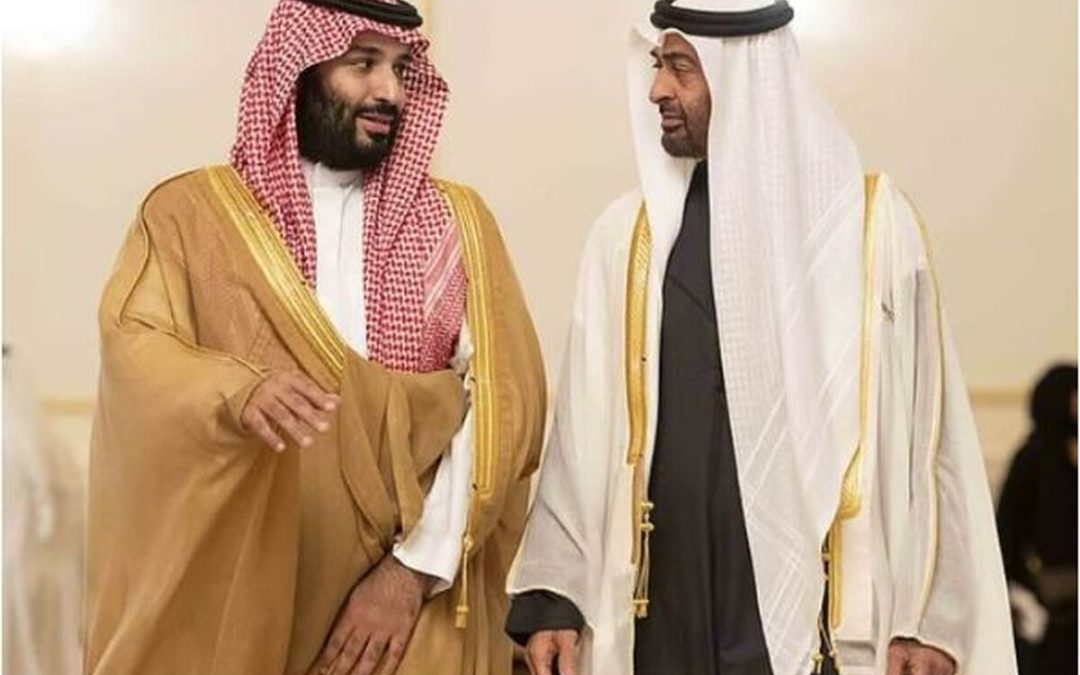
Strategic Council Online: Before the illegitimate attack by the Israeli and American regimes on our country’s nuclear and military centers, Iran’s diplomatic apparatus had adopted an active and multilateral regional policy. This policy aimed to gain and maintain the trust and cooperation of important and influential regional countries, including Saudi Arabia, by keeping them informed about the progress and process of nuclear negotiations with the United States. This policy has proven to be effective. Unlike in previous instances when it was highly likely that these countries would remain silent or even cooperate with attacks on our nuclear facilities, we recently observed a unanimous condemnation of the Israeli regime’s attack on our nation by the Persian Gulf Cooperation Council.

2025/08/26
Strategic Council Online – Interview: A senior international affairs analyst stated that the recent meeting of the foreign minister of Syria’s interim government with a delegation from the Zionist regime in Paris marks a turning point in the regional equations; an event that, beyond a simple diplomatic meeting, signifies a redefinition of strategies regarding Syria’s future. These talks, which were mediated by the United States and focused on reducing tensions in southern Syria, monitoring the ceasefire, and reactivating the 1974 agreement, clearly indicate that the Syria file can no longer be analyzed solely within the framework of an internal crisis or field conflicts. Instead, Damascus today is caught in a complex duality: on one hand, it faces the occupation of part of its territory by the Israeli regime and increasing pressures on its strategic geography, and on the other hand, it feels the necessity of utilizing diplomacy to break out of political isolation. Meanwhile, the Israeli regime seeks to consolidate its position in the region, an issue that links to the long-standing project of “Greater Israel” and efforts to dismantle the traditional structures of the Middle East.

2025/08/23
Strategic Council Online – Interview: A senior Palestinian affairs analyst stated: To justify its crimes in Gaza, the Zionist regime employs two main strategies: using military censorship regarding the publication of operational details and presenting an official narrative by military spokespersons in Hebrew and Arabic. By relying on selective images and information, it attempts to make its military actions in Gaza seem believable. While Benjamin Netanyahu, the Prime Minister of the Israeli regime, has announced readiness to expand military operations in Gaza and claimed that Palestinians would be allowed to leave the area, international criticism of this regime’s actions under the accusation of ethnic cleansing has intensified. By controlling Gaza’s borders, the Israeli regime’s military has restricted the exit of Palestinians and simultaneously carried out extensive bombings in the residential areas of Zeitoun and Sabra, which, according to the Hamas Civil Defense Organization, resulted in at least 33 deaths and widespread destruction. The European Union, the United Kingdom, Australia, Canada, and Japan, in a joint statement, have warned of an impending famine in Gaza and called for a halt to the use of lethal force near aid distribution sites. The World Health Organization has also emphasized the necessity of medical equipment entering Gaza, but the Israeli regime continues to prevent sufficient humanitarian aid from being sent.
