جدیدترین مطالب

Realities of the Tripartite Makkah Pact

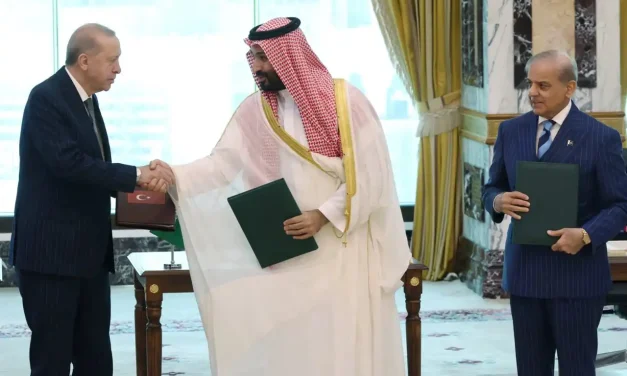
SCFR Online – Interview: The signing of the Makkah agreement between Saudi Arabia, Pakistan, and Turkey has raised questions about the future of the region’s security structure and the position of these countries in West Asian equations. Can this agreement become a genuine collective defense mechanism, or does it have more of a political and deterrent function than creating new military capacity?

Strategic Implications of the Reduction of US Weapons Stockpiles

SCFR Online – Opinion: The continuation of the US war against Iran, in addition to increasing operational costs, has called into question the actual capacity of the American arsenal to simultaneously fulfill security commitments on multiple fronts; an issue that affects deterrence, defense production capacity, and Washington’s resource prioritization.

The Formation of a New Order in Relations Between Powers

SCFR Online – Opinion: The Russia-Ukraine war and the war of the United States and the Israeli regime against Iran have been formed with different objectives and actors, but field and political developments indicate that they are not entirely separate from one another.

An Analysis of the Makkah Defense Pact

SCFR Online – Opinion: On Friday, August 7, the heads of state of three countries – Saudi Arabia, Turkey, and Pakistan – signed a text under the title “Makkah Joint Defense Agreement.”

Dimensions and challenges of the initiative to revive the Hejaz Railway

Strategic Council Online – Note: The initiative to revive the Hejaz Railway, beyond being a transportation project, constitutes an attempt to redefine geopolitics, the economy, and Turkey’s regional position; however, its realization appears to face significant financial, security, and institutional challenges.

Loading

Libyan War

Possibility of Libya’s Disintegration Due to Foreign Intervention

Possibility of Libya’s Disintegration Due to Foreign Intervention

Strategic Council Online – Regional players such as Saudi Arabia, the United Arab Emirates and Turkey are attempting to break up Libya and establish two different sovereignties in the country. Therefore, if the war continues, Libya like Sudan, may be divided into the two eastern and western parts.
Hassan Hanizadeh – Expert on Asian Affairs

Libya eyeing lengthy and difficult negotiations

Libya eyeing lengthy and difficult negotiations

Strategic Council Online – Interview: The two sides of the war in Libya have ceased the conflict under the present circumstances and are calling for political talks to end the deadlock, an expert of international relations said, adding that they face lengthy and difficult negotiations.

Economic Competition of Powers in Libya

Economic Competition of Powers in Libya

Strategic Council Online: Libya’s good economic opportunities have led European states to enter into serious disputes with each other in their bid to dominate Libya, each secretly and openly supporting one of the parties involved in Libya, or like the London government play a significant role in the ongoing Libyan conflict through their interventions in the Arab world and through the use of Arab reaction on their behalf.
Jafar Qanadbashi – Middle East Affairs Expert

Why the Ceasefire in Libya Failed?

Why the Ceasefire in Libya Failed?

Strategic Council Online: The new round of rivalries in Libya began when the Turkish and Russian governments sought to pave the way for their exclusive presence in the country under the pretext of a ceasefire. They aimed to forge an agreement between Seraj and Haftar governments without the knowledge of the European states.
Jafar Qanadbashi – Middle East Affairs Expert

أحدث الوظائف

Realities of the Tripartite Makkah Pact

SCFR Online – Interview: The signing of the Makkah agreement between Saudi Arabia, Pakistan, and Turkey has raised questions about the future of the region’s security structure and the position of these countries in West Asian equations. Can this agreement become a genuine collective defense mechanism, or does it have more of a political and deterrent function than creating new military capacity?

Strategic Implications of the Reduction of US Weapons Stockpiles

SCFR Online – Opinion: The continuation of the US war against Iran, in addition to increasing operational costs, has called into question the actual capacity of the American arsenal to simultaneously fulfill security commitments on multiple fronts; an issue that affects deterrence, defense production capacity, and Washington’s resource prioritization.

The Formation of a New Order in Relations Between Powers

SCFR Online – Opinion: The Russia-Ukraine war and the war of the United States and the Israeli regime against Iran have been formed with different objectives and actors, but field and political developments indicate that they are not entirely separate from one another.

An Analysis of the Makkah Defense Pact

SCFR Online – Opinion: On Friday, August 7, the heads of state of three countries – Saudi Arabia, Turkey, and Pakistan – signed a text under the title “Makkah Joint Defense Agreement.”

Dimensions and challenges of the initiative to revive the Hejaz Railway

Strategic Council Online – Note: The initiative to revive the Hejaz Railway, beyond being a transportation project, constitutes an attempt to redefine geopolitics, the economy, and Turkey’s regional position; however, its realization appears to face significant financial, security, and institutional challenges.

Loading

Libyan War

Possibility of Libya’s Disintegration Due to Foreign Intervention

Possibility of Libya’s Disintegration Due to Foreign Intervention

Strategic Council Online – Regional players such as Saudi Arabia, the United Arab Emirates and Turkey are attempting to break up Libya and establish two different sovereignties in the country. Therefore, if the war continues, Libya like Sudan, may be divided into the two eastern and western parts.
Hassan Hanizadeh – Expert on Asian Affairs

Libya eyeing lengthy and difficult negotiations

Libya eyeing lengthy and difficult negotiations

Strategic Council Online – Interview: The two sides of the war in Libya have ceased the conflict under the present circumstances and are calling for political talks to end the deadlock, an expert of international relations said, adding that they face lengthy and difficult negotiations.

Economic Competition of Powers in Libya

Economic Competition of Powers in Libya

Strategic Council Online: Libya’s good economic opportunities have led European states to enter into serious disputes with each other in their bid to dominate Libya, each secretly and openly supporting one of the parties involved in Libya, or like the London government play a significant role in the ongoing Libyan conflict through their interventions in the Arab world and through the use of Arab reaction on their behalf.
Jafar Qanadbashi – Middle East Affairs Expert

Why the Ceasefire in Libya Failed?

Why the Ceasefire in Libya Failed?

Strategic Council Online: The new round of rivalries in Libya began when the Turkish and Russian governments sought to pave the way for their exclusive presence in the country under the pretext of a ceasefire. They aimed to forge an agreement between Seraj and Haftar governments without the knowledge of the European states.
Jafar Qanadbashi – Middle East Affairs Expert

Libyan War

Possibility of Libya’s Disintegration Due to Foreign Intervention

Possibility of Libya’s Disintegration Due to Foreign Intervention

Strategic Council Online – Regional players such as Saudi Arabia, the United Arab Emirates and Turkey are attempting to break up Libya and establish two different sovereignties in the country. Therefore, if the war continues, Libya like Sudan, may be divided into the two eastern and western parts.
Hassan Hanizadeh – Expert on Asian Affairs

Libya eyeing lengthy and difficult negotiations

Libya eyeing lengthy and difficult negotiations

Strategic Council Online – Interview: The two sides of the war in Libya have ceased the conflict under the present circumstances and are calling for political talks to end the deadlock, an expert of international relations said, adding that they face lengthy and difficult negotiations.

Economic Competition of Powers in Libya

Economic Competition of Powers in Libya

Strategic Council Online: Libya’s good economic opportunities have led European states to enter into serious disputes with each other in their bid to dominate Libya, each secretly and openly supporting one of the parties involved in Libya, or like the London government play a significant role in the ongoing Libyan conflict through their interventions in the Arab world and through the use of Arab reaction on their behalf.
Jafar Qanadbashi – Middle East Affairs Expert

Why the Ceasefire in Libya Failed?

Why the Ceasefire in Libya Failed?

Strategic Council Online: The new round of rivalries in Libya began when the Turkish and Russian governments sought to pave the way for their exclusive presence in the country under the pretext of a ceasefire. They aimed to forge an agreement between Seraj and Haftar governments without the knowledge of the European states.
Jafar Qanadbashi – Middle East Affairs Expert

LATEST CONTENT

Realities of the Tripartite Makkah Pact

SCFR Online – Interview: The signing of the Makkah agreement between Saudi Arabia, Pakistan, and Turkey has raised questions about the future of the region’s security structure and the position of these countries in West Asian equations. Can this agreement become a genuine collective defense mechanism, or does it have more of a political and deterrent function than creating new military capacity?

Strategic Implications of the Reduction of US Weapons Stockpiles

SCFR Online – Opinion: The continuation of the US war against Iran, in addition to increasing operational costs, has called into question the actual capacity of the American arsenal to simultaneously fulfill security commitments on multiple fronts; an issue that affects deterrence, defense production capacity, and Washington’s resource prioritization.

The Formation of a New Order in Relations Between Powers

SCFR Online – Opinion: The Russia-Ukraine war and the war of the United States and the Israeli regime against Iran have been formed with different objectives and actors, but field and political developments indicate that they are not entirely separate from one another.

An Analysis of the Makkah Defense Pact

SCFR Online – Opinion: On Friday, August 7, the heads of state of three countries – Saudi Arabia, Turkey, and Pakistan – signed a text under the title “Makkah Joint Defense Agreement.”

Dimensions and challenges of the initiative to revive the Hejaz Railway

Strategic Council Online – Note: The initiative to revive the Hejaz Railway, beyond being a transportation project, constitutes an attempt to redefine geopolitics, the economy, and Turkey’s regional position; however, its realization appears to face significant financial, security, and institutional challenges.

Loading

Libyan War

Possibility of Libya’s Disintegration Due to Foreign Intervention

Possibility of Libya’s Disintegration Due to Foreign Intervention

Strategic Council Online – Regional players such as Saudi Arabia, the United Arab Emirates and Turkey are attempting to break up Libya and establish two different sovereignties in the country. Therefore, if the war continues, Libya like Sudan, may be divided into the two eastern and western parts.
Hassan Hanizadeh – Expert on Asian Affairs

Libya eyeing lengthy and difficult negotiations

Libya eyeing lengthy and difficult negotiations

Strategic Council Online – Interview: The two sides of the war in Libya have ceased the conflict under the present circumstances and are calling for political talks to end the deadlock, an expert of international relations said, adding that they face lengthy and difficult negotiations.

Economic Competition of Powers in Libya

Economic Competition of Powers in Libya

Strategic Council Online: Libya’s good economic opportunities have led European states to enter into serious disputes with each other in their bid to dominate Libya, each secretly and openly supporting one of the parties involved in Libya, or like the London government play a significant role in the ongoing Libyan conflict through their interventions in the Arab world and through the use of Arab reaction on their behalf.
Jafar Qanadbashi – Middle East Affairs Expert

Why the Ceasefire in Libya Failed?

Why the Ceasefire in Libya Failed?

Strategic Council Online: The new round of rivalries in Libya began when the Turkish and Russian governments sought to pave the way for their exclusive presence in the country under the pretext of a ceasefire. They aimed to forge an agreement between Seraj and Haftar governments without the knowledge of the European states.
Jafar Qanadbashi – Middle East Affairs Expert

ÚLTIMAS PUBLICACIONES

Realities of the Tripartite Makkah Pact

SCFR Online – Interview: The signing of the Makkah agreement between Saudi Arabia, Pakistan, and Turkey has raised questions about the future of the region’s security structure and the position of these countries in West Asian equations. Can this agreement become a genuine collective defense mechanism, or does it have more of a political and deterrent function than creating new military capacity?

Strategic Implications of the Reduction of US Weapons Stockpiles

SCFR Online – Opinion: The continuation of the US war against Iran, in addition to increasing operational costs, has called into question the actual capacity of the American arsenal to simultaneously fulfill security commitments on multiple fronts; an issue that affects deterrence, defense production capacity, and Washington’s resource prioritization.

The Formation of a New Order in Relations Between Powers

SCFR Online – Opinion: The Russia-Ukraine war and the war of the United States and the Israeli regime against Iran have been formed with different objectives and actors, but field and political developments indicate that they are not entirely separate from one another.

An Analysis of the Makkah Defense Pact

SCFR Online – Opinion: On Friday, August 7, the heads of state of three countries – Saudi Arabia, Turkey, and Pakistan – signed a text under the title “Makkah Joint Defense Agreement.”

Dimensions and challenges of the initiative to revive the Hejaz Railway

Strategic Council Online – Note: The initiative to revive the Hejaz Railway, beyond being a transportation project, constitutes an attempt to redefine geopolitics, the economy, and Turkey’s regional position; however, its realization appears to face significant financial, security, and institutional challenges.

Loading

Libyan War

Possibility of Libya’s Disintegration Due to Foreign Intervention

Possibility of Libya’s Disintegration Due to Foreign Intervention

Strategic Council Online – Regional players such as Saudi Arabia, the United Arab Emirates and Turkey are attempting to break up Libya and establish two different sovereignties in the country. Therefore, if the war continues, Libya like Sudan, may be divided into the two eastern and western parts.
Hassan Hanizadeh – Expert on Asian Affairs

Libya eyeing lengthy and difficult negotiations

Libya eyeing lengthy and difficult negotiations

Strategic Council Online – Interview: The two sides of the war in Libya have ceased the conflict under the present circumstances and are calling for political talks to end the deadlock, an expert of international relations said, adding that they face lengthy and difficult negotiations.

Economic Competition of Powers in Libya

Economic Competition of Powers in Libya

Strategic Council Online: Libya’s good economic opportunities have led European states to enter into serious disputes with each other in their bid to dominate Libya, each secretly and openly supporting one of the parties involved in Libya, or like the London government play a significant role in the ongoing Libyan conflict through their interventions in the Arab world and through the use of Arab reaction on their behalf.
Jafar Qanadbashi – Middle East Affairs Expert

Why the Ceasefire in Libya Failed?

Why the Ceasefire in Libya Failed?

Strategic Council Online: The new round of rivalries in Libya began when the Turkish and Russian governments sought to pave the way for their exclusive presence in the country under the pretext of a ceasefire. They aimed to forge an agreement between Seraj and Haftar governments without the knowledge of the European states.
Jafar Qanadbashi – Middle East Affairs Expert

ÚLTIMAS PUBLICACIONES

Realities of the Tripartite Makkah Pact

SCFR Online – Interview: The signing of the Makkah agreement between Saudi Arabia, Pakistan, and Turkey has raised questions about the future of the region’s security structure and the position of these countries in West Asian equations. Can this agreement become a genuine collective defense mechanism, or does it have more of a political and deterrent function than creating new military capacity?

Strategic Implications of the Reduction of US Weapons Stockpiles

SCFR Online – Opinion: The continuation of the US war against Iran, in addition to increasing operational costs, has called into question the actual capacity of the American arsenal to simultaneously fulfill security commitments on multiple fronts; an issue that affects deterrence, defense production capacity, and Washington’s resource prioritization.

The Formation of a New Order in Relations Between Powers

SCFR Online – Opinion: The Russia-Ukraine war and the war of the United States and the Israeli regime against Iran have been formed with different objectives and actors, but field and political developments indicate that they are not entirely separate from one another.

An Analysis of the Makkah Defense Pact

SCFR Online – Opinion: On Friday, August 7, the heads of state of three countries – Saudi Arabia, Turkey, and Pakistan – signed a text under the title “Makkah Joint Defense Agreement.”

Dimensions and challenges of the initiative to revive the Hejaz Railway

Strategic Council Online – Note: The initiative to revive the Hejaz Railway, beyond being a transportation project, constitutes an attempt to redefine geopolitics, the economy, and Turkey’s regional position; however, its realization appears to face significant financial, security, and institutional challenges.

Loading

Libyan War

Possibility of Libya’s Disintegration Due to Foreign Intervention

Possibility of Libya’s Disintegration Due to Foreign Intervention

Strategic Council Online – Regional players such as Saudi Arabia, the United Arab Emirates and Turkey are attempting to break up Libya and establish two different sovereignties in the country. Therefore, if the war continues, Libya like Sudan, may be divided into the two eastern and western parts.
Hassan Hanizadeh – Expert on Asian Affairs

Libya eyeing lengthy and difficult negotiations

Libya eyeing lengthy and difficult negotiations

Strategic Council Online – Interview: The two sides of the war in Libya have ceased the conflict under the present circumstances and are calling for political talks to end the deadlock, an expert of international relations said, adding that they face lengthy and difficult negotiations.

Economic Competition of Powers in Libya

Economic Competition of Powers in Libya

Strategic Council Online: Libya’s good economic opportunities have led European states to enter into serious disputes with each other in their bid to dominate Libya, each secretly and openly supporting one of the parties involved in Libya, or like the London government play a significant role in the ongoing Libyan conflict through their interventions in the Arab world and through the use of Arab reaction on their behalf.
Jafar Qanadbashi – Middle East Affairs Expert

Why the Ceasefire in Libya Failed?

Why the Ceasefire in Libya Failed?

Strategic Council Online: The new round of rivalries in Libya began when the Turkish and Russian governments sought to pave the way for their exclusive presence in the country under the pretext of a ceasefire. They aimed to forge an agreement between Seraj and Haftar governments without the knowledge of the European states.
Jafar Qanadbashi – Middle East Affairs Expert

ÚLTIMAS PUBLICACIONES

Realities of the Tripartite Makkah Pact

SCFR Online – Interview: The signing of the Makkah agreement between Saudi Arabia, Pakistan, and Turkey has raised questions about the future of the region’s security structure and the position of these countries in West Asian equations. Can this agreement become a genuine collective defense mechanism, or does it have more of a political and deterrent function than creating new military capacity?

Strategic Implications of the Reduction of US Weapons Stockpiles

SCFR Online – Opinion: The continuation of the US war against Iran, in addition to increasing operational costs, has called into question the actual capacity of the American arsenal to simultaneously fulfill security commitments on multiple fronts; an issue that affects deterrence, defense production capacity, and Washington’s resource prioritization.

The Formation of a New Order in Relations Between Powers

SCFR Online – Opinion: The Russia-Ukraine war and the war of the United States and the Israeli regime against Iran have been formed with different objectives and actors, but field and political developments indicate that they are not entirely separate from one another.

An Analysis of the Makkah Defense Pact

SCFR Online – Opinion: On Friday, August 7, the heads of state of three countries – Saudi Arabia, Turkey, and Pakistan – signed a text under the title “Makkah Joint Defense Agreement.”

Dimensions and challenges of the initiative to revive the Hejaz Railway

Strategic Council Online – Note: The initiative to revive the Hejaz Railway, beyond being a transportation project, constitutes an attempt to redefine geopolitics, the economy, and Turkey’s regional position; however, its realization appears to face significant financial, security, and institutional challenges.

Loading

Libyan War

Possibility of Libya’s Disintegration Due to Foreign Intervention

Possibility of Libya’s Disintegration Due to Foreign Intervention

Strategic Council Online – Regional players such as Saudi Arabia, the United Arab Emirates and Turkey are attempting to break up Libya and establish two different sovereignties in the country. Therefore, if the war continues, Libya like Sudan, may be divided into the two eastern and western parts.
Hassan Hanizadeh – Expert on Asian Affairs

Libya eyeing lengthy and difficult negotiations

Libya eyeing lengthy and difficult negotiations

Strategic Council Online – Interview: The two sides of the war in Libya have ceased the conflict under the present circumstances and are calling for political talks to end the deadlock, an expert of international relations said, adding that they face lengthy and difficult negotiations.

Economic Competition of Powers in Libya

Economic Competition of Powers in Libya

Strategic Council Online: Libya’s good economic opportunities have led European states to enter into serious disputes with each other in their bid to dominate Libya, each secretly and openly supporting one of the parties involved in Libya, or like the London government play a significant role in the ongoing Libyan conflict through their interventions in the Arab world and through the use of Arab reaction on their behalf.
Jafar Qanadbashi – Middle East Affairs Expert

Why the Ceasefire in Libya Failed?

Why the Ceasefire in Libya Failed?

Strategic Council Online: The new round of rivalries in Libya began when the Turkish and Russian governments sought to pave the way for their exclusive presence in the country under the pretext of a ceasefire. They aimed to forge an agreement between Seraj and Haftar governments without the knowledge of the European states.
Jafar Qanadbashi – Middle East Affairs Expert

ÚLTIMAS PUBLICACIONES

Realities of the Tripartite Makkah Pact

SCFR Online – Interview: The signing of the Makkah agreement between Saudi Arabia, Pakistan, and Turkey has raised questions about the future of the region’s security structure and the position of these countries in West Asian equations. Can this agreement become a genuine collective defense mechanism, or does it have more of a political and deterrent function than creating new military capacity?

Strategic Implications of the Reduction of US Weapons Stockpiles

SCFR Online – Opinion: The continuation of the US war against Iran, in addition to increasing operational costs, has called into question the actual capacity of the American arsenal to simultaneously fulfill security commitments on multiple fronts; an issue that affects deterrence, defense production capacity, and Washington’s resource prioritization.

The Formation of a New Order in Relations Between Powers

SCFR Online – Opinion: The Russia-Ukraine war and the war of the United States and the Israeli regime against Iran have been formed with different objectives and actors, but field and political developments indicate that they are not entirely separate from one another.

An Analysis of the Makkah Defense Pact

SCFR Online – Opinion: On Friday, August 7, the heads of state of three countries – Saudi Arabia, Turkey, and Pakistan – signed a text under the title “Makkah Joint Defense Agreement.”

Dimensions and challenges of the initiative to revive the Hejaz Railway

Strategic Council Online – Note: The initiative to revive the Hejaz Railway, beyond being a transportation project, constitutes an attempt to redefine geopolitics, the economy, and Turkey’s regional position; however, its realization appears to face significant financial, security, and institutional challenges.

Loading