جدیدترین مطالب

The Makkah Pact; Reasons for its Formation and Challenges Ahead

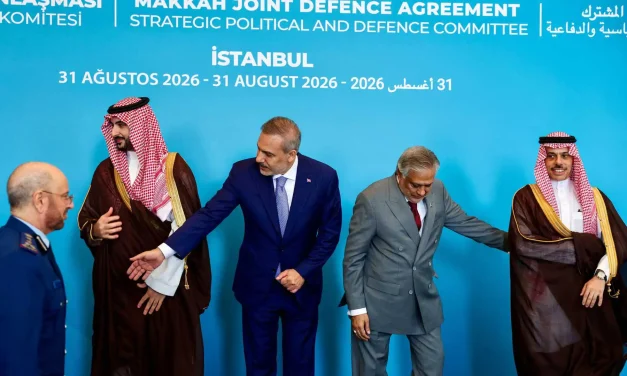
SCFR Online – Opinion: The Makkah Pact, signed between Saudi Arabia, Pakistan, and Turkey under the motto “an attack on one is an attack on all,” is viewed by some analysts less as a full-fledged military coalition and more as an attempt to reduce security dependence on an external power and to establish a regional security mechanism.

Implications of the US-Saudi Nuclear Agreement

SCFR Online – Opinion: The new US-Saudi nuclear agreement, despite legal and political ambiguities, could alter previous non-proliferation standards in West Asia and intensify nuclear competition, ushering it into a new phase.

An Analysis of Recent Turkey-Israeli Regime Tensions

SCFR Online – Opinion: Recent developments in Syria indicate an intensification of strategic rivalry between Turkey and the Israeli regime, but mutual considerations and the role of the United States have limited the likelihood of direct war.

Increasing criticism of the extensive Zionist lobby network

SCFR Online – Opinion: An examination of the mechanisms of the Israeli regime’s influence in the United States depicts a complex picture of shared interests, strategic dependencies, and the limitations of this relationship.

Realities of the Tripartite Makkah Pact

SCFR Online – Interview: The signing of the Makkah agreement between Saudi Arabia, Pakistan, and Turkey has raised questions about the future of the region’s security structure and the position of these countries in West Asian equations. Can this agreement become a genuine collective defense mechanism, or does it have more of a political and deterrent function than creating new military capacity?

Loading

Mehdi Shapouri

Destructive Consequences of IAEA Political Approach to Iran

Destructive Consequences of IAEA Political Approach to Iran

Strategic Council Online – A faculty member of the Institute for Strategic Studies, stating that this political-security view of Iran’s nuclear activities and program has always been destructive and has hindered resolution of the problem, said: The recent issues raised by the IAEA are not new and in the past, when the parties have willed, they have managed and resolved the issues.

Sabotage in Natanz Nuclear Facilities and the Question of Deterrence

Sabotage in Natanz Nuclear Facilities and the Question of Deterrence

Strategic Council Online – A faculty member of the Institute for Strategic Studies, says that preventing enhancement of capabilities that could create deterrence against Israel’s capabilities and bring Israel’s deterrence under question is the regime’s consistent policy. He added: If strategic patience is interpreted as not responding, there may be more damage to Iran’s national interests and security.

An Analysis of Biden’s National Security Document and Its Difference from Trump Era

An Analysis of Biden’s National Security Document and Its Difference from Trump Era

Strategic Council Online – A faculty member of the Center for Strategic Studies, referring to the threats mentioned in the interim national security document of the Biden administration, said: This document emphasizes the competition between the great powers and the threat of changing the distribution of power in the international system and in the US foreign policy, unlike in the past, terrorism and extremism are no longer the primary threat to the US national security.

Prospects for Europe-US Relations and Poland’s Exit from EU

Prospects for Europe-US Relations and Poland’s Exit from EU

Strategic Council Online – A faculty member of the Research Institute for Strategic Studies said that with the return of the Democrats and the internationalist approach in the United States, US-European relations will be restored to a large extent and the possibility for the weakening of the EU will stop. He added: Trump was in favour of disintegration in Europe, but in the aftermath of the coming to power of the new US administration, it seems very unlikely that Poland will take the issue of leaving the EU seriously.

Corona: Undermining Liberal Order, Bolstering Power Politics Order

Corona: Undermining Liberal Order, Bolstering Power Politics Order

Strategic Council Online: A faculty member of the Institute for Strategic Studies said that the conditions and requirements the corona disease has created for the immediate intervention of governments in the internal affairs of the people are to the detriment of individual and social freedoms. He added: The coronavirus may weaken or even be destroyed by vaccines, but its effects on human, community, and government relationships appear to be sustained.

أحدث الوظائف

The Makkah Pact; Reasons for its Formation and Challenges Ahead

SCFR Online – Opinion: The Makkah Pact, signed between Saudi Arabia, Pakistan, and Turkey under the motto “an attack on one is an attack on all,” is viewed by some analysts less as a full-fledged military coalition and more as an attempt to reduce security dependence on an external power and to establish a regional security mechanism.

Implications of the US-Saudi Nuclear Agreement

SCFR Online – Opinion: The new US-Saudi nuclear agreement, despite legal and political ambiguities, could alter previous non-proliferation standards in West Asia and intensify nuclear competition, ushering it into a new phase.

An Analysis of Recent Turkey-Israeli Regime Tensions

SCFR Online – Opinion: Recent developments in Syria indicate an intensification of strategic rivalry between Turkey and the Israeli regime, but mutual considerations and the role of the United States have limited the likelihood of direct war.

Increasing criticism of the extensive Zionist lobby network

SCFR Online – Opinion: An examination of the mechanisms of the Israeli regime’s influence in the United States depicts a complex picture of shared interests, strategic dependencies, and the limitations of this relationship.

Realities of the Tripartite Makkah Pact

SCFR Online – Interview: The signing of the Makkah agreement between Saudi Arabia, Pakistan, and Turkey has raised questions about the future of the region’s security structure and the position of these countries in West Asian equations. Can this agreement become a genuine collective defense mechanism, or does it have more of a political and deterrent function than creating new military capacity?

Loading

Mehdi Shapouri

Destructive Consequences of IAEA Political Approach to Iran

Destructive Consequences of IAEA Political Approach to Iran

Strategic Council Online – A faculty member of the Institute for Strategic Studies, stating that this political-security view of Iran’s nuclear activities and program has always been destructive and has hindered resolution of the problem, said: The recent issues raised by the IAEA are not new and in the past, when the parties have willed, they have managed and resolved the issues.

Sabotage in Natanz Nuclear Facilities and the Question of Deterrence

Sabotage in Natanz Nuclear Facilities and the Question of Deterrence

Strategic Council Online – A faculty member of the Institute for Strategic Studies, says that preventing enhancement of capabilities that could create deterrence against Israel’s capabilities and bring Israel’s deterrence under question is the regime’s consistent policy. He added: If strategic patience is interpreted as not responding, there may be more damage to Iran’s national interests and security.

An Analysis of Biden’s National Security Document and Its Difference from Trump Era

An Analysis of Biden’s National Security Document and Its Difference from Trump Era

Strategic Council Online – A faculty member of the Center for Strategic Studies, referring to the threats mentioned in the interim national security document of the Biden administration, said: This document emphasizes the competition between the great powers and the threat of changing the distribution of power in the international system and in the US foreign policy, unlike in the past, terrorism and extremism are no longer the primary threat to the US national security.

Prospects for Europe-US Relations and Poland’s Exit from EU

Prospects for Europe-US Relations and Poland’s Exit from EU

Strategic Council Online – A faculty member of the Research Institute for Strategic Studies said that with the return of the Democrats and the internationalist approach in the United States, US-European relations will be restored to a large extent and the possibility for the weakening of the EU will stop. He added: Trump was in favour of disintegration in Europe, but in the aftermath of the coming to power of the new US administration, it seems very unlikely that Poland will take the issue of leaving the EU seriously.

Corona: Undermining Liberal Order, Bolstering Power Politics Order

Corona: Undermining Liberal Order, Bolstering Power Politics Order

Strategic Council Online: A faculty member of the Institute for Strategic Studies said that the conditions and requirements the corona disease has created for the immediate intervention of governments in the internal affairs of the people are to the detriment of individual and social freedoms. He added: The coronavirus may weaken or even be destroyed by vaccines, but its effects on human, community, and government relationships appear to be sustained.

Mehdi Shapouri

Destructive Consequences of IAEA Political Approach to Iran

Destructive Consequences of IAEA Political Approach to Iran

Strategic Council Online – A faculty member of the Institute for Strategic Studies, stating that this political-security view of Iran’s nuclear activities and program has always been destructive and has hindered resolution of the problem, said: The recent issues raised by the IAEA are not new and in the past, when the parties have willed, they have managed and resolved the issues.

Sabotage in Natanz Nuclear Facilities and the Question of Deterrence

Sabotage in Natanz Nuclear Facilities and the Question of Deterrence

Strategic Council Online – A faculty member of the Institute for Strategic Studies, says that preventing enhancement of capabilities that could create deterrence against Israel’s capabilities and bring Israel’s deterrence under question is the regime’s consistent policy. He added: If strategic patience is interpreted as not responding, there may be more damage to Iran’s national interests and security.

An Analysis of Biden’s National Security Document and Its Difference from Trump Era

An Analysis of Biden’s National Security Document and Its Difference from Trump Era

Strategic Council Online – A faculty member of the Center for Strategic Studies, referring to the threats mentioned in the interim national security document of the Biden administration, said: This document emphasizes the competition between the great powers and the threat of changing the distribution of power in the international system and in the US foreign policy, unlike in the past, terrorism and extremism are no longer the primary threat to the US national security.

Prospects for Europe-US Relations and Poland’s Exit from EU

Prospects for Europe-US Relations and Poland’s Exit from EU

Strategic Council Online – A faculty member of the Research Institute for Strategic Studies said that with the return of the Democrats and the internationalist approach in the United States, US-European relations will be restored to a large extent and the possibility for the weakening of the EU will stop. He added: Trump was in favour of disintegration in Europe, but in the aftermath of the coming to power of the new US administration, it seems very unlikely that Poland will take the issue of leaving the EU seriously.

Corona: Undermining Liberal Order, Bolstering Power Politics Order

Corona: Undermining Liberal Order, Bolstering Power Politics Order

Strategic Council Online: A faculty member of the Institute for Strategic Studies said that the conditions and requirements the corona disease has created for the immediate intervention of governments in the internal affairs of the people are to the detriment of individual and social freedoms. He added: The coronavirus may weaken or even be destroyed by vaccines, but its effects on human, community, and government relationships appear to be sustained.

LATEST CONTENT

The Makkah Pact; Reasons for its Formation and Challenges Ahead

SCFR Online – Opinion: The Makkah Pact, signed between Saudi Arabia, Pakistan, and Turkey under the motto “an attack on one is an attack on all,” is viewed by some analysts less as a full-fledged military coalition and more as an attempt to reduce security dependence on an external power and to establish a regional security mechanism.

Implications of the US-Saudi Nuclear Agreement

SCFR Online – Opinion: The new US-Saudi nuclear agreement, despite legal and political ambiguities, could alter previous non-proliferation standards in West Asia and intensify nuclear competition, ushering it into a new phase.

An Analysis of Recent Turkey-Israeli Regime Tensions

SCFR Online – Opinion: Recent developments in Syria indicate an intensification of strategic rivalry between Turkey and the Israeli regime, but mutual considerations and the role of the United States have limited the likelihood of direct war.

Increasing criticism of the extensive Zionist lobby network

SCFR Online – Opinion: An examination of the mechanisms of the Israeli regime’s influence in the United States depicts a complex picture of shared interests, strategic dependencies, and the limitations of this relationship.

Realities of the Tripartite Makkah Pact

SCFR Online – Interview: The signing of the Makkah agreement between Saudi Arabia, Pakistan, and Turkey has raised questions about the future of the region’s security structure and the position of these countries in West Asian equations. Can this agreement become a genuine collective defense mechanism, or does it have more of a political and deterrent function than creating new military capacity?

Loading

Mehdi Shapouri

Destructive Consequences of IAEA Political Approach to Iran

Destructive Consequences of IAEA Political Approach to Iran

Strategic Council Online – A faculty member of the Institute for Strategic Studies, stating that this political-security view of Iran’s nuclear activities and program has always been destructive and has hindered resolution of the problem, said: The recent issues raised by the IAEA are not new and in the past, when the parties have willed, they have managed and resolved the issues.

Sabotage in Natanz Nuclear Facilities and the Question of Deterrence

Sabotage in Natanz Nuclear Facilities and the Question of Deterrence

Strategic Council Online – A faculty member of the Institute for Strategic Studies, says that preventing enhancement of capabilities that could create deterrence against Israel’s capabilities and bring Israel’s deterrence under question is the regime’s consistent policy. He added: If strategic patience is interpreted as not responding, there may be more damage to Iran’s national interests and security.

An Analysis of Biden’s National Security Document and Its Difference from Trump Era

An Analysis of Biden’s National Security Document and Its Difference from Trump Era

Strategic Council Online – A faculty member of the Center for Strategic Studies, referring to the threats mentioned in the interim national security document of the Biden administration, said: This document emphasizes the competition between the great powers and the threat of changing the distribution of power in the international system and in the US foreign policy, unlike in the past, terrorism and extremism are no longer the primary threat to the US national security.

Prospects for Europe-US Relations and Poland’s Exit from EU

Prospects for Europe-US Relations and Poland’s Exit from EU

Strategic Council Online – A faculty member of the Research Institute for Strategic Studies said that with the return of the Democrats and the internationalist approach in the United States, US-European relations will be restored to a large extent and the possibility for the weakening of the EU will stop. He added: Trump was in favour of disintegration in Europe, but in the aftermath of the coming to power of the new US administration, it seems very unlikely that Poland will take the issue of leaving the EU seriously.

Corona: Undermining Liberal Order, Bolstering Power Politics Order

Corona: Undermining Liberal Order, Bolstering Power Politics Order

Strategic Council Online: A faculty member of the Institute for Strategic Studies said that the conditions and requirements the corona disease has created for the immediate intervention of governments in the internal affairs of the people are to the detriment of individual and social freedoms. He added: The coronavirus may weaken or even be destroyed by vaccines, but its effects on human, community, and government relationships appear to be sustained.

ÚLTIMAS PUBLICACIONES

The Makkah Pact; Reasons for its Formation and Challenges Ahead

SCFR Online – Opinion: The Makkah Pact, signed between Saudi Arabia, Pakistan, and Turkey under the motto “an attack on one is an attack on all,” is viewed by some analysts less as a full-fledged military coalition and more as an attempt to reduce security dependence on an external power and to establish a regional security mechanism.

Implications of the US-Saudi Nuclear Agreement

SCFR Online – Opinion: The new US-Saudi nuclear agreement, despite legal and political ambiguities, could alter previous non-proliferation standards in West Asia and intensify nuclear competition, ushering it into a new phase.

An Analysis of Recent Turkey-Israeli Regime Tensions

SCFR Online – Opinion: Recent developments in Syria indicate an intensification of strategic rivalry between Turkey and the Israeli regime, but mutual considerations and the role of the United States have limited the likelihood of direct war.

Increasing criticism of the extensive Zionist lobby network

SCFR Online – Opinion: An examination of the mechanisms of the Israeli regime’s influence in the United States depicts a complex picture of shared interests, strategic dependencies, and the limitations of this relationship.

Realities of the Tripartite Makkah Pact

SCFR Online – Interview: The signing of the Makkah agreement between Saudi Arabia, Pakistan, and Turkey has raised questions about the future of the region’s security structure and the position of these countries in West Asian equations. Can this agreement become a genuine collective defense mechanism, or does it have more of a political and deterrent function than creating new military capacity?

Loading

Mehdi Shapouri

Destructive Consequences of IAEA Political Approach to Iran

Destructive Consequences of IAEA Political Approach to Iran

Strategic Council Online – A faculty member of the Institute for Strategic Studies, stating that this political-security view of Iran’s nuclear activities and program has always been destructive and has hindered resolution of the problem, said: The recent issues raised by the IAEA are not new and in the past, when the parties have willed, they have managed and resolved the issues.

Sabotage in Natanz Nuclear Facilities and the Question of Deterrence

Sabotage in Natanz Nuclear Facilities and the Question of Deterrence

Strategic Council Online – A faculty member of the Institute for Strategic Studies, says that preventing enhancement of capabilities that could create deterrence against Israel’s capabilities and bring Israel’s deterrence under question is the regime’s consistent policy. He added: If strategic patience is interpreted as not responding, there may be more damage to Iran’s national interests and security.

An Analysis of Biden’s National Security Document and Its Difference from Trump Era

An Analysis of Biden’s National Security Document and Its Difference from Trump Era

Strategic Council Online – A faculty member of the Center for Strategic Studies, referring to the threats mentioned in the interim national security document of the Biden administration, said: This document emphasizes the competition between the great powers and the threat of changing the distribution of power in the international system and in the US foreign policy, unlike in the past, terrorism and extremism are no longer the primary threat to the US national security.

Prospects for Europe-US Relations and Poland’s Exit from EU

Prospects for Europe-US Relations and Poland’s Exit from EU

Strategic Council Online – A faculty member of the Research Institute for Strategic Studies said that with the return of the Democrats and the internationalist approach in the United States, US-European relations will be restored to a large extent and the possibility for the weakening of the EU will stop. He added: Trump was in favour of disintegration in Europe, but in the aftermath of the coming to power of the new US administration, it seems very unlikely that Poland will take the issue of leaving the EU seriously.

Corona: Undermining Liberal Order, Bolstering Power Politics Order

Corona: Undermining Liberal Order, Bolstering Power Politics Order

Strategic Council Online: A faculty member of the Institute for Strategic Studies said that the conditions and requirements the corona disease has created for the immediate intervention of governments in the internal affairs of the people are to the detriment of individual and social freedoms. He added: The coronavirus may weaken or even be destroyed by vaccines, but its effects on human, community, and government relationships appear to be sustained.

ÚLTIMAS PUBLICACIONES

The Makkah Pact; Reasons for its Formation and Challenges Ahead

SCFR Online – Opinion: The Makkah Pact, signed between Saudi Arabia, Pakistan, and Turkey under the motto “an attack on one is an attack on all,” is viewed by some analysts less as a full-fledged military coalition and more as an attempt to reduce security dependence on an external power and to establish a regional security mechanism.

Implications of the US-Saudi Nuclear Agreement

SCFR Online – Opinion: The new US-Saudi nuclear agreement, despite legal and political ambiguities, could alter previous non-proliferation standards in West Asia and intensify nuclear competition, ushering it into a new phase.

An Analysis of Recent Turkey-Israeli Regime Tensions

SCFR Online – Opinion: Recent developments in Syria indicate an intensification of strategic rivalry between Turkey and the Israeli regime, but mutual considerations and the role of the United States have limited the likelihood of direct war.

Increasing criticism of the extensive Zionist lobby network

SCFR Online – Opinion: An examination of the mechanisms of the Israeli regime’s influence in the United States depicts a complex picture of shared interests, strategic dependencies, and the limitations of this relationship.

Realities of the Tripartite Makkah Pact

SCFR Online – Interview: The signing of the Makkah agreement between Saudi Arabia, Pakistan, and Turkey has raised questions about the future of the region’s security structure and the position of these countries in West Asian equations. Can this agreement become a genuine collective defense mechanism, or does it have more of a political and deterrent function than creating new military capacity?

Loading

Mehdi Shapouri

Destructive Consequences of IAEA Political Approach to Iran

Destructive Consequences of IAEA Political Approach to Iran

Strategic Council Online – A faculty member of the Institute for Strategic Studies, stating that this political-security view of Iran’s nuclear activities and program has always been destructive and has hindered resolution of the problem, said: The recent issues raised by the IAEA are not new and in the past, when the parties have willed, they have managed and resolved the issues.

Sabotage in Natanz Nuclear Facilities and the Question of Deterrence

Sabotage in Natanz Nuclear Facilities and the Question of Deterrence

Strategic Council Online – A faculty member of the Institute for Strategic Studies, says that preventing enhancement of capabilities that could create deterrence against Israel’s capabilities and bring Israel’s deterrence under question is the regime’s consistent policy. He added: If strategic patience is interpreted as not responding, there may be more damage to Iran’s national interests and security.

An Analysis of Biden’s National Security Document and Its Difference from Trump Era

An Analysis of Biden’s National Security Document and Its Difference from Trump Era

Strategic Council Online – A faculty member of the Center for Strategic Studies, referring to the threats mentioned in the interim national security document of the Biden administration, said: This document emphasizes the competition between the great powers and the threat of changing the distribution of power in the international system and in the US foreign policy, unlike in the past, terrorism and extremism are no longer the primary threat to the US national security.

Prospects for Europe-US Relations and Poland’s Exit from EU

Prospects for Europe-US Relations and Poland’s Exit from EU

Strategic Council Online – A faculty member of the Research Institute for Strategic Studies said that with the return of the Democrats and the internationalist approach in the United States, US-European relations will be restored to a large extent and the possibility for the weakening of the EU will stop. He added: Trump was in favour of disintegration in Europe, but in the aftermath of the coming to power of the new US administration, it seems very unlikely that Poland will take the issue of leaving the EU seriously.

Corona: Undermining Liberal Order, Bolstering Power Politics Order

Corona: Undermining Liberal Order, Bolstering Power Politics Order

Strategic Council Online: A faculty member of the Institute for Strategic Studies said that the conditions and requirements the corona disease has created for the immediate intervention of governments in the internal affairs of the people are to the detriment of individual and social freedoms. He added: The coronavirus may weaken or even be destroyed by vaccines, but its effects on human, community, and government relationships appear to be sustained.

ÚLTIMAS PUBLICACIONES

The Makkah Pact; Reasons for its Formation and Challenges Ahead

SCFR Online – Opinion: The Makkah Pact, signed between Saudi Arabia, Pakistan, and Turkey under the motto “an attack on one is an attack on all,” is viewed by some analysts less as a full-fledged military coalition and more as an attempt to reduce security dependence on an external power and to establish a regional security mechanism.

Implications of the US-Saudi Nuclear Agreement

SCFR Online – Opinion: The new US-Saudi nuclear agreement, despite legal and political ambiguities, could alter previous non-proliferation standards in West Asia and intensify nuclear competition, ushering it into a new phase.

An Analysis of Recent Turkey-Israeli Regime Tensions

SCFR Online – Opinion: Recent developments in Syria indicate an intensification of strategic rivalry between Turkey and the Israeli regime, but mutual considerations and the role of the United States have limited the likelihood of direct war.

Increasing criticism of the extensive Zionist lobby network

SCFR Online – Opinion: An examination of the mechanisms of the Israeli regime’s influence in the United States depicts a complex picture of shared interests, strategic dependencies, and the limitations of this relationship.

Realities of the Tripartite Makkah Pact

SCFR Online – Interview: The signing of the Makkah agreement between Saudi Arabia, Pakistan, and Turkey has raised questions about the future of the region’s security structure and the position of these countries in West Asian equations. Can this agreement become a genuine collective defense mechanism, or does it have more of a political and deterrent function than creating new military capacity?

Loading

Mehdi Shapouri

Destructive Consequences of IAEA Political Approach to Iran

Destructive Consequences of IAEA Political Approach to Iran

Strategic Council Online – A faculty member of the Institute for Strategic Studies, stating that this political-security view of Iran’s nuclear activities and program has always been destructive and has hindered resolution of the problem, said: The recent issues raised by the IAEA are not new and in the past, when the parties have willed, they have managed and resolved the issues.

Sabotage in Natanz Nuclear Facilities and the Question of Deterrence

Sabotage in Natanz Nuclear Facilities and the Question of Deterrence

Strategic Council Online – A faculty member of the Institute for Strategic Studies, says that preventing enhancement of capabilities that could create deterrence against Israel’s capabilities and bring Israel’s deterrence under question is the regime’s consistent policy. He added: If strategic patience is interpreted as not responding, there may be more damage to Iran’s national interests and security.

An Analysis of Biden’s National Security Document and Its Difference from Trump Era

An Analysis of Biden’s National Security Document and Its Difference from Trump Era

Strategic Council Online – A faculty member of the Center for Strategic Studies, referring to the threats mentioned in the interim national security document of the Biden administration, said: This document emphasizes the competition between the great powers and the threat of changing the distribution of power in the international system and in the US foreign policy, unlike in the past, terrorism and extremism are no longer the primary threat to the US national security.

Prospects for Europe-US Relations and Poland’s Exit from EU

Prospects for Europe-US Relations and Poland’s Exit from EU

Strategic Council Online – A faculty member of the Research Institute for Strategic Studies said that with the return of the Democrats and the internationalist approach in the United States, US-European relations will be restored to a large extent and the possibility for the weakening of the EU will stop. He added: Trump was in favour of disintegration in Europe, but in the aftermath of the coming to power of the new US administration, it seems very unlikely that Poland will take the issue of leaving the EU seriously.

Corona: Undermining Liberal Order, Bolstering Power Politics Order

Corona: Undermining Liberal Order, Bolstering Power Politics Order

Strategic Council Online: A faculty member of the Institute for Strategic Studies said that the conditions and requirements the corona disease has created for the immediate intervention of governments in the internal affairs of the people are to the detriment of individual and social freedoms. He added: The coronavirus may weaken or even be destroyed by vaccines, but its effects on human, community, and government relationships appear to be sustained.

ÚLTIMAS PUBLICACIONES

The Makkah Pact; Reasons for its Formation and Challenges Ahead

SCFR Online – Opinion: The Makkah Pact, signed between Saudi Arabia, Pakistan, and Turkey under the motto “an attack on one is an attack on all,” is viewed by some analysts less as a full-fledged military coalition and more as an attempt to reduce security dependence on an external power and to establish a regional security mechanism.

Implications of the US-Saudi Nuclear Agreement

SCFR Online – Opinion: The new US-Saudi nuclear agreement, despite legal and political ambiguities, could alter previous non-proliferation standards in West Asia and intensify nuclear competition, ushering it into a new phase.

An Analysis of Recent Turkey-Israeli Regime Tensions

SCFR Online – Opinion: Recent developments in Syria indicate an intensification of strategic rivalry between Turkey and the Israeli regime, but mutual considerations and the role of the United States have limited the likelihood of direct war.

Increasing criticism of the extensive Zionist lobby network

SCFR Online – Opinion: An examination of the mechanisms of the Israeli regime’s influence in the United States depicts a complex picture of shared interests, strategic dependencies, and the limitations of this relationship.

Realities of the Tripartite Makkah Pact

SCFR Online – Interview: The signing of the Makkah agreement between Saudi Arabia, Pakistan, and Turkey has raised questions about the future of the region’s security structure and the position of these countries in West Asian equations. Can this agreement become a genuine collective defense mechanism, or does it have more of a political and deterrent function than creating new military capacity?

Loading