جدیدترین مطالب

Realities of the Tripartite Makkah Pact

SCFR Online – Interview: The signing of the Makkah agreement between Saudi Arabia, Pakistan, and Turkey has raised questions about the future of the region’s security structure and the position of these countries in West Asian equations. Can this agreement become a genuine collective defense mechanism, or does it have more of a political and deterrent function than creating new military capacity?

Strategic Implications of the Reduction of US Weapons Stockpiles

SCFR Online – Opinion: The continuation of the US war against Iran, in addition to increasing operational costs, has called into question the actual capacity of the American arsenal to simultaneously fulfill security commitments on multiple fronts; an issue that affects deterrence, defense production capacity, and Washington’s resource prioritization.

The Formation of a New Order in Relations Between Powers

SCFR Online – Opinion: The Russia-Ukraine war and the war of the United States and the Israeli regime against Iran have been formed with different objectives and actors, but field and political developments indicate that they are not entirely separate from one another.

An Analysis of the Makkah Defense Pact

SCFR Online – Opinion: On Friday, August 7, the heads of state of three countries – Saudi Arabia, Turkey, and Pakistan – signed a text under the title “Makkah Joint Defense Agreement.”

Dimensions and challenges of the initiative to revive the Hejaz Railway

Strategic Council Online – Note: The initiative to revive the Hejaz Railway, beyond being a transportation project, constitutes an attempt to redefine geopolitics, the economy, and Turkey’s regional position; however, its realization appears to face significant financial, security, and institutional challenges.

Loading

New Middle East

Characteristics and Strategic Consequences of Iran’s Historic Response to Zionist Regime

Characteristics and Strategic Consequences of Iran’s Historic Response to Zionist Regime

Strategic Council Online—Opinion: There are two different views about the Islamic Republic of Iran’s missile attacks against the Zionist regime. The first view is based on a superficial reading and a reductionist description that evaluates it as a low-impact and not-so-extensive operation. The second view, a realistic reading, sees Iran’s response as opening a new page of “balance of power” and “turning point” in regional equations, the effects and consequences of which will gradually emerge.

Features of the “garrison regime” of Israel

Features of the “garrison regime” of Israel

Strategic Council Online—Interview: A member of the academic staff of the University of Tehran says the Zionist regime is the proxy of the US Army in the Mediterranean, adding the fact that Israel is a garrison regime should be demonstrated to the world so that not only the void Western propaganda is neutralized but also reconciliation with the garrison regime and its promotion are not considered an advantage.

Behind the Scenes of Iraq-Jordan-Egypt Trilateral Meeting

Behind the Scenes of Iraq-Jordan-Egypt Trilateral Meeting

Strategic Council Online – Arab states, especially Saudi Arabia, Jordan and Egypt, are trying to pull Iraq from the ideological sphere to the atmosphere of Arab reaction in order to deepen the distance between Tehran and Baghdad politically and ideologically.
Hassan Hanizadeh – Middle East Affairs Expert

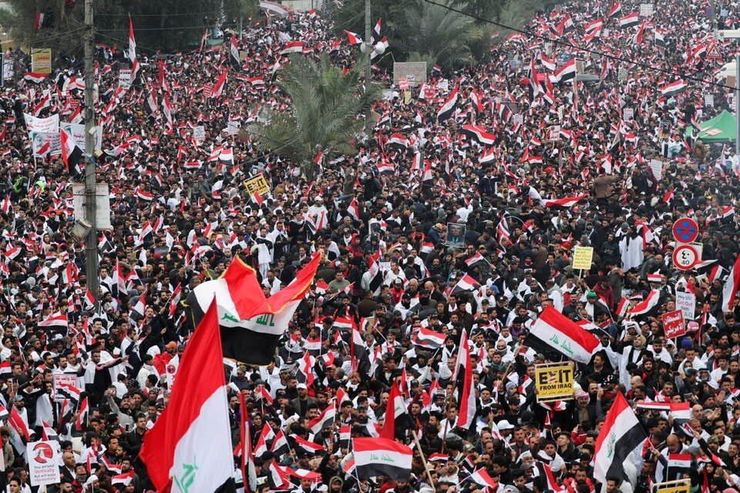
Massive Anti-American Rallies; Message of Unity in Iraq

Massive Anti-American Rallies; Message of Unity in Iraq

Strategic Council Online: Former Iranian ambassador to Iraq says the United States and Israel are seeking disintegration of the regional countries, adding that the formation of new regions is different from Iraq’s breakdown. There are analyzes that creation of these regions could disintegrate Iraq, but it is not a simple matter and no one can divide Iraq, he said.

أحدث الوظائف

Realities of the Tripartite Makkah Pact

SCFR Online – Interview: The signing of the Makkah agreement between Saudi Arabia, Pakistan, and Turkey has raised questions about the future of the region’s security structure and the position of these countries in West Asian equations. Can this agreement become a genuine collective defense mechanism, or does it have more of a political and deterrent function than creating new military capacity?

Strategic Implications of the Reduction of US Weapons Stockpiles

SCFR Online – Opinion: The continuation of the US war against Iran, in addition to increasing operational costs, has called into question the actual capacity of the American arsenal to simultaneously fulfill security commitments on multiple fronts; an issue that affects deterrence, defense production capacity, and Washington’s resource prioritization.

The Formation of a New Order in Relations Between Powers

SCFR Online – Opinion: The Russia-Ukraine war and the war of the United States and the Israeli regime against Iran have been formed with different objectives and actors, but field and political developments indicate that they are not entirely separate from one another.

An Analysis of the Makkah Defense Pact

SCFR Online – Opinion: On Friday, August 7, the heads of state of three countries – Saudi Arabia, Turkey, and Pakistan – signed a text under the title “Makkah Joint Defense Agreement.”

Dimensions and challenges of the initiative to revive the Hejaz Railway

Strategic Council Online – Note: The initiative to revive the Hejaz Railway, beyond being a transportation project, constitutes an attempt to redefine geopolitics, the economy, and Turkey’s regional position; however, its realization appears to face significant financial, security, and institutional challenges.

Loading

New Middle East

Characteristics and Strategic Consequences of Iran’s Historic Response to Zionist Regime

Characteristics and Strategic Consequences of Iran’s Historic Response to Zionist Regime

Strategic Council Online—Opinion: There are two different views about the Islamic Republic of Iran’s missile attacks against the Zionist regime. The first view is based on a superficial reading and a reductionist description that evaluates it as a low-impact and not-so-extensive operation. The second view, a realistic reading, sees Iran’s response as opening a new page of “balance of power” and “turning point” in regional equations, the effects and consequences of which will gradually emerge.

Features of the “garrison regime” of Israel

Features of the “garrison regime” of Israel

Strategic Council Online—Interview: A member of the academic staff of the University of Tehran says the Zionist regime is the proxy of the US Army in the Mediterranean, adding the fact that Israel is a garrison regime should be demonstrated to the world so that not only the void Western propaganda is neutralized but also reconciliation with the garrison regime and its promotion are not considered an advantage.

Behind the Scenes of Iraq-Jordan-Egypt Trilateral Meeting

Behind the Scenes of Iraq-Jordan-Egypt Trilateral Meeting

Strategic Council Online – Arab states, especially Saudi Arabia, Jordan and Egypt, are trying to pull Iraq from the ideological sphere to the atmosphere of Arab reaction in order to deepen the distance between Tehran and Baghdad politically and ideologically.
Hassan Hanizadeh – Middle East Affairs Expert

Massive Anti-American Rallies; Message of Unity in Iraq

Massive Anti-American Rallies; Message of Unity in Iraq

Strategic Council Online: Former Iranian ambassador to Iraq says the United States and Israel are seeking disintegration of the regional countries, adding that the formation of new regions is different from Iraq’s breakdown. There are analyzes that creation of these regions could disintegrate Iraq, but it is not a simple matter and no one can divide Iraq, he said.

New Middle East

Characteristics and Strategic Consequences of Iran’s Historic Response to Zionist Regime

Characteristics and Strategic Consequences of Iran’s Historic Response to Zionist Regime

Strategic Council Online—Opinion: There are two different views about the Islamic Republic of Iran’s missile attacks against the Zionist regime. The first view is based on a superficial reading and a reductionist description that evaluates it as a low-impact and not-so-extensive operation. The second view, a realistic reading, sees Iran’s response as opening a new page of “balance of power” and “turning point” in regional equations, the effects and consequences of which will gradually emerge.

Features of the “garrison regime” of Israel

Features of the “garrison regime” of Israel

Strategic Council Online—Interview: A member of the academic staff of the University of Tehran says the Zionist regime is the proxy of the US Army in the Mediterranean, adding the fact that Israel is a garrison regime should be demonstrated to the world so that not only the void Western propaganda is neutralized but also reconciliation with the garrison regime and its promotion are not considered an advantage.

Behind the Scenes of Iraq-Jordan-Egypt Trilateral Meeting

Behind the Scenes of Iraq-Jordan-Egypt Trilateral Meeting

Strategic Council Online – Arab states, especially Saudi Arabia, Jordan and Egypt, are trying to pull Iraq from the ideological sphere to the atmosphere of Arab reaction in order to deepen the distance between Tehran and Baghdad politically and ideologically.
Hassan Hanizadeh – Middle East Affairs Expert

Massive Anti-American Rallies; Message of Unity in Iraq

Massive Anti-American Rallies; Message of Unity in Iraq

Strategic Council Online: Former Iranian ambassador to Iraq says the United States and Israel are seeking disintegration of the regional countries, adding that the formation of new regions is different from Iraq’s breakdown. There are analyzes that creation of these regions could disintegrate Iraq, but it is not a simple matter and no one can divide Iraq, he said.

LATEST CONTENT

Realities of the Tripartite Makkah Pact

SCFR Online – Interview: The signing of the Makkah agreement between Saudi Arabia, Pakistan, and Turkey has raised questions about the future of the region’s security structure and the position of these countries in West Asian equations. Can this agreement become a genuine collective defense mechanism, or does it have more of a political and deterrent function than creating new military capacity?

Strategic Implications of the Reduction of US Weapons Stockpiles

SCFR Online – Opinion: The continuation of the US war against Iran, in addition to increasing operational costs, has called into question the actual capacity of the American arsenal to simultaneously fulfill security commitments on multiple fronts; an issue that affects deterrence, defense production capacity, and Washington’s resource prioritization.

The Formation of a New Order in Relations Between Powers

SCFR Online – Opinion: The Russia-Ukraine war and the war of the United States and the Israeli regime against Iran have been formed with different objectives and actors, but field and political developments indicate that they are not entirely separate from one another.

An Analysis of the Makkah Defense Pact

SCFR Online – Opinion: On Friday, August 7, the heads of state of three countries – Saudi Arabia, Turkey, and Pakistan – signed a text under the title “Makkah Joint Defense Agreement.”

Dimensions and challenges of the initiative to revive the Hejaz Railway

Strategic Council Online – Note: The initiative to revive the Hejaz Railway, beyond being a transportation project, constitutes an attempt to redefine geopolitics, the economy, and Turkey’s regional position; however, its realization appears to face significant financial, security, and institutional challenges.

Loading

New Middle East

Characteristics and Strategic Consequences of Iran’s Historic Response to Zionist Regime

Characteristics and Strategic Consequences of Iran’s Historic Response to Zionist Regime

Strategic Council Online—Opinion: There are two different views about the Islamic Republic of Iran’s missile attacks against the Zionist regime. The first view is based on a superficial reading and a reductionist description that evaluates it as a low-impact and not-so-extensive operation. The second view, a realistic reading, sees Iran’s response as opening a new page of “balance of power” and “turning point” in regional equations, the effects and consequences of which will gradually emerge.

Features of the “garrison regime” of Israel

Features of the “garrison regime” of Israel

Strategic Council Online—Interview: A member of the academic staff of the University of Tehran says the Zionist regime is the proxy of the US Army in the Mediterranean, adding the fact that Israel is a garrison regime should be demonstrated to the world so that not only the void Western propaganda is neutralized but also reconciliation with the garrison regime and its promotion are not considered an advantage.

Behind the Scenes of Iraq-Jordan-Egypt Trilateral Meeting

Behind the Scenes of Iraq-Jordan-Egypt Trilateral Meeting

Strategic Council Online – Arab states, especially Saudi Arabia, Jordan and Egypt, are trying to pull Iraq from the ideological sphere to the atmosphere of Arab reaction in order to deepen the distance between Tehran and Baghdad politically and ideologically.
Hassan Hanizadeh – Middle East Affairs Expert

Massive Anti-American Rallies; Message of Unity in Iraq

Massive Anti-American Rallies; Message of Unity in Iraq

Strategic Council Online: Former Iranian ambassador to Iraq says the United States and Israel are seeking disintegration of the regional countries, adding that the formation of new regions is different from Iraq’s breakdown. There are analyzes that creation of these regions could disintegrate Iraq, but it is not a simple matter and no one can divide Iraq, he said.

ÚLTIMAS PUBLICACIONES

Realities of the Tripartite Makkah Pact

SCFR Online – Interview: The signing of the Makkah agreement between Saudi Arabia, Pakistan, and Turkey has raised questions about the future of the region’s security structure and the position of these countries in West Asian equations. Can this agreement become a genuine collective defense mechanism, or does it have more of a political and deterrent function than creating new military capacity?

Strategic Implications of the Reduction of US Weapons Stockpiles

SCFR Online – Opinion: The continuation of the US war against Iran, in addition to increasing operational costs, has called into question the actual capacity of the American arsenal to simultaneously fulfill security commitments on multiple fronts; an issue that affects deterrence, defense production capacity, and Washington’s resource prioritization.

The Formation of a New Order in Relations Between Powers

SCFR Online – Opinion: The Russia-Ukraine war and the war of the United States and the Israeli regime against Iran have been formed with different objectives and actors, but field and political developments indicate that they are not entirely separate from one another.

An Analysis of the Makkah Defense Pact

SCFR Online – Opinion: On Friday, August 7, the heads of state of three countries – Saudi Arabia, Turkey, and Pakistan – signed a text under the title “Makkah Joint Defense Agreement.”

Dimensions and challenges of the initiative to revive the Hejaz Railway

Strategic Council Online – Note: The initiative to revive the Hejaz Railway, beyond being a transportation project, constitutes an attempt to redefine geopolitics, the economy, and Turkey’s regional position; however, its realization appears to face significant financial, security, and institutional challenges.

Loading

New Middle East

Characteristics and Strategic Consequences of Iran’s Historic Response to Zionist Regime

Characteristics and Strategic Consequences of Iran’s Historic Response to Zionist Regime

Strategic Council Online—Opinion: There are two different views about the Islamic Republic of Iran’s missile attacks against the Zionist regime. The first view is based on a superficial reading and a reductionist description that evaluates it as a low-impact and not-so-extensive operation. The second view, a realistic reading, sees Iran’s response as opening a new page of “balance of power” and “turning point” in regional equations, the effects and consequences of which will gradually emerge.

Features of the “garrison regime” of Israel

Features of the “garrison regime” of Israel

Strategic Council Online—Interview: A member of the academic staff of the University of Tehran says the Zionist regime is the proxy of the US Army in the Mediterranean, adding the fact that Israel is a garrison regime should be demonstrated to the world so that not only the void Western propaganda is neutralized but also reconciliation with the garrison regime and its promotion are not considered an advantage.

Behind the Scenes of Iraq-Jordan-Egypt Trilateral Meeting

Behind the Scenes of Iraq-Jordan-Egypt Trilateral Meeting

Strategic Council Online – Arab states, especially Saudi Arabia, Jordan and Egypt, are trying to pull Iraq from the ideological sphere to the atmosphere of Arab reaction in order to deepen the distance between Tehran and Baghdad politically and ideologically.
Hassan Hanizadeh – Middle East Affairs Expert

Massive Anti-American Rallies; Message of Unity in Iraq

Massive Anti-American Rallies; Message of Unity in Iraq

Strategic Council Online: Former Iranian ambassador to Iraq says the United States and Israel are seeking disintegration of the regional countries, adding that the formation of new regions is different from Iraq’s breakdown. There are analyzes that creation of these regions could disintegrate Iraq, but it is not a simple matter and no one can divide Iraq, he said.

ÚLTIMAS PUBLICACIONES

Realities of the Tripartite Makkah Pact

SCFR Online – Interview: The signing of the Makkah agreement between Saudi Arabia, Pakistan, and Turkey has raised questions about the future of the region’s security structure and the position of these countries in West Asian equations. Can this agreement become a genuine collective defense mechanism, or does it have more of a political and deterrent function than creating new military capacity?

Strategic Implications of the Reduction of US Weapons Stockpiles

SCFR Online – Opinion: The continuation of the US war against Iran, in addition to increasing operational costs, has called into question the actual capacity of the American arsenal to simultaneously fulfill security commitments on multiple fronts; an issue that affects deterrence, defense production capacity, and Washington’s resource prioritization.

The Formation of a New Order in Relations Between Powers

SCFR Online – Opinion: The Russia-Ukraine war and the war of the United States and the Israeli regime against Iran have been formed with different objectives and actors, but field and political developments indicate that they are not entirely separate from one another.

An Analysis of the Makkah Defense Pact

SCFR Online – Opinion: On Friday, August 7, the heads of state of three countries – Saudi Arabia, Turkey, and Pakistan – signed a text under the title “Makkah Joint Defense Agreement.”

Dimensions and challenges of the initiative to revive the Hejaz Railway

Strategic Council Online – Note: The initiative to revive the Hejaz Railway, beyond being a transportation project, constitutes an attempt to redefine geopolitics, the economy, and Turkey’s regional position; however, its realization appears to face significant financial, security, and institutional challenges.

Loading

New Middle East

Characteristics and Strategic Consequences of Iran’s Historic Response to Zionist Regime

Characteristics and Strategic Consequences of Iran’s Historic Response to Zionist Regime

Strategic Council Online—Opinion: There are two different views about the Islamic Republic of Iran’s missile attacks against the Zionist regime. The first view is based on a superficial reading and a reductionist description that evaluates it as a low-impact and not-so-extensive operation. The second view, a realistic reading, sees Iran’s response as opening a new page of “balance of power” and “turning point” in regional equations, the effects and consequences of which will gradually emerge.

Features of the “garrison regime” of Israel

Features of the “garrison regime” of Israel

Strategic Council Online—Interview: A member of the academic staff of the University of Tehran says the Zionist regime is the proxy of the US Army in the Mediterranean, adding the fact that Israel is a garrison regime should be demonstrated to the world so that not only the void Western propaganda is neutralized but also reconciliation with the garrison regime and its promotion are not considered an advantage.

Behind the Scenes of Iraq-Jordan-Egypt Trilateral Meeting

Behind the Scenes of Iraq-Jordan-Egypt Trilateral Meeting

Strategic Council Online – Arab states, especially Saudi Arabia, Jordan and Egypt, are trying to pull Iraq from the ideological sphere to the atmosphere of Arab reaction in order to deepen the distance between Tehran and Baghdad politically and ideologically.
Hassan Hanizadeh – Middle East Affairs Expert

Massive Anti-American Rallies; Message of Unity in Iraq

Massive Anti-American Rallies; Message of Unity in Iraq

Strategic Council Online: Former Iranian ambassador to Iraq says the United States and Israel are seeking disintegration of the regional countries, adding that the formation of new regions is different from Iraq’s breakdown. There are analyzes that creation of these regions could disintegrate Iraq, but it is not a simple matter and no one can divide Iraq, he said.

ÚLTIMAS PUBLICACIONES

Realities of the Tripartite Makkah Pact

SCFR Online – Interview: The signing of the Makkah agreement between Saudi Arabia, Pakistan, and Turkey has raised questions about the future of the region’s security structure and the position of these countries in West Asian equations. Can this agreement become a genuine collective defense mechanism, or does it have more of a political and deterrent function than creating new military capacity?

Strategic Implications of the Reduction of US Weapons Stockpiles

SCFR Online – Opinion: The continuation of the US war against Iran, in addition to increasing operational costs, has called into question the actual capacity of the American arsenal to simultaneously fulfill security commitments on multiple fronts; an issue that affects deterrence, defense production capacity, and Washington’s resource prioritization.

The Formation of a New Order in Relations Between Powers

SCFR Online – Opinion: The Russia-Ukraine war and the war of the United States and the Israeli regime against Iran have been formed with different objectives and actors, but field and political developments indicate that they are not entirely separate from one another.

An Analysis of the Makkah Defense Pact

SCFR Online – Opinion: On Friday, August 7, the heads of state of three countries – Saudi Arabia, Turkey, and Pakistan – signed a text under the title “Makkah Joint Defense Agreement.”

Dimensions and challenges of the initiative to revive the Hejaz Railway

Strategic Council Online – Note: The initiative to revive the Hejaz Railway, beyond being a transportation project, constitutes an attempt to redefine geopolitics, the economy, and Turkey’s regional position; however, its realization appears to face significant financial, security, and institutional challenges.

Loading

New Middle East

Characteristics and Strategic Consequences of Iran’s Historic Response to Zionist Regime

Characteristics and Strategic Consequences of Iran’s Historic Response to Zionist Regime

Strategic Council Online—Opinion: There are two different views about the Islamic Republic of Iran’s missile attacks against the Zionist regime. The first view is based on a superficial reading and a reductionist description that evaluates it as a low-impact and not-so-extensive operation. The second view, a realistic reading, sees Iran’s response as opening a new page of “balance of power” and “turning point” in regional equations, the effects and consequences of which will gradually emerge.

Features of the “garrison regime” of Israel

Features of the “garrison regime” of Israel

Strategic Council Online—Interview: A member of the academic staff of the University of Tehran says the Zionist regime is the proxy of the US Army in the Mediterranean, adding the fact that Israel is a garrison regime should be demonstrated to the world so that not only the void Western propaganda is neutralized but also reconciliation with the garrison regime and its promotion are not considered an advantage.

Behind the Scenes of Iraq-Jordan-Egypt Trilateral Meeting

Behind the Scenes of Iraq-Jordan-Egypt Trilateral Meeting

Strategic Council Online – Arab states, especially Saudi Arabia, Jordan and Egypt, are trying to pull Iraq from the ideological sphere to the atmosphere of Arab reaction in order to deepen the distance between Tehran and Baghdad politically and ideologically.
Hassan Hanizadeh – Middle East Affairs Expert

Massive Anti-American Rallies; Message of Unity in Iraq

Massive Anti-American Rallies; Message of Unity in Iraq

Strategic Council Online: Former Iranian ambassador to Iraq says the United States and Israel are seeking disintegration of the regional countries, adding that the formation of new regions is different from Iraq’s breakdown. There are analyzes that creation of these regions could disintegrate Iraq, but it is not a simple matter and no one can divide Iraq, he said.

ÚLTIMAS PUBLICACIONES

Realities of the Tripartite Makkah Pact

SCFR Online – Interview: The signing of the Makkah agreement between Saudi Arabia, Pakistan, and Turkey has raised questions about the future of the region’s security structure and the position of these countries in West Asian equations. Can this agreement become a genuine collective defense mechanism, or does it have more of a political and deterrent function than creating new military capacity?

Strategic Implications of the Reduction of US Weapons Stockpiles

SCFR Online – Opinion: The continuation of the US war against Iran, in addition to increasing operational costs, has called into question the actual capacity of the American arsenal to simultaneously fulfill security commitments on multiple fronts; an issue that affects deterrence, defense production capacity, and Washington’s resource prioritization.

The Formation of a New Order in Relations Between Powers

SCFR Online – Opinion: The Russia-Ukraine war and the war of the United States and the Israeli regime against Iran have been formed with different objectives and actors, but field and political developments indicate that they are not entirely separate from one another.

An Analysis of the Makkah Defense Pact

SCFR Online – Opinion: On Friday, August 7, the heads of state of three countries – Saudi Arabia, Turkey, and Pakistan – signed a text under the title “Makkah Joint Defense Agreement.”

Dimensions and challenges of the initiative to revive the Hejaz Railway

Strategic Council Online – Note: The initiative to revive the Hejaz Railway, beyond being a transportation project, constitutes an attempt to redefine geopolitics, the economy, and Turkey’s regional position; however, its realization appears to face significant financial, security, and institutional challenges.

Loading