An Analysis of the Makkah Defense Pact
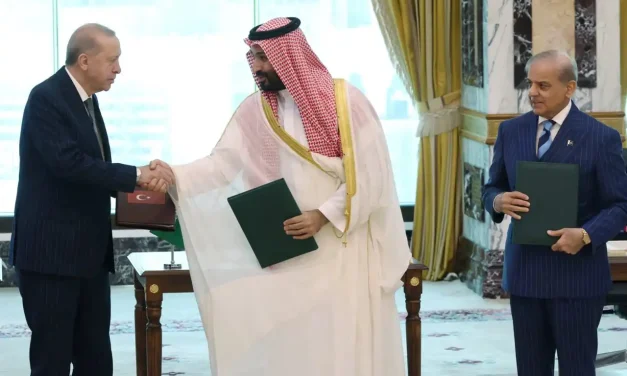
SCFR Online – Opinion: On Friday, August 7, the heads of state of three countries – Saudi Arabia, Turkey, and Pakistan – signed a text under the title “Makkah Joint Defense Agreement.”
Strategic Council Online – Note: The initiative to revive the Hejaz Railway, beyond being a transportation project, constitutes an attempt to redefine geopolitics, the economy, and Turkey’s regional position; however, its realization appears to face significant financial, security, and institutional challenges.
SCFR Online – Opinion: The Strait of Hormuz crisis is no longer merely the consequence of a military confrontation, but rather a sign of the transition from the US-centered maritime order to a new energy security structure involving the participation of emerging and influential powers.
SCFR Online – Opinion: Iran’s active deterrence strategy, while increasing the costs of US intervention, has increasingly exposed the hidden rifts between Washington’s interests and those of the Israeli regime.
SCFR Online – Opinion: The escalation of verbal and strategic tensions between Turkey and the Israeli regime, although not increasing the likelihood of direct war, indicates the formation of a new order in West Asian geopolitical rivalries.
Strategic Council Online – Note: Recent developments in the political geography of West Asia, from rising tensions in the Persian Gulf to missile and drone activities in the Red Sea and the recent warning by Kaja Kallas, the European Union’s foreign policy chief, regarding the threat to freedom of navigation, indicate a key pattern shift; the US-Iran war has moved beyond the scope of a regional and local confrontation and has linked two vital passageways for the global economy: the Strait of Hormuz and the Bab el-Mandeb Strait.
SCFR Online – Opinion: The Ukraine war was not merely a European crisis, but rather the starting point for the rearrangement of the global balance of power and a shift in the strategic behavior of great powers.
SCFR Online – Opinion: Great power competition is now pursued more in trade, currency, technology, and global supply chains than on the battlefields of military confrontation.
Strategic Council Online—Interview: Advisor to the former president of Afghanistan says the Taliban were worried that with the continuation of resistance in Panjshir, nationwide protests and uprising could be formed across whole Afghanistan, adding that protests would definitely continue in Afghanistan in various forms as the majority of the Afghans do not agree with a phenomenon called Taliban.
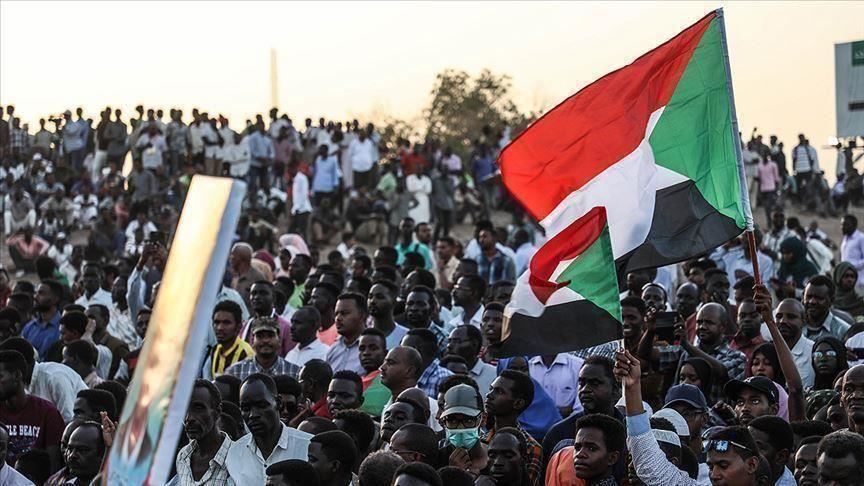
Strategic Council Online – In their last week protests, the Sudanese people used the living conditions as a coverage for their protests against Sudan’s foreign policy, thus expressing their opposition to Sudan’s stance on normalization of relations with the Zionist regime.
Jafar Qanadbashi – Expert on Africa and Middle East Affairs
Strategic Council Online: The new Iraqi government is facing several challenges, while the economic situation in Iraq is not favorable due to the decrease in oil prices and the economic situation Iraq has been facing in the past.
Siamak Kakai – Expert on Iraqi Affairs
Strategic Council Online: An analyst on African and West Asian affairs, referring to Algeria’s presidential election and the subsequent unrests, said the opposition’s capacity was not big enough to accomplish their goals behind the protest rallies; so it seems that the government would eventually succeed in forcing the opposition to stop their demonstrations first by giving them promises and then by threatening them.
Strategic Council Online: An analyst on regional issues, referring to the resignation of Lebanese Prime Minister Saad Hariri and the pressure of certain countries to wage a civil war in Lebanon and weaken the Lebanese Hezbollah, said that today more than being normal events based on current developments the recent unrests revolve around the demands of the external elements with an aim to undermine stability and peace in Lebanon.
SCFR Online – Opinion: On Friday, August 7, the heads of state of three countries – Saudi Arabia, Turkey, and Pakistan – signed a text under the title “Makkah Joint Defense Agreement.”
Strategic Council Online – Note: The initiative to revive the Hejaz Railway, beyond being a transportation project, constitutes an attempt to redefine geopolitics, the economy, and Turkey’s regional position; however, its realization appears to face significant financial, security, and institutional challenges.
SCFR Online – Opinion: The Strait of Hormuz crisis is no longer merely the consequence of a military confrontation, but rather a sign of the transition from the US-centered maritime order to a new energy security structure involving the participation of emerging and influential powers.
SCFR Online – Opinion: Iran’s active deterrence strategy, while increasing the costs of US intervention, has increasingly exposed the hidden rifts between Washington’s interests and those of the Israeli regime.
SCFR Online – Opinion: The escalation of verbal and strategic tensions between Turkey and the Israeli regime, although not increasing the likelihood of direct war, indicates the formation of a new order in West Asian geopolitical rivalries.
Strategic Council Online – Note: Recent developments in the political geography of West Asia, from rising tensions in the Persian Gulf to missile and drone activities in the Red Sea and the recent warning by Kaja Kallas, the European Union’s foreign policy chief, regarding the threat to freedom of navigation, indicate a key pattern shift; the US-Iran war has moved beyond the scope of a regional and local confrontation and has linked two vital passageways for the global economy: the Strait of Hormuz and the Bab el-Mandeb Strait.
SCFR Online – Opinion: The Ukraine war was not merely a European crisis, but rather the starting point for the rearrangement of the global balance of power and a shift in the strategic behavior of great powers.
SCFR Online – Opinion: Great power competition is now pursued more in trade, currency, technology, and global supply chains than on the battlefields of military confrontation.
Strategic Council Online—Interview: Advisor to the former president of Afghanistan says the Taliban were worried that with the continuation of resistance in Panjshir, nationwide protests and uprising could be formed across whole Afghanistan, adding that protests would definitely continue in Afghanistan in various forms as the majority of the Afghans do not agree with a phenomenon called Taliban.
Strategic Council Online – In their last week protests, the Sudanese people used the living conditions as a coverage for their protests against Sudan’s foreign policy, thus expressing their opposition to Sudan’s stance on normalization of relations with the Zionist regime.
Jafar Qanadbashi – Expert on Africa and Middle East Affairs
Strategic Council Online: The new Iraqi government is facing several challenges, while the economic situation in Iraq is not favorable due to the decrease in oil prices and the economic situation Iraq has been facing in the past.
Siamak Kakai – Expert on Iraqi Affairs
Strategic Council Online: An analyst on African and West Asian affairs, referring to Algeria’s presidential election and the subsequent unrests, said the opposition’s capacity was not big enough to accomplish their goals behind the protest rallies; so it seems that the government would eventually succeed in forcing the opposition to stop their demonstrations first by giving them promises and then by threatening them.
Strategic Council Online: An analyst on regional issues, referring to the resignation of Lebanese Prime Minister Saad Hariri and the pressure of certain countries to wage a civil war in Lebanon and weaken the Lebanese Hezbollah, said that today more than being normal events based on current developments the recent unrests revolve around the demands of the external elements with an aim to undermine stability and peace in Lebanon.
Strategic Council Online—Interview: Advisor to the former president of Afghanistan says the Taliban were worried that with the continuation of resistance in Panjshir, nationwide protests and uprising could be formed across whole Afghanistan, adding that protests would definitely continue in Afghanistan in various forms as the majority of the Afghans do not agree with a phenomenon called Taliban.
Strategic Council Online – In their last week protests, the Sudanese people used the living conditions as a coverage for their protests against Sudan’s foreign policy, thus expressing their opposition to Sudan’s stance on normalization of relations with the Zionist regime.
Jafar Qanadbashi – Expert on Africa and Middle East Affairs
Strategic Council Online: The new Iraqi government is facing several challenges, while the economic situation in Iraq is not favorable due to the decrease in oil prices and the economic situation Iraq has been facing in the past.
Siamak Kakai – Expert on Iraqi Affairs
Strategic Council Online: An analyst on African and West Asian affairs, referring to Algeria’s presidential election and the subsequent unrests, said the opposition’s capacity was not big enough to accomplish their goals behind the protest rallies; so it seems that the government would eventually succeed in forcing the opposition to stop their demonstrations first by giving them promises and then by threatening them.
Strategic Council Online: An analyst on regional issues, referring to the resignation of Lebanese Prime Minister Saad Hariri and the pressure of certain countries to wage a civil war in Lebanon and weaken the Lebanese Hezbollah, said that today more than being normal events based on current developments the recent unrests revolve around the demands of the external elements with an aim to undermine stability and peace in Lebanon.
SCFR Online – Opinion: On Friday, August 7, the heads of state of three countries – Saudi Arabia, Turkey, and Pakistan – signed a text under the title “Makkah Joint Defense Agreement.”
Strategic Council Online – Note: The initiative to revive the Hejaz Railway, beyond being a transportation project, constitutes an attempt to redefine geopolitics, the economy, and Turkey’s regional position; however, its realization appears to face significant financial, security, and institutional challenges.
SCFR Online – Opinion: The Strait of Hormuz crisis is no longer merely the consequence of a military confrontation, but rather a sign of the transition from the US-centered maritime order to a new energy security structure involving the participation of emerging and influential powers.
SCFR Online – Opinion: Iran’s active deterrence strategy, while increasing the costs of US intervention, has increasingly exposed the hidden rifts between Washington’s interests and those of the Israeli regime.
SCFR Online – Opinion: The escalation of verbal and strategic tensions between Turkey and the Israeli regime, although not increasing the likelihood of direct war, indicates the formation of a new order in West Asian geopolitical rivalries.
Strategic Council Online – Note: Recent developments in the political geography of West Asia, from rising tensions in the Persian Gulf to missile and drone activities in the Red Sea and the recent warning by Kaja Kallas, the European Union’s foreign policy chief, regarding the threat to freedom of navigation, indicate a key pattern shift; the US-Iran war has moved beyond the scope of a regional and local confrontation and has linked two vital passageways for the global economy: the Strait of Hormuz and the Bab el-Mandeb Strait.
SCFR Online – Opinion: The Ukraine war was not merely a European crisis, but rather the starting point for the rearrangement of the global balance of power and a shift in the strategic behavior of great powers.
SCFR Online – Opinion: Great power competition is now pursued more in trade, currency, technology, and global supply chains than on the battlefields of military confrontation.
Strategic Council Online—Interview: Advisor to the former president of Afghanistan says the Taliban were worried that with the continuation of resistance in Panjshir, nationwide protests and uprising could be formed across whole Afghanistan, adding that protests would definitely continue in Afghanistan in various forms as the majority of the Afghans do not agree with a phenomenon called Taliban.
Strategic Council Online – In their last week protests, the Sudanese people used the living conditions as a coverage for their protests against Sudan’s foreign policy, thus expressing their opposition to Sudan’s stance on normalization of relations with the Zionist regime.
Jafar Qanadbashi – Expert on Africa and Middle East Affairs
Strategic Council Online: The new Iraqi government is facing several challenges, while the economic situation in Iraq is not favorable due to the decrease in oil prices and the economic situation Iraq has been facing in the past.
Siamak Kakai – Expert on Iraqi Affairs
Strategic Council Online: An analyst on African and West Asian affairs, referring to Algeria’s presidential election and the subsequent unrests, said the opposition’s capacity was not big enough to accomplish their goals behind the protest rallies; so it seems that the government would eventually succeed in forcing the opposition to stop their demonstrations first by giving them promises and then by threatening them.
Strategic Council Online: An analyst on regional issues, referring to the resignation of Lebanese Prime Minister Saad Hariri and the pressure of certain countries to wage a civil war in Lebanon and weaken the Lebanese Hezbollah, said that today more than being normal events based on current developments the recent unrests revolve around the demands of the external elements with an aim to undermine stability and peace in Lebanon.
SCFR Online – Opinion: On Friday, August 7, the heads of state of three countries – Saudi Arabia, Turkey, and Pakistan – signed a text under the title “Makkah Joint Defense Agreement.”
Strategic Council Online – Note: The initiative to revive the Hejaz Railway, beyond being a transportation project, constitutes an attempt to redefine geopolitics, the economy, and Turkey’s regional position; however, its realization appears to face significant financial, security, and institutional challenges.
SCFR Online – Opinion: The Strait of Hormuz crisis is no longer merely the consequence of a military confrontation, but rather a sign of the transition from the US-centered maritime order to a new energy security structure involving the participation of emerging and influential powers.
SCFR Online – Opinion: Iran’s active deterrence strategy, while increasing the costs of US intervention, has increasingly exposed the hidden rifts between Washington’s interests and those of the Israeli regime.
SCFR Online – Opinion: The escalation of verbal and strategic tensions between Turkey and the Israeli regime, although not increasing the likelihood of direct war, indicates the formation of a new order in West Asian geopolitical rivalries.
Strategic Council Online – Note: Recent developments in the political geography of West Asia, from rising tensions in the Persian Gulf to missile and drone activities in the Red Sea and the recent warning by Kaja Kallas, the European Union’s foreign policy chief, regarding the threat to freedom of navigation, indicate a key pattern shift; the US-Iran war has moved beyond the scope of a regional and local confrontation and has linked two vital passageways for the global economy: the Strait of Hormuz and the Bab el-Mandeb Strait.
SCFR Online – Opinion: The Ukraine war was not merely a European crisis, but rather the starting point for the rearrangement of the global balance of power and a shift in the strategic behavior of great powers.
SCFR Online – Opinion: Great power competition is now pursued more in trade, currency, technology, and global supply chains than on the battlefields of military confrontation.
Strategic Council Online—Interview: Advisor to the former president of Afghanistan says the Taliban were worried that with the continuation of resistance in Panjshir, nationwide protests and uprising could be formed across whole Afghanistan, adding that protests would definitely continue in Afghanistan in various forms as the majority of the Afghans do not agree with a phenomenon called Taliban.
Strategic Council Online – In their last week protests, the Sudanese people used the living conditions as a coverage for their protests against Sudan’s foreign policy, thus expressing their opposition to Sudan’s stance on normalization of relations with the Zionist regime.
Jafar Qanadbashi – Expert on Africa and Middle East Affairs
Strategic Council Online: The new Iraqi government is facing several challenges, while the economic situation in Iraq is not favorable due to the decrease in oil prices and the economic situation Iraq has been facing in the past.
Siamak Kakai – Expert on Iraqi Affairs
Strategic Council Online: An analyst on African and West Asian affairs, referring to Algeria’s presidential election and the subsequent unrests, said the opposition’s capacity was not big enough to accomplish their goals behind the protest rallies; so it seems that the government would eventually succeed in forcing the opposition to stop their demonstrations first by giving them promises and then by threatening them.
Strategic Council Online: An analyst on regional issues, referring to the resignation of Lebanese Prime Minister Saad Hariri and the pressure of certain countries to wage a civil war in Lebanon and weaken the Lebanese Hezbollah, said that today more than being normal events based on current developments the recent unrests revolve around the demands of the external elements with an aim to undermine stability and peace in Lebanon.
SCFR Online – Opinion: On Friday, August 7, the heads of state of three countries – Saudi Arabia, Turkey, and Pakistan – signed a text under the title “Makkah Joint Defense Agreement.”
Strategic Council Online – Note: The initiative to revive the Hejaz Railway, beyond being a transportation project, constitutes an attempt to redefine geopolitics, the economy, and Turkey’s regional position; however, its realization appears to face significant financial, security, and institutional challenges.
SCFR Online – Opinion: The Strait of Hormuz crisis is no longer merely the consequence of a military confrontation, but rather a sign of the transition from the US-centered maritime order to a new energy security structure involving the participation of emerging and influential powers.
SCFR Online – Opinion: Iran’s active deterrence strategy, while increasing the costs of US intervention, has increasingly exposed the hidden rifts between Washington’s interests and those of the Israeli regime.
SCFR Online – Opinion: The escalation of verbal and strategic tensions between Turkey and the Israeli regime, although not increasing the likelihood of direct war, indicates the formation of a new order in West Asian geopolitical rivalries.
Strategic Council Online – Note: Recent developments in the political geography of West Asia, from rising tensions in the Persian Gulf to missile and drone activities in the Red Sea and the recent warning by Kaja Kallas, the European Union’s foreign policy chief, regarding the threat to freedom of navigation, indicate a key pattern shift; the US-Iran war has moved beyond the scope of a regional and local confrontation and has linked two vital passageways for the global economy: the Strait of Hormuz and the Bab el-Mandeb Strait.
SCFR Online – Opinion: The Ukraine war was not merely a European crisis, but rather the starting point for the rearrangement of the global balance of power and a shift in the strategic behavior of great powers.
SCFR Online – Opinion: Great power competition is now pursued more in trade, currency, technology, and global supply chains than on the battlefields of military confrontation.
Strategic Council Online—Interview: Advisor to the former president of Afghanistan says the Taliban were worried that with the continuation of resistance in Panjshir, nationwide protests and uprising could be formed across whole Afghanistan, adding that protests would definitely continue in Afghanistan in various forms as the majority of the Afghans do not agree with a phenomenon called Taliban.
Strategic Council Online – In their last week protests, the Sudanese people used the living conditions as a coverage for their protests against Sudan’s foreign policy, thus expressing their opposition to Sudan’s stance on normalization of relations with the Zionist regime.
Jafar Qanadbashi – Expert on Africa and Middle East Affairs
Strategic Council Online: The new Iraqi government is facing several challenges, while the economic situation in Iraq is not favorable due to the decrease in oil prices and the economic situation Iraq has been facing in the past.
Siamak Kakai – Expert on Iraqi Affairs
Strategic Council Online: An analyst on African and West Asian affairs, referring to Algeria’s presidential election and the subsequent unrests, said the opposition’s capacity was not big enough to accomplish their goals behind the protest rallies; so it seems that the government would eventually succeed in forcing the opposition to stop their demonstrations first by giving them promises and then by threatening them.
Strategic Council Online: An analyst on regional issues, referring to the resignation of Lebanese Prime Minister Saad Hariri and the pressure of certain countries to wage a civil war in Lebanon and weaken the Lebanese Hezbollah, said that today more than being normal events based on current developments the recent unrests revolve around the demands of the external elements with an aim to undermine stability and peace in Lebanon.
SCFR Online – Opinion: On Friday, August 7, the heads of state of three countries – Saudi Arabia, Turkey, and Pakistan – signed a text under the title “Makkah Joint Defense Agreement.”
Strategic Council Online – Note: The initiative to revive the Hejaz Railway, beyond being a transportation project, constitutes an attempt to redefine geopolitics, the economy, and Turkey’s regional position; however, its realization appears to face significant financial, security, and institutional challenges.
SCFR Online – Opinion: The Strait of Hormuz crisis is no longer merely the consequence of a military confrontation, but rather a sign of the transition from the US-centered maritime order to a new energy security structure involving the participation of emerging and influential powers.
SCFR Online – Opinion: Iran’s active deterrence strategy, while increasing the costs of US intervention, has increasingly exposed the hidden rifts between Washington’s interests and those of the Israeli regime.
SCFR Online – Opinion: The escalation of verbal and strategic tensions between Turkey and the Israeli regime, although not increasing the likelihood of direct war, indicates the formation of a new order in West Asian geopolitical rivalries.
Strategic Council Online – Note: Recent developments in the political geography of West Asia, from rising tensions in the Persian Gulf to missile and drone activities in the Red Sea and the recent warning by Kaja Kallas, the European Union’s foreign policy chief, regarding the threat to freedom of navigation, indicate a key pattern shift; the US-Iran war has moved beyond the scope of a regional and local confrontation and has linked two vital passageways for the global economy: the Strait of Hormuz and the Bab el-Mandeb Strait.
SCFR Online – Opinion: The Ukraine war was not merely a European crisis, but rather the starting point for the rearrangement of the global balance of power and a shift in the strategic behavior of great powers.
SCFR Online – Opinion: Great power competition is now pursued more in trade, currency, technology, and global supply chains than on the battlefields of military confrontation.
Strategic Council Online—Interview: Advisor to the former president of Afghanistan says the Taliban were worried that with the continuation of resistance in Panjshir, nationwide protests and uprising could be formed across whole Afghanistan, adding that protests would definitely continue in Afghanistan in various forms as the majority of the Afghans do not agree with a phenomenon called Taliban.
Strategic Council Online – In their last week protests, the Sudanese people used the living conditions as a coverage for their protests against Sudan’s foreign policy, thus expressing their opposition to Sudan’s stance on normalization of relations with the Zionist regime.
Jafar Qanadbashi – Expert on Africa and Middle East Affairs
Strategic Council Online: The new Iraqi government is facing several challenges, while the economic situation in Iraq is not favorable due to the decrease in oil prices and the economic situation Iraq has been facing in the past.
Siamak Kakai – Expert on Iraqi Affairs
Strategic Council Online: An analyst on African and West Asian affairs, referring to Algeria’s presidential election and the subsequent unrests, said the opposition’s capacity was not big enough to accomplish their goals behind the protest rallies; so it seems that the government would eventually succeed in forcing the opposition to stop their demonstrations first by giving them promises and then by threatening them.
Strategic Council Online: An analyst on regional issues, referring to the resignation of Lebanese Prime Minister Saad Hariri and the pressure of certain countries to wage a civil war in Lebanon and weaken the Lebanese Hezbollah, said that today more than being normal events based on current developments the recent unrests revolve around the demands of the external elements with an aim to undermine stability and peace in Lebanon.
SCFR Online – Opinion: On Friday, August 7, the heads of state of three countries – Saudi Arabia, Turkey, and Pakistan – signed a text under the title “Makkah Joint Defense Agreement.”
Strategic Council Online – Note: The initiative to revive the Hejaz Railway, beyond being a transportation project, constitutes an attempt to redefine geopolitics, the economy, and Turkey’s regional position; however, its realization appears to face significant financial, security, and institutional challenges.
SCFR Online – Opinion: The Strait of Hormuz crisis is no longer merely the consequence of a military confrontation, but rather a sign of the transition from the US-centered maritime order to a new energy security structure involving the participation of emerging and influential powers.
SCFR Online – Opinion: Iran’s active deterrence strategy, while increasing the costs of US intervention, has increasingly exposed the hidden rifts between Washington’s interests and those of the Israeli regime.
SCFR Online – Opinion: The escalation of verbal and strategic tensions between Turkey and the Israeli regime, although not increasing the likelihood of direct war, indicates the formation of a new order in West Asian geopolitical rivalries.
Strategic Council Online – Note: Recent developments in the political geography of West Asia, from rising tensions in the Persian Gulf to missile and drone activities in the Red Sea and the recent warning by Kaja Kallas, the European Union’s foreign policy chief, regarding the threat to freedom of navigation, indicate a key pattern shift; the US-Iran war has moved beyond the scope of a regional and local confrontation and has linked two vital passageways for the global economy: the Strait of Hormuz and the Bab el-Mandeb Strait.
SCFR Online – Opinion: The Ukraine war was not merely a European crisis, but rather the starting point for the rearrangement of the global balance of power and a shift in the strategic behavior of great powers.
SCFR Online – Opinion: Great power competition is now pursued more in trade, currency, technology, and global supply chains than on the battlefields of military confrontation.