An Analysis of the Makkah Defense Pact
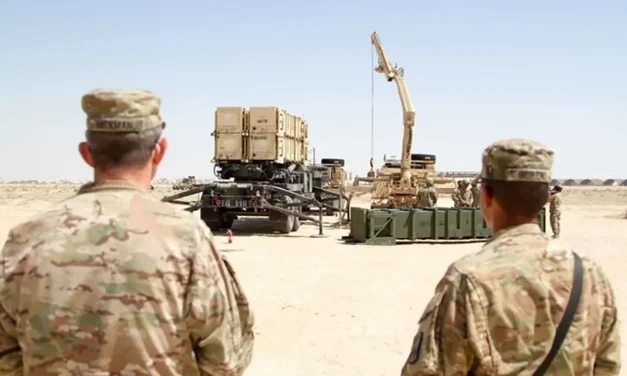
SCFR Online – Opinion: On Friday, August 7, the heads of state of three countries – Saudi Arabia, Turkey, and Pakistan – signed a text under the title “Makkah Joint Defense Agreement.”
Strategic Council Online – Note: The initiative to revive the Hejaz Railway, beyond being a transportation project, constitutes an attempt to redefine geopolitics, the economy, and Turkey’s regional position; however, its realization appears to face significant financial, security, and institutional challenges.
SCFR Online – Opinion: The Strait of Hormuz crisis is no longer merely the consequence of a military confrontation, but rather a sign of the transition from the US-centered maritime order to a new energy security structure involving the participation of emerging and influential powers.
SCFR Online – Opinion: Iran’s active deterrence strategy, while increasing the costs of US intervention, has increasingly exposed the hidden rifts between Washington’s interests and those of the Israeli regime.
SCFR Online – Opinion: The escalation of verbal and strategic tensions between Turkey and the Israeli regime, although not increasing the likelihood of direct war, indicates the formation of a new order in West Asian geopolitical rivalries.
Strategic Council Online – Note: Recent developments in the political geography of West Asia, from rising tensions in the Persian Gulf to missile and drone activities in the Red Sea and the recent warning by Kaja Kallas, the European Union’s foreign policy chief, regarding the threat to freedom of navigation, indicate a key pattern shift; the US-Iran war has moved beyond the scope of a regional and local confrontation and has linked two vital passageways for the global economy: the Strait of Hormuz and the Bab el-Mandeb Strait.
SCFR Online – Opinion: The Ukraine war was not merely a European crisis, but rather the starting point for the rearrangement of the global balance of power and a shift in the strategic behavior of great powers.
SCFR Online – Opinion: Great power competition is now pursued more in trade, currency, technology, and global supply chains than on the battlefields of military confrontation.
Strategic Council Online – Opinion: While the disaster of the 7.8 magnitude earthquake has shaken Turkey, people of Turkey are going to vote in the presidential and parliamentary elections on May 14. All the opinion polls show that Erdoğan is in a tough competition with other rivals. The deadly disaster of the recent earthquake has added to Erdogan’s political and economic problems.
Mahmoud Fazeli – Analyst of international affairs
Strategic Council Online—Interview: Former Iranian ambassador to France said placing the Muslim community in this country within the framework of the radical Islamists and equal treatment with them are a big mistake by France, adding that this law will further provoke the Muslim community in France and will not entail the desirable outcomes for France.
Strategic Council Online – An analyst at the Center for Strategic Studies of President’s Office said that those in the US administration who think of Israel’s interests will be happy to see a military confrontation with Iran on the last days of the Trump administration, adding: Trump’s team is trying to push political relations of Iran and the United States to a point of bitterness and tension the severity of which would not allow Mr. Biden to formulate a successful diplomacy with Iran.
Strategic Council Online – Politics and power in the United States, due to their decentralized and distributive political structure, are influenced by the presence and activity of two groups of “formal” and “informal” actors. Formal actors are influential in the “decision-making” and executive stages, and informal actors are influential in the critical “decision-making” stage. Simply put, the United States is a place for showoff and display of various informal actors who are always trying to play an effective role in the political, economic, security, etc. arenas of the United States by considering their own interests. For example, when it is said that the president in the United States is the representative of oil and arms cartels, etc., it is not an exaggeration and refers to a phenomenon that has a long and lasting history in this country.
Hamid Khoshayand – International Affairs Analyst
Strategic Council Online – For the first time in eight years, the EU-based euro remittances have surpassed US dollar-denominated exchanges, according to the Society for Worldwide Interbank Financial Telecommunication (SWIFT).
Reza Majidzadeh – Researcher in Development Economics
Strategic Council Online—Opinion: The referendum on a new constitution for Algeria was held on the first of October 2020 with the participation of political parties such as Talae al-Horriat (the third party of presidential elections of 2019) and Jibhat ul-Mustaqbal (the fifth party) and the opposition of Islamist parties such as Movement of Society for Peace (known as HAMAS), the Algerian Labors Party and the Algerian Justice and Development Front. In the referendum on Algeria’s new constitution, only 23.84 per cent of the people voted for further change and amendments in the governing rules and administration. The draft text of the new constitution was approved with the yes vote of 66 per cent of the participants while 33 per cent opposed it. This is while 76 per cent of the eligible voters did not participate in the referendum, encouraging the leaders of some of Algeria’s political parties to nullify the plebiscite.
Mahmoud Fazeli—expert of international issues
Strategic Council Online—Opinion: It is highly likely to witness riots and protests after the upcoming US presidential elections and the probable emergence of clashes between the supporters of the candidates of Republicans and the Democratic Party; of course, it is not yet clear whether or not clashes would happen between the two groups as it really depends on the amount of gap between the votes of the two candidates.
Foad Izadi—Professor at the Faculty of the World Studies, University of Tehran
Strategic Council Online: A political science professor in University of South Alabama believes that if Joe Biden wins the US Presidential election on November 3, it would come with symbolic changes in Washington policy toward Iran not substantive policy changes.
Strategic Council Online—Opinion: The fifty-ninth presidential elections of the United States of American will be held on 03 November 2020 with the main competition being between two old candidates from the two main political parties of the United States. The candidate of the Democratic Party has nearly five decades of experience while the Republican candidate has only four years of political experience. They are now entering the last week of the tense campaign to enter the White House. Any political and geopolitical action of the United States is a phenomenon which has its own special repercussions for the entire world and countries.
Ebrahim Roomina—Member of the academic staff of Tarbiyat Modarres University
Strategic Council Online: To the same extent that confrontation between the US and China intensifies, the governments of East and South Asia will more clearly define the borders between themselves and China. Therefore, the US call on India to reduce the volume of trade with China should be sought within the framework of the Indo-Pacific strategy, which the two countries have already agreed over the need for its existence and its implementation.
Tahmoures Gholami – Expert on American Affairs
SCFR Online – Opinion: On Friday, August 7, the heads of state of three countries – Saudi Arabia, Turkey, and Pakistan – signed a text under the title “Makkah Joint Defense Agreement.”
Strategic Council Online – Note: The initiative to revive the Hejaz Railway, beyond being a transportation project, constitutes an attempt to redefine geopolitics, the economy, and Turkey’s regional position; however, its realization appears to face significant financial, security, and institutional challenges.
SCFR Online – Opinion: The Strait of Hormuz crisis is no longer merely the consequence of a military confrontation, but rather a sign of the transition from the US-centered maritime order to a new energy security structure involving the participation of emerging and influential powers.
SCFR Online – Opinion: Iran’s active deterrence strategy, while increasing the costs of US intervention, has increasingly exposed the hidden rifts between Washington’s interests and those of the Israeli regime.
SCFR Online – Opinion: The escalation of verbal and strategic tensions between Turkey and the Israeli regime, although not increasing the likelihood of direct war, indicates the formation of a new order in West Asian geopolitical rivalries.
Strategic Council Online – Note: Recent developments in the political geography of West Asia, from rising tensions in the Persian Gulf to missile and drone activities in the Red Sea and the recent warning by Kaja Kallas, the European Union’s foreign policy chief, regarding the threat to freedom of navigation, indicate a key pattern shift; the US-Iran war has moved beyond the scope of a regional and local confrontation and has linked two vital passageways for the global economy: the Strait of Hormuz and the Bab el-Mandeb Strait.
SCFR Online – Opinion: The Ukraine war was not merely a European crisis, but rather the starting point for the rearrangement of the global balance of power and a shift in the strategic behavior of great powers.
SCFR Online – Opinion: Great power competition is now pursued more in trade, currency, technology, and global supply chains than on the battlefields of military confrontation.
Strategic Council Online – Opinion: While the disaster of the 7.8 magnitude earthquake has shaken Turkey, people of Turkey are going to vote in the presidential and parliamentary elections on May 14. All the opinion polls show that Erdoğan is in a tough competition with other rivals. The deadly disaster of the recent earthquake has added to Erdogan’s political and economic problems.
Mahmoud Fazeli – Analyst of international affairs
Strategic Council Online—Interview: Former Iranian ambassador to France said placing the Muslim community in this country within the framework of the radical Islamists and equal treatment with them are a big mistake by France, adding that this law will further provoke the Muslim community in France and will not entail the desirable outcomes for France.
Strategic Council Online – An analyst at the Center for Strategic Studies of President’s Office said that those in the US administration who think of Israel’s interests will be happy to see a military confrontation with Iran on the last days of the Trump administration, adding: Trump’s team is trying to push political relations of Iran and the United States to a point of bitterness and tension the severity of which would not allow Mr. Biden to formulate a successful diplomacy with Iran.
Strategic Council Online – Politics and power in the United States, due to their decentralized and distributive political structure, are influenced by the presence and activity of two groups of “formal” and “informal” actors. Formal actors are influential in the “decision-making” and executive stages, and informal actors are influential in the critical “decision-making” stage. Simply put, the United States is a place for showoff and display of various informal actors who are always trying to play an effective role in the political, economic, security, etc. arenas of the United States by considering their own interests. For example, when it is said that the president in the United States is the representative of oil and arms cartels, etc., it is not an exaggeration and refers to a phenomenon that has a long and lasting history in this country.
Hamid Khoshayand – International Affairs Analyst
Strategic Council Online – For the first time in eight years, the EU-based euro remittances have surpassed US dollar-denominated exchanges, according to the Society for Worldwide Interbank Financial Telecommunication (SWIFT).
Reza Majidzadeh – Researcher in Development Economics
Strategic Council Online—Opinion: The referendum on a new constitution for Algeria was held on the first of October 2020 with the participation of political parties such as Talae al-Horriat (the third party of presidential elections of 2019) and Jibhat ul-Mustaqbal (the fifth party) and the opposition of Islamist parties such as Movement of Society for Peace (known as HAMAS), the Algerian Labors Party and the Algerian Justice and Development Front. In the referendum on Algeria’s new constitution, only 23.84 per cent of the people voted for further change and amendments in the governing rules and administration. The draft text of the new constitution was approved with the yes vote of 66 per cent of the participants while 33 per cent opposed it. This is while 76 per cent of the eligible voters did not participate in the referendum, encouraging the leaders of some of Algeria’s political parties to nullify the plebiscite.
Mahmoud Fazeli—expert of international issues
Strategic Council Online—Opinion: It is highly likely to witness riots and protests after the upcoming US presidential elections and the probable emergence of clashes between the supporters of the candidates of Republicans and the Democratic Party; of course, it is not yet clear whether or not clashes would happen between the two groups as it really depends on the amount of gap between the votes of the two candidates.
Foad Izadi—Professor at the Faculty of the World Studies, University of Tehran
Strategic Council Online: A political science professor in University of South Alabama believes that if Joe Biden wins the US Presidential election on November 3, it would come with symbolic changes in Washington policy toward Iran not substantive policy changes.
Strategic Council Online—Opinion: The fifty-ninth presidential elections of the United States of American will be held on 03 November 2020 with the main competition being between two old candidates from the two main political parties of the United States. The candidate of the Democratic Party has nearly five decades of experience while the Republican candidate has only four years of political experience. They are now entering the last week of the tense campaign to enter the White House. Any political and geopolitical action of the United States is a phenomenon which has its own special repercussions for the entire world and countries.
Ebrahim Roomina—Member of the academic staff of Tarbiyat Modarres University
Strategic Council Online: To the same extent that confrontation between the US and China intensifies, the governments of East and South Asia will more clearly define the borders between themselves and China. Therefore, the US call on India to reduce the volume of trade with China should be sought within the framework of the Indo-Pacific strategy, which the two countries have already agreed over the need for its existence and its implementation.
Tahmoures Gholami – Expert on American Affairs
Strategic Council Online – Opinion: While the disaster of the 7.8 magnitude earthquake has shaken Turkey, people of Turkey are going to vote in the presidential and parliamentary elections on May 14. All the opinion polls show that Erdoğan is in a tough competition with other rivals. The deadly disaster of the recent earthquake has added to Erdogan’s political and economic problems.
Mahmoud Fazeli – Analyst of international affairs
Strategic Council Online—Interview: Former Iranian ambassador to France said placing the Muslim community in this country within the framework of the radical Islamists and equal treatment with them are a big mistake by France, adding that this law will further provoke the Muslim community in France and will not entail the desirable outcomes for France.
Strategic Council Online – An analyst at the Center for Strategic Studies of President’s Office said that those in the US administration who think of Israel’s interests will be happy to see a military confrontation with Iran on the last days of the Trump administration, adding: Trump’s team is trying to push political relations of Iran and the United States to a point of bitterness and tension the severity of which would not allow Mr. Biden to formulate a successful diplomacy with Iran.
Strategic Council Online – Politics and power in the United States, due to their decentralized and distributive political structure, are influenced by the presence and activity of two groups of “formal” and “informal” actors. Formal actors are influential in the “decision-making” and executive stages, and informal actors are influential in the critical “decision-making” stage. Simply put, the United States is a place for showoff and display of various informal actors who are always trying to play an effective role in the political, economic, security, etc. arenas of the United States by considering their own interests. For example, when it is said that the president in the United States is the representative of oil and arms cartels, etc., it is not an exaggeration and refers to a phenomenon that has a long and lasting history in this country.
Hamid Khoshayand – International Affairs Analyst
Strategic Council Online – For the first time in eight years, the EU-based euro remittances have surpassed US dollar-denominated exchanges, according to the Society for Worldwide Interbank Financial Telecommunication (SWIFT).
Reza Majidzadeh – Researcher in Development Economics
Strategic Council Online—Opinion: The referendum on a new constitution for Algeria was held on the first of October 2020 with the participation of political parties such as Talae al-Horriat (the third party of presidential elections of 2019) and Jibhat ul-Mustaqbal (the fifth party) and the opposition of Islamist parties such as Movement of Society for Peace (known as HAMAS), the Algerian Labors Party and the Algerian Justice and Development Front. In the referendum on Algeria’s new constitution, only 23.84 per cent of the people voted for further change and amendments in the governing rules and administration. The draft text of the new constitution was approved with the yes vote of 66 per cent of the participants while 33 per cent opposed it. This is while 76 per cent of the eligible voters did not participate in the referendum, encouraging the leaders of some of Algeria’s political parties to nullify the plebiscite.
Mahmoud Fazeli—expert of international issues
Strategic Council Online—Opinion: It is highly likely to witness riots and protests after the upcoming US presidential elections and the probable emergence of clashes between the supporters of the candidates of Republicans and the Democratic Party; of course, it is not yet clear whether or not clashes would happen between the two groups as it really depends on the amount of gap between the votes of the two candidates.
Foad Izadi—Professor at the Faculty of the World Studies, University of Tehran
Strategic Council Online: A political science professor in University of South Alabama believes that if Joe Biden wins the US Presidential election on November 3, it would come with symbolic changes in Washington policy toward Iran not substantive policy changes.
Strategic Council Online—Opinion: The fifty-ninth presidential elections of the United States of American will be held on 03 November 2020 with the main competition being between two old candidates from the two main political parties of the United States. The candidate of the Democratic Party has nearly five decades of experience while the Republican candidate has only four years of political experience. They are now entering the last week of the tense campaign to enter the White House. Any political and geopolitical action of the United States is a phenomenon which has its own special repercussions for the entire world and countries.
Ebrahim Roomina—Member of the academic staff of Tarbiyat Modarres University
Strategic Council Online: To the same extent that confrontation between the US and China intensifies, the governments of East and South Asia will more clearly define the borders between themselves and China. Therefore, the US call on India to reduce the volume of trade with China should be sought within the framework of the Indo-Pacific strategy, which the two countries have already agreed over the need for its existence and its implementation.
Tahmoures Gholami – Expert on American Affairs
SCFR Online – Opinion: On Friday, August 7, the heads of state of three countries – Saudi Arabia, Turkey, and Pakistan – signed a text under the title “Makkah Joint Defense Agreement.”
Strategic Council Online – Note: The initiative to revive the Hejaz Railway, beyond being a transportation project, constitutes an attempt to redefine geopolitics, the economy, and Turkey’s regional position; however, its realization appears to face significant financial, security, and institutional challenges.
SCFR Online – Opinion: The Strait of Hormuz crisis is no longer merely the consequence of a military confrontation, but rather a sign of the transition from the US-centered maritime order to a new energy security structure involving the participation of emerging and influential powers.
SCFR Online – Opinion: Iran’s active deterrence strategy, while increasing the costs of US intervention, has increasingly exposed the hidden rifts between Washington’s interests and those of the Israeli regime.
SCFR Online – Opinion: The escalation of verbal and strategic tensions between Turkey and the Israeli regime, although not increasing the likelihood of direct war, indicates the formation of a new order in West Asian geopolitical rivalries.
Strategic Council Online – Note: Recent developments in the political geography of West Asia, from rising tensions in the Persian Gulf to missile and drone activities in the Red Sea and the recent warning by Kaja Kallas, the European Union’s foreign policy chief, regarding the threat to freedom of navigation, indicate a key pattern shift; the US-Iran war has moved beyond the scope of a regional and local confrontation and has linked two vital passageways for the global economy: the Strait of Hormuz and the Bab el-Mandeb Strait.
SCFR Online – Opinion: The Ukraine war was not merely a European crisis, but rather the starting point for the rearrangement of the global balance of power and a shift in the strategic behavior of great powers.
SCFR Online – Opinion: Great power competition is now pursued more in trade, currency, technology, and global supply chains than on the battlefields of military confrontation.
Strategic Council Online – Opinion: While the disaster of the 7.8 magnitude earthquake has shaken Turkey, people of Turkey are going to vote in the presidential and parliamentary elections on May 14. All the opinion polls show that Erdoğan is in a tough competition with other rivals. The deadly disaster of the recent earthquake has added to Erdogan’s political and economic problems.
Mahmoud Fazeli – Analyst of international affairs
Strategic Council Online—Interview: Former Iranian ambassador to France said placing the Muslim community in this country within the framework of the radical Islamists and equal treatment with them are a big mistake by France, adding that this law will further provoke the Muslim community in France and will not entail the desirable outcomes for France.
Strategic Council Online – An analyst at the Center for Strategic Studies of President’s Office said that those in the US administration who think of Israel’s interests will be happy to see a military confrontation with Iran on the last days of the Trump administration, adding: Trump’s team is trying to push political relations of Iran and the United States to a point of bitterness and tension the severity of which would not allow Mr. Biden to formulate a successful diplomacy with Iran.
Strategic Council Online – Politics and power in the United States, due to their decentralized and distributive political structure, are influenced by the presence and activity of two groups of “formal” and “informal” actors. Formal actors are influential in the “decision-making” and executive stages, and informal actors are influential in the critical “decision-making” stage. Simply put, the United States is a place for showoff and display of various informal actors who are always trying to play an effective role in the political, economic, security, etc. arenas of the United States by considering their own interests. For example, when it is said that the president in the United States is the representative of oil and arms cartels, etc., it is not an exaggeration and refers to a phenomenon that has a long and lasting history in this country.
Hamid Khoshayand – International Affairs Analyst
Strategic Council Online – For the first time in eight years, the EU-based euro remittances have surpassed US dollar-denominated exchanges, according to the Society for Worldwide Interbank Financial Telecommunication (SWIFT).
Reza Majidzadeh – Researcher in Development Economics
Strategic Council Online—Opinion: The referendum on a new constitution for Algeria was held on the first of October 2020 with the participation of political parties such as Talae al-Horriat (the third party of presidential elections of 2019) and Jibhat ul-Mustaqbal (the fifth party) and the opposition of Islamist parties such as Movement of Society for Peace (known as HAMAS), the Algerian Labors Party and the Algerian Justice and Development Front. In the referendum on Algeria’s new constitution, only 23.84 per cent of the people voted for further change and amendments in the governing rules and administration. The draft text of the new constitution was approved with the yes vote of 66 per cent of the participants while 33 per cent opposed it. This is while 76 per cent of the eligible voters did not participate in the referendum, encouraging the leaders of some of Algeria’s political parties to nullify the plebiscite.
Mahmoud Fazeli—expert of international issues
Strategic Council Online—Opinion: It is highly likely to witness riots and protests after the upcoming US presidential elections and the probable emergence of clashes between the supporters of the candidates of Republicans and the Democratic Party; of course, it is not yet clear whether or not clashes would happen between the two groups as it really depends on the amount of gap between the votes of the two candidates.
Foad Izadi—Professor at the Faculty of the World Studies, University of Tehran
Strategic Council Online: A political science professor in University of South Alabama believes that if Joe Biden wins the US Presidential election on November 3, it would come with symbolic changes in Washington policy toward Iran not substantive policy changes.
Strategic Council Online—Opinion: The fifty-ninth presidential elections of the United States of American will be held on 03 November 2020 with the main competition being between two old candidates from the two main political parties of the United States. The candidate of the Democratic Party has nearly five decades of experience while the Republican candidate has only four years of political experience. They are now entering the last week of the tense campaign to enter the White House. Any political and geopolitical action of the United States is a phenomenon which has its own special repercussions for the entire world and countries.
Ebrahim Roomina—Member of the academic staff of Tarbiyat Modarres University
Strategic Council Online: To the same extent that confrontation between the US and China intensifies, the governments of East and South Asia will more clearly define the borders between themselves and China. Therefore, the US call on India to reduce the volume of trade with China should be sought within the framework of the Indo-Pacific strategy, which the two countries have already agreed over the need for its existence and its implementation.
Tahmoures Gholami – Expert on American Affairs
SCFR Online – Opinion: On Friday, August 7, the heads of state of three countries – Saudi Arabia, Turkey, and Pakistan – signed a text under the title “Makkah Joint Defense Agreement.”
Strategic Council Online – Note: The initiative to revive the Hejaz Railway, beyond being a transportation project, constitutes an attempt to redefine geopolitics, the economy, and Turkey’s regional position; however, its realization appears to face significant financial, security, and institutional challenges.
SCFR Online – Opinion: The Strait of Hormuz crisis is no longer merely the consequence of a military confrontation, but rather a sign of the transition from the US-centered maritime order to a new energy security structure involving the participation of emerging and influential powers.
SCFR Online – Opinion: Iran’s active deterrence strategy, while increasing the costs of US intervention, has increasingly exposed the hidden rifts between Washington’s interests and those of the Israeli regime.
SCFR Online – Opinion: The escalation of verbal and strategic tensions between Turkey and the Israeli regime, although not increasing the likelihood of direct war, indicates the formation of a new order in West Asian geopolitical rivalries.
Strategic Council Online – Note: Recent developments in the political geography of West Asia, from rising tensions in the Persian Gulf to missile and drone activities in the Red Sea and the recent warning by Kaja Kallas, the European Union’s foreign policy chief, regarding the threat to freedom of navigation, indicate a key pattern shift; the US-Iran war has moved beyond the scope of a regional and local confrontation and has linked two vital passageways for the global economy: the Strait of Hormuz and the Bab el-Mandeb Strait.
SCFR Online – Opinion: The Ukraine war was not merely a European crisis, but rather the starting point for the rearrangement of the global balance of power and a shift in the strategic behavior of great powers.
SCFR Online – Opinion: Great power competition is now pursued more in trade, currency, technology, and global supply chains than on the battlefields of military confrontation.
Strategic Council Online – Opinion: While the disaster of the 7.8 magnitude earthquake has shaken Turkey, people of Turkey are going to vote in the presidential and parliamentary elections on May 14. All the opinion polls show that Erdoğan is in a tough competition with other rivals. The deadly disaster of the recent earthquake has added to Erdogan’s political and economic problems.
Mahmoud Fazeli – Analyst of international affairs
Strategic Council Online—Interview: Former Iranian ambassador to France said placing the Muslim community in this country within the framework of the radical Islamists and equal treatment with them are a big mistake by France, adding that this law will further provoke the Muslim community in France and will not entail the desirable outcomes for France.
Strategic Council Online – An analyst at the Center for Strategic Studies of President’s Office said that those in the US administration who think of Israel’s interests will be happy to see a military confrontation with Iran on the last days of the Trump administration, adding: Trump’s team is trying to push political relations of Iran and the United States to a point of bitterness and tension the severity of which would not allow Mr. Biden to formulate a successful diplomacy with Iran.
Strategic Council Online – Politics and power in the United States, due to their decentralized and distributive political structure, are influenced by the presence and activity of two groups of “formal” and “informal” actors. Formal actors are influential in the “decision-making” and executive stages, and informal actors are influential in the critical “decision-making” stage. Simply put, the United States is a place for showoff and display of various informal actors who are always trying to play an effective role in the political, economic, security, etc. arenas of the United States by considering their own interests. For example, when it is said that the president in the United States is the representative of oil and arms cartels, etc., it is not an exaggeration and refers to a phenomenon that has a long and lasting history in this country.
Hamid Khoshayand – International Affairs Analyst
Strategic Council Online – For the first time in eight years, the EU-based euro remittances have surpassed US dollar-denominated exchanges, according to the Society for Worldwide Interbank Financial Telecommunication (SWIFT).
Reza Majidzadeh – Researcher in Development Economics
Strategic Council Online—Opinion: The referendum on a new constitution for Algeria was held on the first of October 2020 with the participation of political parties such as Talae al-Horriat (the third party of presidential elections of 2019) and Jibhat ul-Mustaqbal (the fifth party) and the opposition of Islamist parties such as Movement of Society for Peace (known as HAMAS), the Algerian Labors Party and the Algerian Justice and Development Front. In the referendum on Algeria’s new constitution, only 23.84 per cent of the people voted for further change and amendments in the governing rules and administration. The draft text of the new constitution was approved with the yes vote of 66 per cent of the participants while 33 per cent opposed it. This is while 76 per cent of the eligible voters did not participate in the referendum, encouraging the leaders of some of Algeria’s political parties to nullify the plebiscite.
Mahmoud Fazeli—expert of international issues
Strategic Council Online—Opinion: It is highly likely to witness riots and protests after the upcoming US presidential elections and the probable emergence of clashes between the supporters of the candidates of Republicans and the Democratic Party; of course, it is not yet clear whether or not clashes would happen between the two groups as it really depends on the amount of gap between the votes of the two candidates.
Foad Izadi—Professor at the Faculty of the World Studies, University of Tehran
Strategic Council Online: A political science professor in University of South Alabama believes that if Joe Biden wins the US Presidential election on November 3, it would come with symbolic changes in Washington policy toward Iran not substantive policy changes.
Strategic Council Online—Opinion: The fifty-ninth presidential elections of the United States of American will be held on 03 November 2020 with the main competition being between two old candidates from the two main political parties of the United States. The candidate of the Democratic Party has nearly five decades of experience while the Republican candidate has only four years of political experience. They are now entering the last week of the tense campaign to enter the White House. Any political and geopolitical action of the United States is a phenomenon which has its own special repercussions for the entire world and countries.
Ebrahim Roomina—Member of the academic staff of Tarbiyat Modarres University
Strategic Council Online: To the same extent that confrontation between the US and China intensifies, the governments of East and South Asia will more clearly define the borders between themselves and China. Therefore, the US call on India to reduce the volume of trade with China should be sought within the framework of the Indo-Pacific strategy, which the two countries have already agreed over the need for its existence and its implementation.
Tahmoures Gholami – Expert on American Affairs
SCFR Online – Opinion: On Friday, August 7, the heads of state of three countries – Saudi Arabia, Turkey, and Pakistan – signed a text under the title “Makkah Joint Defense Agreement.”
Strategic Council Online – Note: The initiative to revive the Hejaz Railway, beyond being a transportation project, constitutes an attempt to redefine geopolitics, the economy, and Turkey’s regional position; however, its realization appears to face significant financial, security, and institutional challenges.
SCFR Online – Opinion: The Strait of Hormuz crisis is no longer merely the consequence of a military confrontation, but rather a sign of the transition from the US-centered maritime order to a new energy security structure involving the participation of emerging and influential powers.
SCFR Online – Opinion: Iran’s active deterrence strategy, while increasing the costs of US intervention, has increasingly exposed the hidden rifts between Washington’s interests and those of the Israeli regime.
SCFR Online – Opinion: The escalation of verbal and strategic tensions between Turkey and the Israeli regime, although not increasing the likelihood of direct war, indicates the formation of a new order in West Asian geopolitical rivalries.
Strategic Council Online – Note: Recent developments in the political geography of West Asia, from rising tensions in the Persian Gulf to missile and drone activities in the Red Sea and the recent warning by Kaja Kallas, the European Union’s foreign policy chief, regarding the threat to freedom of navigation, indicate a key pattern shift; the US-Iran war has moved beyond the scope of a regional and local confrontation and has linked two vital passageways for the global economy: the Strait of Hormuz and the Bab el-Mandeb Strait.
SCFR Online – Opinion: The Ukraine war was not merely a European crisis, but rather the starting point for the rearrangement of the global balance of power and a shift in the strategic behavior of great powers.
SCFR Online – Opinion: Great power competition is now pursued more in trade, currency, technology, and global supply chains than on the battlefields of military confrontation.
Strategic Council Online – Opinion: While the disaster of the 7.8 magnitude earthquake has shaken Turkey, people of Turkey are going to vote in the presidential and parliamentary elections on May 14. All the opinion polls show that Erdoğan is in a tough competition with other rivals. The deadly disaster of the recent earthquake has added to Erdogan’s political and economic problems.
Mahmoud Fazeli – Analyst of international affairs
Strategic Council Online—Interview: Former Iranian ambassador to France said placing the Muslim community in this country within the framework of the radical Islamists and equal treatment with them are a big mistake by France, adding that this law will further provoke the Muslim community in France and will not entail the desirable outcomes for France.
Strategic Council Online – An analyst at the Center for Strategic Studies of President’s Office said that those in the US administration who think of Israel’s interests will be happy to see a military confrontation with Iran on the last days of the Trump administration, adding: Trump’s team is trying to push political relations of Iran and the United States to a point of bitterness and tension the severity of which would not allow Mr. Biden to formulate a successful diplomacy with Iran.
Strategic Council Online – Politics and power in the United States, due to their decentralized and distributive political structure, are influenced by the presence and activity of two groups of “formal” and “informal” actors. Formal actors are influential in the “decision-making” and executive stages, and informal actors are influential in the critical “decision-making” stage. Simply put, the United States is a place for showoff and display of various informal actors who are always trying to play an effective role in the political, economic, security, etc. arenas of the United States by considering their own interests. For example, when it is said that the president in the United States is the representative of oil and arms cartels, etc., it is not an exaggeration and refers to a phenomenon that has a long and lasting history in this country.
Hamid Khoshayand – International Affairs Analyst
Strategic Council Online – For the first time in eight years, the EU-based euro remittances have surpassed US dollar-denominated exchanges, according to the Society for Worldwide Interbank Financial Telecommunication (SWIFT).
Reza Majidzadeh – Researcher in Development Economics
Strategic Council Online—Opinion: The referendum on a new constitution for Algeria was held on the first of October 2020 with the participation of political parties such as Talae al-Horriat (the third party of presidential elections of 2019) and Jibhat ul-Mustaqbal (the fifth party) and the opposition of Islamist parties such as Movement of Society for Peace (known as HAMAS), the Algerian Labors Party and the Algerian Justice and Development Front. In the referendum on Algeria’s new constitution, only 23.84 per cent of the people voted for further change and amendments in the governing rules and administration. The draft text of the new constitution was approved with the yes vote of 66 per cent of the participants while 33 per cent opposed it. This is while 76 per cent of the eligible voters did not participate in the referendum, encouraging the leaders of some of Algeria’s political parties to nullify the plebiscite.
Mahmoud Fazeli—expert of international issues
Strategic Council Online—Opinion: It is highly likely to witness riots and protests after the upcoming US presidential elections and the probable emergence of clashes between the supporters of the candidates of Republicans and the Democratic Party; of course, it is not yet clear whether or not clashes would happen between the two groups as it really depends on the amount of gap between the votes of the two candidates.
Foad Izadi—Professor at the Faculty of the World Studies, University of Tehran
Strategic Council Online: A political science professor in University of South Alabama believes that if Joe Biden wins the US Presidential election on November 3, it would come with symbolic changes in Washington policy toward Iran not substantive policy changes.
Strategic Council Online—Opinion: The fifty-ninth presidential elections of the United States of American will be held on 03 November 2020 with the main competition being between two old candidates from the two main political parties of the United States. The candidate of the Democratic Party has nearly five decades of experience while the Republican candidate has only four years of political experience. They are now entering the last week of the tense campaign to enter the White House. Any political and geopolitical action of the United States is a phenomenon which has its own special repercussions for the entire world and countries.
Ebrahim Roomina—Member of the academic staff of Tarbiyat Modarres University
Strategic Council Online: To the same extent that confrontation between the US and China intensifies, the governments of East and South Asia will more clearly define the borders between themselves and China. Therefore, the US call on India to reduce the volume of trade with China should be sought within the framework of the Indo-Pacific strategy, which the two countries have already agreed over the need for its existence and its implementation.
Tahmoures Gholami – Expert on American Affairs
SCFR Online – Opinion: On Friday, August 7, the heads of state of three countries – Saudi Arabia, Turkey, and Pakistan – signed a text under the title “Makkah Joint Defense Agreement.”
Strategic Council Online – Note: The initiative to revive the Hejaz Railway, beyond being a transportation project, constitutes an attempt to redefine geopolitics, the economy, and Turkey’s regional position; however, its realization appears to face significant financial, security, and institutional challenges.
SCFR Online – Opinion: The Strait of Hormuz crisis is no longer merely the consequence of a military confrontation, but rather a sign of the transition from the US-centered maritime order to a new energy security structure involving the participation of emerging and influential powers.
SCFR Online – Opinion: Iran’s active deterrence strategy, while increasing the costs of US intervention, has increasingly exposed the hidden rifts between Washington’s interests and those of the Israeli regime.
SCFR Online – Opinion: The escalation of verbal and strategic tensions between Turkey and the Israeli regime, although not increasing the likelihood of direct war, indicates the formation of a new order in West Asian geopolitical rivalries.
Strategic Council Online – Note: Recent developments in the political geography of West Asia, from rising tensions in the Persian Gulf to missile and drone activities in the Red Sea and the recent warning by Kaja Kallas, the European Union’s foreign policy chief, regarding the threat to freedom of navigation, indicate a key pattern shift; the US-Iran war has moved beyond the scope of a regional and local confrontation and has linked two vital passageways for the global economy: the Strait of Hormuz and the Bab el-Mandeb Strait.
SCFR Online – Opinion: The Ukraine war was not merely a European crisis, but rather the starting point for the rearrangement of the global balance of power and a shift in the strategic behavior of great powers.
SCFR Online – Opinion: Great power competition is now pursued more in trade, currency, technology, and global supply chains than on the battlefields of military confrontation.
Strategic Council Online – Opinion: While the disaster of the 7.8 magnitude earthquake has shaken Turkey, people of Turkey are going to vote in the presidential and parliamentary elections on May 14. All the opinion polls show that Erdoğan is in a tough competition with other rivals. The deadly disaster of the recent earthquake has added to Erdogan’s political and economic problems.
Mahmoud Fazeli – Analyst of international affairs
Strategic Council Online—Interview: Former Iranian ambassador to France said placing the Muslim community in this country within the framework of the radical Islamists and equal treatment with them are a big mistake by France, adding that this law will further provoke the Muslim community in France and will not entail the desirable outcomes for France.
Strategic Council Online – An analyst at the Center for Strategic Studies of President’s Office said that those in the US administration who think of Israel’s interests will be happy to see a military confrontation with Iran on the last days of the Trump administration, adding: Trump’s team is trying to push political relations of Iran and the United States to a point of bitterness and tension the severity of which would not allow Mr. Biden to formulate a successful diplomacy with Iran.
Strategic Council Online – Politics and power in the United States, due to their decentralized and distributive political structure, are influenced by the presence and activity of two groups of “formal” and “informal” actors. Formal actors are influential in the “decision-making” and executive stages, and informal actors are influential in the critical “decision-making” stage. Simply put, the United States is a place for showoff and display of various informal actors who are always trying to play an effective role in the political, economic, security, etc. arenas of the United States by considering their own interests. For example, when it is said that the president in the United States is the representative of oil and arms cartels, etc., it is not an exaggeration and refers to a phenomenon that has a long and lasting history in this country.
Hamid Khoshayand – International Affairs Analyst
Strategic Council Online – For the first time in eight years, the EU-based euro remittances have surpassed US dollar-denominated exchanges, according to the Society for Worldwide Interbank Financial Telecommunication (SWIFT).
Reza Majidzadeh – Researcher in Development Economics
Strategic Council Online—Opinion: The referendum on a new constitution for Algeria was held on the first of October 2020 with the participation of political parties such as Talae al-Horriat (the third party of presidential elections of 2019) and Jibhat ul-Mustaqbal (the fifth party) and the opposition of Islamist parties such as Movement of Society for Peace (known as HAMAS), the Algerian Labors Party and the Algerian Justice and Development Front. In the referendum on Algeria’s new constitution, only 23.84 per cent of the people voted for further change and amendments in the governing rules and administration. The draft text of the new constitution was approved with the yes vote of 66 per cent of the participants while 33 per cent opposed it. This is while 76 per cent of the eligible voters did not participate in the referendum, encouraging the leaders of some of Algeria’s political parties to nullify the plebiscite.
Mahmoud Fazeli—expert of international issues
Strategic Council Online—Opinion: It is highly likely to witness riots and protests after the upcoming US presidential elections and the probable emergence of clashes between the supporters of the candidates of Republicans and the Democratic Party; of course, it is not yet clear whether or not clashes would happen between the two groups as it really depends on the amount of gap between the votes of the two candidates.
Foad Izadi—Professor at the Faculty of the World Studies, University of Tehran
Strategic Council Online: A political science professor in University of South Alabama believes that if Joe Biden wins the US Presidential election on November 3, it would come with symbolic changes in Washington policy toward Iran not substantive policy changes.
Strategic Council Online—Opinion: The fifty-ninth presidential elections of the United States of American will be held on 03 November 2020 with the main competition being between two old candidates from the two main political parties of the United States. The candidate of the Democratic Party has nearly five decades of experience while the Republican candidate has only four years of political experience. They are now entering the last week of the tense campaign to enter the White House. Any political and geopolitical action of the United States is a phenomenon which has its own special repercussions for the entire world and countries.
Ebrahim Roomina—Member of the academic staff of Tarbiyat Modarres University
Strategic Council Online: To the same extent that confrontation between the US and China intensifies, the governments of East and South Asia will more clearly define the borders between themselves and China. Therefore, the US call on India to reduce the volume of trade with China should be sought within the framework of the Indo-Pacific strategy, which the two countries have already agreed over the need for its existence and its implementation.
Tahmoures Gholami – Expert on American Affairs
SCFR Online – Opinion: On Friday, August 7, the heads of state of three countries – Saudi Arabia, Turkey, and Pakistan – signed a text under the title “Makkah Joint Defense Agreement.”
Strategic Council Online – Note: The initiative to revive the Hejaz Railway, beyond being a transportation project, constitutes an attempt to redefine geopolitics, the economy, and Turkey’s regional position; however, its realization appears to face significant financial, security, and institutional challenges.
SCFR Online – Opinion: The Strait of Hormuz crisis is no longer merely the consequence of a military confrontation, but rather a sign of the transition from the US-centered maritime order to a new energy security structure involving the participation of emerging and influential powers.
SCFR Online – Opinion: Iran’s active deterrence strategy, while increasing the costs of US intervention, has increasingly exposed the hidden rifts between Washington’s interests and those of the Israeli regime.
SCFR Online – Opinion: The escalation of verbal and strategic tensions between Turkey and the Israeli regime, although not increasing the likelihood of direct war, indicates the formation of a new order in West Asian geopolitical rivalries.
Strategic Council Online – Note: Recent developments in the political geography of West Asia, from rising tensions in the Persian Gulf to missile and drone activities in the Red Sea and the recent warning by Kaja Kallas, the European Union’s foreign policy chief, regarding the threat to freedom of navigation, indicate a key pattern shift; the US-Iran war has moved beyond the scope of a regional and local confrontation and has linked two vital passageways for the global economy: the Strait of Hormuz and the Bab el-Mandeb Strait.
SCFR Online – Opinion: The Ukraine war was not merely a European crisis, but rather the starting point for the rearrangement of the global balance of power and a shift in the strategic behavior of great powers.
SCFR Online – Opinion: Great power competition is now pursued more in trade, currency, technology, and global supply chains than on the battlefields of military confrontation.




