جدیدترین مطالب

The Makkah Pact; Reasons for its Formation and Challenges Ahead

SCFR Online – Opinion: The Makkah Pact, signed between Saudi Arabia, Pakistan, and Turkey under the motto “an attack on one is an attack on all,” is viewed by some analysts less as a full-fledged military coalition and more as an attempt to reduce security dependence on an external power and to establish a regional security mechanism.

Implications of the US-Saudi Nuclear Agreement

SCFR Online – Opinion: The new US-Saudi nuclear agreement, despite legal and political ambiguities, could alter previous non-proliferation standards in West Asia and intensify nuclear competition, ushering it into a new phase.

An Analysis of Recent Turkey-Israeli Regime Tensions

SCFR Online – Opinion: Recent developments in Syria indicate an intensification of strategic rivalry between Turkey and the Israeli regime, but mutual considerations and the role of the United States have limited the likelihood of direct war.

Increasing criticism of the extensive Zionist lobby network

SCFR Online – Opinion: An examination of the mechanisms of the Israeli regime’s influence in the United States depicts a complex picture of shared interests, strategic dependencies, and the limitations of this relationship.

Realities of the Tripartite Makkah Pact

SCFR Online – Interview: The signing of the Makkah agreement between Saudi Arabia, Pakistan, and Turkey has raised questions about the future of the region’s security structure and the position of these countries in West Asian equations. Can this agreement become a genuine collective defense mechanism, or does it have more of a political and deterrent function than creating new military capacity?

Strategic Implications of the Reduction of US Weapons Stockpiles

SCFR Online – Opinion: The continuation of the US war against Iran, in addition to increasing operational costs, has called into question the actual capacity of the American arsenal to simultaneously fulfill security commitments on multiple fronts; an issue that affects deterrence, defense production capacity, and Washington’s resource prioritization.

The Formation of a New Order in Relations Between Powers

SCFR Online – Opinion: The Russia-Ukraine war and the war of the United States and the Israeli regime against Iran have been formed with different objectives and actors, but field and political developments indicate that they are not entirely separate from one another.

Loading

Russia

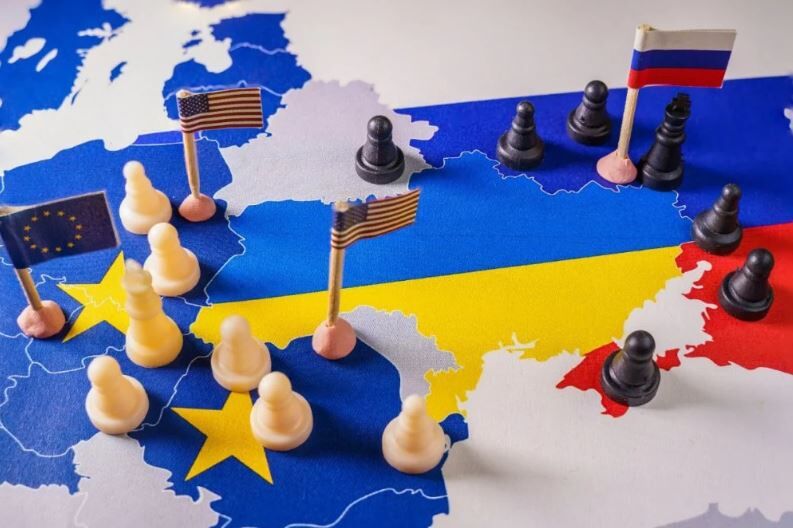
Analysis:  Ongoing Hybrid Warfare Between the West and Russia in the Ukraine War

Analysis: Ongoing Hybrid Warfare Between the West and Russia in the Ukraine War

Online Strategic Council – Interview: A foreign policy expert stated that a direct confrontation and war between Russia and the West under the shadow of the Ukraine war appears unlikely. He noted that the conflicting parties have placed the method of hybrid warfare on the agenda at the highest level with the support of their allies. The reality is that a world war is underway, and many countries are directly and indirectly involved in it, but this is not a nuclear war.

Challenges Facing NATO in the Ukraine Crisis

Challenges Facing NATO in the Ukraine Crisis

Strategic Council Online – Interview: An international affairs expert stated that the flight of unidentified drones over Polish airspace has sounded a new alarm for European security; an incident that, despite its limited scale, sent severe tremors through the foundations of NATO and U.S.-Europe relations. The situation became more complicated when Polish officials accused Russia of violating its airspace. At the same time, the Kremlin denied such accusations, and some sources even suggested that Ukraine was the origin of these drones. The importance of the issue lies in the fact that Poland, unlike Ukraine, is a member of NATO, and any attack on its territory could trigger the alliance’s collective defense clause. However, Donald Trump’s cold and ambiguous reaction to the drone incident left Europeans questioning whether Washington would be willing to defend its allies if the crisis escalates. Meanwhile, NATO has launched the “Eastern Guardian” operation to demonstrate its strength on its eastern borders. Still, at the same time, there are signs of hesitation and division among Western countries. These developments have shifted the balance of power in the Ukraine war into a new phase; a war in which Moscow is not retreating from its positions, Europe has no clear strategy to contain the crisis, and the U.S. shows no willingness to confront Russia directly.

Europe and Russia Confront Each Other Over Allocating Russian Assets to Arm Ukraine

Europe and Russia Confront Each Other Over Allocating Russian Assets to Arm Ukraine

Strategic Council Online – Interview: A senior European affairs analyst stated that Russia’s sharp reaction to the decision by Britain and the European Union to use Moscow’s frozen assets in favor of Ukraine has once again revealed new dimensions of the West’s economic war against Russia. The Russian embassy in London described the allocation of over one billion pounds of its blocked funds to purchase weapons for Ukraine as a “criminal act”. It warned that such policies would not only weaken London’s financial and political credibility in the world but would also not go unanswered. Simultaneously, the European Commission is also considering transferring 200 billion euros of Russian assets for the reconstruction of Ukraine—a decision that Moscow has described as a clear violation of international law.
Experts believe that by arming Ukraine using Russia’s frozen resources, the West has not only escalated the level of economic confrontation but has also challenged the traditional rules of the international financial and trade system. While Russia is seeking ways to circumvent sanctions through some of its partners, Europe and Britain are also determined to maintain pressure. It appears that this economic war is no longer confined to the conflict over Ukraine, and its effects will continue for years to come, redefining international relations and creating new geopolitical blocs.

Prospect of a Potential NATO Confrontation with Russia and China

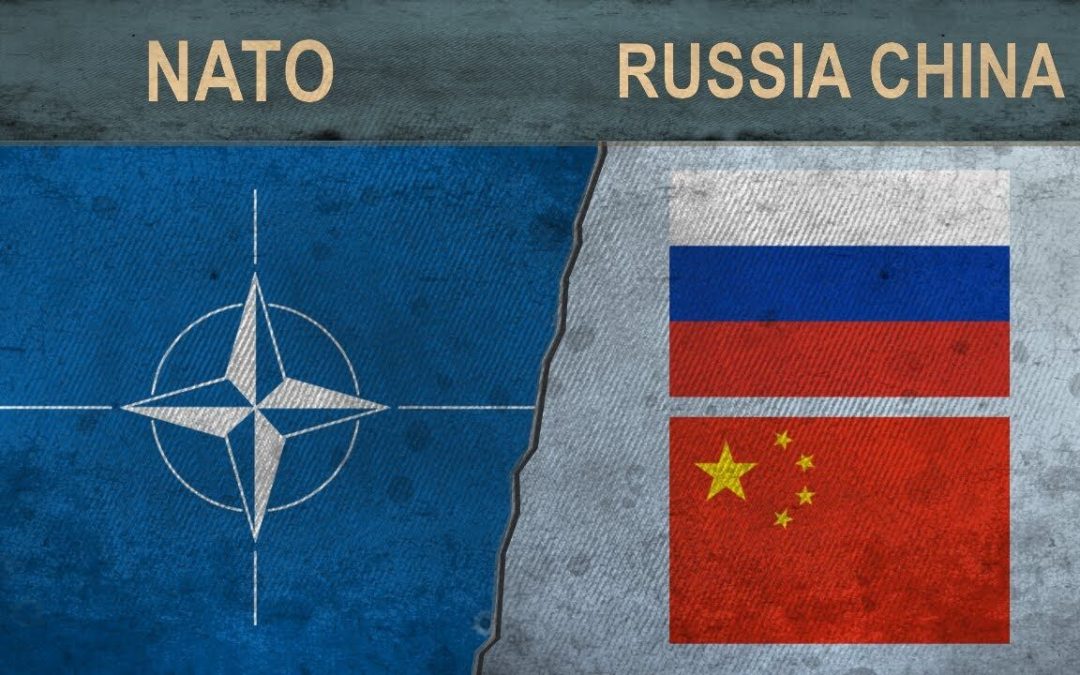
Prospect of a Potential NATO Confrontation with Russia and China

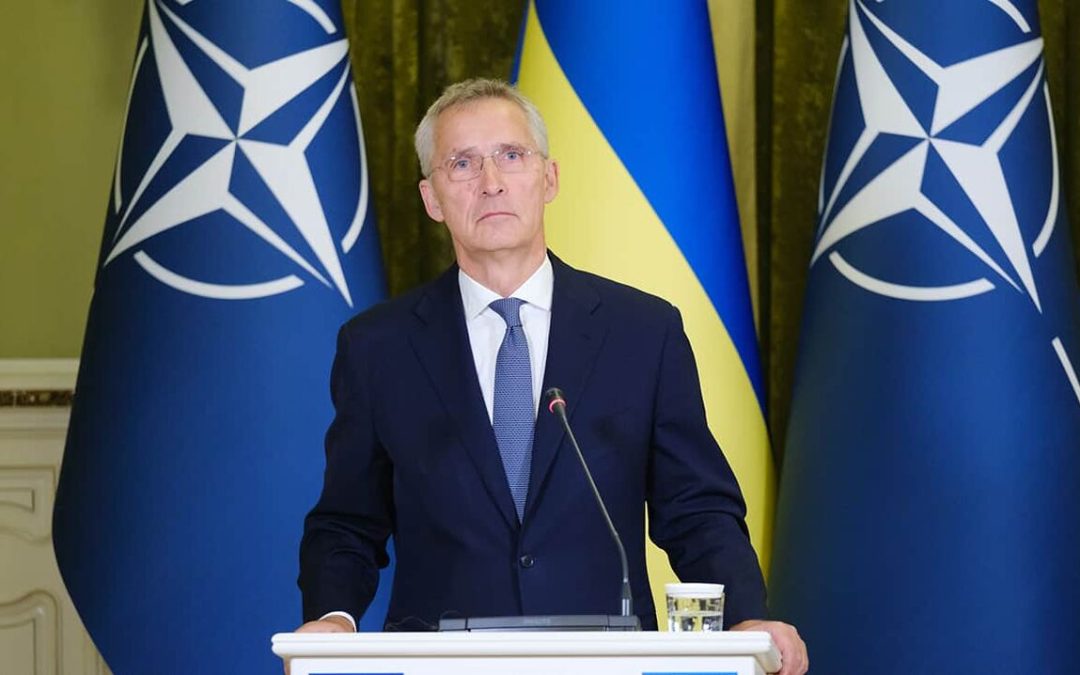
Strategic Council Online – Opinion: The escalating possibility of confrontation between the world’s Eastern and Western powers, particularly after the Russia-Ukraine war, along with the consolidation of China’s narrative of itself as the largest developing country with the capacity to lead the Global South, has become a threatening issue for the West, led by America and Europe. In this context, Mark Rutte, the Secretary-General of NATO, recently spoke at a press conference in Berlin about the necessity of European military modernization and called for “changing defense postures” in line with the increasing international military threats.

Shanghai Summit, New Global Order, and Iran’s Position

Shanghai Summit, New Global Order, and Iran’s Position

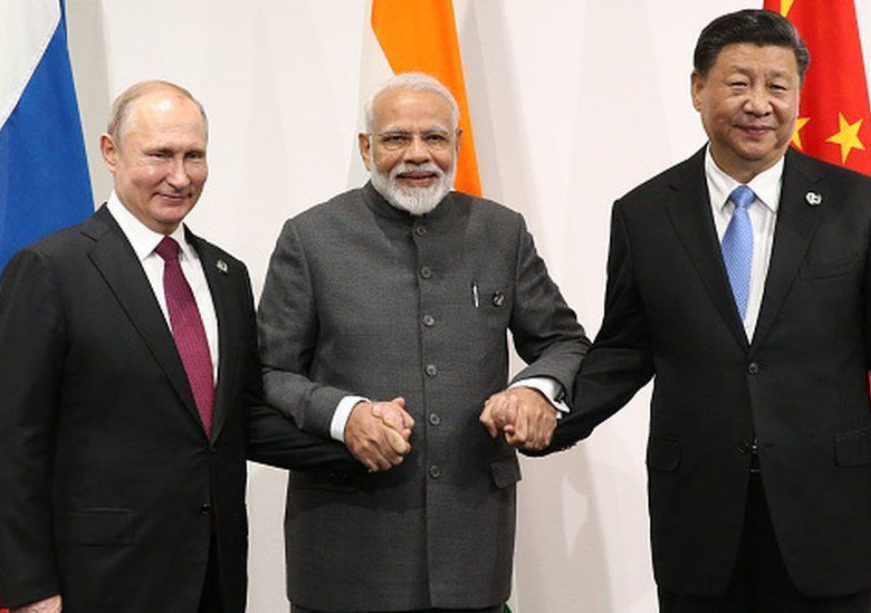
Strategic Council Online – Opinion: The 25th Shanghai Cooperation Organization (SCO) Summit in Tianjin, China, can be considered one of the most significant events in recent years in terms of global power dynamics. Through its impressive hosting and the announcement of various economic and political initiatives, China attempted to present an image of a gradual transition from the West-centric financial order. The presence of leaders from Russia, India, and Central Asian countries also demonstrated that the idea of multipolarity is no longer merely a slogan but is being pursued through economic and institutional cooperation. The coincidence of the Shanghai Summit with the military parade in Beijing commemorating the 80th anniversary of China’s victory over Japan also highlighted the integration of the “hard power–soft power” strategy on the international stage.

India’s Diplomatic Pivot from Washington to Beijing and Moscow

India’s Diplomatic Pivot from Washington to Beijing and Moscow

Strategic Council Online – Interview: An international affairs analyst stated that the United States’ imposition of 50% tariffs on Indian export goods has not only severely impacted the economic relations between the two countries but has also opened a new path in New Delhi’s foreign policy. While Washington has justified this move as “punishing” India for purchasing oil from Russia, the Narendra Modi government has called it unfair and emphasized the necessity of ensuring its country’s energy security. However, India’s reaction has not been limited to mere verbal statements; Modi’s visit to China and participation in the Shanghai Cooperation Organization summit can practically be assessed as a strategic pivot towards the East. Simultaneously, diplomatic exchanges among the three Asian powers have accelerated: China’s Foreign Minister visited New Delhi, his Indian counterpart went to Moscow, and Modi, in his meeting with Beijing’s leaders, sent a clear message of India’s desire for closer cooperation with Russia and China. In this context, the Indian Prime Minister’s lack of response to several phone calls from Trump suggests that New Delhi is redefining its foreign policy priorities in response to Washington’s pressure. Many analysts believe that India’s recent actions are not merely short-term reactions but rather a sign of a new balance of power forming in Asia’s equations.

Russia-Armenia Divergence on the Rise

Russia-Armenia Divergence on the Rise

Strategic Council Online – Interview: A university professor said that the nationalist movements in Armenia believe that Moscow’s measures not only have no benefit for them but have also imposed some costs; and added that in a situation where Russia, which is currently involved in Ukraine, acting in its interests, Armenia has decided that it would be more beneficial to closely cooperate with the international community while pursuing its interests.

Vague Prospect of China-US Summit Agreements

Vague Prospect of China-US Summit Agreements

Strategic Council Online – Interview: A faculty member of the Institute of Strategic Studies said that it should be seen whether the Chinese will violate the agreement to re-establish military relations with the United States due to Biden’s calling Xi Jinping a dictator, added: If once again they conclude that establishment of relations between the military forces of the two countries should be delayed, it shows that the recent meeting between the two presidents has not been successful.

China’s Role in Undermining Effectiveness of Western Sanctions against Russia

China’s Role in Undermining Effectiveness of Western Sanctions against Russia

Strategic Council Online – Interview: An expert on Russian affairs stated that despite some challenges and uncertainties, the relationship between Moscow and Beijing has somehow insured the Russian economy; at the same time, she said that the West has a long-term plan to weaken Russia through sanctions.

Middle East on the Threshold of Comprehensive Peace

Middle East on the Threshold of Comprehensive Peace

Strategic Council Online – Opinion: The strategic agreement between Iran and Saudi Arabia in Beijing will help transform the political and security conditions and move towards stable peace and stability in the region. This agreement will end the costly tensions between Tehran and Riyadh and create new political and security stability requirements and expand cooperation between the region’s countries.
Hassan Hanizadeh – Expert on Middle East affairs

أحدث الوظائف

The Makkah Pact; Reasons for its Formation and Challenges Ahead

SCFR Online – Opinion: The Makkah Pact, signed between Saudi Arabia, Pakistan, and Turkey under the motto “an attack on one is an attack on all,” is viewed by some analysts less as a full-fledged military coalition and more as an attempt to reduce security dependence on an external power and to establish a regional security mechanism.

Implications of the US-Saudi Nuclear Agreement

SCFR Online – Opinion: The new US-Saudi nuclear agreement, despite legal and political ambiguities, could alter previous non-proliferation standards in West Asia and intensify nuclear competition, ushering it into a new phase.

An Analysis of Recent Turkey-Israeli Regime Tensions

SCFR Online – Opinion: Recent developments in Syria indicate an intensification of strategic rivalry between Turkey and the Israeli regime, but mutual considerations and the role of the United States have limited the likelihood of direct war.

Increasing criticism of the extensive Zionist lobby network

SCFR Online – Opinion: An examination of the mechanisms of the Israeli regime’s influence in the United States depicts a complex picture of shared interests, strategic dependencies, and the limitations of this relationship.

Realities of the Tripartite Makkah Pact

SCFR Online – Interview: The signing of the Makkah agreement between Saudi Arabia, Pakistan, and Turkey has raised questions about the future of the region’s security structure and the position of these countries in West Asian equations. Can this agreement become a genuine collective defense mechanism, or does it have more of a political and deterrent function than creating new military capacity?

Strategic Implications of the Reduction of US Weapons Stockpiles

SCFR Online – Opinion: The continuation of the US war against Iran, in addition to increasing operational costs, has called into question the actual capacity of the American arsenal to simultaneously fulfill security commitments on multiple fronts; an issue that affects deterrence, defense production capacity, and Washington’s resource prioritization.

The Formation of a New Order in Relations Between Powers

SCFR Online – Opinion: The Russia-Ukraine war and the war of the United States and the Israeli regime against Iran have been formed with different objectives and actors, but field and political developments indicate that they are not entirely separate from one another.

Loading

Russia

Analysis:  Ongoing Hybrid Warfare Between the West and Russia in the Ukraine War

Analysis: Ongoing Hybrid Warfare Between the West and Russia in the Ukraine War

Online Strategic Council – Interview: A foreign policy expert stated that a direct confrontation and war between Russia and the West under the shadow of the Ukraine war appears unlikely. He noted that the conflicting parties have placed the method of hybrid warfare on the agenda at the highest level with the support of their allies. The reality is that a world war is underway, and many countries are directly and indirectly involved in it, but this is not a nuclear war.

Challenges Facing NATO in the Ukraine Crisis

Challenges Facing NATO in the Ukraine Crisis

Strategic Council Online – Interview: An international affairs expert stated that the flight of unidentified drones over Polish airspace has sounded a new alarm for European security; an incident that, despite its limited scale, sent severe tremors through the foundations of NATO and U.S.-Europe relations. The situation became more complicated when Polish officials accused Russia of violating its airspace. At the same time, the Kremlin denied such accusations, and some sources even suggested that Ukraine was the origin of these drones. The importance of the issue lies in the fact that Poland, unlike Ukraine, is a member of NATO, and any attack on its territory could trigger the alliance’s collective defense clause. However, Donald Trump’s cold and ambiguous reaction to the drone incident left Europeans questioning whether Washington would be willing to defend its allies if the crisis escalates. Meanwhile, NATO has launched the “Eastern Guardian” operation to demonstrate its strength on its eastern borders. Still, at the same time, there are signs of hesitation and division among Western countries. These developments have shifted the balance of power in the Ukraine war into a new phase; a war in which Moscow is not retreating from its positions, Europe has no clear strategy to contain the crisis, and the U.S. shows no willingness to confront Russia directly.

Europe and Russia Confront Each Other Over Allocating Russian Assets to Arm Ukraine

Europe and Russia Confront Each Other Over Allocating Russian Assets to Arm Ukraine

Strategic Council Online – Interview: A senior European affairs analyst stated that Russia’s sharp reaction to the decision by Britain and the European Union to use Moscow’s frozen assets in favor of Ukraine has once again revealed new dimensions of the West’s economic war against Russia. The Russian embassy in London described the allocation of over one billion pounds of its blocked funds to purchase weapons for Ukraine as a “criminal act”. It warned that such policies would not only weaken London’s financial and political credibility in the world but would also not go unanswered. Simultaneously, the European Commission is also considering transferring 200 billion euros of Russian assets for the reconstruction of Ukraine—a decision that Moscow has described as a clear violation of international law.
Experts believe that by arming Ukraine using Russia’s frozen resources, the West has not only escalated the level of economic confrontation but has also challenged the traditional rules of the international financial and trade system. While Russia is seeking ways to circumvent sanctions through some of its partners, Europe and Britain are also determined to maintain pressure. It appears that this economic war is no longer confined to the conflict over Ukraine, and its effects will continue for years to come, redefining international relations and creating new geopolitical blocs.

Prospect of a Potential NATO Confrontation with Russia and China

Prospect of a Potential NATO Confrontation with Russia and China

Strategic Council Online – Opinion: The escalating possibility of confrontation between the world’s Eastern and Western powers, particularly after the Russia-Ukraine war, along with the consolidation of China’s narrative of itself as the largest developing country with the capacity to lead the Global South, has become a threatening issue for the West, led by America and Europe. In this context, Mark Rutte, the Secretary-General of NATO, recently spoke at a press conference in Berlin about the necessity of European military modernization and called for “changing defense postures” in line with the increasing international military threats.

Shanghai Summit, New Global Order, and Iran’s Position

Shanghai Summit, New Global Order, and Iran’s Position

Strategic Council Online – Opinion: The 25th Shanghai Cooperation Organization (SCO) Summit in Tianjin, China, can be considered one of the most significant events in recent years in terms of global power dynamics. Through its impressive hosting and the announcement of various economic and political initiatives, China attempted to present an image of a gradual transition from the West-centric financial order. The presence of leaders from Russia, India, and Central Asian countries also demonstrated that the idea of multipolarity is no longer merely a slogan but is being pursued through economic and institutional cooperation. The coincidence of the Shanghai Summit with the military parade in Beijing commemorating the 80th anniversary of China’s victory over Japan also highlighted the integration of the “hard power–soft power” strategy on the international stage.

India’s Diplomatic Pivot from Washington to Beijing and Moscow

India’s Diplomatic Pivot from Washington to Beijing and Moscow

Strategic Council Online – Interview: An international affairs analyst stated that the United States’ imposition of 50% tariffs on Indian export goods has not only severely impacted the economic relations between the two countries but has also opened a new path in New Delhi’s foreign policy. While Washington has justified this move as “punishing” India for purchasing oil from Russia, the Narendra Modi government has called it unfair and emphasized the necessity of ensuring its country’s energy security. However, India’s reaction has not been limited to mere verbal statements; Modi’s visit to China and participation in the Shanghai Cooperation Organization summit can practically be assessed as a strategic pivot towards the East. Simultaneously, diplomatic exchanges among the three Asian powers have accelerated: China’s Foreign Minister visited New Delhi, his Indian counterpart went to Moscow, and Modi, in his meeting with Beijing’s leaders, sent a clear message of India’s desire for closer cooperation with Russia and China. In this context, the Indian Prime Minister’s lack of response to several phone calls from Trump suggests that New Delhi is redefining its foreign policy priorities in response to Washington’s pressure. Many analysts believe that India’s recent actions are not merely short-term reactions but rather a sign of a new balance of power forming in Asia’s equations.

Russia-Armenia Divergence on the Rise

Russia-Armenia Divergence on the Rise

Strategic Council Online – Interview: A university professor said that the nationalist movements in Armenia believe that Moscow’s measures not only have no benefit for them but have also imposed some costs; and added that in a situation where Russia, which is currently involved in Ukraine, acting in its interests, Armenia has decided that it would be more beneficial to closely cooperate with the international community while pursuing its interests.

Vague Prospect of China-US Summit Agreements

Vague Prospect of China-US Summit Agreements

Strategic Council Online – Interview: A faculty member of the Institute of Strategic Studies said that it should be seen whether the Chinese will violate the agreement to re-establish military relations with the United States due to Biden’s calling Xi Jinping a dictator, added: If once again they conclude that establishment of relations between the military forces of the two countries should be delayed, it shows that the recent meeting between the two presidents has not been successful.

China’s Role in Undermining Effectiveness of Western Sanctions against Russia

China’s Role in Undermining Effectiveness of Western Sanctions against Russia

Strategic Council Online – Interview: An expert on Russian affairs stated that despite some challenges and uncertainties, the relationship between Moscow and Beijing has somehow insured the Russian economy; at the same time, she said that the West has a long-term plan to weaken Russia through sanctions.

Middle East on the Threshold of Comprehensive Peace

Middle East on the Threshold of Comprehensive Peace

Strategic Council Online – Opinion: The strategic agreement between Iran and Saudi Arabia in Beijing will help transform the political and security conditions and move towards stable peace and stability in the region. This agreement will end the costly tensions between Tehran and Riyadh and create new political and security stability requirements and expand cooperation between the region’s countries.
Hassan Hanizadeh – Expert on Middle East affairs

Russia

Analysis:  Ongoing Hybrid Warfare Between the West and Russia in the Ukraine War

Analysis: Ongoing Hybrid Warfare Between the West and Russia in the Ukraine War

Online Strategic Council – Interview: A foreign policy expert stated that a direct confrontation and war between Russia and the West under the shadow of the Ukraine war appears unlikely. He noted that the conflicting parties have placed the method of hybrid warfare on the agenda at the highest level with the support of their allies. The reality is that a world war is underway, and many countries are directly and indirectly involved in it, but this is not a nuclear war.

Challenges Facing NATO in the Ukraine Crisis

Challenges Facing NATO in the Ukraine Crisis

Strategic Council Online – Interview: An international affairs expert stated that the flight of unidentified drones over Polish airspace has sounded a new alarm for European security; an incident that, despite its limited scale, sent severe tremors through the foundations of NATO and U.S.-Europe relations. The situation became more complicated when Polish officials accused Russia of violating its airspace. At the same time, the Kremlin denied such accusations, and some sources even suggested that Ukraine was the origin of these drones. The importance of the issue lies in the fact that Poland, unlike Ukraine, is a member of NATO, and any attack on its territory could trigger the alliance’s collective defense clause. However, Donald Trump’s cold and ambiguous reaction to the drone incident left Europeans questioning whether Washington would be willing to defend its allies if the crisis escalates. Meanwhile, NATO has launched the “Eastern Guardian” operation to demonstrate its strength on its eastern borders. Still, at the same time, there are signs of hesitation and division among Western countries. These developments have shifted the balance of power in the Ukraine war into a new phase; a war in which Moscow is not retreating from its positions, Europe has no clear strategy to contain the crisis, and the U.S. shows no willingness to confront Russia directly.

Europe and Russia Confront Each Other Over Allocating Russian Assets to Arm Ukraine

Europe and Russia Confront Each Other Over Allocating Russian Assets to Arm Ukraine

Strategic Council Online – Interview: A senior European affairs analyst stated that Russia’s sharp reaction to the decision by Britain and the European Union to use Moscow’s frozen assets in favor of Ukraine has once again revealed new dimensions of the West’s economic war against Russia. The Russian embassy in London described the allocation of over one billion pounds of its blocked funds to purchase weapons for Ukraine as a “criminal act”. It warned that such policies would not only weaken London’s financial and political credibility in the world but would also not go unanswered. Simultaneously, the European Commission is also considering transferring 200 billion euros of Russian assets for the reconstruction of Ukraine—a decision that Moscow has described as a clear violation of international law.
Experts believe that by arming Ukraine using Russia’s frozen resources, the West has not only escalated the level of economic confrontation but has also challenged the traditional rules of the international financial and trade system. While Russia is seeking ways to circumvent sanctions through some of its partners, Europe and Britain are also determined to maintain pressure. It appears that this economic war is no longer confined to the conflict over Ukraine, and its effects will continue for years to come, redefining international relations and creating new geopolitical blocs.

Prospect of a Potential NATO Confrontation with Russia and China

Prospect of a Potential NATO Confrontation with Russia and China

Strategic Council Online – Opinion: The escalating possibility of confrontation between the world’s Eastern and Western powers, particularly after the Russia-Ukraine war, along with the consolidation of China’s narrative of itself as the largest developing country with the capacity to lead the Global South, has become a threatening issue for the West, led by America and Europe. In this context, Mark Rutte, the Secretary-General of NATO, recently spoke at a press conference in Berlin about the necessity of European military modernization and called for “changing defense postures” in line with the increasing international military threats.

Shanghai Summit, New Global Order, and Iran’s Position

Shanghai Summit, New Global Order, and Iran’s Position

Strategic Council Online – Opinion: The 25th Shanghai Cooperation Organization (SCO) Summit in Tianjin, China, can be considered one of the most significant events in recent years in terms of global power dynamics. Through its impressive hosting and the announcement of various economic and political initiatives, China attempted to present an image of a gradual transition from the West-centric financial order. The presence of leaders from Russia, India, and Central Asian countries also demonstrated that the idea of multipolarity is no longer merely a slogan but is being pursued through economic and institutional cooperation. The coincidence of the Shanghai Summit with the military parade in Beijing commemorating the 80th anniversary of China’s victory over Japan also highlighted the integration of the “hard power–soft power” strategy on the international stage.

India’s Diplomatic Pivot from Washington to Beijing and Moscow

India’s Diplomatic Pivot from Washington to Beijing and Moscow

Strategic Council Online – Interview: An international affairs analyst stated that the United States’ imposition of 50% tariffs on Indian export goods has not only severely impacted the economic relations between the two countries but has also opened a new path in New Delhi’s foreign policy. While Washington has justified this move as “punishing” India for purchasing oil from Russia, the Narendra Modi government has called it unfair and emphasized the necessity of ensuring its country’s energy security. However, India’s reaction has not been limited to mere verbal statements; Modi’s visit to China and participation in the Shanghai Cooperation Organization summit can practically be assessed as a strategic pivot towards the East. Simultaneously, diplomatic exchanges among the three Asian powers have accelerated: China’s Foreign Minister visited New Delhi, his Indian counterpart went to Moscow, and Modi, in his meeting with Beijing’s leaders, sent a clear message of India’s desire for closer cooperation with Russia and China. In this context, the Indian Prime Minister’s lack of response to several phone calls from Trump suggests that New Delhi is redefining its foreign policy priorities in response to Washington’s pressure. Many analysts believe that India’s recent actions are not merely short-term reactions but rather a sign of a new balance of power forming in Asia’s equations.

Russia-Armenia Divergence on the Rise

Russia-Armenia Divergence on the Rise

Strategic Council Online – Interview: A university professor said that the nationalist movements in Armenia believe that Moscow’s measures not only have no benefit for them but have also imposed some costs; and added that in a situation where Russia, which is currently involved in Ukraine, acting in its interests, Armenia has decided that it would be more beneficial to closely cooperate with the international community while pursuing its interests.

Vague Prospect of China-US Summit Agreements

Vague Prospect of China-US Summit Agreements

Strategic Council Online – Interview: A faculty member of the Institute of Strategic Studies said that it should be seen whether the Chinese will violate the agreement to re-establish military relations with the United States due to Biden’s calling Xi Jinping a dictator, added: If once again they conclude that establishment of relations between the military forces of the two countries should be delayed, it shows that the recent meeting between the two presidents has not been successful.

China’s Role in Undermining Effectiveness of Western Sanctions against Russia

China’s Role in Undermining Effectiveness of Western Sanctions against Russia

Strategic Council Online – Interview: An expert on Russian affairs stated that despite some challenges and uncertainties, the relationship between Moscow and Beijing has somehow insured the Russian economy; at the same time, she said that the West has a long-term plan to weaken Russia through sanctions.

Middle East on the Threshold of Comprehensive Peace

Middle East on the Threshold of Comprehensive Peace

Strategic Council Online – Opinion: The strategic agreement between Iran and Saudi Arabia in Beijing will help transform the political and security conditions and move towards stable peace and stability in the region. This agreement will end the costly tensions between Tehran and Riyadh and create new political and security stability requirements and expand cooperation between the region’s countries.
Hassan Hanizadeh – Expert on Middle East affairs

LATEST CONTENT

The Makkah Pact; Reasons for its Formation and Challenges Ahead

SCFR Online – Opinion: The Makkah Pact, signed between Saudi Arabia, Pakistan, and Turkey under the motto “an attack on one is an attack on all,” is viewed by some analysts less as a full-fledged military coalition and more as an attempt to reduce security dependence on an external power and to establish a regional security mechanism.

Implications of the US-Saudi Nuclear Agreement

SCFR Online – Opinion: The new US-Saudi nuclear agreement, despite legal and political ambiguities, could alter previous non-proliferation standards in West Asia and intensify nuclear competition, ushering it into a new phase.

An Analysis of Recent Turkey-Israeli Regime Tensions

SCFR Online – Opinion: Recent developments in Syria indicate an intensification of strategic rivalry between Turkey and the Israeli regime, but mutual considerations and the role of the United States have limited the likelihood of direct war.

Increasing criticism of the extensive Zionist lobby network

SCFR Online – Opinion: An examination of the mechanisms of the Israeli regime’s influence in the United States depicts a complex picture of shared interests, strategic dependencies, and the limitations of this relationship.

Realities of the Tripartite Makkah Pact

SCFR Online – Interview: The signing of the Makkah agreement between Saudi Arabia, Pakistan, and Turkey has raised questions about the future of the region’s security structure and the position of these countries in West Asian equations. Can this agreement become a genuine collective defense mechanism, or does it have more of a political and deterrent function than creating new military capacity?

Strategic Implications of the Reduction of US Weapons Stockpiles

SCFR Online – Opinion: The continuation of the US war against Iran, in addition to increasing operational costs, has called into question the actual capacity of the American arsenal to simultaneously fulfill security commitments on multiple fronts; an issue that affects deterrence, defense production capacity, and Washington’s resource prioritization.

The Formation of a New Order in Relations Between Powers

SCFR Online – Opinion: The Russia-Ukraine war and the war of the United States and the Israeli regime against Iran have been formed with different objectives and actors, but field and political developments indicate that they are not entirely separate from one another.

Loading

Russia

Analysis:  Ongoing Hybrid Warfare Between the West and Russia in the Ukraine War

Analysis: Ongoing Hybrid Warfare Between the West and Russia in the Ukraine War

Online Strategic Council – Interview: A foreign policy expert stated that a direct confrontation and war between Russia and the West under the shadow of the Ukraine war appears unlikely. He noted that the conflicting parties have placed the method of hybrid warfare on the agenda at the highest level with the support of their allies. The reality is that a world war is underway, and many countries are directly and indirectly involved in it, but this is not a nuclear war.

Challenges Facing NATO in the Ukraine Crisis

Challenges Facing NATO in the Ukraine Crisis

Strategic Council Online – Interview: An international affairs expert stated that the flight of unidentified drones over Polish airspace has sounded a new alarm for European security; an incident that, despite its limited scale, sent severe tremors through the foundations of NATO and U.S.-Europe relations. The situation became more complicated when Polish officials accused Russia of violating its airspace. At the same time, the Kremlin denied such accusations, and some sources even suggested that Ukraine was the origin of these drones. The importance of the issue lies in the fact that Poland, unlike Ukraine, is a member of NATO, and any attack on its territory could trigger the alliance’s collective defense clause. However, Donald Trump’s cold and ambiguous reaction to the drone incident left Europeans questioning whether Washington would be willing to defend its allies if the crisis escalates. Meanwhile, NATO has launched the “Eastern Guardian” operation to demonstrate its strength on its eastern borders. Still, at the same time, there are signs of hesitation and division among Western countries. These developments have shifted the balance of power in the Ukraine war into a new phase; a war in which Moscow is not retreating from its positions, Europe has no clear strategy to contain the crisis, and the U.S. shows no willingness to confront Russia directly.

Europe and Russia Confront Each Other Over Allocating Russian Assets to Arm Ukraine

Europe and Russia Confront Each Other Over Allocating Russian Assets to Arm Ukraine

Strategic Council Online – Interview: A senior European affairs analyst stated that Russia’s sharp reaction to the decision by Britain and the European Union to use Moscow’s frozen assets in favor of Ukraine has once again revealed new dimensions of the West’s economic war against Russia. The Russian embassy in London described the allocation of over one billion pounds of its blocked funds to purchase weapons for Ukraine as a “criminal act”. It warned that such policies would not only weaken London’s financial and political credibility in the world but would also not go unanswered. Simultaneously, the European Commission is also considering transferring 200 billion euros of Russian assets for the reconstruction of Ukraine—a decision that Moscow has described as a clear violation of international law.
Experts believe that by arming Ukraine using Russia’s frozen resources, the West has not only escalated the level of economic confrontation but has also challenged the traditional rules of the international financial and trade system. While Russia is seeking ways to circumvent sanctions through some of its partners, Europe and Britain are also determined to maintain pressure. It appears that this economic war is no longer confined to the conflict over Ukraine, and its effects will continue for years to come, redefining international relations and creating new geopolitical blocs.

Prospect of a Potential NATO Confrontation with Russia and China

Prospect of a Potential NATO Confrontation with Russia and China

Strategic Council Online – Opinion: The escalating possibility of confrontation between the world’s Eastern and Western powers, particularly after the Russia-Ukraine war, along with the consolidation of China’s narrative of itself as the largest developing country with the capacity to lead the Global South, has become a threatening issue for the West, led by America and Europe. In this context, Mark Rutte, the Secretary-General of NATO, recently spoke at a press conference in Berlin about the necessity of European military modernization and called for “changing defense postures” in line with the increasing international military threats.

Shanghai Summit, New Global Order, and Iran’s Position

Shanghai Summit, New Global Order, and Iran’s Position

Strategic Council Online – Opinion: The 25th Shanghai Cooperation Organization (SCO) Summit in Tianjin, China, can be considered one of the most significant events in recent years in terms of global power dynamics. Through its impressive hosting and the announcement of various economic and political initiatives, China attempted to present an image of a gradual transition from the West-centric financial order. The presence of leaders from Russia, India, and Central Asian countries also demonstrated that the idea of multipolarity is no longer merely a slogan but is being pursued through economic and institutional cooperation. The coincidence of the Shanghai Summit with the military parade in Beijing commemorating the 80th anniversary of China’s victory over Japan also highlighted the integration of the “hard power–soft power” strategy on the international stage.

India’s Diplomatic Pivot from Washington to Beijing and Moscow

India’s Diplomatic Pivot from Washington to Beijing and Moscow

Strategic Council Online – Interview: An international affairs analyst stated that the United States’ imposition of 50% tariffs on Indian export goods has not only severely impacted the economic relations between the two countries but has also opened a new path in New Delhi’s foreign policy. While Washington has justified this move as “punishing” India for purchasing oil from Russia, the Narendra Modi government has called it unfair and emphasized the necessity of ensuring its country’s energy security. However, India’s reaction has not been limited to mere verbal statements; Modi’s visit to China and participation in the Shanghai Cooperation Organization summit can practically be assessed as a strategic pivot towards the East. Simultaneously, diplomatic exchanges among the three Asian powers have accelerated: China’s Foreign Minister visited New Delhi, his Indian counterpart went to Moscow, and Modi, in his meeting with Beijing’s leaders, sent a clear message of India’s desire for closer cooperation with Russia and China. In this context, the Indian Prime Minister’s lack of response to several phone calls from Trump suggests that New Delhi is redefining its foreign policy priorities in response to Washington’s pressure. Many analysts believe that India’s recent actions are not merely short-term reactions but rather a sign of a new balance of power forming in Asia’s equations.

Russia-Armenia Divergence on the Rise

Russia-Armenia Divergence on the Rise

Strategic Council Online – Interview: A university professor said that the nationalist movements in Armenia believe that Moscow’s measures not only have no benefit for them but have also imposed some costs; and added that in a situation where Russia, which is currently involved in Ukraine, acting in its interests, Armenia has decided that it would be more beneficial to closely cooperate with the international community while pursuing its interests.

Vague Prospect of China-US Summit Agreements

Vague Prospect of China-US Summit Agreements

Strategic Council Online – Interview: A faculty member of the Institute of Strategic Studies said that it should be seen whether the Chinese will violate the agreement to re-establish military relations with the United States due to Biden’s calling Xi Jinping a dictator, added: If once again they conclude that establishment of relations between the military forces of the two countries should be delayed, it shows that the recent meeting between the two presidents has not been successful.

China’s Role in Undermining Effectiveness of Western Sanctions against Russia

China’s Role in Undermining Effectiveness of Western Sanctions against Russia

Strategic Council Online – Interview: An expert on Russian affairs stated that despite some challenges and uncertainties, the relationship between Moscow and Beijing has somehow insured the Russian economy; at the same time, she said that the West has a long-term plan to weaken Russia through sanctions.

Middle East on the Threshold of Comprehensive Peace

Middle East on the Threshold of Comprehensive Peace

Strategic Council Online – Opinion: The strategic agreement between Iran and Saudi Arabia in Beijing will help transform the political and security conditions and move towards stable peace and stability in the region. This agreement will end the costly tensions between Tehran and Riyadh and create new political and security stability requirements and expand cooperation between the region’s countries.
Hassan Hanizadeh – Expert on Middle East affairs

ÚLTIMAS PUBLICACIONES

The Makkah Pact; Reasons for its Formation and Challenges Ahead

SCFR Online – Opinion: The Makkah Pact, signed between Saudi Arabia, Pakistan, and Turkey under the motto “an attack on one is an attack on all,” is viewed by some analysts less as a full-fledged military coalition and more as an attempt to reduce security dependence on an external power and to establish a regional security mechanism.

Implications of the US-Saudi Nuclear Agreement

SCFR Online – Opinion: The new US-Saudi nuclear agreement, despite legal and political ambiguities, could alter previous non-proliferation standards in West Asia and intensify nuclear competition, ushering it into a new phase.

An Analysis of Recent Turkey-Israeli Regime Tensions

SCFR Online – Opinion: Recent developments in Syria indicate an intensification of strategic rivalry between Turkey and the Israeli regime, but mutual considerations and the role of the United States have limited the likelihood of direct war.

Increasing criticism of the extensive Zionist lobby network

SCFR Online – Opinion: An examination of the mechanisms of the Israeli regime’s influence in the United States depicts a complex picture of shared interests, strategic dependencies, and the limitations of this relationship.

Realities of the Tripartite Makkah Pact

SCFR Online – Interview: The signing of the Makkah agreement between Saudi Arabia, Pakistan, and Turkey has raised questions about the future of the region’s security structure and the position of these countries in West Asian equations. Can this agreement become a genuine collective defense mechanism, or does it have more of a political and deterrent function than creating new military capacity?

Strategic Implications of the Reduction of US Weapons Stockpiles

SCFR Online – Opinion: The continuation of the US war against Iran, in addition to increasing operational costs, has called into question the actual capacity of the American arsenal to simultaneously fulfill security commitments on multiple fronts; an issue that affects deterrence, defense production capacity, and Washington’s resource prioritization.

The Formation of a New Order in Relations Between Powers

SCFR Online – Opinion: The Russia-Ukraine war and the war of the United States and the Israeli regime against Iran have been formed with different objectives and actors, but field and political developments indicate that they are not entirely separate from one another.

Loading

Russia

Analysis:  Ongoing Hybrid Warfare Between the West and Russia in the Ukraine War

Analysis: Ongoing Hybrid Warfare Between the West and Russia in the Ukraine War

Online Strategic Council – Interview: A foreign policy expert stated that a direct confrontation and war between Russia and the West under the shadow of the Ukraine war appears unlikely. He noted that the conflicting parties have placed the method of hybrid warfare on the agenda at the highest level with the support of their allies. The reality is that a world war is underway, and many countries are directly and indirectly involved in it, but this is not a nuclear war.

Challenges Facing NATO in the Ukraine Crisis

Challenges Facing NATO in the Ukraine Crisis

Strategic Council Online – Interview: An international affairs expert stated that the flight of unidentified drones over Polish airspace has sounded a new alarm for European security; an incident that, despite its limited scale, sent severe tremors through the foundations of NATO and U.S.-Europe relations. The situation became more complicated when Polish officials accused Russia of violating its airspace. At the same time, the Kremlin denied such accusations, and some sources even suggested that Ukraine was the origin of these drones. The importance of the issue lies in the fact that Poland, unlike Ukraine, is a member of NATO, and any attack on its territory could trigger the alliance’s collective defense clause. However, Donald Trump’s cold and ambiguous reaction to the drone incident left Europeans questioning whether Washington would be willing to defend its allies if the crisis escalates. Meanwhile, NATO has launched the “Eastern Guardian” operation to demonstrate its strength on its eastern borders. Still, at the same time, there are signs of hesitation and division among Western countries. These developments have shifted the balance of power in the Ukraine war into a new phase; a war in which Moscow is not retreating from its positions, Europe has no clear strategy to contain the crisis, and the U.S. shows no willingness to confront Russia directly.

Europe and Russia Confront Each Other Over Allocating Russian Assets to Arm Ukraine

Europe and Russia Confront Each Other Over Allocating Russian Assets to Arm Ukraine

Strategic Council Online – Interview: A senior European affairs analyst stated that Russia’s sharp reaction to the decision by Britain and the European Union to use Moscow’s frozen assets in favor of Ukraine has once again revealed new dimensions of the West’s economic war against Russia. The Russian embassy in London described the allocation of over one billion pounds of its blocked funds to purchase weapons for Ukraine as a “criminal act”. It warned that such policies would not only weaken London’s financial and political credibility in the world but would also not go unanswered. Simultaneously, the European Commission is also considering transferring 200 billion euros of Russian assets for the reconstruction of Ukraine—a decision that Moscow has described as a clear violation of international law.
Experts believe that by arming Ukraine using Russia’s frozen resources, the West has not only escalated the level of economic confrontation but has also challenged the traditional rules of the international financial and trade system. While Russia is seeking ways to circumvent sanctions through some of its partners, Europe and Britain are also determined to maintain pressure. It appears that this economic war is no longer confined to the conflict over Ukraine, and its effects will continue for years to come, redefining international relations and creating new geopolitical blocs.

Prospect of a Potential NATO Confrontation with Russia and China

Prospect of a Potential NATO Confrontation with Russia and China

Strategic Council Online – Opinion: The escalating possibility of confrontation between the world’s Eastern and Western powers, particularly after the Russia-Ukraine war, along with the consolidation of China’s narrative of itself as the largest developing country with the capacity to lead the Global South, has become a threatening issue for the West, led by America and Europe. In this context, Mark Rutte, the Secretary-General of NATO, recently spoke at a press conference in Berlin about the necessity of European military modernization and called for “changing defense postures” in line with the increasing international military threats.

Shanghai Summit, New Global Order, and Iran’s Position

Shanghai Summit, New Global Order, and Iran’s Position

Strategic Council Online – Opinion: The 25th Shanghai Cooperation Organization (SCO) Summit in Tianjin, China, can be considered one of the most significant events in recent years in terms of global power dynamics. Through its impressive hosting and the announcement of various economic and political initiatives, China attempted to present an image of a gradual transition from the West-centric financial order. The presence of leaders from Russia, India, and Central Asian countries also demonstrated that the idea of multipolarity is no longer merely a slogan but is being pursued through economic and institutional cooperation. The coincidence of the Shanghai Summit with the military parade in Beijing commemorating the 80th anniversary of China’s victory over Japan also highlighted the integration of the “hard power–soft power” strategy on the international stage.

India’s Diplomatic Pivot from Washington to Beijing and Moscow

India’s Diplomatic Pivot from Washington to Beijing and Moscow

Strategic Council Online – Interview: An international affairs analyst stated that the United States’ imposition of 50% tariffs on Indian export goods has not only severely impacted the economic relations between the two countries but has also opened a new path in New Delhi’s foreign policy. While Washington has justified this move as “punishing” India for purchasing oil from Russia, the Narendra Modi government has called it unfair and emphasized the necessity of ensuring its country’s energy security. However, India’s reaction has not been limited to mere verbal statements; Modi’s visit to China and participation in the Shanghai Cooperation Organization summit can practically be assessed as a strategic pivot towards the East. Simultaneously, diplomatic exchanges among the three Asian powers have accelerated: China’s Foreign Minister visited New Delhi, his Indian counterpart went to Moscow, and Modi, in his meeting with Beijing’s leaders, sent a clear message of India’s desire for closer cooperation with Russia and China. In this context, the Indian Prime Minister’s lack of response to several phone calls from Trump suggests that New Delhi is redefining its foreign policy priorities in response to Washington’s pressure. Many analysts believe that India’s recent actions are not merely short-term reactions but rather a sign of a new balance of power forming in Asia’s equations.

Russia-Armenia Divergence on the Rise

Russia-Armenia Divergence on the Rise

Strategic Council Online – Interview: A university professor said that the nationalist movements in Armenia believe that Moscow’s measures not only have no benefit for them but have also imposed some costs; and added that in a situation where Russia, which is currently involved in Ukraine, acting in its interests, Armenia has decided that it would be more beneficial to closely cooperate with the international community while pursuing its interests.

Vague Prospect of China-US Summit Agreements

Vague Prospect of China-US Summit Agreements

Strategic Council Online – Interview: A faculty member of the Institute of Strategic Studies said that it should be seen whether the Chinese will violate the agreement to re-establish military relations with the United States due to Biden’s calling Xi Jinping a dictator, added: If once again they conclude that establishment of relations between the military forces of the two countries should be delayed, it shows that the recent meeting between the two presidents has not been successful.

China’s Role in Undermining Effectiveness of Western Sanctions against Russia

China’s Role in Undermining Effectiveness of Western Sanctions against Russia

Strategic Council Online – Interview: An expert on Russian affairs stated that despite some challenges and uncertainties, the relationship between Moscow and Beijing has somehow insured the Russian economy; at the same time, she said that the West has a long-term plan to weaken Russia through sanctions.

Middle East on the Threshold of Comprehensive Peace

Middle East on the Threshold of Comprehensive Peace

Strategic Council Online – Opinion: The strategic agreement between Iran and Saudi Arabia in Beijing will help transform the political and security conditions and move towards stable peace and stability in the region. This agreement will end the costly tensions between Tehran and Riyadh and create new political and security stability requirements and expand cooperation between the region’s countries.
Hassan Hanizadeh – Expert on Middle East affairs

ÚLTIMAS PUBLICACIONES

The Makkah Pact; Reasons for its Formation and Challenges Ahead

SCFR Online – Opinion: The Makkah Pact, signed between Saudi Arabia, Pakistan, and Turkey under the motto “an attack on one is an attack on all,” is viewed by some analysts less as a full-fledged military coalition and more as an attempt to reduce security dependence on an external power and to establish a regional security mechanism.

Implications of the US-Saudi Nuclear Agreement

SCFR Online – Opinion: The new US-Saudi nuclear agreement, despite legal and political ambiguities, could alter previous non-proliferation standards in West Asia and intensify nuclear competition, ushering it into a new phase.

An Analysis of Recent Turkey-Israeli Regime Tensions

SCFR Online – Opinion: Recent developments in Syria indicate an intensification of strategic rivalry between Turkey and the Israeli regime, but mutual considerations and the role of the United States have limited the likelihood of direct war.

Increasing criticism of the extensive Zionist lobby network

SCFR Online – Opinion: An examination of the mechanisms of the Israeli regime’s influence in the United States depicts a complex picture of shared interests, strategic dependencies, and the limitations of this relationship.

Realities of the Tripartite Makkah Pact

SCFR Online – Interview: The signing of the Makkah agreement between Saudi Arabia, Pakistan, and Turkey has raised questions about the future of the region’s security structure and the position of these countries in West Asian equations. Can this agreement become a genuine collective defense mechanism, or does it have more of a political and deterrent function than creating new military capacity?

Strategic Implications of the Reduction of US Weapons Stockpiles

SCFR Online – Opinion: The continuation of the US war against Iran, in addition to increasing operational costs, has called into question the actual capacity of the American arsenal to simultaneously fulfill security commitments on multiple fronts; an issue that affects deterrence, defense production capacity, and Washington’s resource prioritization.

The Formation of a New Order in Relations Between Powers

SCFR Online – Opinion: The Russia-Ukraine war and the war of the United States and the Israeli regime against Iran have been formed with different objectives and actors, but field and political developments indicate that they are not entirely separate from one another.

Loading

Russia

Analysis:  Ongoing Hybrid Warfare Between the West and Russia in the Ukraine War

Analysis: Ongoing Hybrid Warfare Between the West and Russia in the Ukraine War

Online Strategic Council – Interview: A foreign policy expert stated that a direct confrontation and war between Russia and the West under the shadow of the Ukraine war appears unlikely. He noted that the conflicting parties have placed the method of hybrid warfare on the agenda at the highest level with the support of their allies. The reality is that a world war is underway, and many countries are directly and indirectly involved in it, but this is not a nuclear war.

Challenges Facing NATO in the Ukraine Crisis

Challenges Facing NATO in the Ukraine Crisis

Strategic Council Online – Interview: An international affairs expert stated that the flight of unidentified drones over Polish airspace has sounded a new alarm for European security; an incident that, despite its limited scale, sent severe tremors through the foundations of NATO and U.S.-Europe relations. The situation became more complicated when Polish officials accused Russia of violating its airspace. At the same time, the Kremlin denied such accusations, and some sources even suggested that Ukraine was the origin of these drones. The importance of the issue lies in the fact that Poland, unlike Ukraine, is a member of NATO, and any attack on its territory could trigger the alliance’s collective defense clause. However, Donald Trump’s cold and ambiguous reaction to the drone incident left Europeans questioning whether Washington would be willing to defend its allies if the crisis escalates. Meanwhile, NATO has launched the “Eastern Guardian” operation to demonstrate its strength on its eastern borders. Still, at the same time, there are signs of hesitation and division among Western countries. These developments have shifted the balance of power in the Ukraine war into a new phase; a war in which Moscow is not retreating from its positions, Europe has no clear strategy to contain the crisis, and the U.S. shows no willingness to confront Russia directly.

Europe and Russia Confront Each Other Over Allocating Russian Assets to Arm Ukraine

Europe and Russia Confront Each Other Over Allocating Russian Assets to Arm Ukraine

Strategic Council Online – Interview: A senior European affairs analyst stated that Russia’s sharp reaction to the decision by Britain and the European Union to use Moscow’s frozen assets in favor of Ukraine has once again revealed new dimensions of the West’s economic war against Russia. The Russian embassy in London described the allocation of over one billion pounds of its blocked funds to purchase weapons for Ukraine as a “criminal act”. It warned that such policies would not only weaken London’s financial and political credibility in the world but would also not go unanswered. Simultaneously, the European Commission is also considering transferring 200 billion euros of Russian assets for the reconstruction of Ukraine—a decision that Moscow has described as a clear violation of international law.
Experts believe that by arming Ukraine using Russia’s frozen resources, the West has not only escalated the level of economic confrontation but has also challenged the traditional rules of the international financial and trade system. While Russia is seeking ways to circumvent sanctions through some of its partners, Europe and Britain are also determined to maintain pressure. It appears that this economic war is no longer confined to the conflict over Ukraine, and its effects will continue for years to come, redefining international relations and creating new geopolitical blocs.

Prospect of a Potential NATO Confrontation with Russia and China

Prospect of a Potential NATO Confrontation with Russia and China

Strategic Council Online – Opinion: The escalating possibility of confrontation between the world’s Eastern and Western powers, particularly after the Russia-Ukraine war, along with the consolidation of China’s narrative of itself as the largest developing country with the capacity to lead the Global South, has become a threatening issue for the West, led by America and Europe. In this context, Mark Rutte, the Secretary-General of NATO, recently spoke at a press conference in Berlin about the necessity of European military modernization and called for “changing defense postures” in line with the increasing international military threats.

Shanghai Summit, New Global Order, and Iran’s Position

Shanghai Summit, New Global Order, and Iran’s Position

Strategic Council Online – Opinion: The 25th Shanghai Cooperation Organization (SCO) Summit in Tianjin, China, can be considered one of the most significant events in recent years in terms of global power dynamics. Through its impressive hosting and the announcement of various economic and political initiatives, China attempted to present an image of a gradual transition from the West-centric financial order. The presence of leaders from Russia, India, and Central Asian countries also demonstrated that the idea of multipolarity is no longer merely a slogan but is being pursued through economic and institutional cooperation. The coincidence of the Shanghai Summit with the military parade in Beijing commemorating the 80th anniversary of China’s victory over Japan also highlighted the integration of the “hard power–soft power” strategy on the international stage.

India’s Diplomatic Pivot from Washington to Beijing and Moscow

India’s Diplomatic Pivot from Washington to Beijing and Moscow

Strategic Council Online – Interview: An international affairs analyst stated that the United States’ imposition of 50% tariffs on Indian export goods has not only severely impacted the economic relations between the two countries but has also opened a new path in New Delhi’s foreign policy. While Washington has justified this move as “punishing” India for purchasing oil from Russia, the Narendra Modi government has called it unfair and emphasized the necessity of ensuring its country’s energy security. However, India’s reaction has not been limited to mere verbal statements; Modi’s visit to China and participation in the Shanghai Cooperation Organization summit can practically be assessed as a strategic pivot towards the East. Simultaneously, diplomatic exchanges among the three Asian powers have accelerated: China’s Foreign Minister visited New Delhi, his Indian counterpart went to Moscow, and Modi, in his meeting with Beijing’s leaders, sent a clear message of India’s desire for closer cooperation with Russia and China. In this context, the Indian Prime Minister’s lack of response to several phone calls from Trump suggests that New Delhi is redefining its foreign policy priorities in response to Washington’s pressure. Many analysts believe that India’s recent actions are not merely short-term reactions but rather a sign of a new balance of power forming in Asia’s equations.

Russia-Armenia Divergence on the Rise

Russia-Armenia Divergence on the Rise

Strategic Council Online – Interview: A university professor said that the nationalist movements in Armenia believe that Moscow’s measures not only have no benefit for them but have also imposed some costs; and added that in a situation where Russia, which is currently involved in Ukraine, acting in its interests, Armenia has decided that it would be more beneficial to closely cooperate with the international community while pursuing its interests.

Vague Prospect of China-US Summit Agreements

Vague Prospect of China-US Summit Agreements

Strategic Council Online – Interview: A faculty member of the Institute of Strategic Studies said that it should be seen whether the Chinese will violate the agreement to re-establish military relations with the United States due to Biden’s calling Xi Jinping a dictator, added: If once again they conclude that establishment of relations between the military forces of the two countries should be delayed, it shows that the recent meeting between the two presidents has not been successful.

China’s Role in Undermining Effectiveness of Western Sanctions against Russia

China’s Role in Undermining Effectiveness of Western Sanctions against Russia

Strategic Council Online – Interview: An expert on Russian affairs stated that despite some challenges and uncertainties, the relationship between Moscow and Beijing has somehow insured the Russian economy; at the same time, she said that the West has a long-term plan to weaken Russia through sanctions.

Middle East on the Threshold of Comprehensive Peace

Middle East on the Threshold of Comprehensive Peace

Strategic Council Online – Opinion: The strategic agreement between Iran and Saudi Arabia in Beijing will help transform the political and security conditions and move towards stable peace and stability in the region. This agreement will end the costly tensions between Tehran and Riyadh and create new political and security stability requirements and expand cooperation between the region’s countries.
Hassan Hanizadeh – Expert on Middle East affairs

ÚLTIMAS PUBLICACIONES

The Makkah Pact; Reasons for its Formation and Challenges Ahead

SCFR Online – Opinion: The Makkah Pact, signed between Saudi Arabia, Pakistan, and Turkey under the motto “an attack on one is an attack on all,” is viewed by some analysts less as a full-fledged military coalition and more as an attempt to reduce security dependence on an external power and to establish a regional security mechanism.

Implications of the US-Saudi Nuclear Agreement

SCFR Online – Opinion: The new US-Saudi nuclear agreement, despite legal and political ambiguities, could alter previous non-proliferation standards in West Asia and intensify nuclear competition, ushering it into a new phase.

An Analysis of Recent Turkey-Israeli Regime Tensions

SCFR Online – Opinion: Recent developments in Syria indicate an intensification of strategic rivalry between Turkey and the Israeli regime, but mutual considerations and the role of the United States have limited the likelihood of direct war.

Increasing criticism of the extensive Zionist lobby network

SCFR Online – Opinion: An examination of the mechanisms of the Israeli regime’s influence in the United States depicts a complex picture of shared interests, strategic dependencies, and the limitations of this relationship.

Realities of the Tripartite Makkah Pact

SCFR Online – Interview: The signing of the Makkah agreement between Saudi Arabia, Pakistan, and Turkey has raised questions about the future of the region’s security structure and the position of these countries in West Asian equations. Can this agreement become a genuine collective defense mechanism, or does it have more of a political and deterrent function than creating new military capacity?

Strategic Implications of the Reduction of US Weapons Stockpiles

SCFR Online – Opinion: The continuation of the US war against Iran, in addition to increasing operational costs, has called into question the actual capacity of the American arsenal to simultaneously fulfill security commitments on multiple fronts; an issue that affects deterrence, defense production capacity, and Washington’s resource prioritization.

The Formation of a New Order in Relations Between Powers

SCFR Online – Opinion: The Russia-Ukraine war and the war of the United States and the Israeli regime against Iran have been formed with different objectives and actors, but field and political developments indicate that they are not entirely separate from one another.

Loading

Russia

Analysis:  Ongoing Hybrid Warfare Between the West and Russia in the Ukraine War

Analysis: Ongoing Hybrid Warfare Between the West and Russia in the Ukraine War

Online Strategic Council – Interview: A foreign policy expert stated that a direct confrontation and war between Russia and the West under the shadow of the Ukraine war appears unlikely. He noted that the conflicting parties have placed the method of hybrid warfare on the agenda at the highest level with the support of their allies. The reality is that a world war is underway, and many countries are directly and indirectly involved in it, but this is not a nuclear war.

Challenges Facing NATO in the Ukraine Crisis

Challenges Facing NATO in the Ukraine Crisis

Strategic Council Online – Interview: An international affairs expert stated that the flight of unidentified drones over Polish airspace has sounded a new alarm for European security; an incident that, despite its limited scale, sent severe tremors through the foundations of NATO and U.S.-Europe relations. The situation became more complicated when Polish officials accused Russia of violating its airspace. At the same time, the Kremlin denied such accusations, and some sources even suggested that Ukraine was the origin of these drones. The importance of the issue lies in the fact that Poland, unlike Ukraine, is a member of NATO, and any attack on its territory could trigger the alliance’s collective defense clause. However, Donald Trump’s cold and ambiguous reaction to the drone incident left Europeans questioning whether Washington would be willing to defend its allies if the crisis escalates. Meanwhile, NATO has launched the “Eastern Guardian” operation to demonstrate its strength on its eastern borders. Still, at the same time, there are signs of hesitation and division among Western countries. These developments have shifted the balance of power in the Ukraine war into a new phase; a war in which Moscow is not retreating from its positions, Europe has no clear strategy to contain the crisis, and the U.S. shows no willingness to confront Russia directly.

Europe and Russia Confront Each Other Over Allocating Russian Assets to Arm Ukraine

Europe and Russia Confront Each Other Over Allocating Russian Assets to Arm Ukraine

Strategic Council Online – Interview: A senior European affairs analyst stated that Russia’s sharp reaction to the decision by Britain and the European Union to use Moscow’s frozen assets in favor of Ukraine has once again revealed new dimensions of the West’s economic war against Russia. The Russian embassy in London described the allocation of over one billion pounds of its blocked funds to purchase weapons for Ukraine as a “criminal act”. It warned that such policies would not only weaken London’s financial and political credibility in the world but would also not go unanswered. Simultaneously, the European Commission is also considering transferring 200 billion euros of Russian assets for the reconstruction of Ukraine—a decision that Moscow has described as a clear violation of international law.
Experts believe that by arming Ukraine using Russia’s frozen resources, the West has not only escalated the level of economic confrontation but has also challenged the traditional rules of the international financial and trade system. While Russia is seeking ways to circumvent sanctions through some of its partners, Europe and Britain are also determined to maintain pressure. It appears that this economic war is no longer confined to the conflict over Ukraine, and its effects will continue for years to come, redefining international relations and creating new geopolitical blocs.

Prospect of a Potential NATO Confrontation with Russia and China

Prospect of a Potential NATO Confrontation with Russia and China

Strategic Council Online – Opinion: The escalating possibility of confrontation between the world’s Eastern and Western powers, particularly after the Russia-Ukraine war, along with the consolidation of China’s narrative of itself as the largest developing country with the capacity to lead the Global South, has become a threatening issue for the West, led by America and Europe. In this context, Mark Rutte, the Secretary-General of NATO, recently spoke at a press conference in Berlin about the necessity of European military modernization and called for “changing defense postures” in line with the increasing international military threats.

Shanghai Summit, New Global Order, and Iran’s Position

Shanghai Summit, New Global Order, and Iran’s Position

Strategic Council Online – Opinion: The 25th Shanghai Cooperation Organization (SCO) Summit in Tianjin, China, can be considered one of the most significant events in recent years in terms of global power dynamics. Through its impressive hosting and the announcement of various economic and political initiatives, China attempted to present an image of a gradual transition from the West-centric financial order. The presence of leaders from Russia, India, and Central Asian countries also demonstrated that the idea of multipolarity is no longer merely a slogan but is being pursued through economic and institutional cooperation. The coincidence of the Shanghai Summit with the military parade in Beijing commemorating the 80th anniversary of China’s victory over Japan also highlighted the integration of the “hard power–soft power” strategy on the international stage.

India’s Diplomatic Pivot from Washington to Beijing and Moscow

India’s Diplomatic Pivot from Washington to Beijing and Moscow

Strategic Council Online – Interview: An international affairs analyst stated that the United States’ imposition of 50% tariffs on Indian export goods has not only severely impacted the economic relations between the two countries but has also opened a new path in New Delhi’s foreign policy. While Washington has justified this move as “punishing” India for purchasing oil from Russia, the Narendra Modi government has called it unfair and emphasized the necessity of ensuring its country’s energy security. However, India’s reaction has not been limited to mere verbal statements; Modi’s visit to China and participation in the Shanghai Cooperation Organization summit can practically be assessed as a strategic pivot towards the East. Simultaneously, diplomatic exchanges among the three Asian powers have accelerated: China’s Foreign Minister visited New Delhi, his Indian counterpart went to Moscow, and Modi, in his meeting with Beijing’s leaders, sent a clear message of India’s desire for closer cooperation with Russia and China. In this context, the Indian Prime Minister’s lack of response to several phone calls from Trump suggests that New Delhi is redefining its foreign policy priorities in response to Washington’s pressure. Many analysts believe that India’s recent actions are not merely short-term reactions but rather a sign of a new balance of power forming in Asia’s equations.

Russia-Armenia Divergence on the Rise

Russia-Armenia Divergence on the Rise

Strategic Council Online – Interview: A university professor said that the nationalist movements in Armenia believe that Moscow’s measures not only have no benefit for them but have also imposed some costs; and added that in a situation where Russia, which is currently involved in Ukraine, acting in its interests, Armenia has decided that it would be more beneficial to closely cooperate with the international community while pursuing its interests.

Vague Prospect of China-US Summit Agreements

Vague Prospect of China-US Summit Agreements

Strategic Council Online – Interview: A faculty member of the Institute of Strategic Studies said that it should be seen whether the Chinese will violate the agreement to re-establish military relations with the United States due to Biden’s calling Xi Jinping a dictator, added: If once again they conclude that establishment of relations between the military forces of the two countries should be delayed, it shows that the recent meeting between the two presidents has not been successful.

China’s Role in Undermining Effectiveness of Western Sanctions against Russia

China’s Role in Undermining Effectiveness of Western Sanctions against Russia

Strategic Council Online – Interview: An expert on Russian affairs stated that despite some challenges and uncertainties, the relationship between Moscow and Beijing has somehow insured the Russian economy; at the same time, she said that the West has a long-term plan to weaken Russia through sanctions.

Middle East on the Threshold of Comprehensive Peace

Middle East on the Threshold of Comprehensive Peace

Strategic Council Online – Opinion: The strategic agreement between Iran and Saudi Arabia in Beijing will help transform the political and security conditions and move towards stable peace and stability in the region. This agreement will end the costly tensions between Tehran and Riyadh and create new political and security stability requirements and expand cooperation between the region’s countries.
Hassan Hanizadeh – Expert on Middle East affairs

ÚLTIMAS PUBLICACIONES

The Makkah Pact; Reasons for its Formation and Challenges Ahead

SCFR Online – Opinion: The Makkah Pact, signed between Saudi Arabia, Pakistan, and Turkey under the motto “an attack on one is an attack on all,” is viewed by some analysts less as a full-fledged military coalition and more as an attempt to reduce security dependence on an external power and to establish a regional security mechanism.

Implications of the US-Saudi Nuclear Agreement

SCFR Online – Opinion: The new US-Saudi nuclear agreement, despite legal and political ambiguities, could alter previous non-proliferation standards in West Asia and intensify nuclear competition, ushering it into a new phase.

An Analysis of Recent Turkey-Israeli Regime Tensions

SCFR Online – Opinion: Recent developments in Syria indicate an intensification of strategic rivalry between Turkey and the Israeli regime, but mutual considerations and the role of the United States have limited the likelihood of direct war.

Increasing criticism of the extensive Zionist lobby network

SCFR Online – Opinion: An examination of the mechanisms of the Israeli regime’s influence in the United States depicts a complex picture of shared interests, strategic dependencies, and the limitations of this relationship.

Realities of the Tripartite Makkah Pact

SCFR Online – Interview: The signing of the Makkah agreement between Saudi Arabia, Pakistan, and Turkey has raised questions about the future of the region’s security structure and the position of these countries in West Asian equations. Can this agreement become a genuine collective defense mechanism, or does it have more of a political and deterrent function than creating new military capacity?

Strategic Implications of the Reduction of US Weapons Stockpiles

SCFR Online – Opinion: The continuation of the US war against Iran, in addition to increasing operational costs, has called into question the actual capacity of the American arsenal to simultaneously fulfill security commitments on multiple fronts; an issue that affects deterrence, defense production capacity, and Washington’s resource prioritization.

The Formation of a New Order in Relations Between Powers

SCFR Online – Opinion: The Russia-Ukraine war and the war of the United States and the Israeli regime against Iran have been formed with different objectives and actors, but field and political developments indicate that they are not entirely separate from one another.

Loading