جدیدترین مطالب

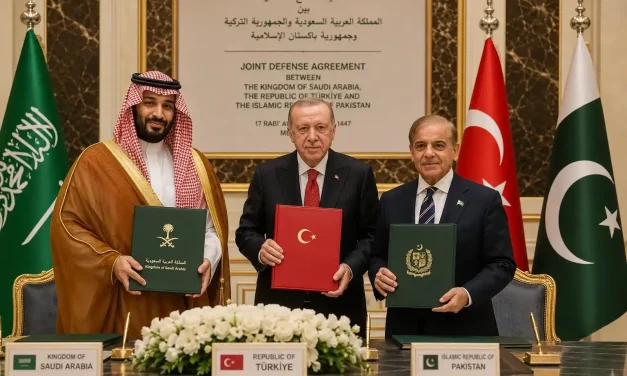
The Makkah Pact; Reasons for its Formation and Challenges Ahead

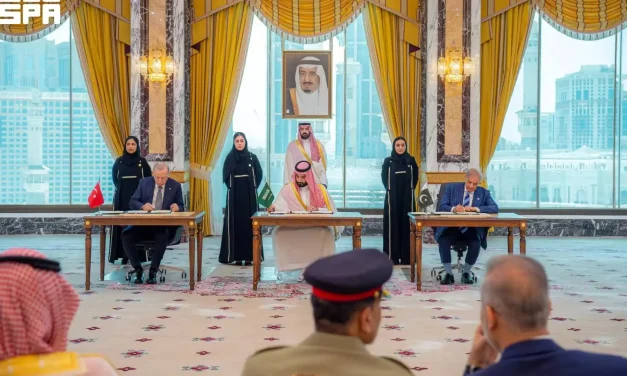
SCFR Online – Opinion: The Makkah Pact, signed between Saudi Arabia, Pakistan, and Turkey under the motto “an attack on one is an attack on all,” is viewed by some analysts less as a full-fledged military coalition and more as an attempt to reduce security dependence on an external power and to establish a regional security mechanism.

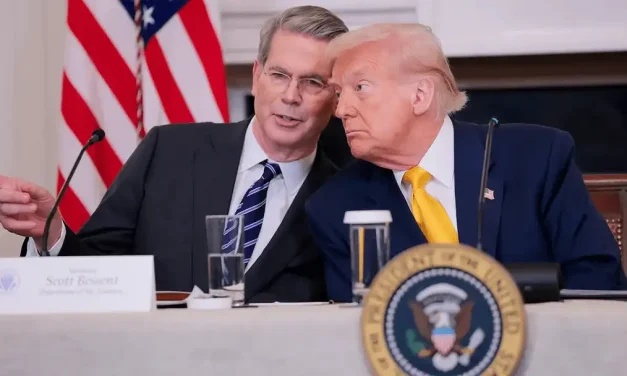
Implications of the US-Saudi Nuclear Agreement

SCFR Online – Opinion: The new US-Saudi nuclear agreement, despite legal and political ambiguities, could alter previous non-proliferation standards in West Asia and intensify nuclear competition, ushering it into a new phase.

An Analysis of Recent Turkey-Israeli Regime Tensions

SCFR Online – Opinion: Recent developments in Syria indicate an intensification of strategic rivalry between Turkey and the Israeli regime, but mutual considerations and the role of the United States have limited the likelihood of direct war.

Increasing criticism of the extensive Zionist lobby network

SCFR Online – Opinion: An examination of the mechanisms of the Israeli regime’s influence in the United States depicts a complex picture of shared interests, strategic dependencies, and the limitations of this relationship.

Realities of the Tripartite Makkah Pact

SCFR Online – Interview: The signing of the Makkah agreement between Saudi Arabia, Pakistan, and Turkey has raised questions about the future of the region’s security structure and the position of these countries in West Asian equations. Can this agreement become a genuine collective defense mechanism, or does it have more of a political and deterrent function than creating new military capacity?

Loading

Russia

The evolution of the crisis in Relations between Azerbaijan Republic and Armenia

The evolution of the crisis in Relations between Azerbaijan Republic and Armenia

Strategic Council Online – Despite the passage of months since the end of the 44-day war between Azerbaijan and Armenia, which began on September 27, 2020 and ended on November 10 with the signing of a tripartite statement by the presidents of Azerbaijan, Russia and the prime minister of Armenia, border clashes between the two sides continued and intensified in recent months; clashes that have resulted in the deaths of the military on both sides, while the two sides accuse each other of violating the peace agreement.
Hossein Asgarian – Tehran International Studies and Researc Institute (Abrar)

The maneuver of Russia, Tajikistan, Uzbekistan and common concerns about the spread of insecurity to Central Asia

The maneuver of Russia, Tajikistan, Uzbekistan and common concerns about the spread of insecurity to Central Asia

Strategic Council Online—Interview: A university professor said any instability and insecurity in Afghanistan can easily spread to Central Asian states and create numerous security challenges for them, adding that there is the concern that empowerment of a radical force in Afghanistan and or any other foreign instigation or movement can result in recruitment of social dissidents in Tajikistan and move this country towards serious challenges.

Interview with the deputy of Iran Cyber Defense Command (2)  A view to strategies of Iran and Europe to combat cyber attacks

Interview with the deputy of Iran Cyber Defense Command (2) A view to strategies of Iran and Europe to combat cyber attacks

Strategic Council Online—Interview: The deputy of Iran Cyber Defense Command referred to the main strategies of Iran to combat the cyber threats and attacks and said “Iran is emphasizing the establishment of a local and domestic cyber defense industry and production of cyber equipment using the capabilities of research and manufacturing sectors in order to support the use of cyber infrastructure and prevent cyber attacks by enemies.”

An Analysis of 2021 Document of Russia’s National Security Strategy Document

An Analysis of 2021 Document of Russia’s National Security Strategy Document

Strategic Council Online – A professor at the University of Tehran saying that the 2021 National Security Strategy document of Russia is seriously different from previous documents, listed the most important dimensions and clauses of that document, and said: What is important for Russia is the evolution of the international system that while it multiplies, it moves away from the west axis of the past, but at the same time, it creates a strong potential for insecurity, increases instability, intensifies radicalism, and complicates the threat environment for the world and for Russia.

Biden’s Different Tactics towards Syria

Biden’s Different Tactics towards Syria

Strategic Council Online – An expert on West Asia affairs, regarding the Biden administration’s view on the Syrian issue said: With the transfer of power from Republicans to Democrats, many analysts in the West Asian region have expressed optimism that the Syrian issue will be resolved through multilateral talks with actors involved in the crisis. In explaining the reasons for that, they have pointed to factors such as lack of priority of Syria for the United States, Biden’s announced policies focusing on East Asia and strategic competition with China and Russia, and the financial and military cost of the West Asian crisis for the United States.

Mutual Sanction of the US & China; Conceivable Scenarios

Mutual Sanction of the US & China; Conceivable Scenarios

Strategic Council Online: China has recently boycotted as many as 70 organs and citizens of the United States, among them Wilbur Ross, Secretary of Commerce of Donald Trump administration is seen. This is a reaction to the similar measure taken by the US to boycott seven Chinese authorities. The action-reaction measure is considered as the continuation of the trade war launched during the Trump administration. Now, the question is: What are the leverages and capabilities of the two countries? How this confrontation will proceed?
Reza Majidzade, Researcher, development political economics

Chinese Foreign Minister Visits Damascus; a New Strategy for Syria

Chinese Foreign Minister Visits Damascus; a New Strategy for Syria

Strategic Council Online – An expert on West Asia affairs said that the presence of the Chinese Foreign Minister in Damascus after 10 years could be a prelude to Beijing’s desire for a broad economic presence in Syria, adding: China sees Syria and especially reconstruction of that country as an opportunity to enhance its presence and influence in the Middle East.

Developments in Afghanistan and China’s Strategy

Developments in Afghanistan and China’s Strategy

Strategic Council Online – Although China has the shortest border length (76 km) with Afghanistan due to the “Wakhan Corridor”, it is one of its most important neighbors. Throughout history, Kabul has been one of the most prominent axes on the China Silk Road; even today, when Afghanistan is in a state of turmoil and the Taliban control much of the territory, it is doubly important to China, especially economically and in security dimension.
Hamid Khoshayand – International Affairs Analyst

The Cyber weakness and the US concern over Russia and China

The Cyber weakness and the US concern over Russia and China

Strategic Council Online—Interview: An expert of international issues says on the US concern about the Cyberwar with Russia that “in recent years, the issue of technological and cyber competition with Russia and even China is one of the most important issues in the domestic circles of the United States.”

Strategic goals and consequences of the misguided US policy in Afghanistan

Strategic goals and consequences of the misguided US policy in Afghanistan

Strategic Council Online—Interview: An expert of international issues says the United States irresponsible withdrawal of forces from Afghanistan has disrupted the relative stability in that country as the US is trying in addition to creating instability in the region, manage the Afghan crisis to create a threat for its rivals in the region.

أحدث الوظائف

The Makkah Pact; Reasons for its Formation and Challenges Ahead

SCFR Online – Opinion: The Makkah Pact, signed between Saudi Arabia, Pakistan, and Turkey under the motto “an attack on one is an attack on all,” is viewed by some analysts less as a full-fledged military coalition and more as an attempt to reduce security dependence on an external power and to establish a regional security mechanism.

Implications of the US-Saudi Nuclear Agreement

SCFR Online – Opinion: The new US-Saudi nuclear agreement, despite legal and political ambiguities, could alter previous non-proliferation standards in West Asia and intensify nuclear competition, ushering it into a new phase.

An Analysis of Recent Turkey-Israeli Regime Tensions

SCFR Online – Opinion: Recent developments in Syria indicate an intensification of strategic rivalry between Turkey and the Israeli regime, but mutual considerations and the role of the United States have limited the likelihood of direct war.

Increasing criticism of the extensive Zionist lobby network

SCFR Online – Opinion: An examination of the mechanisms of the Israeli regime’s influence in the United States depicts a complex picture of shared interests, strategic dependencies, and the limitations of this relationship.

Realities of the Tripartite Makkah Pact

SCFR Online – Interview: The signing of the Makkah agreement between Saudi Arabia, Pakistan, and Turkey has raised questions about the future of the region’s security structure and the position of these countries in West Asian equations. Can this agreement become a genuine collective defense mechanism, or does it have more of a political and deterrent function than creating new military capacity?

Loading

Russia

The evolution of the crisis in Relations between Azerbaijan Republic and Armenia

The evolution of the crisis in Relations between Azerbaijan Republic and Armenia

Strategic Council Online – Despite the passage of months since the end of the 44-day war between Azerbaijan and Armenia, which began on September 27, 2020 and ended on November 10 with the signing of a tripartite statement by the presidents of Azerbaijan, Russia and the prime minister of Armenia, border clashes between the two sides continued and intensified in recent months; clashes that have resulted in the deaths of the military on both sides, while the two sides accuse each other of violating the peace agreement.
Hossein Asgarian – Tehran International Studies and Researc Institute (Abrar)

The maneuver of Russia, Tajikistan, Uzbekistan and common concerns about the spread of insecurity to Central Asia

The maneuver of Russia, Tajikistan, Uzbekistan and common concerns about the spread of insecurity to Central Asia

Strategic Council Online—Interview: A university professor said any instability and insecurity in Afghanistan can easily spread to Central Asian states and create numerous security challenges for them, adding that there is the concern that empowerment of a radical force in Afghanistan and or any other foreign instigation or movement can result in recruitment of social dissidents in Tajikistan and move this country towards serious challenges.

Interview with the deputy of Iran Cyber Defense Command (2)  A view to strategies of Iran and Europe to combat cyber attacks

Interview with the deputy of Iran Cyber Defense Command (2) A view to strategies of Iran and Europe to combat cyber attacks

Strategic Council Online—Interview: The deputy of Iran Cyber Defense Command referred to the main strategies of Iran to combat the cyber threats and attacks and said “Iran is emphasizing the establishment of a local and domestic cyber defense industry and production of cyber equipment using the capabilities of research and manufacturing sectors in order to support the use of cyber infrastructure and prevent cyber attacks by enemies.”

An Analysis of 2021 Document of Russia’s National Security Strategy Document

An Analysis of 2021 Document of Russia’s National Security Strategy Document

Strategic Council Online – A professor at the University of Tehran saying that the 2021 National Security Strategy document of Russia is seriously different from previous documents, listed the most important dimensions and clauses of that document, and said: What is important for Russia is the evolution of the international system that while it multiplies, it moves away from the west axis of the past, but at the same time, it creates a strong potential for insecurity, increases instability, intensifies radicalism, and complicates the threat environment for the world and for Russia.

Biden’s Different Tactics towards Syria

Biden’s Different Tactics towards Syria

Strategic Council Online – An expert on West Asia affairs, regarding the Biden administration’s view on the Syrian issue said: With the transfer of power from Republicans to Democrats, many analysts in the West Asian region have expressed optimism that the Syrian issue will be resolved through multilateral talks with actors involved in the crisis. In explaining the reasons for that, they have pointed to factors such as lack of priority of Syria for the United States, Biden’s announced policies focusing on East Asia and strategic competition with China and Russia, and the financial and military cost of the West Asian crisis for the United States.

Mutual Sanction of the US & China; Conceivable Scenarios

Mutual Sanction of the US & China; Conceivable Scenarios

Strategic Council Online: China has recently boycotted as many as 70 organs and citizens of the United States, among them Wilbur Ross, Secretary of Commerce of Donald Trump administration is seen. This is a reaction to the similar measure taken by the US to boycott seven Chinese authorities. The action-reaction measure is considered as the continuation of the trade war launched during the Trump administration. Now, the question is: What are the leverages and capabilities of the two countries? How this confrontation will proceed?
Reza Majidzade, Researcher, development political economics

Chinese Foreign Minister Visits Damascus; a New Strategy for Syria

Chinese Foreign Minister Visits Damascus; a New Strategy for Syria

Strategic Council Online – An expert on West Asia affairs said that the presence of the Chinese Foreign Minister in Damascus after 10 years could be a prelude to Beijing’s desire for a broad economic presence in Syria, adding: China sees Syria and especially reconstruction of that country as an opportunity to enhance its presence and influence in the Middle East.

Developments in Afghanistan and China’s Strategy

Developments in Afghanistan and China’s Strategy

Strategic Council Online – Although China has the shortest border length (76 km) with Afghanistan due to the “Wakhan Corridor”, it is one of its most important neighbors. Throughout history, Kabul has been one of the most prominent axes on the China Silk Road; even today, when Afghanistan is in a state of turmoil and the Taliban control much of the territory, it is doubly important to China, especially economically and in security dimension.
Hamid Khoshayand – International Affairs Analyst

The Cyber weakness and the US concern over Russia and China

The Cyber weakness and the US concern over Russia and China

Strategic Council Online—Interview: An expert of international issues says on the US concern about the Cyberwar with Russia that “in recent years, the issue of technological and cyber competition with Russia and even China is one of the most important issues in the domestic circles of the United States.”

Strategic goals and consequences of the misguided US policy in Afghanistan

Strategic goals and consequences of the misguided US policy in Afghanistan

Strategic Council Online—Interview: An expert of international issues says the United States irresponsible withdrawal of forces from Afghanistan has disrupted the relative stability in that country as the US is trying in addition to creating instability in the region, manage the Afghan crisis to create a threat for its rivals in the region.

Russia

The evolution of the crisis in Relations between Azerbaijan Republic and Armenia

The evolution of the crisis in Relations between Azerbaijan Republic and Armenia

Strategic Council Online – Despite the passage of months since the end of the 44-day war between Azerbaijan and Armenia, which began on September 27, 2020 and ended on November 10 with the signing of a tripartite statement by the presidents of Azerbaijan, Russia and the prime minister of Armenia, border clashes between the two sides continued and intensified in recent months; clashes that have resulted in the deaths of the military on both sides, while the two sides accuse each other of violating the peace agreement.
Hossein Asgarian – Tehran International Studies and Researc Institute (Abrar)

The maneuver of Russia, Tajikistan, Uzbekistan and common concerns about the spread of insecurity to Central Asia

The maneuver of Russia, Tajikistan, Uzbekistan and common concerns about the spread of insecurity to Central Asia

Strategic Council Online—Interview: A university professor said any instability and insecurity in Afghanistan can easily spread to Central Asian states and create numerous security challenges for them, adding that there is the concern that empowerment of a radical force in Afghanistan and or any other foreign instigation or movement can result in recruitment of social dissidents in Tajikistan and move this country towards serious challenges.

Interview with the deputy of Iran Cyber Defense Command (2)  A view to strategies of Iran and Europe to combat cyber attacks

Interview with the deputy of Iran Cyber Defense Command (2) A view to strategies of Iran and Europe to combat cyber attacks

Strategic Council Online—Interview: The deputy of Iran Cyber Defense Command referred to the main strategies of Iran to combat the cyber threats and attacks and said “Iran is emphasizing the establishment of a local and domestic cyber defense industry and production of cyber equipment using the capabilities of research and manufacturing sectors in order to support the use of cyber infrastructure and prevent cyber attacks by enemies.”

An Analysis of 2021 Document of Russia’s National Security Strategy Document

An Analysis of 2021 Document of Russia’s National Security Strategy Document

Strategic Council Online – A professor at the University of Tehran saying that the 2021 National Security Strategy document of Russia is seriously different from previous documents, listed the most important dimensions and clauses of that document, and said: What is important for Russia is the evolution of the international system that while it multiplies, it moves away from the west axis of the past, but at the same time, it creates a strong potential for insecurity, increases instability, intensifies radicalism, and complicates the threat environment for the world and for Russia.

Biden’s Different Tactics towards Syria

Biden’s Different Tactics towards Syria

Strategic Council Online – An expert on West Asia affairs, regarding the Biden administration’s view on the Syrian issue said: With the transfer of power from Republicans to Democrats, many analysts in the West Asian region have expressed optimism that the Syrian issue will be resolved through multilateral talks with actors involved in the crisis. In explaining the reasons for that, they have pointed to factors such as lack of priority of Syria for the United States, Biden’s announced policies focusing on East Asia and strategic competition with China and Russia, and the financial and military cost of the West Asian crisis for the United States.

Mutual Sanction of the US & China; Conceivable Scenarios

Mutual Sanction of the US & China; Conceivable Scenarios

Strategic Council Online: China has recently boycotted as many as 70 organs and citizens of the United States, among them Wilbur Ross, Secretary of Commerce of Donald Trump administration is seen. This is a reaction to the similar measure taken by the US to boycott seven Chinese authorities. The action-reaction measure is considered as the continuation of the trade war launched during the Trump administration. Now, the question is: What are the leverages and capabilities of the two countries? How this confrontation will proceed?
Reza Majidzade, Researcher, development political economics

Chinese Foreign Minister Visits Damascus; a New Strategy for Syria

Chinese Foreign Minister Visits Damascus; a New Strategy for Syria

Strategic Council Online – An expert on West Asia affairs said that the presence of the Chinese Foreign Minister in Damascus after 10 years could be a prelude to Beijing’s desire for a broad economic presence in Syria, adding: China sees Syria and especially reconstruction of that country as an opportunity to enhance its presence and influence in the Middle East.

Developments in Afghanistan and China’s Strategy

Developments in Afghanistan and China’s Strategy

Strategic Council Online – Although China has the shortest border length (76 km) with Afghanistan due to the “Wakhan Corridor”, it is one of its most important neighbors. Throughout history, Kabul has been one of the most prominent axes on the China Silk Road; even today, when Afghanistan is in a state of turmoil and the Taliban control much of the territory, it is doubly important to China, especially economically and in security dimension.
Hamid Khoshayand – International Affairs Analyst

The Cyber weakness and the US concern over Russia and China

The Cyber weakness and the US concern over Russia and China

Strategic Council Online—Interview: An expert of international issues says on the US concern about the Cyberwar with Russia that “in recent years, the issue of technological and cyber competition with Russia and even China is one of the most important issues in the domestic circles of the United States.”

Strategic goals and consequences of the misguided US policy in Afghanistan

Strategic goals and consequences of the misguided US policy in Afghanistan

Strategic Council Online—Interview: An expert of international issues says the United States irresponsible withdrawal of forces from Afghanistan has disrupted the relative stability in that country as the US is trying in addition to creating instability in the region, manage the Afghan crisis to create a threat for its rivals in the region.

LATEST CONTENT

The Makkah Pact; Reasons for its Formation and Challenges Ahead

SCFR Online – Opinion: The Makkah Pact, signed between Saudi Arabia, Pakistan, and Turkey under the motto “an attack on one is an attack on all,” is viewed by some analysts less as a full-fledged military coalition and more as an attempt to reduce security dependence on an external power and to establish a regional security mechanism.

Implications of the US-Saudi Nuclear Agreement

SCFR Online – Opinion: The new US-Saudi nuclear agreement, despite legal and political ambiguities, could alter previous non-proliferation standards in West Asia and intensify nuclear competition, ushering it into a new phase.

An Analysis of Recent Turkey-Israeli Regime Tensions

SCFR Online – Opinion: Recent developments in Syria indicate an intensification of strategic rivalry between Turkey and the Israeli regime, but mutual considerations and the role of the United States have limited the likelihood of direct war.

Increasing criticism of the extensive Zionist lobby network

SCFR Online – Opinion: An examination of the mechanisms of the Israeli regime’s influence in the United States depicts a complex picture of shared interests, strategic dependencies, and the limitations of this relationship.

Realities of the Tripartite Makkah Pact

SCFR Online – Interview: The signing of the Makkah agreement between Saudi Arabia, Pakistan, and Turkey has raised questions about the future of the region’s security structure and the position of these countries in West Asian equations. Can this agreement become a genuine collective defense mechanism, or does it have more of a political and deterrent function than creating new military capacity?

Loading

Russia

The evolution of the crisis in Relations between Azerbaijan Republic and Armenia

The evolution of the crisis in Relations between Azerbaijan Republic and Armenia

Strategic Council Online – Despite the passage of months since the end of the 44-day war between Azerbaijan and Armenia, which began on September 27, 2020 and ended on November 10 with the signing of a tripartite statement by the presidents of Azerbaijan, Russia and the prime minister of Armenia, border clashes between the two sides continued and intensified in recent months; clashes that have resulted in the deaths of the military on both sides, while the two sides accuse each other of violating the peace agreement.
Hossein Asgarian – Tehran International Studies and Researc Institute (Abrar)

The maneuver of Russia, Tajikistan, Uzbekistan and common concerns about the spread of insecurity to Central Asia

The maneuver of Russia, Tajikistan, Uzbekistan and common concerns about the spread of insecurity to Central Asia

Strategic Council Online—Interview: A university professor said any instability and insecurity in Afghanistan can easily spread to Central Asian states and create numerous security challenges for them, adding that there is the concern that empowerment of a radical force in Afghanistan and or any other foreign instigation or movement can result in recruitment of social dissidents in Tajikistan and move this country towards serious challenges.

Interview with the deputy of Iran Cyber Defense Command (2)  A view to strategies of Iran and Europe to combat cyber attacks

Interview with the deputy of Iran Cyber Defense Command (2) A view to strategies of Iran and Europe to combat cyber attacks

Strategic Council Online—Interview: The deputy of Iran Cyber Defense Command referred to the main strategies of Iran to combat the cyber threats and attacks and said “Iran is emphasizing the establishment of a local and domestic cyber defense industry and production of cyber equipment using the capabilities of research and manufacturing sectors in order to support the use of cyber infrastructure and prevent cyber attacks by enemies.”

An Analysis of 2021 Document of Russia’s National Security Strategy Document

An Analysis of 2021 Document of Russia’s National Security Strategy Document

Strategic Council Online – A professor at the University of Tehran saying that the 2021 National Security Strategy document of Russia is seriously different from previous documents, listed the most important dimensions and clauses of that document, and said: What is important for Russia is the evolution of the international system that while it multiplies, it moves away from the west axis of the past, but at the same time, it creates a strong potential for insecurity, increases instability, intensifies radicalism, and complicates the threat environment for the world and for Russia.

Biden’s Different Tactics towards Syria

Biden’s Different Tactics towards Syria

Strategic Council Online – An expert on West Asia affairs, regarding the Biden administration’s view on the Syrian issue said: With the transfer of power from Republicans to Democrats, many analysts in the West Asian region have expressed optimism that the Syrian issue will be resolved through multilateral talks with actors involved in the crisis. In explaining the reasons for that, they have pointed to factors such as lack of priority of Syria for the United States, Biden’s announced policies focusing on East Asia and strategic competition with China and Russia, and the financial and military cost of the West Asian crisis for the United States.

Mutual Sanction of the US & China; Conceivable Scenarios

Mutual Sanction of the US & China; Conceivable Scenarios

Strategic Council Online: China has recently boycotted as many as 70 organs and citizens of the United States, among them Wilbur Ross, Secretary of Commerce of Donald Trump administration is seen. This is a reaction to the similar measure taken by the US to boycott seven Chinese authorities. The action-reaction measure is considered as the continuation of the trade war launched during the Trump administration. Now, the question is: What are the leverages and capabilities of the two countries? How this confrontation will proceed?
Reza Majidzade, Researcher, development political economics

Chinese Foreign Minister Visits Damascus; a New Strategy for Syria

Chinese Foreign Minister Visits Damascus; a New Strategy for Syria

Strategic Council Online – An expert on West Asia affairs said that the presence of the Chinese Foreign Minister in Damascus after 10 years could be a prelude to Beijing’s desire for a broad economic presence in Syria, adding: China sees Syria and especially reconstruction of that country as an opportunity to enhance its presence and influence in the Middle East.

Developments in Afghanistan and China’s Strategy

Developments in Afghanistan and China’s Strategy

Strategic Council Online – Although China has the shortest border length (76 km) with Afghanistan due to the “Wakhan Corridor”, it is one of its most important neighbors. Throughout history, Kabul has been one of the most prominent axes on the China Silk Road; even today, when Afghanistan is in a state of turmoil and the Taliban control much of the territory, it is doubly important to China, especially economically and in security dimension.
Hamid Khoshayand – International Affairs Analyst

The Cyber weakness and the US concern over Russia and China

The Cyber weakness and the US concern over Russia and China

Strategic Council Online—Interview: An expert of international issues says on the US concern about the Cyberwar with Russia that “in recent years, the issue of technological and cyber competition with Russia and even China is one of the most important issues in the domestic circles of the United States.”

Strategic goals and consequences of the misguided US policy in Afghanistan

Strategic goals and consequences of the misguided US policy in Afghanistan

Strategic Council Online—Interview: An expert of international issues says the United States irresponsible withdrawal of forces from Afghanistan has disrupted the relative stability in that country as the US is trying in addition to creating instability in the region, manage the Afghan crisis to create a threat for its rivals in the region.

ÚLTIMAS PUBLICACIONES

The Makkah Pact; Reasons for its Formation and Challenges Ahead

SCFR Online – Opinion: The Makkah Pact, signed between Saudi Arabia, Pakistan, and Turkey under the motto “an attack on one is an attack on all,” is viewed by some analysts less as a full-fledged military coalition and more as an attempt to reduce security dependence on an external power and to establish a regional security mechanism.

Implications of the US-Saudi Nuclear Agreement

SCFR Online – Opinion: The new US-Saudi nuclear agreement, despite legal and political ambiguities, could alter previous non-proliferation standards in West Asia and intensify nuclear competition, ushering it into a new phase.

An Analysis of Recent Turkey-Israeli Regime Tensions

SCFR Online – Opinion: Recent developments in Syria indicate an intensification of strategic rivalry between Turkey and the Israeli regime, but mutual considerations and the role of the United States have limited the likelihood of direct war.

Increasing criticism of the extensive Zionist lobby network

SCFR Online – Opinion: An examination of the mechanisms of the Israeli regime’s influence in the United States depicts a complex picture of shared interests, strategic dependencies, and the limitations of this relationship.

Realities of the Tripartite Makkah Pact

SCFR Online – Interview: The signing of the Makkah agreement between Saudi Arabia, Pakistan, and Turkey has raised questions about the future of the region’s security structure and the position of these countries in West Asian equations. Can this agreement become a genuine collective defense mechanism, or does it have more of a political and deterrent function than creating new military capacity?

Loading

Russia

The evolution of the crisis in Relations between Azerbaijan Republic and Armenia

The evolution of the crisis in Relations between Azerbaijan Republic and Armenia

Strategic Council Online – Despite the passage of months since the end of the 44-day war between Azerbaijan and Armenia, which began on September 27, 2020 and ended on November 10 with the signing of a tripartite statement by the presidents of Azerbaijan, Russia and the prime minister of Armenia, border clashes between the two sides continued and intensified in recent months; clashes that have resulted in the deaths of the military on both sides, while the two sides accuse each other of violating the peace agreement.
Hossein Asgarian – Tehran International Studies and Researc Institute (Abrar)

The maneuver of Russia, Tajikistan, Uzbekistan and common concerns about the spread of insecurity to Central Asia

The maneuver of Russia, Tajikistan, Uzbekistan and common concerns about the spread of insecurity to Central Asia

Strategic Council Online—Interview: A university professor said any instability and insecurity in Afghanistan can easily spread to Central Asian states and create numerous security challenges for them, adding that there is the concern that empowerment of a radical force in Afghanistan and or any other foreign instigation or movement can result in recruitment of social dissidents in Tajikistan and move this country towards serious challenges.

Interview with the deputy of Iran Cyber Defense Command (2)  A view to strategies of Iran and Europe to combat cyber attacks

Interview with the deputy of Iran Cyber Defense Command (2) A view to strategies of Iran and Europe to combat cyber attacks

Strategic Council Online—Interview: The deputy of Iran Cyber Defense Command referred to the main strategies of Iran to combat the cyber threats and attacks and said “Iran is emphasizing the establishment of a local and domestic cyber defense industry and production of cyber equipment using the capabilities of research and manufacturing sectors in order to support the use of cyber infrastructure and prevent cyber attacks by enemies.”

An Analysis of 2021 Document of Russia’s National Security Strategy Document

An Analysis of 2021 Document of Russia’s National Security Strategy Document

Strategic Council Online – A professor at the University of Tehran saying that the 2021 National Security Strategy document of Russia is seriously different from previous documents, listed the most important dimensions and clauses of that document, and said: What is important for Russia is the evolution of the international system that while it multiplies, it moves away from the west axis of the past, but at the same time, it creates a strong potential for insecurity, increases instability, intensifies radicalism, and complicates the threat environment for the world and for Russia.

Biden’s Different Tactics towards Syria

Biden’s Different Tactics towards Syria

Strategic Council Online – An expert on West Asia affairs, regarding the Biden administration’s view on the Syrian issue said: With the transfer of power from Republicans to Democrats, many analysts in the West Asian region have expressed optimism that the Syrian issue will be resolved through multilateral talks with actors involved in the crisis. In explaining the reasons for that, they have pointed to factors such as lack of priority of Syria for the United States, Biden’s announced policies focusing on East Asia and strategic competition with China and Russia, and the financial and military cost of the West Asian crisis for the United States.

Mutual Sanction of the US & China; Conceivable Scenarios

Mutual Sanction of the US & China; Conceivable Scenarios

Strategic Council Online: China has recently boycotted as many as 70 organs and citizens of the United States, among them Wilbur Ross, Secretary of Commerce of Donald Trump administration is seen. This is a reaction to the similar measure taken by the US to boycott seven Chinese authorities. The action-reaction measure is considered as the continuation of the trade war launched during the Trump administration. Now, the question is: What are the leverages and capabilities of the two countries? How this confrontation will proceed?
Reza Majidzade, Researcher, development political economics

Chinese Foreign Minister Visits Damascus; a New Strategy for Syria

Chinese Foreign Minister Visits Damascus; a New Strategy for Syria

Strategic Council Online – An expert on West Asia affairs said that the presence of the Chinese Foreign Minister in Damascus after 10 years could be a prelude to Beijing’s desire for a broad economic presence in Syria, adding: China sees Syria and especially reconstruction of that country as an opportunity to enhance its presence and influence in the Middle East.

Developments in Afghanistan and China’s Strategy

Developments in Afghanistan and China’s Strategy

Strategic Council Online – Although China has the shortest border length (76 km) with Afghanistan due to the “Wakhan Corridor”, it is one of its most important neighbors. Throughout history, Kabul has been one of the most prominent axes on the China Silk Road; even today, when Afghanistan is in a state of turmoil and the Taliban control much of the territory, it is doubly important to China, especially economically and in security dimension.
Hamid Khoshayand – International Affairs Analyst

The Cyber weakness and the US concern over Russia and China

The Cyber weakness and the US concern over Russia and China

Strategic Council Online—Interview: An expert of international issues says on the US concern about the Cyberwar with Russia that “in recent years, the issue of technological and cyber competition with Russia and even China is one of the most important issues in the domestic circles of the United States.”

Strategic goals and consequences of the misguided US policy in Afghanistan

Strategic goals and consequences of the misguided US policy in Afghanistan

Strategic Council Online—Interview: An expert of international issues says the United States irresponsible withdrawal of forces from Afghanistan has disrupted the relative stability in that country as the US is trying in addition to creating instability in the region, manage the Afghan crisis to create a threat for its rivals in the region.

ÚLTIMAS PUBLICACIONES

The Makkah Pact; Reasons for its Formation and Challenges Ahead

SCFR Online – Opinion: The Makkah Pact, signed between Saudi Arabia, Pakistan, and Turkey under the motto “an attack on one is an attack on all,” is viewed by some analysts less as a full-fledged military coalition and more as an attempt to reduce security dependence on an external power and to establish a regional security mechanism.

Implications of the US-Saudi Nuclear Agreement

SCFR Online – Opinion: The new US-Saudi nuclear agreement, despite legal and political ambiguities, could alter previous non-proliferation standards in West Asia and intensify nuclear competition, ushering it into a new phase.

An Analysis of Recent Turkey-Israeli Regime Tensions

SCFR Online – Opinion: Recent developments in Syria indicate an intensification of strategic rivalry between Turkey and the Israeli regime, but mutual considerations and the role of the United States have limited the likelihood of direct war.

Increasing criticism of the extensive Zionist lobby network

SCFR Online – Opinion: An examination of the mechanisms of the Israeli regime’s influence in the United States depicts a complex picture of shared interests, strategic dependencies, and the limitations of this relationship.

Realities of the Tripartite Makkah Pact

SCFR Online – Interview: The signing of the Makkah agreement between Saudi Arabia, Pakistan, and Turkey has raised questions about the future of the region’s security structure and the position of these countries in West Asian equations. Can this agreement become a genuine collective defense mechanism, or does it have more of a political and deterrent function than creating new military capacity?

Loading

Russia

The evolution of the crisis in Relations between Azerbaijan Republic and Armenia

The evolution of the crisis in Relations between Azerbaijan Republic and Armenia

Strategic Council Online – Despite the passage of months since the end of the 44-day war between Azerbaijan and Armenia, which began on September 27, 2020 and ended on November 10 with the signing of a tripartite statement by the presidents of Azerbaijan, Russia and the prime minister of Armenia, border clashes between the two sides continued and intensified in recent months; clashes that have resulted in the deaths of the military on both sides, while the two sides accuse each other of violating the peace agreement.
Hossein Asgarian – Tehran International Studies and Researc Institute (Abrar)

The maneuver of Russia, Tajikistan, Uzbekistan and common concerns about the spread of insecurity to Central Asia

The maneuver of Russia, Tajikistan, Uzbekistan and common concerns about the spread of insecurity to Central Asia

Strategic Council Online—Interview: A university professor said any instability and insecurity in Afghanistan can easily spread to Central Asian states and create numerous security challenges for them, adding that there is the concern that empowerment of a radical force in Afghanistan and or any other foreign instigation or movement can result in recruitment of social dissidents in Tajikistan and move this country towards serious challenges.

Interview with the deputy of Iran Cyber Defense Command (2)  A view to strategies of Iran and Europe to combat cyber attacks

Interview with the deputy of Iran Cyber Defense Command (2) A view to strategies of Iran and Europe to combat cyber attacks

Strategic Council Online—Interview: The deputy of Iran Cyber Defense Command referred to the main strategies of Iran to combat the cyber threats and attacks and said “Iran is emphasizing the establishment of a local and domestic cyber defense industry and production of cyber equipment using the capabilities of research and manufacturing sectors in order to support the use of cyber infrastructure and prevent cyber attacks by enemies.”

An Analysis of 2021 Document of Russia’s National Security Strategy Document

An Analysis of 2021 Document of Russia’s National Security Strategy Document

Strategic Council Online – A professor at the University of Tehran saying that the 2021 National Security Strategy document of Russia is seriously different from previous documents, listed the most important dimensions and clauses of that document, and said: What is important for Russia is the evolution of the international system that while it multiplies, it moves away from the west axis of the past, but at the same time, it creates a strong potential for insecurity, increases instability, intensifies radicalism, and complicates the threat environment for the world and for Russia.

Biden’s Different Tactics towards Syria

Biden’s Different Tactics towards Syria

Strategic Council Online – An expert on West Asia affairs, regarding the Biden administration’s view on the Syrian issue said: With the transfer of power from Republicans to Democrats, many analysts in the West Asian region have expressed optimism that the Syrian issue will be resolved through multilateral talks with actors involved in the crisis. In explaining the reasons for that, they have pointed to factors such as lack of priority of Syria for the United States, Biden’s announced policies focusing on East Asia and strategic competition with China and Russia, and the financial and military cost of the West Asian crisis for the United States.

Mutual Sanction of the US & China; Conceivable Scenarios

Mutual Sanction of the US & China; Conceivable Scenarios

Strategic Council Online: China has recently boycotted as many as 70 organs and citizens of the United States, among them Wilbur Ross, Secretary of Commerce of Donald Trump administration is seen. This is a reaction to the similar measure taken by the US to boycott seven Chinese authorities. The action-reaction measure is considered as the continuation of the trade war launched during the Trump administration. Now, the question is: What are the leverages and capabilities of the two countries? How this confrontation will proceed?
Reza Majidzade, Researcher, development political economics

Chinese Foreign Minister Visits Damascus; a New Strategy for Syria

Chinese Foreign Minister Visits Damascus; a New Strategy for Syria

Strategic Council Online – An expert on West Asia affairs said that the presence of the Chinese Foreign Minister in Damascus after 10 years could be a prelude to Beijing’s desire for a broad economic presence in Syria, adding: China sees Syria and especially reconstruction of that country as an opportunity to enhance its presence and influence in the Middle East.

Developments in Afghanistan and China’s Strategy

Developments in Afghanistan and China’s Strategy

Strategic Council Online – Although China has the shortest border length (76 km) with Afghanistan due to the “Wakhan Corridor”, it is one of its most important neighbors. Throughout history, Kabul has been one of the most prominent axes on the China Silk Road; even today, when Afghanistan is in a state of turmoil and the Taliban control much of the territory, it is doubly important to China, especially economically and in security dimension.
Hamid Khoshayand – International Affairs Analyst

The Cyber weakness and the US concern over Russia and China

The Cyber weakness and the US concern over Russia and China

Strategic Council Online—Interview: An expert of international issues says on the US concern about the Cyberwar with Russia that “in recent years, the issue of technological and cyber competition with Russia and even China is one of the most important issues in the domestic circles of the United States.”

Strategic goals and consequences of the misguided US policy in Afghanistan

Strategic goals and consequences of the misguided US policy in Afghanistan

Strategic Council Online—Interview: An expert of international issues says the United States irresponsible withdrawal of forces from Afghanistan has disrupted the relative stability in that country as the US is trying in addition to creating instability in the region, manage the Afghan crisis to create a threat for its rivals in the region.

ÚLTIMAS PUBLICACIONES

The Makkah Pact; Reasons for its Formation and Challenges Ahead

SCFR Online – Opinion: The Makkah Pact, signed between Saudi Arabia, Pakistan, and Turkey under the motto “an attack on one is an attack on all,” is viewed by some analysts less as a full-fledged military coalition and more as an attempt to reduce security dependence on an external power and to establish a regional security mechanism.

Implications of the US-Saudi Nuclear Agreement

SCFR Online – Opinion: The new US-Saudi nuclear agreement, despite legal and political ambiguities, could alter previous non-proliferation standards in West Asia and intensify nuclear competition, ushering it into a new phase.

An Analysis of Recent Turkey-Israeli Regime Tensions

SCFR Online – Opinion: Recent developments in Syria indicate an intensification of strategic rivalry between Turkey and the Israeli regime, but mutual considerations and the role of the United States have limited the likelihood of direct war.

Increasing criticism of the extensive Zionist lobby network

SCFR Online – Opinion: An examination of the mechanisms of the Israeli regime’s influence in the United States depicts a complex picture of shared interests, strategic dependencies, and the limitations of this relationship.

Realities of the Tripartite Makkah Pact

SCFR Online – Interview: The signing of the Makkah agreement between Saudi Arabia, Pakistan, and Turkey has raised questions about the future of the region’s security structure and the position of these countries in West Asian equations. Can this agreement become a genuine collective defense mechanism, or does it have more of a political and deterrent function than creating new military capacity?

Loading

Russia

The evolution of the crisis in Relations between Azerbaijan Republic and Armenia

The evolution of the crisis in Relations between Azerbaijan Republic and Armenia

Strategic Council Online – Despite the passage of months since the end of the 44-day war between Azerbaijan and Armenia, which began on September 27, 2020 and ended on November 10 with the signing of a tripartite statement by the presidents of Azerbaijan, Russia and the prime minister of Armenia, border clashes between the two sides continued and intensified in recent months; clashes that have resulted in the deaths of the military on both sides, while the two sides accuse each other of violating the peace agreement.
Hossein Asgarian – Tehran International Studies and Researc Institute (Abrar)

The maneuver of Russia, Tajikistan, Uzbekistan and common concerns about the spread of insecurity to Central Asia

The maneuver of Russia, Tajikistan, Uzbekistan and common concerns about the spread of insecurity to Central Asia

Strategic Council Online—Interview: A university professor said any instability and insecurity in Afghanistan can easily spread to Central Asian states and create numerous security challenges for them, adding that there is the concern that empowerment of a radical force in Afghanistan and or any other foreign instigation or movement can result in recruitment of social dissidents in Tajikistan and move this country towards serious challenges.

Interview with the deputy of Iran Cyber Defense Command (2)  A view to strategies of Iran and Europe to combat cyber attacks

Interview with the deputy of Iran Cyber Defense Command (2) A view to strategies of Iran and Europe to combat cyber attacks

Strategic Council Online—Interview: The deputy of Iran Cyber Defense Command referred to the main strategies of Iran to combat the cyber threats and attacks and said “Iran is emphasizing the establishment of a local and domestic cyber defense industry and production of cyber equipment using the capabilities of research and manufacturing sectors in order to support the use of cyber infrastructure and prevent cyber attacks by enemies.”

An Analysis of 2021 Document of Russia’s National Security Strategy Document

An Analysis of 2021 Document of Russia’s National Security Strategy Document

Strategic Council Online – A professor at the University of Tehran saying that the 2021 National Security Strategy document of Russia is seriously different from previous documents, listed the most important dimensions and clauses of that document, and said: What is important for Russia is the evolution of the international system that while it multiplies, it moves away from the west axis of the past, but at the same time, it creates a strong potential for insecurity, increases instability, intensifies radicalism, and complicates the threat environment for the world and for Russia.

Biden’s Different Tactics towards Syria

Biden’s Different Tactics towards Syria

Strategic Council Online – An expert on West Asia affairs, regarding the Biden administration’s view on the Syrian issue said: With the transfer of power from Republicans to Democrats, many analysts in the West Asian region have expressed optimism that the Syrian issue will be resolved through multilateral talks with actors involved in the crisis. In explaining the reasons for that, they have pointed to factors such as lack of priority of Syria for the United States, Biden’s announced policies focusing on East Asia and strategic competition with China and Russia, and the financial and military cost of the West Asian crisis for the United States.

Mutual Sanction of the US & China; Conceivable Scenarios

Mutual Sanction of the US & China; Conceivable Scenarios

Strategic Council Online: China has recently boycotted as many as 70 organs and citizens of the United States, among them Wilbur Ross, Secretary of Commerce of Donald Trump administration is seen. This is a reaction to the similar measure taken by the US to boycott seven Chinese authorities. The action-reaction measure is considered as the continuation of the trade war launched during the Trump administration. Now, the question is: What are the leverages and capabilities of the two countries? How this confrontation will proceed?
Reza Majidzade, Researcher, development political economics

Chinese Foreign Minister Visits Damascus; a New Strategy for Syria

Chinese Foreign Minister Visits Damascus; a New Strategy for Syria

Strategic Council Online – An expert on West Asia affairs said that the presence of the Chinese Foreign Minister in Damascus after 10 years could be a prelude to Beijing’s desire for a broad economic presence in Syria, adding: China sees Syria and especially reconstruction of that country as an opportunity to enhance its presence and influence in the Middle East.

Developments in Afghanistan and China’s Strategy

Developments in Afghanistan and China’s Strategy

Strategic Council Online – Although China has the shortest border length (76 km) with Afghanistan due to the “Wakhan Corridor”, it is one of its most important neighbors. Throughout history, Kabul has been one of the most prominent axes on the China Silk Road; even today, when Afghanistan is in a state of turmoil and the Taliban control much of the territory, it is doubly important to China, especially economically and in security dimension.
Hamid Khoshayand – International Affairs Analyst

The Cyber weakness and the US concern over Russia and China

The Cyber weakness and the US concern over Russia and China

Strategic Council Online—Interview: An expert of international issues says on the US concern about the Cyberwar with Russia that “in recent years, the issue of technological and cyber competition with Russia and even China is one of the most important issues in the domestic circles of the United States.”

Strategic goals and consequences of the misguided US policy in Afghanistan

Strategic goals and consequences of the misguided US policy in Afghanistan

Strategic Council Online—Interview: An expert of international issues says the United States irresponsible withdrawal of forces from Afghanistan has disrupted the relative stability in that country as the US is trying in addition to creating instability in the region, manage the Afghan crisis to create a threat for its rivals in the region.

ÚLTIMAS PUBLICACIONES

The Makkah Pact; Reasons for its Formation and Challenges Ahead

SCFR Online – Opinion: The Makkah Pact, signed between Saudi Arabia, Pakistan, and Turkey under the motto “an attack on one is an attack on all,” is viewed by some analysts less as a full-fledged military coalition and more as an attempt to reduce security dependence on an external power and to establish a regional security mechanism.

Implications of the US-Saudi Nuclear Agreement

SCFR Online – Opinion: The new US-Saudi nuclear agreement, despite legal and political ambiguities, could alter previous non-proliferation standards in West Asia and intensify nuclear competition, ushering it into a new phase.

An Analysis of Recent Turkey-Israeli Regime Tensions

SCFR Online – Opinion: Recent developments in Syria indicate an intensification of strategic rivalry between Turkey and the Israeli regime, but mutual considerations and the role of the United States have limited the likelihood of direct war.

Increasing criticism of the extensive Zionist lobby network

SCFR Online – Opinion: An examination of the mechanisms of the Israeli regime’s influence in the United States depicts a complex picture of shared interests, strategic dependencies, and the limitations of this relationship.

Realities of the Tripartite Makkah Pact

SCFR Online – Interview: The signing of the Makkah agreement between Saudi Arabia, Pakistan, and Turkey has raised questions about the future of the region’s security structure and the position of these countries in West Asian equations. Can this agreement become a genuine collective defense mechanism, or does it have more of a political and deterrent function than creating new military capacity?

Loading