جدیدترین مطالب

China’s Rejection of US Sanctions; Strengthening Iran’s Geopolitical Leverage

SCFR Online – Opinion: Concurrent with the official commencement of the United States’ economic war against our country, focusing on sanctions instruments, isolation, and economic pressure, what has now become increasingly important is the lack of alignment of other major global powers, especially China, with this policy.

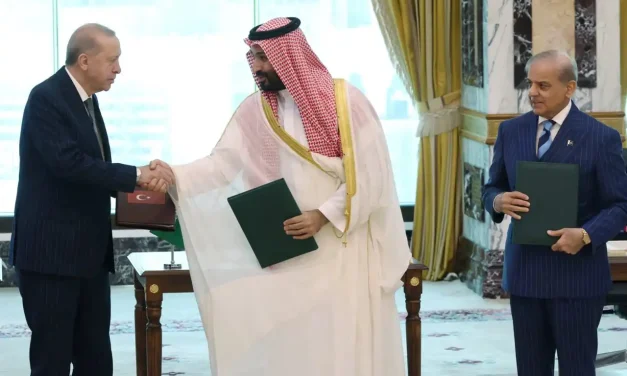
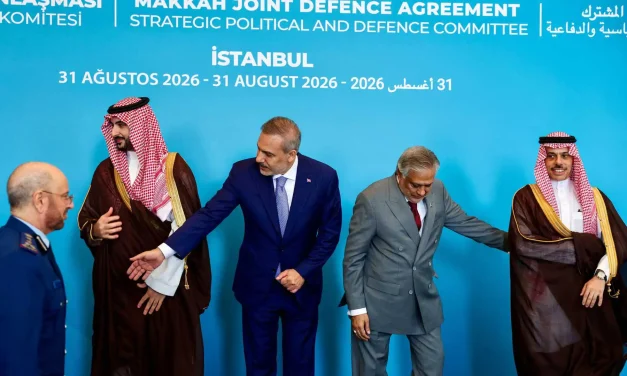
The Makkah Pact; Reasons for its Formation and Challenges Ahead

SCFR Online – Opinion: The Makkah Pact, signed between Saudi Arabia, Pakistan, and Turkey under the motto “an attack on one is an attack on all,” is viewed by some analysts less as a full-fledged military coalition and more as an attempt to reduce security dependence on an external power and to establish a regional security mechanism.

Implications of the US-Saudi Nuclear Agreement

SCFR Online – Opinion: The new US-Saudi nuclear agreement, despite legal and political ambiguities, could alter previous non-proliferation standards in West Asia and intensify nuclear competition, ushering it into a new phase.

An Analysis of Recent Turkey-Israeli Regime Tensions

SCFR Online – Opinion: Recent developments in Syria indicate an intensification of strategic rivalry between Turkey and the Israeli regime, but mutual considerations and the role of the United States have limited the likelihood of direct war.

Loading

START II

U.S. Concern about China’s Nuclear Reinforcement

U.S. Concern about China’s Nuclear Reinforcement

Strategic Council Online- Note: Development of 110 nuclear power plants by 2030 is one of the macro-investment projects of China, which has caused another field of contradiction of interests between China and the U.S.
Reza Majidzadeh, Director of Simorgh Development Group, Passargad Millennium Plan think-tank

Reasons and Consequences of the US opposition to extending START II

Reasons and Consequences of the US opposition to extending START II

Strategic Council Online -Opinion: Killing START II would mean that Russia and the United States consider no limit whatsoever on developing nuclear weapons and there exists the possibility that the American side especially would make efforts to achieve new progress and development in the area of nuclear weapons or increase the number of American nuclear missiles and weapons.
Shoayb Bahman—Expert of Russia relations

أحدث الوظائف

China’s Rejection of US Sanctions; Strengthening Iran’s Geopolitical Leverage

SCFR Online – Opinion: Concurrent with the official commencement of the United States’ economic war against our country, focusing on sanctions instruments, isolation, and economic pressure, what has now become increasingly important is the lack of alignment of other major global powers, especially China, with this policy.

The Makkah Pact; Reasons for its Formation and Challenges Ahead

SCFR Online – Opinion: The Makkah Pact, signed between Saudi Arabia, Pakistan, and Turkey under the motto “an attack on one is an attack on all,” is viewed by some analysts less as a full-fledged military coalition and more as an attempt to reduce security dependence on an external power and to establish a regional security mechanism.

Implications of the US-Saudi Nuclear Agreement

SCFR Online – Opinion: The new US-Saudi nuclear agreement, despite legal and political ambiguities, could alter previous non-proliferation standards in West Asia and intensify nuclear competition, ushering it into a new phase.

An Analysis of Recent Turkey-Israeli Regime Tensions

SCFR Online – Opinion: Recent developments in Syria indicate an intensification of strategic rivalry between Turkey and the Israeli regime, but mutual considerations and the role of the United States have limited the likelihood of direct war.

Loading

START II

U.S. Concern about China’s Nuclear Reinforcement

U.S. Concern about China’s Nuclear Reinforcement

Strategic Council Online- Note: Development of 110 nuclear power plants by 2030 is one of the macro-investment projects of China, which has caused another field of contradiction of interests between China and the U.S.
Reza Majidzadeh, Director of Simorgh Development Group, Passargad Millennium Plan think-tank

Reasons and Consequences of the US opposition to extending START II

Reasons and Consequences of the US opposition to extending START II

Strategic Council Online -Opinion: Killing START II would mean that Russia and the United States consider no limit whatsoever on developing nuclear weapons and there exists the possibility that the American side especially would make efforts to achieve new progress and development in the area of nuclear weapons or increase the number of American nuclear missiles and weapons.
Shoayb Bahman—Expert of Russia relations

START II

U.S. Concern about China’s Nuclear Reinforcement

U.S. Concern about China’s Nuclear Reinforcement

Strategic Council Online- Note: Development of 110 nuclear power plants by 2030 is one of the macro-investment projects of China, which has caused another field of contradiction of interests between China and the U.S.
Reza Majidzadeh, Director of Simorgh Development Group, Passargad Millennium Plan think-tank

Reasons and Consequences of the US opposition to extending START II

Reasons and Consequences of the US opposition to extending START II

Strategic Council Online -Opinion: Killing START II would mean that Russia and the United States consider no limit whatsoever on developing nuclear weapons and there exists the possibility that the American side especially would make efforts to achieve new progress and development in the area of nuclear weapons or increase the number of American nuclear missiles and weapons.
Shoayb Bahman—Expert of Russia relations

LATEST CONTENT

China’s Rejection of US Sanctions; Strengthening Iran’s Geopolitical Leverage

SCFR Online – Opinion: Concurrent with the official commencement of the United States’ economic war against our country, focusing on sanctions instruments, isolation, and economic pressure, what has now become increasingly important is the lack of alignment of other major global powers, especially China, with this policy.

The Makkah Pact; Reasons for its Formation and Challenges Ahead

SCFR Online – Opinion: The Makkah Pact, signed between Saudi Arabia, Pakistan, and Turkey under the motto “an attack on one is an attack on all,” is viewed by some analysts less as a full-fledged military coalition and more as an attempt to reduce security dependence on an external power and to establish a regional security mechanism.

Implications of the US-Saudi Nuclear Agreement

SCFR Online – Opinion: The new US-Saudi nuclear agreement, despite legal and political ambiguities, could alter previous non-proliferation standards in West Asia and intensify nuclear competition, ushering it into a new phase.

An Analysis of Recent Turkey-Israeli Regime Tensions

SCFR Online – Opinion: Recent developments in Syria indicate an intensification of strategic rivalry between Turkey and the Israeli regime, but mutual considerations and the role of the United States have limited the likelihood of direct war.

Loading

START II

U.S. Concern about China’s Nuclear Reinforcement

U.S. Concern about China’s Nuclear Reinforcement

Strategic Council Online- Note: Development of 110 nuclear power plants by 2030 is one of the macro-investment projects of China, which has caused another field of contradiction of interests between China and the U.S.
Reza Majidzadeh, Director of Simorgh Development Group, Passargad Millennium Plan think-tank

Reasons and Consequences of the US opposition to extending START II

Reasons and Consequences of the US opposition to extending START II

Strategic Council Online -Opinion: Killing START II would mean that Russia and the United States consider no limit whatsoever on developing nuclear weapons and there exists the possibility that the American side especially would make efforts to achieve new progress and development in the area of nuclear weapons or increase the number of American nuclear missiles and weapons.
Shoayb Bahman—Expert of Russia relations

ÚLTIMAS PUBLICACIONES

China’s Rejection of US Sanctions; Strengthening Iran’s Geopolitical Leverage

SCFR Online – Opinion: Concurrent with the official commencement of the United States’ economic war against our country, focusing on sanctions instruments, isolation, and economic pressure, what has now become increasingly important is the lack of alignment of other major global powers, especially China, with this policy.

The Makkah Pact; Reasons for its Formation and Challenges Ahead

SCFR Online – Opinion: The Makkah Pact, signed between Saudi Arabia, Pakistan, and Turkey under the motto “an attack on one is an attack on all,” is viewed by some analysts less as a full-fledged military coalition and more as an attempt to reduce security dependence on an external power and to establish a regional security mechanism.

Implications of the US-Saudi Nuclear Agreement

SCFR Online – Opinion: The new US-Saudi nuclear agreement, despite legal and political ambiguities, could alter previous non-proliferation standards in West Asia and intensify nuclear competition, ushering it into a new phase.

An Analysis of Recent Turkey-Israeli Regime Tensions

SCFR Online – Opinion: Recent developments in Syria indicate an intensification of strategic rivalry between Turkey and the Israeli regime, but mutual considerations and the role of the United States have limited the likelihood of direct war.

Loading

START II

U.S. Concern about China’s Nuclear Reinforcement

U.S. Concern about China’s Nuclear Reinforcement

Strategic Council Online- Note: Development of 110 nuclear power plants by 2030 is one of the macro-investment projects of China, which has caused another field of contradiction of interests between China and the U.S.
Reza Majidzadeh, Director of Simorgh Development Group, Passargad Millennium Plan think-tank

Reasons and Consequences of the US opposition to extending START II

Reasons and Consequences of the US opposition to extending START II

Strategic Council Online -Opinion: Killing START II would mean that Russia and the United States consider no limit whatsoever on developing nuclear weapons and there exists the possibility that the American side especially would make efforts to achieve new progress and development in the area of nuclear weapons or increase the number of American nuclear missiles and weapons.
Shoayb Bahman—Expert of Russia relations

ÚLTIMAS PUBLICACIONES

China’s Rejection of US Sanctions; Strengthening Iran’s Geopolitical Leverage

SCFR Online – Opinion: Concurrent with the official commencement of the United States’ economic war against our country, focusing on sanctions instruments, isolation, and economic pressure, what has now become increasingly important is the lack of alignment of other major global powers, especially China, with this policy.

The Makkah Pact; Reasons for its Formation and Challenges Ahead

SCFR Online – Opinion: The Makkah Pact, signed between Saudi Arabia, Pakistan, and Turkey under the motto “an attack on one is an attack on all,” is viewed by some analysts less as a full-fledged military coalition and more as an attempt to reduce security dependence on an external power and to establish a regional security mechanism.

Implications of the US-Saudi Nuclear Agreement

SCFR Online – Opinion: The new US-Saudi nuclear agreement, despite legal and political ambiguities, could alter previous non-proliferation standards in West Asia and intensify nuclear competition, ushering it into a new phase.

An Analysis of Recent Turkey-Israeli Regime Tensions

SCFR Online – Opinion: Recent developments in Syria indicate an intensification of strategic rivalry between Turkey and the Israeli regime, but mutual considerations and the role of the United States have limited the likelihood of direct war.

Loading

START II

U.S. Concern about China’s Nuclear Reinforcement

U.S. Concern about China’s Nuclear Reinforcement

Strategic Council Online- Note: Development of 110 nuclear power plants by 2030 is one of the macro-investment projects of China, which has caused another field of contradiction of interests between China and the U.S.
Reza Majidzadeh, Director of Simorgh Development Group, Passargad Millennium Plan think-tank

Reasons and Consequences of the US opposition to extending START II

Reasons and Consequences of the US opposition to extending START II

Strategic Council Online -Opinion: Killing START II would mean that Russia and the United States consider no limit whatsoever on developing nuclear weapons and there exists the possibility that the American side especially would make efforts to achieve new progress and development in the area of nuclear weapons or increase the number of American nuclear missiles and weapons.
Shoayb Bahman—Expert of Russia relations

ÚLTIMAS PUBLICACIONES

China’s Rejection of US Sanctions; Strengthening Iran’s Geopolitical Leverage

SCFR Online – Opinion: Concurrent with the official commencement of the United States’ economic war against our country, focusing on sanctions instruments, isolation, and economic pressure, what has now become increasingly important is the lack of alignment of other major global powers, especially China, with this policy.

The Makkah Pact; Reasons for its Formation and Challenges Ahead

SCFR Online – Opinion: The Makkah Pact, signed between Saudi Arabia, Pakistan, and Turkey under the motto “an attack on one is an attack on all,” is viewed by some analysts less as a full-fledged military coalition and more as an attempt to reduce security dependence on an external power and to establish a regional security mechanism.

Implications of the US-Saudi Nuclear Agreement

SCFR Online – Opinion: The new US-Saudi nuclear agreement, despite legal and political ambiguities, could alter previous non-proliferation standards in West Asia and intensify nuclear competition, ushering it into a new phase.

An Analysis of Recent Turkey-Israeli Regime Tensions

SCFR Online – Opinion: Recent developments in Syria indicate an intensification of strategic rivalry between Turkey and the Israeli regime, but mutual considerations and the role of the United States have limited the likelihood of direct war.

Loading

START II

U.S. Concern about China’s Nuclear Reinforcement

U.S. Concern about China’s Nuclear Reinforcement

Strategic Council Online- Note: Development of 110 nuclear power plants by 2030 is one of the macro-investment projects of China, which has caused another field of contradiction of interests between China and the U.S.
Reza Majidzadeh, Director of Simorgh Development Group, Passargad Millennium Plan think-tank

Reasons and Consequences of the US opposition to extending START II

Reasons and Consequences of the US opposition to extending START II

Strategic Council Online -Opinion: Killing START II would mean that Russia and the United States consider no limit whatsoever on developing nuclear weapons and there exists the possibility that the American side especially would make efforts to achieve new progress and development in the area of nuclear weapons or increase the number of American nuclear missiles and weapons.
Shoayb Bahman—Expert of Russia relations

ÚLTIMAS PUBLICACIONES

China’s Rejection of US Sanctions; Strengthening Iran’s Geopolitical Leverage

SCFR Online – Opinion: Concurrent with the official commencement of the United States’ economic war against our country, focusing on sanctions instruments, isolation, and economic pressure, what has now become increasingly important is the lack of alignment of other major global powers, especially China, with this policy.

The Makkah Pact; Reasons for its Formation and Challenges Ahead

SCFR Online – Opinion: The Makkah Pact, signed between Saudi Arabia, Pakistan, and Turkey under the motto “an attack on one is an attack on all,” is viewed by some analysts less as a full-fledged military coalition and more as an attempt to reduce security dependence on an external power and to establish a regional security mechanism.

Implications of the US-Saudi Nuclear Agreement

SCFR Online – Opinion: The new US-Saudi nuclear agreement, despite legal and political ambiguities, could alter previous non-proliferation standards in West Asia and intensify nuclear competition, ushering it into a new phase.

An Analysis of Recent Turkey-Israeli Regime Tensions

SCFR Online – Opinion: Recent developments in Syria indicate an intensification of strategic rivalry between Turkey and the Israeli regime, but mutual considerations and the role of the United States have limited the likelihood of direct war.

Loading