جدیدترین مطالب

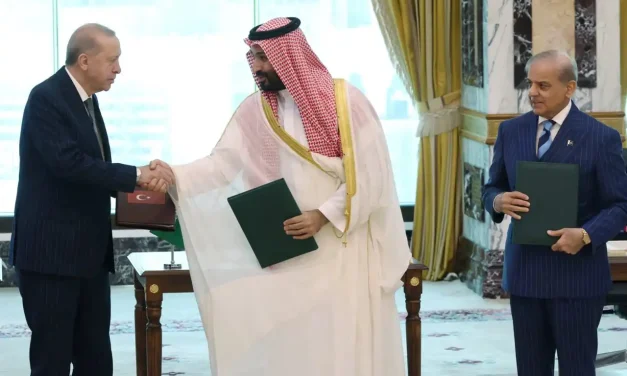
The Inseparability of the Lebanese Front from the Axis of Resistance

SCFR Online–Opinion: By providing an extensive network of social, healthcare, educational, and post-war reconstruction services, Hezbollah has established a strong social base for itself among Lebanon’s Shiites and Sunnis, and even beyond that, among other segments of Lebanese society, including Christians. Hezbollah has never been an external actor imposed upon Lebanon; rather, it is a phenomenon fundamentally born out of the occupation and crimes of the Zionist regime and itself influenced by popular resistance.

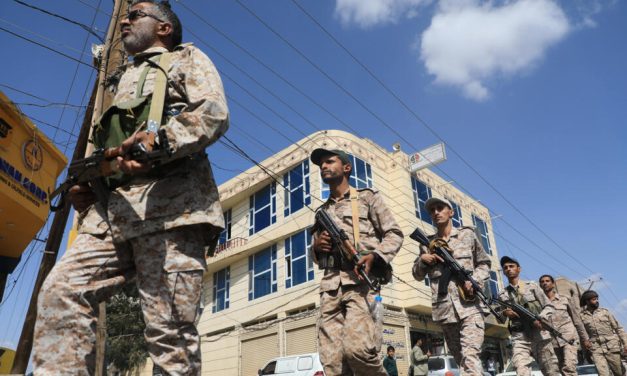
The Increasing Efforts of the Zionist Regime to Redefine Borders and the Regional Order and Its Consequences

SCFR Online– Opinion: Security and military developments in the region over recent months indicate that the ongoing crises and wars in Gaza, southern Lebanon, and parts of Syrian territory encompass broader dimensions of geopolitical and geostrategic transformations. In this context, the increased military presence and control of the Zionist regime over parts of the territories of these areas, along with proposals regarding the creation of buffer zones or even the expansion of security borders, have raised serious questions about the future of the regional order and its consequences for the countries of West Asia.

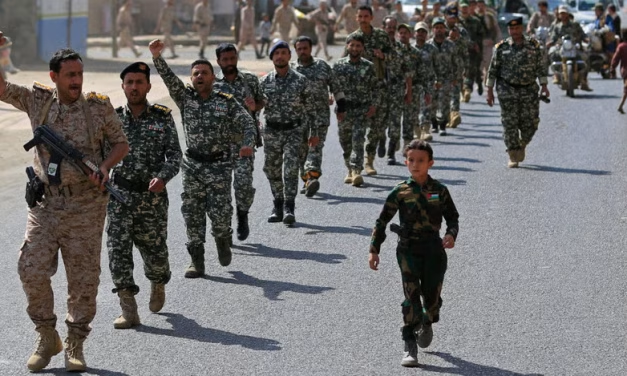
The Components of Iran’s Deterrence Power

SCFR Online – Opinion: At a time when regional security equations have reached a sensitive stage under the influence of Iran’s strategic confrontation with the United States and the Zionist regime, the question of the nature of Tehran’s defensive power has gained greater significance than ever before. While Washington and Tel Aviv rely on their technological superiority, the Islamic Republic of Iran has presented a model of deterrence that extends beyond the material calculations of the world’s classical militaries. This power, rooted in the connection between “the field” and “the people,” has not only altered the balance of power in recent conflicts but has also disrupted adversaries’ calculations when confronting Iran’s strategic depth.

The Persian Gulf; A Cold Battlefield Between Beijing and Washington

SCFR Online – Opinion: The competition in recent years between the United States and China encompasses various geographical regions—including the Indo-Pacific, West Asia, the Arctic and Antarctic, and Africa—as well as multiple domains such as economics and technology. Within this context, a strategic competition has also emerged in the Persian Gulf region across economic, technological, and military spheres.

Europe’s Enduring Dependence on Persian Gulf Energy

SCFR Online – Opinion: The dominant discourse in the field of European energy security over the past two decades has revolved around diversification of supply sources and the gradual reduction of dependence on fossil fuels. This narrative, which gained particular momentum after the Ukraine gas crisis in 2006 and its intensification in 2014 and 2022, was based on the assumption that Europe could free itself from the geopolitical vulnerabilities arising from dependence on specific suppliers through investment in renewable energy, imports of liquefied natural gas from diversified sources, and the establishment of new infrastructure. However, a closer analysis of energy trade data and the structure of the global oil and gas supply chain presents a different picture. Europe has not only failed to meaningfully reduce its dependence on the Persian Gulf, but in some sectors — particularly in liquefied natural gas imports — this dependence has deepened. This reality, which is often overlooked in public discourse, raises fundamental questions about the sustainability of Europe’s energy security strategies and their impact on regional power equations.

Loading

The specialized meeting on “Foreign Relations in the Artificial Intelligence Era”

Chehrazad Suggested in a meeting on AI applications in foreign relations: Necessity of Considering the AI Department in the Foreign Ministry Structure

Chehrazad Suggested in a meeting on AI applications in foreign relations: Necessity of Considering the AI Department in the Foreign Ministry Structure

Strategic Council Online – Meeting: An expert in the field of cyber governance, referring to the requirements and targets of establishing artificial intelligence, added: The role of the link between the national innovation system and the international innovation system is the responsibility of the Ministry of Foreign Affairs. Meanwhile, the optimum transfer of technology can happen with the help of diplomacy. This is not possible without considering mechanisms for the transfer of technology.

Dr. Maleki, at a meeting on AI application in foreign relations, explains Necessity of Using AI in Energy Diplomacy

Dr. Maleki, at a meeting on AI application in foreign relations, explains Necessity of Using AI in Energy Diplomacy

Strategic Council Online – Meeting: A faculty member of the Department of Energy Engineering of the Sharif University of Technology, stating that artificial intelligence has created a revolution in the debate on energy, added: Nothing can replace human decision-making, and I hope it will be like this, but in any case, algorithms of artificial intelligence can help to make decisions.

Dr. Sattari Explains at Meeting on AI Application in Foreign Relations: Need to Rely on Internal Power in Sensitive AI Applications

Dr. Sattari Explains at Meeting on AI Application in Foreign Relations: Need to Rely on Internal Power in Sensitive AI Applications

Strategic Council Online – Meeting: The head of the Science-Technology Commission of the Strategic Council on Foreign Relations, emphasizing the need for relying on domestic power in sensitive applications of artificial intelligence, including the use of this technology in the Ministry of Foreign Affairs, said: This issue is one of the subject matters that cannot be handed over to foreign companies because in any case, decisions should be made through these data. At present, domestic private companies have serious use of artificial intelligence.

Dr. Araghchi at the “Foreign Relations in Artificial Intelligence Era” meeting: The Necessity of Influencing on Norms in the Artificial Intelligence Era

Dr. Araghchi at the “Foreign Relations in Artificial Intelligence Era” meeting: The Necessity of Influencing on Norms in the Artificial Intelligence Era

Strategic Council Online: Secretary of the Strategic Council on Foreign Relations said: It is necessary to be accurate about the category of artificial intelligence in the service of diplomacy and diplomacy at the service of artificial intelligence. Artificial intelligence is one of the needs of all diplomats today; because, compared to the past, the number of players in the international arena has greatly increased.

Researcher of digital governance explains in the seminar on “foreign relations in the age of artificial intelligence”:  Profound impacts of artificial intelligence on international relations

Researcher of digital governance explains in the seminar on “foreign relations in the age of artificial intelligence”: Profound impacts of artificial intelligence on international relations

Strategic Council Online: A researcher in the field of digital governance emphasized that under conditions where the eruption of plurality does not create any single narrative due to the dominance of artificial intelligence, the discussion of justice and the abandonment of a single discourse in the world causes Francis Fukuyama’s theory of the end of history to be questioned and assume its global distribution to be basically invalid. In this situation, we will never again be able to analyze the international political economy as before.

A faculty member of the Foreign Ministry School emphasizes at a meeting on “Foreign Relations in Artificial Intelligence Era”: The Necessity of Understanding Digitization of International Relations

A faculty member of the Foreign Ministry School emphasizes at a meeting on “Foreign Relations in Artificial Intelligence Era”: The Necessity of Understanding Digitization of International Relations

Strategic Council Online: A faculty member of the School of International Relations of the Ministry of Foreign Affairs emphasized: Artificial intelligence can be very decisive in international relations. As international relations can be digitized, data can be given to artificial intelligence, and conclusions can be drawn from it.

Sharif University of Technology lecturer at the “Foreign Relations in Artificial Intelligence Era” meeting: Need to determine data governance to benefit from artificial intelligence

Sharif University of Technology lecturer at the “Foreign Relations in Artificial Intelligence Era” meeting: Need to determine data governance to benefit from artificial intelligence

Strategic Council Online: A professor of Sharif University of Technology, referring to the performance of cognitive sciences and neurosciences in addition to quantum processing and artificial intelligence, stated: If we do not consider these three together, given the progress being made in the world, it is impossible for us to reach that stage, and this means that in such a case, we will only receive services; that means we will have to be subordinate in diplomacy; not only in diplomacy, but in all fields, we either have to be subservient, or we have to live like primitive humans.

Expert on cyberspace international governance in a meeting on “Foreign Relations in Artificial Intelligence Era”: Power of artificial intelligence in changing global strategic stability

Expert on cyberspace international governance in a meeting on “Foreign Relations in Artificial Intelligence Era”: Power of artificial intelligence in changing global strategic stability

Strategic Council Online: An expert on cyberspace international governance, stating that artificial intelligence can change the global strategic stability and fundamental assumptions about defense and deterrence, said: Europe’s approach to artificial intelligence is regulation and standardization, and if we want to move towards interaction with Europe in the area of artificial intelligence, we must clarify our positions and approach concerning some issues.

SCFR in specialized meetings examines; Foreign Relations in Artificial Intelligence Era

SCFR in specialized meetings examines; Foreign Relations in Artificial Intelligence Era

Strategic Council Online: The specialized meeting on “Foreign Relations in the Artificial Intelligence Era” was held on Tuesday, chaired by Dr. Sorena Sattari, head of the Science and Technology Commission of the Strategic Council on Foreign Relations. Dr. Saeed Seyed Agha Banihashemi, a faculty member of the School of International Relations of the Ministry of Foreign Affairs, Dr. Hamidreza Rabiei, a faculty member of the Department of Computer Engineering at the Sharif University of Technology, Dr. Saeed Chehrazad, a faculty member of Allameh Tabataba’i University, and Dr. Majid Nili Ahmadabadi, a faculty member of the School of Electrical and Computer Engineering, as well as Dr. Behzad Ahmadi Lafouraki, an expert in international cyberspace governance, were also present in that event. The meeting was held at the Strategic Council on Foreign Relations premises.

أحدث الوظائف

The Inseparability of the Lebanese Front from the Axis of Resistance

SCFR Online–Opinion: By providing an extensive network of social, healthcare, educational, and post-war reconstruction services, Hezbollah has established a strong social base for itself among Lebanon’s Shiites and Sunnis, and even beyond that, among other segments of Lebanese society, including Christians. Hezbollah has never been an external actor imposed upon Lebanon; rather, it is a phenomenon fundamentally born out of the occupation and crimes of the Zionist regime and itself influenced by popular resistance.

The Increasing Efforts of the Zionist Regime to Redefine Borders and the Regional Order and Its Consequences

SCFR Online– Opinion: Security and military developments in the region over recent months indicate that the ongoing crises and wars in Gaza, southern Lebanon, and parts of Syrian territory encompass broader dimensions of geopolitical and geostrategic transformations. In this context, the increased military presence and control of the Zionist regime over parts of the territories of these areas, along with proposals regarding the creation of buffer zones or even the expansion of security borders, have raised serious questions about the future of the regional order and its consequences for the countries of West Asia.

The Components of Iran’s Deterrence Power

SCFR Online – Opinion: At a time when regional security equations have reached a sensitive stage under the influence of Iran’s strategic confrontation with the United States and the Zionist regime, the question of the nature of Tehran’s defensive power has gained greater significance than ever before. While Washington and Tel Aviv rely on their technological superiority, the Islamic Republic of Iran has presented a model of deterrence that extends beyond the material calculations of the world’s classical militaries. This power, rooted in the connection between “the field” and “the people,” has not only altered the balance of power in recent conflicts but has also disrupted adversaries’ calculations when confronting Iran’s strategic depth.

The Persian Gulf; A Cold Battlefield Between Beijing and Washington

SCFR Online – Opinion: The competition in recent years between the United States and China encompasses various geographical regions—including the Indo-Pacific, West Asia, the Arctic and Antarctic, and Africa—as well as multiple domains such as economics and technology. Within this context, a strategic competition has also emerged in the Persian Gulf region across economic, technological, and military spheres.

Europe’s Enduring Dependence on Persian Gulf Energy

SCFR Online – Opinion: The dominant discourse in the field of European energy security over the past two decades has revolved around diversification of supply sources and the gradual reduction of dependence on fossil fuels. This narrative, which gained particular momentum after the Ukraine gas crisis in 2006 and its intensification in 2014 and 2022, was based on the assumption that Europe could free itself from the geopolitical vulnerabilities arising from dependence on specific suppliers through investment in renewable energy, imports of liquefied natural gas from diversified sources, and the establishment of new infrastructure. However, a closer analysis of energy trade data and the structure of the global oil and gas supply chain presents a different picture. Europe has not only failed to meaningfully reduce its dependence on the Persian Gulf, but in some sectors — particularly in liquefied natural gas imports — this dependence has deepened. This reality, which is often overlooked in public discourse, raises fundamental questions about the sustainability of Europe’s energy security strategies and their impact on regional power equations.

Loading

The specialized meeting on “Foreign Relations in the Artificial Intelligence Era”

Chehrazad Suggested in a meeting on AI applications in foreign relations: Necessity of Considering the AI Department in the Foreign Ministry Structure

Chehrazad Suggested in a meeting on AI applications in foreign relations: Necessity of Considering the AI Department in the Foreign Ministry Structure

Strategic Council Online – Meeting: An expert in the field of cyber governance, referring to the requirements and targets of establishing artificial intelligence, added: The role of the link between the national innovation system and the international innovation system is the responsibility of the Ministry of Foreign Affairs. Meanwhile, the optimum transfer of technology can happen with the help of diplomacy. This is not possible without considering mechanisms for the transfer of technology.

Dr. Maleki, at a meeting on AI application in foreign relations, explains Necessity of Using AI in Energy Diplomacy

Dr. Maleki, at a meeting on AI application in foreign relations, explains Necessity of Using AI in Energy Diplomacy

Strategic Council Online – Meeting: A faculty member of the Department of Energy Engineering of the Sharif University of Technology, stating that artificial intelligence has created a revolution in the debate on energy, added: Nothing can replace human decision-making, and I hope it will be like this, but in any case, algorithms of artificial intelligence can help to make decisions.

Dr. Sattari Explains at Meeting on AI Application in Foreign Relations: Need to Rely on Internal Power in Sensitive AI Applications

Dr. Sattari Explains at Meeting on AI Application in Foreign Relations: Need to Rely on Internal Power in Sensitive AI Applications

Strategic Council Online – Meeting: The head of the Science-Technology Commission of the Strategic Council on Foreign Relations, emphasizing the need for relying on domestic power in sensitive applications of artificial intelligence, including the use of this technology in the Ministry of Foreign Affairs, said: This issue is one of the subject matters that cannot be handed over to foreign companies because in any case, decisions should be made through these data. At present, domestic private companies have serious use of artificial intelligence.

Dr. Araghchi at the “Foreign Relations in Artificial Intelligence Era” meeting: The Necessity of Influencing on Norms in the Artificial Intelligence Era

Dr. Araghchi at the “Foreign Relations in Artificial Intelligence Era” meeting: The Necessity of Influencing on Norms in the Artificial Intelligence Era

Strategic Council Online: Secretary of the Strategic Council on Foreign Relations said: It is necessary to be accurate about the category of artificial intelligence in the service of diplomacy and diplomacy at the service of artificial intelligence. Artificial intelligence is one of the needs of all diplomats today; because, compared to the past, the number of players in the international arena has greatly increased.

Researcher of digital governance explains in the seminar on “foreign relations in the age of artificial intelligence”:  Profound impacts of artificial intelligence on international relations

Researcher of digital governance explains in the seminar on “foreign relations in the age of artificial intelligence”: Profound impacts of artificial intelligence on international relations

Strategic Council Online: A researcher in the field of digital governance emphasized that under conditions where the eruption of plurality does not create any single narrative due to the dominance of artificial intelligence, the discussion of justice and the abandonment of a single discourse in the world causes Francis Fukuyama’s theory of the end of history to be questioned and assume its global distribution to be basically invalid. In this situation, we will never again be able to analyze the international political economy as before.

A faculty member of the Foreign Ministry School emphasizes at a meeting on “Foreign Relations in Artificial Intelligence Era”: The Necessity of Understanding Digitization of International Relations

A faculty member of the Foreign Ministry School emphasizes at a meeting on “Foreign Relations in Artificial Intelligence Era”: The Necessity of Understanding Digitization of International Relations

Strategic Council Online: A faculty member of the School of International Relations of the Ministry of Foreign Affairs emphasized: Artificial intelligence can be very decisive in international relations. As international relations can be digitized, data can be given to artificial intelligence, and conclusions can be drawn from it.

Sharif University of Technology lecturer at the “Foreign Relations in Artificial Intelligence Era” meeting: Need to determine data governance to benefit from artificial intelligence

Sharif University of Technology lecturer at the “Foreign Relations in Artificial Intelligence Era” meeting: Need to determine data governance to benefit from artificial intelligence

Strategic Council Online: A professor of Sharif University of Technology, referring to the performance of cognitive sciences and neurosciences in addition to quantum processing and artificial intelligence, stated: If we do not consider these three together, given the progress being made in the world, it is impossible for us to reach that stage, and this means that in such a case, we will only receive services; that means we will have to be subordinate in diplomacy; not only in diplomacy, but in all fields, we either have to be subservient, or we have to live like primitive humans.

Expert on cyberspace international governance in a meeting on “Foreign Relations in Artificial Intelligence Era”: Power of artificial intelligence in changing global strategic stability

Expert on cyberspace international governance in a meeting on “Foreign Relations in Artificial Intelligence Era”: Power of artificial intelligence in changing global strategic stability

Strategic Council Online: An expert on cyberspace international governance, stating that artificial intelligence can change the global strategic stability and fundamental assumptions about defense and deterrence, said: Europe’s approach to artificial intelligence is regulation and standardization, and if we want to move towards interaction with Europe in the area of artificial intelligence, we must clarify our positions and approach concerning some issues.

SCFR in specialized meetings examines; Foreign Relations in Artificial Intelligence Era

SCFR in specialized meetings examines; Foreign Relations in Artificial Intelligence Era

Strategic Council Online: The specialized meeting on “Foreign Relations in the Artificial Intelligence Era” was held on Tuesday, chaired by Dr. Sorena Sattari, head of the Science and Technology Commission of the Strategic Council on Foreign Relations. Dr. Saeed Seyed Agha Banihashemi, a faculty member of the School of International Relations of the Ministry of Foreign Affairs, Dr. Hamidreza Rabiei, a faculty member of the Department of Computer Engineering at the Sharif University of Technology, Dr. Saeed Chehrazad, a faculty member of Allameh Tabataba’i University, and Dr. Majid Nili Ahmadabadi, a faculty member of the School of Electrical and Computer Engineering, as well as Dr. Behzad Ahmadi Lafouraki, an expert in international cyberspace governance, were also present in that event. The meeting was held at the Strategic Council on Foreign Relations premises.

The specialized meeting on “Foreign Relations in the Artificial Intelligence Era”

Chehrazad Suggested in a meeting on AI applications in foreign relations: Necessity of Considering the AI Department in the Foreign Ministry Structure

Chehrazad Suggested in a meeting on AI applications in foreign relations: Necessity of Considering the AI Department in the Foreign Ministry Structure

Strategic Council Online – Meeting: An expert in the field of cyber governance, referring to the requirements and targets of establishing artificial intelligence, added: The role of the link between the national innovation system and the international innovation system is the responsibility of the Ministry of Foreign Affairs. Meanwhile, the optimum transfer of technology can happen with the help of diplomacy. This is not possible without considering mechanisms for the transfer of technology.

Dr. Maleki, at a meeting on AI application in foreign relations, explains Necessity of Using AI in Energy Diplomacy

Dr. Maleki, at a meeting on AI application in foreign relations, explains Necessity of Using AI in Energy Diplomacy

Strategic Council Online – Meeting: A faculty member of the Department of Energy Engineering of the Sharif University of Technology, stating that artificial intelligence has created a revolution in the debate on energy, added: Nothing can replace human decision-making, and I hope it will be like this, but in any case, algorithms of artificial intelligence can help to make decisions.

Dr. Sattari Explains at Meeting on AI Application in Foreign Relations: Need to Rely on Internal Power in Sensitive AI Applications

Dr. Sattari Explains at Meeting on AI Application in Foreign Relations: Need to Rely on Internal Power in Sensitive AI Applications

Strategic Council Online – Meeting: The head of the Science-Technology Commission of the Strategic Council on Foreign Relations, emphasizing the need for relying on domestic power in sensitive applications of artificial intelligence, including the use of this technology in the Ministry of Foreign Affairs, said: This issue is one of the subject matters that cannot be handed over to foreign companies because in any case, decisions should be made through these data. At present, domestic private companies have serious use of artificial intelligence.

Dr. Araghchi at the “Foreign Relations in Artificial Intelligence Era” meeting: The Necessity of Influencing on Norms in the Artificial Intelligence Era

Dr. Araghchi at the “Foreign Relations in Artificial Intelligence Era” meeting: The Necessity of Influencing on Norms in the Artificial Intelligence Era

Strategic Council Online: Secretary of the Strategic Council on Foreign Relations said: It is necessary to be accurate about the category of artificial intelligence in the service of diplomacy and diplomacy at the service of artificial intelligence. Artificial intelligence is one of the needs of all diplomats today; because, compared to the past, the number of players in the international arena has greatly increased.

Researcher of digital governance explains in the seminar on “foreign relations in the age of artificial intelligence”:  Profound impacts of artificial intelligence on international relations

Researcher of digital governance explains in the seminar on “foreign relations in the age of artificial intelligence”: Profound impacts of artificial intelligence on international relations

Strategic Council Online: A researcher in the field of digital governance emphasized that under conditions where the eruption of plurality does not create any single narrative due to the dominance of artificial intelligence, the discussion of justice and the abandonment of a single discourse in the world causes Francis Fukuyama’s theory of the end of history to be questioned and assume its global distribution to be basically invalid. In this situation, we will never again be able to analyze the international political economy as before.

A faculty member of the Foreign Ministry School emphasizes at a meeting on “Foreign Relations in Artificial Intelligence Era”: The Necessity of Understanding Digitization of International Relations

A faculty member of the Foreign Ministry School emphasizes at a meeting on “Foreign Relations in Artificial Intelligence Era”: The Necessity of Understanding Digitization of International Relations

Strategic Council Online: A faculty member of the School of International Relations of the Ministry of Foreign Affairs emphasized: Artificial intelligence can be very decisive in international relations. As international relations can be digitized, data can be given to artificial intelligence, and conclusions can be drawn from it.

Sharif University of Technology lecturer at the “Foreign Relations in Artificial Intelligence Era” meeting: Need to determine data governance to benefit from artificial intelligence

Sharif University of Technology lecturer at the “Foreign Relations in Artificial Intelligence Era” meeting: Need to determine data governance to benefit from artificial intelligence

Strategic Council Online: A professor of Sharif University of Technology, referring to the performance of cognitive sciences and neurosciences in addition to quantum processing and artificial intelligence, stated: If we do not consider these three together, given the progress being made in the world, it is impossible for us to reach that stage, and this means that in such a case, we will only receive services; that means we will have to be subordinate in diplomacy; not only in diplomacy, but in all fields, we either have to be subservient, or we have to live like primitive humans.

Expert on cyberspace international governance in a meeting on “Foreign Relations in Artificial Intelligence Era”: Power of artificial intelligence in changing global strategic stability

Expert on cyberspace international governance in a meeting on “Foreign Relations in Artificial Intelligence Era”: Power of artificial intelligence in changing global strategic stability

Strategic Council Online: An expert on cyberspace international governance, stating that artificial intelligence can change the global strategic stability and fundamental assumptions about defense and deterrence, said: Europe’s approach to artificial intelligence is regulation and standardization, and if we want to move towards interaction with Europe in the area of artificial intelligence, we must clarify our positions and approach concerning some issues.

SCFR in specialized meetings examines; Foreign Relations in Artificial Intelligence Era

SCFR in specialized meetings examines; Foreign Relations in Artificial Intelligence Era

Strategic Council Online: The specialized meeting on “Foreign Relations in the Artificial Intelligence Era” was held on Tuesday, chaired by Dr. Sorena Sattari, head of the Science and Technology Commission of the Strategic Council on Foreign Relations. Dr. Saeed Seyed Agha Banihashemi, a faculty member of the School of International Relations of the Ministry of Foreign Affairs, Dr. Hamidreza Rabiei, a faculty member of the Department of Computer Engineering at the Sharif University of Technology, Dr. Saeed Chehrazad, a faculty member of Allameh Tabataba’i University, and Dr. Majid Nili Ahmadabadi, a faculty member of the School of Electrical and Computer Engineering, as well as Dr. Behzad Ahmadi Lafouraki, an expert in international cyberspace governance, were also present in that event. The meeting was held at the Strategic Council on Foreign Relations premises.

LATEST CONTENT

The Inseparability of the Lebanese Front from the Axis of Resistance

SCFR Online–Opinion: By providing an extensive network of social, healthcare, educational, and post-war reconstruction services, Hezbollah has established a strong social base for itself among Lebanon’s Shiites and Sunnis, and even beyond that, among other segments of Lebanese society, including Christians. Hezbollah has never been an external actor imposed upon Lebanon; rather, it is a phenomenon fundamentally born out of the occupation and crimes of the Zionist regime and itself influenced by popular resistance.

The Increasing Efforts of the Zionist Regime to Redefine Borders and the Regional Order and Its Consequences

SCFR Online– Opinion: Security and military developments in the region over recent months indicate that the ongoing crises and wars in Gaza, southern Lebanon, and parts of Syrian territory encompass broader dimensions of geopolitical and geostrategic transformations. In this context, the increased military presence and control of the Zionist regime over parts of the territories of these areas, along with proposals regarding the creation of buffer zones or even the expansion of security borders, have raised serious questions about the future of the regional order and its consequences for the countries of West Asia.

The Components of Iran’s Deterrence Power

SCFR Online – Opinion: At a time when regional security equations have reached a sensitive stage under the influence of Iran’s strategic confrontation with the United States and the Zionist regime, the question of the nature of Tehran’s defensive power has gained greater significance than ever before. While Washington and Tel Aviv rely on their technological superiority, the Islamic Republic of Iran has presented a model of deterrence that extends beyond the material calculations of the world’s classical militaries. This power, rooted in the connection between “the field” and “the people,” has not only altered the balance of power in recent conflicts but has also disrupted adversaries’ calculations when confronting Iran’s strategic depth.

The Persian Gulf; A Cold Battlefield Between Beijing and Washington

SCFR Online – Opinion: The competition in recent years between the United States and China encompasses various geographical regions—including the Indo-Pacific, West Asia, the Arctic and Antarctic, and Africa—as well as multiple domains such as economics and technology. Within this context, a strategic competition has also emerged in the Persian Gulf region across economic, technological, and military spheres.

Europe’s Enduring Dependence on Persian Gulf Energy

SCFR Online – Opinion: The dominant discourse in the field of European energy security over the past two decades has revolved around diversification of supply sources and the gradual reduction of dependence on fossil fuels. This narrative, which gained particular momentum after the Ukraine gas crisis in 2006 and its intensification in 2014 and 2022, was based on the assumption that Europe could free itself from the geopolitical vulnerabilities arising from dependence on specific suppliers through investment in renewable energy, imports of liquefied natural gas from diversified sources, and the establishment of new infrastructure. However, a closer analysis of energy trade data and the structure of the global oil and gas supply chain presents a different picture. Europe has not only failed to meaningfully reduce its dependence on the Persian Gulf, but in some sectors — particularly in liquefied natural gas imports — this dependence has deepened. This reality, which is often overlooked in public discourse, raises fundamental questions about the sustainability of Europe’s energy security strategies and their impact on regional power equations.

Loading

The specialized meeting on “Foreign Relations in the Artificial Intelligence Era”

Chehrazad Suggested in a meeting on AI applications in foreign relations: Necessity of Considering the AI Department in the Foreign Ministry Structure

Chehrazad Suggested in a meeting on AI applications in foreign relations: Necessity of Considering the AI Department in the Foreign Ministry Structure

Strategic Council Online – Meeting: An expert in the field of cyber governance, referring to the requirements and targets of establishing artificial intelligence, added: The role of the link between the national innovation system and the international innovation system is the responsibility of the Ministry of Foreign Affairs. Meanwhile, the optimum transfer of technology can happen with the help of diplomacy. This is not possible without considering mechanisms for the transfer of technology.

Dr. Maleki, at a meeting on AI application in foreign relations, explains Necessity of Using AI in Energy Diplomacy

Dr. Maleki, at a meeting on AI application in foreign relations, explains Necessity of Using AI in Energy Diplomacy

Strategic Council Online – Meeting: A faculty member of the Department of Energy Engineering of the Sharif University of Technology, stating that artificial intelligence has created a revolution in the debate on energy, added: Nothing can replace human decision-making, and I hope it will be like this, but in any case, algorithms of artificial intelligence can help to make decisions.

Dr. Sattari Explains at Meeting on AI Application in Foreign Relations: Need to Rely on Internal Power in Sensitive AI Applications

Dr. Sattari Explains at Meeting on AI Application in Foreign Relations: Need to Rely on Internal Power in Sensitive AI Applications

Strategic Council Online – Meeting: The head of the Science-Technology Commission of the Strategic Council on Foreign Relations, emphasizing the need for relying on domestic power in sensitive applications of artificial intelligence, including the use of this technology in the Ministry of Foreign Affairs, said: This issue is one of the subject matters that cannot be handed over to foreign companies because in any case, decisions should be made through these data. At present, domestic private companies have serious use of artificial intelligence.

Dr. Araghchi at the “Foreign Relations in Artificial Intelligence Era” meeting: The Necessity of Influencing on Norms in the Artificial Intelligence Era

Dr. Araghchi at the “Foreign Relations in Artificial Intelligence Era” meeting: The Necessity of Influencing on Norms in the Artificial Intelligence Era

Strategic Council Online: Secretary of the Strategic Council on Foreign Relations said: It is necessary to be accurate about the category of artificial intelligence in the service of diplomacy and diplomacy at the service of artificial intelligence. Artificial intelligence is one of the needs of all diplomats today; because, compared to the past, the number of players in the international arena has greatly increased.

Researcher of digital governance explains in the seminar on “foreign relations in the age of artificial intelligence”:  Profound impacts of artificial intelligence on international relations

Researcher of digital governance explains in the seminar on “foreign relations in the age of artificial intelligence”: Profound impacts of artificial intelligence on international relations

Strategic Council Online: A researcher in the field of digital governance emphasized that under conditions where the eruption of plurality does not create any single narrative due to the dominance of artificial intelligence, the discussion of justice and the abandonment of a single discourse in the world causes Francis Fukuyama’s theory of the end of history to be questioned and assume its global distribution to be basically invalid. In this situation, we will never again be able to analyze the international political economy as before.

A faculty member of the Foreign Ministry School emphasizes at a meeting on “Foreign Relations in Artificial Intelligence Era”: The Necessity of Understanding Digitization of International Relations

A faculty member of the Foreign Ministry School emphasizes at a meeting on “Foreign Relations in Artificial Intelligence Era”: The Necessity of Understanding Digitization of International Relations

Strategic Council Online: A faculty member of the School of International Relations of the Ministry of Foreign Affairs emphasized: Artificial intelligence can be very decisive in international relations. As international relations can be digitized, data can be given to artificial intelligence, and conclusions can be drawn from it.

Sharif University of Technology lecturer at the “Foreign Relations in Artificial Intelligence Era” meeting: Need to determine data governance to benefit from artificial intelligence

Sharif University of Technology lecturer at the “Foreign Relations in Artificial Intelligence Era” meeting: Need to determine data governance to benefit from artificial intelligence

Strategic Council Online: A professor of Sharif University of Technology, referring to the performance of cognitive sciences and neurosciences in addition to quantum processing and artificial intelligence, stated: If we do not consider these three together, given the progress being made in the world, it is impossible for us to reach that stage, and this means that in such a case, we will only receive services; that means we will have to be subordinate in diplomacy; not only in diplomacy, but in all fields, we either have to be subservient, or we have to live like primitive humans.

Expert on cyberspace international governance in a meeting on “Foreign Relations in Artificial Intelligence Era”: Power of artificial intelligence in changing global strategic stability

Expert on cyberspace international governance in a meeting on “Foreign Relations in Artificial Intelligence Era”: Power of artificial intelligence in changing global strategic stability

Strategic Council Online: An expert on cyberspace international governance, stating that artificial intelligence can change the global strategic stability and fundamental assumptions about defense and deterrence, said: Europe’s approach to artificial intelligence is regulation and standardization, and if we want to move towards interaction with Europe in the area of artificial intelligence, we must clarify our positions and approach concerning some issues.

SCFR in specialized meetings examines; Foreign Relations in Artificial Intelligence Era

SCFR in specialized meetings examines; Foreign Relations in Artificial Intelligence Era

Strategic Council Online: The specialized meeting on “Foreign Relations in the Artificial Intelligence Era” was held on Tuesday, chaired by Dr. Sorena Sattari, head of the Science and Technology Commission of the Strategic Council on Foreign Relations. Dr. Saeed Seyed Agha Banihashemi, a faculty member of the School of International Relations of the Ministry of Foreign Affairs, Dr. Hamidreza Rabiei, a faculty member of the Department of Computer Engineering at the Sharif University of Technology, Dr. Saeed Chehrazad, a faculty member of Allameh Tabataba’i University, and Dr. Majid Nili Ahmadabadi, a faculty member of the School of Electrical and Computer Engineering, as well as Dr. Behzad Ahmadi Lafouraki, an expert in international cyberspace governance, were also present in that event. The meeting was held at the Strategic Council on Foreign Relations premises.

ÚLTIMAS PUBLICACIONES

The Inseparability of the Lebanese Front from the Axis of Resistance

SCFR Online–Opinion: By providing an extensive network of social, healthcare, educational, and post-war reconstruction services, Hezbollah has established a strong social base for itself among Lebanon’s Shiites and Sunnis, and even beyond that, among other segments of Lebanese society, including Christians. Hezbollah has never been an external actor imposed upon Lebanon; rather, it is a phenomenon fundamentally born out of the occupation and crimes of the Zionist regime and itself influenced by popular resistance.

The Increasing Efforts of the Zionist Regime to Redefine Borders and the Regional Order and Its Consequences

SCFR Online– Opinion: Security and military developments in the region over recent months indicate that the ongoing crises and wars in Gaza, southern Lebanon, and parts of Syrian territory encompass broader dimensions of geopolitical and geostrategic transformations. In this context, the increased military presence and control of the Zionist regime over parts of the territories of these areas, along with proposals regarding the creation of buffer zones or even the expansion of security borders, have raised serious questions about the future of the regional order and its consequences for the countries of West Asia.

The Components of Iran’s Deterrence Power

SCFR Online – Opinion: At a time when regional security equations have reached a sensitive stage under the influence of Iran’s strategic confrontation with the United States and the Zionist regime, the question of the nature of Tehran’s defensive power has gained greater significance than ever before. While Washington and Tel Aviv rely on their technological superiority, the Islamic Republic of Iran has presented a model of deterrence that extends beyond the material calculations of the world’s classical militaries. This power, rooted in the connection between “the field” and “the people,” has not only altered the balance of power in recent conflicts but has also disrupted adversaries’ calculations when confronting Iran’s strategic depth.

The Persian Gulf; A Cold Battlefield Between Beijing and Washington

SCFR Online – Opinion: The competition in recent years between the United States and China encompasses various geographical regions—including the Indo-Pacific, West Asia, the Arctic and Antarctic, and Africa—as well as multiple domains such as economics and technology. Within this context, a strategic competition has also emerged in the Persian Gulf region across economic, technological, and military spheres.

Europe’s Enduring Dependence on Persian Gulf Energy

SCFR Online – Opinion: The dominant discourse in the field of European energy security over the past two decades has revolved around diversification of supply sources and the gradual reduction of dependence on fossil fuels. This narrative, which gained particular momentum after the Ukraine gas crisis in 2006 and its intensification in 2014 and 2022, was based on the assumption that Europe could free itself from the geopolitical vulnerabilities arising from dependence on specific suppliers through investment in renewable energy, imports of liquefied natural gas from diversified sources, and the establishment of new infrastructure. However, a closer analysis of energy trade data and the structure of the global oil and gas supply chain presents a different picture. Europe has not only failed to meaningfully reduce its dependence on the Persian Gulf, but in some sectors — particularly in liquefied natural gas imports — this dependence has deepened. This reality, which is often overlooked in public discourse, raises fundamental questions about the sustainability of Europe’s energy security strategies and their impact on regional power equations.

Loading

The specialized meeting on “Foreign Relations in the Artificial Intelligence Era”

Chehrazad Suggested in a meeting on AI applications in foreign relations: Necessity of Considering the AI Department in the Foreign Ministry Structure

Chehrazad Suggested in a meeting on AI applications in foreign relations: Necessity of Considering the AI Department in the Foreign Ministry Structure

Strategic Council Online – Meeting: An expert in the field of cyber governance, referring to the requirements and targets of establishing artificial intelligence, added: The role of the link between the national innovation system and the international innovation system is the responsibility of the Ministry of Foreign Affairs. Meanwhile, the optimum transfer of technology can happen with the help of diplomacy. This is not possible without considering mechanisms for the transfer of technology.

Dr. Maleki, at a meeting on AI application in foreign relations, explains Necessity of Using AI in Energy Diplomacy

Dr. Maleki, at a meeting on AI application in foreign relations, explains Necessity of Using AI in Energy Diplomacy

Strategic Council Online – Meeting: A faculty member of the Department of Energy Engineering of the Sharif University of Technology, stating that artificial intelligence has created a revolution in the debate on energy, added: Nothing can replace human decision-making, and I hope it will be like this, but in any case, algorithms of artificial intelligence can help to make decisions.

Dr. Sattari Explains at Meeting on AI Application in Foreign Relations: Need to Rely on Internal Power in Sensitive AI Applications

Dr. Sattari Explains at Meeting on AI Application in Foreign Relations: Need to Rely on Internal Power in Sensitive AI Applications

Strategic Council Online – Meeting: The head of the Science-Technology Commission of the Strategic Council on Foreign Relations, emphasizing the need for relying on domestic power in sensitive applications of artificial intelligence, including the use of this technology in the Ministry of Foreign Affairs, said: This issue is one of the subject matters that cannot be handed over to foreign companies because in any case, decisions should be made through these data. At present, domestic private companies have serious use of artificial intelligence.

Dr. Araghchi at the “Foreign Relations in Artificial Intelligence Era” meeting: The Necessity of Influencing on Norms in the Artificial Intelligence Era

Dr. Araghchi at the “Foreign Relations in Artificial Intelligence Era” meeting: The Necessity of Influencing on Norms in the Artificial Intelligence Era

Strategic Council Online: Secretary of the Strategic Council on Foreign Relations said: It is necessary to be accurate about the category of artificial intelligence in the service of diplomacy and diplomacy at the service of artificial intelligence. Artificial intelligence is one of the needs of all diplomats today; because, compared to the past, the number of players in the international arena has greatly increased.

Researcher of digital governance explains in the seminar on “foreign relations in the age of artificial intelligence”:  Profound impacts of artificial intelligence on international relations

Researcher of digital governance explains in the seminar on “foreign relations in the age of artificial intelligence”: Profound impacts of artificial intelligence on international relations

Strategic Council Online: A researcher in the field of digital governance emphasized that under conditions where the eruption of plurality does not create any single narrative due to the dominance of artificial intelligence, the discussion of justice and the abandonment of a single discourse in the world causes Francis Fukuyama’s theory of the end of history to be questioned and assume its global distribution to be basically invalid. In this situation, we will never again be able to analyze the international political economy as before.

A faculty member of the Foreign Ministry School emphasizes at a meeting on “Foreign Relations in Artificial Intelligence Era”: The Necessity of Understanding Digitization of International Relations

A faculty member of the Foreign Ministry School emphasizes at a meeting on “Foreign Relations in Artificial Intelligence Era”: The Necessity of Understanding Digitization of International Relations

Strategic Council Online: A faculty member of the School of International Relations of the Ministry of Foreign Affairs emphasized: Artificial intelligence can be very decisive in international relations. As international relations can be digitized, data can be given to artificial intelligence, and conclusions can be drawn from it.

Sharif University of Technology lecturer at the “Foreign Relations in Artificial Intelligence Era” meeting: Need to determine data governance to benefit from artificial intelligence

Sharif University of Technology lecturer at the “Foreign Relations in Artificial Intelligence Era” meeting: Need to determine data governance to benefit from artificial intelligence

Strategic Council Online: A professor of Sharif University of Technology, referring to the performance of cognitive sciences and neurosciences in addition to quantum processing and artificial intelligence, stated: If we do not consider these three together, given the progress being made in the world, it is impossible for us to reach that stage, and this means that in such a case, we will only receive services; that means we will have to be subordinate in diplomacy; not only in diplomacy, but in all fields, we either have to be subservient, or we have to live like primitive humans.

Expert on cyberspace international governance in a meeting on “Foreign Relations in Artificial Intelligence Era”: Power of artificial intelligence in changing global strategic stability

Expert on cyberspace international governance in a meeting on “Foreign Relations in Artificial Intelligence Era”: Power of artificial intelligence in changing global strategic stability

Strategic Council Online: An expert on cyberspace international governance, stating that artificial intelligence can change the global strategic stability and fundamental assumptions about defense and deterrence, said: Europe’s approach to artificial intelligence is regulation and standardization, and if we want to move towards interaction with Europe in the area of artificial intelligence, we must clarify our positions and approach concerning some issues.

SCFR in specialized meetings examines; Foreign Relations in Artificial Intelligence Era

SCFR in specialized meetings examines; Foreign Relations in Artificial Intelligence Era

Strategic Council Online: The specialized meeting on “Foreign Relations in the Artificial Intelligence Era” was held on Tuesday, chaired by Dr. Sorena Sattari, head of the Science and Technology Commission of the Strategic Council on Foreign Relations. Dr. Saeed Seyed Agha Banihashemi, a faculty member of the School of International Relations of the Ministry of Foreign Affairs, Dr. Hamidreza Rabiei, a faculty member of the Department of Computer Engineering at the Sharif University of Technology, Dr. Saeed Chehrazad, a faculty member of Allameh Tabataba’i University, and Dr. Majid Nili Ahmadabadi, a faculty member of the School of Electrical and Computer Engineering, as well as Dr. Behzad Ahmadi Lafouraki, an expert in international cyberspace governance, were also present in that event. The meeting was held at the Strategic Council on Foreign Relations premises.

ÚLTIMAS PUBLICACIONES

The Inseparability of the Lebanese Front from the Axis of Resistance

SCFR Online–Opinion: By providing an extensive network of social, healthcare, educational, and post-war reconstruction services, Hezbollah has established a strong social base for itself among Lebanon’s Shiites and Sunnis, and even beyond that, among other segments of Lebanese society, including Christians. Hezbollah has never been an external actor imposed upon Lebanon; rather, it is a phenomenon fundamentally born out of the occupation and crimes of the Zionist regime and itself influenced by popular resistance.

The Increasing Efforts of the Zionist Regime to Redefine Borders and the Regional Order and Its Consequences

SCFR Online– Opinion: Security and military developments in the region over recent months indicate that the ongoing crises and wars in Gaza, southern Lebanon, and parts of Syrian territory encompass broader dimensions of geopolitical and geostrategic transformations. In this context, the increased military presence and control of the Zionist regime over parts of the territories of these areas, along with proposals regarding the creation of buffer zones or even the expansion of security borders, have raised serious questions about the future of the regional order and its consequences for the countries of West Asia.

The Components of Iran’s Deterrence Power

SCFR Online – Opinion: At a time when regional security equations have reached a sensitive stage under the influence of Iran’s strategic confrontation with the United States and the Zionist regime, the question of the nature of Tehran’s defensive power has gained greater significance than ever before. While Washington and Tel Aviv rely on their technological superiority, the Islamic Republic of Iran has presented a model of deterrence that extends beyond the material calculations of the world’s classical militaries. This power, rooted in the connection between “the field” and “the people,” has not only altered the balance of power in recent conflicts but has also disrupted adversaries’ calculations when confronting Iran’s strategic depth.

The Persian Gulf; A Cold Battlefield Between Beijing and Washington

SCFR Online – Opinion: The competition in recent years between the United States and China encompasses various geographical regions—including the Indo-Pacific, West Asia, the Arctic and Antarctic, and Africa—as well as multiple domains such as economics and technology. Within this context, a strategic competition has also emerged in the Persian Gulf region across economic, technological, and military spheres.

Europe’s Enduring Dependence on Persian Gulf Energy

SCFR Online – Opinion: The dominant discourse in the field of European energy security over the past two decades has revolved around diversification of supply sources and the gradual reduction of dependence on fossil fuels. This narrative, which gained particular momentum after the Ukraine gas crisis in 2006 and its intensification in 2014 and 2022, was based on the assumption that Europe could free itself from the geopolitical vulnerabilities arising from dependence on specific suppliers through investment in renewable energy, imports of liquefied natural gas from diversified sources, and the establishment of new infrastructure. However, a closer analysis of energy trade data and the structure of the global oil and gas supply chain presents a different picture. Europe has not only failed to meaningfully reduce its dependence on the Persian Gulf, but in some sectors — particularly in liquefied natural gas imports — this dependence has deepened. This reality, which is often overlooked in public discourse, raises fundamental questions about the sustainability of Europe’s energy security strategies and their impact on regional power equations.

Loading

The specialized meeting on “Foreign Relations in the Artificial Intelligence Era”

Chehrazad Suggested in a meeting on AI applications in foreign relations: Necessity of Considering the AI Department in the Foreign Ministry Structure

Chehrazad Suggested in a meeting on AI applications in foreign relations: Necessity of Considering the AI Department in the Foreign Ministry Structure

Strategic Council Online – Meeting: An expert in the field of cyber governance, referring to the requirements and targets of establishing artificial intelligence, added: The role of the link between the national innovation system and the international innovation system is the responsibility of the Ministry of Foreign Affairs. Meanwhile, the optimum transfer of technology can happen with the help of diplomacy. This is not possible without considering mechanisms for the transfer of technology.

Dr. Maleki, at a meeting on AI application in foreign relations, explains Necessity of Using AI in Energy Diplomacy

Dr. Maleki, at a meeting on AI application in foreign relations, explains Necessity of Using AI in Energy Diplomacy

Strategic Council Online – Meeting: A faculty member of the Department of Energy Engineering of the Sharif University of Technology, stating that artificial intelligence has created a revolution in the debate on energy, added: Nothing can replace human decision-making, and I hope it will be like this, but in any case, algorithms of artificial intelligence can help to make decisions.

Dr. Sattari Explains at Meeting on AI Application in Foreign Relations: Need to Rely on Internal Power in Sensitive AI Applications

Dr. Sattari Explains at Meeting on AI Application in Foreign Relations: Need to Rely on Internal Power in Sensitive AI Applications

Strategic Council Online – Meeting: The head of the Science-Technology Commission of the Strategic Council on Foreign Relations, emphasizing the need for relying on domestic power in sensitive applications of artificial intelligence, including the use of this technology in the Ministry of Foreign Affairs, said: This issue is one of the subject matters that cannot be handed over to foreign companies because in any case, decisions should be made through these data. At present, domestic private companies have serious use of artificial intelligence.

Dr. Araghchi at the “Foreign Relations in Artificial Intelligence Era” meeting: The Necessity of Influencing on Norms in the Artificial Intelligence Era

Dr. Araghchi at the “Foreign Relations in Artificial Intelligence Era” meeting: The Necessity of Influencing on Norms in the Artificial Intelligence Era

Strategic Council Online: Secretary of the Strategic Council on Foreign Relations said: It is necessary to be accurate about the category of artificial intelligence in the service of diplomacy and diplomacy at the service of artificial intelligence. Artificial intelligence is one of the needs of all diplomats today; because, compared to the past, the number of players in the international arena has greatly increased.

Researcher of digital governance explains in the seminar on “foreign relations in the age of artificial intelligence”:  Profound impacts of artificial intelligence on international relations

Researcher of digital governance explains in the seminar on “foreign relations in the age of artificial intelligence”: Profound impacts of artificial intelligence on international relations

Strategic Council Online: A researcher in the field of digital governance emphasized that under conditions where the eruption of plurality does not create any single narrative due to the dominance of artificial intelligence, the discussion of justice and the abandonment of a single discourse in the world causes Francis Fukuyama’s theory of the end of history to be questioned and assume its global distribution to be basically invalid. In this situation, we will never again be able to analyze the international political economy as before.

A faculty member of the Foreign Ministry School emphasizes at a meeting on “Foreign Relations in Artificial Intelligence Era”: The Necessity of Understanding Digitization of International Relations

A faculty member of the Foreign Ministry School emphasizes at a meeting on “Foreign Relations in Artificial Intelligence Era”: The Necessity of Understanding Digitization of International Relations

Strategic Council Online: A faculty member of the School of International Relations of the Ministry of Foreign Affairs emphasized: Artificial intelligence can be very decisive in international relations. As international relations can be digitized, data can be given to artificial intelligence, and conclusions can be drawn from it.

Sharif University of Technology lecturer at the “Foreign Relations in Artificial Intelligence Era” meeting: Need to determine data governance to benefit from artificial intelligence

Sharif University of Technology lecturer at the “Foreign Relations in Artificial Intelligence Era” meeting: Need to determine data governance to benefit from artificial intelligence

Strategic Council Online: A professor of Sharif University of Technology, referring to the performance of cognitive sciences and neurosciences in addition to quantum processing and artificial intelligence, stated: If we do not consider these three together, given the progress being made in the world, it is impossible for us to reach that stage, and this means that in such a case, we will only receive services; that means we will have to be subordinate in diplomacy; not only in diplomacy, but in all fields, we either have to be subservient, or we have to live like primitive humans.

Expert on cyberspace international governance in a meeting on “Foreign Relations in Artificial Intelligence Era”: Power of artificial intelligence in changing global strategic stability

Expert on cyberspace international governance in a meeting on “Foreign Relations in Artificial Intelligence Era”: Power of artificial intelligence in changing global strategic stability

Strategic Council Online: An expert on cyberspace international governance, stating that artificial intelligence can change the global strategic stability and fundamental assumptions about defense and deterrence, said: Europe’s approach to artificial intelligence is regulation and standardization, and if we want to move towards interaction with Europe in the area of artificial intelligence, we must clarify our positions and approach concerning some issues.

SCFR in specialized meetings examines; Foreign Relations in Artificial Intelligence Era

SCFR in specialized meetings examines; Foreign Relations in Artificial Intelligence Era

Strategic Council Online: The specialized meeting on “Foreign Relations in the Artificial Intelligence Era” was held on Tuesday, chaired by Dr. Sorena Sattari, head of the Science and Technology Commission of the Strategic Council on Foreign Relations. Dr. Saeed Seyed Agha Banihashemi, a faculty member of the School of International Relations of the Ministry of Foreign Affairs, Dr. Hamidreza Rabiei, a faculty member of the Department of Computer Engineering at the Sharif University of Technology, Dr. Saeed Chehrazad, a faculty member of Allameh Tabataba’i University, and Dr. Majid Nili Ahmadabadi, a faculty member of the School of Electrical and Computer Engineering, as well as Dr. Behzad Ahmadi Lafouraki, an expert in international cyberspace governance, were also present in that event. The meeting was held at the Strategic Council on Foreign Relations premises.

ÚLTIMAS PUBLICACIONES

The Inseparability of the Lebanese Front from the Axis of Resistance

SCFR Online–Opinion: By providing an extensive network of social, healthcare, educational, and post-war reconstruction services, Hezbollah has established a strong social base for itself among Lebanon’s Shiites and Sunnis, and even beyond that, among other segments of Lebanese society, including Christians. Hezbollah has never been an external actor imposed upon Lebanon; rather, it is a phenomenon fundamentally born out of the occupation and crimes of the Zionist regime and itself influenced by popular resistance.

The Increasing Efforts of the Zionist Regime to Redefine Borders and the Regional Order and Its Consequences

SCFR Online– Opinion: Security and military developments in the region over recent months indicate that the ongoing crises and wars in Gaza, southern Lebanon, and parts of Syrian territory encompass broader dimensions of geopolitical and geostrategic transformations. In this context, the increased military presence and control of the Zionist regime over parts of the territories of these areas, along with proposals regarding the creation of buffer zones or even the expansion of security borders, have raised serious questions about the future of the regional order and its consequences for the countries of West Asia.

The Components of Iran’s Deterrence Power

SCFR Online – Opinion: At a time when regional security equations have reached a sensitive stage under the influence of Iran’s strategic confrontation with the United States and the Zionist regime, the question of the nature of Tehran’s defensive power has gained greater significance than ever before. While Washington and Tel Aviv rely on their technological superiority, the Islamic Republic of Iran has presented a model of deterrence that extends beyond the material calculations of the world’s classical militaries. This power, rooted in the connection between “the field” and “the people,” has not only altered the balance of power in recent conflicts but has also disrupted adversaries’ calculations when confronting Iran’s strategic depth.

The Persian Gulf; A Cold Battlefield Between Beijing and Washington

SCFR Online – Opinion: The competition in recent years between the United States and China encompasses various geographical regions—including the Indo-Pacific, West Asia, the Arctic and Antarctic, and Africa—as well as multiple domains such as economics and technology. Within this context, a strategic competition has also emerged in the Persian Gulf region across economic, technological, and military spheres.

Europe’s Enduring Dependence on Persian Gulf Energy

SCFR Online – Opinion: The dominant discourse in the field of European energy security over the past two decades has revolved around diversification of supply sources and the gradual reduction of dependence on fossil fuels. This narrative, which gained particular momentum after the Ukraine gas crisis in 2006 and its intensification in 2014 and 2022, was based on the assumption that Europe could free itself from the geopolitical vulnerabilities arising from dependence on specific suppliers through investment in renewable energy, imports of liquefied natural gas from diversified sources, and the establishment of new infrastructure. However, a closer analysis of energy trade data and the structure of the global oil and gas supply chain presents a different picture. Europe has not only failed to meaningfully reduce its dependence on the Persian Gulf, but in some sectors — particularly in liquefied natural gas imports — this dependence has deepened. This reality, which is often overlooked in public discourse, raises fundamental questions about the sustainability of Europe’s energy security strategies and their impact on regional power equations.

Loading

The specialized meeting on “Foreign Relations in the Artificial Intelligence Era”

Chehrazad Suggested in a meeting on AI applications in foreign relations: Necessity of Considering the AI Department in the Foreign Ministry Structure

Chehrazad Suggested in a meeting on AI applications in foreign relations: Necessity of Considering the AI Department in the Foreign Ministry Structure

Strategic Council Online – Meeting: An expert in the field of cyber governance, referring to the requirements and targets of establishing artificial intelligence, added: The role of the link between the national innovation system and the international innovation system is the responsibility of the Ministry of Foreign Affairs. Meanwhile, the optimum transfer of technology can happen with the help of diplomacy. This is not possible without considering mechanisms for the transfer of technology.

Dr. Maleki, at a meeting on AI application in foreign relations, explains Necessity of Using AI in Energy Diplomacy

Dr. Maleki, at a meeting on AI application in foreign relations, explains Necessity of Using AI in Energy Diplomacy

Strategic Council Online – Meeting: A faculty member of the Department of Energy Engineering of the Sharif University of Technology, stating that artificial intelligence has created a revolution in the debate on energy, added: Nothing can replace human decision-making, and I hope it will be like this, but in any case, algorithms of artificial intelligence can help to make decisions.

Dr. Sattari Explains at Meeting on AI Application in Foreign Relations: Need to Rely on Internal Power in Sensitive AI Applications

Dr. Sattari Explains at Meeting on AI Application in Foreign Relations: Need to Rely on Internal Power in Sensitive AI Applications

Strategic Council Online – Meeting: The head of the Science-Technology Commission of the Strategic Council on Foreign Relations, emphasizing the need for relying on domestic power in sensitive applications of artificial intelligence, including the use of this technology in the Ministry of Foreign Affairs, said: This issue is one of the subject matters that cannot be handed over to foreign companies because in any case, decisions should be made through these data. At present, domestic private companies have serious use of artificial intelligence.

Dr. Araghchi at the “Foreign Relations in Artificial Intelligence Era” meeting: The Necessity of Influencing on Norms in the Artificial Intelligence Era

Dr. Araghchi at the “Foreign Relations in Artificial Intelligence Era” meeting: The Necessity of Influencing on Norms in the Artificial Intelligence Era

Strategic Council Online: Secretary of the Strategic Council on Foreign Relations said: It is necessary to be accurate about the category of artificial intelligence in the service of diplomacy and diplomacy at the service of artificial intelligence. Artificial intelligence is one of the needs of all diplomats today; because, compared to the past, the number of players in the international arena has greatly increased.

Researcher of digital governance explains in the seminar on “foreign relations in the age of artificial intelligence”:  Profound impacts of artificial intelligence on international relations

Researcher of digital governance explains in the seminar on “foreign relations in the age of artificial intelligence”: Profound impacts of artificial intelligence on international relations

Strategic Council Online: A researcher in the field of digital governance emphasized that under conditions where the eruption of plurality does not create any single narrative due to the dominance of artificial intelligence, the discussion of justice and the abandonment of a single discourse in the world causes Francis Fukuyama’s theory of the end of history to be questioned and assume its global distribution to be basically invalid. In this situation, we will never again be able to analyze the international political economy as before.

A faculty member of the Foreign Ministry School emphasizes at a meeting on “Foreign Relations in Artificial Intelligence Era”: The Necessity of Understanding Digitization of International Relations

A faculty member of the Foreign Ministry School emphasizes at a meeting on “Foreign Relations in Artificial Intelligence Era”: The Necessity of Understanding Digitization of International Relations

Strategic Council Online: A faculty member of the School of International Relations of the Ministry of Foreign Affairs emphasized: Artificial intelligence can be very decisive in international relations. As international relations can be digitized, data can be given to artificial intelligence, and conclusions can be drawn from it.

Sharif University of Technology lecturer at the “Foreign Relations in Artificial Intelligence Era” meeting: Need to determine data governance to benefit from artificial intelligence

Sharif University of Technology lecturer at the “Foreign Relations in Artificial Intelligence Era” meeting: Need to determine data governance to benefit from artificial intelligence

Strategic Council Online: A professor of Sharif University of Technology, referring to the performance of cognitive sciences and neurosciences in addition to quantum processing and artificial intelligence, stated: If we do not consider these three together, given the progress being made in the world, it is impossible for us to reach that stage, and this means that in such a case, we will only receive services; that means we will have to be subordinate in diplomacy; not only in diplomacy, but in all fields, we either have to be subservient, or we have to live like primitive humans.

Expert on cyberspace international governance in a meeting on “Foreign Relations in Artificial Intelligence Era”: Power of artificial intelligence in changing global strategic stability

Expert on cyberspace international governance in a meeting on “Foreign Relations in Artificial Intelligence Era”: Power of artificial intelligence in changing global strategic stability

Strategic Council Online: An expert on cyberspace international governance, stating that artificial intelligence can change the global strategic stability and fundamental assumptions about defense and deterrence, said: Europe’s approach to artificial intelligence is regulation and standardization, and if we want to move towards interaction with Europe in the area of artificial intelligence, we must clarify our positions and approach concerning some issues.

SCFR in specialized meetings examines; Foreign Relations in Artificial Intelligence Era

SCFR in specialized meetings examines; Foreign Relations in Artificial Intelligence Era

Strategic Council Online: The specialized meeting on “Foreign Relations in the Artificial Intelligence Era” was held on Tuesday, chaired by Dr. Sorena Sattari, head of the Science and Technology Commission of the Strategic Council on Foreign Relations. Dr. Saeed Seyed Agha Banihashemi, a faculty member of the School of International Relations of the Ministry of Foreign Affairs, Dr. Hamidreza Rabiei, a faculty member of the Department of Computer Engineering at the Sharif University of Technology, Dr. Saeed Chehrazad, a faculty member of Allameh Tabataba’i University, and Dr. Majid Nili Ahmadabadi, a faculty member of the School of Electrical and Computer Engineering, as well as Dr. Behzad Ahmadi Lafouraki, an expert in international cyberspace governance, were also present in that event. The meeting was held at the Strategic Council on Foreign Relations premises.

ÚLTIMAS PUBLICACIONES

The Inseparability of the Lebanese Front from the Axis of Resistance

SCFR Online–Opinion: By providing an extensive network of social, healthcare, educational, and post-war reconstruction services, Hezbollah has established a strong social base for itself among Lebanon’s Shiites and Sunnis, and even beyond that, among other segments of Lebanese society, including Christians. Hezbollah has never been an external actor imposed upon Lebanon; rather, it is a phenomenon fundamentally born out of the occupation and crimes of the Zionist regime and itself influenced by popular resistance.

The Increasing Efforts of the Zionist Regime to Redefine Borders and the Regional Order and Its Consequences

SCFR Online– Opinion: Security and military developments in the region over recent months indicate that the ongoing crises and wars in Gaza, southern Lebanon, and parts of Syrian territory encompass broader dimensions of geopolitical and geostrategic transformations. In this context, the increased military presence and control of the Zionist regime over parts of the territories of these areas, along with proposals regarding the creation of buffer zones or even the expansion of security borders, have raised serious questions about the future of the regional order and its consequences for the countries of West Asia.

The Components of Iran’s Deterrence Power

SCFR Online – Opinion: At a time when regional security equations have reached a sensitive stage under the influence of Iran’s strategic confrontation with the United States and the Zionist regime, the question of the nature of Tehran’s defensive power has gained greater significance than ever before. While Washington and Tel Aviv rely on their technological superiority, the Islamic Republic of Iran has presented a model of deterrence that extends beyond the material calculations of the world’s classical militaries. This power, rooted in the connection between “the field” and “the people,” has not only altered the balance of power in recent conflicts but has also disrupted adversaries’ calculations when confronting Iran’s strategic depth.

The Persian Gulf; A Cold Battlefield Between Beijing and Washington

SCFR Online – Opinion: The competition in recent years between the United States and China encompasses various geographical regions—including the Indo-Pacific, West Asia, the Arctic and Antarctic, and Africa—as well as multiple domains such as economics and technology. Within this context, a strategic competition has also emerged in the Persian Gulf region across economic, technological, and military spheres.

Europe’s Enduring Dependence on Persian Gulf Energy

SCFR Online – Opinion: The dominant discourse in the field of European energy security over the past two decades has revolved around diversification of supply sources and the gradual reduction of dependence on fossil fuels. This narrative, which gained particular momentum after the Ukraine gas crisis in 2006 and its intensification in 2014 and 2022, was based on the assumption that Europe could free itself from the geopolitical vulnerabilities arising from dependence on specific suppliers through investment in renewable energy, imports of liquefied natural gas from diversified sources, and the establishment of new infrastructure. However, a closer analysis of energy trade data and the structure of the global oil and gas supply chain presents a different picture. Europe has not only failed to meaningfully reduce its dependence on the Persian Gulf, but in some sectors — particularly in liquefied natural gas imports — this dependence has deepened. This reality, which is often overlooked in public discourse, raises fundamental questions about the sustainability of Europe’s energy security strategies and their impact on regional power equations.

Loading