2025/09/11
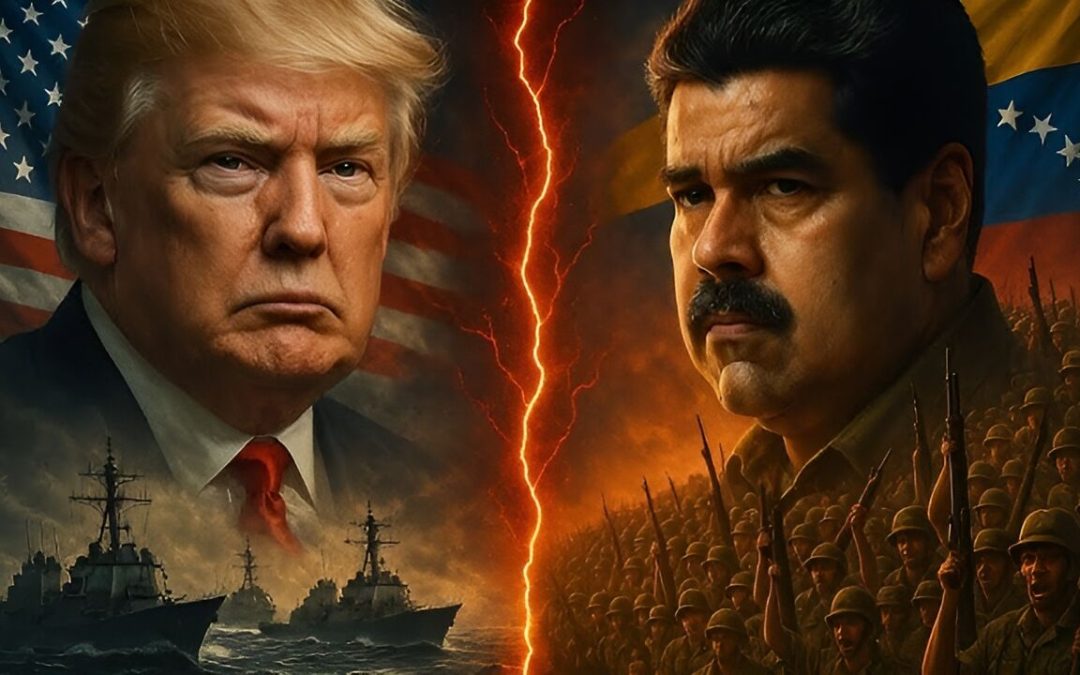
Strategic Council Online – Interview: An American affairs expert stated that in recent weeks, U.S. policy toward Venezuela has undergone a distinct redefinition, shifting toward hard power tools. According to media reports, during Donald Trump’s presidency, the White House reviewed options for military operations “against drug cartels”. It even introduced a deadly attack on a suspected boat leaving Venezuelan waters as the beginning of a new phase of its campaign. This approach has been reinforced by the deployment of significant military assets to the Caribbean periphery, including cruisers equipped with cruise missiles and attack submarines, as well as the stationing of F-35 fighter jets in Puerto Rico. It is complemented by labeling Nicolás Maduro a “narcoterrorist” and doubling the bounty for his capture.
Although Trump, when asked about “regime change,” said, “We’re not discussing that,” by linking Venezuela to the anti-drug mission, he has effectively redefined the “maximum pressure” strategy within a security-military framework. At the regional level, the resurgence of the old concept of “gunboat diplomacy” in America’s backyard sends a deterrent message to Caracas and its allies on one hand, while increasing the risk of sliding into proxy and attritional conflicts on the other. At the structural level, the merging of U.S. domestic considerations, including the “crackdown on drug trafficking” agenda, with geopolitical calculations to control energy resources and routes of influence, indicates that the Venezuela issue is not merely a criminal-security matter but rather a reflection of great power competition and a test of the resilience of the Latin American regional order—an order that, with each crisis escalation, simultaneously creates opportunities and threats for both extra-regional and regional actors.

2023/01/01
Strategic Council Online – Interview: An expert on Latin America affairs commenting on the resumption of negotiations between the Venezuelan government and political opposition after a year-long suspension and the subsequent reduction of some US sanctions against Nicolas Maduro’s government, said: These days, in terms of the American foreign policy, Venezuela is preferred in comparison to many countries, including some countries in the Middle East; because they can deal with this country more easily and due to its proximity, they buy cheaper oil from Caracas.

2022/03/31
Strategic Council Online – Opinion: After the Russian military invasion of Ukraine, two important events occurred in the energy market; first, the negative expectation shock in the field of oil supply, which led to an unprecedented rise in oil prices in recent years and second, the European and American approach to Russian energy (oil and gas) imports has intensified efforts to find alternative resources.
Reza Majidzadeh – Director of Simorgh Development Working Group, Pasargad Millennium Plan Institute

2022/02/06
Strategic Council Online – Opinion: Latin America witnessed an intensive period of presidential, parliamentary and local elections that created an upheaval turn in the policies of the regional countries. Within the past few months, the victory of justice-oriented parties in some of Latin American countries, especially the victory of leftist candidate in Chilean presidential election challenged Washington’s effort to preserve its interventionist position in the region.
Mahmoud Fazeli, Analyst of International Affairs

2021/12/31
Strategic Council Online – Interview: Having said livelihood and tendency towards socialism and leftism in a Latin American neoliberal country like Chile is noticeable, a university professor added:” Now, restoration of political and economic stability is a priority in the country and the leftist president of Chile is making effort to put an end to economic based protests in Chile.
