جدیدترین مطالب

Iran’s Success in the Narrative Battle in Cyberspace

SCFR Online – Opinion: In the war between Iran and the United States, the main battlefield was not defined solely in the military domain; rather, the battle of narratives in cyberspace—particularly through memes—reached a decisive level.

The Global Energy Shock Situation and Future Scenarios

SCFR Online – Opinion: Only one month after the beginning of the Ramadan War, maritime traffic in the Strait of Hormuz decreased dramatically, with Bloomberg announcing a reduction of 103 vessels; Brent oil prices rose by more than 50 percent, and gasoline prices in the United States increased by 31.4 percent. Additionally, benchmark gas prices in Europe showed a 73.4 percent increase.

Al-Zaydi’s Selection as Prime Minister, The Beginning of a New Chapter in Iraq

SCFR Online – Note: After approximately five months of political deadlock and institutional confusion, Ali al-Zaydi has finally been selected as Iraq’s Prime Minister. Al-Zaydi’s selection as Prime Minister represents a positive sign of the completion of the government formation process and the beginning of a new phase in Iraqi politics and governance. The emergence of a young, technocratic figure from the third generation of politicians—in a context where the country has been administered by traditional figures for decades—revives hope that Iraq may perhaps distance itself from the repetitive cycle of crises and experience a new path of stability, efficiency, and regional convergence.

Intensifying Intra-Party Divisions in the United States Regarding the Zionist Regime

SCFR Online – Note: Over recent decades, support for the Zionist regime has been one of the few issues commanding bipartisan consensus in US foreign policy. Since the Cold War era, Republicans and Democrats have generally agreed on the necessity of preserving the security and survival of the Zionist regime as Washington’s most strategic ally in West Asia—and indeed, globally. However, developments in recent years—particularly the Gaza war, escalating regional conflicts, the expansion of tensions into Lebanon, and this regime’s recent warmongering against Iran—have caused this traditional consensus, especially within the Democratic Party, to face significant fractures.

Public Opinion Disappointment of the Zionist Regime Regarding Success in War with Iran

SCFR Online – Opinion: The internal situation of the Israeli regime during the 40-day war can be analyzed from several perspectives. The popularity levels of Benjamin Netanyahu, the Likud Party, and the ruling coalition led by Netanyahu until February 28, 2026, remained approximately the same as during the preceding year. The most recent factor that had somewhat increased Netanyahu’s popularity was the advancement of the 2024 war with Hezbollah Lebanon. Subsequently, his popularity temporarily increased during the 12-day war with Iran, but after the war, it returned to its previous state.

Loading

Iran

NATO’s Ambiguous Mission in Iraq New Plan for Socio-Cultural Influence

NATO’s Ambiguous Mission in Iraq New Plan for Socio-Cultural Influence

Strategic Council Online – Interview: An international relations professor said that although NATO’s training mission for the Iraqi police forces is carried out in line with preventing ISIS from regaining power, in fact, NATO has decided to develop the scope of its mission in Iraq, noted: NATO, and the United States at its head, is looking for influence in the social body of Arab countries, especially Iraq, to advance its targets while shaping the intellectual formation and organizing the police body against the Resistance.

France vs. Baku and Ankara in the Caucasus

France vs. Baku and Ankara in the Caucasus

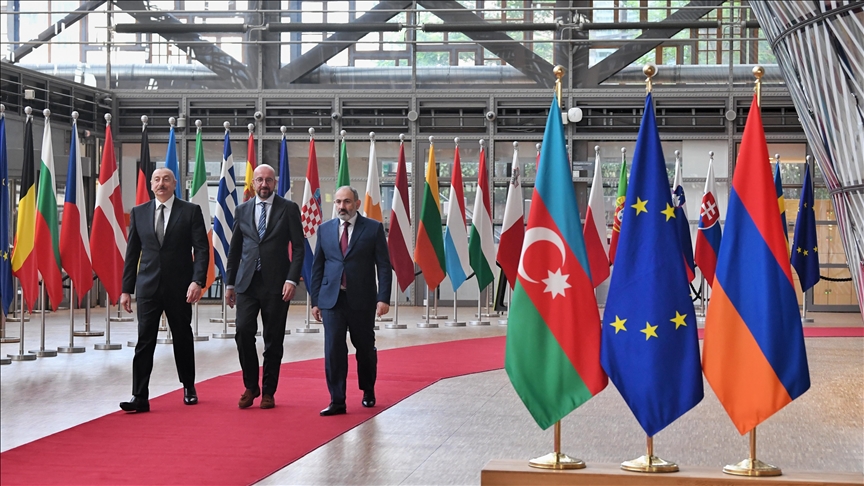
Strategic Council Online – Interview: An international relations university professor stated that Paris is trying not to allow the situation in the Caucasus to progress as desired by the Republic of Azerbaijan and Turkey and hopes the situation can be shaped as much as possible in line with French interests through military assistance, adding: France, after Russia, is the second largest foreign investor in Armenia since 2016. This country is trying to create a rift between Armenia and Russia by strengthening ties with Armenia. France’s military support to Armenia is an important and new development that we are witnessing after the weakening of Russia’s position in Armenia.

Strategic Importance of Establishing Iran’s Permanent Scientific Base at the South Pole

Strategic Importance of Establishing Iran’s Permanent Scientific Base at the South Pole

Strategic Council Online – Interview: Commander of the Strategic Navy of the Army emphasized that Iran’s presence at the South Pole, in addition to increasing its geopolitical weight, also brings deterrent power, adding: Now the people and the scientific community have the demand that in the South Pole we use our property and rights, and due to the existence of the necessary capacities, this measure has been put on the agenda.

New Arabia: the need to develop a suitable strategy

New Arabia: the need to develop a suitable strategy

Strategic Council Online—Opinion: At the end of August this year, Saudi Arabia announced that it had appointed its first ambassador to the Palestinian Authority. Based on this decision, Nayef bin Bandar al-Sudairi, as the extraordinary, plenipotentiary and non-resident ambassador (accredited) of Saudi Arabia in Ramallah and the Saudi consul general in occupied Quds, handed over his credentials to Majdi Al-Khalidi, the diplomatic advisor of Mahmoud Abbas, the head of the Palestinian Authority. Now, less than two months have passed since these decisions and actions, the Saudi government has announced that an official delegation from this country, headed by Nayef Bin Bandar Al-Sudairi, will travel to Ramallah to celebrate the birthday of the Prophet of Islam (PBUH) and to offer prayers in Al-Aqsa Mosque; An unprecedented action since the occupation of Quds in 1967, which will open a new chapter in Saudi Arabia’s diplomatic and role-playing activities in the West Asian region.

Mohammad Mehdi Mazaheri – University professor

Significance of Formation of “Dialogue and Cooperation Assembly” among Persian Gulf States

Significance of Formation of “Dialogue and Cooperation Assembly” among Persian Gulf States

Strategic Council Online – Opinion: One of the most important issues raised during Amir Abdollahian’s trip to the coastal states of the Persian Gulf a few months ago was the formation of a joint mechanism called “Dialogue and Cooperation Assembly” for negotiation and cooperation with the presence of all countries in the Persian Gulf region.
Barsam Mohammadi – Expert on regional affairs

Increasing Negative Influence of the West on Russia-Turkey Relations

Increasing Negative Influence of the West on Russia-Turkey Relations

Strategic Council Online – Interview: A researcher of the Research Center of the Expediency Council, while emphasizing the importance of the recent meeting between the presidents of Turkey and Russia in Sochi, said: The crisis in Ukraine and the pressures of the West have negatively affected Turkey’s balanced approach towards the West and Russia, and that the Russians are doubtful about Turkey’s future policies.

Obstacles, Prospect of Normalization of Riyadh-Tel Aviv Relations

Obstacles, Prospect of Normalization of Riyadh-Tel Aviv Relations

Strategic Council Online – Opinion: Normalization and recognition of relations between the Zionist regime and Saudi Arabia is still at the focal point of the political circles of the Zionist regime. Israel and, recently, the United States administration have focused on this issue and are discussing the imminent compromise between Tel Aviv and Riyadh, which is unrealistic.
Hamid Khoshayand – Expert on regional affairs

New East-West Corridor; First Operational Sign of Failed Abraham Accords

New East-West Corridor; First Operational Sign of Failed Abraham Accords

Strategic Council Online – Opinion: The idea of developing transportation routes to boost trade in the Persian Gulf and eliminate the need for the strategic Strait of Hormuz was formed among the Persian Gulf Cooperation Council member states some years ago. To realize the idea, the rail transport corridor along the Persian Gulf was started in 2016 by launching the Persian Gulf Cooperation Council rail network. According to the agreement signed among the member states of the Council, each of the countries was expected to build and complete their rail network independently. Finally, after completing all national lines, the Persian Gulf Cooperation Council network would be launched by connecting the national rail networks of those countries. In this way, an Arab railway network would be formed, connecting all six Persian Gulf Cooperation Council member countries through a railway line of 2177 kilometers.
Dr. Mohammad Mehdi Mazaheri – University professor

Objectives Behind Holding Joint US-Armenia Military Exercise

Objectives Behind Holding Joint US-Armenia Military Exercise

Strategic Council Online – Interview: The former head of the Foundation for Caucasus Studies considered the holding of a limited exercise between Armenia and the United States a warning to Russia to show that Armenia, under the leadership of Pashinyan, will rely more on the United States and said: This maneuver, which is mainly for the domestic consumption of Biden and Pashinyan governments, will not help Yerevan and will not be effective in the critical developments that are being shaped in the region.

أحدث الوظائف

Iran’s Success in the Narrative Battle in Cyberspace

SCFR Online – Opinion: In the war between Iran and the United States, the main battlefield was not defined solely in the military domain; rather, the battle of narratives in cyberspace—particularly through memes—reached a decisive level.

The Global Energy Shock Situation and Future Scenarios

SCFR Online – Opinion: Only one month after the beginning of the Ramadan War, maritime traffic in the Strait of Hormuz decreased dramatically, with Bloomberg announcing a reduction of 103 vessels; Brent oil prices rose by more than 50 percent, and gasoline prices in the United States increased by 31.4 percent. Additionally, benchmark gas prices in Europe showed a 73.4 percent increase.

Al-Zaydi’s Selection as Prime Minister, The Beginning of a New Chapter in Iraq

SCFR Online – Note: After approximately five months of political deadlock and institutional confusion, Ali al-Zaydi has finally been selected as Iraq’s Prime Minister. Al-Zaydi’s selection as Prime Minister represents a positive sign of the completion of the government formation process and the beginning of a new phase in Iraqi politics and governance. The emergence of a young, technocratic figure from the third generation of politicians—in a context where the country has been administered by traditional figures for decades—revives hope that Iraq may perhaps distance itself from the repetitive cycle of crises and experience a new path of stability, efficiency, and regional convergence.

Intensifying Intra-Party Divisions in the United States Regarding the Zionist Regime

SCFR Online – Note: Over recent decades, support for the Zionist regime has been one of the few issues commanding bipartisan consensus in US foreign policy. Since the Cold War era, Republicans and Democrats have generally agreed on the necessity of preserving the security and survival of the Zionist regime as Washington’s most strategic ally in West Asia—and indeed, globally. However, developments in recent years—particularly the Gaza war, escalating regional conflicts, the expansion of tensions into Lebanon, and this regime’s recent warmongering against Iran—have caused this traditional consensus, especially within the Democratic Party, to face significant fractures.

Public Opinion Disappointment of the Zionist Regime Regarding Success in War with Iran

SCFR Online – Opinion: The internal situation of the Israeli regime during the 40-day war can be analyzed from several perspectives. The popularity levels of Benjamin Netanyahu, the Likud Party, and the ruling coalition led by Netanyahu until February 28, 2026, remained approximately the same as during the preceding year. The most recent factor that had somewhat increased Netanyahu’s popularity was the advancement of the 2024 war with Hezbollah Lebanon. Subsequently, his popularity temporarily increased during the 12-day war with Iran, but after the war, it returned to its previous state.

Loading

Iran

NATO’s Ambiguous Mission in Iraq New Plan for Socio-Cultural Influence

NATO’s Ambiguous Mission in Iraq New Plan for Socio-Cultural Influence

Strategic Council Online – Interview: An international relations professor said that although NATO’s training mission for the Iraqi police forces is carried out in line with preventing ISIS from regaining power, in fact, NATO has decided to develop the scope of its mission in Iraq, noted: NATO, and the United States at its head, is looking for influence in the social body of Arab countries, especially Iraq, to advance its targets while shaping the intellectual formation and organizing the police body against the Resistance.

France vs. Baku and Ankara in the Caucasus

France vs. Baku and Ankara in the Caucasus

Strategic Council Online – Interview: An international relations university professor stated that Paris is trying not to allow the situation in the Caucasus to progress as desired by the Republic of Azerbaijan and Turkey and hopes the situation can be shaped as much as possible in line with French interests through military assistance, adding: France, after Russia, is the second largest foreign investor in Armenia since 2016. This country is trying to create a rift between Armenia and Russia by strengthening ties with Armenia. France’s military support to Armenia is an important and new development that we are witnessing after the weakening of Russia’s position in Armenia.

Strategic Importance of Establishing Iran’s Permanent Scientific Base at the South Pole

Strategic Importance of Establishing Iran’s Permanent Scientific Base at the South Pole

Strategic Council Online – Interview: Commander of the Strategic Navy of the Army emphasized that Iran’s presence at the South Pole, in addition to increasing its geopolitical weight, also brings deterrent power, adding: Now the people and the scientific community have the demand that in the South Pole we use our property and rights, and due to the existence of the necessary capacities, this measure has been put on the agenda.

New Arabia: the need to develop a suitable strategy

New Arabia: the need to develop a suitable strategy

Strategic Council Online—Opinion: At the end of August this year, Saudi Arabia announced that it had appointed its first ambassador to the Palestinian Authority. Based on this decision, Nayef bin Bandar al-Sudairi, as the extraordinary, plenipotentiary and non-resident ambassador (accredited) of Saudi Arabia in Ramallah and the Saudi consul general in occupied Quds, handed over his credentials to Majdi Al-Khalidi, the diplomatic advisor of Mahmoud Abbas, the head of the Palestinian Authority. Now, less than two months have passed since these decisions and actions, the Saudi government has announced that an official delegation from this country, headed by Nayef Bin Bandar Al-Sudairi, will travel to Ramallah to celebrate the birthday of the Prophet of Islam (PBUH) and to offer prayers in Al-Aqsa Mosque; An unprecedented action since the occupation of Quds in 1967, which will open a new chapter in Saudi Arabia’s diplomatic and role-playing activities in the West Asian region.

Mohammad Mehdi Mazaheri – University professor

Significance of Formation of “Dialogue and Cooperation Assembly” among Persian Gulf States

Significance of Formation of “Dialogue and Cooperation Assembly” among Persian Gulf States

Strategic Council Online – Opinion: One of the most important issues raised during Amir Abdollahian’s trip to the coastal states of the Persian Gulf a few months ago was the formation of a joint mechanism called “Dialogue and Cooperation Assembly” for negotiation and cooperation with the presence of all countries in the Persian Gulf region.
Barsam Mohammadi – Expert on regional affairs

Increasing Negative Influence of the West on Russia-Turkey Relations

Increasing Negative Influence of the West on Russia-Turkey Relations

Strategic Council Online – Interview: A researcher of the Research Center of the Expediency Council, while emphasizing the importance of the recent meeting between the presidents of Turkey and Russia in Sochi, said: The crisis in Ukraine and the pressures of the West have negatively affected Turkey’s balanced approach towards the West and Russia, and that the Russians are doubtful about Turkey’s future policies.

Obstacles, Prospect of Normalization of Riyadh-Tel Aviv Relations

Obstacles, Prospect of Normalization of Riyadh-Tel Aviv Relations

Strategic Council Online – Opinion: Normalization and recognition of relations between the Zionist regime and Saudi Arabia is still at the focal point of the political circles of the Zionist regime. Israel and, recently, the United States administration have focused on this issue and are discussing the imminent compromise between Tel Aviv and Riyadh, which is unrealistic.
Hamid Khoshayand – Expert on regional affairs

New East-West Corridor; First Operational Sign of Failed Abraham Accords

New East-West Corridor; First Operational Sign of Failed Abraham Accords

Strategic Council Online – Opinion: The idea of developing transportation routes to boost trade in the Persian Gulf and eliminate the need for the strategic Strait of Hormuz was formed among the Persian Gulf Cooperation Council member states some years ago. To realize the idea, the rail transport corridor along the Persian Gulf was started in 2016 by launching the Persian Gulf Cooperation Council rail network. According to the agreement signed among the member states of the Council, each of the countries was expected to build and complete their rail network independently. Finally, after completing all national lines, the Persian Gulf Cooperation Council network would be launched by connecting the national rail networks of those countries. In this way, an Arab railway network would be formed, connecting all six Persian Gulf Cooperation Council member countries through a railway line of 2177 kilometers.
Dr. Mohammad Mehdi Mazaheri – University professor

Objectives Behind Holding Joint US-Armenia Military Exercise

Objectives Behind Holding Joint US-Armenia Military Exercise

Strategic Council Online – Interview: The former head of the Foundation for Caucasus Studies considered the holding of a limited exercise between Armenia and the United States a warning to Russia to show that Armenia, under the leadership of Pashinyan, will rely more on the United States and said: This maneuver, which is mainly for the domestic consumption of Biden and Pashinyan governments, will not help Yerevan and will not be effective in the critical developments that are being shaped in the region.

Iran

NATO’s Ambiguous Mission in Iraq New Plan for Socio-Cultural Influence

NATO’s Ambiguous Mission in Iraq New Plan for Socio-Cultural Influence

Strategic Council Online – Interview: An international relations professor said that although NATO’s training mission for the Iraqi police forces is carried out in line with preventing ISIS from regaining power, in fact, NATO has decided to develop the scope of its mission in Iraq, noted: NATO, and the United States at its head, is looking for influence in the social body of Arab countries, especially Iraq, to advance its targets while shaping the intellectual formation and organizing the police body against the Resistance.

France vs. Baku and Ankara in the Caucasus

France vs. Baku and Ankara in the Caucasus

Strategic Council Online – Interview: An international relations university professor stated that Paris is trying not to allow the situation in the Caucasus to progress as desired by the Republic of Azerbaijan and Turkey and hopes the situation can be shaped as much as possible in line with French interests through military assistance, adding: France, after Russia, is the second largest foreign investor in Armenia since 2016. This country is trying to create a rift between Armenia and Russia by strengthening ties with Armenia. France’s military support to Armenia is an important and new development that we are witnessing after the weakening of Russia’s position in Armenia.

Strategic Importance of Establishing Iran’s Permanent Scientific Base at the South Pole

Strategic Importance of Establishing Iran’s Permanent Scientific Base at the South Pole

Strategic Council Online – Interview: Commander of the Strategic Navy of the Army emphasized that Iran’s presence at the South Pole, in addition to increasing its geopolitical weight, also brings deterrent power, adding: Now the people and the scientific community have the demand that in the South Pole we use our property and rights, and due to the existence of the necessary capacities, this measure has been put on the agenda.

New Arabia: the need to develop a suitable strategy

New Arabia: the need to develop a suitable strategy

Strategic Council Online—Opinion: At the end of August this year, Saudi Arabia announced that it had appointed its first ambassador to the Palestinian Authority. Based on this decision, Nayef bin Bandar al-Sudairi, as the extraordinary, plenipotentiary and non-resident ambassador (accredited) of Saudi Arabia in Ramallah and the Saudi consul general in occupied Quds, handed over his credentials to Majdi Al-Khalidi, the diplomatic advisor of Mahmoud Abbas, the head of the Palestinian Authority. Now, less than two months have passed since these decisions and actions, the Saudi government has announced that an official delegation from this country, headed by Nayef Bin Bandar Al-Sudairi, will travel to Ramallah to celebrate the birthday of the Prophet of Islam (PBUH) and to offer prayers in Al-Aqsa Mosque; An unprecedented action since the occupation of Quds in 1967, which will open a new chapter in Saudi Arabia’s diplomatic and role-playing activities in the West Asian region.

Mohammad Mehdi Mazaheri – University professor

Significance of Formation of “Dialogue and Cooperation Assembly” among Persian Gulf States

Significance of Formation of “Dialogue and Cooperation Assembly” among Persian Gulf States

Strategic Council Online – Opinion: One of the most important issues raised during Amir Abdollahian’s trip to the coastal states of the Persian Gulf a few months ago was the formation of a joint mechanism called “Dialogue and Cooperation Assembly” for negotiation and cooperation with the presence of all countries in the Persian Gulf region.
Barsam Mohammadi – Expert on regional affairs

Increasing Negative Influence of the West on Russia-Turkey Relations

Increasing Negative Influence of the West on Russia-Turkey Relations

Strategic Council Online – Interview: A researcher of the Research Center of the Expediency Council, while emphasizing the importance of the recent meeting between the presidents of Turkey and Russia in Sochi, said: The crisis in Ukraine and the pressures of the West have negatively affected Turkey’s balanced approach towards the West and Russia, and that the Russians are doubtful about Turkey’s future policies.

Obstacles, Prospect of Normalization of Riyadh-Tel Aviv Relations

Obstacles, Prospect of Normalization of Riyadh-Tel Aviv Relations

Strategic Council Online – Opinion: Normalization and recognition of relations between the Zionist regime and Saudi Arabia is still at the focal point of the political circles of the Zionist regime. Israel and, recently, the United States administration have focused on this issue and are discussing the imminent compromise between Tel Aviv and Riyadh, which is unrealistic.
Hamid Khoshayand – Expert on regional affairs

New East-West Corridor; First Operational Sign of Failed Abraham Accords

New East-West Corridor; First Operational Sign of Failed Abraham Accords

Strategic Council Online – Opinion: The idea of developing transportation routes to boost trade in the Persian Gulf and eliminate the need for the strategic Strait of Hormuz was formed among the Persian Gulf Cooperation Council member states some years ago. To realize the idea, the rail transport corridor along the Persian Gulf was started in 2016 by launching the Persian Gulf Cooperation Council rail network. According to the agreement signed among the member states of the Council, each of the countries was expected to build and complete their rail network independently. Finally, after completing all national lines, the Persian Gulf Cooperation Council network would be launched by connecting the national rail networks of those countries. In this way, an Arab railway network would be formed, connecting all six Persian Gulf Cooperation Council member countries through a railway line of 2177 kilometers.
Dr. Mohammad Mehdi Mazaheri – University professor

Objectives Behind Holding Joint US-Armenia Military Exercise

Objectives Behind Holding Joint US-Armenia Military Exercise

Strategic Council Online – Interview: The former head of the Foundation for Caucasus Studies considered the holding of a limited exercise between Armenia and the United States a warning to Russia to show that Armenia, under the leadership of Pashinyan, will rely more on the United States and said: This maneuver, which is mainly for the domestic consumption of Biden and Pashinyan governments, will not help Yerevan and will not be effective in the critical developments that are being shaped in the region.

LATEST CONTENT

Iran’s Success in the Narrative Battle in Cyberspace

SCFR Online – Opinion: In the war between Iran and the United States, the main battlefield was not defined solely in the military domain; rather, the battle of narratives in cyberspace—particularly through memes—reached a decisive level.

The Global Energy Shock Situation and Future Scenarios

SCFR Online – Opinion: Only one month after the beginning of the Ramadan War, maritime traffic in the Strait of Hormuz decreased dramatically, with Bloomberg announcing a reduction of 103 vessels; Brent oil prices rose by more than 50 percent, and gasoline prices in the United States increased by 31.4 percent. Additionally, benchmark gas prices in Europe showed a 73.4 percent increase.

Al-Zaydi’s Selection as Prime Minister, The Beginning of a New Chapter in Iraq

SCFR Online – Note: After approximately five months of political deadlock and institutional confusion, Ali al-Zaydi has finally been selected as Iraq’s Prime Minister. Al-Zaydi’s selection as Prime Minister represents a positive sign of the completion of the government formation process and the beginning of a new phase in Iraqi politics and governance. The emergence of a young, technocratic figure from the third generation of politicians—in a context where the country has been administered by traditional figures for decades—revives hope that Iraq may perhaps distance itself from the repetitive cycle of crises and experience a new path of stability, efficiency, and regional convergence.

Intensifying Intra-Party Divisions in the United States Regarding the Zionist Regime

SCFR Online – Note: Over recent decades, support for the Zionist regime has been one of the few issues commanding bipartisan consensus in US foreign policy. Since the Cold War era, Republicans and Democrats have generally agreed on the necessity of preserving the security and survival of the Zionist regime as Washington’s most strategic ally in West Asia—and indeed, globally. However, developments in recent years—particularly the Gaza war, escalating regional conflicts, the expansion of tensions into Lebanon, and this regime’s recent warmongering against Iran—have caused this traditional consensus, especially within the Democratic Party, to face significant fractures.

Public Opinion Disappointment of the Zionist Regime Regarding Success in War with Iran

SCFR Online – Opinion: The internal situation of the Israeli regime during the 40-day war can be analyzed from several perspectives. The popularity levels of Benjamin Netanyahu, the Likud Party, and the ruling coalition led by Netanyahu until February 28, 2026, remained approximately the same as during the preceding year. The most recent factor that had somewhat increased Netanyahu’s popularity was the advancement of the 2024 war with Hezbollah Lebanon. Subsequently, his popularity temporarily increased during the 12-day war with Iran, but after the war, it returned to its previous state.

Loading

Iran

NATO’s Ambiguous Mission in Iraq New Plan for Socio-Cultural Influence

NATO’s Ambiguous Mission in Iraq New Plan for Socio-Cultural Influence

Strategic Council Online – Interview: An international relations professor said that although NATO’s training mission for the Iraqi police forces is carried out in line with preventing ISIS from regaining power, in fact, NATO has decided to develop the scope of its mission in Iraq, noted: NATO, and the United States at its head, is looking for influence in the social body of Arab countries, especially Iraq, to advance its targets while shaping the intellectual formation and organizing the police body against the Resistance.

France vs. Baku and Ankara in the Caucasus

France vs. Baku and Ankara in the Caucasus

Strategic Council Online – Interview: An international relations university professor stated that Paris is trying not to allow the situation in the Caucasus to progress as desired by the Republic of Azerbaijan and Turkey and hopes the situation can be shaped as much as possible in line with French interests through military assistance, adding: France, after Russia, is the second largest foreign investor in Armenia since 2016. This country is trying to create a rift between Armenia and Russia by strengthening ties with Armenia. France’s military support to Armenia is an important and new development that we are witnessing after the weakening of Russia’s position in Armenia.

Strategic Importance of Establishing Iran’s Permanent Scientific Base at the South Pole

Strategic Importance of Establishing Iran’s Permanent Scientific Base at the South Pole

Strategic Council Online – Interview: Commander of the Strategic Navy of the Army emphasized that Iran’s presence at the South Pole, in addition to increasing its geopolitical weight, also brings deterrent power, adding: Now the people and the scientific community have the demand that in the South Pole we use our property and rights, and due to the existence of the necessary capacities, this measure has been put on the agenda.

New Arabia: the need to develop a suitable strategy

New Arabia: the need to develop a suitable strategy

Strategic Council Online—Opinion: At the end of August this year, Saudi Arabia announced that it had appointed its first ambassador to the Palestinian Authority. Based on this decision, Nayef bin Bandar al-Sudairi, as the extraordinary, plenipotentiary and non-resident ambassador (accredited) of Saudi Arabia in Ramallah and the Saudi consul general in occupied Quds, handed over his credentials to Majdi Al-Khalidi, the diplomatic advisor of Mahmoud Abbas, the head of the Palestinian Authority. Now, less than two months have passed since these decisions and actions, the Saudi government has announced that an official delegation from this country, headed by Nayef Bin Bandar Al-Sudairi, will travel to Ramallah to celebrate the birthday of the Prophet of Islam (PBUH) and to offer prayers in Al-Aqsa Mosque; An unprecedented action since the occupation of Quds in 1967, which will open a new chapter in Saudi Arabia’s diplomatic and role-playing activities in the West Asian region.

Mohammad Mehdi Mazaheri – University professor

Significance of Formation of “Dialogue and Cooperation Assembly” among Persian Gulf States

Significance of Formation of “Dialogue and Cooperation Assembly” among Persian Gulf States

Strategic Council Online – Opinion: One of the most important issues raised during Amir Abdollahian’s trip to the coastal states of the Persian Gulf a few months ago was the formation of a joint mechanism called “Dialogue and Cooperation Assembly” for negotiation and cooperation with the presence of all countries in the Persian Gulf region.
Barsam Mohammadi – Expert on regional affairs

Increasing Negative Influence of the West on Russia-Turkey Relations

Increasing Negative Influence of the West on Russia-Turkey Relations

Strategic Council Online – Interview: A researcher of the Research Center of the Expediency Council, while emphasizing the importance of the recent meeting between the presidents of Turkey and Russia in Sochi, said: The crisis in Ukraine and the pressures of the West have negatively affected Turkey’s balanced approach towards the West and Russia, and that the Russians are doubtful about Turkey’s future policies.

Obstacles, Prospect of Normalization of Riyadh-Tel Aviv Relations

Obstacles, Prospect of Normalization of Riyadh-Tel Aviv Relations

Strategic Council Online – Opinion: Normalization and recognition of relations between the Zionist regime and Saudi Arabia is still at the focal point of the political circles of the Zionist regime. Israel and, recently, the United States administration have focused on this issue and are discussing the imminent compromise between Tel Aviv and Riyadh, which is unrealistic.
Hamid Khoshayand – Expert on regional affairs

New East-West Corridor; First Operational Sign of Failed Abraham Accords

New East-West Corridor; First Operational Sign of Failed Abraham Accords

Strategic Council Online – Opinion: The idea of developing transportation routes to boost trade in the Persian Gulf and eliminate the need for the strategic Strait of Hormuz was formed among the Persian Gulf Cooperation Council member states some years ago. To realize the idea, the rail transport corridor along the Persian Gulf was started in 2016 by launching the Persian Gulf Cooperation Council rail network. According to the agreement signed among the member states of the Council, each of the countries was expected to build and complete their rail network independently. Finally, after completing all national lines, the Persian Gulf Cooperation Council network would be launched by connecting the national rail networks of those countries. In this way, an Arab railway network would be formed, connecting all six Persian Gulf Cooperation Council member countries through a railway line of 2177 kilometers.
Dr. Mohammad Mehdi Mazaheri – University professor

Objectives Behind Holding Joint US-Armenia Military Exercise

Objectives Behind Holding Joint US-Armenia Military Exercise

Strategic Council Online – Interview: The former head of the Foundation for Caucasus Studies considered the holding of a limited exercise between Armenia and the United States a warning to Russia to show that Armenia, under the leadership of Pashinyan, will rely more on the United States and said: This maneuver, which is mainly for the domestic consumption of Biden and Pashinyan governments, will not help Yerevan and will not be effective in the critical developments that are being shaped in the region.

ÚLTIMAS PUBLICACIONES

Iran’s Success in the Narrative Battle in Cyberspace

SCFR Online – Opinion: In the war between Iran and the United States, the main battlefield was not defined solely in the military domain; rather, the battle of narratives in cyberspace—particularly through memes—reached a decisive level.

The Global Energy Shock Situation and Future Scenarios

SCFR Online – Opinion: Only one month after the beginning of the Ramadan War, maritime traffic in the Strait of Hormuz decreased dramatically, with Bloomberg announcing a reduction of 103 vessels; Brent oil prices rose by more than 50 percent, and gasoline prices in the United States increased by 31.4 percent. Additionally, benchmark gas prices in Europe showed a 73.4 percent increase.

Al-Zaydi’s Selection as Prime Minister, The Beginning of a New Chapter in Iraq

SCFR Online – Note: After approximately five months of political deadlock and institutional confusion, Ali al-Zaydi has finally been selected as Iraq’s Prime Minister. Al-Zaydi’s selection as Prime Minister represents a positive sign of the completion of the government formation process and the beginning of a new phase in Iraqi politics and governance. The emergence of a young, technocratic figure from the third generation of politicians—in a context where the country has been administered by traditional figures for decades—revives hope that Iraq may perhaps distance itself from the repetitive cycle of crises and experience a new path of stability, efficiency, and regional convergence.

Intensifying Intra-Party Divisions in the United States Regarding the Zionist Regime

SCFR Online – Note: Over recent decades, support for the Zionist regime has been one of the few issues commanding bipartisan consensus in US foreign policy. Since the Cold War era, Republicans and Democrats have generally agreed on the necessity of preserving the security and survival of the Zionist regime as Washington’s most strategic ally in West Asia—and indeed, globally. However, developments in recent years—particularly the Gaza war, escalating regional conflicts, the expansion of tensions into Lebanon, and this regime’s recent warmongering against Iran—have caused this traditional consensus, especially within the Democratic Party, to face significant fractures.

Public Opinion Disappointment of the Zionist Regime Regarding Success in War with Iran

SCFR Online – Opinion: The internal situation of the Israeli regime during the 40-day war can be analyzed from several perspectives. The popularity levels of Benjamin Netanyahu, the Likud Party, and the ruling coalition led by Netanyahu until February 28, 2026, remained approximately the same as during the preceding year. The most recent factor that had somewhat increased Netanyahu’s popularity was the advancement of the 2024 war with Hezbollah Lebanon. Subsequently, his popularity temporarily increased during the 12-day war with Iran, but after the war, it returned to its previous state.

Loading

Iran

NATO’s Ambiguous Mission in Iraq New Plan for Socio-Cultural Influence

NATO’s Ambiguous Mission in Iraq New Plan for Socio-Cultural Influence

Strategic Council Online – Interview: An international relations professor said that although NATO’s training mission for the Iraqi police forces is carried out in line with preventing ISIS from regaining power, in fact, NATO has decided to develop the scope of its mission in Iraq, noted: NATO, and the United States at its head, is looking for influence in the social body of Arab countries, especially Iraq, to advance its targets while shaping the intellectual formation and organizing the police body against the Resistance.

France vs. Baku and Ankara in the Caucasus

France vs. Baku and Ankara in the Caucasus

Strategic Council Online – Interview: An international relations university professor stated that Paris is trying not to allow the situation in the Caucasus to progress as desired by the Republic of Azerbaijan and Turkey and hopes the situation can be shaped as much as possible in line with French interests through military assistance, adding: France, after Russia, is the second largest foreign investor in Armenia since 2016. This country is trying to create a rift between Armenia and Russia by strengthening ties with Armenia. France’s military support to Armenia is an important and new development that we are witnessing after the weakening of Russia’s position in Armenia.

Strategic Importance of Establishing Iran’s Permanent Scientific Base at the South Pole

Strategic Importance of Establishing Iran’s Permanent Scientific Base at the South Pole

Strategic Council Online – Interview: Commander of the Strategic Navy of the Army emphasized that Iran’s presence at the South Pole, in addition to increasing its geopolitical weight, also brings deterrent power, adding: Now the people and the scientific community have the demand that in the South Pole we use our property and rights, and due to the existence of the necessary capacities, this measure has been put on the agenda.

New Arabia: the need to develop a suitable strategy

New Arabia: the need to develop a suitable strategy

Strategic Council Online—Opinion: At the end of August this year, Saudi Arabia announced that it had appointed its first ambassador to the Palestinian Authority. Based on this decision, Nayef bin Bandar al-Sudairi, as the extraordinary, plenipotentiary and non-resident ambassador (accredited) of Saudi Arabia in Ramallah and the Saudi consul general in occupied Quds, handed over his credentials to Majdi Al-Khalidi, the diplomatic advisor of Mahmoud Abbas, the head of the Palestinian Authority. Now, less than two months have passed since these decisions and actions, the Saudi government has announced that an official delegation from this country, headed by Nayef Bin Bandar Al-Sudairi, will travel to Ramallah to celebrate the birthday of the Prophet of Islam (PBUH) and to offer prayers in Al-Aqsa Mosque; An unprecedented action since the occupation of Quds in 1967, which will open a new chapter in Saudi Arabia’s diplomatic and role-playing activities in the West Asian region.

Mohammad Mehdi Mazaheri – University professor

Significance of Formation of “Dialogue and Cooperation Assembly” among Persian Gulf States

Significance of Formation of “Dialogue and Cooperation Assembly” among Persian Gulf States

Strategic Council Online – Opinion: One of the most important issues raised during Amir Abdollahian’s trip to the coastal states of the Persian Gulf a few months ago was the formation of a joint mechanism called “Dialogue and Cooperation Assembly” for negotiation and cooperation with the presence of all countries in the Persian Gulf region.
Barsam Mohammadi – Expert on regional affairs

Increasing Negative Influence of the West on Russia-Turkey Relations

Increasing Negative Influence of the West on Russia-Turkey Relations

Strategic Council Online – Interview: A researcher of the Research Center of the Expediency Council, while emphasizing the importance of the recent meeting between the presidents of Turkey and Russia in Sochi, said: The crisis in Ukraine and the pressures of the West have negatively affected Turkey’s balanced approach towards the West and Russia, and that the Russians are doubtful about Turkey’s future policies.

Obstacles, Prospect of Normalization of Riyadh-Tel Aviv Relations

Obstacles, Prospect of Normalization of Riyadh-Tel Aviv Relations

Strategic Council Online – Opinion: Normalization and recognition of relations between the Zionist regime and Saudi Arabia is still at the focal point of the political circles of the Zionist regime. Israel and, recently, the United States administration have focused on this issue and are discussing the imminent compromise between Tel Aviv and Riyadh, which is unrealistic.
Hamid Khoshayand – Expert on regional affairs

New East-West Corridor; First Operational Sign of Failed Abraham Accords

New East-West Corridor; First Operational Sign of Failed Abraham Accords

Strategic Council Online – Opinion: The idea of developing transportation routes to boost trade in the Persian Gulf and eliminate the need for the strategic Strait of Hormuz was formed among the Persian Gulf Cooperation Council member states some years ago. To realize the idea, the rail transport corridor along the Persian Gulf was started in 2016 by launching the Persian Gulf Cooperation Council rail network. According to the agreement signed among the member states of the Council, each of the countries was expected to build and complete their rail network independently. Finally, after completing all national lines, the Persian Gulf Cooperation Council network would be launched by connecting the national rail networks of those countries. In this way, an Arab railway network would be formed, connecting all six Persian Gulf Cooperation Council member countries through a railway line of 2177 kilometers.
Dr. Mohammad Mehdi Mazaheri – University professor

Objectives Behind Holding Joint US-Armenia Military Exercise

Objectives Behind Holding Joint US-Armenia Military Exercise

Strategic Council Online – Interview: The former head of the Foundation for Caucasus Studies considered the holding of a limited exercise between Armenia and the United States a warning to Russia to show that Armenia, under the leadership of Pashinyan, will rely more on the United States and said: This maneuver, which is mainly for the domestic consumption of Biden and Pashinyan governments, will not help Yerevan and will not be effective in the critical developments that are being shaped in the region.

ÚLTIMAS PUBLICACIONES

Iran’s Success in the Narrative Battle in Cyberspace

SCFR Online – Opinion: In the war between Iran and the United States, the main battlefield was not defined solely in the military domain; rather, the battle of narratives in cyberspace—particularly through memes—reached a decisive level.

The Global Energy Shock Situation and Future Scenarios

SCFR Online – Opinion: Only one month after the beginning of the Ramadan War, maritime traffic in the Strait of Hormuz decreased dramatically, with Bloomberg announcing a reduction of 103 vessels; Brent oil prices rose by more than 50 percent, and gasoline prices in the United States increased by 31.4 percent. Additionally, benchmark gas prices in Europe showed a 73.4 percent increase.

Al-Zaydi’s Selection as Prime Minister, The Beginning of a New Chapter in Iraq

SCFR Online – Note: After approximately five months of political deadlock and institutional confusion, Ali al-Zaydi has finally been selected as Iraq’s Prime Minister. Al-Zaydi’s selection as Prime Minister represents a positive sign of the completion of the government formation process and the beginning of a new phase in Iraqi politics and governance. The emergence of a young, technocratic figure from the third generation of politicians—in a context where the country has been administered by traditional figures for decades—revives hope that Iraq may perhaps distance itself from the repetitive cycle of crises and experience a new path of stability, efficiency, and regional convergence.

Intensifying Intra-Party Divisions in the United States Regarding the Zionist Regime

SCFR Online – Note: Over recent decades, support for the Zionist regime has been one of the few issues commanding bipartisan consensus in US foreign policy. Since the Cold War era, Republicans and Democrats have generally agreed on the necessity of preserving the security and survival of the Zionist regime as Washington’s most strategic ally in West Asia—and indeed, globally. However, developments in recent years—particularly the Gaza war, escalating regional conflicts, the expansion of tensions into Lebanon, and this regime’s recent warmongering against Iran—have caused this traditional consensus, especially within the Democratic Party, to face significant fractures.

Public Opinion Disappointment of the Zionist Regime Regarding Success in War with Iran

SCFR Online – Opinion: The internal situation of the Israeli regime during the 40-day war can be analyzed from several perspectives. The popularity levels of Benjamin Netanyahu, the Likud Party, and the ruling coalition led by Netanyahu until February 28, 2026, remained approximately the same as during the preceding year. The most recent factor that had somewhat increased Netanyahu’s popularity was the advancement of the 2024 war with Hezbollah Lebanon. Subsequently, his popularity temporarily increased during the 12-day war with Iran, but after the war, it returned to its previous state.

Loading

Iran

NATO’s Ambiguous Mission in Iraq New Plan for Socio-Cultural Influence

NATO’s Ambiguous Mission in Iraq New Plan for Socio-Cultural Influence

Strategic Council Online – Interview: An international relations professor said that although NATO’s training mission for the Iraqi police forces is carried out in line with preventing ISIS from regaining power, in fact, NATO has decided to develop the scope of its mission in Iraq, noted: NATO, and the United States at its head, is looking for influence in the social body of Arab countries, especially Iraq, to advance its targets while shaping the intellectual formation and organizing the police body against the Resistance.

France vs. Baku and Ankara in the Caucasus

France vs. Baku and Ankara in the Caucasus

Strategic Council Online – Interview: An international relations university professor stated that Paris is trying not to allow the situation in the Caucasus to progress as desired by the Republic of Azerbaijan and Turkey and hopes the situation can be shaped as much as possible in line with French interests through military assistance, adding: France, after Russia, is the second largest foreign investor in Armenia since 2016. This country is trying to create a rift between Armenia and Russia by strengthening ties with Armenia. France’s military support to Armenia is an important and new development that we are witnessing after the weakening of Russia’s position in Armenia.

Strategic Importance of Establishing Iran’s Permanent Scientific Base at the South Pole

Strategic Importance of Establishing Iran’s Permanent Scientific Base at the South Pole

Strategic Council Online – Interview: Commander of the Strategic Navy of the Army emphasized that Iran’s presence at the South Pole, in addition to increasing its geopolitical weight, also brings deterrent power, adding: Now the people and the scientific community have the demand that in the South Pole we use our property and rights, and due to the existence of the necessary capacities, this measure has been put on the agenda.

New Arabia: the need to develop a suitable strategy

New Arabia: the need to develop a suitable strategy

Strategic Council Online—Opinion: At the end of August this year, Saudi Arabia announced that it had appointed its first ambassador to the Palestinian Authority. Based on this decision, Nayef bin Bandar al-Sudairi, as the extraordinary, plenipotentiary and non-resident ambassador (accredited) of Saudi Arabia in Ramallah and the Saudi consul general in occupied Quds, handed over his credentials to Majdi Al-Khalidi, the diplomatic advisor of Mahmoud Abbas, the head of the Palestinian Authority. Now, less than two months have passed since these decisions and actions, the Saudi government has announced that an official delegation from this country, headed by Nayef Bin Bandar Al-Sudairi, will travel to Ramallah to celebrate the birthday of the Prophet of Islam (PBUH) and to offer prayers in Al-Aqsa Mosque; An unprecedented action since the occupation of Quds in 1967, which will open a new chapter in Saudi Arabia’s diplomatic and role-playing activities in the West Asian region.

Mohammad Mehdi Mazaheri – University professor

Significance of Formation of “Dialogue and Cooperation Assembly” among Persian Gulf States

Significance of Formation of “Dialogue and Cooperation Assembly” among Persian Gulf States

Strategic Council Online – Opinion: One of the most important issues raised during Amir Abdollahian’s trip to the coastal states of the Persian Gulf a few months ago was the formation of a joint mechanism called “Dialogue and Cooperation Assembly” for negotiation and cooperation with the presence of all countries in the Persian Gulf region.
Barsam Mohammadi – Expert on regional affairs

Increasing Negative Influence of the West on Russia-Turkey Relations

Increasing Negative Influence of the West on Russia-Turkey Relations

Strategic Council Online – Interview: A researcher of the Research Center of the Expediency Council, while emphasizing the importance of the recent meeting between the presidents of Turkey and Russia in Sochi, said: The crisis in Ukraine and the pressures of the West have negatively affected Turkey’s balanced approach towards the West and Russia, and that the Russians are doubtful about Turkey’s future policies.

Obstacles, Prospect of Normalization of Riyadh-Tel Aviv Relations

Obstacles, Prospect of Normalization of Riyadh-Tel Aviv Relations

Strategic Council Online – Opinion: Normalization and recognition of relations between the Zionist regime and Saudi Arabia is still at the focal point of the political circles of the Zionist regime. Israel and, recently, the United States administration have focused on this issue and are discussing the imminent compromise between Tel Aviv and Riyadh, which is unrealistic.
Hamid Khoshayand – Expert on regional affairs

New East-West Corridor; First Operational Sign of Failed Abraham Accords

New East-West Corridor; First Operational Sign of Failed Abraham Accords

Strategic Council Online – Opinion: The idea of developing transportation routes to boost trade in the Persian Gulf and eliminate the need for the strategic Strait of Hormuz was formed among the Persian Gulf Cooperation Council member states some years ago. To realize the idea, the rail transport corridor along the Persian Gulf was started in 2016 by launching the Persian Gulf Cooperation Council rail network. According to the agreement signed among the member states of the Council, each of the countries was expected to build and complete their rail network independently. Finally, after completing all national lines, the Persian Gulf Cooperation Council network would be launched by connecting the national rail networks of those countries. In this way, an Arab railway network would be formed, connecting all six Persian Gulf Cooperation Council member countries through a railway line of 2177 kilometers.
Dr. Mohammad Mehdi Mazaheri – University professor

Objectives Behind Holding Joint US-Armenia Military Exercise

Objectives Behind Holding Joint US-Armenia Military Exercise

Strategic Council Online – Interview: The former head of the Foundation for Caucasus Studies considered the holding of a limited exercise between Armenia and the United States a warning to Russia to show that Armenia, under the leadership of Pashinyan, will rely more on the United States and said: This maneuver, which is mainly for the domestic consumption of Biden and Pashinyan governments, will not help Yerevan and will not be effective in the critical developments that are being shaped in the region.

ÚLTIMAS PUBLICACIONES

Iran’s Success in the Narrative Battle in Cyberspace

SCFR Online – Opinion: In the war between Iran and the United States, the main battlefield was not defined solely in the military domain; rather, the battle of narratives in cyberspace—particularly through memes—reached a decisive level.

The Global Energy Shock Situation and Future Scenarios

SCFR Online – Opinion: Only one month after the beginning of the Ramadan War, maritime traffic in the Strait of Hormuz decreased dramatically, with Bloomberg announcing a reduction of 103 vessels; Brent oil prices rose by more than 50 percent, and gasoline prices in the United States increased by 31.4 percent. Additionally, benchmark gas prices in Europe showed a 73.4 percent increase.

Al-Zaydi’s Selection as Prime Minister, The Beginning of a New Chapter in Iraq

SCFR Online – Note: After approximately five months of political deadlock and institutional confusion, Ali al-Zaydi has finally been selected as Iraq’s Prime Minister. Al-Zaydi’s selection as Prime Minister represents a positive sign of the completion of the government formation process and the beginning of a new phase in Iraqi politics and governance. The emergence of a young, technocratic figure from the third generation of politicians—in a context where the country has been administered by traditional figures for decades—revives hope that Iraq may perhaps distance itself from the repetitive cycle of crises and experience a new path of stability, efficiency, and regional convergence.

Intensifying Intra-Party Divisions in the United States Regarding the Zionist Regime

SCFR Online – Note: Over recent decades, support for the Zionist regime has been one of the few issues commanding bipartisan consensus in US foreign policy. Since the Cold War era, Republicans and Democrats have generally agreed on the necessity of preserving the security and survival of the Zionist regime as Washington’s most strategic ally in West Asia—and indeed, globally. However, developments in recent years—particularly the Gaza war, escalating regional conflicts, the expansion of tensions into Lebanon, and this regime’s recent warmongering against Iran—have caused this traditional consensus, especially within the Democratic Party, to face significant fractures.

Public Opinion Disappointment of the Zionist Regime Regarding Success in War with Iran

SCFR Online – Opinion: The internal situation of the Israeli regime during the 40-day war can be analyzed from several perspectives. The popularity levels of Benjamin Netanyahu, the Likud Party, and the ruling coalition led by Netanyahu until February 28, 2026, remained approximately the same as during the preceding year. The most recent factor that had somewhat increased Netanyahu’s popularity was the advancement of the 2024 war with Hezbollah Lebanon. Subsequently, his popularity temporarily increased during the 12-day war with Iran, but after the war, it returned to its previous state.

Loading

Iran

NATO’s Ambiguous Mission in Iraq New Plan for Socio-Cultural Influence

NATO’s Ambiguous Mission in Iraq New Plan for Socio-Cultural Influence

Strategic Council Online – Interview: An international relations professor said that although NATO’s training mission for the Iraqi police forces is carried out in line with preventing ISIS from regaining power, in fact, NATO has decided to develop the scope of its mission in Iraq, noted: NATO, and the United States at its head, is looking for influence in the social body of Arab countries, especially Iraq, to advance its targets while shaping the intellectual formation and organizing the police body against the Resistance.

France vs. Baku and Ankara in the Caucasus

France vs. Baku and Ankara in the Caucasus

Strategic Council Online – Interview: An international relations university professor stated that Paris is trying not to allow the situation in the Caucasus to progress as desired by the Republic of Azerbaijan and Turkey and hopes the situation can be shaped as much as possible in line with French interests through military assistance, adding: France, after Russia, is the second largest foreign investor in Armenia since 2016. This country is trying to create a rift between Armenia and Russia by strengthening ties with Armenia. France’s military support to Armenia is an important and new development that we are witnessing after the weakening of Russia’s position in Armenia.

Strategic Importance of Establishing Iran’s Permanent Scientific Base at the South Pole

Strategic Importance of Establishing Iran’s Permanent Scientific Base at the South Pole

Strategic Council Online – Interview: Commander of the Strategic Navy of the Army emphasized that Iran’s presence at the South Pole, in addition to increasing its geopolitical weight, also brings deterrent power, adding: Now the people and the scientific community have the demand that in the South Pole we use our property and rights, and due to the existence of the necessary capacities, this measure has been put on the agenda.

New Arabia: the need to develop a suitable strategy

New Arabia: the need to develop a suitable strategy

Strategic Council Online—Opinion: At the end of August this year, Saudi Arabia announced that it had appointed its first ambassador to the Palestinian Authority. Based on this decision, Nayef bin Bandar al-Sudairi, as the extraordinary, plenipotentiary and non-resident ambassador (accredited) of Saudi Arabia in Ramallah and the Saudi consul general in occupied Quds, handed over his credentials to Majdi Al-Khalidi, the diplomatic advisor of Mahmoud Abbas, the head of the Palestinian Authority. Now, less than two months have passed since these decisions and actions, the Saudi government has announced that an official delegation from this country, headed by Nayef Bin Bandar Al-Sudairi, will travel to Ramallah to celebrate the birthday of the Prophet of Islam (PBUH) and to offer prayers in Al-Aqsa Mosque; An unprecedented action since the occupation of Quds in 1967, which will open a new chapter in Saudi Arabia’s diplomatic and role-playing activities in the West Asian region.

Mohammad Mehdi Mazaheri – University professor

Significance of Formation of “Dialogue and Cooperation Assembly” among Persian Gulf States

Significance of Formation of “Dialogue and Cooperation Assembly” among Persian Gulf States

Strategic Council Online – Opinion: One of the most important issues raised during Amir Abdollahian’s trip to the coastal states of the Persian Gulf a few months ago was the formation of a joint mechanism called “Dialogue and Cooperation Assembly” for negotiation and cooperation with the presence of all countries in the Persian Gulf region.
Barsam Mohammadi – Expert on regional affairs

Increasing Negative Influence of the West on Russia-Turkey Relations

Increasing Negative Influence of the West on Russia-Turkey Relations

Strategic Council Online – Interview: A researcher of the Research Center of the Expediency Council, while emphasizing the importance of the recent meeting between the presidents of Turkey and Russia in Sochi, said: The crisis in Ukraine and the pressures of the West have negatively affected Turkey’s balanced approach towards the West and Russia, and that the Russians are doubtful about Turkey’s future policies.

Obstacles, Prospect of Normalization of Riyadh-Tel Aviv Relations

Obstacles, Prospect of Normalization of Riyadh-Tel Aviv Relations

Strategic Council Online – Opinion: Normalization and recognition of relations between the Zionist regime and Saudi Arabia is still at the focal point of the political circles of the Zionist regime. Israel and, recently, the United States administration have focused on this issue and are discussing the imminent compromise between Tel Aviv and Riyadh, which is unrealistic.
Hamid Khoshayand – Expert on regional affairs

New East-West Corridor; First Operational Sign of Failed Abraham Accords

New East-West Corridor; First Operational Sign of Failed Abraham Accords

Strategic Council Online – Opinion: The idea of developing transportation routes to boost trade in the Persian Gulf and eliminate the need for the strategic Strait of Hormuz was formed among the Persian Gulf Cooperation Council member states some years ago. To realize the idea, the rail transport corridor along the Persian Gulf was started in 2016 by launching the Persian Gulf Cooperation Council rail network. According to the agreement signed among the member states of the Council, each of the countries was expected to build and complete their rail network independently. Finally, after completing all national lines, the Persian Gulf Cooperation Council network would be launched by connecting the national rail networks of those countries. In this way, an Arab railway network would be formed, connecting all six Persian Gulf Cooperation Council member countries through a railway line of 2177 kilometers.
Dr. Mohammad Mehdi Mazaheri – University professor

Objectives Behind Holding Joint US-Armenia Military Exercise

Objectives Behind Holding Joint US-Armenia Military Exercise

Strategic Council Online – Interview: The former head of the Foundation for Caucasus Studies considered the holding of a limited exercise between Armenia and the United States a warning to Russia to show that Armenia, under the leadership of Pashinyan, will rely more on the United States and said: This maneuver, which is mainly for the domestic consumption of Biden and Pashinyan governments, will not help Yerevan and will not be effective in the critical developments that are being shaped in the region.

ÚLTIMAS PUBLICACIONES

Iran’s Success in the Narrative Battle in Cyberspace

SCFR Online – Opinion: In the war between Iran and the United States, the main battlefield was not defined solely in the military domain; rather, the battle of narratives in cyberspace—particularly through memes—reached a decisive level.

The Global Energy Shock Situation and Future Scenarios

SCFR Online – Opinion: Only one month after the beginning of the Ramadan War, maritime traffic in the Strait of Hormuz decreased dramatically, with Bloomberg announcing a reduction of 103 vessels; Brent oil prices rose by more than 50 percent, and gasoline prices in the United States increased by 31.4 percent. Additionally, benchmark gas prices in Europe showed a 73.4 percent increase.

Al-Zaydi’s Selection as Prime Minister, The Beginning of a New Chapter in Iraq

SCFR Online – Note: After approximately five months of political deadlock and institutional confusion, Ali al-Zaydi has finally been selected as Iraq’s Prime Minister. Al-Zaydi’s selection as Prime Minister represents a positive sign of the completion of the government formation process and the beginning of a new phase in Iraqi politics and governance. The emergence of a young, technocratic figure from the third generation of politicians—in a context where the country has been administered by traditional figures for decades—revives hope that Iraq may perhaps distance itself from the repetitive cycle of crises and experience a new path of stability, efficiency, and regional convergence.

Intensifying Intra-Party Divisions in the United States Regarding the Zionist Regime

SCFR Online – Note: Over recent decades, support for the Zionist regime has been one of the few issues commanding bipartisan consensus in US foreign policy. Since the Cold War era, Republicans and Democrats have generally agreed on the necessity of preserving the security and survival of the Zionist regime as Washington’s most strategic ally in West Asia—and indeed, globally. However, developments in recent years—particularly the Gaza war, escalating regional conflicts, the expansion of tensions into Lebanon, and this regime’s recent warmongering against Iran—have caused this traditional consensus, especially within the Democratic Party, to face significant fractures.

Public Opinion Disappointment of the Zionist Regime Regarding Success in War with Iran

SCFR Online – Opinion: The internal situation of the Israeli regime during the 40-day war can be analyzed from several perspectives. The popularity levels of Benjamin Netanyahu, the Likud Party, and the ruling coalition led by Netanyahu until February 28, 2026, remained approximately the same as during the preceding year. The most recent factor that had somewhat increased Netanyahu’s popularity was the advancement of the 2024 war with Hezbollah Lebanon. Subsequently, his popularity temporarily increased during the 12-day war with Iran, but after the war, it returned to its previous state.

Loading