An Analysis of the Makkah Defense Pact
SCFR Online – Opinion: On Friday, August 7, the heads of state of three countries – Saudi Arabia, Turkey, and Pakistan – signed a text under the title “Makkah Joint Defense Agreement.”
Strategic Council Online – Note: The initiative to revive the Hejaz Railway, beyond being a transportation project, constitutes an attempt to redefine geopolitics, the economy, and Turkey’s regional position; however, its realization appears to face significant financial, security, and institutional challenges.
SCFR Online – Opinion: The Strait of Hormuz crisis is no longer merely the consequence of a military confrontation, but rather a sign of the transition from the US-centered maritime order to a new energy security structure involving the participation of emerging and influential powers.
SCFR Online – Opinion: Iran’s active deterrence strategy, while increasing the costs of US intervention, has increasingly exposed the hidden rifts between Washington’s interests and those of the Israeli regime.
SCFR Online – Opinion: The escalation of verbal and strategic tensions between Turkey and the Israeli regime, although not increasing the likelihood of direct war, indicates the formation of a new order in West Asian geopolitical rivalries.
Strategic Council Online – Note: Recent developments in the political geography of West Asia, from rising tensions in the Persian Gulf to missile and drone activities in the Red Sea and the recent warning by Kaja Kallas, the European Union’s foreign policy chief, regarding the threat to freedom of navigation, indicate a key pattern shift; the US-Iran war has moved beyond the scope of a regional and local confrontation and has linked two vital passageways for the global economy: the Strait of Hormuz and the Bab el-Mandeb Strait.
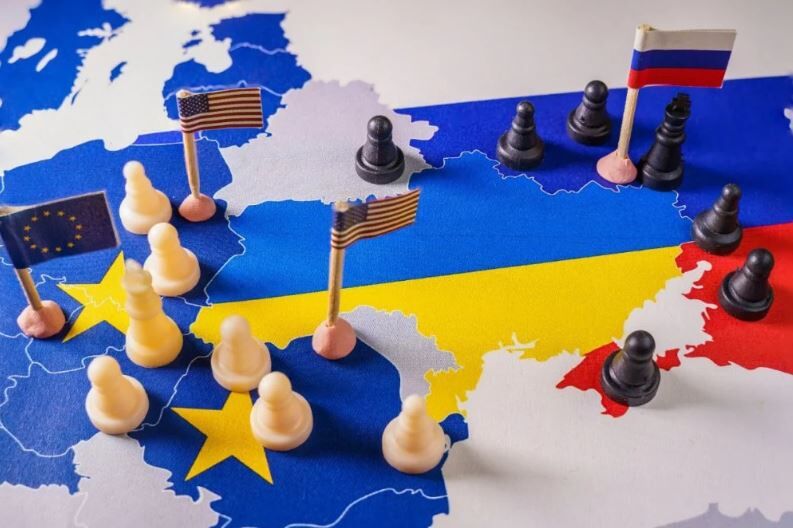
SCFR Online – Opinion: The Ukraine war was not merely a European crisis, but rather the starting point for the rearrangement of the global balance of power and a shift in the strategic behavior of great powers.
SCFR Online – Opinion: Great power competition is now pursued more in trade, currency, technology, and global supply chains than on the battlefields of military confrontation.
Online Strategic Council – Interview: A foreign policy expert stated that a direct confrontation and war between Russia and the West under the shadow of the Ukraine war appears unlikely. He noted that the conflicting parties have placed the method of hybrid warfare on the agenda at the highest level with the support of their allies. The reality is that a world war is underway, and many countries are directly and indirectly involved in it, but this is not a nuclear war.
Strategic Council Online – Interview: An expert on US affairs commenting on the White House approach to the North Korea supersonic missile tests said: At present, the only tool available to the US is sanctions, but even Washington knows that it cannot resort to the option of war in order to solve the North Korean problem and the only option is the same option of diplomacy.
Strategic Council Online- Interview: Having pointed out the recent statement issued by thirty countries including Iran, China, Russia, Palestine, Belarus, Pakistan, Egypt, Venezuela and Bolivia on condemning to resort the coercive unilateral measures such as sanctions against developing countries, an expert on the U.S. said:” It is obvious that when the U.S. pressurizes countries under the pretext of sanctions, those countries try to both minimize their dependence on the U.S. economy and maximize their capacities to boost their cooperation with other countries subjected to similar sanctions”.
Strategic Council Online – Interview: An expert on US affairs commenting on whether Washington’s decision to withdraw its troops from Afghanistan is taking place at a time when the country has achieved its objectives or the decision indicates the ineffectiveness of the US strategy in Afghanistan, said: The US officials had set two targets at the time of the invasion of Afghanistan; the first was the fight against al-Qaeda terrorism and the second was the establishment of peace, stability and democracy in Afghanistan. But now that their forces are leaving Afghanistan, they claim that their mission has only been to eliminate al-Qaeda terrorism, and in this regard, they cite the killing of Osama bin Laden, the leader of that terrorist movement, as evidence to their claim.
Strategic Council Online – An expert on American affairs said: Some of Trump’s supporters believe that the American identity should be preserved and that the United States is defined by its European descent, including the whites and the Protestants; but Trump’s opponents believe that the American society is a multiracial and mosaic society, and that all races should be involved in the affairs of the society and in the administration.
Strategic Council Online: An expert on American affairs believes that although there are meaningful differences between the viewpoints of Trump’s team with Biden’s team towards foreign policy, in some cases, the next US administration may continue the path of the previous administration. As an example, Biden’s United States is likely to continue its pressures on NATO members to increase their share of the NATO military spending.
Strategic Council Online – Polls are not in Trump’s favour right now; in fact, within a week, Joe Biden’s distance from Donald Trump in the total polls published by the RCP site increased by about three per cent, from 6.1 to 9.2 per cent. This trend is not good news for Trump if it continues. However, the polls cannot be taken for granted to say that public opinion has become against Trump.
Amir Ali Abolfath – Expert on American Affairs
Strategic Council Online – Donald Trump’s recent remarks on lack of commitment to a peaceful transfer of power can be evaluated from two aspects; one related to the nature and the rules of the elections in the United States and the mail-in elections process in that country, and the other related to his personal and psychological characteristics that he is not prepared at all to accept defeat.
Amir Ali Abolfath – Expert on American Affairs
Strategic Council Online – Critics of Donald Trump believe that he opposes the mail-in voting because the turnout in such voting will increase, and this is not in the interests of the conservative right-wing. In fact, it is the liberals who get the chance to win whenever participation goes up.
Amir Ali Abolfath – Expert on American Issues
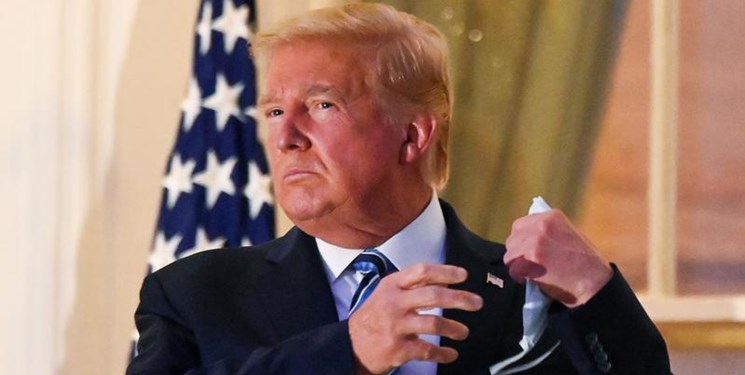
Strategic Council Online: US President Ronald Trump is under intense public pressure these days, and the evidence points to negligence and uncertainty in crisis management in the United States, which has made the situation in the country very critical. Now the president of the United States is looking for a victim to put the blame on, and to hold that institution or organization responsible for this scandal.
Amir Ali Abolfatah – American affairs expert
SCFR Online – Opinion: On Friday, August 7, the heads of state of three countries – Saudi Arabia, Turkey, and Pakistan – signed a text under the title “Makkah Joint Defense Agreement.”
Strategic Council Online – Note: The initiative to revive the Hejaz Railway, beyond being a transportation project, constitutes an attempt to redefine geopolitics, the economy, and Turkey’s regional position; however, its realization appears to face significant financial, security, and institutional challenges.
SCFR Online – Opinion: The Strait of Hormuz crisis is no longer merely the consequence of a military confrontation, but rather a sign of the transition from the US-centered maritime order to a new energy security structure involving the participation of emerging and influential powers.
SCFR Online – Opinion: Iran’s active deterrence strategy, while increasing the costs of US intervention, has increasingly exposed the hidden rifts between Washington’s interests and those of the Israeli regime.
SCFR Online – Opinion: The escalation of verbal and strategic tensions between Turkey and the Israeli regime, although not increasing the likelihood of direct war, indicates the formation of a new order in West Asian geopolitical rivalries.
Strategic Council Online – Note: Recent developments in the political geography of West Asia, from rising tensions in the Persian Gulf to missile and drone activities in the Red Sea and the recent warning by Kaja Kallas, the European Union’s foreign policy chief, regarding the threat to freedom of navigation, indicate a key pattern shift; the US-Iran war has moved beyond the scope of a regional and local confrontation and has linked two vital passageways for the global economy: the Strait of Hormuz and the Bab el-Mandeb Strait.
SCFR Online – Opinion: The Ukraine war was not merely a European crisis, but rather the starting point for the rearrangement of the global balance of power and a shift in the strategic behavior of great powers.
SCFR Online – Opinion: Great power competition is now pursued more in trade, currency, technology, and global supply chains than on the battlefields of military confrontation.
Online Strategic Council – Interview: A foreign policy expert stated that a direct confrontation and war between Russia and the West under the shadow of the Ukraine war appears unlikely. He noted that the conflicting parties have placed the method of hybrid warfare on the agenda at the highest level with the support of their allies. The reality is that a world war is underway, and many countries are directly and indirectly involved in it, but this is not a nuclear war.
Strategic Council Online – Interview: An expert on US affairs commenting on the White House approach to the North Korea supersonic missile tests said: At present, the only tool available to the US is sanctions, but even Washington knows that it cannot resort to the option of war in order to solve the North Korean problem and the only option is the same option of diplomacy.
Strategic Council Online- Interview: Having pointed out the recent statement issued by thirty countries including Iran, China, Russia, Palestine, Belarus, Pakistan, Egypt, Venezuela and Bolivia on condemning to resort the coercive unilateral measures such as sanctions against developing countries, an expert on the U.S. said:” It is obvious that when the U.S. pressurizes countries under the pretext of sanctions, those countries try to both minimize their dependence on the U.S. economy and maximize their capacities to boost their cooperation with other countries subjected to similar sanctions”.
Strategic Council Online – Interview: An expert on US affairs commenting on whether Washington’s decision to withdraw its troops from Afghanistan is taking place at a time when the country has achieved its objectives or the decision indicates the ineffectiveness of the US strategy in Afghanistan, said: The US officials had set two targets at the time of the invasion of Afghanistan; the first was the fight against al-Qaeda terrorism and the second was the establishment of peace, stability and democracy in Afghanistan. But now that their forces are leaving Afghanistan, they claim that their mission has only been to eliminate al-Qaeda terrorism, and in this regard, they cite the killing of Osama bin Laden, the leader of that terrorist movement, as evidence to their claim.
Strategic Council Online – An expert on American affairs said: Some of Trump’s supporters believe that the American identity should be preserved and that the United States is defined by its European descent, including the whites and the Protestants; but Trump’s opponents believe that the American society is a multiracial and mosaic society, and that all races should be involved in the affairs of the society and in the administration.
Strategic Council Online: An expert on American affairs believes that although there are meaningful differences between the viewpoints of Trump’s team with Biden’s team towards foreign policy, in some cases, the next US administration may continue the path of the previous administration. As an example, Biden’s United States is likely to continue its pressures on NATO members to increase their share of the NATO military spending.
Strategic Council Online – Polls are not in Trump’s favour right now; in fact, within a week, Joe Biden’s distance from Donald Trump in the total polls published by the RCP site increased by about three per cent, from 6.1 to 9.2 per cent. This trend is not good news for Trump if it continues. However, the polls cannot be taken for granted to say that public opinion has become against Trump.
Amir Ali Abolfath – Expert on American Affairs
Strategic Council Online – Donald Trump’s recent remarks on lack of commitment to a peaceful transfer of power can be evaluated from two aspects; one related to the nature and the rules of the elections in the United States and the mail-in elections process in that country, and the other related to his personal and psychological characteristics that he is not prepared at all to accept defeat.
Amir Ali Abolfath – Expert on American Affairs
Strategic Council Online – Critics of Donald Trump believe that he opposes the mail-in voting because the turnout in such voting will increase, and this is not in the interests of the conservative right-wing. In fact, it is the liberals who get the chance to win whenever participation goes up.
Amir Ali Abolfath – Expert on American Issues
Strategic Council Online: US President Ronald Trump is under intense public pressure these days, and the evidence points to negligence and uncertainty in crisis management in the United States, which has made the situation in the country very critical. Now the president of the United States is looking for a victim to put the blame on, and to hold that institution or organization responsible for this scandal.
Amir Ali Abolfatah – American affairs expert
Online Strategic Council – Interview: A foreign policy expert stated that a direct confrontation and war between Russia and the West under the shadow of the Ukraine war appears unlikely. He noted that the conflicting parties have placed the method of hybrid warfare on the agenda at the highest level with the support of their allies. The reality is that a world war is underway, and many countries are directly and indirectly involved in it, but this is not a nuclear war.
Strategic Council Online – Interview: An expert on US affairs commenting on the White House approach to the North Korea supersonic missile tests said: At present, the only tool available to the US is sanctions, but even Washington knows that it cannot resort to the option of war in order to solve the North Korean problem and the only option is the same option of diplomacy.
Strategic Council Online- Interview: Having pointed out the recent statement issued by thirty countries including Iran, China, Russia, Palestine, Belarus, Pakistan, Egypt, Venezuela and Bolivia on condemning to resort the coercive unilateral measures such as sanctions against developing countries, an expert on the U.S. said:” It is obvious that when the U.S. pressurizes countries under the pretext of sanctions, those countries try to both minimize their dependence on the U.S. economy and maximize their capacities to boost their cooperation with other countries subjected to similar sanctions”.
Strategic Council Online – Interview: An expert on US affairs commenting on whether Washington’s decision to withdraw its troops from Afghanistan is taking place at a time when the country has achieved its objectives or the decision indicates the ineffectiveness of the US strategy in Afghanistan, said: The US officials had set two targets at the time of the invasion of Afghanistan; the first was the fight against al-Qaeda terrorism and the second was the establishment of peace, stability and democracy in Afghanistan. But now that their forces are leaving Afghanistan, they claim that their mission has only been to eliminate al-Qaeda terrorism, and in this regard, they cite the killing of Osama bin Laden, the leader of that terrorist movement, as evidence to their claim.
Strategic Council Online – An expert on American affairs said: Some of Trump’s supporters believe that the American identity should be preserved and that the United States is defined by its European descent, including the whites and the Protestants; but Trump’s opponents believe that the American society is a multiracial and mosaic society, and that all races should be involved in the affairs of the society and in the administration.
Strategic Council Online: An expert on American affairs believes that although there are meaningful differences between the viewpoints of Trump’s team with Biden’s team towards foreign policy, in some cases, the next US administration may continue the path of the previous administration. As an example, Biden’s United States is likely to continue its pressures on NATO members to increase their share of the NATO military spending.
Strategic Council Online – Polls are not in Trump’s favour right now; in fact, within a week, Joe Biden’s distance from Donald Trump in the total polls published by the RCP site increased by about three per cent, from 6.1 to 9.2 per cent. This trend is not good news for Trump if it continues. However, the polls cannot be taken for granted to say that public opinion has become against Trump.
Amir Ali Abolfath – Expert on American Affairs
Strategic Council Online – Donald Trump’s recent remarks on lack of commitment to a peaceful transfer of power can be evaluated from two aspects; one related to the nature and the rules of the elections in the United States and the mail-in elections process in that country, and the other related to his personal and psychological characteristics that he is not prepared at all to accept defeat.
Amir Ali Abolfath – Expert on American Affairs
Strategic Council Online – Critics of Donald Trump believe that he opposes the mail-in voting because the turnout in such voting will increase, and this is not in the interests of the conservative right-wing. In fact, it is the liberals who get the chance to win whenever participation goes up.
Amir Ali Abolfath – Expert on American Issues
Strategic Council Online: US President Ronald Trump is under intense public pressure these days, and the evidence points to negligence and uncertainty in crisis management in the United States, which has made the situation in the country very critical. Now the president of the United States is looking for a victim to put the blame on, and to hold that institution or organization responsible for this scandal.
Amir Ali Abolfatah – American affairs expert
SCFR Online – Opinion: On Friday, August 7, the heads of state of three countries – Saudi Arabia, Turkey, and Pakistan – signed a text under the title “Makkah Joint Defense Agreement.”
Strategic Council Online – Note: The initiative to revive the Hejaz Railway, beyond being a transportation project, constitutes an attempt to redefine geopolitics, the economy, and Turkey’s regional position; however, its realization appears to face significant financial, security, and institutional challenges.
SCFR Online – Opinion: The Strait of Hormuz crisis is no longer merely the consequence of a military confrontation, but rather a sign of the transition from the US-centered maritime order to a new energy security structure involving the participation of emerging and influential powers.
SCFR Online – Opinion: Iran’s active deterrence strategy, while increasing the costs of US intervention, has increasingly exposed the hidden rifts between Washington’s interests and those of the Israeli regime.
SCFR Online – Opinion: The escalation of verbal and strategic tensions between Turkey and the Israeli regime, although not increasing the likelihood of direct war, indicates the formation of a new order in West Asian geopolitical rivalries.
Strategic Council Online – Note: Recent developments in the political geography of West Asia, from rising tensions in the Persian Gulf to missile and drone activities in the Red Sea and the recent warning by Kaja Kallas, the European Union’s foreign policy chief, regarding the threat to freedom of navigation, indicate a key pattern shift; the US-Iran war has moved beyond the scope of a regional and local confrontation and has linked two vital passageways for the global economy: the Strait of Hormuz and the Bab el-Mandeb Strait.
SCFR Online – Opinion: The Ukraine war was not merely a European crisis, but rather the starting point for the rearrangement of the global balance of power and a shift in the strategic behavior of great powers.
SCFR Online – Opinion: Great power competition is now pursued more in trade, currency, technology, and global supply chains than on the battlefields of military confrontation.
Online Strategic Council – Interview: A foreign policy expert stated that a direct confrontation and war between Russia and the West under the shadow of the Ukraine war appears unlikely. He noted that the conflicting parties have placed the method of hybrid warfare on the agenda at the highest level with the support of their allies. The reality is that a world war is underway, and many countries are directly and indirectly involved in it, but this is not a nuclear war.
Strategic Council Online – Interview: An expert on US affairs commenting on the White House approach to the North Korea supersonic missile tests said: At present, the only tool available to the US is sanctions, but even Washington knows that it cannot resort to the option of war in order to solve the North Korean problem and the only option is the same option of diplomacy.
Strategic Council Online- Interview: Having pointed out the recent statement issued by thirty countries including Iran, China, Russia, Palestine, Belarus, Pakistan, Egypt, Venezuela and Bolivia on condemning to resort the coercive unilateral measures such as sanctions against developing countries, an expert on the U.S. said:” It is obvious that when the U.S. pressurizes countries under the pretext of sanctions, those countries try to both minimize their dependence on the U.S. economy and maximize their capacities to boost their cooperation with other countries subjected to similar sanctions”.
Strategic Council Online – Interview: An expert on US affairs commenting on whether Washington’s decision to withdraw its troops from Afghanistan is taking place at a time when the country has achieved its objectives or the decision indicates the ineffectiveness of the US strategy in Afghanistan, said: The US officials had set two targets at the time of the invasion of Afghanistan; the first was the fight against al-Qaeda terrorism and the second was the establishment of peace, stability and democracy in Afghanistan. But now that their forces are leaving Afghanistan, they claim that their mission has only been to eliminate al-Qaeda terrorism, and in this regard, they cite the killing of Osama bin Laden, the leader of that terrorist movement, as evidence to their claim.
Strategic Council Online – An expert on American affairs said: Some of Trump’s supporters believe that the American identity should be preserved and that the United States is defined by its European descent, including the whites and the Protestants; but Trump’s opponents believe that the American society is a multiracial and mosaic society, and that all races should be involved in the affairs of the society and in the administration.
Strategic Council Online: An expert on American affairs believes that although there are meaningful differences between the viewpoints of Trump’s team with Biden’s team towards foreign policy, in some cases, the next US administration may continue the path of the previous administration. As an example, Biden’s United States is likely to continue its pressures on NATO members to increase their share of the NATO military spending.
Strategic Council Online – Polls are not in Trump’s favour right now; in fact, within a week, Joe Biden’s distance from Donald Trump in the total polls published by the RCP site increased by about three per cent, from 6.1 to 9.2 per cent. This trend is not good news for Trump if it continues. However, the polls cannot be taken for granted to say that public opinion has become against Trump.
Amir Ali Abolfath – Expert on American Affairs
Strategic Council Online – Donald Trump’s recent remarks on lack of commitment to a peaceful transfer of power can be evaluated from two aspects; one related to the nature and the rules of the elections in the United States and the mail-in elections process in that country, and the other related to his personal and psychological characteristics that he is not prepared at all to accept defeat.
Amir Ali Abolfath – Expert on American Affairs
Strategic Council Online – Critics of Donald Trump believe that he opposes the mail-in voting because the turnout in such voting will increase, and this is not in the interests of the conservative right-wing. In fact, it is the liberals who get the chance to win whenever participation goes up.
Amir Ali Abolfath – Expert on American Issues
Strategic Council Online: US President Ronald Trump is under intense public pressure these days, and the evidence points to negligence and uncertainty in crisis management in the United States, which has made the situation in the country very critical. Now the president of the United States is looking for a victim to put the blame on, and to hold that institution or organization responsible for this scandal.
Amir Ali Abolfatah – American affairs expert
SCFR Online – Opinion: On Friday, August 7, the heads of state of three countries – Saudi Arabia, Turkey, and Pakistan – signed a text under the title “Makkah Joint Defense Agreement.”
Strategic Council Online – Note: The initiative to revive the Hejaz Railway, beyond being a transportation project, constitutes an attempt to redefine geopolitics, the economy, and Turkey’s regional position; however, its realization appears to face significant financial, security, and institutional challenges.
SCFR Online – Opinion: The Strait of Hormuz crisis is no longer merely the consequence of a military confrontation, but rather a sign of the transition from the US-centered maritime order to a new energy security structure involving the participation of emerging and influential powers.
SCFR Online – Opinion: Iran’s active deterrence strategy, while increasing the costs of US intervention, has increasingly exposed the hidden rifts between Washington’s interests and those of the Israeli regime.
SCFR Online – Opinion: The escalation of verbal and strategic tensions between Turkey and the Israeli regime, although not increasing the likelihood of direct war, indicates the formation of a new order in West Asian geopolitical rivalries.
Strategic Council Online – Note: Recent developments in the political geography of West Asia, from rising tensions in the Persian Gulf to missile and drone activities in the Red Sea and the recent warning by Kaja Kallas, the European Union’s foreign policy chief, regarding the threat to freedom of navigation, indicate a key pattern shift; the US-Iran war has moved beyond the scope of a regional and local confrontation and has linked two vital passageways for the global economy: the Strait of Hormuz and the Bab el-Mandeb Strait.
SCFR Online – Opinion: The Ukraine war was not merely a European crisis, but rather the starting point for the rearrangement of the global balance of power and a shift in the strategic behavior of great powers.
SCFR Online – Opinion: Great power competition is now pursued more in trade, currency, technology, and global supply chains than on the battlefields of military confrontation.
Online Strategic Council – Interview: A foreign policy expert stated that a direct confrontation and war between Russia and the West under the shadow of the Ukraine war appears unlikely. He noted that the conflicting parties have placed the method of hybrid warfare on the agenda at the highest level with the support of their allies. The reality is that a world war is underway, and many countries are directly and indirectly involved in it, but this is not a nuclear war.
Strategic Council Online – Interview: An expert on US affairs commenting on the White House approach to the North Korea supersonic missile tests said: At present, the only tool available to the US is sanctions, but even Washington knows that it cannot resort to the option of war in order to solve the North Korean problem and the only option is the same option of diplomacy.
Strategic Council Online- Interview: Having pointed out the recent statement issued by thirty countries including Iran, China, Russia, Palestine, Belarus, Pakistan, Egypt, Venezuela and Bolivia on condemning to resort the coercive unilateral measures such as sanctions against developing countries, an expert on the U.S. said:” It is obvious that when the U.S. pressurizes countries under the pretext of sanctions, those countries try to both minimize their dependence on the U.S. economy and maximize their capacities to boost their cooperation with other countries subjected to similar sanctions”.
Strategic Council Online – Interview: An expert on US affairs commenting on whether Washington’s decision to withdraw its troops from Afghanistan is taking place at a time when the country has achieved its objectives or the decision indicates the ineffectiveness of the US strategy in Afghanistan, said: The US officials had set two targets at the time of the invasion of Afghanistan; the first was the fight against al-Qaeda terrorism and the second was the establishment of peace, stability and democracy in Afghanistan. But now that their forces are leaving Afghanistan, they claim that their mission has only been to eliminate al-Qaeda terrorism, and in this regard, they cite the killing of Osama bin Laden, the leader of that terrorist movement, as evidence to their claim.
Strategic Council Online – An expert on American affairs said: Some of Trump’s supporters believe that the American identity should be preserved and that the United States is defined by its European descent, including the whites and the Protestants; but Trump’s opponents believe that the American society is a multiracial and mosaic society, and that all races should be involved in the affairs of the society and in the administration.
Strategic Council Online: An expert on American affairs believes that although there are meaningful differences between the viewpoints of Trump’s team with Biden’s team towards foreign policy, in some cases, the next US administration may continue the path of the previous administration. As an example, Biden’s United States is likely to continue its pressures on NATO members to increase their share of the NATO military spending.
Strategic Council Online – Polls are not in Trump’s favour right now; in fact, within a week, Joe Biden’s distance from Donald Trump in the total polls published by the RCP site increased by about three per cent, from 6.1 to 9.2 per cent. This trend is not good news for Trump if it continues. However, the polls cannot be taken for granted to say that public opinion has become against Trump.
Amir Ali Abolfath – Expert on American Affairs
Strategic Council Online – Donald Trump’s recent remarks on lack of commitment to a peaceful transfer of power can be evaluated from two aspects; one related to the nature and the rules of the elections in the United States and the mail-in elections process in that country, and the other related to his personal and psychological characteristics that he is not prepared at all to accept defeat.
Amir Ali Abolfath – Expert on American Affairs
Strategic Council Online – Critics of Donald Trump believe that he opposes the mail-in voting because the turnout in such voting will increase, and this is not in the interests of the conservative right-wing. In fact, it is the liberals who get the chance to win whenever participation goes up.
Amir Ali Abolfath – Expert on American Issues
Strategic Council Online: US President Ronald Trump is under intense public pressure these days, and the evidence points to negligence and uncertainty in crisis management in the United States, which has made the situation in the country very critical. Now the president of the United States is looking for a victim to put the blame on, and to hold that institution or organization responsible for this scandal.
Amir Ali Abolfatah – American affairs expert
SCFR Online – Opinion: On Friday, August 7, the heads of state of three countries – Saudi Arabia, Turkey, and Pakistan – signed a text under the title “Makkah Joint Defense Agreement.”
Strategic Council Online – Note: The initiative to revive the Hejaz Railway, beyond being a transportation project, constitutes an attempt to redefine geopolitics, the economy, and Turkey’s regional position; however, its realization appears to face significant financial, security, and institutional challenges.
SCFR Online – Opinion: The Strait of Hormuz crisis is no longer merely the consequence of a military confrontation, but rather a sign of the transition from the US-centered maritime order to a new energy security structure involving the participation of emerging and influential powers.
SCFR Online – Opinion: Iran’s active deterrence strategy, while increasing the costs of US intervention, has increasingly exposed the hidden rifts between Washington’s interests and those of the Israeli regime.
SCFR Online – Opinion: The escalation of verbal and strategic tensions between Turkey and the Israeli regime, although not increasing the likelihood of direct war, indicates the formation of a new order in West Asian geopolitical rivalries.
Strategic Council Online – Note: Recent developments in the political geography of West Asia, from rising tensions in the Persian Gulf to missile and drone activities in the Red Sea and the recent warning by Kaja Kallas, the European Union’s foreign policy chief, regarding the threat to freedom of navigation, indicate a key pattern shift; the US-Iran war has moved beyond the scope of a regional and local confrontation and has linked two vital passageways for the global economy: the Strait of Hormuz and the Bab el-Mandeb Strait.
SCFR Online – Opinion: The Ukraine war was not merely a European crisis, but rather the starting point for the rearrangement of the global balance of power and a shift in the strategic behavior of great powers.
SCFR Online – Opinion: Great power competition is now pursued more in trade, currency, technology, and global supply chains than on the battlefields of military confrontation.
Online Strategic Council – Interview: A foreign policy expert stated that a direct confrontation and war between Russia and the West under the shadow of the Ukraine war appears unlikely. He noted that the conflicting parties have placed the method of hybrid warfare on the agenda at the highest level with the support of their allies. The reality is that a world war is underway, and many countries are directly and indirectly involved in it, but this is not a nuclear war.
Strategic Council Online – Interview: An expert on US affairs commenting on the White House approach to the North Korea supersonic missile tests said: At present, the only tool available to the US is sanctions, but even Washington knows that it cannot resort to the option of war in order to solve the North Korean problem and the only option is the same option of diplomacy.
Strategic Council Online- Interview: Having pointed out the recent statement issued by thirty countries including Iran, China, Russia, Palestine, Belarus, Pakistan, Egypt, Venezuela and Bolivia on condemning to resort the coercive unilateral measures such as sanctions against developing countries, an expert on the U.S. said:” It is obvious that when the U.S. pressurizes countries under the pretext of sanctions, those countries try to both minimize their dependence on the U.S. economy and maximize their capacities to boost their cooperation with other countries subjected to similar sanctions”.
Strategic Council Online – Interview: An expert on US affairs commenting on whether Washington’s decision to withdraw its troops from Afghanistan is taking place at a time when the country has achieved its objectives or the decision indicates the ineffectiveness of the US strategy in Afghanistan, said: The US officials had set two targets at the time of the invasion of Afghanistan; the first was the fight against al-Qaeda terrorism and the second was the establishment of peace, stability and democracy in Afghanistan. But now that their forces are leaving Afghanistan, they claim that their mission has only been to eliminate al-Qaeda terrorism, and in this regard, they cite the killing of Osama bin Laden, the leader of that terrorist movement, as evidence to their claim.
Strategic Council Online – An expert on American affairs said: Some of Trump’s supporters believe that the American identity should be preserved and that the United States is defined by its European descent, including the whites and the Protestants; but Trump’s opponents believe that the American society is a multiracial and mosaic society, and that all races should be involved in the affairs of the society and in the administration.
Strategic Council Online: An expert on American affairs believes that although there are meaningful differences between the viewpoints of Trump’s team with Biden’s team towards foreign policy, in some cases, the next US administration may continue the path of the previous administration. As an example, Biden’s United States is likely to continue its pressures on NATO members to increase their share of the NATO military spending.
Strategic Council Online – Polls are not in Trump’s favour right now; in fact, within a week, Joe Biden’s distance from Donald Trump in the total polls published by the RCP site increased by about three per cent, from 6.1 to 9.2 per cent. This trend is not good news for Trump if it continues. However, the polls cannot be taken for granted to say that public opinion has become against Trump.
Amir Ali Abolfath – Expert on American Affairs
Strategic Council Online – Donald Trump’s recent remarks on lack of commitment to a peaceful transfer of power can be evaluated from two aspects; one related to the nature and the rules of the elections in the United States and the mail-in elections process in that country, and the other related to his personal and psychological characteristics that he is not prepared at all to accept defeat.
Amir Ali Abolfath – Expert on American Affairs
Strategic Council Online – Critics of Donald Trump believe that he opposes the mail-in voting because the turnout in such voting will increase, and this is not in the interests of the conservative right-wing. In fact, it is the liberals who get the chance to win whenever participation goes up.
Amir Ali Abolfath – Expert on American Issues
Strategic Council Online: US President Ronald Trump is under intense public pressure these days, and the evidence points to negligence and uncertainty in crisis management in the United States, which has made the situation in the country very critical. Now the president of the United States is looking for a victim to put the blame on, and to hold that institution or organization responsible for this scandal.
Amir Ali Abolfatah – American affairs expert
SCFR Online – Opinion: On Friday, August 7, the heads of state of three countries – Saudi Arabia, Turkey, and Pakistan – signed a text under the title “Makkah Joint Defense Agreement.”
Strategic Council Online – Note: The initiative to revive the Hejaz Railway, beyond being a transportation project, constitutes an attempt to redefine geopolitics, the economy, and Turkey’s regional position; however, its realization appears to face significant financial, security, and institutional challenges.
SCFR Online – Opinion: The Strait of Hormuz crisis is no longer merely the consequence of a military confrontation, but rather a sign of the transition from the US-centered maritime order to a new energy security structure involving the participation of emerging and influential powers.
SCFR Online – Opinion: Iran’s active deterrence strategy, while increasing the costs of US intervention, has increasingly exposed the hidden rifts between Washington’s interests and those of the Israeli regime.
SCFR Online – Opinion: The escalation of verbal and strategic tensions between Turkey and the Israeli regime, although not increasing the likelihood of direct war, indicates the formation of a new order in West Asian geopolitical rivalries.
Strategic Council Online – Note: Recent developments in the political geography of West Asia, from rising tensions in the Persian Gulf to missile and drone activities in the Red Sea and the recent warning by Kaja Kallas, the European Union’s foreign policy chief, regarding the threat to freedom of navigation, indicate a key pattern shift; the US-Iran war has moved beyond the scope of a regional and local confrontation and has linked two vital passageways for the global economy: the Strait of Hormuz and the Bab el-Mandeb Strait.
SCFR Online – Opinion: The Ukraine war was not merely a European crisis, but rather the starting point for the rearrangement of the global balance of power and a shift in the strategic behavior of great powers.
SCFR Online – Opinion: Great power competition is now pursued more in trade, currency, technology, and global supply chains than on the battlefields of military confrontation.
Online Strategic Council – Interview: A foreign policy expert stated that a direct confrontation and war between Russia and the West under the shadow of the Ukraine war appears unlikely. He noted that the conflicting parties have placed the method of hybrid warfare on the agenda at the highest level with the support of their allies. The reality is that a world war is underway, and many countries are directly and indirectly involved in it, but this is not a nuclear war.
Strategic Council Online – Interview: An expert on US affairs commenting on the White House approach to the North Korea supersonic missile tests said: At present, the only tool available to the US is sanctions, but even Washington knows that it cannot resort to the option of war in order to solve the North Korean problem and the only option is the same option of diplomacy.
Strategic Council Online- Interview: Having pointed out the recent statement issued by thirty countries including Iran, China, Russia, Palestine, Belarus, Pakistan, Egypt, Venezuela and Bolivia on condemning to resort the coercive unilateral measures such as sanctions against developing countries, an expert on the U.S. said:” It is obvious that when the U.S. pressurizes countries under the pretext of sanctions, those countries try to both minimize their dependence on the U.S. economy and maximize their capacities to boost their cooperation with other countries subjected to similar sanctions”.
Strategic Council Online – Interview: An expert on US affairs commenting on whether Washington’s decision to withdraw its troops from Afghanistan is taking place at a time when the country has achieved its objectives or the decision indicates the ineffectiveness of the US strategy in Afghanistan, said: The US officials had set two targets at the time of the invasion of Afghanistan; the first was the fight against al-Qaeda terrorism and the second was the establishment of peace, stability and democracy in Afghanistan. But now that their forces are leaving Afghanistan, they claim that their mission has only been to eliminate al-Qaeda terrorism, and in this regard, they cite the killing of Osama bin Laden, the leader of that terrorist movement, as evidence to their claim.
Strategic Council Online – An expert on American affairs said: Some of Trump’s supporters believe that the American identity should be preserved and that the United States is defined by its European descent, including the whites and the Protestants; but Trump’s opponents believe that the American society is a multiracial and mosaic society, and that all races should be involved in the affairs of the society and in the administration.
Strategic Council Online: An expert on American affairs believes that although there are meaningful differences between the viewpoints of Trump’s team with Biden’s team towards foreign policy, in some cases, the next US administration may continue the path of the previous administration. As an example, Biden’s United States is likely to continue its pressures on NATO members to increase their share of the NATO military spending.
Strategic Council Online – Polls are not in Trump’s favour right now; in fact, within a week, Joe Biden’s distance from Donald Trump in the total polls published by the RCP site increased by about three per cent, from 6.1 to 9.2 per cent. This trend is not good news for Trump if it continues. However, the polls cannot be taken for granted to say that public opinion has become against Trump.
Amir Ali Abolfath – Expert on American Affairs
Strategic Council Online – Donald Trump’s recent remarks on lack of commitment to a peaceful transfer of power can be evaluated from two aspects; one related to the nature and the rules of the elections in the United States and the mail-in elections process in that country, and the other related to his personal and psychological characteristics that he is not prepared at all to accept defeat.
Amir Ali Abolfath – Expert on American Affairs
Strategic Council Online – Critics of Donald Trump believe that he opposes the mail-in voting because the turnout in such voting will increase, and this is not in the interests of the conservative right-wing. In fact, it is the liberals who get the chance to win whenever participation goes up.
Amir Ali Abolfath – Expert on American Issues
Strategic Council Online: US President Ronald Trump is under intense public pressure these days, and the evidence points to negligence and uncertainty in crisis management in the United States, which has made the situation in the country very critical. Now the president of the United States is looking for a victim to put the blame on, and to hold that institution or organization responsible for this scandal.
Amir Ali Abolfatah – American affairs expert
SCFR Online – Opinion: On Friday, August 7, the heads of state of three countries – Saudi Arabia, Turkey, and Pakistan – signed a text under the title “Makkah Joint Defense Agreement.”
Strategic Council Online – Note: The initiative to revive the Hejaz Railway, beyond being a transportation project, constitutes an attempt to redefine geopolitics, the economy, and Turkey’s regional position; however, its realization appears to face significant financial, security, and institutional challenges.
SCFR Online – Opinion: The Strait of Hormuz crisis is no longer merely the consequence of a military confrontation, but rather a sign of the transition from the US-centered maritime order to a new energy security structure involving the participation of emerging and influential powers.
SCFR Online – Opinion: Iran’s active deterrence strategy, while increasing the costs of US intervention, has increasingly exposed the hidden rifts between Washington’s interests and those of the Israeli regime.
SCFR Online – Opinion: The escalation of verbal and strategic tensions between Turkey and the Israeli regime, although not increasing the likelihood of direct war, indicates the formation of a new order in West Asian geopolitical rivalries.
Strategic Council Online – Note: Recent developments in the political geography of West Asia, from rising tensions in the Persian Gulf to missile and drone activities in the Red Sea and the recent warning by Kaja Kallas, the European Union’s foreign policy chief, regarding the threat to freedom of navigation, indicate a key pattern shift; the US-Iran war has moved beyond the scope of a regional and local confrontation and has linked two vital passageways for the global economy: the Strait of Hormuz and the Bab el-Mandeb Strait.
SCFR Online – Opinion: The Ukraine war was not merely a European crisis, but rather the starting point for the rearrangement of the global balance of power and a shift in the strategic behavior of great powers.
SCFR Online – Opinion: Great power competition is now pursued more in trade, currency, technology, and global supply chains than on the battlefields of military confrontation.