Necessity of Global Stand against U.S. Sanctions

2021/10/17 | interview, Politics, Top News

Strategic Council Online- Interview: Having pointed out the recent statement issued by thirty countries including Iran, China, Russia, Palestine, Belarus, Pakistan, Egypt, Venezuela and Bolivia on condemning to resort the coercive unilateral measures such as sanctions against developing countries, an expert on the U.S. said:” It is obvious that when the U.S. pressurizes countries under the pretext of sanctions, those countries try to both minimize their dependence on the U.S. economy and maximize their capacities to boost their cooperation with other countries subjected to similar sanctions”.

Amir Ali Abolfath in an interview with the site of Strategic Council on Foreign Relations pointed out the possibility of formation of a club among those sanction-fighting countries in future continued:” however, the club containing those countries subjected to sanctions has not been formed”.

He stressed:” In fact, it can be said that perhaps an unwritten agreement among these countries is being formed based on mutual necessities”.

The expert explained:” when a country suffers from difficulties to use the U.S. dollar or international banking system like SWIFT, then she approaches other countries that can provide new capacities for her. Using national currencies, or currencies other than U.S. dollar and euro, clearing or barter deals, joint venture in countries pressurized under sanctions, and formation of regional blocs are among measures that countries like Iran, being under sanction regime, can put in their agenda”.

Having stressed on the point that Americans have dauntlessly extended their sanctions within the past decades, he added:” the sanctions were addressing the U.S. enemies and rivals at the outset. But today, even the U.S. allies are pressurized by sanctions. In a way, it can be said that the U.S. is strongly addicted to imposing sanction and sanction policy. Now, tens of countries, a large number of companies, a long list of real and legal entities throughout the world are enlisted in the U.S. sanctions”.

According to Abolfath, the more extensive the sanctions, the stronger become the anti-sanctions cooperation.

He continued:” There was a time when only three or four countries were subjected to sanctions and unable to do something collectively. But now, there is a range of countries and companies that are enlisted in sanctions and can find each other and try their best to promote capacities to meet their mutual requirements”.

On the future of such anti-sanction policies, he explained:” It seems that such cooperation and policies will be strengthened in future, because the U.S. does neither plan to put aside her sanction policy nor loosens the severity of her policies. That’s why reciprocity against such U.S. policy is to strengthen the cooperation among those countries and foundations any of which are somehow subjected to sanctions due to a reason. Moreover, the necessity requires that these countries and foundations will take step towards cooperation with each other”.

Having ultimately pointed out that Iran as one of the countries that is subjected to the severest sanction regimes of the U.S., Abolfath said:” This very point requires Iran to head towards cooperation with other sanctioned countries in order to meet their mutual needs, because diplomacy needs economic background and it is a must for Iran to dynamic her economy”.


0 Comments

Submit a Comment

Your email address will not be published. Required fields are marked *

LATEST CONTENT

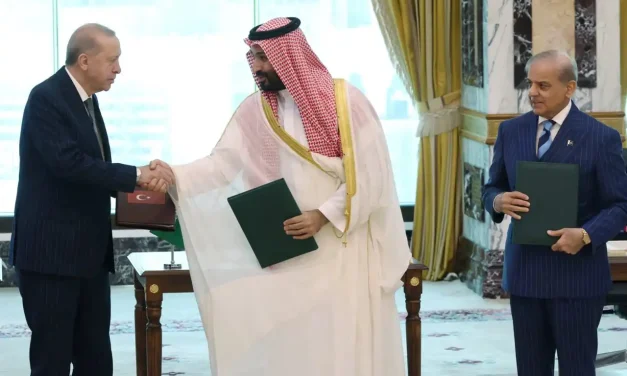
An Analysis of the Makkah Defense Pact

SCFR Online – Opinion: On Friday, August 7, the heads of state of three countries – Saudi Arabia, Turkey, and Pakistan – signed a text under the title “Makkah Joint Defense Agreement.”

Dimensions and challenges of the initiative to revive the Hejaz Railway

Strategic Council Online – Note: The initiative to revive the Hejaz Railway, beyond being a transportation project, constitutes an attempt to redefine geopolitics, the economy, and Turkey’s regional position; however, its realization appears to face significant financial, security, and institutional challenges.

Balancing in the chain of chokepoints; from sea-based deterrence to pluralistic diplomacy

Strategic Council Online – Note: Recent developments in the political geography of West Asia, from rising tensions in the Persian Gulf to missile and drone activities in the Red Sea and the recent warning by Kaja Kallas, the European Union’s foreign policy chief, regarding the threat to freedom of navigation, indicate a key pattern shift; the US-Iran war has moved beyond the scope of a regional and local confrontation and has linked two vital passageways for the global economy: the Strait of Hormuz and the Bab el-Mandeb Strait.

Loading

Últimas publicaciones

An Analysis of the Makkah Defense Pact

SCFR Online – Opinion: On Friday, August 7, the heads of state of three countries – Saudi Arabia, Turkey, and Pakistan – signed a text under the title “Makkah Joint Defense Agreement.”

Dimensions and challenges of the initiative to revive the Hejaz Railway

Strategic Council Online – Note: The initiative to revive the Hejaz Railway, beyond being a transportation project, constitutes an attempt to redefine geopolitics, the economy, and Turkey’s regional position; however, its realization appears to face significant financial, security, and institutional challenges.

Balancing in the chain of chokepoints; from sea-based deterrence to pluralistic diplomacy

Strategic Council Online – Note: Recent developments in the political geography of West Asia, from rising tensions in the Persian Gulf to missile and drone activities in the Red Sea and the recent warning by Kaja Kallas, the European Union’s foreign policy chief, regarding the threat to freedom of navigation, indicate a key pattern shift; the US-Iran war has moved beyond the scope of a regional and local confrontation and has linked two vital passageways for the global economy: the Strait of Hormuz and the Bab el-Mandeb Strait.

Loading

DERNIER CONTENU

An Analysis of the Makkah Defense Pact

SCFR Online – Opinion: On Friday, August 7, the heads of state of three countries – Saudi Arabia, Turkey, and Pakistan – signed a text under the title “Makkah Joint Defense Agreement.”

Dimensions and challenges of the initiative to revive the Hejaz Railway

Strategic Council Online – Note: The initiative to revive the Hejaz Railway, beyond being a transportation project, constitutes an attempt to redefine geopolitics, the economy, and Turkey’s regional position; however, its realization appears to face significant financial, security, and institutional challenges.

Balancing in the chain of chokepoints; from sea-based deterrence to pluralistic diplomacy

Strategic Council Online – Note: Recent developments in the political geography of West Asia, from rising tensions in the Persian Gulf to missile and drone activities in the Red Sea and the recent warning by Kaja Kallas, the European Union’s foreign policy chief, regarding the threat to freedom of navigation, indicate a key pattern shift; the US-Iran war has moved beyond the scope of a regional and local confrontation and has linked two vital passageways for the global economy: the Strait of Hormuz and the Bab el-Mandeb Strait.

Loading

DERNIER CONTENU

An Analysis of the Makkah Defense Pact

SCFR Online – Opinion: On Friday, August 7, the heads of state of three countries – Saudi Arabia, Turkey, and Pakistan – signed a text under the title “Makkah Joint Defense Agreement.”

Dimensions and challenges of the initiative to revive the Hejaz Railway

Strategic Council Online – Note: The initiative to revive the Hejaz Railway, beyond being a transportation project, constitutes an attempt to redefine geopolitics, the economy, and Turkey’s regional position; however, its realization appears to face significant financial, security, and institutional challenges.

Balancing in the chain of chokepoints; from sea-based deterrence to pluralistic diplomacy

Strategic Council Online – Note: Recent developments in the political geography of West Asia, from rising tensions in the Persian Gulf to missile and drone activities in the Red Sea and the recent warning by Kaja Kallas, the European Union’s foreign policy chief, regarding the threat to freedom of navigation, indicate a key pattern shift; the US-Iran war has moved beyond the scope of a regional and local confrontation and has linked two vital passageways for the global economy: the Strait of Hormuz and the Bab el-Mandeb Strait.

Loading

DERNIER CONTENU

An Analysis of the Makkah Defense Pact

SCFR Online – Opinion: On Friday, August 7, the heads of state of three countries – Saudi Arabia, Turkey, and Pakistan – signed a text under the title “Makkah Joint Defense Agreement.”

Dimensions and challenges of the initiative to revive the Hejaz Railway

Strategic Council Online – Note: The initiative to revive the Hejaz Railway, beyond being a transportation project, constitutes an attempt to redefine geopolitics, the economy, and Turkey’s regional position; however, its realization appears to face significant financial, security, and institutional challenges.

Balancing in the chain of chokepoints; from sea-based deterrence to pluralistic diplomacy

Strategic Council Online – Note: Recent developments in the political geography of West Asia, from rising tensions in the Persian Gulf to missile and drone activities in the Red Sea and the recent warning by Kaja Kallas, the European Union’s foreign policy chief, regarding the threat to freedom of navigation, indicate a key pattern shift; the US-Iran war has moved beyond the scope of a regional and local confrontation and has linked two vital passageways for the global economy: the Strait of Hormuz and the Bab el-Mandeb Strait.

Loading