جدیدترین مطالب

Iran’s Potential Levers of Power

SCFRonline– Opinion: Iran’s geopolitical power is not limited solely to oil and the Strait of Hormuz; the unintended emergence of disruptions in the future global food and energy security chains can also demonstrate Iran’s strategic importance.

The Inseparability of the Lebanese Front from the Axis of Resistance

SCFR Online–Opinion: By providing an extensive network of social, healthcare, educational, and post-war reconstruction services, Hezbollah has established a strong social base for itself among Lebanon’s Shiites and Sunnis, and even beyond that, among other segments of Lebanese society, including Christians. Hezbollah has never been an external actor imposed upon Lebanon; rather, it is a phenomenon fundamentally born out of the occupation and crimes of the Zionist regime and itself influenced by popular resistance.

The Increasing Efforts of the Zionist Regime to Redefine Borders and the Regional Order and Its Consequences

SCFR Online– Opinion: Security and military developments in the region over recent months indicate that the ongoing crises and wars in Gaza, southern Lebanon, and parts of Syrian territory encompass broader dimensions of geopolitical and geostrategic transformations. In this context, the increased military presence and control of the Zionist regime over parts of the territories of these areas, along with proposals regarding the creation of buffer zones or even the expansion of security borders, have raised serious questions about the future of the regional order and its consequences for the countries of West Asia.

The Components of Iran’s Deterrence Power

SCFR Online – Opinion: At a time when regional security equations have reached a sensitive stage under the influence of Iran’s strategic confrontation with the United States and the Zionist regime, the question of the nature of Tehran’s defensive power has gained greater significance than ever before. While Washington and Tel Aviv rely on their technological superiority, the Islamic Republic of Iran has presented a model of deterrence that extends beyond the material calculations of the world’s classical militaries. This power, rooted in the connection between “the field” and “the people,” has not only altered the balance of power in recent conflicts but has also disrupted adversaries’ calculations when confronting Iran’s strategic depth.

Loading

Asia

An Analysis of Iraq’s Vision 2050 Plan: Challenges and Opportunities Ahead

An Analysis of Iraq’s Vision 2050 Plan: Challenges and Opportunities Ahead

Online Strategic Council – Interview: A West Asia affairs expert stated that the unveiling of Iraq’s Vision 2050 plan by its Prime Minister, Mohammed Shia’ Al-Sudani, is assessed as a turning point on the path of economic development and reducing the country’s dependence on oil revenues. This plan is designed to create a diversified economy, develop infrastructure, and position Iraq at the heart of Asia-Europe trade corridors. If realized, it could alter the region’s geopolitical equations. In this plan, Al-Sudani has emphasized diverting 20 percent of the Asia-Europe trade through Iraq, which, if successful, will make the country a key player in global trade. On the other hand, environmental crises, security challenges, and the necessity of reforming governance structures in Iraq have made this plan a multidimensional and complex issue. For Iran, the implementation of Vision 2050 not only creates economic opportunities in the fields of energy and transit but also provides the possibility of enhancing political and security cooperation. However, the success of this plan is contingent upon resolving internal obstacles and Baghdad’s smart management of foreign relations, an issue that could improve the future of Iran-Iraq interactions and the regional standing of both countries in the coming decades.

India’s Diplomatic Pivot from Washington to Beijing and Moscow

India’s Diplomatic Pivot from Washington to Beijing and Moscow

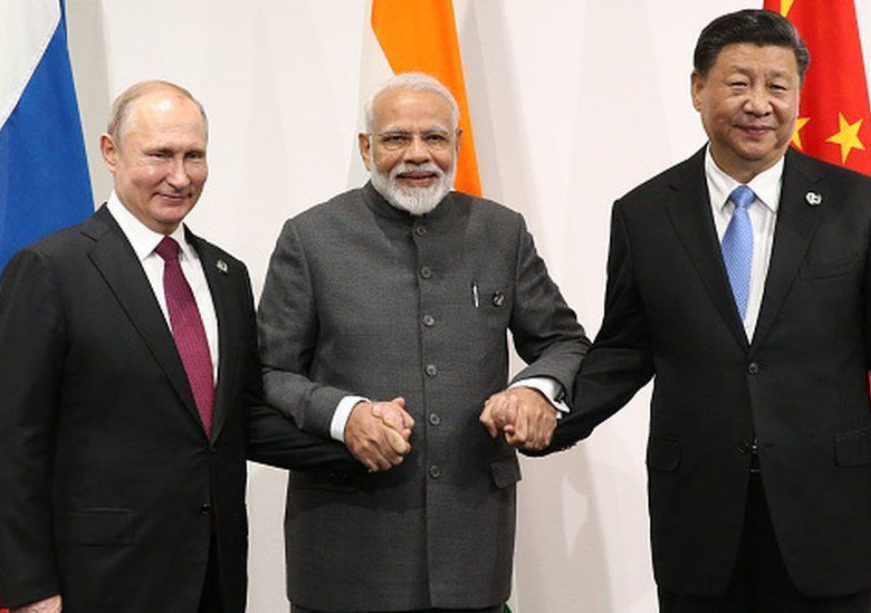
Strategic Council Online – Interview: An international affairs analyst stated that the United States’ imposition of 50% tariffs on Indian export goods has not only severely impacted the economic relations between the two countries but has also opened a new path in New Delhi’s foreign policy. While Washington has justified this move as “punishing” India for purchasing oil from Russia, the Narendra Modi government has called it unfair and emphasized the necessity of ensuring its country’s energy security. However, India’s reaction has not been limited to mere verbal statements; Modi’s visit to China and participation in the Shanghai Cooperation Organization summit can practically be assessed as a strategic pivot towards the East. Simultaneously, diplomatic exchanges among the three Asian powers have accelerated: China’s Foreign Minister visited New Delhi, his Indian counterpart went to Moscow, and Modi, in his meeting with Beijing’s leaders, sent a clear message of India’s desire for closer cooperation with Russia and China. In this context, the Indian Prime Minister’s lack of response to several phone calls from Trump suggests that New Delhi is redefining its foreign policy priorities in response to Washington’s pressure. Many analysts believe that India’s recent actions are not merely short-term reactions but rather a sign of a new balance of power forming in Asia’s equations.

Turkey’s Goal in Applying for the Shanghai Organization Membership

Turkey’s Goal in Applying for the Shanghai Organization Membership

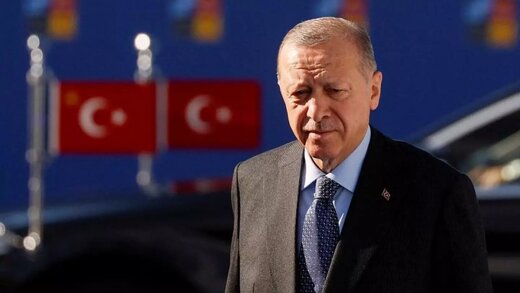
Strategic Council Online – Interview: Iran’s former diplomat, considering Turkey’s request for membership in the Shanghai Organization, said: If at some point there is a dispute between the Shanghai Organization and NATO, Erdogan will not advocate Shanghai. Therefore, Turkey’s membership in the Shanghai Organization is sensitive, considering its common policies and interests with the West and Europe.

China’s Role in Undermining Effectiveness of Western Sanctions against Russia

China’s Role in Undermining Effectiveness of Western Sanctions against Russia

Strategic Council Online – Interview: An expert on Russian affairs stated that despite some challenges and uncertainties, the relationship between Moscow and Beijing has somehow insured the Russian economy; at the same time, she said that the West has a long-term plan to weaken Russia through sanctions.

Turkey’s Macro Approach in Promoting Regional, European Policy; Interaction with Big Powers

Turkey’s Macro Approach in Promoting Regional, European Policy; Interaction with Big Powers

Strategic Council Online – Interview: Secretary of the Turkish Studies Department at the Iranian Association of West Asian Studies said: Turkey is trying to pass through the tensions it experienced with some countries in the region and its neighbors in the past years and put the policy of reducing tension seriously on its agenda. The increase in tensions has negatively affected the country’s economy, and now Ankara is not in a good position to bear more costs.

Prospects, Implications of Resumption of Iran-Egypt Relations

Prospects, Implications of Resumption of Iran-Egypt Relations

Strategic Council Online – Opinion: The stand of the Supreme Leader of the Islamic Revolution regarding welcoming Egypt’s desire to resume relations is a valuable opportunity that can speed up the process of improving relations between the two countries.
Barsam Mohammadi – Expert on regional affairs

Analysis of China’s Concern over NATO Office Opening in Japan

Analysis of China’s Concern over NATO Office Opening in Japan

Strategic Council Online – Interview: An expert on international affairs says that China has increased its military and warfare power in the military and security fields rather than looking for alliances and coalitions. She added that: Establishment of a NATO mission in Japan creates the grounds for serious information and management cooperation in that region and conveys the message that NATO is closely monitoring regional trends and long-term plans for East Asia are being formed.

Consequences of US Oil Sanctions Modification against Venezuela

Consequences of US Oil Sanctions Modification against Venezuela

Strategic Council Online – Interview: Having stated that in view of the global crisis on increasing energy prices, the U.S. has no solution but to extend the temporary and limited license on Petroleos de Venezuela, S.A. (PDVSA), a scientific board member of Tehran University said:” reducing the severity of sanctions on Venezuelan oil substantiated the superiority of thesis about the inefficiency of sanctions”.

Intl. Implications of China’s Future Presidency over BRICS

Intl. Implications of China’s Future Presidency over BRICS

Strategic Council Online – Opinion: Tensions and rivalries between China and the United States have global significance and implications, affecting relations with other powers and even international organizations and institutions such as the G20 or the United Nations and its agencies.
Pouria Nabipour – Ph.D. in political science and international relations

Challenges Facing Democrats on Biden’s Declining Popularity

Challenges Facing Democrats on Biden’s Declining Popularity

Strategic Council Online – Interview: An expert on US affairs says the Democrats are facing the challenge of unpopularity and are likely to lose seats in the mid-term congressional elections. He added: The internal situation in the United States is very chaotic for a variety of reasons, and its distorted image has negatively affected its soft power in the world.

أحدث الوظائف

Iran’s Potential Levers of Power

SCFRonline– Opinion: Iran’s geopolitical power is not limited solely to oil and the Strait of Hormuz; the unintended emergence of disruptions in the future global food and energy security chains can also demonstrate Iran’s strategic importance.

The Inseparability of the Lebanese Front from the Axis of Resistance

SCFR Online–Opinion: By providing an extensive network of social, healthcare, educational, and post-war reconstruction services, Hezbollah has established a strong social base for itself among Lebanon’s Shiites and Sunnis, and even beyond that, among other segments of Lebanese society, including Christians. Hezbollah has never been an external actor imposed upon Lebanon; rather, it is a phenomenon fundamentally born out of the occupation and crimes of the Zionist regime and itself influenced by popular resistance.

The Increasing Efforts of the Zionist Regime to Redefine Borders and the Regional Order and Its Consequences

SCFR Online– Opinion: Security and military developments in the region over recent months indicate that the ongoing crises and wars in Gaza, southern Lebanon, and parts of Syrian territory encompass broader dimensions of geopolitical and geostrategic transformations. In this context, the increased military presence and control of the Zionist regime over parts of the territories of these areas, along with proposals regarding the creation of buffer zones or even the expansion of security borders, have raised serious questions about the future of the regional order and its consequences for the countries of West Asia.

The Components of Iran’s Deterrence Power

SCFR Online – Opinion: At a time when regional security equations have reached a sensitive stage under the influence of Iran’s strategic confrontation with the United States and the Zionist regime, the question of the nature of Tehran’s defensive power has gained greater significance than ever before. While Washington and Tel Aviv rely on their technological superiority, the Islamic Republic of Iran has presented a model of deterrence that extends beyond the material calculations of the world’s classical militaries. This power, rooted in the connection between “the field” and “the people,” has not only altered the balance of power in recent conflicts but has also disrupted adversaries’ calculations when confronting Iran’s strategic depth.

Loading

Asia

An Analysis of Iraq’s Vision 2050 Plan: Challenges and Opportunities Ahead

An Analysis of Iraq’s Vision 2050 Plan: Challenges and Opportunities Ahead

Online Strategic Council – Interview: A West Asia affairs expert stated that the unveiling of Iraq’s Vision 2050 plan by its Prime Minister, Mohammed Shia’ Al-Sudani, is assessed as a turning point on the path of economic development and reducing the country’s dependence on oil revenues. This plan is designed to create a diversified economy, develop infrastructure, and position Iraq at the heart of Asia-Europe trade corridors. If realized, it could alter the region’s geopolitical equations. In this plan, Al-Sudani has emphasized diverting 20 percent of the Asia-Europe trade through Iraq, which, if successful, will make the country a key player in global trade. On the other hand, environmental crises, security challenges, and the necessity of reforming governance structures in Iraq have made this plan a multidimensional and complex issue. For Iran, the implementation of Vision 2050 not only creates economic opportunities in the fields of energy and transit but also provides the possibility of enhancing political and security cooperation. However, the success of this plan is contingent upon resolving internal obstacles and Baghdad’s smart management of foreign relations, an issue that could improve the future of Iran-Iraq interactions and the regional standing of both countries in the coming decades.

India’s Diplomatic Pivot from Washington to Beijing and Moscow

India’s Diplomatic Pivot from Washington to Beijing and Moscow

Strategic Council Online – Interview: An international affairs analyst stated that the United States’ imposition of 50% tariffs on Indian export goods has not only severely impacted the economic relations between the two countries but has also opened a new path in New Delhi’s foreign policy. While Washington has justified this move as “punishing” India for purchasing oil from Russia, the Narendra Modi government has called it unfair and emphasized the necessity of ensuring its country’s energy security. However, India’s reaction has not been limited to mere verbal statements; Modi’s visit to China and participation in the Shanghai Cooperation Organization summit can practically be assessed as a strategic pivot towards the East. Simultaneously, diplomatic exchanges among the three Asian powers have accelerated: China’s Foreign Minister visited New Delhi, his Indian counterpart went to Moscow, and Modi, in his meeting with Beijing’s leaders, sent a clear message of India’s desire for closer cooperation with Russia and China. In this context, the Indian Prime Minister’s lack of response to several phone calls from Trump suggests that New Delhi is redefining its foreign policy priorities in response to Washington’s pressure. Many analysts believe that India’s recent actions are not merely short-term reactions but rather a sign of a new balance of power forming in Asia’s equations.

Turkey’s Goal in Applying for the Shanghai Organization Membership

Turkey’s Goal in Applying for the Shanghai Organization Membership

Strategic Council Online – Interview: Iran’s former diplomat, considering Turkey’s request for membership in the Shanghai Organization, said: If at some point there is a dispute between the Shanghai Organization and NATO, Erdogan will not advocate Shanghai. Therefore, Turkey’s membership in the Shanghai Organization is sensitive, considering its common policies and interests with the West and Europe.

China’s Role in Undermining Effectiveness of Western Sanctions against Russia

China’s Role in Undermining Effectiveness of Western Sanctions against Russia

Strategic Council Online – Interview: An expert on Russian affairs stated that despite some challenges and uncertainties, the relationship between Moscow and Beijing has somehow insured the Russian economy; at the same time, she said that the West has a long-term plan to weaken Russia through sanctions.

Turkey’s Macro Approach in Promoting Regional, European Policy; Interaction with Big Powers

Turkey’s Macro Approach in Promoting Regional, European Policy; Interaction with Big Powers

Strategic Council Online – Interview: Secretary of the Turkish Studies Department at the Iranian Association of West Asian Studies said: Turkey is trying to pass through the tensions it experienced with some countries in the region and its neighbors in the past years and put the policy of reducing tension seriously on its agenda. The increase in tensions has negatively affected the country’s economy, and now Ankara is not in a good position to bear more costs.

Prospects, Implications of Resumption of Iran-Egypt Relations

Prospects, Implications of Resumption of Iran-Egypt Relations

Strategic Council Online – Opinion: The stand of the Supreme Leader of the Islamic Revolution regarding welcoming Egypt’s desire to resume relations is a valuable opportunity that can speed up the process of improving relations between the two countries.
Barsam Mohammadi – Expert on regional affairs

Analysis of China’s Concern over NATO Office Opening in Japan

Analysis of China’s Concern over NATO Office Opening in Japan

Strategic Council Online – Interview: An expert on international affairs says that China has increased its military and warfare power in the military and security fields rather than looking for alliances and coalitions. She added that: Establishment of a NATO mission in Japan creates the grounds for serious information and management cooperation in that region and conveys the message that NATO is closely monitoring regional trends and long-term plans for East Asia are being formed.

Consequences of US Oil Sanctions Modification against Venezuela

Consequences of US Oil Sanctions Modification against Venezuela

Strategic Council Online – Interview: Having stated that in view of the global crisis on increasing energy prices, the U.S. has no solution but to extend the temporary and limited license on Petroleos de Venezuela, S.A. (PDVSA), a scientific board member of Tehran University said:” reducing the severity of sanctions on Venezuelan oil substantiated the superiority of thesis about the inefficiency of sanctions”.

Intl. Implications of China’s Future Presidency over BRICS

Intl. Implications of China’s Future Presidency over BRICS

Strategic Council Online – Opinion: Tensions and rivalries between China and the United States have global significance and implications, affecting relations with other powers and even international organizations and institutions such as the G20 or the United Nations and its agencies.
Pouria Nabipour – Ph.D. in political science and international relations

Challenges Facing Democrats on Biden’s Declining Popularity

Challenges Facing Democrats on Biden’s Declining Popularity

Strategic Council Online – Interview: An expert on US affairs says the Democrats are facing the challenge of unpopularity and are likely to lose seats in the mid-term congressional elections. He added: The internal situation in the United States is very chaotic for a variety of reasons, and its distorted image has negatively affected its soft power in the world.

Asia

An Analysis of Iraq’s Vision 2050 Plan: Challenges and Opportunities Ahead

An Analysis of Iraq’s Vision 2050 Plan: Challenges and Opportunities Ahead

Online Strategic Council – Interview: A West Asia affairs expert stated that the unveiling of Iraq’s Vision 2050 plan by its Prime Minister, Mohammed Shia’ Al-Sudani, is assessed as a turning point on the path of economic development and reducing the country’s dependence on oil revenues. This plan is designed to create a diversified economy, develop infrastructure, and position Iraq at the heart of Asia-Europe trade corridors. If realized, it could alter the region’s geopolitical equations. In this plan, Al-Sudani has emphasized diverting 20 percent of the Asia-Europe trade through Iraq, which, if successful, will make the country a key player in global trade. On the other hand, environmental crises, security challenges, and the necessity of reforming governance structures in Iraq have made this plan a multidimensional and complex issue. For Iran, the implementation of Vision 2050 not only creates economic opportunities in the fields of energy and transit but also provides the possibility of enhancing political and security cooperation. However, the success of this plan is contingent upon resolving internal obstacles and Baghdad’s smart management of foreign relations, an issue that could improve the future of Iran-Iraq interactions and the regional standing of both countries in the coming decades.

India’s Diplomatic Pivot from Washington to Beijing and Moscow

India’s Diplomatic Pivot from Washington to Beijing and Moscow

Strategic Council Online – Interview: An international affairs analyst stated that the United States’ imposition of 50% tariffs on Indian export goods has not only severely impacted the economic relations between the two countries but has also opened a new path in New Delhi’s foreign policy. While Washington has justified this move as “punishing” India for purchasing oil from Russia, the Narendra Modi government has called it unfair and emphasized the necessity of ensuring its country’s energy security. However, India’s reaction has not been limited to mere verbal statements; Modi’s visit to China and participation in the Shanghai Cooperation Organization summit can practically be assessed as a strategic pivot towards the East. Simultaneously, diplomatic exchanges among the three Asian powers have accelerated: China’s Foreign Minister visited New Delhi, his Indian counterpart went to Moscow, and Modi, in his meeting with Beijing’s leaders, sent a clear message of India’s desire for closer cooperation with Russia and China. In this context, the Indian Prime Minister’s lack of response to several phone calls from Trump suggests that New Delhi is redefining its foreign policy priorities in response to Washington’s pressure. Many analysts believe that India’s recent actions are not merely short-term reactions but rather a sign of a new balance of power forming in Asia’s equations.

Turkey’s Goal in Applying for the Shanghai Organization Membership

Turkey’s Goal in Applying for the Shanghai Organization Membership

Strategic Council Online – Interview: Iran’s former diplomat, considering Turkey’s request for membership in the Shanghai Organization, said: If at some point there is a dispute between the Shanghai Organization and NATO, Erdogan will not advocate Shanghai. Therefore, Turkey’s membership in the Shanghai Organization is sensitive, considering its common policies and interests with the West and Europe.

China’s Role in Undermining Effectiveness of Western Sanctions against Russia

China’s Role in Undermining Effectiveness of Western Sanctions against Russia

Strategic Council Online – Interview: An expert on Russian affairs stated that despite some challenges and uncertainties, the relationship between Moscow and Beijing has somehow insured the Russian economy; at the same time, she said that the West has a long-term plan to weaken Russia through sanctions.

Turkey’s Macro Approach in Promoting Regional, European Policy; Interaction with Big Powers

Turkey’s Macro Approach in Promoting Regional, European Policy; Interaction with Big Powers

Strategic Council Online – Interview: Secretary of the Turkish Studies Department at the Iranian Association of West Asian Studies said: Turkey is trying to pass through the tensions it experienced with some countries in the region and its neighbors in the past years and put the policy of reducing tension seriously on its agenda. The increase in tensions has negatively affected the country’s economy, and now Ankara is not in a good position to bear more costs.

Prospects, Implications of Resumption of Iran-Egypt Relations

Prospects, Implications of Resumption of Iran-Egypt Relations

Strategic Council Online – Opinion: The stand of the Supreme Leader of the Islamic Revolution regarding welcoming Egypt’s desire to resume relations is a valuable opportunity that can speed up the process of improving relations between the two countries.
Barsam Mohammadi – Expert on regional affairs

Analysis of China’s Concern over NATO Office Opening in Japan

Analysis of China’s Concern over NATO Office Opening in Japan

Strategic Council Online – Interview: An expert on international affairs says that China has increased its military and warfare power in the military and security fields rather than looking for alliances and coalitions. She added that: Establishment of a NATO mission in Japan creates the grounds for serious information and management cooperation in that region and conveys the message that NATO is closely monitoring regional trends and long-term plans for East Asia are being formed.

Consequences of US Oil Sanctions Modification against Venezuela

Consequences of US Oil Sanctions Modification against Venezuela

Strategic Council Online – Interview: Having stated that in view of the global crisis on increasing energy prices, the U.S. has no solution but to extend the temporary and limited license on Petroleos de Venezuela, S.A. (PDVSA), a scientific board member of Tehran University said:” reducing the severity of sanctions on Venezuelan oil substantiated the superiority of thesis about the inefficiency of sanctions”.

Intl. Implications of China’s Future Presidency over BRICS

Intl. Implications of China’s Future Presidency over BRICS

Strategic Council Online – Opinion: Tensions and rivalries between China and the United States have global significance and implications, affecting relations with other powers and even international organizations and institutions such as the G20 or the United Nations and its agencies.
Pouria Nabipour – Ph.D. in political science and international relations

Challenges Facing Democrats on Biden’s Declining Popularity

Challenges Facing Democrats on Biden’s Declining Popularity

Strategic Council Online – Interview: An expert on US affairs says the Democrats are facing the challenge of unpopularity and are likely to lose seats in the mid-term congressional elections. He added: The internal situation in the United States is very chaotic for a variety of reasons, and its distorted image has negatively affected its soft power in the world.

LATEST CONTENT

Iran’s Potential Levers of Power

SCFRonline– Opinion: Iran’s geopolitical power is not limited solely to oil and the Strait of Hormuz; the unintended emergence of disruptions in the future global food and energy security chains can also demonstrate Iran’s strategic importance.

The Inseparability of the Lebanese Front from the Axis of Resistance

SCFR Online–Opinion: By providing an extensive network of social, healthcare, educational, and post-war reconstruction services, Hezbollah has established a strong social base for itself among Lebanon’s Shiites and Sunnis, and even beyond that, among other segments of Lebanese society, including Christians. Hezbollah has never been an external actor imposed upon Lebanon; rather, it is a phenomenon fundamentally born out of the occupation and crimes of the Zionist regime and itself influenced by popular resistance.

The Increasing Efforts of the Zionist Regime to Redefine Borders and the Regional Order and Its Consequences

SCFR Online– Opinion: Security and military developments in the region over recent months indicate that the ongoing crises and wars in Gaza, southern Lebanon, and parts of Syrian territory encompass broader dimensions of geopolitical and geostrategic transformations. In this context, the increased military presence and control of the Zionist regime over parts of the territories of these areas, along with proposals regarding the creation of buffer zones or even the expansion of security borders, have raised serious questions about the future of the regional order and its consequences for the countries of West Asia.

The Components of Iran’s Deterrence Power

SCFR Online – Opinion: At a time when regional security equations have reached a sensitive stage under the influence of Iran’s strategic confrontation with the United States and the Zionist regime, the question of the nature of Tehran’s defensive power has gained greater significance than ever before. While Washington and Tel Aviv rely on their technological superiority, the Islamic Republic of Iran has presented a model of deterrence that extends beyond the material calculations of the world’s classical militaries. This power, rooted in the connection between “the field” and “the people,” has not only altered the balance of power in recent conflicts but has also disrupted adversaries’ calculations when confronting Iran’s strategic depth.

Loading

Asia

An Analysis of Iraq’s Vision 2050 Plan: Challenges and Opportunities Ahead

An Analysis of Iraq’s Vision 2050 Plan: Challenges and Opportunities Ahead

Online Strategic Council – Interview: A West Asia affairs expert stated that the unveiling of Iraq’s Vision 2050 plan by its Prime Minister, Mohammed Shia’ Al-Sudani, is assessed as a turning point on the path of economic development and reducing the country’s dependence on oil revenues. This plan is designed to create a diversified economy, develop infrastructure, and position Iraq at the heart of Asia-Europe trade corridors. If realized, it could alter the region’s geopolitical equations. In this plan, Al-Sudani has emphasized diverting 20 percent of the Asia-Europe trade through Iraq, which, if successful, will make the country a key player in global trade. On the other hand, environmental crises, security challenges, and the necessity of reforming governance structures in Iraq have made this plan a multidimensional and complex issue. For Iran, the implementation of Vision 2050 not only creates economic opportunities in the fields of energy and transit but also provides the possibility of enhancing political and security cooperation. However, the success of this plan is contingent upon resolving internal obstacles and Baghdad’s smart management of foreign relations, an issue that could improve the future of Iran-Iraq interactions and the regional standing of both countries in the coming decades.

India’s Diplomatic Pivot from Washington to Beijing and Moscow

India’s Diplomatic Pivot from Washington to Beijing and Moscow

Strategic Council Online – Interview: An international affairs analyst stated that the United States’ imposition of 50% tariffs on Indian export goods has not only severely impacted the economic relations between the two countries but has also opened a new path in New Delhi’s foreign policy. While Washington has justified this move as “punishing” India for purchasing oil from Russia, the Narendra Modi government has called it unfair and emphasized the necessity of ensuring its country’s energy security. However, India’s reaction has not been limited to mere verbal statements; Modi’s visit to China and participation in the Shanghai Cooperation Organization summit can practically be assessed as a strategic pivot towards the East. Simultaneously, diplomatic exchanges among the three Asian powers have accelerated: China’s Foreign Minister visited New Delhi, his Indian counterpart went to Moscow, and Modi, in his meeting with Beijing’s leaders, sent a clear message of India’s desire for closer cooperation with Russia and China. In this context, the Indian Prime Minister’s lack of response to several phone calls from Trump suggests that New Delhi is redefining its foreign policy priorities in response to Washington’s pressure. Many analysts believe that India’s recent actions are not merely short-term reactions but rather a sign of a new balance of power forming in Asia’s equations.

Turkey’s Goal in Applying for the Shanghai Organization Membership

Turkey’s Goal in Applying for the Shanghai Organization Membership

Strategic Council Online – Interview: Iran’s former diplomat, considering Turkey’s request for membership in the Shanghai Organization, said: If at some point there is a dispute between the Shanghai Organization and NATO, Erdogan will not advocate Shanghai. Therefore, Turkey’s membership in the Shanghai Organization is sensitive, considering its common policies and interests with the West and Europe.

China’s Role in Undermining Effectiveness of Western Sanctions against Russia

China’s Role in Undermining Effectiveness of Western Sanctions against Russia

Strategic Council Online – Interview: An expert on Russian affairs stated that despite some challenges and uncertainties, the relationship between Moscow and Beijing has somehow insured the Russian economy; at the same time, she said that the West has a long-term plan to weaken Russia through sanctions.

Turkey’s Macro Approach in Promoting Regional, European Policy; Interaction with Big Powers

Turkey’s Macro Approach in Promoting Regional, European Policy; Interaction with Big Powers

Strategic Council Online – Interview: Secretary of the Turkish Studies Department at the Iranian Association of West Asian Studies said: Turkey is trying to pass through the tensions it experienced with some countries in the region and its neighbors in the past years and put the policy of reducing tension seriously on its agenda. The increase in tensions has negatively affected the country’s economy, and now Ankara is not in a good position to bear more costs.

Prospects, Implications of Resumption of Iran-Egypt Relations

Prospects, Implications of Resumption of Iran-Egypt Relations

Strategic Council Online – Opinion: The stand of the Supreme Leader of the Islamic Revolution regarding welcoming Egypt’s desire to resume relations is a valuable opportunity that can speed up the process of improving relations between the two countries.
Barsam Mohammadi – Expert on regional affairs

Analysis of China’s Concern over NATO Office Opening in Japan

Analysis of China’s Concern over NATO Office Opening in Japan

Strategic Council Online – Interview: An expert on international affairs says that China has increased its military and warfare power in the military and security fields rather than looking for alliances and coalitions. She added that: Establishment of a NATO mission in Japan creates the grounds for serious information and management cooperation in that region and conveys the message that NATO is closely monitoring regional trends and long-term plans for East Asia are being formed.

Consequences of US Oil Sanctions Modification against Venezuela

Consequences of US Oil Sanctions Modification against Venezuela

Strategic Council Online – Interview: Having stated that in view of the global crisis on increasing energy prices, the U.S. has no solution but to extend the temporary and limited license on Petroleos de Venezuela, S.A. (PDVSA), a scientific board member of Tehran University said:” reducing the severity of sanctions on Venezuelan oil substantiated the superiority of thesis about the inefficiency of sanctions”.

Intl. Implications of China’s Future Presidency over BRICS

Intl. Implications of China’s Future Presidency over BRICS

Strategic Council Online – Opinion: Tensions and rivalries between China and the United States have global significance and implications, affecting relations with other powers and even international organizations and institutions such as the G20 or the United Nations and its agencies.
Pouria Nabipour – Ph.D. in political science and international relations

Challenges Facing Democrats on Biden’s Declining Popularity

Challenges Facing Democrats on Biden’s Declining Popularity

Strategic Council Online – Interview: An expert on US affairs says the Democrats are facing the challenge of unpopularity and are likely to lose seats in the mid-term congressional elections. He added: The internal situation in the United States is very chaotic for a variety of reasons, and its distorted image has negatively affected its soft power in the world.

ÚLTIMAS PUBLICACIONES

Iran’s Potential Levers of Power

SCFRonline– Opinion: Iran’s geopolitical power is not limited solely to oil and the Strait of Hormuz; the unintended emergence of disruptions in the future global food and energy security chains can also demonstrate Iran’s strategic importance.

The Inseparability of the Lebanese Front from the Axis of Resistance

SCFR Online–Opinion: By providing an extensive network of social, healthcare, educational, and post-war reconstruction services, Hezbollah has established a strong social base for itself among Lebanon’s Shiites and Sunnis, and even beyond that, among other segments of Lebanese society, including Christians. Hezbollah has never been an external actor imposed upon Lebanon; rather, it is a phenomenon fundamentally born out of the occupation and crimes of the Zionist regime and itself influenced by popular resistance.

The Increasing Efforts of the Zionist Regime to Redefine Borders and the Regional Order and Its Consequences

SCFR Online– Opinion: Security and military developments in the region over recent months indicate that the ongoing crises and wars in Gaza, southern Lebanon, and parts of Syrian territory encompass broader dimensions of geopolitical and geostrategic transformations. In this context, the increased military presence and control of the Zionist regime over parts of the territories of these areas, along with proposals regarding the creation of buffer zones or even the expansion of security borders, have raised serious questions about the future of the regional order and its consequences for the countries of West Asia.

The Components of Iran’s Deterrence Power

SCFR Online – Opinion: At a time when regional security equations have reached a sensitive stage under the influence of Iran’s strategic confrontation with the United States and the Zionist regime, the question of the nature of Tehran’s defensive power has gained greater significance than ever before. While Washington and Tel Aviv rely on their technological superiority, the Islamic Republic of Iran has presented a model of deterrence that extends beyond the material calculations of the world’s classical militaries. This power, rooted in the connection between “the field” and “the people,” has not only altered the balance of power in recent conflicts but has also disrupted adversaries’ calculations when confronting Iran’s strategic depth.

Loading

Asia

An Analysis of Iraq’s Vision 2050 Plan: Challenges and Opportunities Ahead

An Analysis of Iraq’s Vision 2050 Plan: Challenges and Opportunities Ahead

Online Strategic Council – Interview: A West Asia affairs expert stated that the unveiling of Iraq’s Vision 2050 plan by its Prime Minister, Mohammed Shia’ Al-Sudani, is assessed as a turning point on the path of economic development and reducing the country’s dependence on oil revenues. This plan is designed to create a diversified economy, develop infrastructure, and position Iraq at the heart of Asia-Europe trade corridors. If realized, it could alter the region’s geopolitical equations. In this plan, Al-Sudani has emphasized diverting 20 percent of the Asia-Europe trade through Iraq, which, if successful, will make the country a key player in global trade. On the other hand, environmental crises, security challenges, and the necessity of reforming governance structures in Iraq have made this plan a multidimensional and complex issue. For Iran, the implementation of Vision 2050 not only creates economic opportunities in the fields of energy and transit but also provides the possibility of enhancing political and security cooperation. However, the success of this plan is contingent upon resolving internal obstacles and Baghdad’s smart management of foreign relations, an issue that could improve the future of Iran-Iraq interactions and the regional standing of both countries in the coming decades.

India’s Diplomatic Pivot from Washington to Beijing and Moscow

India’s Diplomatic Pivot from Washington to Beijing and Moscow

Strategic Council Online – Interview: An international affairs analyst stated that the United States’ imposition of 50% tariffs on Indian export goods has not only severely impacted the economic relations between the two countries but has also opened a new path in New Delhi’s foreign policy. While Washington has justified this move as “punishing” India for purchasing oil from Russia, the Narendra Modi government has called it unfair and emphasized the necessity of ensuring its country’s energy security. However, India’s reaction has not been limited to mere verbal statements; Modi’s visit to China and participation in the Shanghai Cooperation Organization summit can practically be assessed as a strategic pivot towards the East. Simultaneously, diplomatic exchanges among the three Asian powers have accelerated: China’s Foreign Minister visited New Delhi, his Indian counterpart went to Moscow, and Modi, in his meeting with Beijing’s leaders, sent a clear message of India’s desire for closer cooperation with Russia and China. In this context, the Indian Prime Minister’s lack of response to several phone calls from Trump suggests that New Delhi is redefining its foreign policy priorities in response to Washington’s pressure. Many analysts believe that India’s recent actions are not merely short-term reactions but rather a sign of a new balance of power forming in Asia’s equations.

Turkey’s Goal in Applying for the Shanghai Organization Membership

Turkey’s Goal in Applying for the Shanghai Organization Membership

Strategic Council Online – Interview: Iran’s former diplomat, considering Turkey’s request for membership in the Shanghai Organization, said: If at some point there is a dispute between the Shanghai Organization and NATO, Erdogan will not advocate Shanghai. Therefore, Turkey’s membership in the Shanghai Organization is sensitive, considering its common policies and interests with the West and Europe.

China’s Role in Undermining Effectiveness of Western Sanctions against Russia

China’s Role in Undermining Effectiveness of Western Sanctions against Russia

Strategic Council Online – Interview: An expert on Russian affairs stated that despite some challenges and uncertainties, the relationship between Moscow and Beijing has somehow insured the Russian economy; at the same time, she said that the West has a long-term plan to weaken Russia through sanctions.

Turkey’s Macro Approach in Promoting Regional, European Policy; Interaction with Big Powers

Turkey’s Macro Approach in Promoting Regional, European Policy; Interaction with Big Powers

Strategic Council Online – Interview: Secretary of the Turkish Studies Department at the Iranian Association of West Asian Studies said: Turkey is trying to pass through the tensions it experienced with some countries in the region and its neighbors in the past years and put the policy of reducing tension seriously on its agenda. The increase in tensions has negatively affected the country’s economy, and now Ankara is not in a good position to bear more costs.

Prospects, Implications of Resumption of Iran-Egypt Relations

Prospects, Implications of Resumption of Iran-Egypt Relations

Strategic Council Online – Opinion: The stand of the Supreme Leader of the Islamic Revolution regarding welcoming Egypt’s desire to resume relations is a valuable opportunity that can speed up the process of improving relations between the two countries.
Barsam Mohammadi – Expert on regional affairs

Analysis of China’s Concern over NATO Office Opening in Japan

Analysis of China’s Concern over NATO Office Opening in Japan

Strategic Council Online – Interview: An expert on international affairs says that China has increased its military and warfare power in the military and security fields rather than looking for alliances and coalitions. She added that: Establishment of a NATO mission in Japan creates the grounds for serious information and management cooperation in that region and conveys the message that NATO is closely monitoring regional trends and long-term plans for East Asia are being formed.

Consequences of US Oil Sanctions Modification against Venezuela

Consequences of US Oil Sanctions Modification against Venezuela

Strategic Council Online – Interview: Having stated that in view of the global crisis on increasing energy prices, the U.S. has no solution but to extend the temporary and limited license on Petroleos de Venezuela, S.A. (PDVSA), a scientific board member of Tehran University said:” reducing the severity of sanctions on Venezuelan oil substantiated the superiority of thesis about the inefficiency of sanctions”.

Intl. Implications of China’s Future Presidency over BRICS

Intl. Implications of China’s Future Presidency over BRICS

Strategic Council Online – Opinion: Tensions and rivalries between China and the United States have global significance and implications, affecting relations with other powers and even international organizations and institutions such as the G20 or the United Nations and its agencies.
Pouria Nabipour – Ph.D. in political science and international relations

Challenges Facing Democrats on Biden’s Declining Popularity

Challenges Facing Democrats on Biden’s Declining Popularity

Strategic Council Online – Interview: An expert on US affairs says the Democrats are facing the challenge of unpopularity and are likely to lose seats in the mid-term congressional elections. He added: The internal situation in the United States is very chaotic for a variety of reasons, and its distorted image has negatively affected its soft power in the world.

ÚLTIMAS PUBLICACIONES

Iran’s Potential Levers of Power

SCFRonline– Opinion: Iran’s geopolitical power is not limited solely to oil and the Strait of Hormuz; the unintended emergence of disruptions in the future global food and energy security chains can also demonstrate Iran’s strategic importance.

The Inseparability of the Lebanese Front from the Axis of Resistance

SCFR Online–Opinion: By providing an extensive network of social, healthcare, educational, and post-war reconstruction services, Hezbollah has established a strong social base for itself among Lebanon’s Shiites and Sunnis, and even beyond that, among other segments of Lebanese society, including Christians. Hezbollah has never been an external actor imposed upon Lebanon; rather, it is a phenomenon fundamentally born out of the occupation and crimes of the Zionist regime and itself influenced by popular resistance.

The Increasing Efforts of the Zionist Regime to Redefine Borders and the Regional Order and Its Consequences

SCFR Online– Opinion: Security and military developments in the region over recent months indicate that the ongoing crises and wars in Gaza, southern Lebanon, and parts of Syrian territory encompass broader dimensions of geopolitical and geostrategic transformations. In this context, the increased military presence and control of the Zionist regime over parts of the territories of these areas, along with proposals regarding the creation of buffer zones or even the expansion of security borders, have raised serious questions about the future of the regional order and its consequences for the countries of West Asia.

The Components of Iran’s Deterrence Power

SCFR Online – Opinion: At a time when regional security equations have reached a sensitive stage under the influence of Iran’s strategic confrontation with the United States and the Zionist regime, the question of the nature of Tehran’s defensive power has gained greater significance than ever before. While Washington and Tel Aviv rely on their technological superiority, the Islamic Republic of Iran has presented a model of deterrence that extends beyond the material calculations of the world’s classical militaries. This power, rooted in the connection between “the field” and “the people,” has not only altered the balance of power in recent conflicts but has also disrupted adversaries’ calculations when confronting Iran’s strategic depth.

Loading

Asia

An Analysis of Iraq’s Vision 2050 Plan: Challenges and Opportunities Ahead

An Analysis of Iraq’s Vision 2050 Plan: Challenges and Opportunities Ahead

Online Strategic Council – Interview: A West Asia affairs expert stated that the unveiling of Iraq’s Vision 2050 plan by its Prime Minister, Mohammed Shia’ Al-Sudani, is assessed as a turning point on the path of economic development and reducing the country’s dependence on oil revenues. This plan is designed to create a diversified economy, develop infrastructure, and position Iraq at the heart of Asia-Europe trade corridors. If realized, it could alter the region’s geopolitical equations. In this plan, Al-Sudani has emphasized diverting 20 percent of the Asia-Europe trade through Iraq, which, if successful, will make the country a key player in global trade. On the other hand, environmental crises, security challenges, and the necessity of reforming governance structures in Iraq have made this plan a multidimensional and complex issue. For Iran, the implementation of Vision 2050 not only creates economic opportunities in the fields of energy and transit but also provides the possibility of enhancing political and security cooperation. However, the success of this plan is contingent upon resolving internal obstacles and Baghdad’s smart management of foreign relations, an issue that could improve the future of Iran-Iraq interactions and the regional standing of both countries in the coming decades.

India’s Diplomatic Pivot from Washington to Beijing and Moscow

India’s Diplomatic Pivot from Washington to Beijing and Moscow

Strategic Council Online – Interview: An international affairs analyst stated that the United States’ imposition of 50% tariffs on Indian export goods has not only severely impacted the economic relations between the two countries but has also opened a new path in New Delhi’s foreign policy. While Washington has justified this move as “punishing” India for purchasing oil from Russia, the Narendra Modi government has called it unfair and emphasized the necessity of ensuring its country’s energy security. However, India’s reaction has not been limited to mere verbal statements; Modi’s visit to China and participation in the Shanghai Cooperation Organization summit can practically be assessed as a strategic pivot towards the East. Simultaneously, diplomatic exchanges among the three Asian powers have accelerated: China’s Foreign Minister visited New Delhi, his Indian counterpart went to Moscow, and Modi, in his meeting with Beijing’s leaders, sent a clear message of India’s desire for closer cooperation with Russia and China. In this context, the Indian Prime Minister’s lack of response to several phone calls from Trump suggests that New Delhi is redefining its foreign policy priorities in response to Washington’s pressure. Many analysts believe that India’s recent actions are not merely short-term reactions but rather a sign of a new balance of power forming in Asia’s equations.

Turkey’s Goal in Applying for the Shanghai Organization Membership

Turkey’s Goal in Applying for the Shanghai Organization Membership

Strategic Council Online – Interview: Iran’s former diplomat, considering Turkey’s request for membership in the Shanghai Organization, said: If at some point there is a dispute between the Shanghai Organization and NATO, Erdogan will not advocate Shanghai. Therefore, Turkey’s membership in the Shanghai Organization is sensitive, considering its common policies and interests with the West and Europe.

China’s Role in Undermining Effectiveness of Western Sanctions against Russia

China’s Role in Undermining Effectiveness of Western Sanctions against Russia

Strategic Council Online – Interview: An expert on Russian affairs stated that despite some challenges and uncertainties, the relationship between Moscow and Beijing has somehow insured the Russian economy; at the same time, she said that the West has a long-term plan to weaken Russia through sanctions.

Turkey’s Macro Approach in Promoting Regional, European Policy; Interaction with Big Powers

Turkey’s Macro Approach in Promoting Regional, European Policy; Interaction with Big Powers

Strategic Council Online – Interview: Secretary of the Turkish Studies Department at the Iranian Association of West Asian Studies said: Turkey is trying to pass through the tensions it experienced with some countries in the region and its neighbors in the past years and put the policy of reducing tension seriously on its agenda. The increase in tensions has negatively affected the country’s economy, and now Ankara is not in a good position to bear more costs.

Prospects, Implications of Resumption of Iran-Egypt Relations

Prospects, Implications of Resumption of Iran-Egypt Relations

Strategic Council Online – Opinion: The stand of the Supreme Leader of the Islamic Revolution regarding welcoming Egypt’s desire to resume relations is a valuable opportunity that can speed up the process of improving relations between the two countries.
Barsam Mohammadi – Expert on regional affairs

Analysis of China’s Concern over NATO Office Opening in Japan

Analysis of China’s Concern over NATO Office Opening in Japan

Strategic Council Online – Interview: An expert on international affairs says that China has increased its military and warfare power in the military and security fields rather than looking for alliances and coalitions. She added that: Establishment of a NATO mission in Japan creates the grounds for serious information and management cooperation in that region and conveys the message that NATO is closely monitoring regional trends and long-term plans for East Asia are being formed.

Consequences of US Oil Sanctions Modification against Venezuela

Consequences of US Oil Sanctions Modification against Venezuela

Strategic Council Online – Interview: Having stated that in view of the global crisis on increasing energy prices, the U.S. has no solution but to extend the temporary and limited license on Petroleos de Venezuela, S.A. (PDVSA), a scientific board member of Tehran University said:” reducing the severity of sanctions on Venezuelan oil substantiated the superiority of thesis about the inefficiency of sanctions”.

Intl. Implications of China’s Future Presidency over BRICS

Intl. Implications of China’s Future Presidency over BRICS

Strategic Council Online – Opinion: Tensions and rivalries between China and the United States have global significance and implications, affecting relations with other powers and even international organizations and institutions such as the G20 or the United Nations and its agencies.
Pouria Nabipour – Ph.D. in political science and international relations

Challenges Facing Democrats on Biden’s Declining Popularity

Challenges Facing Democrats on Biden’s Declining Popularity

Strategic Council Online – Interview: An expert on US affairs says the Democrats are facing the challenge of unpopularity and are likely to lose seats in the mid-term congressional elections. He added: The internal situation in the United States is very chaotic for a variety of reasons, and its distorted image has negatively affected its soft power in the world.

ÚLTIMAS PUBLICACIONES

Iran’s Potential Levers of Power

SCFRonline– Opinion: Iran’s geopolitical power is not limited solely to oil and the Strait of Hormuz; the unintended emergence of disruptions in the future global food and energy security chains can also demonstrate Iran’s strategic importance.

The Inseparability of the Lebanese Front from the Axis of Resistance

SCFR Online–Opinion: By providing an extensive network of social, healthcare, educational, and post-war reconstruction services, Hezbollah has established a strong social base for itself among Lebanon’s Shiites and Sunnis, and even beyond that, among other segments of Lebanese society, including Christians. Hezbollah has never been an external actor imposed upon Lebanon; rather, it is a phenomenon fundamentally born out of the occupation and crimes of the Zionist regime and itself influenced by popular resistance.

The Increasing Efforts of the Zionist Regime to Redefine Borders and the Regional Order and Its Consequences

SCFR Online– Opinion: Security and military developments in the region over recent months indicate that the ongoing crises and wars in Gaza, southern Lebanon, and parts of Syrian territory encompass broader dimensions of geopolitical and geostrategic transformations. In this context, the increased military presence and control of the Zionist regime over parts of the territories of these areas, along with proposals regarding the creation of buffer zones or even the expansion of security borders, have raised serious questions about the future of the regional order and its consequences for the countries of West Asia.

The Components of Iran’s Deterrence Power

SCFR Online – Opinion: At a time when regional security equations have reached a sensitive stage under the influence of Iran’s strategic confrontation with the United States and the Zionist regime, the question of the nature of Tehran’s defensive power has gained greater significance than ever before. While Washington and Tel Aviv rely on their technological superiority, the Islamic Republic of Iran has presented a model of deterrence that extends beyond the material calculations of the world’s classical militaries. This power, rooted in the connection between “the field” and “the people,” has not only altered the balance of power in recent conflicts but has also disrupted adversaries’ calculations when confronting Iran’s strategic depth.

Loading

Asia

An Analysis of Iraq’s Vision 2050 Plan: Challenges and Opportunities Ahead

An Analysis of Iraq’s Vision 2050 Plan: Challenges and Opportunities Ahead

Online Strategic Council – Interview: A West Asia affairs expert stated that the unveiling of Iraq’s Vision 2050 plan by its Prime Minister, Mohammed Shia’ Al-Sudani, is assessed as a turning point on the path of economic development and reducing the country’s dependence on oil revenues. This plan is designed to create a diversified economy, develop infrastructure, and position Iraq at the heart of Asia-Europe trade corridors. If realized, it could alter the region’s geopolitical equations. In this plan, Al-Sudani has emphasized diverting 20 percent of the Asia-Europe trade through Iraq, which, if successful, will make the country a key player in global trade. On the other hand, environmental crises, security challenges, and the necessity of reforming governance structures in Iraq have made this plan a multidimensional and complex issue. For Iran, the implementation of Vision 2050 not only creates economic opportunities in the fields of energy and transit but also provides the possibility of enhancing political and security cooperation. However, the success of this plan is contingent upon resolving internal obstacles and Baghdad’s smart management of foreign relations, an issue that could improve the future of Iran-Iraq interactions and the regional standing of both countries in the coming decades.

India’s Diplomatic Pivot from Washington to Beijing and Moscow

India’s Diplomatic Pivot from Washington to Beijing and Moscow

Strategic Council Online – Interview: An international affairs analyst stated that the United States’ imposition of 50% tariffs on Indian export goods has not only severely impacted the economic relations between the two countries but has also opened a new path in New Delhi’s foreign policy. While Washington has justified this move as “punishing” India for purchasing oil from Russia, the Narendra Modi government has called it unfair and emphasized the necessity of ensuring its country’s energy security. However, India’s reaction has not been limited to mere verbal statements; Modi’s visit to China and participation in the Shanghai Cooperation Organization summit can practically be assessed as a strategic pivot towards the East. Simultaneously, diplomatic exchanges among the three Asian powers have accelerated: China’s Foreign Minister visited New Delhi, his Indian counterpart went to Moscow, and Modi, in his meeting with Beijing’s leaders, sent a clear message of India’s desire for closer cooperation with Russia and China. In this context, the Indian Prime Minister’s lack of response to several phone calls from Trump suggests that New Delhi is redefining its foreign policy priorities in response to Washington’s pressure. Many analysts believe that India’s recent actions are not merely short-term reactions but rather a sign of a new balance of power forming in Asia’s equations.

Turkey’s Goal in Applying for the Shanghai Organization Membership

Turkey’s Goal in Applying for the Shanghai Organization Membership

Strategic Council Online – Interview: Iran’s former diplomat, considering Turkey’s request for membership in the Shanghai Organization, said: If at some point there is a dispute between the Shanghai Organization and NATO, Erdogan will not advocate Shanghai. Therefore, Turkey’s membership in the Shanghai Organization is sensitive, considering its common policies and interests with the West and Europe.

China’s Role in Undermining Effectiveness of Western Sanctions against Russia

China’s Role in Undermining Effectiveness of Western Sanctions against Russia

Strategic Council Online – Interview: An expert on Russian affairs stated that despite some challenges and uncertainties, the relationship between Moscow and Beijing has somehow insured the Russian economy; at the same time, she said that the West has a long-term plan to weaken Russia through sanctions.

Turkey’s Macro Approach in Promoting Regional, European Policy; Interaction with Big Powers

Turkey’s Macro Approach in Promoting Regional, European Policy; Interaction with Big Powers

Strategic Council Online – Interview: Secretary of the Turkish Studies Department at the Iranian Association of West Asian Studies said: Turkey is trying to pass through the tensions it experienced with some countries in the region and its neighbors in the past years and put the policy of reducing tension seriously on its agenda. The increase in tensions has negatively affected the country’s economy, and now Ankara is not in a good position to bear more costs.

Prospects, Implications of Resumption of Iran-Egypt Relations

Prospects, Implications of Resumption of Iran-Egypt Relations

Strategic Council Online – Opinion: The stand of the Supreme Leader of the Islamic Revolution regarding welcoming Egypt’s desire to resume relations is a valuable opportunity that can speed up the process of improving relations between the two countries.
Barsam Mohammadi – Expert on regional affairs

Analysis of China’s Concern over NATO Office Opening in Japan

Analysis of China’s Concern over NATO Office Opening in Japan

Strategic Council Online – Interview: An expert on international affairs says that China has increased its military and warfare power in the military and security fields rather than looking for alliances and coalitions. She added that: Establishment of a NATO mission in Japan creates the grounds for serious information and management cooperation in that region and conveys the message that NATO is closely monitoring regional trends and long-term plans for East Asia are being formed.

Consequences of US Oil Sanctions Modification against Venezuela

Consequences of US Oil Sanctions Modification against Venezuela

Strategic Council Online – Interview: Having stated that in view of the global crisis on increasing energy prices, the U.S. has no solution but to extend the temporary and limited license on Petroleos de Venezuela, S.A. (PDVSA), a scientific board member of Tehran University said:” reducing the severity of sanctions on Venezuelan oil substantiated the superiority of thesis about the inefficiency of sanctions”.

Intl. Implications of China’s Future Presidency over BRICS

Intl. Implications of China’s Future Presidency over BRICS

Strategic Council Online – Opinion: Tensions and rivalries between China and the United States have global significance and implications, affecting relations with other powers and even international organizations and institutions such as the G20 or the United Nations and its agencies.
Pouria Nabipour – Ph.D. in political science and international relations

Challenges Facing Democrats on Biden’s Declining Popularity

Challenges Facing Democrats on Biden’s Declining Popularity

Strategic Council Online – Interview: An expert on US affairs says the Democrats are facing the challenge of unpopularity and are likely to lose seats in the mid-term congressional elections. He added: The internal situation in the United States is very chaotic for a variety of reasons, and its distorted image has negatively affected its soft power in the world.

ÚLTIMAS PUBLICACIONES

Iran’s Potential Levers of Power

SCFRonline– Opinion: Iran’s geopolitical power is not limited solely to oil and the Strait of Hormuz; the unintended emergence of disruptions in the future global food and energy security chains can also demonstrate Iran’s strategic importance.

The Inseparability of the Lebanese Front from the Axis of Resistance

SCFR Online–Opinion: By providing an extensive network of social, healthcare, educational, and post-war reconstruction services, Hezbollah has established a strong social base for itself among Lebanon’s Shiites and Sunnis, and even beyond that, among other segments of Lebanese society, including Christians. Hezbollah has never been an external actor imposed upon Lebanon; rather, it is a phenomenon fundamentally born out of the occupation and crimes of the Zionist regime and itself influenced by popular resistance.

The Increasing Efforts of the Zionist Regime to Redefine Borders and the Regional Order and Its Consequences

SCFR Online– Opinion: Security and military developments in the region over recent months indicate that the ongoing crises and wars in Gaza, southern Lebanon, and parts of Syrian territory encompass broader dimensions of geopolitical and geostrategic transformations. In this context, the increased military presence and control of the Zionist regime over parts of the territories of these areas, along with proposals regarding the creation of buffer zones or even the expansion of security borders, have raised serious questions about the future of the regional order and its consequences for the countries of West Asia.

The Components of Iran’s Deterrence Power

SCFR Online – Opinion: At a time when regional security equations have reached a sensitive stage under the influence of Iran’s strategic confrontation with the United States and the Zionist regime, the question of the nature of Tehran’s defensive power has gained greater significance than ever before. While Washington and Tel Aviv rely on their technological superiority, the Islamic Republic of Iran has presented a model of deterrence that extends beyond the material calculations of the world’s classical militaries. This power, rooted in the connection between “the field” and “the people,” has not only altered the balance of power in recent conflicts but has also disrupted adversaries’ calculations when confronting Iran’s strategic depth.

Loading