An Analysis of the Makkah Defense Pact
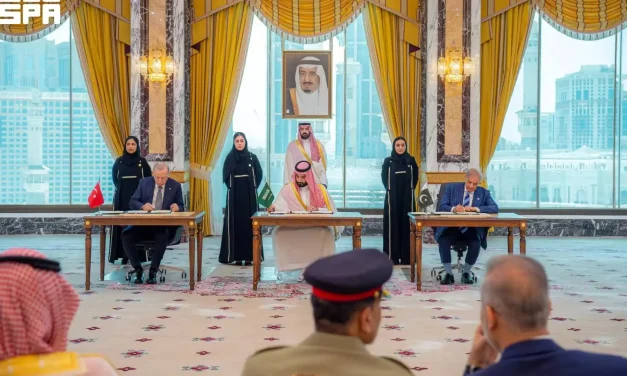
SCFR Online – Opinion: On Friday, August 7, the heads of state of three countries – Saudi Arabia, Turkey, and Pakistan – signed a text under the title “Makkah Joint Defense Agreement.”
Strategic Council Online – Note: The initiative to revive the Hejaz Railway, beyond being a transportation project, constitutes an attempt to redefine geopolitics, the economy, and Turkey’s regional position; however, its realization appears to face significant financial, security, and institutional challenges.
SCFR Online – Opinion: The Strait of Hormuz crisis is no longer merely the consequence of a military confrontation, but rather a sign of the transition from the US-centered maritime order to a new energy security structure involving the participation of emerging and influential powers.
SCFR Online – Opinion: Iran’s active deterrence strategy, while increasing the costs of US intervention, has increasingly exposed the hidden rifts between Washington’s interests and those of the Israeli regime.
SCFR Online – Opinion: The escalation of verbal and strategic tensions between Turkey and the Israeli regime, although not increasing the likelihood of direct war, indicates the formation of a new order in West Asian geopolitical rivalries.
Strategic Council Online – Note: Recent developments in the political geography of West Asia, from rising tensions in the Persian Gulf to missile and drone activities in the Red Sea and the recent warning by Kaja Kallas, the European Union’s foreign policy chief, regarding the threat to freedom of navigation, indicate a key pattern shift; the US-Iran war has moved beyond the scope of a regional and local confrontation and has linked two vital passageways for the global economy: the Strait of Hormuz and the Bab el-Mandeb Strait.
SCFR Online – Opinion: The Ukraine war was not merely a European crisis, but rather the starting point for the rearrangement of the global balance of power and a shift in the strategic behavior of great powers.
SCFR Online – Opinion: Great power competition is now pursued more in trade, currency, technology, and global supply chains than on the battlefields of military confrontation.
Strategic Council Online- Note: In the light of recent events of the world, China managed to be the pioneer of development and economic recovery of the world after the Corona pandemic.
Iman Samadi Nia, Researcher, Economic Diplomacy
Strategic Council Online – Note: Today, no one can deny that the world has entered into the digital age and that global production and marketing have entered into new conditions and waves. In the field of commodity production, experts talk about the fourth wave of the industrial revolution. Robotics of machinery and widespread use of artificial intelligence (AI), natural language processing (NLP), Internet of Things (IoT), and blockchain will greatly reduce costs and increase the speed of production, distribution, and supply of goods in an incredible way. These events quickly derail third-wave factories which, even assuming the use of the best and most up-to-date production methods, will still have low productivity.
Iman Samadinia – economic diplomacy researcher
Strategic Council Online-Editorial: With rising hopes for alleviating the Covid-19 outbreak, experts are studying the legacy and impact of this crisis on the global economy.
Iman Samadinia—researcher of the Economic Diplomacy Studies Office, University of Imam Sadeq (AS)
SCFR Online – Opinion: On Friday, August 7, the heads of state of three countries – Saudi Arabia, Turkey, and Pakistan – signed a text under the title “Makkah Joint Defense Agreement.”
Strategic Council Online – Note: The initiative to revive the Hejaz Railway, beyond being a transportation project, constitutes an attempt to redefine geopolitics, the economy, and Turkey’s regional position; however, its realization appears to face significant financial, security, and institutional challenges.
SCFR Online – Opinion: The Strait of Hormuz crisis is no longer merely the consequence of a military confrontation, but rather a sign of the transition from the US-centered maritime order to a new energy security structure involving the participation of emerging and influential powers.
SCFR Online – Opinion: Iran’s active deterrence strategy, while increasing the costs of US intervention, has increasingly exposed the hidden rifts between Washington’s interests and those of the Israeli regime.
SCFR Online – Opinion: The escalation of verbal and strategic tensions between Turkey and the Israeli regime, although not increasing the likelihood of direct war, indicates the formation of a new order in West Asian geopolitical rivalries.
Strategic Council Online – Note: Recent developments in the political geography of West Asia, from rising tensions in the Persian Gulf to missile and drone activities in the Red Sea and the recent warning by Kaja Kallas, the European Union’s foreign policy chief, regarding the threat to freedom of navigation, indicate a key pattern shift; the US-Iran war has moved beyond the scope of a regional and local confrontation and has linked two vital passageways for the global economy: the Strait of Hormuz and the Bab el-Mandeb Strait.
SCFR Online – Opinion: The Ukraine war was not merely a European crisis, but rather the starting point for the rearrangement of the global balance of power and a shift in the strategic behavior of great powers.
SCFR Online – Opinion: Great power competition is now pursued more in trade, currency, technology, and global supply chains than on the battlefields of military confrontation.
Strategic Council Online- Note: In the light of recent events of the world, China managed to be the pioneer of development and economic recovery of the world after the Corona pandemic.
Iman Samadi Nia, Researcher, Economic Diplomacy
Strategic Council Online – Note: Today, no one can deny that the world has entered into the digital age and that global production and marketing have entered into new conditions and waves. In the field of commodity production, experts talk about the fourth wave of the industrial revolution. Robotics of machinery and widespread use of artificial intelligence (AI), natural language processing (NLP), Internet of Things (IoT), and blockchain will greatly reduce costs and increase the speed of production, distribution, and supply of goods in an incredible way. These events quickly derail third-wave factories which, even assuming the use of the best and most up-to-date production methods, will still have low productivity.
Iman Samadinia – economic diplomacy researcher
Strategic Council Online-Editorial: With rising hopes for alleviating the Covid-19 outbreak, experts are studying the legacy and impact of this crisis on the global economy.
Iman Samadinia—researcher of the Economic Diplomacy Studies Office, University of Imam Sadeq (AS)
Strategic Council Online- Note: In the light of recent events of the world, China managed to be the pioneer of development and economic recovery of the world after the Corona pandemic.
Iman Samadi Nia, Researcher, Economic Diplomacy
Strategic Council Online – Note: Today, no one can deny that the world has entered into the digital age and that global production and marketing have entered into new conditions and waves. In the field of commodity production, experts talk about the fourth wave of the industrial revolution. Robotics of machinery and widespread use of artificial intelligence (AI), natural language processing (NLP), Internet of Things (IoT), and blockchain will greatly reduce costs and increase the speed of production, distribution, and supply of goods in an incredible way. These events quickly derail third-wave factories which, even assuming the use of the best and most up-to-date production methods, will still have low productivity.
Iman Samadinia – economic diplomacy researcher
Strategic Council Online-Editorial: With rising hopes for alleviating the Covid-19 outbreak, experts are studying the legacy and impact of this crisis on the global economy.
Iman Samadinia—researcher of the Economic Diplomacy Studies Office, University of Imam Sadeq (AS)
SCFR Online – Opinion: On Friday, August 7, the heads of state of three countries – Saudi Arabia, Turkey, and Pakistan – signed a text under the title “Makkah Joint Defense Agreement.”
Strategic Council Online – Note: The initiative to revive the Hejaz Railway, beyond being a transportation project, constitutes an attempt to redefine geopolitics, the economy, and Turkey’s regional position; however, its realization appears to face significant financial, security, and institutional challenges.
SCFR Online – Opinion: The Strait of Hormuz crisis is no longer merely the consequence of a military confrontation, but rather a sign of the transition from the US-centered maritime order to a new energy security structure involving the participation of emerging and influential powers.
SCFR Online – Opinion: Iran’s active deterrence strategy, while increasing the costs of US intervention, has increasingly exposed the hidden rifts between Washington’s interests and those of the Israeli regime.
SCFR Online – Opinion: The escalation of verbal and strategic tensions between Turkey and the Israeli regime, although not increasing the likelihood of direct war, indicates the formation of a new order in West Asian geopolitical rivalries.
Strategic Council Online – Note: Recent developments in the political geography of West Asia, from rising tensions in the Persian Gulf to missile and drone activities in the Red Sea and the recent warning by Kaja Kallas, the European Union’s foreign policy chief, regarding the threat to freedom of navigation, indicate a key pattern shift; the US-Iran war has moved beyond the scope of a regional and local confrontation and has linked two vital passageways for the global economy: the Strait of Hormuz and the Bab el-Mandeb Strait.
SCFR Online – Opinion: The Ukraine war was not merely a European crisis, but rather the starting point for the rearrangement of the global balance of power and a shift in the strategic behavior of great powers.
SCFR Online – Opinion: Great power competition is now pursued more in trade, currency, technology, and global supply chains than on the battlefields of military confrontation.
Strategic Council Online- Note: In the light of recent events of the world, China managed to be the pioneer of development and economic recovery of the world after the Corona pandemic.
Iman Samadi Nia, Researcher, Economic Diplomacy
Strategic Council Online – Note: Today, no one can deny that the world has entered into the digital age and that global production and marketing have entered into new conditions and waves. In the field of commodity production, experts talk about the fourth wave of the industrial revolution. Robotics of machinery and widespread use of artificial intelligence (AI), natural language processing (NLP), Internet of Things (IoT), and blockchain will greatly reduce costs and increase the speed of production, distribution, and supply of goods in an incredible way. These events quickly derail third-wave factories which, even assuming the use of the best and most up-to-date production methods, will still have low productivity.
Iman Samadinia – economic diplomacy researcher
Strategic Council Online-Editorial: With rising hopes for alleviating the Covid-19 outbreak, experts are studying the legacy and impact of this crisis on the global economy.
Iman Samadinia—researcher of the Economic Diplomacy Studies Office, University of Imam Sadeq (AS)
SCFR Online – Opinion: On Friday, August 7, the heads of state of three countries – Saudi Arabia, Turkey, and Pakistan – signed a text under the title “Makkah Joint Defense Agreement.”
Strategic Council Online – Note: The initiative to revive the Hejaz Railway, beyond being a transportation project, constitutes an attempt to redefine geopolitics, the economy, and Turkey’s regional position; however, its realization appears to face significant financial, security, and institutional challenges.
SCFR Online – Opinion: The Strait of Hormuz crisis is no longer merely the consequence of a military confrontation, but rather a sign of the transition from the US-centered maritime order to a new energy security structure involving the participation of emerging and influential powers.
SCFR Online – Opinion: Iran’s active deterrence strategy, while increasing the costs of US intervention, has increasingly exposed the hidden rifts between Washington’s interests and those of the Israeli regime.
SCFR Online – Opinion: The escalation of verbal and strategic tensions between Turkey and the Israeli regime, although not increasing the likelihood of direct war, indicates the formation of a new order in West Asian geopolitical rivalries.
Strategic Council Online – Note: Recent developments in the political geography of West Asia, from rising tensions in the Persian Gulf to missile and drone activities in the Red Sea and the recent warning by Kaja Kallas, the European Union’s foreign policy chief, regarding the threat to freedom of navigation, indicate a key pattern shift; the US-Iran war has moved beyond the scope of a regional and local confrontation and has linked two vital passageways for the global economy: the Strait of Hormuz and the Bab el-Mandeb Strait.
SCFR Online – Opinion: The Ukraine war was not merely a European crisis, but rather the starting point for the rearrangement of the global balance of power and a shift in the strategic behavior of great powers.
SCFR Online – Opinion: Great power competition is now pursued more in trade, currency, technology, and global supply chains than on the battlefields of military confrontation.
Strategic Council Online- Note: In the light of recent events of the world, China managed to be the pioneer of development and economic recovery of the world after the Corona pandemic.
Iman Samadi Nia, Researcher, Economic Diplomacy
Strategic Council Online – Note: Today, no one can deny that the world has entered into the digital age and that global production and marketing have entered into new conditions and waves. In the field of commodity production, experts talk about the fourth wave of the industrial revolution. Robotics of machinery and widespread use of artificial intelligence (AI), natural language processing (NLP), Internet of Things (IoT), and blockchain will greatly reduce costs and increase the speed of production, distribution, and supply of goods in an incredible way. These events quickly derail third-wave factories which, even assuming the use of the best and most up-to-date production methods, will still have low productivity.
Iman Samadinia – economic diplomacy researcher
Strategic Council Online-Editorial: With rising hopes for alleviating the Covid-19 outbreak, experts are studying the legacy and impact of this crisis on the global economy.
Iman Samadinia—researcher of the Economic Diplomacy Studies Office, University of Imam Sadeq (AS)
SCFR Online – Opinion: On Friday, August 7, the heads of state of three countries – Saudi Arabia, Turkey, and Pakistan – signed a text under the title “Makkah Joint Defense Agreement.”
Strategic Council Online – Note: The initiative to revive the Hejaz Railway, beyond being a transportation project, constitutes an attempt to redefine geopolitics, the economy, and Turkey’s regional position; however, its realization appears to face significant financial, security, and institutional challenges.
SCFR Online – Opinion: The Strait of Hormuz crisis is no longer merely the consequence of a military confrontation, but rather a sign of the transition from the US-centered maritime order to a new energy security structure involving the participation of emerging and influential powers.
SCFR Online – Opinion: Iran’s active deterrence strategy, while increasing the costs of US intervention, has increasingly exposed the hidden rifts between Washington’s interests and those of the Israeli regime.
SCFR Online – Opinion: The escalation of verbal and strategic tensions between Turkey and the Israeli regime, although not increasing the likelihood of direct war, indicates the formation of a new order in West Asian geopolitical rivalries.
Strategic Council Online – Note: Recent developments in the political geography of West Asia, from rising tensions in the Persian Gulf to missile and drone activities in the Red Sea and the recent warning by Kaja Kallas, the European Union’s foreign policy chief, regarding the threat to freedom of navigation, indicate a key pattern shift; the US-Iran war has moved beyond the scope of a regional and local confrontation and has linked two vital passageways for the global economy: the Strait of Hormuz and the Bab el-Mandeb Strait.
SCFR Online – Opinion: The Ukraine war was not merely a European crisis, but rather the starting point for the rearrangement of the global balance of power and a shift in the strategic behavior of great powers.
SCFR Online – Opinion: Great power competition is now pursued more in trade, currency, technology, and global supply chains than on the battlefields of military confrontation.
Strategic Council Online- Note: In the light of recent events of the world, China managed to be the pioneer of development and economic recovery of the world after the Corona pandemic.
Iman Samadi Nia, Researcher, Economic Diplomacy
Strategic Council Online – Note: Today, no one can deny that the world has entered into the digital age and that global production and marketing have entered into new conditions and waves. In the field of commodity production, experts talk about the fourth wave of the industrial revolution. Robotics of machinery and widespread use of artificial intelligence (AI), natural language processing (NLP), Internet of Things (IoT), and blockchain will greatly reduce costs and increase the speed of production, distribution, and supply of goods in an incredible way. These events quickly derail third-wave factories which, even assuming the use of the best and most up-to-date production methods, will still have low productivity.
Iman Samadinia – economic diplomacy researcher
Strategic Council Online-Editorial: With rising hopes for alleviating the Covid-19 outbreak, experts are studying the legacy and impact of this crisis on the global economy.
Iman Samadinia—researcher of the Economic Diplomacy Studies Office, University of Imam Sadeq (AS)
SCFR Online – Opinion: On Friday, August 7, the heads of state of three countries – Saudi Arabia, Turkey, and Pakistan – signed a text under the title “Makkah Joint Defense Agreement.”
Strategic Council Online – Note: The initiative to revive the Hejaz Railway, beyond being a transportation project, constitutes an attempt to redefine geopolitics, the economy, and Turkey’s regional position; however, its realization appears to face significant financial, security, and institutional challenges.
SCFR Online – Opinion: The Strait of Hormuz crisis is no longer merely the consequence of a military confrontation, but rather a sign of the transition from the US-centered maritime order to a new energy security structure involving the participation of emerging and influential powers.
SCFR Online – Opinion: Iran’s active deterrence strategy, while increasing the costs of US intervention, has increasingly exposed the hidden rifts between Washington’s interests and those of the Israeli regime.
SCFR Online – Opinion: The escalation of verbal and strategic tensions between Turkey and the Israeli regime, although not increasing the likelihood of direct war, indicates the formation of a new order in West Asian geopolitical rivalries.
Strategic Council Online – Note: Recent developments in the political geography of West Asia, from rising tensions in the Persian Gulf to missile and drone activities in the Red Sea and the recent warning by Kaja Kallas, the European Union’s foreign policy chief, regarding the threat to freedom of navigation, indicate a key pattern shift; the US-Iran war has moved beyond the scope of a regional and local confrontation and has linked two vital passageways for the global economy: the Strait of Hormuz and the Bab el-Mandeb Strait.
SCFR Online – Opinion: The Ukraine war was not merely a European crisis, but rather the starting point for the rearrangement of the global balance of power and a shift in the strategic behavior of great powers.
SCFR Online – Opinion: Great power competition is now pursued more in trade, currency, technology, and global supply chains than on the battlefields of military confrontation.
Strategic Council Online- Note: In the light of recent events of the world, China managed to be the pioneer of development and economic recovery of the world after the Corona pandemic.
Iman Samadi Nia, Researcher, Economic Diplomacy
Strategic Council Online – Note: Today, no one can deny that the world has entered into the digital age and that global production and marketing have entered into new conditions and waves. In the field of commodity production, experts talk about the fourth wave of the industrial revolution. Robotics of machinery and widespread use of artificial intelligence (AI), natural language processing (NLP), Internet of Things (IoT), and blockchain will greatly reduce costs and increase the speed of production, distribution, and supply of goods in an incredible way. These events quickly derail third-wave factories which, even assuming the use of the best and most up-to-date production methods, will still have low productivity.
Iman Samadinia – economic diplomacy researcher
Strategic Council Online-Editorial: With rising hopes for alleviating the Covid-19 outbreak, experts are studying the legacy and impact of this crisis on the global economy.
Iman Samadinia—researcher of the Economic Diplomacy Studies Office, University of Imam Sadeq (AS)
SCFR Online – Opinion: On Friday, August 7, the heads of state of three countries – Saudi Arabia, Turkey, and Pakistan – signed a text under the title “Makkah Joint Defense Agreement.”
Strategic Council Online – Note: The initiative to revive the Hejaz Railway, beyond being a transportation project, constitutes an attempt to redefine geopolitics, the economy, and Turkey’s regional position; however, its realization appears to face significant financial, security, and institutional challenges.
SCFR Online – Opinion: The Strait of Hormuz crisis is no longer merely the consequence of a military confrontation, but rather a sign of the transition from the US-centered maritime order to a new energy security structure involving the participation of emerging and influential powers.
SCFR Online – Opinion: Iran’s active deterrence strategy, while increasing the costs of US intervention, has increasingly exposed the hidden rifts between Washington’s interests and those of the Israeli regime.
SCFR Online – Opinion: The escalation of verbal and strategic tensions between Turkey and the Israeli regime, although not increasing the likelihood of direct war, indicates the formation of a new order in West Asian geopolitical rivalries.
Strategic Council Online – Note: Recent developments in the political geography of West Asia, from rising tensions in the Persian Gulf to missile and drone activities in the Red Sea and the recent warning by Kaja Kallas, the European Union’s foreign policy chief, regarding the threat to freedom of navigation, indicate a key pattern shift; the US-Iran war has moved beyond the scope of a regional and local confrontation and has linked two vital passageways for the global economy: the Strait of Hormuz and the Bab el-Mandeb Strait.
SCFR Online – Opinion: The Ukraine war was not merely a European crisis, but rather the starting point for the rearrangement of the global balance of power and a shift in the strategic behavior of great powers.
SCFR Online – Opinion: Great power competition is now pursued more in trade, currency, technology, and global supply chains than on the battlefields of military confrontation.