Opportunity for Technological Development in Iran-China Strategic Cooperation

2021/04/13 | Economy, Note, Top News

Strategic Council Online - Note: Today, no one can deny that the world has entered into the digital age and that global production and marketing have entered into new conditions and waves. In the field of commodity production, experts talk about the fourth wave of the industrial revolution. Robotics of machinery and widespread use of artificial intelligence (AI), natural language processing (NLP), Internet of Things (IoT), and blockchain will greatly reduce costs and increase the speed of production, distribution, and supply of goods in an incredible way. These events quickly derail third-wave factories which, even assuming the use of the best and most up-to-date production methods, will still have low productivity. Iman Samadinia - economic diplomacy researcher

In the field of marketing, the world has entered from the fourth generation of marketing to the fifth generation and new concepts such as the use of artificial intelligence for marketing automation, agile marketing, contextual technology, future customer experience or CX, virtual reality and augmented reality marketing, data-driven marketing and predictive and… have been born. This means that global production and marketing must be modernized around the world, and this requires countries to invest.

The world’s economies need large investments to modernize their economies based on the new generation of global production and marketing, and countries that lag behind in this competition must accept the dominance of leading countries in this field and always need to import new generation technologies and sciences from powerful countries.

One of the realities of the forthcoming industrial revolution is the tying of artificial intelligence and the performance of all possible activities using self-controlling robots. Because artificial intelligence can use human capabilities such as reasoning, planning, communication and mutual understanding, at low cost and high productivity and effectively, it can be a substitute for humans in many areas and reduce human error to a minimum.

China and new technologies

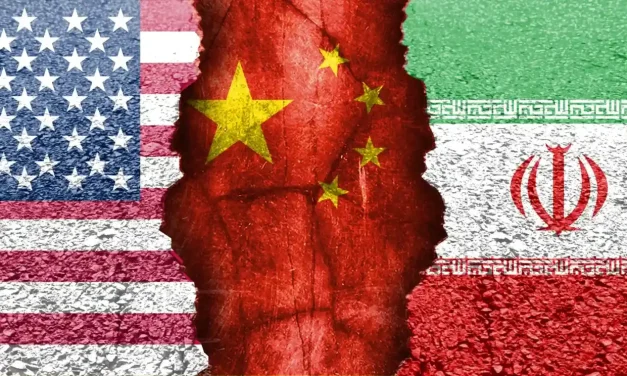
As a powerful country in the economic field, which is in close competition with Western countries in all aspects of economic development, China can be one of the best options for Iran. China’s gross domestic product is 14 trillion dollars, and given its average growth of 6 percent, it is not far behind the US 21 trillion dollars economy. Also, over the decades, the boom in production and the attraction of foreign direct investment is now facing a huge capital surplus. Between 2005 and 2019 alone, China invested more than 815 billion dollars in development projects of other countries. In total, the country has invested 1.23 trillion dollars over the years, and more than 80 percent of that investment has been attracted by southern (low- and middle-income) countries

China is conquering one peak after another in the field of artificial intelligence, production technologies, marketing and sales infrastructure around the world. As such, Alibaba, one of the largest global online sales platforms, is now owned by China, and in other areas, powerful companies such as PetroChina, China Construction Bank, CITIC Group, China Life Insurance Co. and… are operational now. In the field of technology, large companies such as Baidu, Xiaomi, Huawei, ByteDance, etc. are among the leaders in global technology, and the value of those companies is estimated at 4 trillion dollars. This figure becomes interesting when it is predicted that in the next five years, the market value of those companies will be even higher than the market of 7 trillion dollars of American technology companies such as Apple, Microsoft, IBM and others.

China currently ranks first in the world in the field of artificial intelligence and intends to connect and promote all Chinese intelligent industries under the “Made in China, 2025” program. China is also seeking to revolutionize the health system by using artificial intelligence, such as the development of “doctor robots”. Depending on the nature of China’s governance structure, it could use artificial intelligence to expand its central control policy locally. The trade war between China and the United States is, in fact, an offensive policy by the United States to counter China’s technological superiority and development, especially in the field of artificial intelligence.

Conclusion

From a technological point of view, Iran also needs economic growth along with the development of its technological production and marketing infrastructures, and in this field, it must use the knowledge and experience of leading countries and, of course, huge foreign investments of those countries.

Meanwhile, China’s role is technologically significant for Iran. It is rumored that cooperation in the field of technology and telecommunications, the fifth generation of telecommunications, joint projects to develop and strengthen information and communication infrastructure and, of course, the most important of them, the construction of smart cities on the Makran coast is part of the comprehensive strategic cooperation document. Therefore, this valuable document can pave the way for the development of new technologies in Iran, especially in the field of artificial intelligence, and bring about dramatic changes. The Iranian government must, through continuous planning, promote Iran’s position in new technologies such as artificial intelligence.

Establishing lasting relationships between Iranian companies and higher education institutions and the top Chinese companies and institutions of higher education should be on the agenda of policymakers. In the meantime, given the importance of technology transfer, domestic companies should be required to do so only under certain frameworks and structures, such as Offset (equilibrium), franchise, joint venture, buyback and concluding trade agreements and those structures are to be set up as such to transfer knowledge and valuable business technologies to in-house companies during implementation of the project.

0 Comments

Submit a Comment

Your email address will not be published. Required fields are marked *

LATEST CONTENT

The Inseparability of the Lebanese Front from the Axis of Resistance

SCFR Online–Opinion: By providing an extensive network of social, healthcare, educational, and post-war reconstruction services, Hezbollah has established a strong social base for itself among Lebanon’s Shiites and Sunnis, and even beyond that, among other segments of Lebanese society, including Christians. Hezbollah has never been an external actor imposed upon Lebanon; rather, it is a phenomenon fundamentally born out of the occupation and crimes of the Zionist regime and itself influenced by popular resistance.

The Increasing Efforts of the Zionist Regime to Redefine Borders and the Regional Order and Its Consequences

SCFR Online– Opinion: Security and military developments in the region over recent months indicate that the ongoing crises and wars in Gaza, southern Lebanon, and parts of Syrian territory encompass broader dimensions of geopolitical and geostrategic transformations. In this context, the increased military presence and control of the Zionist regime over parts of the territories of these areas, along with proposals regarding the creation of buffer zones or even the expansion of security borders, have raised serious questions about the future of the regional order and its consequences for the countries of West Asia.

The Components of Iran’s Deterrence Power

SCFR Online – Opinion: At a time when regional security equations have reached a sensitive stage under the influence of Iran’s strategic confrontation with the United States and the Zionist regime, the question of the nature of Tehran’s defensive power has gained greater significance than ever before. While Washington and Tel Aviv rely on their technological superiority, the Islamic Republic of Iran has presented a model of deterrence that extends beyond the material calculations of the world’s classical militaries. This power, rooted in the connection between “the field” and “the people,” has not only altered the balance of power in recent conflicts but has also disrupted adversaries’ calculations when confronting Iran’s strategic depth.

Loading

Últimas publicaciones

The Inseparability of the Lebanese Front from the Axis of Resistance

SCFR Online–Opinion: By providing an extensive network of social, healthcare, educational, and post-war reconstruction services, Hezbollah has established a strong social base for itself among Lebanon’s Shiites and Sunnis, and even beyond that, among other segments of Lebanese society, including Christians. Hezbollah has never been an external actor imposed upon Lebanon; rather, it is a phenomenon fundamentally born out of the occupation and crimes of the Zionist regime and itself influenced by popular resistance.

The Increasing Efforts of the Zionist Regime to Redefine Borders and the Regional Order and Its Consequences

SCFR Online– Opinion: Security and military developments in the region over recent months indicate that the ongoing crises and wars in Gaza, southern Lebanon, and parts of Syrian territory encompass broader dimensions of geopolitical and geostrategic transformations. In this context, the increased military presence and control of the Zionist regime over parts of the territories of these areas, along with proposals regarding the creation of buffer zones or even the expansion of security borders, have raised serious questions about the future of the regional order and its consequences for the countries of West Asia.

The Components of Iran’s Deterrence Power

SCFR Online – Opinion: At a time when regional security equations have reached a sensitive stage under the influence of Iran’s strategic confrontation with the United States and the Zionist regime, the question of the nature of Tehran’s defensive power has gained greater significance than ever before. While Washington and Tel Aviv rely on their technological superiority, the Islamic Republic of Iran has presented a model of deterrence that extends beyond the material calculations of the world’s classical militaries. This power, rooted in the connection between “the field” and “the people,” has not only altered the balance of power in recent conflicts but has also disrupted adversaries’ calculations when confronting Iran’s strategic depth.

Loading

DERNIER CONTENU

The Inseparability of the Lebanese Front from the Axis of Resistance

SCFR Online–Opinion: By providing an extensive network of social, healthcare, educational, and post-war reconstruction services, Hezbollah has established a strong social base for itself among Lebanon’s Shiites and Sunnis, and even beyond that, among other segments of Lebanese society, including Christians. Hezbollah has never been an external actor imposed upon Lebanon; rather, it is a phenomenon fundamentally born out of the occupation and crimes of the Zionist regime and itself influenced by popular resistance.

The Increasing Efforts of the Zionist Regime to Redefine Borders and the Regional Order and Its Consequences

SCFR Online– Opinion: Security and military developments in the region over recent months indicate that the ongoing crises and wars in Gaza, southern Lebanon, and parts of Syrian territory encompass broader dimensions of geopolitical and geostrategic transformations. In this context, the increased military presence and control of the Zionist regime over parts of the territories of these areas, along with proposals regarding the creation of buffer zones or even the expansion of security borders, have raised serious questions about the future of the regional order and its consequences for the countries of West Asia.

The Components of Iran’s Deterrence Power

SCFR Online – Opinion: At a time when regional security equations have reached a sensitive stage under the influence of Iran’s strategic confrontation with the United States and the Zionist regime, the question of the nature of Tehran’s defensive power has gained greater significance than ever before. While Washington and Tel Aviv rely on their technological superiority, the Islamic Republic of Iran has presented a model of deterrence that extends beyond the material calculations of the world’s classical militaries. This power, rooted in the connection between “the field” and “the people,” has not only altered the balance of power in recent conflicts but has also disrupted adversaries’ calculations when confronting Iran’s strategic depth.

Loading

DERNIER CONTENU

The Inseparability of the Lebanese Front from the Axis of Resistance

SCFR Online–Opinion: By providing an extensive network of social, healthcare, educational, and post-war reconstruction services, Hezbollah has established a strong social base for itself among Lebanon’s Shiites and Sunnis, and even beyond that, among other segments of Lebanese society, including Christians. Hezbollah has never been an external actor imposed upon Lebanon; rather, it is a phenomenon fundamentally born out of the occupation and crimes of the Zionist regime and itself influenced by popular resistance.

The Increasing Efforts of the Zionist Regime to Redefine Borders and the Regional Order and Its Consequences

SCFR Online– Opinion: Security and military developments in the region over recent months indicate that the ongoing crises and wars in Gaza, southern Lebanon, and parts of Syrian territory encompass broader dimensions of geopolitical and geostrategic transformations. In this context, the increased military presence and control of the Zionist regime over parts of the territories of these areas, along with proposals regarding the creation of buffer zones or even the expansion of security borders, have raised serious questions about the future of the regional order and its consequences for the countries of West Asia.

The Components of Iran’s Deterrence Power

SCFR Online – Opinion: At a time when regional security equations have reached a sensitive stage under the influence of Iran’s strategic confrontation with the United States and the Zionist regime, the question of the nature of Tehran’s defensive power has gained greater significance than ever before. While Washington and Tel Aviv rely on their technological superiority, the Islamic Republic of Iran has presented a model of deterrence that extends beyond the material calculations of the world’s classical militaries. This power, rooted in the connection between “the field” and “the people,” has not only altered the balance of power in recent conflicts but has also disrupted adversaries’ calculations when confronting Iran’s strategic depth.

Loading

DERNIER CONTENU

The Inseparability of the Lebanese Front from the Axis of Resistance

SCFR Online–Opinion: By providing an extensive network of social, healthcare, educational, and post-war reconstruction services, Hezbollah has established a strong social base for itself among Lebanon’s Shiites and Sunnis, and even beyond that, among other segments of Lebanese society, including Christians. Hezbollah has never been an external actor imposed upon Lebanon; rather, it is a phenomenon fundamentally born out of the occupation and crimes of the Zionist regime and itself influenced by popular resistance.

The Increasing Efforts of the Zionist Regime to Redefine Borders and the Regional Order and Its Consequences

SCFR Online– Opinion: Security and military developments in the region over recent months indicate that the ongoing crises and wars in Gaza, southern Lebanon, and parts of Syrian territory encompass broader dimensions of geopolitical and geostrategic transformations. In this context, the increased military presence and control of the Zionist regime over parts of the territories of these areas, along with proposals regarding the creation of buffer zones or even the expansion of security borders, have raised serious questions about the future of the regional order and its consequences for the countries of West Asia.

The Components of Iran’s Deterrence Power

SCFR Online – Opinion: At a time when regional security equations have reached a sensitive stage under the influence of Iran’s strategic confrontation with the United States and the Zionist regime, the question of the nature of Tehran’s defensive power has gained greater significance than ever before. While Washington and Tel Aviv rely on their technological superiority, the Islamic Republic of Iran has presented a model of deterrence that extends beyond the material calculations of the world’s classical militaries. This power, rooted in the connection between “the field” and “the people,” has not only altered the balance of power in recent conflicts but has also disrupted adversaries’ calculations when confronting Iran’s strategic depth.

Loading