Geoeconomics as the Most Important Arena of Great Power Competition
SCFR Online – Opinion: Great power competition is now pursued more in trade, currency, technology, and global supply chains than on the battlefields of military confrontation.
Strategic Council Online – Note: By disregarding Iran’s deterrence capabilities and political economy leverage in the Strait of Hormuz, Washington has reached a strategic deadlock from which military means are unable to extricate it.
SCFR Online – Opinion: Foreign policy analysis is valid when it evaluates decisions based on the information and circumstances prevailing at the time they were made, not on the basis of outcomes that only become apparent after the crisis has ended.
SCFR Online-Opinion: Sanctions are gradually transforming from classical financial instruments into complex mechanisms for the containment of technology, data, and global supply chains.
SCFR Online – Opinion: Emmanuel Macron’s visit to Damascus is an attempt to redefine France’s role in Syria following the recent political developments in that country; an effort pursued within the context of great power competition and the country’s security challenges.
Strategic Council Online – Note: Middle powers such as India, Turkey, Australia, and some Persian Gulf countries are no longer marginal actors, but are redefining global power equations through balancing diplomacy.
Strategic Council Online – Note: In today’s global politics, the creation of narratives has become as important as territorial control and economic management, and has turned into the main tool of great power competition.
Strategic Council Online – Note: Hamas’s handing over the civilian management in Gaza is assessed as an attempt to reduce political pressures, facilitate reconstruction, and preserve the status of resistance in the future equations of Palestine.
SCFR Online – Opinion: The internal situation of the Israeli regime during the 40-day war can be analyzed from several perspectives. The popularity levels of Benjamin Netanyahu, the Likud Party, and the ruling coalition led by Netanyahu until February 28, 2026, remained approximately the same as during the preceding year. The most recent factor that had somewhat increased Netanyahu’s popularity was the advancement of the 2024 war with Hezbollah Lebanon. Subsequently, his popularity temporarily increased during the 12-day war with Iran, but after the war, it returned to its previous state.
Strategic Council Online – Opinion: It appears that the primary focus of the 2026 budget of the Israeli regime is on simultaneously managing war pressures, social discontent, and political ambiguities; even if this approach leads to the postponement of structural reforms and increases financial risks in the medium-term horizon.
Strategic Council Online – Interview: An Israeli regime affairs researcher stated: The Zionist regime media recently announced that Benjamin Netanyahu, the Prime Minister of this regime, has requested a two-week postponement of his trial for security reasons and regional developments. On Sunday, news also emerged that the “Occupied Jerusalem” district court agreed to postpone Netanyahu’s trial by one week. This decision followed the Zionist regime Prime Minister summoning officials from the Foreign Intelligence Service (Mossad) and Military Intelligence Organization (Aman) to a confidential session held at this court to explain the reasons for his request to delay his trial by two weeks.
Strategic Council Online – Opinion: Weakening the United Nations Relief and Works Agency (UNRWA) could lead to worse conditions for the Palestinians and intensify and accelerate their exodus from the Gaza Strip.
Strategic Council Online – Interview: An expert on Zionist affairs said that Israel’s Justice Minister Yarvin Levin, on Benjamin Netanyahu’s order, asked the Attorney General of this regime to open a criminal case to investigate Netanyahu and Yoav Galant regarding the Gaza war. According to the media, the purpose of this action is to circumvent the request of the International Criminal Court to issue an international arrest warrant against these two officials of the Zionist regime.
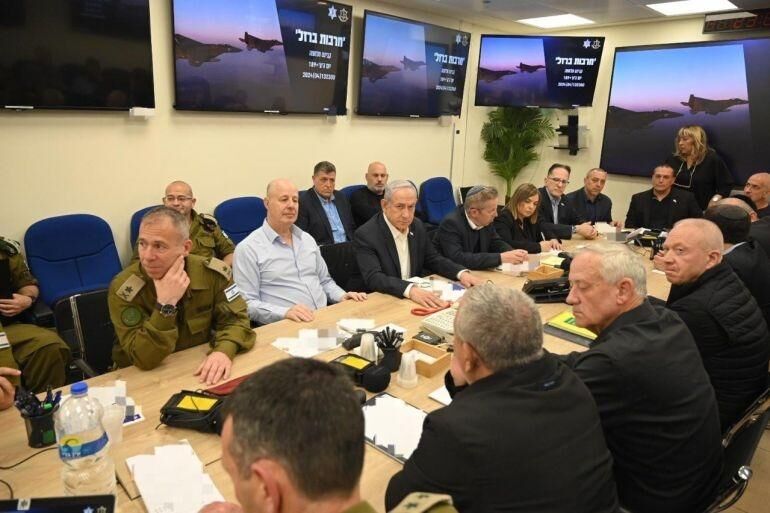
Strategic Council Online—Opinion: Recently, Benjamin Netanyahu, the Prime Minister of the Zionist regime, announced the dissolution of its war cabinet. To examine the dissolution of the Israeli war cabinet, we must examine the conditions before its formation.
Strategic Council Online – Interview: Disputes have escalated within the Zionist regime after October 7; some people want to reduce the intensity of the war, and others believe that the war should continue intensively.
Strategic Council Online – Interview: A researcher of the Zionist regime affairs at the Stream Research Institute, regarding the continuation of protests in the Zionist regime in response to the revision plan of the judicial reform law, said: Protests against the Supreme Court reform case have entered the 18th consecutive week, while the negotiations between Netanyahu’s government and the opposition parties to reach a solution are not inspiring.
Strategic Council Online: Opinion: The new cabinet of the Zionist regime came to power in June 2021 with only 61 supporting deputies; But after going through various ups and downs, this cabinet finally faced its biggest internal crisis in the recent month. The two-pronged crisis began with the resignation of Aydit Silman, a member of the Yaminah party, and led to the suspension of the United Arab List-Raam party’s cooperation with the cabinet following the escalation of clashes between Jews and Muslims at Al-Aqsa Mosque.
Mansoor Barati, Researcher of Zionist regime issues
Strategic Council Online-Interview: A researcher of the Zionist regime issues, referring to the recent poll by the Center for Strategic Studies at the University of Jordan on the basis of which 46 percent of the people of Jordan consider Israel as the biggest threat to the Arab world, says given this view of the Jordanian people, the possibility of developing relations between Tel Aviv and Amman is very limited and almost impossible.
SCFR Online – Opinion: Great power competition is now pursued more in trade, currency, technology, and global supply chains than on the battlefields of military confrontation.
Strategic Council Online – Note: By disregarding Iran’s deterrence capabilities and political economy leverage in the Strait of Hormuz, Washington has reached a strategic deadlock from which military means are unable to extricate it.
SCFR Online – Opinion: Foreign policy analysis is valid when it evaluates decisions based on the information and circumstances prevailing at the time they were made, not on the basis of outcomes that only become apparent after the crisis has ended.
SCFR Online-Opinion: Sanctions are gradually transforming from classical financial instruments into complex mechanisms for the containment of technology, data, and global supply chains.
SCFR Online – Opinion: Emmanuel Macron’s visit to Damascus is an attempt to redefine France’s role in Syria following the recent political developments in that country; an effort pursued within the context of great power competition and the country’s security challenges.
Strategic Council Online – Note: Middle powers such as India, Turkey, Australia, and some Persian Gulf countries are no longer marginal actors, but are redefining global power equations through balancing diplomacy.
Strategic Council Online – Note: In today’s global politics, the creation of narratives has become as important as territorial control and economic management, and has turned into the main tool of great power competition.
Strategic Council Online – Note: Hamas’s handing over the civilian management in Gaza is assessed as an attempt to reduce political pressures, facilitate reconstruction, and preserve the status of resistance in the future equations of Palestine.
SCFR Online – Opinion: The internal situation of the Israeli regime during the 40-day war can be analyzed from several perspectives. The popularity levels of Benjamin Netanyahu, the Likud Party, and the ruling coalition led by Netanyahu until February 28, 2026, remained approximately the same as during the preceding year. The most recent factor that had somewhat increased Netanyahu’s popularity was the advancement of the 2024 war with Hezbollah Lebanon. Subsequently, his popularity temporarily increased during the 12-day war with Iran, but after the war, it returned to its previous state.
Strategic Council Online – Opinion: It appears that the primary focus of the 2026 budget of the Israeli regime is on simultaneously managing war pressures, social discontent, and political ambiguities; even if this approach leads to the postponement of structural reforms and increases financial risks in the medium-term horizon.
Strategic Council Online – Interview: An Israeli regime affairs researcher stated: The Zionist regime media recently announced that Benjamin Netanyahu, the Prime Minister of this regime, has requested a two-week postponement of his trial for security reasons and regional developments. On Sunday, news also emerged that the “Occupied Jerusalem” district court agreed to postpone Netanyahu’s trial by one week. This decision followed the Zionist regime Prime Minister summoning officials from the Foreign Intelligence Service (Mossad) and Military Intelligence Organization (Aman) to a confidential session held at this court to explain the reasons for his request to delay his trial by two weeks.
Strategic Council Online – Opinion: Weakening the United Nations Relief and Works Agency (UNRWA) could lead to worse conditions for the Palestinians and intensify and accelerate their exodus from the Gaza Strip.
Strategic Council Online – Interview: An expert on Zionist affairs said that Israel’s Justice Minister Yarvin Levin, on Benjamin Netanyahu’s order, asked the Attorney General of this regime to open a criminal case to investigate Netanyahu and Yoav Galant regarding the Gaza war. According to the media, the purpose of this action is to circumvent the request of the International Criminal Court to issue an international arrest warrant against these two officials of the Zionist regime.
Strategic Council Online—Opinion: Recently, Benjamin Netanyahu, the Prime Minister of the Zionist regime, announced the dissolution of its war cabinet. To examine the dissolution of the Israeli war cabinet, we must examine the conditions before its formation.
Strategic Council Online – Interview: Disputes have escalated within the Zionist regime after October 7; some people want to reduce the intensity of the war, and others believe that the war should continue intensively.
Strategic Council Online – Interview: A researcher of the Zionist regime affairs at the Stream Research Institute, regarding the continuation of protests in the Zionist regime in response to the revision plan of the judicial reform law, said: Protests against the Supreme Court reform case have entered the 18th consecutive week, while the negotiations between Netanyahu’s government and the opposition parties to reach a solution are not inspiring.
Strategic Council Online: Opinion: The new cabinet of the Zionist regime came to power in June 2021 with only 61 supporting deputies; But after going through various ups and downs, this cabinet finally faced its biggest internal crisis in the recent month. The two-pronged crisis began with the resignation of Aydit Silman, a member of the Yaminah party, and led to the suspension of the United Arab List-Raam party’s cooperation with the cabinet following the escalation of clashes between Jews and Muslims at Al-Aqsa Mosque.
Mansoor Barati, Researcher of Zionist regime issues
Strategic Council Online-Interview: A researcher of the Zionist regime issues, referring to the recent poll by the Center for Strategic Studies at the University of Jordan on the basis of which 46 percent of the people of Jordan consider Israel as the biggest threat to the Arab world, says given this view of the Jordanian people, the possibility of developing relations between Tel Aviv and Amman is very limited and almost impossible.
SCFR Online – Opinion: The internal situation of the Israeli regime during the 40-day war can be analyzed from several perspectives. The popularity levels of Benjamin Netanyahu, the Likud Party, and the ruling coalition led by Netanyahu until February 28, 2026, remained approximately the same as during the preceding year. The most recent factor that had somewhat increased Netanyahu’s popularity was the advancement of the 2024 war with Hezbollah Lebanon. Subsequently, his popularity temporarily increased during the 12-day war with Iran, but after the war, it returned to its previous state.
Strategic Council Online – Opinion: It appears that the primary focus of the 2026 budget of the Israeli regime is on simultaneously managing war pressures, social discontent, and political ambiguities; even if this approach leads to the postponement of structural reforms and increases financial risks in the medium-term horizon.
Strategic Council Online – Interview: An Israeli regime affairs researcher stated: The Zionist regime media recently announced that Benjamin Netanyahu, the Prime Minister of this regime, has requested a two-week postponement of his trial for security reasons and regional developments. On Sunday, news also emerged that the “Occupied Jerusalem” district court agreed to postpone Netanyahu’s trial by one week. This decision followed the Zionist regime Prime Minister summoning officials from the Foreign Intelligence Service (Mossad) and Military Intelligence Organization (Aman) to a confidential session held at this court to explain the reasons for his request to delay his trial by two weeks.
Strategic Council Online – Opinion: Weakening the United Nations Relief and Works Agency (UNRWA) could lead to worse conditions for the Palestinians and intensify and accelerate their exodus from the Gaza Strip.
Strategic Council Online – Interview: An expert on Zionist affairs said that Israel’s Justice Minister Yarvin Levin, on Benjamin Netanyahu’s order, asked the Attorney General of this regime to open a criminal case to investigate Netanyahu and Yoav Galant regarding the Gaza war. According to the media, the purpose of this action is to circumvent the request of the International Criminal Court to issue an international arrest warrant against these two officials of the Zionist regime.
Strategic Council Online—Opinion: Recently, Benjamin Netanyahu, the Prime Minister of the Zionist regime, announced the dissolution of its war cabinet. To examine the dissolution of the Israeli war cabinet, we must examine the conditions before its formation.
Strategic Council Online – Interview: Disputes have escalated within the Zionist regime after October 7; some people want to reduce the intensity of the war, and others believe that the war should continue intensively.
Strategic Council Online – Interview: A researcher of the Zionist regime affairs at the Stream Research Institute, regarding the continuation of protests in the Zionist regime in response to the revision plan of the judicial reform law, said: Protests against the Supreme Court reform case have entered the 18th consecutive week, while the negotiations between Netanyahu’s government and the opposition parties to reach a solution are not inspiring.
Strategic Council Online: Opinion: The new cabinet of the Zionist regime came to power in June 2021 with only 61 supporting deputies; But after going through various ups and downs, this cabinet finally faced its biggest internal crisis in the recent month. The two-pronged crisis began with the resignation of Aydit Silman, a member of the Yaminah party, and led to the suspension of the United Arab List-Raam party’s cooperation with the cabinet following the escalation of clashes between Jews and Muslims at Al-Aqsa Mosque.
Mansoor Barati, Researcher of Zionist regime issues
Strategic Council Online-Interview: A researcher of the Zionist regime issues, referring to the recent poll by the Center for Strategic Studies at the University of Jordan on the basis of which 46 percent of the people of Jordan consider Israel as the biggest threat to the Arab world, says given this view of the Jordanian people, the possibility of developing relations between Tel Aviv and Amman is very limited and almost impossible.
SCFR Online – Opinion: Great power competition is now pursued more in trade, currency, technology, and global supply chains than on the battlefields of military confrontation.
Strategic Council Online – Note: By disregarding Iran’s deterrence capabilities and political economy leverage in the Strait of Hormuz, Washington has reached a strategic deadlock from which military means are unable to extricate it.
SCFR Online – Opinion: Foreign policy analysis is valid when it evaluates decisions based on the information and circumstances prevailing at the time they were made, not on the basis of outcomes that only become apparent after the crisis has ended.
SCFR Online-Opinion: Sanctions are gradually transforming from classical financial instruments into complex mechanisms for the containment of technology, data, and global supply chains.
SCFR Online – Opinion: Emmanuel Macron’s visit to Damascus is an attempt to redefine France’s role in Syria following the recent political developments in that country; an effort pursued within the context of great power competition and the country’s security challenges.
Strategic Council Online – Note: Middle powers such as India, Turkey, Australia, and some Persian Gulf countries are no longer marginal actors, but are redefining global power equations through balancing diplomacy.
Strategic Council Online – Note: In today’s global politics, the creation of narratives has become as important as territorial control and economic management, and has turned into the main tool of great power competition.
Strategic Council Online – Note: Hamas’s handing over the civilian management in Gaza is assessed as an attempt to reduce political pressures, facilitate reconstruction, and preserve the status of resistance in the future equations of Palestine.
SCFR Online – Opinion: The internal situation of the Israeli regime during the 40-day war can be analyzed from several perspectives. The popularity levels of Benjamin Netanyahu, the Likud Party, and the ruling coalition led by Netanyahu until February 28, 2026, remained approximately the same as during the preceding year. The most recent factor that had somewhat increased Netanyahu’s popularity was the advancement of the 2024 war with Hezbollah Lebanon. Subsequently, his popularity temporarily increased during the 12-day war with Iran, but after the war, it returned to its previous state.
Strategic Council Online – Opinion: It appears that the primary focus of the 2026 budget of the Israeli regime is on simultaneously managing war pressures, social discontent, and political ambiguities; even if this approach leads to the postponement of structural reforms and increases financial risks in the medium-term horizon.
Strategic Council Online – Interview: An Israeli regime affairs researcher stated: The Zionist regime media recently announced that Benjamin Netanyahu, the Prime Minister of this regime, has requested a two-week postponement of his trial for security reasons and regional developments. On Sunday, news also emerged that the “Occupied Jerusalem” district court agreed to postpone Netanyahu’s trial by one week. This decision followed the Zionist regime Prime Minister summoning officials from the Foreign Intelligence Service (Mossad) and Military Intelligence Organization (Aman) to a confidential session held at this court to explain the reasons for his request to delay his trial by two weeks.
Strategic Council Online – Opinion: Weakening the United Nations Relief and Works Agency (UNRWA) could lead to worse conditions for the Palestinians and intensify and accelerate their exodus from the Gaza Strip.
Strategic Council Online – Interview: An expert on Zionist affairs said that Israel’s Justice Minister Yarvin Levin, on Benjamin Netanyahu’s order, asked the Attorney General of this regime to open a criminal case to investigate Netanyahu and Yoav Galant regarding the Gaza war. According to the media, the purpose of this action is to circumvent the request of the International Criminal Court to issue an international arrest warrant against these two officials of the Zionist regime.
Strategic Council Online—Opinion: Recently, Benjamin Netanyahu, the Prime Minister of the Zionist regime, announced the dissolution of its war cabinet. To examine the dissolution of the Israeli war cabinet, we must examine the conditions before its formation.
Strategic Council Online – Interview: Disputes have escalated within the Zionist regime after October 7; some people want to reduce the intensity of the war, and others believe that the war should continue intensively.
Strategic Council Online – Interview: A researcher of the Zionist regime affairs at the Stream Research Institute, regarding the continuation of protests in the Zionist regime in response to the revision plan of the judicial reform law, said: Protests against the Supreme Court reform case have entered the 18th consecutive week, while the negotiations between Netanyahu’s government and the opposition parties to reach a solution are not inspiring.
Strategic Council Online: Opinion: The new cabinet of the Zionist regime came to power in June 2021 with only 61 supporting deputies; But after going through various ups and downs, this cabinet finally faced its biggest internal crisis in the recent month. The two-pronged crisis began with the resignation of Aydit Silman, a member of the Yaminah party, and led to the suspension of the United Arab List-Raam party’s cooperation with the cabinet following the escalation of clashes between Jews and Muslims at Al-Aqsa Mosque.
Mansoor Barati, Researcher of Zionist regime issues
Strategic Council Online-Interview: A researcher of the Zionist regime issues, referring to the recent poll by the Center for Strategic Studies at the University of Jordan on the basis of which 46 percent of the people of Jordan consider Israel as the biggest threat to the Arab world, says given this view of the Jordanian people, the possibility of developing relations between Tel Aviv and Amman is very limited and almost impossible.
SCFR Online – Opinion: Great power competition is now pursued more in trade, currency, technology, and global supply chains than on the battlefields of military confrontation.
Strategic Council Online – Note: By disregarding Iran’s deterrence capabilities and political economy leverage in the Strait of Hormuz, Washington has reached a strategic deadlock from which military means are unable to extricate it.
SCFR Online – Opinion: Foreign policy analysis is valid when it evaluates decisions based on the information and circumstances prevailing at the time they were made, not on the basis of outcomes that only become apparent after the crisis has ended.
SCFR Online-Opinion: Sanctions are gradually transforming from classical financial instruments into complex mechanisms for the containment of technology, data, and global supply chains.
SCFR Online – Opinion: Emmanuel Macron’s visit to Damascus is an attempt to redefine France’s role in Syria following the recent political developments in that country; an effort pursued within the context of great power competition and the country’s security challenges.
Strategic Council Online – Note: Middle powers such as India, Turkey, Australia, and some Persian Gulf countries are no longer marginal actors, but are redefining global power equations through balancing diplomacy.
Strategic Council Online – Note: In today’s global politics, the creation of narratives has become as important as territorial control and economic management, and has turned into the main tool of great power competition.
Strategic Council Online – Note: Hamas’s handing over the civilian management in Gaza is assessed as an attempt to reduce political pressures, facilitate reconstruction, and preserve the status of resistance in the future equations of Palestine.
SCFR Online – Opinion: The internal situation of the Israeli regime during the 40-day war can be analyzed from several perspectives. The popularity levels of Benjamin Netanyahu, the Likud Party, and the ruling coalition led by Netanyahu until February 28, 2026, remained approximately the same as during the preceding year. The most recent factor that had somewhat increased Netanyahu’s popularity was the advancement of the 2024 war with Hezbollah Lebanon. Subsequently, his popularity temporarily increased during the 12-day war with Iran, but after the war, it returned to its previous state.
Strategic Council Online – Opinion: It appears that the primary focus of the 2026 budget of the Israeli regime is on simultaneously managing war pressures, social discontent, and political ambiguities; even if this approach leads to the postponement of structural reforms and increases financial risks in the medium-term horizon.
Strategic Council Online – Interview: An Israeli regime affairs researcher stated: The Zionist regime media recently announced that Benjamin Netanyahu, the Prime Minister of this regime, has requested a two-week postponement of his trial for security reasons and regional developments. On Sunday, news also emerged that the “Occupied Jerusalem” district court agreed to postpone Netanyahu’s trial by one week. This decision followed the Zionist regime Prime Minister summoning officials from the Foreign Intelligence Service (Mossad) and Military Intelligence Organization (Aman) to a confidential session held at this court to explain the reasons for his request to delay his trial by two weeks.
Strategic Council Online – Opinion: Weakening the United Nations Relief and Works Agency (UNRWA) could lead to worse conditions for the Palestinians and intensify and accelerate their exodus from the Gaza Strip.
Strategic Council Online – Interview: An expert on Zionist affairs said that Israel’s Justice Minister Yarvin Levin, on Benjamin Netanyahu’s order, asked the Attorney General of this regime to open a criminal case to investigate Netanyahu and Yoav Galant regarding the Gaza war. According to the media, the purpose of this action is to circumvent the request of the International Criminal Court to issue an international arrest warrant against these two officials of the Zionist regime.
Strategic Council Online—Opinion: Recently, Benjamin Netanyahu, the Prime Minister of the Zionist regime, announced the dissolution of its war cabinet. To examine the dissolution of the Israeli war cabinet, we must examine the conditions before its formation.
Strategic Council Online – Interview: Disputes have escalated within the Zionist regime after October 7; some people want to reduce the intensity of the war, and others believe that the war should continue intensively.
Strategic Council Online – Interview: A researcher of the Zionist regime affairs at the Stream Research Institute, regarding the continuation of protests in the Zionist regime in response to the revision plan of the judicial reform law, said: Protests against the Supreme Court reform case have entered the 18th consecutive week, while the negotiations between Netanyahu’s government and the opposition parties to reach a solution are not inspiring.
Strategic Council Online: Opinion: The new cabinet of the Zionist regime came to power in June 2021 with only 61 supporting deputies; But after going through various ups and downs, this cabinet finally faced its biggest internal crisis in the recent month. The two-pronged crisis began with the resignation of Aydit Silman, a member of the Yaminah party, and led to the suspension of the United Arab List-Raam party’s cooperation with the cabinet following the escalation of clashes between Jews and Muslims at Al-Aqsa Mosque.
Mansoor Barati, Researcher of Zionist regime issues
Strategic Council Online-Interview: A researcher of the Zionist regime issues, referring to the recent poll by the Center for Strategic Studies at the University of Jordan on the basis of which 46 percent of the people of Jordan consider Israel as the biggest threat to the Arab world, says given this view of the Jordanian people, the possibility of developing relations between Tel Aviv and Amman is very limited and almost impossible.
SCFR Online – Opinion: Great power competition is now pursued more in trade, currency, technology, and global supply chains than on the battlefields of military confrontation.
Strategic Council Online – Note: By disregarding Iran’s deterrence capabilities and political economy leverage in the Strait of Hormuz, Washington has reached a strategic deadlock from which military means are unable to extricate it.
SCFR Online – Opinion: Foreign policy analysis is valid when it evaluates decisions based on the information and circumstances prevailing at the time they were made, not on the basis of outcomes that only become apparent after the crisis has ended.
SCFR Online-Opinion: Sanctions are gradually transforming from classical financial instruments into complex mechanisms for the containment of technology, data, and global supply chains.
SCFR Online – Opinion: Emmanuel Macron’s visit to Damascus is an attempt to redefine France’s role in Syria following the recent political developments in that country; an effort pursued within the context of great power competition and the country’s security challenges.
Strategic Council Online – Note: Middle powers such as India, Turkey, Australia, and some Persian Gulf countries are no longer marginal actors, but are redefining global power equations through balancing diplomacy.
Strategic Council Online – Note: In today’s global politics, the creation of narratives has become as important as territorial control and economic management, and has turned into the main tool of great power competition.
Strategic Council Online – Note: Hamas’s handing over the civilian management in Gaza is assessed as an attempt to reduce political pressures, facilitate reconstruction, and preserve the status of resistance in the future equations of Palestine.
SCFR Online – Opinion: The internal situation of the Israeli regime during the 40-day war can be analyzed from several perspectives. The popularity levels of Benjamin Netanyahu, the Likud Party, and the ruling coalition led by Netanyahu until February 28, 2026, remained approximately the same as during the preceding year. The most recent factor that had somewhat increased Netanyahu’s popularity was the advancement of the 2024 war with Hezbollah Lebanon. Subsequently, his popularity temporarily increased during the 12-day war with Iran, but after the war, it returned to its previous state.
Strategic Council Online – Opinion: It appears that the primary focus of the 2026 budget of the Israeli regime is on simultaneously managing war pressures, social discontent, and political ambiguities; even if this approach leads to the postponement of structural reforms and increases financial risks in the medium-term horizon.
Strategic Council Online – Interview: An Israeli regime affairs researcher stated: The Zionist regime media recently announced that Benjamin Netanyahu, the Prime Minister of this regime, has requested a two-week postponement of his trial for security reasons and regional developments. On Sunday, news also emerged that the “Occupied Jerusalem” district court agreed to postpone Netanyahu’s trial by one week. This decision followed the Zionist regime Prime Minister summoning officials from the Foreign Intelligence Service (Mossad) and Military Intelligence Organization (Aman) to a confidential session held at this court to explain the reasons for his request to delay his trial by two weeks.
Strategic Council Online – Opinion: Weakening the United Nations Relief and Works Agency (UNRWA) could lead to worse conditions for the Palestinians and intensify and accelerate their exodus from the Gaza Strip.
Strategic Council Online – Interview: An expert on Zionist affairs said that Israel’s Justice Minister Yarvin Levin, on Benjamin Netanyahu’s order, asked the Attorney General of this regime to open a criminal case to investigate Netanyahu and Yoav Galant regarding the Gaza war. According to the media, the purpose of this action is to circumvent the request of the International Criminal Court to issue an international arrest warrant against these two officials of the Zionist regime.
Strategic Council Online—Opinion: Recently, Benjamin Netanyahu, the Prime Minister of the Zionist regime, announced the dissolution of its war cabinet. To examine the dissolution of the Israeli war cabinet, we must examine the conditions before its formation.
Strategic Council Online – Interview: Disputes have escalated within the Zionist regime after October 7; some people want to reduce the intensity of the war, and others believe that the war should continue intensively.
Strategic Council Online – Interview: A researcher of the Zionist regime affairs at the Stream Research Institute, regarding the continuation of protests in the Zionist regime in response to the revision plan of the judicial reform law, said: Protests against the Supreme Court reform case have entered the 18th consecutive week, while the negotiations between Netanyahu’s government and the opposition parties to reach a solution are not inspiring.
Strategic Council Online: Opinion: The new cabinet of the Zionist regime came to power in June 2021 with only 61 supporting deputies; But after going through various ups and downs, this cabinet finally faced its biggest internal crisis in the recent month. The two-pronged crisis began with the resignation of Aydit Silman, a member of the Yaminah party, and led to the suspension of the United Arab List-Raam party’s cooperation with the cabinet following the escalation of clashes between Jews and Muslims at Al-Aqsa Mosque.
Mansoor Barati, Researcher of Zionist regime issues
Strategic Council Online-Interview: A researcher of the Zionist regime issues, referring to the recent poll by the Center for Strategic Studies at the University of Jordan on the basis of which 46 percent of the people of Jordan consider Israel as the biggest threat to the Arab world, says given this view of the Jordanian people, the possibility of developing relations between Tel Aviv and Amman is very limited and almost impossible.
SCFR Online – Opinion: Great power competition is now pursued more in trade, currency, technology, and global supply chains than on the battlefields of military confrontation.
Strategic Council Online – Note: By disregarding Iran’s deterrence capabilities and political economy leverage in the Strait of Hormuz, Washington has reached a strategic deadlock from which military means are unable to extricate it.
SCFR Online – Opinion: Foreign policy analysis is valid when it evaluates decisions based on the information and circumstances prevailing at the time they were made, not on the basis of outcomes that only become apparent after the crisis has ended.
SCFR Online-Opinion: Sanctions are gradually transforming from classical financial instruments into complex mechanisms for the containment of technology, data, and global supply chains.
SCFR Online – Opinion: Emmanuel Macron’s visit to Damascus is an attempt to redefine France’s role in Syria following the recent political developments in that country; an effort pursued within the context of great power competition and the country’s security challenges.
Strategic Council Online – Note: Middle powers such as India, Turkey, Australia, and some Persian Gulf countries are no longer marginal actors, but are redefining global power equations through balancing diplomacy.
Strategic Council Online – Note: In today’s global politics, the creation of narratives has become as important as territorial control and economic management, and has turned into the main tool of great power competition.
Strategic Council Online – Note: Hamas’s handing over the civilian management in Gaza is assessed as an attempt to reduce political pressures, facilitate reconstruction, and preserve the status of resistance in the future equations of Palestine.
SCFR Online – Opinion: The internal situation of the Israeli regime during the 40-day war can be analyzed from several perspectives. The popularity levels of Benjamin Netanyahu, the Likud Party, and the ruling coalition led by Netanyahu until February 28, 2026, remained approximately the same as during the preceding year. The most recent factor that had somewhat increased Netanyahu’s popularity was the advancement of the 2024 war with Hezbollah Lebanon. Subsequently, his popularity temporarily increased during the 12-day war with Iran, but after the war, it returned to its previous state.
Strategic Council Online – Opinion: It appears that the primary focus of the 2026 budget of the Israeli regime is on simultaneously managing war pressures, social discontent, and political ambiguities; even if this approach leads to the postponement of structural reforms and increases financial risks in the medium-term horizon.
Strategic Council Online – Interview: An Israeli regime affairs researcher stated: The Zionist regime media recently announced that Benjamin Netanyahu, the Prime Minister of this regime, has requested a two-week postponement of his trial for security reasons and regional developments. On Sunday, news also emerged that the “Occupied Jerusalem” district court agreed to postpone Netanyahu’s trial by one week. This decision followed the Zionist regime Prime Minister summoning officials from the Foreign Intelligence Service (Mossad) and Military Intelligence Organization (Aman) to a confidential session held at this court to explain the reasons for his request to delay his trial by two weeks.
Strategic Council Online – Opinion: Weakening the United Nations Relief and Works Agency (UNRWA) could lead to worse conditions for the Palestinians and intensify and accelerate their exodus from the Gaza Strip.
Strategic Council Online – Interview: An expert on Zionist affairs said that Israel’s Justice Minister Yarvin Levin, on Benjamin Netanyahu’s order, asked the Attorney General of this regime to open a criminal case to investigate Netanyahu and Yoav Galant regarding the Gaza war. According to the media, the purpose of this action is to circumvent the request of the International Criminal Court to issue an international arrest warrant against these two officials of the Zionist regime.
Strategic Council Online—Opinion: Recently, Benjamin Netanyahu, the Prime Minister of the Zionist regime, announced the dissolution of its war cabinet. To examine the dissolution of the Israeli war cabinet, we must examine the conditions before its formation.
Strategic Council Online – Interview: Disputes have escalated within the Zionist regime after October 7; some people want to reduce the intensity of the war, and others believe that the war should continue intensively.
Strategic Council Online – Interview: A researcher of the Zionist regime affairs at the Stream Research Institute, regarding the continuation of protests in the Zionist regime in response to the revision plan of the judicial reform law, said: Protests against the Supreme Court reform case have entered the 18th consecutive week, while the negotiations between Netanyahu’s government and the opposition parties to reach a solution are not inspiring.
Strategic Council Online: Opinion: The new cabinet of the Zionist regime came to power in June 2021 with only 61 supporting deputies; But after going through various ups and downs, this cabinet finally faced its biggest internal crisis in the recent month. The two-pronged crisis began with the resignation of Aydit Silman, a member of the Yaminah party, and led to the suspension of the United Arab List-Raam party’s cooperation with the cabinet following the escalation of clashes between Jews and Muslims at Al-Aqsa Mosque.
Mansoor Barati, Researcher of Zionist regime issues
Strategic Council Online-Interview: A researcher of the Zionist regime issues, referring to the recent poll by the Center for Strategic Studies at the University of Jordan on the basis of which 46 percent of the people of Jordan consider Israel as the biggest threat to the Arab world, says given this view of the Jordanian people, the possibility of developing relations between Tel Aviv and Amman is very limited and almost impossible.
SCFR Online – Opinion: Great power competition is now pursued more in trade, currency, technology, and global supply chains than on the battlefields of military confrontation.
Strategic Council Online – Note: By disregarding Iran’s deterrence capabilities and political economy leverage in the Strait of Hormuz, Washington has reached a strategic deadlock from which military means are unable to extricate it.
SCFR Online – Opinion: Foreign policy analysis is valid when it evaluates decisions based on the information and circumstances prevailing at the time they were made, not on the basis of outcomes that only become apparent after the crisis has ended.
SCFR Online-Opinion: Sanctions are gradually transforming from classical financial instruments into complex mechanisms for the containment of technology, data, and global supply chains.
SCFR Online – Opinion: Emmanuel Macron’s visit to Damascus is an attempt to redefine France’s role in Syria following the recent political developments in that country; an effort pursued within the context of great power competition and the country’s security challenges.
Strategic Council Online – Note: Middle powers such as India, Turkey, Australia, and some Persian Gulf countries are no longer marginal actors, but are redefining global power equations through balancing diplomacy.
Strategic Council Online – Note: In today’s global politics, the creation of narratives has become as important as territorial control and economic management, and has turned into the main tool of great power competition.
Strategic Council Online – Note: Hamas’s handing over the civilian management in Gaza is assessed as an attempt to reduce political pressures, facilitate reconstruction, and preserve the status of resistance in the future equations of Palestine.