جدیدترین مطالب

The Makkah Pact Under scrutiny; From the “Deterrence Dilemma” to the “Risk of Disrupting Security”

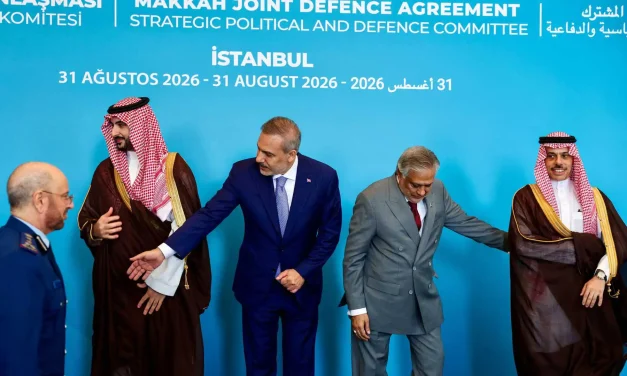
SCFR Online – Opinion: The Makkah Pact, signed on August 7, 2026, between Saudi Arabia, Turkey, and Pakistan, is more than an answer to geopolitical vacuums; in practice, it faces a “deterrence dilemma” and “differing threat perception.” While this pact symbolizes a transition toward regional self-reliance, its first field tests and the complexities of relations with regional actors will determine its real meaning.

Loading

Moscow

Reasons for EU Opposition to Russia’s G7 Membership

Reasons for EU Opposition to Russia’s G7 Membership

Strategic Council Online: In the short term, given the EU’s internal crises, it cannot be hoped that Brussels-Moscow relations will improve quickly, but in the medium and long terms, the EU due to its dependence on Russian energy and the fact that part of Russia is on the European continent, is forced to settle differences with Moscow and to reduce tensions in the relations with Russia.
Alireza Samoudi – European Affairs Expert

New Balance of Power against Turkey

New Balance of Power against Turkey

Strategic Council Online: A former ambassador and Middle East expert says the recent developments in Arab states against Turkey are expected to create a new balance of power. “If Erdogan fails to pay attention to the issue, the axis is likely to boost its status against Turkey in the future.

Russia-America Confrontation over Boosting Cooperation with Venezuela

Russia-America Confrontation over Boosting Cooperation with Venezuela

Strategic Council Online: An international affairs expert cited the escalation of tensions between Russia and the United States in Latin America, saying that because of leftist views and tendencies in the region that are naturally predominantly anti-American if Washington intends to make more interventions it will cost it dearly. Washington’s strategies in Latin America are limited and confined to political and economic tools such as economic sanctions.

أحدث الوظائف

The Makkah Pact Under scrutiny; From the “Deterrence Dilemma” to the “Risk of Disrupting Security”

SCFR Online – Opinion: The Makkah Pact, signed on August 7, 2026, between Saudi Arabia, Turkey, and Pakistan, is more than an answer to geopolitical vacuums; in practice, it faces a “deterrence dilemma” and “differing threat perception.” While this pact symbolizes a transition toward regional self-reliance, its first field tests and the complexities of relations with regional actors will determine its real meaning.

Loading

Moscow

Reasons for EU Opposition to Russia’s G7 Membership

Reasons for EU Opposition to Russia’s G7 Membership

Strategic Council Online: In the short term, given the EU’s internal crises, it cannot be hoped that Brussels-Moscow relations will improve quickly, but in the medium and long terms, the EU due to its dependence on Russian energy and the fact that part of Russia is on the European continent, is forced to settle differences with Moscow and to reduce tensions in the relations with Russia.
Alireza Samoudi – European Affairs Expert

New Balance of Power against Turkey

New Balance of Power against Turkey

Strategic Council Online: A former ambassador and Middle East expert says the recent developments in Arab states against Turkey are expected to create a new balance of power. “If Erdogan fails to pay attention to the issue, the axis is likely to boost its status against Turkey in the future.

Russia-America Confrontation over Boosting Cooperation with Venezuela

Russia-America Confrontation over Boosting Cooperation with Venezuela

Strategic Council Online: An international affairs expert cited the escalation of tensions between Russia and the United States in Latin America, saying that because of leftist views and tendencies in the region that are naturally predominantly anti-American if Washington intends to make more interventions it will cost it dearly. Washington’s strategies in Latin America are limited and confined to political and economic tools such as economic sanctions.

Moscow

Reasons for EU Opposition to Russia’s G7 Membership

Reasons for EU Opposition to Russia’s G7 Membership

Strategic Council Online: In the short term, given the EU’s internal crises, it cannot be hoped that Brussels-Moscow relations will improve quickly, but in the medium and long terms, the EU due to its dependence on Russian energy and the fact that part of Russia is on the European continent, is forced to settle differences with Moscow and to reduce tensions in the relations with Russia.
Alireza Samoudi – European Affairs Expert

New Balance of Power against Turkey

New Balance of Power against Turkey

Strategic Council Online: A former ambassador and Middle East expert says the recent developments in Arab states against Turkey are expected to create a new balance of power. “If Erdogan fails to pay attention to the issue, the axis is likely to boost its status against Turkey in the future.

Russia-America Confrontation over Boosting Cooperation with Venezuela

Russia-America Confrontation over Boosting Cooperation with Venezuela

Strategic Council Online: An international affairs expert cited the escalation of tensions between Russia and the United States in Latin America, saying that because of leftist views and tendencies in the region that are naturally predominantly anti-American if Washington intends to make more interventions it will cost it dearly. Washington’s strategies in Latin America are limited and confined to political and economic tools such as economic sanctions.

LATEST CONTENT

The Makkah Pact Under scrutiny; From the “Deterrence Dilemma” to the “Risk of Disrupting Security”

SCFR Online – Opinion: The Makkah Pact, signed on August 7, 2026, between Saudi Arabia, Turkey, and Pakistan, is more than an answer to geopolitical vacuums; in practice, it faces a “deterrence dilemma” and “differing threat perception.” While this pact symbolizes a transition toward regional self-reliance, its first field tests and the complexities of relations with regional actors will determine its real meaning.

Loading

Moscow

Reasons for EU Opposition to Russia’s G7 Membership

Reasons for EU Opposition to Russia’s G7 Membership

Strategic Council Online: In the short term, given the EU’s internal crises, it cannot be hoped that Brussels-Moscow relations will improve quickly, but in the medium and long terms, the EU due to its dependence on Russian energy and the fact that part of Russia is on the European continent, is forced to settle differences with Moscow and to reduce tensions in the relations with Russia.
Alireza Samoudi – European Affairs Expert

New Balance of Power against Turkey

New Balance of Power against Turkey

Strategic Council Online: A former ambassador and Middle East expert says the recent developments in Arab states against Turkey are expected to create a new balance of power. “If Erdogan fails to pay attention to the issue, the axis is likely to boost its status against Turkey in the future.

Russia-America Confrontation over Boosting Cooperation with Venezuela

Russia-America Confrontation over Boosting Cooperation with Venezuela

Strategic Council Online: An international affairs expert cited the escalation of tensions between Russia and the United States in Latin America, saying that because of leftist views and tendencies in the region that are naturally predominantly anti-American if Washington intends to make more interventions it will cost it dearly. Washington’s strategies in Latin America are limited and confined to political and economic tools such as economic sanctions.

ÚLTIMAS PUBLICACIONES

The Makkah Pact Under scrutiny; From the “Deterrence Dilemma” to the “Risk of Disrupting Security”

SCFR Online – Opinion: The Makkah Pact, signed on August 7, 2026, between Saudi Arabia, Turkey, and Pakistan, is more than an answer to geopolitical vacuums; in practice, it faces a “deterrence dilemma” and “differing threat perception.” While this pact symbolizes a transition toward regional self-reliance, its first field tests and the complexities of relations with regional actors will determine its real meaning.

Loading

Moscow

Reasons for EU Opposition to Russia’s G7 Membership

Reasons for EU Opposition to Russia’s G7 Membership

Strategic Council Online: In the short term, given the EU’s internal crises, it cannot be hoped that Brussels-Moscow relations will improve quickly, but in the medium and long terms, the EU due to its dependence on Russian energy and the fact that part of Russia is on the European continent, is forced to settle differences with Moscow and to reduce tensions in the relations with Russia.
Alireza Samoudi – European Affairs Expert

New Balance of Power against Turkey

New Balance of Power against Turkey

Strategic Council Online: A former ambassador and Middle East expert says the recent developments in Arab states against Turkey are expected to create a new balance of power. “If Erdogan fails to pay attention to the issue, the axis is likely to boost its status against Turkey in the future.

Russia-America Confrontation over Boosting Cooperation with Venezuela

Russia-America Confrontation over Boosting Cooperation with Venezuela

Strategic Council Online: An international affairs expert cited the escalation of tensions between Russia and the United States in Latin America, saying that because of leftist views and tendencies in the region that are naturally predominantly anti-American if Washington intends to make more interventions it will cost it dearly. Washington’s strategies in Latin America are limited and confined to political and economic tools such as economic sanctions.

ÚLTIMAS PUBLICACIONES

The Makkah Pact Under scrutiny; From the “Deterrence Dilemma” to the “Risk of Disrupting Security”

SCFR Online – Opinion: The Makkah Pact, signed on August 7, 2026, between Saudi Arabia, Turkey, and Pakistan, is more than an answer to geopolitical vacuums; in practice, it faces a “deterrence dilemma” and “differing threat perception.” While this pact symbolizes a transition toward regional self-reliance, its first field tests and the complexities of relations with regional actors will determine its real meaning.

Loading

Moscow

Reasons for EU Opposition to Russia’s G7 Membership

Reasons for EU Opposition to Russia’s G7 Membership

Strategic Council Online: In the short term, given the EU’s internal crises, it cannot be hoped that Brussels-Moscow relations will improve quickly, but in the medium and long terms, the EU due to its dependence on Russian energy and the fact that part of Russia is on the European continent, is forced to settle differences with Moscow and to reduce tensions in the relations with Russia.
Alireza Samoudi – European Affairs Expert

New Balance of Power against Turkey

New Balance of Power against Turkey

Strategic Council Online: A former ambassador and Middle East expert says the recent developments in Arab states against Turkey are expected to create a new balance of power. “If Erdogan fails to pay attention to the issue, the axis is likely to boost its status against Turkey in the future.

Russia-America Confrontation over Boosting Cooperation with Venezuela

Russia-America Confrontation over Boosting Cooperation with Venezuela

Strategic Council Online: An international affairs expert cited the escalation of tensions between Russia and the United States in Latin America, saying that because of leftist views and tendencies in the region that are naturally predominantly anti-American if Washington intends to make more interventions it will cost it dearly. Washington’s strategies in Latin America are limited and confined to political and economic tools such as economic sanctions.

ÚLTIMAS PUBLICACIONES

The Makkah Pact Under scrutiny; From the “Deterrence Dilemma” to the “Risk of Disrupting Security”

SCFR Online – Opinion: The Makkah Pact, signed on August 7, 2026, between Saudi Arabia, Turkey, and Pakistan, is more than an answer to geopolitical vacuums; in practice, it faces a “deterrence dilemma” and “differing threat perception.” While this pact symbolizes a transition toward regional self-reliance, its first field tests and the complexities of relations with regional actors will determine its real meaning.

Loading

Moscow

Reasons for EU Opposition to Russia’s G7 Membership

Reasons for EU Opposition to Russia’s G7 Membership

Strategic Council Online: In the short term, given the EU’s internal crises, it cannot be hoped that Brussels-Moscow relations will improve quickly, but in the medium and long terms, the EU due to its dependence on Russian energy and the fact that part of Russia is on the European continent, is forced to settle differences with Moscow and to reduce tensions in the relations with Russia.
Alireza Samoudi – European Affairs Expert

New Balance of Power against Turkey

New Balance of Power against Turkey

Strategic Council Online: A former ambassador and Middle East expert says the recent developments in Arab states against Turkey are expected to create a new balance of power. “If Erdogan fails to pay attention to the issue, the axis is likely to boost its status against Turkey in the future.

Russia-America Confrontation over Boosting Cooperation with Venezuela

Russia-America Confrontation over Boosting Cooperation with Venezuela

Strategic Council Online: An international affairs expert cited the escalation of tensions between Russia and the United States in Latin America, saying that because of leftist views and tendencies in the region that are naturally predominantly anti-American if Washington intends to make more interventions it will cost it dearly. Washington’s strategies in Latin America are limited and confined to political and economic tools such as economic sanctions.

ÚLTIMAS PUBLICACIONES

The Makkah Pact Under scrutiny; From the “Deterrence Dilemma” to the “Risk of Disrupting Security”

SCFR Online – Opinion: The Makkah Pact, signed on August 7, 2026, between Saudi Arabia, Turkey, and Pakistan, is more than an answer to geopolitical vacuums; in practice, it faces a “deterrence dilemma” and “differing threat perception.” While this pact symbolizes a transition toward regional self-reliance, its first field tests and the complexities of relations with regional actors will determine its real meaning.

Loading