New Balance of Power against Turkey

2020/03/22 | interview, Politics, Top News

Strategic Council Online: A former ambassador and Middle East expert says the recent developments in Arab states against Turkey are expected to create a new balance of power. “If Erdogan fails to pay attention to the issue, the axis is likely to boost its status against Turkey in the future.

In an interview with the website of the Strategic Council on Foreign Relations, Ahmad Dastmalchian, referring to the secret visit of the Egyptian intelligence chief to Syria, his meetings with Damascus officials and news published on discussing the adoption of a strategy by Arab states to counter Turkey, stated: “After Turkey directly violated the national sovereignty of Syria and supported the terrorists of Idlib and dispatched them to Libya, we are witnessing a new alliance and unity among the Arab states against Turkey.

New Balance of Power Outlined

He added: Given the sharp division between Egypt and Turkey after the fall of Morsi and the rise of al-Sisi, Egyptians and some Arab states are seeking to establish inter-Arab balances to show they support Syria against Turkish aggression. These movements will create a new balance of power, especially given that Egypt as an Arab heavyweight can influence the equations against Turkey in the Arab world.

The former Iranian ambassador to Lebanon emphasized the importance of the trip and the issues discussed, noting the recent developments in Libya. “We have recently witnessed the dispatch of a Libyan delegation to Syria on behalf of Khalifa Haftar who has serious differences with Turkey over sending troops to Libya. These developments must be examined together, and those negotiations can be considered a backup and guarantee of the visit.

Dastmalchian describing the developments taking place in the Arab world against Turkish policies said that in the current situation the Arab world is paying more attention to supporting Syria. Meanwhile, since the Ottomans occupied the Arab world, the Arabs generally do not have a positive attitude about Turkey and follow the developments in that country with a negative approach.

The former diplomat described Turkey’s recent policies in line with raising anew the Neo-Ottomanism approach, adding that Erdogan government’s actions have revived Arab provocation and their historical mentality, drawing their attention to the point that Turkish aggression and expansionism must be stopped.

Arab Mentality Not in Turkey’s Interest

The Middle East analyst also pointed out the longstanding Arab-Turkish differences saying that in the current situation, the Arab mentality is not in Turkey’s interest, and that makes the Arab axis more united against Ankara than ever before. Besides, Erdogan’s Neo-Ottomanism approach and in particular his greed ill-will towards Idlib from a long time ago has created a new balance of power that will show its impacts.

Referring to the dispatch of pro-Turkish terrorist groups from northern Syria to Libya, which was discussed during the Egyptian intelligence chief’s visit to Damascus, Dastmalchi said: Libya is very important to Egypt’s national security and has somehow been the backyard of Egypt security-wise. Any developments in Libya will directly affect Egypt’s national security. The actions and reactions we see among Arabs are the results of Turkey’s actions and the Arab world’s reaction.

Strengthening Arab Axis against Turkey

“If Erdogan does not pay attention to this issue, the anti-Turkey axis may be further strengthened and this is what the Russians also want to happen to take advantage of the opportunity that comes up,” he said.

Referring to the Erdogan government’s regional and international policies, the former Iranian ambassador to Lebanon continued: Ankara is trying to move its existing crises out of Turkey due to the numerous economic problems it faces internally and escalation of the ethnic crisis. At times the issue of the Kurds and at times the issue of Idlib are raised and Turkey sometimes plays with the issue of pressure on Europe through opening its borders to Syrian refugees.

“It seems this country does not have a calm future and is more likely to be drawn into crises deeper than before,” he said. Opposition forces will use Turkey’s internal contradictions, especially the government’s past moves and issues that came up during Erdogan’s trip to Moscow, and will press him more than ever.


0 Comments

Submit a Comment

Your email address will not be published. Required fields are marked *

LATEST CONTENT

China’s Rejection of US Sanctions; Strengthening Iran’s Geopolitical Leverage

SCFR Online – Opinion: Concurrent with the official commencement of the United States’ economic war against our country, focusing on sanctions instruments, isolation, and economic pressure, what has now become increasingly important is the lack of alignment of other major global powers, especially China, with this policy.

The Makkah Pact; Reasons for its Formation and Challenges Ahead

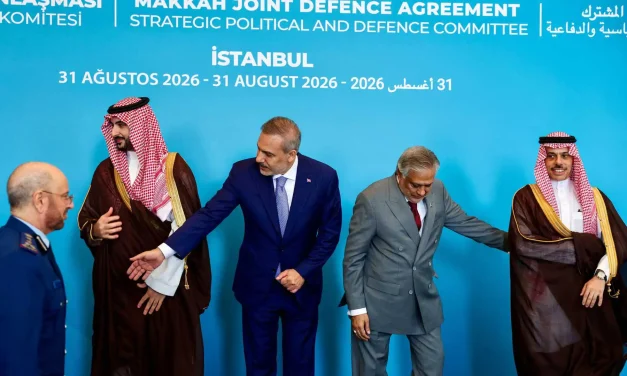
SCFR Online – Opinion: The Makkah Pact, signed between Saudi Arabia, Pakistan, and Turkey under the motto “an attack on one is an attack on all,” is viewed by some analysts less as a full-fledged military coalition and more as an attempt to reduce security dependence on an external power and to establish a regional security mechanism.

Implications of the US-Saudi Nuclear Agreement

SCFR Online – Opinion: The new US-Saudi nuclear agreement, despite legal and political ambiguities, could alter previous non-proliferation standards in West Asia and intensify nuclear competition, ushering it into a new phase.

An Analysis of Recent Turkey-Israeli Regime Tensions

SCFR Online – Opinion: Recent developments in Syria indicate an intensification of strategic rivalry between Turkey and the Israeli regime, but mutual considerations and the role of the United States have limited the likelihood of direct war.

Loading

Últimas publicaciones

China’s Rejection of US Sanctions; Strengthening Iran’s Geopolitical Leverage

SCFR Online – Opinion: Concurrent with the official commencement of the United States’ economic war against our country, focusing on sanctions instruments, isolation, and economic pressure, what has now become increasingly important is the lack of alignment of other major global powers, especially China, with this policy.

The Makkah Pact; Reasons for its Formation and Challenges Ahead

SCFR Online – Opinion: The Makkah Pact, signed between Saudi Arabia, Pakistan, and Turkey under the motto “an attack on one is an attack on all,” is viewed by some analysts less as a full-fledged military coalition and more as an attempt to reduce security dependence on an external power and to establish a regional security mechanism.

Implications of the US-Saudi Nuclear Agreement

SCFR Online – Opinion: The new US-Saudi nuclear agreement, despite legal and political ambiguities, could alter previous non-proliferation standards in West Asia and intensify nuclear competition, ushering it into a new phase.

An Analysis of Recent Turkey-Israeli Regime Tensions

SCFR Online – Opinion: Recent developments in Syria indicate an intensification of strategic rivalry between Turkey and the Israeli regime, but mutual considerations and the role of the United States have limited the likelihood of direct war.

Loading

DERNIER CONTENU

China’s Rejection of US Sanctions; Strengthening Iran’s Geopolitical Leverage

SCFR Online – Opinion: Concurrent with the official commencement of the United States’ economic war against our country, focusing on sanctions instruments, isolation, and economic pressure, what has now become increasingly important is the lack of alignment of other major global powers, especially China, with this policy.

The Makkah Pact; Reasons for its Formation and Challenges Ahead

SCFR Online – Opinion: The Makkah Pact, signed between Saudi Arabia, Pakistan, and Turkey under the motto “an attack on one is an attack on all,” is viewed by some analysts less as a full-fledged military coalition and more as an attempt to reduce security dependence on an external power and to establish a regional security mechanism.

Implications of the US-Saudi Nuclear Agreement

SCFR Online – Opinion: The new US-Saudi nuclear agreement, despite legal and political ambiguities, could alter previous non-proliferation standards in West Asia and intensify nuclear competition, ushering it into a new phase.

An Analysis of Recent Turkey-Israeli Regime Tensions

SCFR Online – Opinion: Recent developments in Syria indicate an intensification of strategic rivalry between Turkey and the Israeli regime, but mutual considerations and the role of the United States have limited the likelihood of direct war.

Loading

DERNIER CONTENU

China’s Rejection of US Sanctions; Strengthening Iran’s Geopolitical Leverage

SCFR Online – Opinion: Concurrent with the official commencement of the United States’ economic war against our country, focusing on sanctions instruments, isolation, and economic pressure, what has now become increasingly important is the lack of alignment of other major global powers, especially China, with this policy.

The Makkah Pact; Reasons for its Formation and Challenges Ahead

SCFR Online – Opinion: The Makkah Pact, signed between Saudi Arabia, Pakistan, and Turkey under the motto “an attack on one is an attack on all,” is viewed by some analysts less as a full-fledged military coalition and more as an attempt to reduce security dependence on an external power and to establish a regional security mechanism.

Implications of the US-Saudi Nuclear Agreement

SCFR Online – Opinion: The new US-Saudi nuclear agreement, despite legal and political ambiguities, could alter previous non-proliferation standards in West Asia and intensify nuclear competition, ushering it into a new phase.

An Analysis of Recent Turkey-Israeli Regime Tensions

SCFR Online – Opinion: Recent developments in Syria indicate an intensification of strategic rivalry between Turkey and the Israeli regime, but mutual considerations and the role of the United States have limited the likelihood of direct war.

Loading

DERNIER CONTENU

China’s Rejection of US Sanctions; Strengthening Iran’s Geopolitical Leverage

SCFR Online – Opinion: Concurrent with the official commencement of the United States’ economic war against our country, focusing on sanctions instruments, isolation, and economic pressure, what has now become increasingly important is the lack of alignment of other major global powers, especially China, with this policy.

The Makkah Pact; Reasons for its Formation and Challenges Ahead

SCFR Online – Opinion: The Makkah Pact, signed between Saudi Arabia, Pakistan, and Turkey under the motto “an attack on one is an attack on all,” is viewed by some analysts less as a full-fledged military coalition and more as an attempt to reduce security dependence on an external power and to establish a regional security mechanism.

Implications of the US-Saudi Nuclear Agreement

SCFR Online – Opinion: The new US-Saudi nuclear agreement, despite legal and political ambiguities, could alter previous non-proliferation standards in West Asia and intensify nuclear competition, ushering it into a new phase.

An Analysis of Recent Turkey-Israeli Regime Tensions

SCFR Online – Opinion: Recent developments in Syria indicate an intensification of strategic rivalry between Turkey and the Israeli regime, but mutual considerations and the role of the United States have limited the likelihood of direct war.

Loading