An Analysis of the Makkah Defense Pact
SCFR Online – Opinion: On Friday, August 7, the heads of state of three countries – Saudi Arabia, Turkey, and Pakistan – signed a text under the title “Makkah Joint Defense Agreement.”
Strategic Council Online – Note: The initiative to revive the Hejaz Railway, beyond being a transportation project, constitutes an attempt to redefine geopolitics, the economy, and Turkey’s regional position; however, its realization appears to face significant financial, security, and institutional challenges.
SCFR Online – Opinion: The Strait of Hormuz crisis is no longer merely the consequence of a military confrontation, but rather a sign of the transition from the US-centered maritime order to a new energy security structure involving the participation of emerging and influential powers.
SCFR Online – Opinion: Iran’s active deterrence strategy, while increasing the costs of US intervention, has increasingly exposed the hidden rifts between Washington’s interests and those of the Israeli regime.
SCFR Online – Opinion: The escalation of verbal and strategic tensions between Turkey and the Israeli regime, although not increasing the likelihood of direct war, indicates the formation of a new order in West Asian geopolitical rivalries.
Strategic Council Online – Note: Recent developments in the political geography of West Asia, from rising tensions in the Persian Gulf to missile and drone activities in the Red Sea and the recent warning by Kaja Kallas, the European Union’s foreign policy chief, regarding the threat to freedom of navigation, indicate a key pattern shift; the US-Iran war has moved beyond the scope of a regional and local confrontation and has linked two vital passageways for the global economy: the Strait of Hormuz and the Bab el-Mandeb Strait.
SCFR Online – Opinion: The Ukraine war was not merely a European crisis, but rather the starting point for the rearrangement of the global balance of power and a shift in the strategic behavior of great powers.
SCFR Online – Opinion: Great power competition is now pursued more in trade, currency, technology, and global supply chains than on the battlefields of military confrontation.
SCFR Online-Opinion: Sanctions are gradually transforming from classical financial instruments into complex mechanisms for the containment of technology, data, and global supply chains.
Strategic Council Online – Note: In today’s global politics, the creation of narratives has become as important as territorial control and economic management, and has turned into the main tool of great power competition.
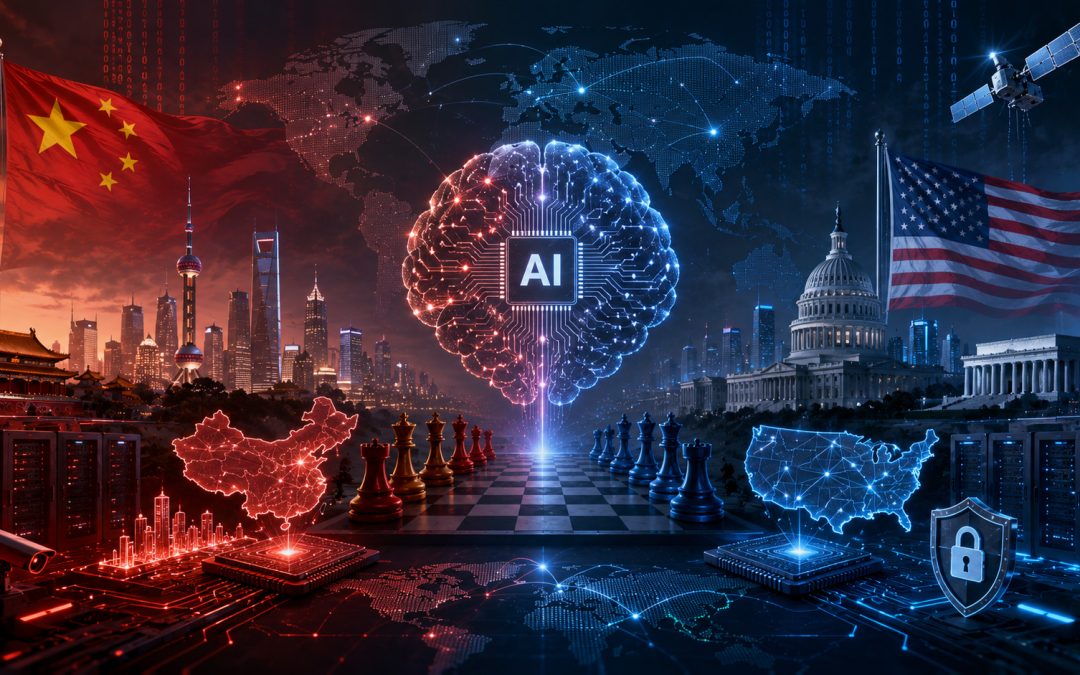
SCFR Online – Opinion: The competition between China and the United States is no longer solely about economics or military power, but is now centered on the control of algorithms, data, and the governance rules of artificial intelligence.
Strategic Council Online – Opinion: On the threshold of a new era of space competition between Beijing and Washington, the sky is no longer considered merely an arena for great-power conflict but has become a potential platform for the development of civilian defense applications for countries.
Strategic Council Online: A professor of Sharif University of Technology, referring to the performance of cognitive sciences and neurosciences in addition to quantum processing and artificial intelligence, stated: If we do not consider these three together, given the progress being made in the world, it is impossible for us to reach that stage, and this means that in such a case, we will only receive services; that means we will have to be subordinate in diplomacy; not only in diplomacy, but in all fields, we either have to be subservient, or we have to live like primitive humans.
Strategic Council Online – The deputy of Iran Cyber Defense Command, stating that technological progress, in addition to having different advantages, also creates new problems, said: The United States, the Zionist regime, and their regional allies are working to increase their operational access to our infrastructures by taking advantage of the advancement in cyberspace-related technologies.
Strategic Council Online—Interview: An analyst of America issues says Joe Biden’s inauguration speech demonstrated that domestic issues of the United States is put on the spotlight while foreign policy has been sidelined as Americans are facing identity threats from inside.
Strategic Council Online: After Donald Trump was elected as the president of the United States, since he did not have diplomatic and political experience, the Republican Party, or the shadow government and behind the scene influential persons appointed individuals to guide Trump; these included Rex Tillerson as the Secretary of State; James Mattis as Secretary of Defense and General Herbert McMaster as National Security Advisor.
Tahmores Gholami -American Affairs Expert
SCFR Online – Opinion: On Friday, August 7, the heads of state of three countries – Saudi Arabia, Turkey, and Pakistan – signed a text under the title “Makkah Joint Defense Agreement.”
Strategic Council Online – Note: The initiative to revive the Hejaz Railway, beyond being a transportation project, constitutes an attempt to redefine geopolitics, the economy, and Turkey’s regional position; however, its realization appears to face significant financial, security, and institutional challenges.
SCFR Online – Opinion: The Strait of Hormuz crisis is no longer merely the consequence of a military confrontation, but rather a sign of the transition from the US-centered maritime order to a new energy security structure involving the participation of emerging and influential powers.
SCFR Online – Opinion: Iran’s active deterrence strategy, while increasing the costs of US intervention, has increasingly exposed the hidden rifts between Washington’s interests and those of the Israeli regime.
SCFR Online – Opinion: The escalation of verbal and strategic tensions between Turkey and the Israeli regime, although not increasing the likelihood of direct war, indicates the formation of a new order in West Asian geopolitical rivalries.
Strategic Council Online – Note: Recent developments in the political geography of West Asia, from rising tensions in the Persian Gulf to missile and drone activities in the Red Sea and the recent warning by Kaja Kallas, the European Union’s foreign policy chief, regarding the threat to freedom of navigation, indicate a key pattern shift; the US-Iran war has moved beyond the scope of a regional and local confrontation and has linked two vital passageways for the global economy: the Strait of Hormuz and the Bab el-Mandeb Strait.
SCFR Online – Opinion: The Ukraine war was not merely a European crisis, but rather the starting point for the rearrangement of the global balance of power and a shift in the strategic behavior of great powers.
SCFR Online – Opinion: Great power competition is now pursued more in trade, currency, technology, and global supply chains than on the battlefields of military confrontation.
SCFR Online-Opinion: Sanctions are gradually transforming from classical financial instruments into complex mechanisms for the containment of technology, data, and global supply chains.
Strategic Council Online – Note: In today’s global politics, the creation of narratives has become as important as territorial control and economic management, and has turned into the main tool of great power competition.
SCFR Online – Opinion: The competition between China and the United States is no longer solely about economics or military power, but is now centered on the control of algorithms, data, and the governance rules of artificial intelligence.
Strategic Council Online – Opinion: On the threshold of a new era of space competition between Beijing and Washington, the sky is no longer considered merely an arena for great-power conflict but has become a potential platform for the development of civilian defense applications for countries.
Strategic Council Online: A professor of Sharif University of Technology, referring to the performance of cognitive sciences and neurosciences in addition to quantum processing and artificial intelligence, stated: If we do not consider these three together, given the progress being made in the world, it is impossible for us to reach that stage, and this means that in such a case, we will only receive services; that means we will have to be subordinate in diplomacy; not only in diplomacy, but in all fields, we either have to be subservient, or we have to live like primitive humans.
Strategic Council Online – The deputy of Iran Cyber Defense Command, stating that technological progress, in addition to having different advantages, also creates new problems, said: The United States, the Zionist regime, and their regional allies are working to increase their operational access to our infrastructures by taking advantage of the advancement in cyberspace-related technologies.
Strategic Council Online—Interview: An analyst of America issues says Joe Biden’s inauguration speech demonstrated that domestic issues of the United States is put on the spotlight while foreign policy has been sidelined as Americans are facing identity threats from inside.
Strategic Council Online: After Donald Trump was elected as the president of the United States, since he did not have diplomatic and political experience, the Republican Party, or the shadow government and behind the scene influential persons appointed individuals to guide Trump; these included Rex Tillerson as the Secretary of State; James Mattis as Secretary of Defense and General Herbert McMaster as National Security Advisor.
Tahmores Gholami -American Affairs Expert
SCFR Online-Opinion: Sanctions are gradually transforming from classical financial instruments into complex mechanisms for the containment of technology, data, and global supply chains.
Strategic Council Online – Note: In today’s global politics, the creation of narratives has become as important as territorial control and economic management, and has turned into the main tool of great power competition.
SCFR Online – Opinion: The competition between China and the United States is no longer solely about economics or military power, but is now centered on the control of algorithms, data, and the governance rules of artificial intelligence.
Strategic Council Online – Opinion: On the threshold of a new era of space competition between Beijing and Washington, the sky is no longer considered merely an arena for great-power conflict but has become a potential platform for the development of civilian defense applications for countries.
Strategic Council Online: A professor of Sharif University of Technology, referring to the performance of cognitive sciences and neurosciences in addition to quantum processing and artificial intelligence, stated: If we do not consider these three together, given the progress being made in the world, it is impossible for us to reach that stage, and this means that in such a case, we will only receive services; that means we will have to be subordinate in diplomacy; not only in diplomacy, but in all fields, we either have to be subservient, or we have to live like primitive humans.
Strategic Council Online – The deputy of Iran Cyber Defense Command, stating that technological progress, in addition to having different advantages, also creates new problems, said: The United States, the Zionist regime, and their regional allies are working to increase their operational access to our infrastructures by taking advantage of the advancement in cyberspace-related technologies.
Strategic Council Online—Interview: An analyst of America issues says Joe Biden’s inauguration speech demonstrated that domestic issues of the United States is put on the spotlight while foreign policy has been sidelined as Americans are facing identity threats from inside.
Strategic Council Online: After Donald Trump was elected as the president of the United States, since he did not have diplomatic and political experience, the Republican Party, or the shadow government and behind the scene influential persons appointed individuals to guide Trump; these included Rex Tillerson as the Secretary of State; James Mattis as Secretary of Defense and General Herbert McMaster as National Security Advisor.
Tahmores Gholami -American Affairs Expert
SCFR Online – Opinion: On Friday, August 7, the heads of state of three countries – Saudi Arabia, Turkey, and Pakistan – signed a text under the title “Makkah Joint Defense Agreement.”
Strategic Council Online – Note: The initiative to revive the Hejaz Railway, beyond being a transportation project, constitutes an attempt to redefine geopolitics, the economy, and Turkey’s regional position; however, its realization appears to face significant financial, security, and institutional challenges.
SCFR Online – Opinion: The Strait of Hormuz crisis is no longer merely the consequence of a military confrontation, but rather a sign of the transition from the US-centered maritime order to a new energy security structure involving the participation of emerging and influential powers.
SCFR Online – Opinion: Iran’s active deterrence strategy, while increasing the costs of US intervention, has increasingly exposed the hidden rifts between Washington’s interests and those of the Israeli regime.
SCFR Online – Opinion: The escalation of verbal and strategic tensions between Turkey and the Israeli regime, although not increasing the likelihood of direct war, indicates the formation of a new order in West Asian geopolitical rivalries.
Strategic Council Online – Note: Recent developments in the political geography of West Asia, from rising tensions in the Persian Gulf to missile and drone activities in the Red Sea and the recent warning by Kaja Kallas, the European Union’s foreign policy chief, regarding the threat to freedom of navigation, indicate a key pattern shift; the US-Iran war has moved beyond the scope of a regional and local confrontation and has linked two vital passageways for the global economy: the Strait of Hormuz and the Bab el-Mandeb Strait.
SCFR Online – Opinion: The Ukraine war was not merely a European crisis, but rather the starting point for the rearrangement of the global balance of power and a shift in the strategic behavior of great powers.
SCFR Online – Opinion: Great power competition is now pursued more in trade, currency, technology, and global supply chains than on the battlefields of military confrontation.
SCFR Online-Opinion: Sanctions are gradually transforming from classical financial instruments into complex mechanisms for the containment of technology, data, and global supply chains.
Strategic Council Online – Note: In today’s global politics, the creation of narratives has become as important as territorial control and economic management, and has turned into the main tool of great power competition.
SCFR Online – Opinion: The competition between China and the United States is no longer solely about economics or military power, but is now centered on the control of algorithms, data, and the governance rules of artificial intelligence.
Strategic Council Online – Opinion: On the threshold of a new era of space competition between Beijing and Washington, the sky is no longer considered merely an arena for great-power conflict but has become a potential platform for the development of civilian defense applications for countries.
Strategic Council Online: A professor of Sharif University of Technology, referring to the performance of cognitive sciences and neurosciences in addition to quantum processing and artificial intelligence, stated: If we do not consider these three together, given the progress being made in the world, it is impossible for us to reach that stage, and this means that in such a case, we will only receive services; that means we will have to be subordinate in diplomacy; not only in diplomacy, but in all fields, we either have to be subservient, or we have to live like primitive humans.
Strategic Council Online – The deputy of Iran Cyber Defense Command, stating that technological progress, in addition to having different advantages, also creates new problems, said: The United States, the Zionist regime, and their regional allies are working to increase their operational access to our infrastructures by taking advantage of the advancement in cyberspace-related technologies.
Strategic Council Online—Interview: An analyst of America issues says Joe Biden’s inauguration speech demonstrated that domestic issues of the United States is put on the spotlight while foreign policy has been sidelined as Americans are facing identity threats from inside.
Strategic Council Online: After Donald Trump was elected as the president of the United States, since he did not have diplomatic and political experience, the Republican Party, or the shadow government and behind the scene influential persons appointed individuals to guide Trump; these included Rex Tillerson as the Secretary of State; James Mattis as Secretary of Defense and General Herbert McMaster as National Security Advisor.
Tahmores Gholami -American Affairs Expert
SCFR Online – Opinion: On Friday, August 7, the heads of state of three countries – Saudi Arabia, Turkey, and Pakistan – signed a text under the title “Makkah Joint Defense Agreement.”
Strategic Council Online – Note: The initiative to revive the Hejaz Railway, beyond being a transportation project, constitutes an attempt to redefine geopolitics, the economy, and Turkey’s regional position; however, its realization appears to face significant financial, security, and institutional challenges.
SCFR Online – Opinion: The Strait of Hormuz crisis is no longer merely the consequence of a military confrontation, but rather a sign of the transition from the US-centered maritime order to a new energy security structure involving the participation of emerging and influential powers.
SCFR Online – Opinion: Iran’s active deterrence strategy, while increasing the costs of US intervention, has increasingly exposed the hidden rifts between Washington’s interests and those of the Israeli regime.
SCFR Online – Opinion: The escalation of verbal and strategic tensions between Turkey and the Israeli regime, although not increasing the likelihood of direct war, indicates the formation of a new order in West Asian geopolitical rivalries.
Strategic Council Online – Note: Recent developments in the political geography of West Asia, from rising tensions in the Persian Gulf to missile and drone activities in the Red Sea and the recent warning by Kaja Kallas, the European Union’s foreign policy chief, regarding the threat to freedom of navigation, indicate a key pattern shift; the US-Iran war has moved beyond the scope of a regional and local confrontation and has linked two vital passageways for the global economy: the Strait of Hormuz and the Bab el-Mandeb Strait.
SCFR Online – Opinion: The Ukraine war was not merely a European crisis, but rather the starting point for the rearrangement of the global balance of power and a shift in the strategic behavior of great powers.
SCFR Online – Opinion: Great power competition is now pursued more in trade, currency, technology, and global supply chains than on the battlefields of military confrontation.
SCFR Online-Opinion: Sanctions are gradually transforming from classical financial instruments into complex mechanisms for the containment of technology, data, and global supply chains.
Strategic Council Online – Note: In today’s global politics, the creation of narratives has become as important as territorial control and economic management, and has turned into the main tool of great power competition.
SCFR Online – Opinion: The competition between China and the United States is no longer solely about economics or military power, but is now centered on the control of algorithms, data, and the governance rules of artificial intelligence.
Strategic Council Online – Opinion: On the threshold of a new era of space competition between Beijing and Washington, the sky is no longer considered merely an arena for great-power conflict but has become a potential platform for the development of civilian defense applications for countries.
Strategic Council Online: A professor of Sharif University of Technology, referring to the performance of cognitive sciences and neurosciences in addition to quantum processing and artificial intelligence, stated: If we do not consider these three together, given the progress being made in the world, it is impossible for us to reach that stage, and this means that in such a case, we will only receive services; that means we will have to be subordinate in diplomacy; not only in diplomacy, but in all fields, we either have to be subservient, or we have to live like primitive humans.
Strategic Council Online – The deputy of Iran Cyber Defense Command, stating that technological progress, in addition to having different advantages, also creates new problems, said: The United States, the Zionist regime, and their regional allies are working to increase their operational access to our infrastructures by taking advantage of the advancement in cyberspace-related technologies.
Strategic Council Online—Interview: An analyst of America issues says Joe Biden’s inauguration speech demonstrated that domestic issues of the United States is put on the spotlight while foreign policy has been sidelined as Americans are facing identity threats from inside.
Strategic Council Online: After Donald Trump was elected as the president of the United States, since he did not have diplomatic and political experience, the Republican Party, or the shadow government and behind the scene influential persons appointed individuals to guide Trump; these included Rex Tillerson as the Secretary of State; James Mattis as Secretary of Defense and General Herbert McMaster as National Security Advisor.
Tahmores Gholami -American Affairs Expert
SCFR Online – Opinion: On Friday, August 7, the heads of state of three countries – Saudi Arabia, Turkey, and Pakistan – signed a text under the title “Makkah Joint Defense Agreement.”
Strategic Council Online – Note: The initiative to revive the Hejaz Railway, beyond being a transportation project, constitutes an attempt to redefine geopolitics, the economy, and Turkey’s regional position; however, its realization appears to face significant financial, security, and institutional challenges.
SCFR Online – Opinion: The Strait of Hormuz crisis is no longer merely the consequence of a military confrontation, but rather a sign of the transition from the US-centered maritime order to a new energy security structure involving the participation of emerging and influential powers.
SCFR Online – Opinion: Iran’s active deterrence strategy, while increasing the costs of US intervention, has increasingly exposed the hidden rifts between Washington’s interests and those of the Israeli regime.
SCFR Online – Opinion: The escalation of verbal and strategic tensions between Turkey and the Israeli regime, although not increasing the likelihood of direct war, indicates the formation of a new order in West Asian geopolitical rivalries.
Strategic Council Online – Note: Recent developments in the political geography of West Asia, from rising tensions in the Persian Gulf to missile and drone activities in the Red Sea and the recent warning by Kaja Kallas, the European Union’s foreign policy chief, regarding the threat to freedom of navigation, indicate a key pattern shift; the US-Iran war has moved beyond the scope of a regional and local confrontation and has linked two vital passageways for the global economy: the Strait of Hormuz and the Bab el-Mandeb Strait.
SCFR Online – Opinion: The Ukraine war was not merely a European crisis, but rather the starting point for the rearrangement of the global balance of power and a shift in the strategic behavior of great powers.
SCFR Online – Opinion: Great power competition is now pursued more in trade, currency, technology, and global supply chains than on the battlefields of military confrontation.
SCFR Online-Opinion: Sanctions are gradually transforming from classical financial instruments into complex mechanisms for the containment of technology, data, and global supply chains.
Strategic Council Online – Note: In today’s global politics, the creation of narratives has become as important as territorial control and economic management, and has turned into the main tool of great power competition.
SCFR Online – Opinion: The competition between China and the United States is no longer solely about economics or military power, but is now centered on the control of algorithms, data, and the governance rules of artificial intelligence.
Strategic Council Online – Opinion: On the threshold of a new era of space competition between Beijing and Washington, the sky is no longer considered merely an arena for great-power conflict but has become a potential platform for the development of civilian defense applications for countries.
Strategic Council Online: A professor of Sharif University of Technology, referring to the performance of cognitive sciences and neurosciences in addition to quantum processing and artificial intelligence, stated: If we do not consider these three together, given the progress being made in the world, it is impossible for us to reach that stage, and this means that in such a case, we will only receive services; that means we will have to be subordinate in diplomacy; not only in diplomacy, but in all fields, we either have to be subservient, or we have to live like primitive humans.
Strategic Council Online – The deputy of Iran Cyber Defense Command, stating that technological progress, in addition to having different advantages, also creates new problems, said: The United States, the Zionist regime, and their regional allies are working to increase their operational access to our infrastructures by taking advantage of the advancement in cyberspace-related technologies.
Strategic Council Online—Interview: An analyst of America issues says Joe Biden’s inauguration speech demonstrated that domestic issues of the United States is put on the spotlight while foreign policy has been sidelined as Americans are facing identity threats from inside.
Strategic Council Online: After Donald Trump was elected as the president of the United States, since he did not have diplomatic and political experience, the Republican Party, or the shadow government and behind the scene influential persons appointed individuals to guide Trump; these included Rex Tillerson as the Secretary of State; James Mattis as Secretary of Defense and General Herbert McMaster as National Security Advisor.
Tahmores Gholami -American Affairs Expert
SCFR Online – Opinion: On Friday, August 7, the heads of state of three countries – Saudi Arabia, Turkey, and Pakistan – signed a text under the title “Makkah Joint Defense Agreement.”
Strategic Council Online – Note: The initiative to revive the Hejaz Railway, beyond being a transportation project, constitutes an attempt to redefine geopolitics, the economy, and Turkey’s regional position; however, its realization appears to face significant financial, security, and institutional challenges.
SCFR Online – Opinion: The Strait of Hormuz crisis is no longer merely the consequence of a military confrontation, but rather a sign of the transition from the US-centered maritime order to a new energy security structure involving the participation of emerging and influential powers.
SCFR Online – Opinion: Iran’s active deterrence strategy, while increasing the costs of US intervention, has increasingly exposed the hidden rifts between Washington’s interests and those of the Israeli regime.
SCFR Online – Opinion: The escalation of verbal and strategic tensions between Turkey and the Israeli regime, although not increasing the likelihood of direct war, indicates the formation of a new order in West Asian geopolitical rivalries.
Strategic Council Online – Note: Recent developments in the political geography of West Asia, from rising tensions in the Persian Gulf to missile and drone activities in the Red Sea and the recent warning by Kaja Kallas, the European Union’s foreign policy chief, regarding the threat to freedom of navigation, indicate a key pattern shift; the US-Iran war has moved beyond the scope of a regional and local confrontation and has linked two vital passageways for the global economy: the Strait of Hormuz and the Bab el-Mandeb Strait.
SCFR Online – Opinion: The Ukraine war was not merely a European crisis, but rather the starting point for the rearrangement of the global balance of power and a shift in the strategic behavior of great powers.
SCFR Online – Opinion: Great power competition is now pursued more in trade, currency, technology, and global supply chains than on the battlefields of military confrontation.
SCFR Online-Opinion: Sanctions are gradually transforming from classical financial instruments into complex mechanisms for the containment of technology, data, and global supply chains.
Strategic Council Online – Note: In today’s global politics, the creation of narratives has become as important as territorial control and economic management, and has turned into the main tool of great power competition.
SCFR Online – Opinion: The competition between China and the United States is no longer solely about economics or military power, but is now centered on the control of algorithms, data, and the governance rules of artificial intelligence.
Strategic Council Online – Opinion: On the threshold of a new era of space competition between Beijing and Washington, the sky is no longer considered merely an arena for great-power conflict but has become a potential platform for the development of civilian defense applications for countries.
Strategic Council Online: A professor of Sharif University of Technology, referring to the performance of cognitive sciences and neurosciences in addition to quantum processing and artificial intelligence, stated: If we do not consider these three together, given the progress being made in the world, it is impossible for us to reach that stage, and this means that in such a case, we will only receive services; that means we will have to be subordinate in diplomacy; not only in diplomacy, but in all fields, we either have to be subservient, or we have to live like primitive humans.
Strategic Council Online – The deputy of Iran Cyber Defense Command, stating that technological progress, in addition to having different advantages, also creates new problems, said: The United States, the Zionist regime, and their regional allies are working to increase their operational access to our infrastructures by taking advantage of the advancement in cyberspace-related technologies.
Strategic Council Online—Interview: An analyst of America issues says Joe Biden’s inauguration speech demonstrated that domestic issues of the United States is put on the spotlight while foreign policy has been sidelined as Americans are facing identity threats from inside.
Strategic Council Online: After Donald Trump was elected as the president of the United States, since he did not have diplomatic and political experience, the Republican Party, or the shadow government and behind the scene influential persons appointed individuals to guide Trump; these included Rex Tillerson as the Secretary of State; James Mattis as Secretary of Defense and General Herbert McMaster as National Security Advisor.
Tahmores Gholami -American Affairs Expert
SCFR Online – Opinion: On Friday, August 7, the heads of state of three countries – Saudi Arabia, Turkey, and Pakistan – signed a text under the title “Makkah Joint Defense Agreement.”
Strategic Council Online – Note: The initiative to revive the Hejaz Railway, beyond being a transportation project, constitutes an attempt to redefine geopolitics, the economy, and Turkey’s regional position; however, its realization appears to face significant financial, security, and institutional challenges.
SCFR Online – Opinion: The Strait of Hormuz crisis is no longer merely the consequence of a military confrontation, but rather a sign of the transition from the US-centered maritime order to a new energy security structure involving the participation of emerging and influential powers.
SCFR Online – Opinion: Iran’s active deterrence strategy, while increasing the costs of US intervention, has increasingly exposed the hidden rifts between Washington’s interests and those of the Israeli regime.
SCFR Online – Opinion: The escalation of verbal and strategic tensions between Turkey and the Israeli regime, although not increasing the likelihood of direct war, indicates the formation of a new order in West Asian geopolitical rivalries.
Strategic Council Online – Note: Recent developments in the political geography of West Asia, from rising tensions in the Persian Gulf to missile and drone activities in the Red Sea and the recent warning by Kaja Kallas, the European Union’s foreign policy chief, regarding the threat to freedom of navigation, indicate a key pattern shift; the US-Iran war has moved beyond the scope of a regional and local confrontation and has linked two vital passageways for the global economy: the Strait of Hormuz and the Bab el-Mandeb Strait.
SCFR Online – Opinion: The Ukraine war was not merely a European crisis, but rather the starting point for the rearrangement of the global balance of power and a shift in the strategic behavior of great powers.
SCFR Online – Opinion: Great power competition is now pursued more in trade, currency, technology, and global supply chains than on the battlefields of military confrontation.