2020/03/03
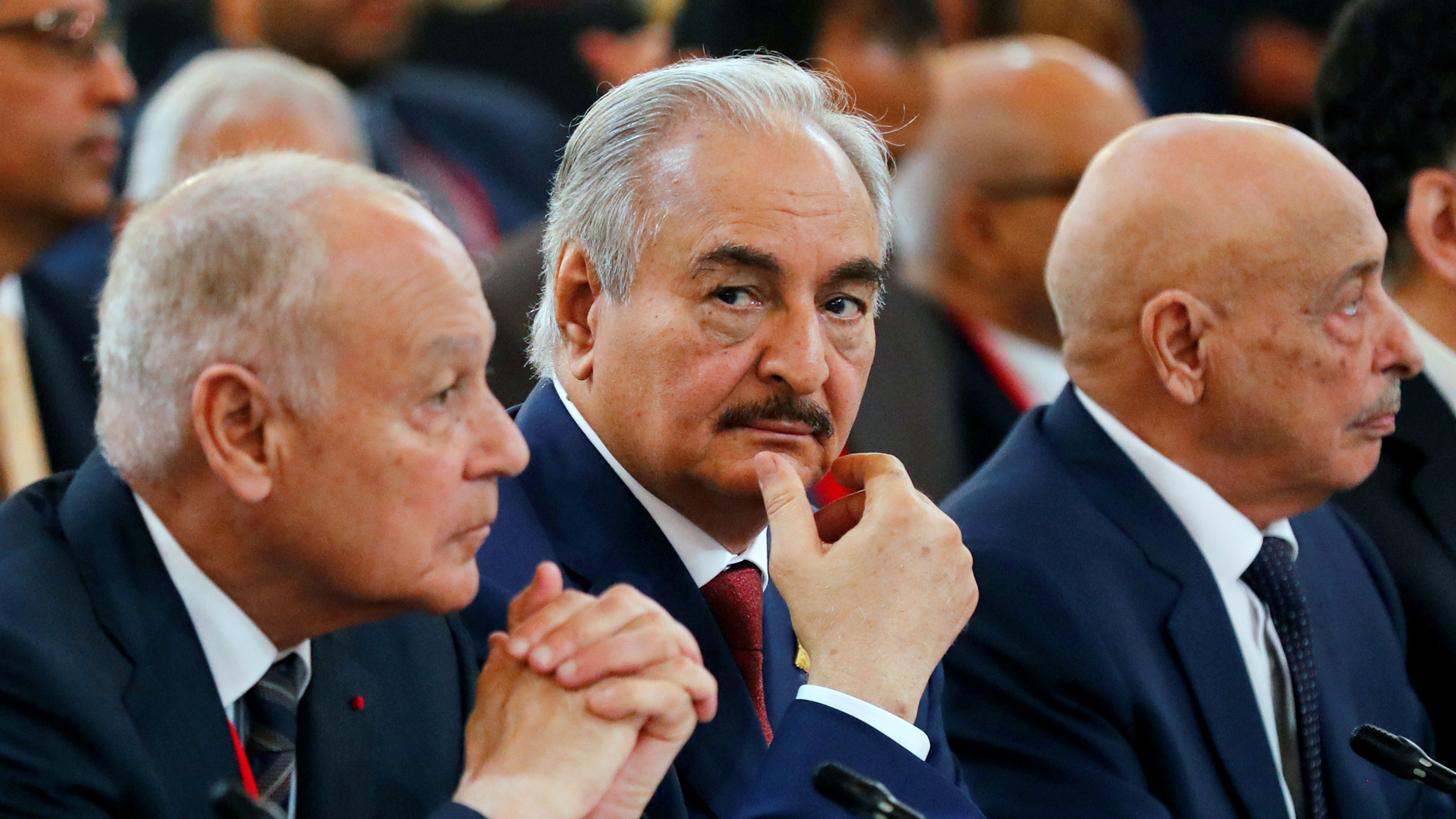
Strategic Council Online: A university professor outlining the failure to achieve peace and ceasefire in Libya said: Since Khalifa Haftar is fully aware that Turkey would not abandon its support for economic investments and Brotherhood-led government in North Africa it has made accepting the ceasefire conditional on Turkish troop withdrawal from Libya to send the ball into the court of the National Unity Government and impose international pressure on it

2020/02/04
Strategic Council Online: Erdogan is trying to get closer to achieving some of his European goals by using the refugee card, which today is the Achilles’ Heel of EU countries, including Germany.
Abed Akbari – European Affairs Expert

2020/01/10
Strategic Council Online: An expert on African affairs says the proxy war in Libya has somehow started with the intervention of the regional states, mainly the Arab states. He considers the ineffectiveness of the National Unity Government a means to further intensify the provocative efforts of Khalifa Haftar, emphasizing that in these circumstances, one cannot virtually draw a good perspective for the future of the Libyan government.
2019/05/06
Strategic Council Online: The scenario of the West’s intervention and the presence of European armies in the Libyan soil are among the assumptions cited in some analyses because as pointed out by experts on North African affairs if Libya’s oil-rich resources fall into the hands of Muslim groups and popular organizations, European governments will inevitably begin to engage in direct military intervention in Libya; Of course, such an assumption seems highly unlikely considering the problems the West is now facing.
Jafar Ghanadbashi – North African Affairs Expert
2019/05/01
Strategic Council Online: What is happening today in major North African countries, including Sudan, Libya, and Algeria, is affected by a combination of internal factors and mechanisms as well as foreign interventions before being a proof of the “Arab Spring, the Second Wave.”
Kourosh Fakhr Tavoli – African Affairs Expert
