An Analysis of the Makkah Defense Pact
SCFR Online – Opinion: On Friday, August 7, the heads of state of three countries – Saudi Arabia, Turkey, and Pakistan – signed a text under the title “Makkah Joint Defense Agreement.”
Strategic Council Online – Note: The initiative to revive the Hejaz Railway, beyond being a transportation project, constitutes an attempt to redefine geopolitics, the economy, and Turkey’s regional position; however, its realization appears to face significant financial, security, and institutional challenges.
SCFR Online – Opinion: The Strait of Hormuz crisis is no longer merely the consequence of a military confrontation, but rather a sign of the transition from the US-centered maritime order to a new energy security structure involving the participation of emerging and influential powers.
SCFR Online – Opinion: Iran’s active deterrence strategy, while increasing the costs of US intervention, has increasingly exposed the hidden rifts between Washington’s interests and those of the Israeli regime.
SCFR Online – Opinion: The escalation of verbal and strategic tensions between Turkey and the Israeli regime, although not increasing the likelihood of direct war, indicates the formation of a new order in West Asian geopolitical rivalries.
Strategic Council Online – Note: Recent developments in the political geography of West Asia, from rising tensions in the Persian Gulf to missile and drone activities in the Red Sea and the recent warning by Kaja Kallas, the European Union’s foreign policy chief, regarding the threat to freedom of navigation, indicate a key pattern shift; the US-Iran war has moved beyond the scope of a regional and local confrontation and has linked two vital passageways for the global economy: the Strait of Hormuz and the Bab el-Mandeb Strait.
SCFR Online – Opinion: The Ukraine war was not merely a European crisis, but rather the starting point for the rearrangement of the global balance of power and a shift in the strategic behavior of great powers.
SCFR Online – Opinion: Great power competition is now pursued more in trade, currency, technology, and global supply chains than on the battlefields of military confrontation.
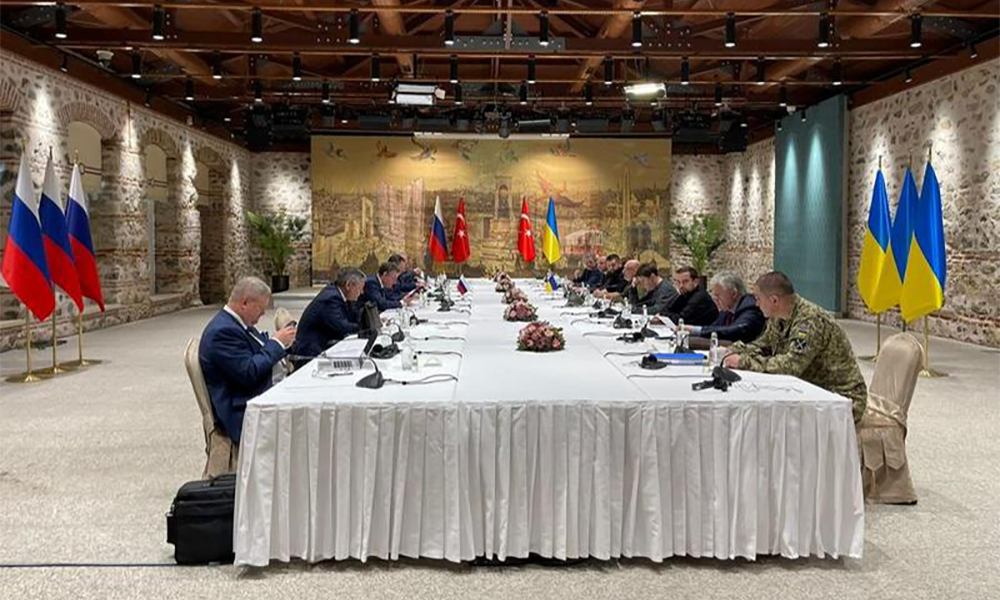
Strategic Council Online – Opinion: The latest round of direct talks between Russia and Ukraine, hosted by Istanbul on May 15 to reach a ceasefire agreement, was neither the first nor will it be the last set of negotiations between the two countries to achieve peace.
Strategic Council Online – Opinion: According to what the Republic of Azerbaijan and Armenia authorities officially announce these days, the two South Caucasus countries are taking the last steps to reach a peace treaty.
Strategic Council Online—Opinion: At the end of August this year, Saudi Arabia announced that it had appointed its first ambassador to the Palestinian Authority. Based on this decision, Nayef bin Bandar al-Sudairi, as the extraordinary, plenipotentiary and non-resident ambassador (accredited) of Saudi Arabia in Ramallah and the Saudi consul general in occupied Quds, handed over his credentials to Majdi Al-Khalidi, the diplomatic advisor of Mahmoud Abbas, the head of the Palestinian Authority. Now, less than two months have passed since these decisions and actions, the Saudi government has announced that an official delegation from this country, headed by Nayef Bin Bandar Al-Sudairi, will travel to Ramallah to celebrate the birthday of the Prophet of Islam (PBUH) and to offer prayers in Al-Aqsa Mosque; An unprecedented action since the occupation of Quds in 1967, which will open a new chapter in Saudi Arabia’s diplomatic and role-playing activities in the West Asian region.
Mohammad Mehdi Mazaheri – University professor
Strategic Council Online—Interview: An Afghan researcher and journalist says the international community should change its politico-social priorities in Afghanistan to economic priorities and help the continuity of the country’s structure and prevents to total collapse of the social-economic system and emergence of civil war.
Strategic Council Online – The former head of Afghanistan Support Headquarters at the IRI Ministry of Foreign Affairs, stating that Pakistan considers Afghanistan the depth of its strategy, said: It is better for countries in the region to allow the Afghan people to independently determine their government and address common concerns through friendly relations.
Strategic Council Online—Interview: An expert of international issues says the United States irresponsible withdrawal of forces from Afghanistan has disrupted the relative stability in that country as the US is trying in addition to creating instability in the region, manage the Afghan crisis to create a threat for its rivals in the region.
Strategic Council Online – Assistant to Minister and Director General of West Asia at Iran’s Ministry of Foreign Affairs, stating that the meeting of intra-Afghan groups in Tehran had a special success, added: The Taliban, with its past experience, realizes that it cannot necessarily achieve international legitimacy by military force; rather, international legitimacy is achieved through political negotiations.
Strategic Council Online—Interview: An expert of Afghanistan issues says no change has been taken place in the goals, motivations and ideology of Taliban compared to the past two decades and the Taliban, during various periods, has made efforts given the present circumstances in Afghanistan to realize a portion of its goals and programs with special tools.
Strategic Council Online- According to the Director Yemen desk, at Mersaad think-tank, with the departure of Omani delegation to Sanaa, there was a promising perspective that war would stop, everybody was waiting for a serious incident in this respect. But with statements of political authorities of Haadi government, and also Sanaa government, it was clear that the talks would lead to nowhere.
Strategic Council Online – Interview: A faculty member of the Faculty of World Studies, University of Tehran, stating that before Saudi Arabia and the government of Mansour Hadi did not consider any rights for the Houthis, said: Now Saudi Arabia’s position has completely changed and it seems that Saudi Arabia has to pay the price to stop the war, which is to pay attention to the rights of the Yemenis.
SCFR Online – Opinion: On Friday, August 7, the heads of state of three countries – Saudi Arabia, Turkey, and Pakistan – signed a text under the title “Makkah Joint Defense Agreement.”
Strategic Council Online – Note: The initiative to revive the Hejaz Railway, beyond being a transportation project, constitutes an attempt to redefine geopolitics, the economy, and Turkey’s regional position; however, its realization appears to face significant financial, security, and institutional challenges.
SCFR Online – Opinion: The Strait of Hormuz crisis is no longer merely the consequence of a military confrontation, but rather a sign of the transition from the US-centered maritime order to a new energy security structure involving the participation of emerging and influential powers.
SCFR Online – Opinion: Iran’s active deterrence strategy, while increasing the costs of US intervention, has increasingly exposed the hidden rifts between Washington’s interests and those of the Israeli regime.
SCFR Online – Opinion: The escalation of verbal and strategic tensions between Turkey and the Israeli regime, although not increasing the likelihood of direct war, indicates the formation of a new order in West Asian geopolitical rivalries.
Strategic Council Online – Note: Recent developments in the political geography of West Asia, from rising tensions in the Persian Gulf to missile and drone activities in the Red Sea and the recent warning by Kaja Kallas, the European Union’s foreign policy chief, regarding the threat to freedom of navigation, indicate a key pattern shift; the US-Iran war has moved beyond the scope of a regional and local confrontation and has linked two vital passageways for the global economy: the Strait of Hormuz and the Bab el-Mandeb Strait.
SCFR Online – Opinion: The Ukraine war was not merely a European crisis, but rather the starting point for the rearrangement of the global balance of power and a shift in the strategic behavior of great powers.
SCFR Online – Opinion: Great power competition is now pursued more in trade, currency, technology, and global supply chains than on the battlefields of military confrontation.
Strategic Council Online – Opinion: The latest round of direct talks between Russia and Ukraine, hosted by Istanbul on May 15 to reach a ceasefire agreement, was neither the first nor will it be the last set of negotiations between the two countries to achieve peace.
Strategic Council Online – Opinion: According to what the Republic of Azerbaijan and Armenia authorities officially announce these days, the two South Caucasus countries are taking the last steps to reach a peace treaty.
Strategic Council Online—Opinion: At the end of August this year, Saudi Arabia announced that it had appointed its first ambassador to the Palestinian Authority. Based on this decision, Nayef bin Bandar al-Sudairi, as the extraordinary, plenipotentiary and non-resident ambassador (accredited) of Saudi Arabia in Ramallah and the Saudi consul general in occupied Quds, handed over his credentials to Majdi Al-Khalidi, the diplomatic advisor of Mahmoud Abbas, the head of the Palestinian Authority. Now, less than two months have passed since these decisions and actions, the Saudi government has announced that an official delegation from this country, headed by Nayef Bin Bandar Al-Sudairi, will travel to Ramallah to celebrate the birthday of the Prophet of Islam (PBUH) and to offer prayers in Al-Aqsa Mosque; An unprecedented action since the occupation of Quds in 1967, which will open a new chapter in Saudi Arabia’s diplomatic and role-playing activities in the West Asian region.
Mohammad Mehdi Mazaheri – University professor
Strategic Council Online—Interview: An Afghan researcher and journalist says the international community should change its politico-social priorities in Afghanistan to economic priorities and help the continuity of the country’s structure and prevents to total collapse of the social-economic system and emergence of civil war.
Strategic Council Online – The former head of Afghanistan Support Headquarters at the IRI Ministry of Foreign Affairs, stating that Pakistan considers Afghanistan the depth of its strategy, said: It is better for countries in the region to allow the Afghan people to independently determine their government and address common concerns through friendly relations.
Strategic Council Online—Interview: An expert of international issues says the United States irresponsible withdrawal of forces from Afghanistan has disrupted the relative stability in that country as the US is trying in addition to creating instability in the region, manage the Afghan crisis to create a threat for its rivals in the region.
Strategic Council Online – Assistant to Minister and Director General of West Asia at Iran’s Ministry of Foreign Affairs, stating that the meeting of intra-Afghan groups in Tehran had a special success, added: The Taliban, with its past experience, realizes that it cannot necessarily achieve international legitimacy by military force; rather, international legitimacy is achieved through political negotiations.
Strategic Council Online—Interview: An expert of Afghanistan issues says no change has been taken place in the goals, motivations and ideology of Taliban compared to the past two decades and the Taliban, during various periods, has made efforts given the present circumstances in Afghanistan to realize a portion of its goals and programs with special tools.
Strategic Council Online- According to the Director Yemen desk, at Mersaad think-tank, with the departure of Omani delegation to Sanaa, there was a promising perspective that war would stop, everybody was waiting for a serious incident in this respect. But with statements of political authorities of Haadi government, and also Sanaa government, it was clear that the talks would lead to nowhere.
Strategic Council Online – Interview: A faculty member of the Faculty of World Studies, University of Tehran, stating that before Saudi Arabia and the government of Mansour Hadi did not consider any rights for the Houthis, said: Now Saudi Arabia’s position has completely changed and it seems that Saudi Arabia has to pay the price to stop the war, which is to pay attention to the rights of the Yemenis.
Strategic Council Online – Opinion: The latest round of direct talks between Russia and Ukraine, hosted by Istanbul on May 15 to reach a ceasefire agreement, was neither the first nor will it be the last set of negotiations between the two countries to achieve peace.
Strategic Council Online – Opinion: According to what the Republic of Azerbaijan and Armenia authorities officially announce these days, the two South Caucasus countries are taking the last steps to reach a peace treaty.
Strategic Council Online—Opinion: At the end of August this year, Saudi Arabia announced that it had appointed its first ambassador to the Palestinian Authority. Based on this decision, Nayef bin Bandar al-Sudairi, as the extraordinary, plenipotentiary and non-resident ambassador (accredited) of Saudi Arabia in Ramallah and the Saudi consul general in occupied Quds, handed over his credentials to Majdi Al-Khalidi, the diplomatic advisor of Mahmoud Abbas, the head of the Palestinian Authority. Now, less than two months have passed since these decisions and actions, the Saudi government has announced that an official delegation from this country, headed by Nayef Bin Bandar Al-Sudairi, will travel to Ramallah to celebrate the birthday of the Prophet of Islam (PBUH) and to offer prayers in Al-Aqsa Mosque; An unprecedented action since the occupation of Quds in 1967, which will open a new chapter in Saudi Arabia’s diplomatic and role-playing activities in the West Asian region.
Mohammad Mehdi Mazaheri – University professor
Strategic Council Online—Interview: An Afghan researcher and journalist says the international community should change its politico-social priorities in Afghanistan to economic priorities and help the continuity of the country’s structure and prevents to total collapse of the social-economic system and emergence of civil war.
Strategic Council Online – The former head of Afghanistan Support Headquarters at the IRI Ministry of Foreign Affairs, stating that Pakistan considers Afghanistan the depth of its strategy, said: It is better for countries in the region to allow the Afghan people to independently determine their government and address common concerns through friendly relations.
Strategic Council Online—Interview: An expert of international issues says the United States irresponsible withdrawal of forces from Afghanistan has disrupted the relative stability in that country as the US is trying in addition to creating instability in the region, manage the Afghan crisis to create a threat for its rivals in the region.
Strategic Council Online – Assistant to Minister and Director General of West Asia at Iran’s Ministry of Foreign Affairs, stating that the meeting of intra-Afghan groups in Tehran had a special success, added: The Taliban, with its past experience, realizes that it cannot necessarily achieve international legitimacy by military force; rather, international legitimacy is achieved through political negotiations.
Strategic Council Online—Interview: An expert of Afghanistan issues says no change has been taken place in the goals, motivations and ideology of Taliban compared to the past two decades and the Taliban, during various periods, has made efforts given the present circumstances in Afghanistan to realize a portion of its goals and programs with special tools.
Strategic Council Online- According to the Director Yemen desk, at Mersaad think-tank, with the departure of Omani delegation to Sanaa, there was a promising perspective that war would stop, everybody was waiting for a serious incident in this respect. But with statements of political authorities of Haadi government, and also Sanaa government, it was clear that the talks would lead to nowhere.
Strategic Council Online – Interview: A faculty member of the Faculty of World Studies, University of Tehran, stating that before Saudi Arabia and the government of Mansour Hadi did not consider any rights for the Houthis, said: Now Saudi Arabia’s position has completely changed and it seems that Saudi Arabia has to pay the price to stop the war, which is to pay attention to the rights of the Yemenis.
SCFR Online – Opinion: On Friday, August 7, the heads of state of three countries – Saudi Arabia, Turkey, and Pakistan – signed a text under the title “Makkah Joint Defense Agreement.”
Strategic Council Online – Note: The initiative to revive the Hejaz Railway, beyond being a transportation project, constitutes an attempt to redefine geopolitics, the economy, and Turkey’s regional position; however, its realization appears to face significant financial, security, and institutional challenges.
SCFR Online – Opinion: The Strait of Hormuz crisis is no longer merely the consequence of a military confrontation, but rather a sign of the transition from the US-centered maritime order to a new energy security structure involving the participation of emerging and influential powers.
SCFR Online – Opinion: Iran’s active deterrence strategy, while increasing the costs of US intervention, has increasingly exposed the hidden rifts between Washington’s interests and those of the Israeli regime.
SCFR Online – Opinion: The escalation of verbal and strategic tensions between Turkey and the Israeli regime, although not increasing the likelihood of direct war, indicates the formation of a new order in West Asian geopolitical rivalries.
Strategic Council Online – Note: Recent developments in the political geography of West Asia, from rising tensions in the Persian Gulf to missile and drone activities in the Red Sea and the recent warning by Kaja Kallas, the European Union’s foreign policy chief, regarding the threat to freedom of navigation, indicate a key pattern shift; the US-Iran war has moved beyond the scope of a regional and local confrontation and has linked two vital passageways for the global economy: the Strait of Hormuz and the Bab el-Mandeb Strait.
SCFR Online – Opinion: The Ukraine war was not merely a European crisis, but rather the starting point for the rearrangement of the global balance of power and a shift in the strategic behavior of great powers.
SCFR Online – Opinion: Great power competition is now pursued more in trade, currency, technology, and global supply chains than on the battlefields of military confrontation.
Strategic Council Online – Opinion: The latest round of direct talks between Russia and Ukraine, hosted by Istanbul on May 15 to reach a ceasefire agreement, was neither the first nor will it be the last set of negotiations between the two countries to achieve peace.
Strategic Council Online – Opinion: According to what the Republic of Azerbaijan and Armenia authorities officially announce these days, the two South Caucasus countries are taking the last steps to reach a peace treaty.
Strategic Council Online—Opinion: At the end of August this year, Saudi Arabia announced that it had appointed its first ambassador to the Palestinian Authority. Based on this decision, Nayef bin Bandar al-Sudairi, as the extraordinary, plenipotentiary and non-resident ambassador (accredited) of Saudi Arabia in Ramallah and the Saudi consul general in occupied Quds, handed over his credentials to Majdi Al-Khalidi, the diplomatic advisor of Mahmoud Abbas, the head of the Palestinian Authority. Now, less than two months have passed since these decisions and actions, the Saudi government has announced that an official delegation from this country, headed by Nayef Bin Bandar Al-Sudairi, will travel to Ramallah to celebrate the birthday of the Prophet of Islam (PBUH) and to offer prayers in Al-Aqsa Mosque; An unprecedented action since the occupation of Quds in 1967, which will open a new chapter in Saudi Arabia’s diplomatic and role-playing activities in the West Asian region.
Mohammad Mehdi Mazaheri – University professor
Strategic Council Online—Interview: An Afghan researcher and journalist says the international community should change its politico-social priorities in Afghanistan to economic priorities and help the continuity of the country’s structure and prevents to total collapse of the social-economic system and emergence of civil war.
Strategic Council Online – The former head of Afghanistan Support Headquarters at the IRI Ministry of Foreign Affairs, stating that Pakistan considers Afghanistan the depth of its strategy, said: It is better for countries in the region to allow the Afghan people to independently determine their government and address common concerns through friendly relations.
Strategic Council Online—Interview: An expert of international issues says the United States irresponsible withdrawal of forces from Afghanistan has disrupted the relative stability in that country as the US is trying in addition to creating instability in the region, manage the Afghan crisis to create a threat for its rivals in the region.
Strategic Council Online – Assistant to Minister and Director General of West Asia at Iran’s Ministry of Foreign Affairs, stating that the meeting of intra-Afghan groups in Tehran had a special success, added: The Taliban, with its past experience, realizes that it cannot necessarily achieve international legitimacy by military force; rather, international legitimacy is achieved through political negotiations.
Strategic Council Online—Interview: An expert of Afghanistan issues says no change has been taken place in the goals, motivations and ideology of Taliban compared to the past two decades and the Taliban, during various periods, has made efforts given the present circumstances in Afghanistan to realize a portion of its goals and programs with special tools.
Strategic Council Online- According to the Director Yemen desk, at Mersaad think-tank, with the departure of Omani delegation to Sanaa, there was a promising perspective that war would stop, everybody was waiting for a serious incident in this respect. But with statements of political authorities of Haadi government, and also Sanaa government, it was clear that the talks would lead to nowhere.
Strategic Council Online – Interview: A faculty member of the Faculty of World Studies, University of Tehran, stating that before Saudi Arabia and the government of Mansour Hadi did not consider any rights for the Houthis, said: Now Saudi Arabia’s position has completely changed and it seems that Saudi Arabia has to pay the price to stop the war, which is to pay attention to the rights of the Yemenis.
SCFR Online – Opinion: On Friday, August 7, the heads of state of three countries – Saudi Arabia, Turkey, and Pakistan – signed a text under the title “Makkah Joint Defense Agreement.”
Strategic Council Online – Note: The initiative to revive the Hejaz Railway, beyond being a transportation project, constitutes an attempt to redefine geopolitics, the economy, and Turkey’s regional position; however, its realization appears to face significant financial, security, and institutional challenges.
SCFR Online – Opinion: The Strait of Hormuz crisis is no longer merely the consequence of a military confrontation, but rather a sign of the transition from the US-centered maritime order to a new energy security structure involving the participation of emerging and influential powers.
SCFR Online – Opinion: Iran’s active deterrence strategy, while increasing the costs of US intervention, has increasingly exposed the hidden rifts between Washington’s interests and those of the Israeli regime.
SCFR Online – Opinion: The escalation of verbal and strategic tensions between Turkey and the Israeli regime, although not increasing the likelihood of direct war, indicates the formation of a new order in West Asian geopolitical rivalries.
Strategic Council Online – Note: Recent developments in the political geography of West Asia, from rising tensions in the Persian Gulf to missile and drone activities in the Red Sea and the recent warning by Kaja Kallas, the European Union’s foreign policy chief, regarding the threat to freedom of navigation, indicate a key pattern shift; the US-Iran war has moved beyond the scope of a regional and local confrontation and has linked two vital passageways for the global economy: the Strait of Hormuz and the Bab el-Mandeb Strait.
SCFR Online – Opinion: The Ukraine war was not merely a European crisis, but rather the starting point for the rearrangement of the global balance of power and a shift in the strategic behavior of great powers.
SCFR Online – Opinion: Great power competition is now pursued more in trade, currency, technology, and global supply chains than on the battlefields of military confrontation.
Strategic Council Online – Opinion: The latest round of direct talks between Russia and Ukraine, hosted by Istanbul on May 15 to reach a ceasefire agreement, was neither the first nor will it be the last set of negotiations between the two countries to achieve peace.
Strategic Council Online – Opinion: According to what the Republic of Azerbaijan and Armenia authorities officially announce these days, the two South Caucasus countries are taking the last steps to reach a peace treaty.
Strategic Council Online—Opinion: At the end of August this year, Saudi Arabia announced that it had appointed its first ambassador to the Palestinian Authority. Based on this decision, Nayef bin Bandar al-Sudairi, as the extraordinary, plenipotentiary and non-resident ambassador (accredited) of Saudi Arabia in Ramallah and the Saudi consul general in occupied Quds, handed over his credentials to Majdi Al-Khalidi, the diplomatic advisor of Mahmoud Abbas, the head of the Palestinian Authority. Now, less than two months have passed since these decisions and actions, the Saudi government has announced that an official delegation from this country, headed by Nayef Bin Bandar Al-Sudairi, will travel to Ramallah to celebrate the birthday of the Prophet of Islam (PBUH) and to offer prayers in Al-Aqsa Mosque; An unprecedented action since the occupation of Quds in 1967, which will open a new chapter in Saudi Arabia’s diplomatic and role-playing activities in the West Asian region.
Mohammad Mehdi Mazaheri – University professor
Strategic Council Online—Interview: An Afghan researcher and journalist says the international community should change its politico-social priorities in Afghanistan to economic priorities and help the continuity of the country’s structure and prevents to total collapse of the social-economic system and emergence of civil war.
Strategic Council Online – The former head of Afghanistan Support Headquarters at the IRI Ministry of Foreign Affairs, stating that Pakistan considers Afghanistan the depth of its strategy, said: It is better for countries in the region to allow the Afghan people to independently determine their government and address common concerns through friendly relations.
Strategic Council Online—Interview: An expert of international issues says the United States irresponsible withdrawal of forces from Afghanistan has disrupted the relative stability in that country as the US is trying in addition to creating instability in the region, manage the Afghan crisis to create a threat for its rivals in the region.
Strategic Council Online – Assistant to Minister and Director General of West Asia at Iran’s Ministry of Foreign Affairs, stating that the meeting of intra-Afghan groups in Tehran had a special success, added: The Taliban, with its past experience, realizes that it cannot necessarily achieve international legitimacy by military force; rather, international legitimacy is achieved through political negotiations.
Strategic Council Online—Interview: An expert of Afghanistan issues says no change has been taken place in the goals, motivations and ideology of Taliban compared to the past two decades and the Taliban, during various periods, has made efforts given the present circumstances in Afghanistan to realize a portion of its goals and programs with special tools.
Strategic Council Online- According to the Director Yemen desk, at Mersaad think-tank, with the departure of Omani delegation to Sanaa, there was a promising perspective that war would stop, everybody was waiting for a serious incident in this respect. But with statements of political authorities of Haadi government, and also Sanaa government, it was clear that the talks would lead to nowhere.
Strategic Council Online – Interview: A faculty member of the Faculty of World Studies, University of Tehran, stating that before Saudi Arabia and the government of Mansour Hadi did not consider any rights for the Houthis, said: Now Saudi Arabia’s position has completely changed and it seems that Saudi Arabia has to pay the price to stop the war, which is to pay attention to the rights of the Yemenis.
SCFR Online – Opinion: On Friday, August 7, the heads of state of three countries – Saudi Arabia, Turkey, and Pakistan – signed a text under the title “Makkah Joint Defense Agreement.”
Strategic Council Online – Note: The initiative to revive the Hejaz Railway, beyond being a transportation project, constitutes an attempt to redefine geopolitics, the economy, and Turkey’s regional position; however, its realization appears to face significant financial, security, and institutional challenges.
SCFR Online – Opinion: The Strait of Hormuz crisis is no longer merely the consequence of a military confrontation, but rather a sign of the transition from the US-centered maritime order to a new energy security structure involving the participation of emerging and influential powers.
SCFR Online – Opinion: Iran’s active deterrence strategy, while increasing the costs of US intervention, has increasingly exposed the hidden rifts between Washington’s interests and those of the Israeli regime.
SCFR Online – Opinion: The escalation of verbal and strategic tensions between Turkey and the Israeli regime, although not increasing the likelihood of direct war, indicates the formation of a new order in West Asian geopolitical rivalries.
Strategic Council Online – Note: Recent developments in the political geography of West Asia, from rising tensions in the Persian Gulf to missile and drone activities in the Red Sea and the recent warning by Kaja Kallas, the European Union’s foreign policy chief, regarding the threat to freedom of navigation, indicate a key pattern shift; the US-Iran war has moved beyond the scope of a regional and local confrontation and has linked two vital passageways for the global economy: the Strait of Hormuz and the Bab el-Mandeb Strait.
SCFR Online – Opinion: The Ukraine war was not merely a European crisis, but rather the starting point for the rearrangement of the global balance of power and a shift in the strategic behavior of great powers.
SCFR Online – Opinion: Great power competition is now pursued more in trade, currency, technology, and global supply chains than on the battlefields of military confrontation.
Strategic Council Online – Opinion: The latest round of direct talks between Russia and Ukraine, hosted by Istanbul on May 15 to reach a ceasefire agreement, was neither the first nor will it be the last set of negotiations between the two countries to achieve peace.
Strategic Council Online – Opinion: According to what the Republic of Azerbaijan and Armenia authorities officially announce these days, the two South Caucasus countries are taking the last steps to reach a peace treaty.
Strategic Council Online—Opinion: At the end of August this year, Saudi Arabia announced that it had appointed its first ambassador to the Palestinian Authority. Based on this decision, Nayef bin Bandar al-Sudairi, as the extraordinary, plenipotentiary and non-resident ambassador (accredited) of Saudi Arabia in Ramallah and the Saudi consul general in occupied Quds, handed over his credentials to Majdi Al-Khalidi, the diplomatic advisor of Mahmoud Abbas, the head of the Palestinian Authority. Now, less than two months have passed since these decisions and actions, the Saudi government has announced that an official delegation from this country, headed by Nayef Bin Bandar Al-Sudairi, will travel to Ramallah to celebrate the birthday of the Prophet of Islam (PBUH) and to offer prayers in Al-Aqsa Mosque; An unprecedented action since the occupation of Quds in 1967, which will open a new chapter in Saudi Arabia’s diplomatic and role-playing activities in the West Asian region.
Mohammad Mehdi Mazaheri – University professor
Strategic Council Online—Interview: An Afghan researcher and journalist says the international community should change its politico-social priorities in Afghanistan to economic priorities and help the continuity of the country’s structure and prevents to total collapse of the social-economic system and emergence of civil war.
Strategic Council Online – The former head of Afghanistan Support Headquarters at the IRI Ministry of Foreign Affairs, stating that Pakistan considers Afghanistan the depth of its strategy, said: It is better for countries in the region to allow the Afghan people to independently determine their government and address common concerns through friendly relations.
Strategic Council Online—Interview: An expert of international issues says the United States irresponsible withdrawal of forces from Afghanistan has disrupted the relative stability in that country as the US is trying in addition to creating instability in the region, manage the Afghan crisis to create a threat for its rivals in the region.
Strategic Council Online – Assistant to Minister and Director General of West Asia at Iran’s Ministry of Foreign Affairs, stating that the meeting of intra-Afghan groups in Tehran had a special success, added: The Taliban, with its past experience, realizes that it cannot necessarily achieve international legitimacy by military force; rather, international legitimacy is achieved through political negotiations.
Strategic Council Online—Interview: An expert of Afghanistan issues says no change has been taken place in the goals, motivations and ideology of Taliban compared to the past two decades and the Taliban, during various periods, has made efforts given the present circumstances in Afghanistan to realize a portion of its goals and programs with special tools.
Strategic Council Online- According to the Director Yemen desk, at Mersaad think-tank, with the departure of Omani delegation to Sanaa, there was a promising perspective that war would stop, everybody was waiting for a serious incident in this respect. But with statements of political authorities of Haadi government, and also Sanaa government, it was clear that the talks would lead to nowhere.
Strategic Council Online – Interview: A faculty member of the Faculty of World Studies, University of Tehran, stating that before Saudi Arabia and the government of Mansour Hadi did not consider any rights for the Houthis, said: Now Saudi Arabia’s position has completely changed and it seems that Saudi Arabia has to pay the price to stop the war, which is to pay attention to the rights of the Yemenis.
SCFR Online – Opinion: On Friday, August 7, the heads of state of three countries – Saudi Arabia, Turkey, and Pakistan – signed a text under the title “Makkah Joint Defense Agreement.”
Strategic Council Online – Note: The initiative to revive the Hejaz Railway, beyond being a transportation project, constitutes an attempt to redefine geopolitics, the economy, and Turkey’s regional position; however, its realization appears to face significant financial, security, and institutional challenges.
SCFR Online – Opinion: The Strait of Hormuz crisis is no longer merely the consequence of a military confrontation, but rather a sign of the transition from the US-centered maritime order to a new energy security structure involving the participation of emerging and influential powers.
SCFR Online – Opinion: Iran’s active deterrence strategy, while increasing the costs of US intervention, has increasingly exposed the hidden rifts between Washington’s interests and those of the Israeli regime.
SCFR Online – Opinion: The escalation of verbal and strategic tensions between Turkey and the Israeli regime, although not increasing the likelihood of direct war, indicates the formation of a new order in West Asian geopolitical rivalries.
Strategic Council Online – Note: Recent developments in the political geography of West Asia, from rising tensions in the Persian Gulf to missile and drone activities in the Red Sea and the recent warning by Kaja Kallas, the European Union’s foreign policy chief, regarding the threat to freedom of navigation, indicate a key pattern shift; the US-Iran war has moved beyond the scope of a regional and local confrontation and has linked two vital passageways for the global economy: the Strait of Hormuz and the Bab el-Mandeb Strait.
SCFR Online – Opinion: The Ukraine war was not merely a European crisis, but rather the starting point for the rearrangement of the global balance of power and a shift in the strategic behavior of great powers.
SCFR Online – Opinion: Great power competition is now pursued more in trade, currency, technology, and global supply chains than on the battlefields of military confrontation.
Strategic Council Online – Opinion: The latest round of direct talks between Russia and Ukraine, hosted by Istanbul on May 15 to reach a ceasefire agreement, was neither the first nor will it be the last set of negotiations between the two countries to achieve peace.
Strategic Council Online – Opinion: According to what the Republic of Azerbaijan and Armenia authorities officially announce these days, the two South Caucasus countries are taking the last steps to reach a peace treaty.
Strategic Council Online—Opinion: At the end of August this year, Saudi Arabia announced that it had appointed its first ambassador to the Palestinian Authority. Based on this decision, Nayef bin Bandar al-Sudairi, as the extraordinary, plenipotentiary and non-resident ambassador (accredited) of Saudi Arabia in Ramallah and the Saudi consul general in occupied Quds, handed over his credentials to Majdi Al-Khalidi, the diplomatic advisor of Mahmoud Abbas, the head of the Palestinian Authority. Now, less than two months have passed since these decisions and actions, the Saudi government has announced that an official delegation from this country, headed by Nayef Bin Bandar Al-Sudairi, will travel to Ramallah to celebrate the birthday of the Prophet of Islam (PBUH) and to offer prayers in Al-Aqsa Mosque; An unprecedented action since the occupation of Quds in 1967, which will open a new chapter in Saudi Arabia’s diplomatic and role-playing activities in the West Asian region.
Mohammad Mehdi Mazaheri – University professor
Strategic Council Online—Interview: An Afghan researcher and journalist says the international community should change its politico-social priorities in Afghanistan to economic priorities and help the continuity of the country’s structure and prevents to total collapse of the social-economic system and emergence of civil war.
Strategic Council Online – The former head of Afghanistan Support Headquarters at the IRI Ministry of Foreign Affairs, stating that Pakistan considers Afghanistan the depth of its strategy, said: It is better for countries in the region to allow the Afghan people to independently determine their government and address common concerns through friendly relations.
Strategic Council Online—Interview: An expert of international issues says the United States irresponsible withdrawal of forces from Afghanistan has disrupted the relative stability in that country as the US is trying in addition to creating instability in the region, manage the Afghan crisis to create a threat for its rivals in the region.
Strategic Council Online – Assistant to Minister and Director General of West Asia at Iran’s Ministry of Foreign Affairs, stating that the meeting of intra-Afghan groups in Tehran had a special success, added: The Taliban, with its past experience, realizes that it cannot necessarily achieve international legitimacy by military force; rather, international legitimacy is achieved through political negotiations.
Strategic Council Online—Interview: An expert of Afghanistan issues says no change has been taken place in the goals, motivations and ideology of Taliban compared to the past two decades and the Taliban, during various periods, has made efforts given the present circumstances in Afghanistan to realize a portion of its goals and programs with special tools.
Strategic Council Online- According to the Director Yemen desk, at Mersaad think-tank, with the departure of Omani delegation to Sanaa, there was a promising perspective that war would stop, everybody was waiting for a serious incident in this respect. But with statements of political authorities of Haadi government, and also Sanaa government, it was clear that the talks would lead to nowhere.
Strategic Council Online – Interview: A faculty member of the Faculty of World Studies, University of Tehran, stating that before Saudi Arabia and the government of Mansour Hadi did not consider any rights for the Houthis, said: Now Saudi Arabia’s position has completely changed and it seems that Saudi Arabia has to pay the price to stop the war, which is to pay attention to the rights of the Yemenis.
SCFR Online – Opinion: On Friday, August 7, the heads of state of three countries – Saudi Arabia, Turkey, and Pakistan – signed a text under the title “Makkah Joint Defense Agreement.”
Strategic Council Online – Note: The initiative to revive the Hejaz Railway, beyond being a transportation project, constitutes an attempt to redefine geopolitics, the economy, and Turkey’s regional position; however, its realization appears to face significant financial, security, and institutional challenges.
SCFR Online – Opinion: The Strait of Hormuz crisis is no longer merely the consequence of a military confrontation, but rather a sign of the transition from the US-centered maritime order to a new energy security structure involving the participation of emerging and influential powers.
SCFR Online – Opinion: Iran’s active deterrence strategy, while increasing the costs of US intervention, has increasingly exposed the hidden rifts between Washington’s interests and those of the Israeli regime.
SCFR Online – Opinion: The escalation of verbal and strategic tensions between Turkey and the Israeli regime, although not increasing the likelihood of direct war, indicates the formation of a new order in West Asian geopolitical rivalries.
Strategic Council Online – Note: Recent developments in the political geography of West Asia, from rising tensions in the Persian Gulf to missile and drone activities in the Red Sea and the recent warning by Kaja Kallas, the European Union’s foreign policy chief, regarding the threat to freedom of navigation, indicate a key pattern shift; the US-Iran war has moved beyond the scope of a regional and local confrontation and has linked two vital passageways for the global economy: the Strait of Hormuz and the Bab el-Mandeb Strait.
SCFR Online – Opinion: The Ukraine war was not merely a European crisis, but rather the starting point for the rearrangement of the global balance of power and a shift in the strategic behavior of great powers.
SCFR Online – Opinion: Great power competition is now pursued more in trade, currency, technology, and global supply chains than on the battlefields of military confrontation.