Prospects for a Peace Agreement Between Russia and Ukraine

2025/05/31 | Note, Politics, Top News

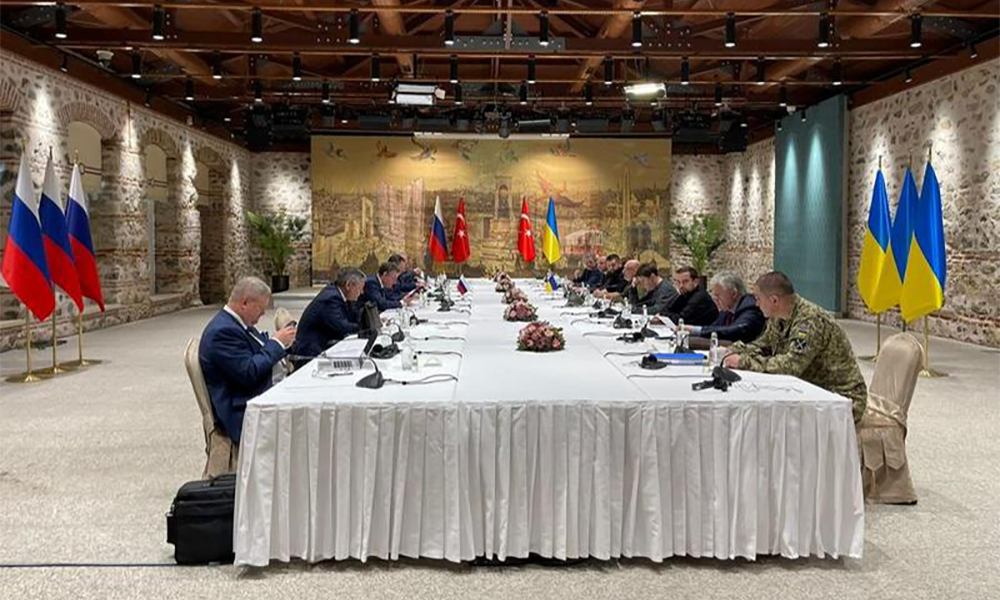
Strategic Council Online – Opinion: The latest round of direct talks between Russia and Ukraine, hosted by Istanbul on May 15 to reach a ceasefire agreement, was neither the first nor will it be the last set of negotiations between the two countries to achieve peace.

Homayoun Qasemi – International Relations Researcher
A significant portion of 21st-century military conflicts have not ended in peace; instead, the parties have either reached a fragile ceasefire or, due to the subsiding of hostilities, have halted at the frontlines. Currently, despite ongoing efforts, there is no clear prospect for achieving lasting peace in the Ukraine war. It is worth noting that Russia has a history of leaving wartime status unresolved—for example, after World War II, due to disputes with Japan over the Kuril Islands, the two sides have still not officially signed a peace treaty despite having diplomatic relations. Similarly, Russia-Ukraine relations may face the same fate after the war.

The previous round of direct negotiations between the two sides took place in the early days of the war in 2022 but was abandoned without results. The recent talks met a similar fate, with the only official achievement being the exchange of 1,000 prisoners of war from each side, which was significant from a humanitarian perspective.

Currently, the four leading actors in this war—Russia, Ukraine, the European Union, and the United States—are each pursuing their own desires and interests. Since November 2023 and Ukraine’s unsuccessful counteroffensive, Russia’s war machine has resumed its offensive operations, gaining the upper hand on the battlefield and capturing more territory each day. The Kremlin’s most important demand is the annexation of Crimea and the four regions of Luhansk, Donetsk, Zaporizhzhia, and Kherson, along with their recognition as Russian territory. It should be noted that parts of these regions are still under Ukrainian control, and Russia has not fully captured them. Ukraine, however, considers accepting the loss of its territory as the biggest red line in reaching an agreement. Russia has threatened that if the war drags on, it will seize even more Ukrainian territory beyond these regions.

Another demand from Moscow is the swift holding of elections in Ukraine. Since May 2024, President Zelensky’s term has officially ended, but due to wartime conditions, Ukraine has not held new presidential elections, and Zelensky’s government remains in power. The Kremlin considers the current government illegitimate, deems any agreement with it unstable, and insists on making peace with a new government that comes to power after elections.

However, Ukraine’s primary demand in this round of talks was a 30-day temporary ceasefire, which Russia rejected. The Russian side claims that if such a ceasefire were established, Ukraine would use the opportunity to import weapons and restore its military capabilities, making the ceasefire unhelpful in achieving peace.

Before coming to power, Trump claimed that he would end the Ukraine war in the early days of his administration—a promise he has so far failed to fulfill. In this round of negotiations, the United States made every effort to secure a 30-day ceasefire, but Russia did not accept it. After the talks failed and following his recent phone call with Putin, Trump called for the U.S. to withdraw from the negotiation process, urging the parties to reach an agreement on their own.

Meanwhile, Brussels, observing the declining U.S. involvement in supporting Ukraine and cooperating with Europe, seeks to adopt an independent policy for the Union’s security, viewing the Ukraine war as a significant test. The EU sees Ukraine’s complete defeat in this war as undermining its own deterrence (in the absence of the United States) against Russia. It has imposed a new wave of sanctions against Russia, particularly targeting its shadow fleet, and is pushing to send new packages of military and economic aid to Ukraine.

Under these circumstances, it seems that as long as Russia remains confident in its battlefield superiority, an end to the Ukraine war at the negotiating table, at least in the near future, remains unlikely.

0 Comments

LATEST CONTENT

Consequences of Declining Trust in the Judiciary in Europe

SCFRonline – Opinion: The increase in public distrust of the French judicial system, which in recent surveys has reached approximately two-thirds of citizens, should be analyzed within a framework broader than temporary dissatisfaction or an emotional reaction to a particular criminal case.

Iran’s Potential Levers of Power

SCFRonline– Opinion: Iran’s geopolitical power is not limited solely to oil and the Strait of Hormuz; the unintended emergence of disruptions in the future global food and energy security chains can also demonstrate Iran’s strategic importance.

The Inseparability of the Lebanese Front from the Axis of Resistance

SCFR Online–Opinion: By providing an extensive network of social, healthcare, educational, and post-war reconstruction services, Hezbollah has established a strong social base for itself among Lebanon’s Shiites and Sunnis, and even beyond that, among other segments of Lebanese society, including Christians. Hezbollah has never been an external actor imposed upon Lebanon; rather, it is a phenomenon fundamentally born out of the occupation and crimes of the Zionist regime and itself influenced by popular resistance.

The Increasing Efforts of the Zionist Regime to Redefine Borders and the Regional Order and Its Consequences

SCFR Online– Opinion: Security and military developments in the region over recent months indicate that the ongoing crises and wars in Gaza, southern Lebanon, and parts of Syrian territory encompass broader dimensions of geopolitical and geostrategic transformations. In this context, the increased military presence and control of the Zionist regime over parts of the territories of these areas, along with proposals regarding the creation of buffer zones or even the expansion of security borders, have raised serious questions about the future of the regional order and its consequences for the countries of West Asia.

Loading

Últimas publicaciones

Consequences of Declining Trust in the Judiciary in Europe

SCFRonline – Opinion: The increase in public distrust of the French judicial system, which in recent surveys has reached approximately two-thirds of citizens, should be analyzed within a framework broader than temporary dissatisfaction or an emotional reaction to a particular criminal case.

Iran’s Potential Levers of Power

SCFRonline– Opinion: Iran’s geopolitical power is not limited solely to oil and the Strait of Hormuz; the unintended emergence of disruptions in the future global food and energy security chains can also demonstrate Iran’s strategic importance.

The Inseparability of the Lebanese Front from the Axis of Resistance

SCFR Online–Opinion: By providing an extensive network of social, healthcare, educational, and post-war reconstruction services, Hezbollah has established a strong social base for itself among Lebanon’s Shiites and Sunnis, and even beyond that, among other segments of Lebanese society, including Christians. Hezbollah has never been an external actor imposed upon Lebanon; rather, it is a phenomenon fundamentally born out of the occupation and crimes of the Zionist regime and itself influenced by popular resistance.

The Increasing Efforts of the Zionist Regime to Redefine Borders and the Regional Order and Its Consequences

SCFR Online– Opinion: Security and military developments in the region over recent months indicate that the ongoing crises and wars in Gaza, southern Lebanon, and parts of Syrian territory encompass broader dimensions of geopolitical and geostrategic transformations. In this context, the increased military presence and control of the Zionist regime over parts of the territories of these areas, along with proposals regarding the creation of buffer zones or even the expansion of security borders, have raised serious questions about the future of the regional order and its consequences for the countries of West Asia.

Loading

DERNIER CONTENU

Consequences of Declining Trust in the Judiciary in Europe

SCFRonline – Opinion: The increase in public distrust of the French judicial system, which in recent surveys has reached approximately two-thirds of citizens, should be analyzed within a framework broader than temporary dissatisfaction or an emotional reaction to a particular criminal case.

Iran’s Potential Levers of Power

SCFRonline– Opinion: Iran’s geopolitical power is not limited solely to oil and the Strait of Hormuz; the unintended emergence of disruptions in the future global food and energy security chains can also demonstrate Iran’s strategic importance.

The Inseparability of the Lebanese Front from the Axis of Resistance

SCFR Online–Opinion: By providing an extensive network of social, healthcare, educational, and post-war reconstruction services, Hezbollah has established a strong social base for itself among Lebanon’s Shiites and Sunnis, and even beyond that, among other segments of Lebanese society, including Christians. Hezbollah has never been an external actor imposed upon Lebanon; rather, it is a phenomenon fundamentally born out of the occupation and crimes of the Zionist regime and itself influenced by popular resistance.

The Increasing Efforts of the Zionist Regime to Redefine Borders and the Regional Order and Its Consequences

SCFR Online– Opinion: Security and military developments in the region over recent months indicate that the ongoing crises and wars in Gaza, southern Lebanon, and parts of Syrian territory encompass broader dimensions of geopolitical and geostrategic transformations. In this context, the increased military presence and control of the Zionist regime over parts of the territories of these areas, along with proposals regarding the creation of buffer zones or even the expansion of security borders, have raised serious questions about the future of the regional order and its consequences for the countries of West Asia.

Loading

DERNIER CONTENU

Consequences of Declining Trust in the Judiciary in Europe

SCFRonline – Opinion: The increase in public distrust of the French judicial system, which in recent surveys has reached approximately two-thirds of citizens, should be analyzed within a framework broader than temporary dissatisfaction or an emotional reaction to a particular criminal case.

Iran’s Potential Levers of Power

SCFRonline– Opinion: Iran’s geopolitical power is not limited solely to oil and the Strait of Hormuz; the unintended emergence of disruptions in the future global food and energy security chains can also demonstrate Iran’s strategic importance.

The Inseparability of the Lebanese Front from the Axis of Resistance

SCFR Online–Opinion: By providing an extensive network of social, healthcare, educational, and post-war reconstruction services, Hezbollah has established a strong social base for itself among Lebanon’s Shiites and Sunnis, and even beyond that, among other segments of Lebanese society, including Christians. Hezbollah has never been an external actor imposed upon Lebanon; rather, it is a phenomenon fundamentally born out of the occupation and crimes of the Zionist regime and itself influenced by popular resistance.

The Increasing Efforts of the Zionist Regime to Redefine Borders and the Regional Order and Its Consequences

SCFR Online– Opinion: Security and military developments in the region over recent months indicate that the ongoing crises and wars in Gaza, southern Lebanon, and parts of Syrian territory encompass broader dimensions of geopolitical and geostrategic transformations. In this context, the increased military presence and control of the Zionist regime over parts of the territories of these areas, along with proposals regarding the creation of buffer zones or even the expansion of security borders, have raised serious questions about the future of the regional order and its consequences for the countries of West Asia.

Loading

DERNIER CONTENU

Consequences of Declining Trust in the Judiciary in Europe

SCFRonline – Opinion: The increase in public distrust of the French judicial system, which in recent surveys has reached approximately two-thirds of citizens, should be analyzed within a framework broader than temporary dissatisfaction or an emotional reaction to a particular criminal case.

Iran’s Potential Levers of Power

SCFRonline– Opinion: Iran’s geopolitical power is not limited solely to oil and the Strait of Hormuz; the unintended emergence of disruptions in the future global food and energy security chains can also demonstrate Iran’s strategic importance.

The Inseparability of the Lebanese Front from the Axis of Resistance

SCFR Online–Opinion: By providing an extensive network of social, healthcare, educational, and post-war reconstruction services, Hezbollah has established a strong social base for itself among Lebanon’s Shiites and Sunnis, and even beyond that, among other segments of Lebanese society, including Christians. Hezbollah has never been an external actor imposed upon Lebanon; rather, it is a phenomenon fundamentally born out of the occupation and crimes of the Zionist regime and itself influenced by popular resistance.

The Increasing Efforts of the Zionist Regime to Redefine Borders and the Regional Order and Its Consequences

SCFR Online– Opinion: Security and military developments in the region over recent months indicate that the ongoing crises and wars in Gaza, southern Lebanon, and parts of Syrian territory encompass broader dimensions of geopolitical and geostrategic transformations. In this context, the increased military presence and control of the Zionist regime over parts of the territories of these areas, along with proposals regarding the creation of buffer zones or even the expansion of security borders, have raised serious questions about the future of the regional order and its consequences for the countries of West Asia.

Loading





