جدیدترین مطالب

The Makkah Pact; Reasons for its Formation and Challenges Ahead

SCFR Online – Opinion: The Makkah Pact, signed between Saudi Arabia, Pakistan, and Turkey under the motto “an attack on one is an attack on all,” is viewed by some analysts less as a full-fledged military coalition and more as an attempt to reduce security dependence on an external power and to establish a regional security mechanism.

Implications of the US-Saudi Nuclear Agreement

SCFR Online – Opinion: The new US-Saudi nuclear agreement, despite legal and political ambiguities, could alter previous non-proliferation standards in West Asia and intensify nuclear competition, ushering it into a new phase.

An Analysis of Recent Turkey-Israeli Regime Tensions

SCFR Online – Opinion: Recent developments in Syria indicate an intensification of strategic rivalry between Turkey and the Israeli regime, but mutual considerations and the role of the United States have limited the likelihood of direct war.

Increasing criticism of the extensive Zionist lobby network

SCFR Online – Opinion: An examination of the mechanisms of the Israeli regime’s influence in the United States depicts a complex picture of shared interests, strategic dependencies, and the limitations of this relationship.

Realities of the Tripartite Makkah Pact

SCFR Online – Interview: The signing of the Makkah agreement between Saudi Arabia, Pakistan, and Turkey has raised questions about the future of the region’s security structure and the position of these countries in West Asian equations. Can this agreement become a genuine collective defense mechanism, or does it have more of a political and deterrent function than creating new military capacity?

Loading

South Caucasus

Analysis of the Recognition of the Armenian Genocide by the Zionist Regime

Analysis of the Recognition of the Armenian Genocide by the Zionist Regime

SCFR Online – Opinion: At a time when the West Asia region, particularly in recent months, has been undergoing the most complex political and security developments of the past half-century, the sudden decision by the cabinet of the Zionist regime to recognize the Armenian genocide committed by Turkey, which has faced strong condemnation and opposition from Ankara and Baku, raises questions.

The South Caucasus, A New Front in NATO-Russia Competition

The South Caucasus, A New Front in NATO-Russia Competition

Strategic Council Online – Interview: A Caucasus issues analyst stated that increased cooperation between the Republic of Azerbaijan and NATO, along with Western support for Baku, signifies the formation of a new front of geopolitical competition between NATO and Russia in the South Caucasus.

Iran’s Role in the Emerging Eurasian Order

Iran’s Role in the Emerging Eurasian Order

Online Strategic Council – Interview: It is essential that Tehran, Moscow, and Beijing adopt a more coordinated approach in the face of Washington’s strategy to revive its influence in Eurasia.

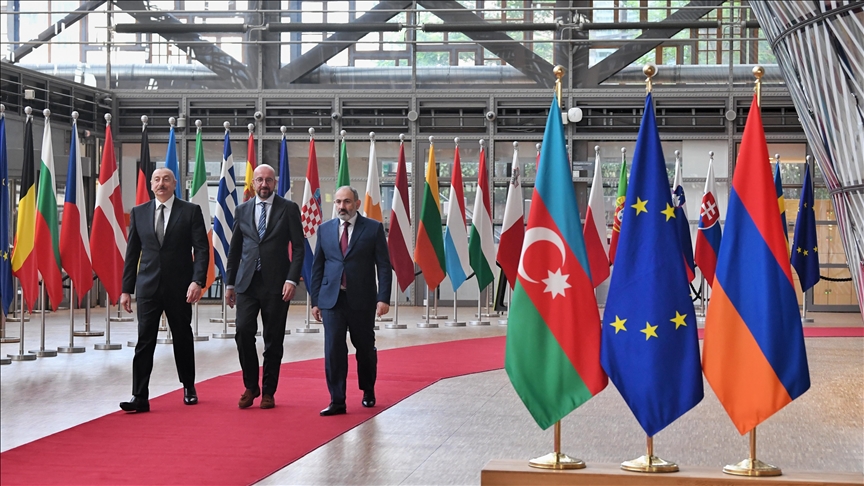
Armenia & Azerbaijan on the Path to Final Peace Agreement

Armenia & Azerbaijan on the Path to Final Peace Agreement

Strategic Council Online – Opinion: According to what the Republic of Azerbaijan and Armenia authorities officially announce these days, the two South Caucasus countries are taking the last steps to reach a peace treaty.

Reasons for Armenia’s Strategic Proximity to Europe and America

Reasons for Armenia’s Strategic Proximity to Europe and America

Strategic Council Online: The former Iranian ambassador to Armenia said Armenia’s strategic closeness to Europe and America is not far from expected because Pashinyan’s government is worried that if another attack occurs on its borders, it will not be able to maintain its position and defend its country. Therefore, he is trying to arrange for allies in the West.

Withdrawal of Russian Forces from South Caucasus; Strategy or Tactic?

Withdrawal of Russian Forces from South Caucasus; Strategy or Tactic?

Strategic Council Online – Interview: An expert on Caucasus affairs said: Following news reports that the Kremlin has implicitly confirmed that Russian peacekeepers are withdrawing from the Nagorno-Karabakh region and taking their weapons and equipment with them, this question is seriously raised: Does Russia want to hand over the South Caucasus region to the West?

Consequences of the escalation of militarization in the South Caucasus

Consequences of the escalation of militarization in the South Caucasus

Strategic Council Online—Opinion: In recent months, we have seen Armenia and Azerbaijan strengthen new military-security arrangements. The two countries are developing military and security relations and exchanges with European and extra-regional countries within an “escalating process.” Strengthening the weapons arsenals, reviewing membership in some military pacts, and increasing military purchases are among these measures.
Barsam Mohammadi- Expert of regional issues

France and the European Union seek to challenge Russia’s role in the South Caucasus

France and the European Union seek to challenge Russia’s role in the South Caucasus

Strategic Council Online—Interview: The former ambassador of Iran to the Republic of Azerbaijan said that the positions of the European Union’s foreign policy in support of Armenia and opposition to the Republic of Azerbaijan are in the context of challenging Russia’s role in the developments in the South Caucasus and also in the continuation of Europe’s conflict with Russia over Ukraine.

Increasing Negative Influence of the West on Russia-Turkey Relations

Increasing Negative Influence of the West on Russia-Turkey Relations

Strategic Council Online – Interview: A researcher of the Research Center of the Expediency Council, while emphasizing the importance of the recent meeting between the presidents of Turkey and Russia in Sochi, said: The crisis in Ukraine and the pressures of the West have negatively affected Turkey’s balanced approach towards the West and Russia, and that the Russians are doubtful about Turkey’s future policies.

أحدث الوظائف

The Makkah Pact; Reasons for its Formation and Challenges Ahead

SCFR Online – Opinion: The Makkah Pact, signed between Saudi Arabia, Pakistan, and Turkey under the motto “an attack on one is an attack on all,” is viewed by some analysts less as a full-fledged military coalition and more as an attempt to reduce security dependence on an external power and to establish a regional security mechanism.

Implications of the US-Saudi Nuclear Agreement

SCFR Online – Opinion: The new US-Saudi nuclear agreement, despite legal and political ambiguities, could alter previous non-proliferation standards in West Asia and intensify nuclear competition, ushering it into a new phase.

An Analysis of Recent Turkey-Israeli Regime Tensions

SCFR Online – Opinion: Recent developments in Syria indicate an intensification of strategic rivalry between Turkey and the Israeli regime, but mutual considerations and the role of the United States have limited the likelihood of direct war.

Increasing criticism of the extensive Zionist lobby network

SCFR Online – Opinion: An examination of the mechanisms of the Israeli regime’s influence in the United States depicts a complex picture of shared interests, strategic dependencies, and the limitations of this relationship.

Realities of the Tripartite Makkah Pact

SCFR Online – Interview: The signing of the Makkah agreement between Saudi Arabia, Pakistan, and Turkey has raised questions about the future of the region’s security structure and the position of these countries in West Asian equations. Can this agreement become a genuine collective defense mechanism, or does it have more of a political and deterrent function than creating new military capacity?

Loading

South Caucasus

Analysis of the Recognition of the Armenian Genocide by the Zionist Regime

Analysis of the Recognition of the Armenian Genocide by the Zionist Regime

SCFR Online – Opinion: At a time when the West Asia region, particularly in recent months, has been undergoing the most complex political and security developments of the past half-century, the sudden decision by the cabinet of the Zionist regime to recognize the Armenian genocide committed by Turkey, which has faced strong condemnation and opposition from Ankara and Baku, raises questions.

The South Caucasus, A New Front in NATO-Russia Competition

The South Caucasus, A New Front in NATO-Russia Competition

Strategic Council Online – Interview: A Caucasus issues analyst stated that increased cooperation between the Republic of Azerbaijan and NATO, along with Western support for Baku, signifies the formation of a new front of geopolitical competition between NATO and Russia in the South Caucasus.

Iran’s Role in the Emerging Eurasian Order

Iran’s Role in the Emerging Eurasian Order

Online Strategic Council – Interview: It is essential that Tehran, Moscow, and Beijing adopt a more coordinated approach in the face of Washington’s strategy to revive its influence in Eurasia.

Armenia & Azerbaijan on the Path to Final Peace Agreement

Armenia & Azerbaijan on the Path to Final Peace Agreement

Strategic Council Online – Opinion: According to what the Republic of Azerbaijan and Armenia authorities officially announce these days, the two South Caucasus countries are taking the last steps to reach a peace treaty.

Reasons for Armenia’s Strategic Proximity to Europe and America

Reasons for Armenia’s Strategic Proximity to Europe and America

Strategic Council Online: The former Iranian ambassador to Armenia said Armenia’s strategic closeness to Europe and America is not far from expected because Pashinyan’s government is worried that if another attack occurs on its borders, it will not be able to maintain its position and defend its country. Therefore, he is trying to arrange for allies in the West.

Withdrawal of Russian Forces from South Caucasus; Strategy or Tactic?

Withdrawal of Russian Forces from South Caucasus; Strategy or Tactic?

Strategic Council Online – Interview: An expert on Caucasus affairs said: Following news reports that the Kremlin has implicitly confirmed that Russian peacekeepers are withdrawing from the Nagorno-Karabakh region and taking their weapons and equipment with them, this question is seriously raised: Does Russia want to hand over the South Caucasus region to the West?

Consequences of the escalation of militarization in the South Caucasus

Consequences of the escalation of militarization in the South Caucasus

Strategic Council Online—Opinion: In recent months, we have seen Armenia and Azerbaijan strengthen new military-security arrangements. The two countries are developing military and security relations and exchanges with European and extra-regional countries within an “escalating process.” Strengthening the weapons arsenals, reviewing membership in some military pacts, and increasing military purchases are among these measures.
Barsam Mohammadi- Expert of regional issues

France and the European Union seek to challenge Russia’s role in the South Caucasus

France and the European Union seek to challenge Russia’s role in the South Caucasus

Strategic Council Online—Interview: The former ambassador of Iran to the Republic of Azerbaijan said that the positions of the European Union’s foreign policy in support of Armenia and opposition to the Republic of Azerbaijan are in the context of challenging Russia’s role in the developments in the South Caucasus and also in the continuation of Europe’s conflict with Russia over Ukraine.

Increasing Negative Influence of the West on Russia-Turkey Relations

Increasing Negative Influence of the West on Russia-Turkey Relations

Strategic Council Online – Interview: A researcher of the Research Center of the Expediency Council, while emphasizing the importance of the recent meeting between the presidents of Turkey and Russia in Sochi, said: The crisis in Ukraine and the pressures of the West have negatively affected Turkey’s balanced approach towards the West and Russia, and that the Russians are doubtful about Turkey’s future policies.

South Caucasus

Analysis of the Recognition of the Armenian Genocide by the Zionist Regime

Analysis of the Recognition of the Armenian Genocide by the Zionist Regime

SCFR Online – Opinion: At a time when the West Asia region, particularly in recent months, has been undergoing the most complex political and security developments of the past half-century, the sudden decision by the cabinet of the Zionist regime to recognize the Armenian genocide committed by Turkey, which has faced strong condemnation and opposition from Ankara and Baku, raises questions.

The South Caucasus, A New Front in NATO-Russia Competition

The South Caucasus, A New Front in NATO-Russia Competition

Strategic Council Online – Interview: A Caucasus issues analyst stated that increased cooperation between the Republic of Azerbaijan and NATO, along with Western support for Baku, signifies the formation of a new front of geopolitical competition between NATO and Russia in the South Caucasus.

Iran’s Role in the Emerging Eurasian Order

Iran’s Role in the Emerging Eurasian Order

Online Strategic Council – Interview: It is essential that Tehran, Moscow, and Beijing adopt a more coordinated approach in the face of Washington’s strategy to revive its influence in Eurasia.

Armenia & Azerbaijan on the Path to Final Peace Agreement

Armenia & Azerbaijan on the Path to Final Peace Agreement

Strategic Council Online – Opinion: According to what the Republic of Azerbaijan and Armenia authorities officially announce these days, the two South Caucasus countries are taking the last steps to reach a peace treaty.

Reasons for Armenia’s Strategic Proximity to Europe and America

Reasons for Armenia’s Strategic Proximity to Europe and America

Strategic Council Online: The former Iranian ambassador to Armenia said Armenia’s strategic closeness to Europe and America is not far from expected because Pashinyan’s government is worried that if another attack occurs on its borders, it will not be able to maintain its position and defend its country. Therefore, he is trying to arrange for allies in the West.

Withdrawal of Russian Forces from South Caucasus; Strategy or Tactic?

Withdrawal of Russian Forces from South Caucasus; Strategy or Tactic?

Strategic Council Online – Interview: An expert on Caucasus affairs said: Following news reports that the Kremlin has implicitly confirmed that Russian peacekeepers are withdrawing from the Nagorno-Karabakh region and taking their weapons and equipment with them, this question is seriously raised: Does Russia want to hand over the South Caucasus region to the West?

Consequences of the escalation of militarization in the South Caucasus

Consequences of the escalation of militarization in the South Caucasus

Strategic Council Online—Opinion: In recent months, we have seen Armenia and Azerbaijan strengthen new military-security arrangements. The two countries are developing military and security relations and exchanges with European and extra-regional countries within an “escalating process.” Strengthening the weapons arsenals, reviewing membership in some military pacts, and increasing military purchases are among these measures.
Barsam Mohammadi- Expert of regional issues

France and the European Union seek to challenge Russia’s role in the South Caucasus

France and the European Union seek to challenge Russia’s role in the South Caucasus

Strategic Council Online—Interview: The former ambassador of Iran to the Republic of Azerbaijan said that the positions of the European Union’s foreign policy in support of Armenia and opposition to the Republic of Azerbaijan are in the context of challenging Russia’s role in the developments in the South Caucasus and also in the continuation of Europe’s conflict with Russia over Ukraine.

Increasing Negative Influence of the West on Russia-Turkey Relations

Increasing Negative Influence of the West on Russia-Turkey Relations

Strategic Council Online – Interview: A researcher of the Research Center of the Expediency Council, while emphasizing the importance of the recent meeting between the presidents of Turkey and Russia in Sochi, said: The crisis in Ukraine and the pressures of the West have negatively affected Turkey’s balanced approach towards the West and Russia, and that the Russians are doubtful about Turkey’s future policies.

LATEST CONTENT

The Makkah Pact; Reasons for its Formation and Challenges Ahead

SCFR Online – Opinion: The Makkah Pact, signed between Saudi Arabia, Pakistan, and Turkey under the motto “an attack on one is an attack on all,” is viewed by some analysts less as a full-fledged military coalition and more as an attempt to reduce security dependence on an external power and to establish a regional security mechanism.

Implications of the US-Saudi Nuclear Agreement

SCFR Online – Opinion: The new US-Saudi nuclear agreement, despite legal and political ambiguities, could alter previous non-proliferation standards in West Asia and intensify nuclear competition, ushering it into a new phase.

An Analysis of Recent Turkey-Israeli Regime Tensions

SCFR Online – Opinion: Recent developments in Syria indicate an intensification of strategic rivalry between Turkey and the Israeli regime, but mutual considerations and the role of the United States have limited the likelihood of direct war.

Increasing criticism of the extensive Zionist lobby network

SCFR Online – Opinion: An examination of the mechanisms of the Israeli regime’s influence in the United States depicts a complex picture of shared interests, strategic dependencies, and the limitations of this relationship.

Realities of the Tripartite Makkah Pact

SCFR Online – Interview: The signing of the Makkah agreement between Saudi Arabia, Pakistan, and Turkey has raised questions about the future of the region’s security structure and the position of these countries in West Asian equations. Can this agreement become a genuine collective defense mechanism, or does it have more of a political and deterrent function than creating new military capacity?

Loading

South Caucasus

Analysis of the Recognition of the Armenian Genocide by the Zionist Regime

Analysis of the Recognition of the Armenian Genocide by the Zionist Regime

SCFR Online – Opinion: At a time when the West Asia region, particularly in recent months, has been undergoing the most complex political and security developments of the past half-century, the sudden decision by the cabinet of the Zionist regime to recognize the Armenian genocide committed by Turkey, which has faced strong condemnation and opposition from Ankara and Baku, raises questions.

The South Caucasus, A New Front in NATO-Russia Competition

The South Caucasus, A New Front in NATO-Russia Competition

Strategic Council Online – Interview: A Caucasus issues analyst stated that increased cooperation between the Republic of Azerbaijan and NATO, along with Western support for Baku, signifies the formation of a new front of geopolitical competition between NATO and Russia in the South Caucasus.

Iran’s Role in the Emerging Eurasian Order

Iran’s Role in the Emerging Eurasian Order

Online Strategic Council – Interview: It is essential that Tehran, Moscow, and Beijing adopt a more coordinated approach in the face of Washington’s strategy to revive its influence in Eurasia.

Armenia & Azerbaijan on the Path to Final Peace Agreement

Armenia & Azerbaijan on the Path to Final Peace Agreement

Strategic Council Online – Opinion: According to what the Republic of Azerbaijan and Armenia authorities officially announce these days, the two South Caucasus countries are taking the last steps to reach a peace treaty.

Reasons for Armenia’s Strategic Proximity to Europe and America

Reasons for Armenia’s Strategic Proximity to Europe and America

Strategic Council Online: The former Iranian ambassador to Armenia said Armenia’s strategic closeness to Europe and America is not far from expected because Pashinyan’s government is worried that if another attack occurs on its borders, it will not be able to maintain its position and defend its country. Therefore, he is trying to arrange for allies in the West.

Withdrawal of Russian Forces from South Caucasus; Strategy or Tactic?

Withdrawal of Russian Forces from South Caucasus; Strategy or Tactic?

Strategic Council Online – Interview: An expert on Caucasus affairs said: Following news reports that the Kremlin has implicitly confirmed that Russian peacekeepers are withdrawing from the Nagorno-Karabakh region and taking their weapons and equipment with them, this question is seriously raised: Does Russia want to hand over the South Caucasus region to the West?

Consequences of the escalation of militarization in the South Caucasus

Consequences of the escalation of militarization in the South Caucasus

Strategic Council Online—Opinion: In recent months, we have seen Armenia and Azerbaijan strengthen new military-security arrangements. The two countries are developing military and security relations and exchanges with European and extra-regional countries within an “escalating process.” Strengthening the weapons arsenals, reviewing membership in some military pacts, and increasing military purchases are among these measures.
Barsam Mohammadi- Expert of regional issues

France and the European Union seek to challenge Russia’s role in the South Caucasus

France and the European Union seek to challenge Russia’s role in the South Caucasus

Strategic Council Online—Interview: The former ambassador of Iran to the Republic of Azerbaijan said that the positions of the European Union’s foreign policy in support of Armenia and opposition to the Republic of Azerbaijan are in the context of challenging Russia’s role in the developments in the South Caucasus and also in the continuation of Europe’s conflict with Russia over Ukraine.

Increasing Negative Influence of the West on Russia-Turkey Relations

Increasing Negative Influence of the West on Russia-Turkey Relations

Strategic Council Online – Interview: A researcher of the Research Center of the Expediency Council, while emphasizing the importance of the recent meeting between the presidents of Turkey and Russia in Sochi, said: The crisis in Ukraine and the pressures of the West have negatively affected Turkey’s balanced approach towards the West and Russia, and that the Russians are doubtful about Turkey’s future policies.

ÚLTIMAS PUBLICACIONES

The Makkah Pact; Reasons for its Formation and Challenges Ahead

SCFR Online – Opinion: The Makkah Pact, signed between Saudi Arabia, Pakistan, and Turkey under the motto “an attack on one is an attack on all,” is viewed by some analysts less as a full-fledged military coalition and more as an attempt to reduce security dependence on an external power and to establish a regional security mechanism.

Implications of the US-Saudi Nuclear Agreement

SCFR Online – Opinion: The new US-Saudi nuclear agreement, despite legal and political ambiguities, could alter previous non-proliferation standards in West Asia and intensify nuclear competition, ushering it into a new phase.

An Analysis of Recent Turkey-Israeli Regime Tensions

SCFR Online – Opinion: Recent developments in Syria indicate an intensification of strategic rivalry between Turkey and the Israeli regime, but mutual considerations and the role of the United States have limited the likelihood of direct war.

Increasing criticism of the extensive Zionist lobby network

SCFR Online – Opinion: An examination of the mechanisms of the Israeli regime’s influence in the United States depicts a complex picture of shared interests, strategic dependencies, and the limitations of this relationship.

Realities of the Tripartite Makkah Pact

SCFR Online – Interview: The signing of the Makkah agreement between Saudi Arabia, Pakistan, and Turkey has raised questions about the future of the region’s security structure and the position of these countries in West Asian equations. Can this agreement become a genuine collective defense mechanism, or does it have more of a political and deterrent function than creating new military capacity?

Loading

South Caucasus

Analysis of the Recognition of the Armenian Genocide by the Zionist Regime

Analysis of the Recognition of the Armenian Genocide by the Zionist Regime

SCFR Online – Opinion: At a time when the West Asia region, particularly in recent months, has been undergoing the most complex political and security developments of the past half-century, the sudden decision by the cabinet of the Zionist regime to recognize the Armenian genocide committed by Turkey, which has faced strong condemnation and opposition from Ankara and Baku, raises questions.

The South Caucasus, A New Front in NATO-Russia Competition

The South Caucasus, A New Front in NATO-Russia Competition

Strategic Council Online – Interview: A Caucasus issues analyst stated that increased cooperation between the Republic of Azerbaijan and NATO, along with Western support for Baku, signifies the formation of a new front of geopolitical competition between NATO and Russia in the South Caucasus.

Iran’s Role in the Emerging Eurasian Order

Iran’s Role in the Emerging Eurasian Order

Online Strategic Council – Interview: It is essential that Tehran, Moscow, and Beijing adopt a more coordinated approach in the face of Washington’s strategy to revive its influence in Eurasia.

Armenia & Azerbaijan on the Path to Final Peace Agreement

Armenia & Azerbaijan on the Path to Final Peace Agreement

Strategic Council Online – Opinion: According to what the Republic of Azerbaijan and Armenia authorities officially announce these days, the two South Caucasus countries are taking the last steps to reach a peace treaty.

Reasons for Armenia’s Strategic Proximity to Europe and America

Reasons for Armenia’s Strategic Proximity to Europe and America

Strategic Council Online: The former Iranian ambassador to Armenia said Armenia’s strategic closeness to Europe and America is not far from expected because Pashinyan’s government is worried that if another attack occurs on its borders, it will not be able to maintain its position and defend its country. Therefore, he is trying to arrange for allies in the West.

Withdrawal of Russian Forces from South Caucasus; Strategy or Tactic?

Withdrawal of Russian Forces from South Caucasus; Strategy or Tactic?

Strategic Council Online – Interview: An expert on Caucasus affairs said: Following news reports that the Kremlin has implicitly confirmed that Russian peacekeepers are withdrawing from the Nagorno-Karabakh region and taking their weapons and equipment with them, this question is seriously raised: Does Russia want to hand over the South Caucasus region to the West?

Consequences of the escalation of militarization in the South Caucasus

Consequences of the escalation of militarization in the South Caucasus

Strategic Council Online—Opinion: In recent months, we have seen Armenia and Azerbaijan strengthen new military-security arrangements. The two countries are developing military and security relations and exchanges with European and extra-regional countries within an “escalating process.” Strengthening the weapons arsenals, reviewing membership in some military pacts, and increasing military purchases are among these measures.
Barsam Mohammadi- Expert of regional issues

France and the European Union seek to challenge Russia’s role in the South Caucasus

France and the European Union seek to challenge Russia’s role in the South Caucasus

Strategic Council Online—Interview: The former ambassador of Iran to the Republic of Azerbaijan said that the positions of the European Union’s foreign policy in support of Armenia and opposition to the Republic of Azerbaijan are in the context of challenging Russia’s role in the developments in the South Caucasus and also in the continuation of Europe’s conflict with Russia over Ukraine.

Increasing Negative Influence of the West on Russia-Turkey Relations

Increasing Negative Influence of the West on Russia-Turkey Relations

Strategic Council Online – Interview: A researcher of the Research Center of the Expediency Council, while emphasizing the importance of the recent meeting between the presidents of Turkey and Russia in Sochi, said: The crisis in Ukraine and the pressures of the West have negatively affected Turkey’s balanced approach towards the West and Russia, and that the Russians are doubtful about Turkey’s future policies.

ÚLTIMAS PUBLICACIONES

The Makkah Pact; Reasons for its Formation and Challenges Ahead

SCFR Online – Opinion: The Makkah Pact, signed between Saudi Arabia, Pakistan, and Turkey under the motto “an attack on one is an attack on all,” is viewed by some analysts less as a full-fledged military coalition and more as an attempt to reduce security dependence on an external power and to establish a regional security mechanism.

Implications of the US-Saudi Nuclear Agreement

SCFR Online – Opinion: The new US-Saudi nuclear agreement, despite legal and political ambiguities, could alter previous non-proliferation standards in West Asia and intensify nuclear competition, ushering it into a new phase.

An Analysis of Recent Turkey-Israeli Regime Tensions

SCFR Online – Opinion: Recent developments in Syria indicate an intensification of strategic rivalry between Turkey and the Israeli regime, but mutual considerations and the role of the United States have limited the likelihood of direct war.

Increasing criticism of the extensive Zionist lobby network

SCFR Online – Opinion: An examination of the mechanisms of the Israeli regime’s influence in the United States depicts a complex picture of shared interests, strategic dependencies, and the limitations of this relationship.

Realities of the Tripartite Makkah Pact

SCFR Online – Interview: The signing of the Makkah agreement between Saudi Arabia, Pakistan, and Turkey has raised questions about the future of the region’s security structure and the position of these countries in West Asian equations. Can this agreement become a genuine collective defense mechanism, or does it have more of a political and deterrent function than creating new military capacity?

Loading

South Caucasus

Analysis of the Recognition of the Armenian Genocide by the Zionist Regime

Analysis of the Recognition of the Armenian Genocide by the Zionist Regime

SCFR Online – Opinion: At a time when the West Asia region, particularly in recent months, has been undergoing the most complex political and security developments of the past half-century, the sudden decision by the cabinet of the Zionist regime to recognize the Armenian genocide committed by Turkey, which has faced strong condemnation and opposition from Ankara and Baku, raises questions.

The South Caucasus, A New Front in NATO-Russia Competition

The South Caucasus, A New Front in NATO-Russia Competition

Strategic Council Online – Interview: A Caucasus issues analyst stated that increased cooperation between the Republic of Azerbaijan and NATO, along with Western support for Baku, signifies the formation of a new front of geopolitical competition between NATO and Russia in the South Caucasus.

Iran’s Role in the Emerging Eurasian Order

Iran’s Role in the Emerging Eurasian Order

Online Strategic Council – Interview: It is essential that Tehran, Moscow, and Beijing adopt a more coordinated approach in the face of Washington’s strategy to revive its influence in Eurasia.

Armenia & Azerbaijan on the Path to Final Peace Agreement

Armenia & Azerbaijan on the Path to Final Peace Agreement

Strategic Council Online – Opinion: According to what the Republic of Azerbaijan and Armenia authorities officially announce these days, the two South Caucasus countries are taking the last steps to reach a peace treaty.

Reasons for Armenia’s Strategic Proximity to Europe and America

Reasons for Armenia’s Strategic Proximity to Europe and America

Strategic Council Online: The former Iranian ambassador to Armenia said Armenia’s strategic closeness to Europe and America is not far from expected because Pashinyan’s government is worried that if another attack occurs on its borders, it will not be able to maintain its position and defend its country. Therefore, he is trying to arrange for allies in the West.

Withdrawal of Russian Forces from South Caucasus; Strategy or Tactic?

Withdrawal of Russian Forces from South Caucasus; Strategy or Tactic?

Strategic Council Online – Interview: An expert on Caucasus affairs said: Following news reports that the Kremlin has implicitly confirmed that Russian peacekeepers are withdrawing from the Nagorno-Karabakh region and taking their weapons and equipment with them, this question is seriously raised: Does Russia want to hand over the South Caucasus region to the West?

Consequences of the escalation of militarization in the South Caucasus

Consequences of the escalation of militarization in the South Caucasus

Strategic Council Online—Opinion: In recent months, we have seen Armenia and Azerbaijan strengthen new military-security arrangements. The two countries are developing military and security relations and exchanges with European and extra-regional countries within an “escalating process.” Strengthening the weapons arsenals, reviewing membership in some military pacts, and increasing military purchases are among these measures.
Barsam Mohammadi- Expert of regional issues

France and the European Union seek to challenge Russia’s role in the South Caucasus

France and the European Union seek to challenge Russia’s role in the South Caucasus

Strategic Council Online—Interview: The former ambassador of Iran to the Republic of Azerbaijan said that the positions of the European Union’s foreign policy in support of Armenia and opposition to the Republic of Azerbaijan are in the context of challenging Russia’s role in the developments in the South Caucasus and also in the continuation of Europe’s conflict with Russia over Ukraine.

Increasing Negative Influence of the West on Russia-Turkey Relations

Increasing Negative Influence of the West on Russia-Turkey Relations

Strategic Council Online – Interview: A researcher of the Research Center of the Expediency Council, while emphasizing the importance of the recent meeting between the presidents of Turkey and Russia in Sochi, said: The crisis in Ukraine and the pressures of the West have negatively affected Turkey’s balanced approach towards the West and Russia, and that the Russians are doubtful about Turkey’s future policies.

ÚLTIMAS PUBLICACIONES

The Makkah Pact; Reasons for its Formation and Challenges Ahead

SCFR Online – Opinion: The Makkah Pact, signed between Saudi Arabia, Pakistan, and Turkey under the motto “an attack on one is an attack on all,” is viewed by some analysts less as a full-fledged military coalition and more as an attempt to reduce security dependence on an external power and to establish a regional security mechanism.

Implications of the US-Saudi Nuclear Agreement

SCFR Online – Opinion: The new US-Saudi nuclear agreement, despite legal and political ambiguities, could alter previous non-proliferation standards in West Asia and intensify nuclear competition, ushering it into a new phase.

An Analysis of Recent Turkey-Israeli Regime Tensions

SCFR Online – Opinion: Recent developments in Syria indicate an intensification of strategic rivalry between Turkey and the Israeli regime, but mutual considerations and the role of the United States have limited the likelihood of direct war.

Increasing criticism of the extensive Zionist lobby network

SCFR Online – Opinion: An examination of the mechanisms of the Israeli regime’s influence in the United States depicts a complex picture of shared interests, strategic dependencies, and the limitations of this relationship.

Realities of the Tripartite Makkah Pact

SCFR Online – Interview: The signing of the Makkah agreement between Saudi Arabia, Pakistan, and Turkey has raised questions about the future of the region’s security structure and the position of these countries in West Asian equations. Can this agreement become a genuine collective defense mechanism, or does it have more of a political and deterrent function than creating new military capacity?

Loading

South Caucasus

Analysis of the Recognition of the Armenian Genocide by the Zionist Regime

Analysis of the Recognition of the Armenian Genocide by the Zionist Regime

SCFR Online – Opinion: At a time when the West Asia region, particularly in recent months, has been undergoing the most complex political and security developments of the past half-century, the sudden decision by the cabinet of the Zionist regime to recognize the Armenian genocide committed by Turkey, which has faced strong condemnation and opposition from Ankara and Baku, raises questions.

The South Caucasus, A New Front in NATO-Russia Competition

The South Caucasus, A New Front in NATO-Russia Competition

Strategic Council Online – Interview: A Caucasus issues analyst stated that increased cooperation between the Republic of Azerbaijan and NATO, along with Western support for Baku, signifies the formation of a new front of geopolitical competition between NATO and Russia in the South Caucasus.

Iran’s Role in the Emerging Eurasian Order

Iran’s Role in the Emerging Eurasian Order

Online Strategic Council – Interview: It is essential that Tehran, Moscow, and Beijing adopt a more coordinated approach in the face of Washington’s strategy to revive its influence in Eurasia.

Armenia & Azerbaijan on the Path to Final Peace Agreement

Armenia & Azerbaijan on the Path to Final Peace Agreement

Strategic Council Online – Opinion: According to what the Republic of Azerbaijan and Armenia authorities officially announce these days, the two South Caucasus countries are taking the last steps to reach a peace treaty.

Reasons for Armenia’s Strategic Proximity to Europe and America

Reasons for Armenia’s Strategic Proximity to Europe and America

Strategic Council Online: The former Iranian ambassador to Armenia said Armenia’s strategic closeness to Europe and America is not far from expected because Pashinyan’s government is worried that if another attack occurs on its borders, it will not be able to maintain its position and defend its country. Therefore, he is trying to arrange for allies in the West.

Withdrawal of Russian Forces from South Caucasus; Strategy or Tactic?

Withdrawal of Russian Forces from South Caucasus; Strategy or Tactic?

Strategic Council Online – Interview: An expert on Caucasus affairs said: Following news reports that the Kremlin has implicitly confirmed that Russian peacekeepers are withdrawing from the Nagorno-Karabakh region and taking their weapons and equipment with them, this question is seriously raised: Does Russia want to hand over the South Caucasus region to the West?

Consequences of the escalation of militarization in the South Caucasus

Consequences of the escalation of militarization in the South Caucasus

Strategic Council Online—Opinion: In recent months, we have seen Armenia and Azerbaijan strengthen new military-security arrangements. The two countries are developing military and security relations and exchanges with European and extra-regional countries within an “escalating process.” Strengthening the weapons arsenals, reviewing membership in some military pacts, and increasing military purchases are among these measures.
Barsam Mohammadi- Expert of regional issues

France and the European Union seek to challenge Russia’s role in the South Caucasus

France and the European Union seek to challenge Russia’s role in the South Caucasus

Strategic Council Online—Interview: The former ambassador of Iran to the Republic of Azerbaijan said that the positions of the European Union’s foreign policy in support of Armenia and opposition to the Republic of Azerbaijan are in the context of challenging Russia’s role in the developments in the South Caucasus and also in the continuation of Europe’s conflict with Russia over Ukraine.

Increasing Negative Influence of the West on Russia-Turkey Relations

Increasing Negative Influence of the West on Russia-Turkey Relations

Strategic Council Online – Interview: A researcher of the Research Center of the Expediency Council, while emphasizing the importance of the recent meeting between the presidents of Turkey and Russia in Sochi, said: The crisis in Ukraine and the pressures of the West have negatively affected Turkey’s balanced approach towards the West and Russia, and that the Russians are doubtful about Turkey’s future policies.

ÚLTIMAS PUBLICACIONES

The Makkah Pact; Reasons for its Formation and Challenges Ahead

SCFR Online – Opinion: The Makkah Pact, signed between Saudi Arabia, Pakistan, and Turkey under the motto “an attack on one is an attack on all,” is viewed by some analysts less as a full-fledged military coalition and more as an attempt to reduce security dependence on an external power and to establish a regional security mechanism.

Implications of the US-Saudi Nuclear Agreement

SCFR Online – Opinion: The new US-Saudi nuclear agreement, despite legal and political ambiguities, could alter previous non-proliferation standards in West Asia and intensify nuclear competition, ushering it into a new phase.

An Analysis of Recent Turkey-Israeli Regime Tensions

SCFR Online – Opinion: Recent developments in Syria indicate an intensification of strategic rivalry between Turkey and the Israeli regime, but mutual considerations and the role of the United States have limited the likelihood of direct war.

Increasing criticism of the extensive Zionist lobby network

SCFR Online – Opinion: An examination of the mechanisms of the Israeli regime’s influence in the United States depicts a complex picture of shared interests, strategic dependencies, and the limitations of this relationship.

Realities of the Tripartite Makkah Pact

SCFR Online – Interview: The signing of the Makkah agreement between Saudi Arabia, Pakistan, and Turkey has raised questions about the future of the region’s security structure and the position of these countries in West Asian equations. Can this agreement become a genuine collective defense mechanism, or does it have more of a political and deterrent function than creating new military capacity?

Loading