جدیدترین مطالب

Increasing criticism of the extensive Zionist lobby network

SCFR Online – Opinion: An examination of the mechanisms of the Israeli regime’s influence in the United States depicts a complex picture of shared interests, strategic dependencies, and the limitations of this relationship.

Realities of the Tripartite Makkah Pact

SCFR Online – Interview: The signing of the Makkah agreement between Saudi Arabia, Pakistan, and Turkey has raised questions about the future of the region’s security structure and the position of these countries in West Asian equations. Can this agreement become a genuine collective defense mechanism, or does it have more of a political and deterrent function than creating new military capacity?

Strategic Implications of the Reduction of US Weapons Stockpiles

SCFR Online – Opinion: The continuation of the US war against Iran, in addition to increasing operational costs, has called into question the actual capacity of the American arsenal to simultaneously fulfill security commitments on multiple fronts; an issue that affects deterrence, defense production capacity, and Washington’s resource prioritization.

The Formation of a New Order in Relations Between Powers

SCFR Online – Opinion: The Russia-Ukraine war and the war of the United States and the Israeli regime against Iran have been formed with different objectives and actors, but field and political developments indicate that they are not entirely separate from one another.

An Analysis of the Makkah Defense Pact

SCFR Online – Opinion: On Friday, August 7, the heads of state of three countries – Saudi Arabia, Turkey, and Pakistan – signed a text under the title “Makkah Joint Defense Agreement.”

Dimensions and challenges of the initiative to revive the Hejaz Railway

Strategic Council Online – Note: The initiative to revive the Hejaz Railway, beyond being a transportation project, constitutes an attempt to redefine geopolitics, the economy, and Turkey’s regional position; however, its realization appears to face significant financial, security, and institutional challenges.

Loading

Tahrik Taliban Pakistan

An Analysis of the Resumption of Diplomatic Relations Between Pakistan and Afghanistan

An Analysis of the Resumption of Diplomatic Relations Between Pakistan and Afghanistan

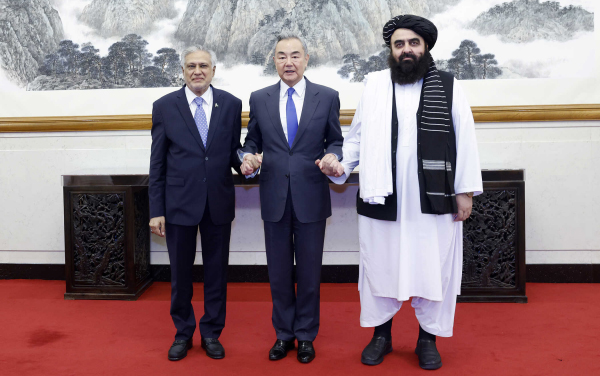
Strategic Council Online– Interview: A senior analyst on South Asian affairs stated that after a period of escalating tensions, which led to the mass expulsion of Afghan refugees from Pakistan and a downgrade in diplomatic relations between Islamabad and Kabul, the two sides have strategically resumed relations at the ambassador level. This development, which followed high-level consultations and coincided with an informal trilateral meeting of the foreign ministers of Pakistan, Afghanistan, and China in Beijing, signals a shared willingness to rebuild trust and deepen security and economic cooperation. This diplomatic shift must be understood as the result of intersecting security, economic, and geopolitical factors.

Consequences of  Recent Military Border Tension between Pakistan and Afghanistan

Consequences of Recent Military Border Tension between Pakistan and Afghanistan

Strategic Council Online—Opinion: The recent military border tensions between Pakistan and Afghanistan have characteristics that completely distinguish them from the process of increasing and gradual conflict between the two countries over the past three and a half years and even before that. Their consequences make it necessary for the neighboring countries to consult.

Delhi’s Reasons for Rejecting Request on India-Pakistan Reconciliation

Delhi’s Reasons for Rejecting Request on India-Pakistan Reconciliation

Strategic Council Online – Interview: A former Iranian diplomat said that currently Indians have a superior position and the upper hand against Pakistan and in response to Islamabad request for reconciliation, set conditions and terms. He added: Due to internal problems, now the relations with India and the issue of Kashmir is out of Pakistan’s priority and their main problem is the terrorist and extremist groups that threaten the Islamabad government in Pakistan. The government of Pakistan is interested in creating peace on the Kashmir front so that it can better deal with its internal problems.

Islamabad’s worried about sectarian interventions in Pakistan

Islamabad’s worried about sectarian interventions in Pakistan

Strategic Council Online—Interview: An expert of the issues of the subcontinent says Pakistani officials are worried about acts against their national security by foreign countries as tensions rise between India and Pakistan in the eastern borders of India.

أحدث الوظائف

Increasing criticism of the extensive Zionist lobby network

SCFR Online – Opinion: An examination of the mechanisms of the Israeli regime’s influence in the United States depicts a complex picture of shared interests, strategic dependencies, and the limitations of this relationship.

Realities of the Tripartite Makkah Pact

SCFR Online – Interview: The signing of the Makkah agreement between Saudi Arabia, Pakistan, and Turkey has raised questions about the future of the region’s security structure and the position of these countries in West Asian equations. Can this agreement become a genuine collective defense mechanism, or does it have more of a political and deterrent function than creating new military capacity?

Strategic Implications of the Reduction of US Weapons Stockpiles

SCFR Online – Opinion: The continuation of the US war against Iran, in addition to increasing operational costs, has called into question the actual capacity of the American arsenal to simultaneously fulfill security commitments on multiple fronts; an issue that affects deterrence, defense production capacity, and Washington’s resource prioritization.

The Formation of a New Order in Relations Between Powers

SCFR Online – Opinion: The Russia-Ukraine war and the war of the United States and the Israeli regime against Iran have been formed with different objectives and actors, but field and political developments indicate that they are not entirely separate from one another.

An Analysis of the Makkah Defense Pact

SCFR Online – Opinion: On Friday, August 7, the heads of state of three countries – Saudi Arabia, Turkey, and Pakistan – signed a text under the title “Makkah Joint Defense Agreement.”

Dimensions and challenges of the initiative to revive the Hejaz Railway

Strategic Council Online – Note: The initiative to revive the Hejaz Railway, beyond being a transportation project, constitutes an attempt to redefine geopolitics, the economy, and Turkey’s regional position; however, its realization appears to face significant financial, security, and institutional challenges.

Loading

Tahrik Taliban Pakistan

An Analysis of the Resumption of Diplomatic Relations Between Pakistan and Afghanistan

An Analysis of the Resumption of Diplomatic Relations Between Pakistan and Afghanistan

Strategic Council Online– Interview: A senior analyst on South Asian affairs stated that after a period of escalating tensions, which led to the mass expulsion of Afghan refugees from Pakistan and a downgrade in diplomatic relations between Islamabad and Kabul, the two sides have strategically resumed relations at the ambassador level. This development, which followed high-level consultations and coincided with an informal trilateral meeting of the foreign ministers of Pakistan, Afghanistan, and China in Beijing, signals a shared willingness to rebuild trust and deepen security and economic cooperation. This diplomatic shift must be understood as the result of intersecting security, economic, and geopolitical factors.

Consequences of  Recent Military Border Tension between Pakistan and Afghanistan

Consequences of Recent Military Border Tension between Pakistan and Afghanistan

Strategic Council Online—Opinion: The recent military border tensions between Pakistan and Afghanistan have characteristics that completely distinguish them from the process of increasing and gradual conflict between the two countries over the past three and a half years and even before that. Their consequences make it necessary for the neighboring countries to consult.

Delhi’s Reasons for Rejecting Request on India-Pakistan Reconciliation

Delhi’s Reasons for Rejecting Request on India-Pakistan Reconciliation

Strategic Council Online – Interview: A former Iranian diplomat said that currently Indians have a superior position and the upper hand against Pakistan and in response to Islamabad request for reconciliation, set conditions and terms. He added: Due to internal problems, now the relations with India and the issue of Kashmir is out of Pakistan’s priority and their main problem is the terrorist and extremist groups that threaten the Islamabad government in Pakistan. The government of Pakistan is interested in creating peace on the Kashmir front so that it can better deal with its internal problems.

Islamabad’s worried about sectarian interventions in Pakistan

Islamabad’s worried about sectarian interventions in Pakistan

Strategic Council Online—Interview: An expert of the issues of the subcontinent says Pakistani officials are worried about acts against their national security by foreign countries as tensions rise between India and Pakistan in the eastern borders of India.

Tahrik Taliban Pakistan

An Analysis of the Resumption of Diplomatic Relations Between Pakistan and Afghanistan

An Analysis of the Resumption of Diplomatic Relations Between Pakistan and Afghanistan

Strategic Council Online– Interview: A senior analyst on South Asian affairs stated that after a period of escalating tensions, which led to the mass expulsion of Afghan refugees from Pakistan and a downgrade in diplomatic relations between Islamabad and Kabul, the two sides have strategically resumed relations at the ambassador level. This development, which followed high-level consultations and coincided with an informal trilateral meeting of the foreign ministers of Pakistan, Afghanistan, and China in Beijing, signals a shared willingness to rebuild trust and deepen security and economic cooperation. This diplomatic shift must be understood as the result of intersecting security, economic, and geopolitical factors.

Consequences of  Recent Military Border Tension between Pakistan and Afghanistan

Consequences of Recent Military Border Tension between Pakistan and Afghanistan

Strategic Council Online—Opinion: The recent military border tensions between Pakistan and Afghanistan have characteristics that completely distinguish them from the process of increasing and gradual conflict between the two countries over the past three and a half years and even before that. Their consequences make it necessary for the neighboring countries to consult.

Delhi’s Reasons for Rejecting Request on India-Pakistan Reconciliation

Delhi’s Reasons for Rejecting Request on India-Pakistan Reconciliation

Strategic Council Online – Interview: A former Iranian diplomat said that currently Indians have a superior position and the upper hand against Pakistan and in response to Islamabad request for reconciliation, set conditions and terms. He added: Due to internal problems, now the relations with India and the issue of Kashmir is out of Pakistan’s priority and their main problem is the terrorist and extremist groups that threaten the Islamabad government in Pakistan. The government of Pakistan is interested in creating peace on the Kashmir front so that it can better deal with its internal problems.

Islamabad’s worried about sectarian interventions in Pakistan

Islamabad’s worried about sectarian interventions in Pakistan

Strategic Council Online—Interview: An expert of the issues of the subcontinent says Pakistani officials are worried about acts against their national security by foreign countries as tensions rise between India and Pakistan in the eastern borders of India.

LATEST CONTENT

Increasing criticism of the extensive Zionist lobby network

SCFR Online – Opinion: An examination of the mechanisms of the Israeli regime’s influence in the United States depicts a complex picture of shared interests, strategic dependencies, and the limitations of this relationship.

Realities of the Tripartite Makkah Pact

SCFR Online – Interview: The signing of the Makkah agreement between Saudi Arabia, Pakistan, and Turkey has raised questions about the future of the region’s security structure and the position of these countries in West Asian equations. Can this agreement become a genuine collective defense mechanism, or does it have more of a political and deterrent function than creating new military capacity?

Strategic Implications of the Reduction of US Weapons Stockpiles

SCFR Online – Opinion: The continuation of the US war against Iran, in addition to increasing operational costs, has called into question the actual capacity of the American arsenal to simultaneously fulfill security commitments on multiple fronts; an issue that affects deterrence, defense production capacity, and Washington’s resource prioritization.

The Formation of a New Order in Relations Between Powers

SCFR Online – Opinion: The Russia-Ukraine war and the war of the United States and the Israeli regime against Iran have been formed with different objectives and actors, but field and political developments indicate that they are not entirely separate from one another.

An Analysis of the Makkah Defense Pact

SCFR Online – Opinion: On Friday, August 7, the heads of state of three countries – Saudi Arabia, Turkey, and Pakistan – signed a text under the title “Makkah Joint Defense Agreement.”

Dimensions and challenges of the initiative to revive the Hejaz Railway

Strategic Council Online – Note: The initiative to revive the Hejaz Railway, beyond being a transportation project, constitutes an attempt to redefine geopolitics, the economy, and Turkey’s regional position; however, its realization appears to face significant financial, security, and institutional challenges.

Loading

Tahrik Taliban Pakistan

An Analysis of the Resumption of Diplomatic Relations Between Pakistan and Afghanistan

An Analysis of the Resumption of Diplomatic Relations Between Pakistan and Afghanistan

Strategic Council Online– Interview: A senior analyst on South Asian affairs stated that after a period of escalating tensions, which led to the mass expulsion of Afghan refugees from Pakistan and a downgrade in diplomatic relations between Islamabad and Kabul, the two sides have strategically resumed relations at the ambassador level. This development, which followed high-level consultations and coincided with an informal trilateral meeting of the foreign ministers of Pakistan, Afghanistan, and China in Beijing, signals a shared willingness to rebuild trust and deepen security and economic cooperation. This diplomatic shift must be understood as the result of intersecting security, economic, and geopolitical factors.

Consequences of  Recent Military Border Tension between Pakistan and Afghanistan

Consequences of Recent Military Border Tension between Pakistan and Afghanistan

Strategic Council Online—Opinion: The recent military border tensions between Pakistan and Afghanistan have characteristics that completely distinguish them from the process of increasing and gradual conflict between the two countries over the past three and a half years and even before that. Their consequences make it necessary for the neighboring countries to consult.

Delhi’s Reasons for Rejecting Request on India-Pakistan Reconciliation

Delhi’s Reasons for Rejecting Request on India-Pakistan Reconciliation

Strategic Council Online – Interview: A former Iranian diplomat said that currently Indians have a superior position and the upper hand against Pakistan and in response to Islamabad request for reconciliation, set conditions and terms. He added: Due to internal problems, now the relations with India and the issue of Kashmir is out of Pakistan’s priority and their main problem is the terrorist and extremist groups that threaten the Islamabad government in Pakistan. The government of Pakistan is interested in creating peace on the Kashmir front so that it can better deal with its internal problems.

Islamabad’s worried about sectarian interventions in Pakistan

Islamabad’s worried about sectarian interventions in Pakistan

Strategic Council Online—Interview: An expert of the issues of the subcontinent says Pakistani officials are worried about acts against their national security by foreign countries as tensions rise between India and Pakistan in the eastern borders of India.

ÚLTIMAS PUBLICACIONES

Increasing criticism of the extensive Zionist lobby network

SCFR Online – Opinion: An examination of the mechanisms of the Israeli regime’s influence in the United States depicts a complex picture of shared interests, strategic dependencies, and the limitations of this relationship.

Realities of the Tripartite Makkah Pact

SCFR Online – Interview: The signing of the Makkah agreement between Saudi Arabia, Pakistan, and Turkey has raised questions about the future of the region’s security structure and the position of these countries in West Asian equations. Can this agreement become a genuine collective defense mechanism, or does it have more of a political and deterrent function than creating new military capacity?

Strategic Implications of the Reduction of US Weapons Stockpiles

SCFR Online – Opinion: The continuation of the US war against Iran, in addition to increasing operational costs, has called into question the actual capacity of the American arsenal to simultaneously fulfill security commitments on multiple fronts; an issue that affects deterrence, defense production capacity, and Washington’s resource prioritization.

The Formation of a New Order in Relations Between Powers

SCFR Online – Opinion: The Russia-Ukraine war and the war of the United States and the Israeli regime against Iran have been formed with different objectives and actors, but field and political developments indicate that they are not entirely separate from one another.

An Analysis of the Makkah Defense Pact

SCFR Online – Opinion: On Friday, August 7, the heads of state of three countries – Saudi Arabia, Turkey, and Pakistan – signed a text under the title “Makkah Joint Defense Agreement.”

Dimensions and challenges of the initiative to revive the Hejaz Railway

Strategic Council Online – Note: The initiative to revive the Hejaz Railway, beyond being a transportation project, constitutes an attempt to redefine geopolitics, the economy, and Turkey’s regional position; however, its realization appears to face significant financial, security, and institutional challenges.

Loading

Tahrik Taliban Pakistan

An Analysis of the Resumption of Diplomatic Relations Between Pakistan and Afghanistan

An Analysis of the Resumption of Diplomatic Relations Between Pakistan and Afghanistan

Strategic Council Online– Interview: A senior analyst on South Asian affairs stated that after a period of escalating tensions, which led to the mass expulsion of Afghan refugees from Pakistan and a downgrade in diplomatic relations between Islamabad and Kabul, the two sides have strategically resumed relations at the ambassador level. This development, which followed high-level consultations and coincided with an informal trilateral meeting of the foreign ministers of Pakistan, Afghanistan, and China in Beijing, signals a shared willingness to rebuild trust and deepen security and economic cooperation. This diplomatic shift must be understood as the result of intersecting security, economic, and geopolitical factors.

Consequences of  Recent Military Border Tension between Pakistan and Afghanistan

Consequences of Recent Military Border Tension between Pakistan and Afghanistan

Strategic Council Online—Opinion: The recent military border tensions between Pakistan and Afghanistan have characteristics that completely distinguish them from the process of increasing and gradual conflict between the two countries over the past three and a half years and even before that. Their consequences make it necessary for the neighboring countries to consult.

Delhi’s Reasons for Rejecting Request on India-Pakistan Reconciliation

Delhi’s Reasons for Rejecting Request on India-Pakistan Reconciliation

Strategic Council Online – Interview: A former Iranian diplomat said that currently Indians have a superior position and the upper hand against Pakistan and in response to Islamabad request for reconciliation, set conditions and terms. He added: Due to internal problems, now the relations with India and the issue of Kashmir is out of Pakistan’s priority and their main problem is the terrorist and extremist groups that threaten the Islamabad government in Pakistan. The government of Pakistan is interested in creating peace on the Kashmir front so that it can better deal with its internal problems.

Islamabad’s worried about sectarian interventions in Pakistan

Islamabad’s worried about sectarian interventions in Pakistan

Strategic Council Online—Interview: An expert of the issues of the subcontinent says Pakistani officials are worried about acts against their national security by foreign countries as tensions rise between India and Pakistan in the eastern borders of India.

ÚLTIMAS PUBLICACIONES

Increasing criticism of the extensive Zionist lobby network

SCFR Online – Opinion: An examination of the mechanisms of the Israeli regime’s influence in the United States depicts a complex picture of shared interests, strategic dependencies, and the limitations of this relationship.

Realities of the Tripartite Makkah Pact

SCFR Online – Interview: The signing of the Makkah agreement between Saudi Arabia, Pakistan, and Turkey has raised questions about the future of the region’s security structure and the position of these countries in West Asian equations. Can this agreement become a genuine collective defense mechanism, or does it have more of a political and deterrent function than creating new military capacity?

Strategic Implications of the Reduction of US Weapons Stockpiles

SCFR Online – Opinion: The continuation of the US war against Iran, in addition to increasing operational costs, has called into question the actual capacity of the American arsenal to simultaneously fulfill security commitments on multiple fronts; an issue that affects deterrence, defense production capacity, and Washington’s resource prioritization.

The Formation of a New Order in Relations Between Powers

SCFR Online – Opinion: The Russia-Ukraine war and the war of the United States and the Israeli regime against Iran have been formed with different objectives and actors, but field and political developments indicate that they are not entirely separate from one another.

An Analysis of the Makkah Defense Pact

SCFR Online – Opinion: On Friday, August 7, the heads of state of three countries – Saudi Arabia, Turkey, and Pakistan – signed a text under the title “Makkah Joint Defense Agreement.”

Dimensions and challenges of the initiative to revive the Hejaz Railway

Strategic Council Online – Note: The initiative to revive the Hejaz Railway, beyond being a transportation project, constitutes an attempt to redefine geopolitics, the economy, and Turkey’s regional position; however, its realization appears to face significant financial, security, and institutional challenges.

Loading

Tahrik Taliban Pakistan

An Analysis of the Resumption of Diplomatic Relations Between Pakistan and Afghanistan

An Analysis of the Resumption of Diplomatic Relations Between Pakistan and Afghanistan

Strategic Council Online– Interview: A senior analyst on South Asian affairs stated that after a period of escalating tensions, which led to the mass expulsion of Afghan refugees from Pakistan and a downgrade in diplomatic relations between Islamabad and Kabul, the two sides have strategically resumed relations at the ambassador level. This development, which followed high-level consultations and coincided with an informal trilateral meeting of the foreign ministers of Pakistan, Afghanistan, and China in Beijing, signals a shared willingness to rebuild trust and deepen security and economic cooperation. This diplomatic shift must be understood as the result of intersecting security, economic, and geopolitical factors.

Consequences of  Recent Military Border Tension between Pakistan and Afghanistan

Consequences of Recent Military Border Tension between Pakistan and Afghanistan

Strategic Council Online—Opinion: The recent military border tensions between Pakistan and Afghanistan have characteristics that completely distinguish them from the process of increasing and gradual conflict between the two countries over the past three and a half years and even before that. Their consequences make it necessary for the neighboring countries to consult.

Delhi’s Reasons for Rejecting Request on India-Pakistan Reconciliation

Delhi’s Reasons for Rejecting Request on India-Pakistan Reconciliation

Strategic Council Online – Interview: A former Iranian diplomat said that currently Indians have a superior position and the upper hand against Pakistan and in response to Islamabad request for reconciliation, set conditions and terms. He added: Due to internal problems, now the relations with India and the issue of Kashmir is out of Pakistan’s priority and their main problem is the terrorist and extremist groups that threaten the Islamabad government in Pakistan. The government of Pakistan is interested in creating peace on the Kashmir front so that it can better deal with its internal problems.

Islamabad’s worried about sectarian interventions in Pakistan

Islamabad’s worried about sectarian interventions in Pakistan

Strategic Council Online—Interview: An expert of the issues of the subcontinent says Pakistani officials are worried about acts against their national security by foreign countries as tensions rise between India and Pakistan in the eastern borders of India.

ÚLTIMAS PUBLICACIONES

Increasing criticism of the extensive Zionist lobby network

SCFR Online – Opinion: An examination of the mechanisms of the Israeli regime’s influence in the United States depicts a complex picture of shared interests, strategic dependencies, and the limitations of this relationship.

Realities of the Tripartite Makkah Pact

SCFR Online – Interview: The signing of the Makkah agreement between Saudi Arabia, Pakistan, and Turkey has raised questions about the future of the region’s security structure and the position of these countries in West Asian equations. Can this agreement become a genuine collective defense mechanism, or does it have more of a political and deterrent function than creating new military capacity?

Strategic Implications of the Reduction of US Weapons Stockpiles

SCFR Online – Opinion: The continuation of the US war against Iran, in addition to increasing operational costs, has called into question the actual capacity of the American arsenal to simultaneously fulfill security commitments on multiple fronts; an issue that affects deterrence, defense production capacity, and Washington’s resource prioritization.

The Formation of a New Order in Relations Between Powers

SCFR Online – Opinion: The Russia-Ukraine war and the war of the United States and the Israeli regime against Iran have been formed with different objectives and actors, but field and political developments indicate that they are not entirely separate from one another.

An Analysis of the Makkah Defense Pact

SCFR Online – Opinion: On Friday, August 7, the heads of state of three countries – Saudi Arabia, Turkey, and Pakistan – signed a text under the title “Makkah Joint Defense Agreement.”

Dimensions and challenges of the initiative to revive the Hejaz Railway

Strategic Council Online – Note: The initiative to revive the Hejaz Railway, beyond being a transportation project, constitutes an attempt to redefine geopolitics, the economy, and Turkey’s regional position; however, its realization appears to face significant financial, security, and institutional challenges.

Loading

Tahrik Taliban Pakistan

An Analysis of the Resumption of Diplomatic Relations Between Pakistan and Afghanistan

An Analysis of the Resumption of Diplomatic Relations Between Pakistan and Afghanistan

Strategic Council Online– Interview: A senior analyst on South Asian affairs stated that after a period of escalating tensions, which led to the mass expulsion of Afghan refugees from Pakistan and a downgrade in diplomatic relations between Islamabad and Kabul, the two sides have strategically resumed relations at the ambassador level. This development, which followed high-level consultations and coincided with an informal trilateral meeting of the foreign ministers of Pakistan, Afghanistan, and China in Beijing, signals a shared willingness to rebuild trust and deepen security and economic cooperation. This diplomatic shift must be understood as the result of intersecting security, economic, and geopolitical factors.

Consequences of  Recent Military Border Tension between Pakistan and Afghanistan

Consequences of Recent Military Border Tension between Pakistan and Afghanistan

Strategic Council Online—Opinion: The recent military border tensions between Pakistan and Afghanistan have characteristics that completely distinguish them from the process of increasing and gradual conflict between the two countries over the past three and a half years and even before that. Their consequences make it necessary for the neighboring countries to consult.

Delhi’s Reasons for Rejecting Request on India-Pakistan Reconciliation

Delhi’s Reasons for Rejecting Request on India-Pakistan Reconciliation

Strategic Council Online – Interview: A former Iranian diplomat said that currently Indians have a superior position and the upper hand against Pakistan and in response to Islamabad request for reconciliation, set conditions and terms. He added: Due to internal problems, now the relations with India and the issue of Kashmir is out of Pakistan’s priority and their main problem is the terrorist and extremist groups that threaten the Islamabad government in Pakistan. The government of Pakistan is interested in creating peace on the Kashmir front so that it can better deal with its internal problems.

Islamabad’s worried about sectarian interventions in Pakistan

Islamabad’s worried about sectarian interventions in Pakistan

Strategic Council Online—Interview: An expert of the issues of the subcontinent says Pakistani officials are worried about acts against their national security by foreign countries as tensions rise between India and Pakistan in the eastern borders of India.

ÚLTIMAS PUBLICACIONES

Increasing criticism of the extensive Zionist lobby network

SCFR Online – Opinion: An examination of the mechanisms of the Israeli regime’s influence in the United States depicts a complex picture of shared interests, strategic dependencies, and the limitations of this relationship.

Realities of the Tripartite Makkah Pact

SCFR Online – Interview: The signing of the Makkah agreement between Saudi Arabia, Pakistan, and Turkey has raised questions about the future of the region’s security structure and the position of these countries in West Asian equations. Can this agreement become a genuine collective defense mechanism, or does it have more of a political and deterrent function than creating new military capacity?

Strategic Implications of the Reduction of US Weapons Stockpiles

SCFR Online – Opinion: The continuation of the US war against Iran, in addition to increasing operational costs, has called into question the actual capacity of the American arsenal to simultaneously fulfill security commitments on multiple fronts; an issue that affects deterrence, defense production capacity, and Washington’s resource prioritization.

The Formation of a New Order in Relations Between Powers

SCFR Online – Opinion: The Russia-Ukraine war and the war of the United States and the Israeli regime against Iran have been formed with different objectives and actors, but field and political developments indicate that they are not entirely separate from one another.

An Analysis of the Makkah Defense Pact

SCFR Online – Opinion: On Friday, August 7, the heads of state of three countries – Saudi Arabia, Turkey, and Pakistan – signed a text under the title “Makkah Joint Defense Agreement.”

Dimensions and challenges of the initiative to revive the Hejaz Railway

Strategic Council Online – Note: The initiative to revive the Hejaz Railway, beyond being a transportation project, constitutes an attempt to redefine geopolitics, the economy, and Turkey’s regional position; however, its realization appears to face significant financial, security, and institutional challenges.

Loading