Islamabad’s worried about sectarian interventions in Pakistan

2020/11/28 | interview, Politics, top news

Strategic Council Online—Interview: An expert of the issues of the subcontinent says Pakistani officials are worried about acts against their national security by foreign countries as tensions rise between India and Pakistan in the eastern borders of India.

Pirmohammad Mollazehi said Pakistani authorities believe that foreign spy services have invested heavily on relocating Daesh elements from Afghanistan to Pakistan and creating instability across the country.

He told the Strategic Council on Foreign Relations that tens of millions of dollars are being spent by foreign intelligence services to relocate terrorists from Afghanistan to Pakistan to cause havoc.

“The foreign minister and army spokesperson of Pakistan have expressed concern over such relocations and probable instability in Pakistan by Daesh elements as the Daesh in Afghanistan is different from the Daesh in the Middle East. The Daesh in Afghanistan is composed of several ethnic groups who have gained a lot of experience in Iraq and Syria fighting alongside Arab forces.”

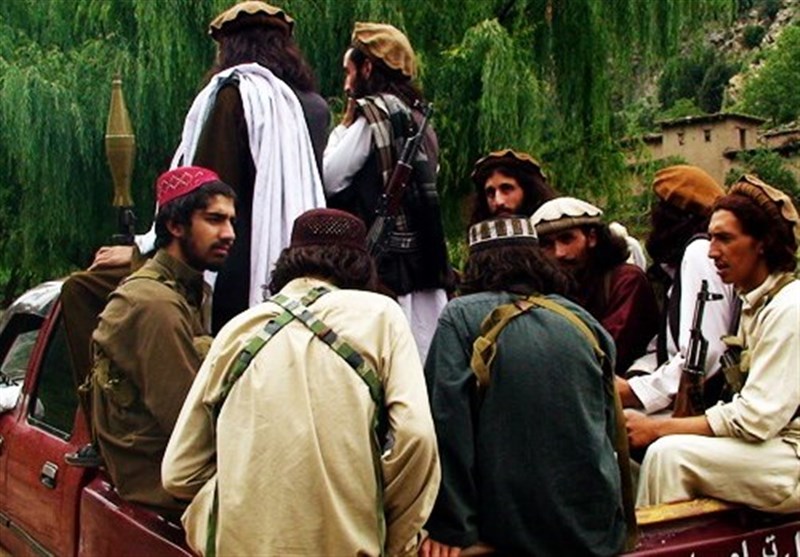
He said the Pakistani officials are also worried about movements and activities of Tahrik Taliban Pakistan—a Pashtun group related to Daesh acting against the federal government of Pakistan.

He added that Tahrik Taliban Pakistan has succeeded in attracting the Lashkar-e-Taiba and Lashkar-e-Jhangvi Sipah-e-Sahaba Pakistan, saying Haraka al-Ansar of Bangladesh and the Indian Mujahideen have also joined Daesh as concerns are high for Daesh and Al-Qaeda to get linked and form a united command.

Referring to the accusations exchanged between Pakistan and Afghanistan on the presence and organization of Daesh, Mollazehi said Daesh has recruited almost all Sunni radical forces and organized them in Afghanistan with the aim of establishing the Oriental Khalifate or the Greater Khorasan Khalifate.

“In some cases, accusations levelled by Pakistan and Afghanistan against each other on Daesh are false and for propaganda purposes. However, what is important here is that Daesh is seeking to establish a Khalifate and has now mobilized its forces in Afghanistan.”

He said Daesh poses a great danger to Pakistan as they are considered Jihadi groups capable of recruiting terrorists.

“New tensions in the eastern border of Pakistan with India could be assessed from this viewpoint. Such tensions are in fact reciprocal and take place in reaction to Pakistan’s actions in Indian Kashmir.”

Mollazehi said Pakistan was supporting for a long period of time some radical Islamist groups in Kashmir and Afghanistan; and under the present conditions, Pakistan is worried that the National Security Agency of India, as a reciprocal measure against Pakistan, could be cooperating with the Afghans to force Pakistan to stop its activities in Kashmir and Afghanistan.

Mollazehi believes that Pakistani authorities are seriously concerned about two districts: the Pashtun-residing areas in Khyber Pakhtunkhwa and other tribal areas and the Eastern Baluchistan area which is controlled by Pakistan.

He pointed out that Pakistani intelligence believes Indian and Afghan secret services are united to get links to anti-Pakistani groups.

“The Pakistanis are seriously worried about it and feel threatened of it. Pakistan is not considered a united nation in national terms and has composed of four important tribes in four important states. The Punjabis are dominant as they outnumber other ethnicities and this has created a negative reaction among other groups. Among other tribes, there are also groups seeking independence and self-autonomy. ”

Mollazehi said Pakistan is vulnerable in this respect and has no other choice but to reach understanding and get along with Afghanistan and India if such concerns are real.

Stressing the necessity of creating an understanding between India and Pakistan in this respect, he said the Pashtun tribes had a meeting in Miranshah among the leaders of important armed tribes and expressed solidarity with Afghanistan, calling for the return of Pashtuns to Afghanistan.

“This is very dangerous for Pakistanis”.

Mollazehi further referred to the visit by Pakistani Prime Minister Imran Khan to Kabul, saying that he discussed issues of national security with the Afghan president and officials.

“The Pakistanis are seriously worried about such developments which pose a threat to their national security. Such tribes are armed and fighters. They even defeated the British and the Russians in historical conflicts. It seems that Pakistan has reached a point in which it has to make an important decision: either it should preserve its national unity and review its policies at the regional level, or it should risk disintegration as it remains vulnerable.”

0 Comments

Submit a Comment

Your email address will not be published. Required fields are marked *

LATEST CONTENT

Temporary China–U.S. Trade Truce in the Shadow of Fundamental Distrust

SCFR Online – Opinion: The recent visit of the President of the United States to China is significant from various aspects; because China is recognized as the world’s second-largest economic power and a growing economy. The Chinese are also advancing in various fields, including the space sector, artificial intelligence, and military industries; to the extent that in the military sector, whereas they previously lacked an aircraft carrier, they now possess their third aircraft carrier. On the other hand, the United States, as a superpower, has always regarded China as its rival and continues to view it as such today.

Iran’s Success in the Narrative Battle in Cyberspace

SCFR Online – Opinion: In the war between Iran and the United States, the main battlefield was not defined solely in the military domain; rather, the battle of narratives in cyberspace—particularly through memes—reached a decisive level.

The Global Energy Shock Situation and Future Scenarios

SCFR Online – Opinion: Only one month after the beginning of the Ramadan War, maritime traffic in the Strait of Hormuz decreased dramatically, with Bloomberg announcing a reduction of 103 vessels; Brent oil prices rose by more than 50 percent, and gasoline prices in the United States increased by 31.4 percent. Additionally, benchmark gas prices in Europe showed a 73.4 percent increase.

Al-Zaydi’s Selection as Prime Minister, The Beginning of a New Chapter in Iraq

SCFR Online – Note: After approximately five months of political deadlock and institutional confusion, Ali al-Zaydi has finally been selected as Iraq’s Prime Minister. Al-Zaydi’s selection as Prime Minister represents a positive sign of the completion of the government formation process and the beginning of a new phase in Iraqi politics and governance. The emergence of a young, technocratic figure from the third generation of politicians—in a context where the country has been administered by traditional figures for decades—revives hope that Iraq may perhaps distance itself from the repetitive cycle of crises and experience a new path of stability, efficiency, and regional convergence.

Loading

Últimas publicaciones

Temporary China–U.S. Trade Truce in the Shadow of Fundamental Distrust

SCFR Online – Opinion: The recent visit of the President of the United States to China is significant from various aspects; because China is recognized as the world’s second-largest economic power and a growing economy. The Chinese are also advancing in various fields, including the space sector, artificial intelligence, and military industries; to the extent that in the military sector, whereas they previously lacked an aircraft carrier, they now possess their third aircraft carrier. On the other hand, the United States, as a superpower, has always regarded China as its rival and continues to view it as such today.

Iran’s Success in the Narrative Battle in Cyberspace

SCFR Online – Opinion: In the war between Iran and the United States, the main battlefield was not defined solely in the military domain; rather, the battle of narratives in cyberspace—particularly through memes—reached a decisive level.

The Global Energy Shock Situation and Future Scenarios

SCFR Online – Opinion: Only one month after the beginning of the Ramadan War, maritime traffic in the Strait of Hormuz decreased dramatically, with Bloomberg announcing a reduction of 103 vessels; Brent oil prices rose by more than 50 percent, and gasoline prices in the United States increased by 31.4 percent. Additionally, benchmark gas prices in Europe showed a 73.4 percent increase.

Al-Zaydi’s Selection as Prime Minister, The Beginning of a New Chapter in Iraq

SCFR Online – Note: After approximately five months of political deadlock and institutional confusion, Ali al-Zaydi has finally been selected as Iraq’s Prime Minister. Al-Zaydi’s selection as Prime Minister represents a positive sign of the completion of the government formation process and the beginning of a new phase in Iraqi politics and governance. The emergence of a young, technocratic figure from the third generation of politicians—in a context where the country has been administered by traditional figures for decades—revives hope that Iraq may perhaps distance itself from the repetitive cycle of crises and experience a new path of stability, efficiency, and regional convergence.

Loading

DERNIER CONTENU

Temporary China–U.S. Trade Truce in the Shadow of Fundamental Distrust

SCFR Online – Opinion: The recent visit of the President of the United States to China is significant from various aspects; because China is recognized as the world’s second-largest economic power and a growing economy. The Chinese are also advancing in various fields, including the space sector, artificial intelligence, and military industries; to the extent that in the military sector, whereas they previously lacked an aircraft carrier, they now possess their third aircraft carrier. On the other hand, the United States, as a superpower, has always regarded China as its rival and continues to view it as such today.

Iran’s Success in the Narrative Battle in Cyberspace

SCFR Online – Opinion: In the war between Iran and the United States, the main battlefield was not defined solely in the military domain; rather, the battle of narratives in cyberspace—particularly through memes—reached a decisive level.

The Global Energy Shock Situation and Future Scenarios

SCFR Online – Opinion: Only one month after the beginning of the Ramadan War, maritime traffic in the Strait of Hormuz decreased dramatically, with Bloomberg announcing a reduction of 103 vessels; Brent oil prices rose by more than 50 percent, and gasoline prices in the United States increased by 31.4 percent. Additionally, benchmark gas prices in Europe showed a 73.4 percent increase.

Al-Zaydi’s Selection as Prime Minister, The Beginning of a New Chapter in Iraq

SCFR Online – Note: After approximately five months of political deadlock and institutional confusion, Ali al-Zaydi has finally been selected as Iraq’s Prime Minister. Al-Zaydi’s selection as Prime Minister represents a positive sign of the completion of the government formation process and the beginning of a new phase in Iraqi politics and governance. The emergence of a young, technocratic figure from the third generation of politicians—in a context where the country has been administered by traditional figures for decades—revives hope that Iraq may perhaps distance itself from the repetitive cycle of crises and experience a new path of stability, efficiency, and regional convergence.

Loading

DERNIER CONTENU

Temporary China–U.S. Trade Truce in the Shadow of Fundamental Distrust

SCFR Online – Opinion: The recent visit of the President of the United States to China is significant from various aspects; because China is recognized as the world’s second-largest economic power and a growing economy. The Chinese are also advancing in various fields, including the space sector, artificial intelligence, and military industries; to the extent that in the military sector, whereas they previously lacked an aircraft carrier, they now possess their third aircraft carrier. On the other hand, the United States, as a superpower, has always regarded China as its rival and continues to view it as such today.

Iran’s Success in the Narrative Battle in Cyberspace

SCFR Online – Opinion: In the war between Iran and the United States, the main battlefield was not defined solely in the military domain; rather, the battle of narratives in cyberspace—particularly through memes—reached a decisive level.

The Global Energy Shock Situation and Future Scenarios

SCFR Online – Opinion: Only one month after the beginning of the Ramadan War, maritime traffic in the Strait of Hormuz decreased dramatically, with Bloomberg announcing a reduction of 103 vessels; Brent oil prices rose by more than 50 percent, and gasoline prices in the United States increased by 31.4 percent. Additionally, benchmark gas prices in Europe showed a 73.4 percent increase.

Al-Zaydi’s Selection as Prime Minister, The Beginning of a New Chapter in Iraq

SCFR Online – Note: After approximately five months of political deadlock and institutional confusion, Ali al-Zaydi has finally been selected as Iraq’s Prime Minister. Al-Zaydi’s selection as Prime Minister represents a positive sign of the completion of the government formation process and the beginning of a new phase in Iraqi politics and governance. The emergence of a young, technocratic figure from the third generation of politicians—in a context where the country has been administered by traditional figures for decades—revives hope that Iraq may perhaps distance itself from the repetitive cycle of crises and experience a new path of stability, efficiency, and regional convergence.

Loading

DERNIER CONTENU

Temporary China–U.S. Trade Truce in the Shadow of Fundamental Distrust

SCFR Online – Opinion: The recent visit of the President of the United States to China is significant from various aspects; because China is recognized as the world’s second-largest economic power and a growing economy. The Chinese are also advancing in various fields, including the space sector, artificial intelligence, and military industries; to the extent that in the military sector, whereas they previously lacked an aircraft carrier, they now possess their third aircraft carrier. On the other hand, the United States, as a superpower, has always regarded China as its rival and continues to view it as such today.

Iran’s Success in the Narrative Battle in Cyberspace

SCFR Online – Opinion: In the war between Iran and the United States, the main battlefield was not defined solely in the military domain; rather, the battle of narratives in cyberspace—particularly through memes—reached a decisive level.

The Global Energy Shock Situation and Future Scenarios

SCFR Online – Opinion: Only one month after the beginning of the Ramadan War, maritime traffic in the Strait of Hormuz decreased dramatically, with Bloomberg announcing a reduction of 103 vessels; Brent oil prices rose by more than 50 percent, and gasoline prices in the United States increased by 31.4 percent. Additionally, benchmark gas prices in Europe showed a 73.4 percent increase.

Al-Zaydi’s Selection as Prime Minister, The Beginning of a New Chapter in Iraq

SCFR Online – Note: After approximately five months of political deadlock and institutional confusion, Ali al-Zaydi has finally been selected as Iraq’s Prime Minister. Al-Zaydi’s selection as Prime Minister represents a positive sign of the completion of the government formation process and the beginning of a new phase in Iraqi politics and governance. The emergence of a young, technocratic figure from the third generation of politicians—in a context where the country has been administered by traditional figures for decades—revives hope that Iraq may perhaps distance itself from the repetitive cycle of crises and experience a new path of stability, efficiency, and regional convergence.

Loading





