جدیدترین مطالب

Balancing in the chain of chokepoints; from sea-based deterrence to pluralistic diplomacy

Strategic Council Online – Note: Recent developments in the political geography of West Asia, from rising tensions in the Persian Gulf to missile and drone activities in the Red Sea and the recent warning by Kaja Kallas, the European Union’s foreign policy chief, regarding the threat to freedom of navigation, indicate a key pattern shift; the US-Iran war has moved beyond the scope of a regional and local confrontation and has linked two vital passageways for the global economy: the Strait of Hormuz and the Bab el-Mandeb Strait.

Indicators for Choosing Between War and Diplomacy

SCFR Online – Opinion: Foreign policy analysis is valid when it evaluates decisions based on the information and circumstances prevailing at the time they were made, not on the basis of outcomes that only become apparent after the crisis has ended.

Loading

Taiwan

Temporary China–U.S. Trade Truce in the Shadow of Fundamental Distrust

Temporary China–U.S. Trade Truce in the Shadow of Fundamental Distrust

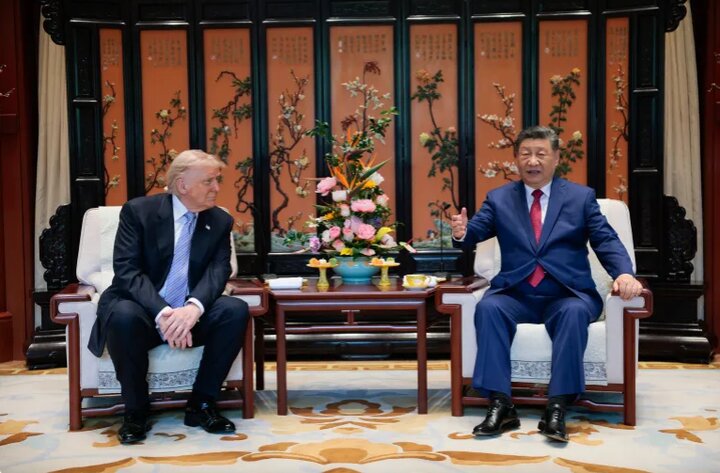
SCFR Online – Opinion: The recent visit of the President of the United States to China is significant from various aspects; because China is recognized as the world’s second-largest economic power and a growing economy. The Chinese are also advancing in various fields, including the space sector, artificial intelligence, and military industries; to the extent that in the military sector, whereas they previously lacked an aircraft carrier, they now possess their third aircraft carrier. On the other hand, the United States, as a superpower, has always regarded China as its rival and continues to view it as such today.

America’s Strategy for Creating Tension in the Asia-Pacific

America’s Strategy for Creating Tension in the Asia-Pacific

Strategic Council Online – Opinion: Relations between some countries in the Asia-Pacific region, such as China and Japan or China and Australia, which were previously relatively normal, are trending towards deterioration, and the primary reason for this is the aggressive policies of the United States of America.

The Zionist regime’s leverage against China to gain advantages

The Zionist regime’s leverage against China to gain advantages

Strategic Council Online – Opinion: The Chinese Embassy in occupied Palestine recently issued a strongly-worded statement, declaring that the Taiwan issue is a “red line that cannot be crossed.” The embassy called on the Israeli regime to correct its erroneous actions in this area.

Japan-China Tensions Over Taiwan

Japan-China Tensions Over Taiwan

Strategic Council Online – Interview: An international affairs expert said that U.S. President Donald Trump, in a phone call this week with Sanae Takaichi, asked her not to further escalate disputes with China. Earlier this month, Takaichi created a rare tension with Beijing by stating that “a potential Chinese attack on Taiwan could lead to military action by Japan,” remarks that drew a sharp reaction from China. Beijing demanded that she retract these statements, but the Japanese Prime Minister has not done so thus far, and Tokyo has only emphasized that its policy regarding Taiwan has not changed.

China’s Strategy to Counter the U.S. Effort to Escalate the Taiwan Crisis

China’s Strategy to Counter the U.S. Effort to Escalate the Taiwan Crisis

Strategic Council Online – Interview: “Any miscalculated move could lead to escalating tensions and uncontrollable crises, but Beijing’s prudence and precise strategies have so far prevented the Taiwan issue from escalating into a crisis similar to that of Ukraine,” said an East Asia analyst.

West Asia: An Arena of Strength Testing

West Asia: An Arena of Strength Testing

Online Strategic Council – Note: Developments in the West Asia region, including tensions between Iran and the Israeli regime or regional cooperation, are influenced by macro policies pursued by extra-regional powers. Of course, other equations are very influential. It must be noted that China and Russia have no desire whatsoever for America’s success in the West Asia region and, based on this, they do not support the success and operational superiority of the Israeli regime in confronting Iran. Meanwhile, the Americans are seeking to focus their forces in West Asia for now, amid the three crises of Ukraine, Taiwan, and West Asia.

The Prospect of Escalating Tensions between China and Taiwan

The Prospect of Escalating Tensions between China and Taiwan

Strategic Council Online – Interview: An expert on East Asian issues said: The recent tensions between China and Taiwan are not new. The differences between China and Taiwan are rooted in the history of this land and the Indo-Pacific equations that America and the West are trying to fuel. Nevertheless, China is trying to resolve the dispute peacefully.

Using Military Tools to Annex Taiwan to China?

Using Military Tools to Annex Taiwan to China?

Strategic Council Online -Interview: An expert on international affairs says: The circle of China’s pressures on Taiwan in the political-economic dimensions has not been completed to say that these pressures have been ineffective and China plans to enter into a military conflict with Taiwan soon.

US plans to create a new offensive capability against China

US plans to create a new offensive capability against China

Strategic Council Online—Interview: An expert on international affairs said the US plan to deploy medium-range missiles in East Asia aims to create an offensive capability against China, adding that naturally, the deployment of these missiles by the United States in countries such as Australia or possibly in Japan and South Korea can lead to China’s counter-reaction and increase the level of tensions between the two countries.

Vague Prospect of China-US Summit Agreements

Vague Prospect of China-US Summit Agreements

Strategic Council Online – Interview: A faculty member of the Institute of Strategic Studies said that it should be seen whether the Chinese will violate the agreement to re-establish military relations with the United States due to Biden’s calling Xi Jinping a dictator, added: If once again they conclude that establishment of relations between the military forces of the two countries should be delayed, it shows that the recent meeting between the two presidents has not been successful.

أحدث الوظائف

Balancing in the chain of chokepoints; from sea-based deterrence to pluralistic diplomacy

Strategic Council Online – Note: Recent developments in the political geography of West Asia, from rising tensions in the Persian Gulf to missile and drone activities in the Red Sea and the recent warning by Kaja Kallas, the European Union’s foreign policy chief, regarding the threat to freedom of navigation, indicate a key pattern shift; the US-Iran war has moved beyond the scope of a regional and local confrontation and has linked two vital passageways for the global economy: the Strait of Hormuz and the Bab el-Mandeb Strait.

Indicators for Choosing Between War and Diplomacy

SCFR Online – Opinion: Foreign policy analysis is valid when it evaluates decisions based on the information and circumstances prevailing at the time they were made, not on the basis of outcomes that only become apparent after the crisis has ended.

Loading

Taiwan

Temporary China–U.S. Trade Truce in the Shadow of Fundamental Distrust

Temporary China–U.S. Trade Truce in the Shadow of Fundamental Distrust

SCFR Online – Opinion: The recent visit of the President of the United States to China is significant from various aspects; because China is recognized as the world’s second-largest economic power and a growing economy. The Chinese are also advancing in various fields, including the space sector, artificial intelligence, and military industries; to the extent that in the military sector, whereas they previously lacked an aircraft carrier, they now possess their third aircraft carrier. On the other hand, the United States, as a superpower, has always regarded China as its rival and continues to view it as such today.

America’s Strategy for Creating Tension in the Asia-Pacific

America’s Strategy for Creating Tension in the Asia-Pacific

Strategic Council Online – Opinion: Relations between some countries in the Asia-Pacific region, such as China and Japan or China and Australia, which were previously relatively normal, are trending towards deterioration, and the primary reason for this is the aggressive policies of the United States of America.

The Zionist regime’s leverage against China to gain advantages

The Zionist regime’s leverage against China to gain advantages

Strategic Council Online – Opinion: The Chinese Embassy in occupied Palestine recently issued a strongly-worded statement, declaring that the Taiwan issue is a “red line that cannot be crossed.” The embassy called on the Israeli regime to correct its erroneous actions in this area.

Japan-China Tensions Over Taiwan

Japan-China Tensions Over Taiwan

Strategic Council Online – Interview: An international affairs expert said that U.S. President Donald Trump, in a phone call this week with Sanae Takaichi, asked her not to further escalate disputes with China. Earlier this month, Takaichi created a rare tension with Beijing by stating that “a potential Chinese attack on Taiwan could lead to military action by Japan,” remarks that drew a sharp reaction from China. Beijing demanded that she retract these statements, but the Japanese Prime Minister has not done so thus far, and Tokyo has only emphasized that its policy regarding Taiwan has not changed.

China’s Strategy to Counter the U.S. Effort to Escalate the Taiwan Crisis

China’s Strategy to Counter the U.S. Effort to Escalate the Taiwan Crisis

Strategic Council Online – Interview: “Any miscalculated move could lead to escalating tensions and uncontrollable crises, but Beijing’s prudence and precise strategies have so far prevented the Taiwan issue from escalating into a crisis similar to that of Ukraine,” said an East Asia analyst.

West Asia: An Arena of Strength Testing

West Asia: An Arena of Strength Testing

Online Strategic Council – Note: Developments in the West Asia region, including tensions between Iran and the Israeli regime or regional cooperation, are influenced by macro policies pursued by extra-regional powers. Of course, other equations are very influential. It must be noted that China and Russia have no desire whatsoever for America’s success in the West Asia region and, based on this, they do not support the success and operational superiority of the Israeli regime in confronting Iran. Meanwhile, the Americans are seeking to focus their forces in West Asia for now, amid the three crises of Ukraine, Taiwan, and West Asia.

The Prospect of Escalating Tensions between China and Taiwan

The Prospect of Escalating Tensions between China and Taiwan

Strategic Council Online – Interview: An expert on East Asian issues said: The recent tensions between China and Taiwan are not new. The differences between China and Taiwan are rooted in the history of this land and the Indo-Pacific equations that America and the West are trying to fuel. Nevertheless, China is trying to resolve the dispute peacefully.

Using Military Tools to Annex Taiwan to China?

Using Military Tools to Annex Taiwan to China?

Strategic Council Online -Interview: An expert on international affairs says: The circle of China’s pressures on Taiwan in the political-economic dimensions has not been completed to say that these pressures have been ineffective and China plans to enter into a military conflict with Taiwan soon.

US plans to create a new offensive capability against China

US plans to create a new offensive capability against China

Strategic Council Online—Interview: An expert on international affairs said the US plan to deploy medium-range missiles in East Asia aims to create an offensive capability against China, adding that naturally, the deployment of these missiles by the United States in countries such as Australia or possibly in Japan and South Korea can lead to China’s counter-reaction and increase the level of tensions between the two countries.

Vague Prospect of China-US Summit Agreements

Vague Prospect of China-US Summit Agreements

Strategic Council Online – Interview: A faculty member of the Institute of Strategic Studies said that it should be seen whether the Chinese will violate the agreement to re-establish military relations with the United States due to Biden’s calling Xi Jinping a dictator, added: If once again they conclude that establishment of relations between the military forces of the two countries should be delayed, it shows that the recent meeting between the two presidents has not been successful.

Taiwan

Temporary China–U.S. Trade Truce in the Shadow of Fundamental Distrust

Temporary China–U.S. Trade Truce in the Shadow of Fundamental Distrust

SCFR Online – Opinion: The recent visit of the President of the United States to China is significant from various aspects; because China is recognized as the world’s second-largest economic power and a growing economy. The Chinese are also advancing in various fields, including the space sector, artificial intelligence, and military industries; to the extent that in the military sector, whereas they previously lacked an aircraft carrier, they now possess their third aircraft carrier. On the other hand, the United States, as a superpower, has always regarded China as its rival and continues to view it as such today.

America’s Strategy for Creating Tension in the Asia-Pacific

America’s Strategy for Creating Tension in the Asia-Pacific

Strategic Council Online – Opinion: Relations between some countries in the Asia-Pacific region, such as China and Japan or China and Australia, which were previously relatively normal, are trending towards deterioration, and the primary reason for this is the aggressive policies of the United States of America.

The Zionist regime’s leverage against China to gain advantages

The Zionist regime’s leverage against China to gain advantages

Strategic Council Online – Opinion: The Chinese Embassy in occupied Palestine recently issued a strongly-worded statement, declaring that the Taiwan issue is a “red line that cannot be crossed.” The embassy called on the Israeli regime to correct its erroneous actions in this area.

Japan-China Tensions Over Taiwan

Japan-China Tensions Over Taiwan

Strategic Council Online – Interview: An international affairs expert said that U.S. President Donald Trump, in a phone call this week with Sanae Takaichi, asked her not to further escalate disputes with China. Earlier this month, Takaichi created a rare tension with Beijing by stating that “a potential Chinese attack on Taiwan could lead to military action by Japan,” remarks that drew a sharp reaction from China. Beijing demanded that she retract these statements, but the Japanese Prime Minister has not done so thus far, and Tokyo has only emphasized that its policy regarding Taiwan has not changed.

China’s Strategy to Counter the U.S. Effort to Escalate the Taiwan Crisis

China’s Strategy to Counter the U.S. Effort to Escalate the Taiwan Crisis

Strategic Council Online – Interview: “Any miscalculated move could lead to escalating tensions and uncontrollable crises, but Beijing’s prudence and precise strategies have so far prevented the Taiwan issue from escalating into a crisis similar to that of Ukraine,” said an East Asia analyst.

West Asia: An Arena of Strength Testing

West Asia: An Arena of Strength Testing

Online Strategic Council – Note: Developments in the West Asia region, including tensions between Iran and the Israeli regime or regional cooperation, are influenced by macro policies pursued by extra-regional powers. Of course, other equations are very influential. It must be noted that China and Russia have no desire whatsoever for America’s success in the West Asia region and, based on this, they do not support the success and operational superiority of the Israeli regime in confronting Iran. Meanwhile, the Americans are seeking to focus their forces in West Asia for now, amid the three crises of Ukraine, Taiwan, and West Asia.

The Prospect of Escalating Tensions between China and Taiwan

The Prospect of Escalating Tensions between China and Taiwan

Strategic Council Online – Interview: An expert on East Asian issues said: The recent tensions between China and Taiwan are not new. The differences between China and Taiwan are rooted in the history of this land and the Indo-Pacific equations that America and the West are trying to fuel. Nevertheless, China is trying to resolve the dispute peacefully.

Using Military Tools to Annex Taiwan to China?

Using Military Tools to Annex Taiwan to China?

Strategic Council Online -Interview: An expert on international affairs says: The circle of China’s pressures on Taiwan in the political-economic dimensions has not been completed to say that these pressures have been ineffective and China plans to enter into a military conflict with Taiwan soon.

US plans to create a new offensive capability against China

US plans to create a new offensive capability against China

Strategic Council Online—Interview: An expert on international affairs said the US plan to deploy medium-range missiles in East Asia aims to create an offensive capability against China, adding that naturally, the deployment of these missiles by the United States in countries such as Australia or possibly in Japan and South Korea can lead to China’s counter-reaction and increase the level of tensions between the two countries.

Vague Prospect of China-US Summit Agreements

Vague Prospect of China-US Summit Agreements

Strategic Council Online – Interview: A faculty member of the Institute of Strategic Studies said that it should be seen whether the Chinese will violate the agreement to re-establish military relations with the United States due to Biden’s calling Xi Jinping a dictator, added: If once again they conclude that establishment of relations between the military forces of the two countries should be delayed, it shows that the recent meeting between the two presidents has not been successful.

LATEST CONTENT

Balancing in the chain of chokepoints; from sea-based deterrence to pluralistic diplomacy

Strategic Council Online – Note: Recent developments in the political geography of West Asia, from rising tensions in the Persian Gulf to missile and drone activities in the Red Sea and the recent warning by Kaja Kallas, the European Union’s foreign policy chief, regarding the threat to freedom of navigation, indicate a key pattern shift; the US-Iran war has moved beyond the scope of a regional and local confrontation and has linked two vital passageways for the global economy: the Strait of Hormuz and the Bab el-Mandeb Strait.

Indicators for Choosing Between War and Diplomacy

SCFR Online – Opinion: Foreign policy analysis is valid when it evaluates decisions based on the information and circumstances prevailing at the time they were made, not on the basis of outcomes that only become apparent after the crisis has ended.

Loading

Taiwan

Temporary China–U.S. Trade Truce in the Shadow of Fundamental Distrust

Temporary China–U.S. Trade Truce in the Shadow of Fundamental Distrust

SCFR Online – Opinion: The recent visit of the President of the United States to China is significant from various aspects; because China is recognized as the world’s second-largest economic power and a growing economy. The Chinese are also advancing in various fields, including the space sector, artificial intelligence, and military industries; to the extent that in the military sector, whereas they previously lacked an aircraft carrier, they now possess their third aircraft carrier. On the other hand, the United States, as a superpower, has always regarded China as its rival and continues to view it as such today.

America’s Strategy for Creating Tension in the Asia-Pacific

America’s Strategy for Creating Tension in the Asia-Pacific

Strategic Council Online – Opinion: Relations between some countries in the Asia-Pacific region, such as China and Japan or China and Australia, which were previously relatively normal, are trending towards deterioration, and the primary reason for this is the aggressive policies of the United States of America.

The Zionist regime’s leverage against China to gain advantages

The Zionist regime’s leverage against China to gain advantages

Strategic Council Online – Opinion: The Chinese Embassy in occupied Palestine recently issued a strongly-worded statement, declaring that the Taiwan issue is a “red line that cannot be crossed.” The embassy called on the Israeli regime to correct its erroneous actions in this area.

Japan-China Tensions Over Taiwan

Japan-China Tensions Over Taiwan

Strategic Council Online – Interview: An international affairs expert said that U.S. President Donald Trump, in a phone call this week with Sanae Takaichi, asked her not to further escalate disputes with China. Earlier this month, Takaichi created a rare tension with Beijing by stating that “a potential Chinese attack on Taiwan could lead to military action by Japan,” remarks that drew a sharp reaction from China. Beijing demanded that she retract these statements, but the Japanese Prime Minister has not done so thus far, and Tokyo has only emphasized that its policy regarding Taiwan has not changed.

China’s Strategy to Counter the U.S. Effort to Escalate the Taiwan Crisis

China’s Strategy to Counter the U.S. Effort to Escalate the Taiwan Crisis

Strategic Council Online – Interview: “Any miscalculated move could lead to escalating tensions and uncontrollable crises, but Beijing’s prudence and precise strategies have so far prevented the Taiwan issue from escalating into a crisis similar to that of Ukraine,” said an East Asia analyst.

West Asia: An Arena of Strength Testing

West Asia: An Arena of Strength Testing

Online Strategic Council – Note: Developments in the West Asia region, including tensions between Iran and the Israeli regime or regional cooperation, are influenced by macro policies pursued by extra-regional powers. Of course, other equations are very influential. It must be noted that China and Russia have no desire whatsoever for America’s success in the West Asia region and, based on this, they do not support the success and operational superiority of the Israeli regime in confronting Iran. Meanwhile, the Americans are seeking to focus their forces in West Asia for now, amid the three crises of Ukraine, Taiwan, and West Asia.

The Prospect of Escalating Tensions between China and Taiwan

The Prospect of Escalating Tensions between China and Taiwan

Strategic Council Online – Interview: An expert on East Asian issues said: The recent tensions between China and Taiwan are not new. The differences between China and Taiwan are rooted in the history of this land and the Indo-Pacific equations that America and the West are trying to fuel. Nevertheless, China is trying to resolve the dispute peacefully.

Using Military Tools to Annex Taiwan to China?

Using Military Tools to Annex Taiwan to China?

Strategic Council Online -Interview: An expert on international affairs says: The circle of China’s pressures on Taiwan in the political-economic dimensions has not been completed to say that these pressures have been ineffective and China plans to enter into a military conflict with Taiwan soon.

US plans to create a new offensive capability against China

US plans to create a new offensive capability against China

Strategic Council Online—Interview: An expert on international affairs said the US plan to deploy medium-range missiles in East Asia aims to create an offensive capability against China, adding that naturally, the deployment of these missiles by the United States in countries such as Australia or possibly in Japan and South Korea can lead to China’s counter-reaction and increase the level of tensions between the two countries.

Vague Prospect of China-US Summit Agreements

Vague Prospect of China-US Summit Agreements

Strategic Council Online – Interview: A faculty member of the Institute of Strategic Studies said that it should be seen whether the Chinese will violate the agreement to re-establish military relations with the United States due to Biden’s calling Xi Jinping a dictator, added: If once again they conclude that establishment of relations between the military forces of the two countries should be delayed, it shows that the recent meeting between the two presidents has not been successful.

ÚLTIMAS PUBLICACIONES

Balancing in the chain of chokepoints; from sea-based deterrence to pluralistic diplomacy

Strategic Council Online – Note: Recent developments in the political geography of West Asia, from rising tensions in the Persian Gulf to missile and drone activities in the Red Sea and the recent warning by Kaja Kallas, the European Union’s foreign policy chief, regarding the threat to freedom of navigation, indicate a key pattern shift; the US-Iran war has moved beyond the scope of a regional and local confrontation and has linked two vital passageways for the global economy: the Strait of Hormuz and the Bab el-Mandeb Strait.

Indicators for Choosing Between War and Diplomacy

SCFR Online – Opinion: Foreign policy analysis is valid when it evaluates decisions based on the information and circumstances prevailing at the time they were made, not on the basis of outcomes that only become apparent after the crisis has ended.

Loading

Taiwan

Temporary China–U.S. Trade Truce in the Shadow of Fundamental Distrust

Temporary China–U.S. Trade Truce in the Shadow of Fundamental Distrust

SCFR Online – Opinion: The recent visit of the President of the United States to China is significant from various aspects; because China is recognized as the world’s second-largest economic power and a growing economy. The Chinese are also advancing in various fields, including the space sector, artificial intelligence, and military industries; to the extent that in the military sector, whereas they previously lacked an aircraft carrier, they now possess their third aircraft carrier. On the other hand, the United States, as a superpower, has always regarded China as its rival and continues to view it as such today.

America’s Strategy for Creating Tension in the Asia-Pacific

America’s Strategy for Creating Tension in the Asia-Pacific

Strategic Council Online – Opinion: Relations between some countries in the Asia-Pacific region, such as China and Japan or China and Australia, which were previously relatively normal, are trending towards deterioration, and the primary reason for this is the aggressive policies of the United States of America.

The Zionist regime’s leverage against China to gain advantages

The Zionist regime’s leverage against China to gain advantages

Strategic Council Online – Opinion: The Chinese Embassy in occupied Palestine recently issued a strongly-worded statement, declaring that the Taiwan issue is a “red line that cannot be crossed.” The embassy called on the Israeli regime to correct its erroneous actions in this area.

Japan-China Tensions Over Taiwan

Japan-China Tensions Over Taiwan

Strategic Council Online – Interview: An international affairs expert said that U.S. President Donald Trump, in a phone call this week with Sanae Takaichi, asked her not to further escalate disputes with China. Earlier this month, Takaichi created a rare tension with Beijing by stating that “a potential Chinese attack on Taiwan could lead to military action by Japan,” remarks that drew a sharp reaction from China. Beijing demanded that she retract these statements, but the Japanese Prime Minister has not done so thus far, and Tokyo has only emphasized that its policy regarding Taiwan has not changed.

China’s Strategy to Counter the U.S. Effort to Escalate the Taiwan Crisis

China’s Strategy to Counter the U.S. Effort to Escalate the Taiwan Crisis

Strategic Council Online – Interview: “Any miscalculated move could lead to escalating tensions and uncontrollable crises, but Beijing’s prudence and precise strategies have so far prevented the Taiwan issue from escalating into a crisis similar to that of Ukraine,” said an East Asia analyst.

West Asia: An Arena of Strength Testing

West Asia: An Arena of Strength Testing

Online Strategic Council – Note: Developments in the West Asia region, including tensions between Iran and the Israeli regime or regional cooperation, are influenced by macro policies pursued by extra-regional powers. Of course, other equations are very influential. It must be noted that China and Russia have no desire whatsoever for America’s success in the West Asia region and, based on this, they do not support the success and operational superiority of the Israeli regime in confronting Iran. Meanwhile, the Americans are seeking to focus their forces in West Asia for now, amid the three crises of Ukraine, Taiwan, and West Asia.

The Prospect of Escalating Tensions between China and Taiwan

The Prospect of Escalating Tensions between China and Taiwan

Strategic Council Online – Interview: An expert on East Asian issues said: The recent tensions between China and Taiwan are not new. The differences between China and Taiwan are rooted in the history of this land and the Indo-Pacific equations that America and the West are trying to fuel. Nevertheless, China is trying to resolve the dispute peacefully.

Using Military Tools to Annex Taiwan to China?

Using Military Tools to Annex Taiwan to China?

Strategic Council Online -Interview: An expert on international affairs says: The circle of China’s pressures on Taiwan in the political-economic dimensions has not been completed to say that these pressures have been ineffective and China plans to enter into a military conflict with Taiwan soon.

US plans to create a new offensive capability against China

US plans to create a new offensive capability against China

Strategic Council Online—Interview: An expert on international affairs said the US plan to deploy medium-range missiles in East Asia aims to create an offensive capability against China, adding that naturally, the deployment of these missiles by the United States in countries such as Australia or possibly in Japan and South Korea can lead to China’s counter-reaction and increase the level of tensions between the two countries.

Vague Prospect of China-US Summit Agreements

Vague Prospect of China-US Summit Agreements

Strategic Council Online – Interview: A faculty member of the Institute of Strategic Studies said that it should be seen whether the Chinese will violate the agreement to re-establish military relations with the United States due to Biden’s calling Xi Jinping a dictator, added: If once again they conclude that establishment of relations between the military forces of the two countries should be delayed, it shows that the recent meeting between the two presidents has not been successful.

ÚLTIMAS PUBLICACIONES

Balancing in the chain of chokepoints; from sea-based deterrence to pluralistic diplomacy

Strategic Council Online – Note: Recent developments in the political geography of West Asia, from rising tensions in the Persian Gulf to missile and drone activities in the Red Sea and the recent warning by Kaja Kallas, the European Union’s foreign policy chief, regarding the threat to freedom of navigation, indicate a key pattern shift; the US-Iran war has moved beyond the scope of a regional and local confrontation and has linked two vital passageways for the global economy: the Strait of Hormuz and the Bab el-Mandeb Strait.

Indicators for Choosing Between War and Diplomacy

SCFR Online – Opinion: Foreign policy analysis is valid when it evaluates decisions based on the information and circumstances prevailing at the time they were made, not on the basis of outcomes that only become apparent after the crisis has ended.

Loading

Taiwan

Temporary China–U.S. Trade Truce in the Shadow of Fundamental Distrust

Temporary China–U.S. Trade Truce in the Shadow of Fundamental Distrust

SCFR Online – Opinion: The recent visit of the President of the United States to China is significant from various aspects; because China is recognized as the world’s second-largest economic power and a growing economy. The Chinese are also advancing in various fields, including the space sector, artificial intelligence, and military industries; to the extent that in the military sector, whereas they previously lacked an aircraft carrier, they now possess their third aircraft carrier. On the other hand, the United States, as a superpower, has always regarded China as its rival and continues to view it as such today.

America’s Strategy for Creating Tension in the Asia-Pacific

America’s Strategy for Creating Tension in the Asia-Pacific

Strategic Council Online – Opinion: Relations between some countries in the Asia-Pacific region, such as China and Japan or China and Australia, which were previously relatively normal, are trending towards deterioration, and the primary reason for this is the aggressive policies of the United States of America.

The Zionist regime’s leverage against China to gain advantages

The Zionist regime’s leverage against China to gain advantages

Strategic Council Online – Opinion: The Chinese Embassy in occupied Palestine recently issued a strongly-worded statement, declaring that the Taiwan issue is a “red line that cannot be crossed.” The embassy called on the Israeli regime to correct its erroneous actions in this area.

Japan-China Tensions Over Taiwan

Japan-China Tensions Over Taiwan

Strategic Council Online – Interview: An international affairs expert said that U.S. President Donald Trump, in a phone call this week with Sanae Takaichi, asked her not to further escalate disputes with China. Earlier this month, Takaichi created a rare tension with Beijing by stating that “a potential Chinese attack on Taiwan could lead to military action by Japan,” remarks that drew a sharp reaction from China. Beijing demanded that she retract these statements, but the Japanese Prime Minister has not done so thus far, and Tokyo has only emphasized that its policy regarding Taiwan has not changed.

China’s Strategy to Counter the U.S. Effort to Escalate the Taiwan Crisis

China’s Strategy to Counter the U.S. Effort to Escalate the Taiwan Crisis

Strategic Council Online – Interview: “Any miscalculated move could lead to escalating tensions and uncontrollable crises, but Beijing’s prudence and precise strategies have so far prevented the Taiwan issue from escalating into a crisis similar to that of Ukraine,” said an East Asia analyst.

West Asia: An Arena of Strength Testing

West Asia: An Arena of Strength Testing

Online Strategic Council – Note: Developments in the West Asia region, including tensions between Iran and the Israeli regime or regional cooperation, are influenced by macro policies pursued by extra-regional powers. Of course, other equations are very influential. It must be noted that China and Russia have no desire whatsoever for America’s success in the West Asia region and, based on this, they do not support the success and operational superiority of the Israeli regime in confronting Iran. Meanwhile, the Americans are seeking to focus their forces in West Asia for now, amid the three crises of Ukraine, Taiwan, and West Asia.

The Prospect of Escalating Tensions between China and Taiwan

The Prospect of Escalating Tensions between China and Taiwan

Strategic Council Online – Interview: An expert on East Asian issues said: The recent tensions between China and Taiwan are not new. The differences between China and Taiwan are rooted in the history of this land and the Indo-Pacific equations that America and the West are trying to fuel. Nevertheless, China is trying to resolve the dispute peacefully.

Using Military Tools to Annex Taiwan to China?

Using Military Tools to Annex Taiwan to China?

Strategic Council Online -Interview: An expert on international affairs says: The circle of China’s pressures on Taiwan in the political-economic dimensions has not been completed to say that these pressures have been ineffective and China plans to enter into a military conflict with Taiwan soon.

US plans to create a new offensive capability against China

US plans to create a new offensive capability against China

Strategic Council Online—Interview: An expert on international affairs said the US plan to deploy medium-range missiles in East Asia aims to create an offensive capability against China, adding that naturally, the deployment of these missiles by the United States in countries such as Australia or possibly in Japan and South Korea can lead to China’s counter-reaction and increase the level of tensions between the two countries.

Vague Prospect of China-US Summit Agreements

Vague Prospect of China-US Summit Agreements

Strategic Council Online – Interview: A faculty member of the Institute of Strategic Studies said that it should be seen whether the Chinese will violate the agreement to re-establish military relations with the United States due to Biden’s calling Xi Jinping a dictator, added: If once again they conclude that establishment of relations between the military forces of the two countries should be delayed, it shows that the recent meeting between the two presidents has not been successful.

ÚLTIMAS PUBLICACIONES

Balancing in the chain of chokepoints; from sea-based deterrence to pluralistic diplomacy

Strategic Council Online – Note: Recent developments in the political geography of West Asia, from rising tensions in the Persian Gulf to missile and drone activities in the Red Sea and the recent warning by Kaja Kallas, the European Union’s foreign policy chief, regarding the threat to freedom of navigation, indicate a key pattern shift; the US-Iran war has moved beyond the scope of a regional and local confrontation and has linked two vital passageways for the global economy: the Strait of Hormuz and the Bab el-Mandeb Strait.

Indicators for Choosing Between War and Diplomacy

SCFR Online – Opinion: Foreign policy analysis is valid when it evaluates decisions based on the information and circumstances prevailing at the time they were made, not on the basis of outcomes that only become apparent after the crisis has ended.

Loading

Taiwan

Temporary China–U.S. Trade Truce in the Shadow of Fundamental Distrust

Temporary China–U.S. Trade Truce in the Shadow of Fundamental Distrust

SCFR Online – Opinion: The recent visit of the President of the United States to China is significant from various aspects; because China is recognized as the world’s second-largest economic power and a growing economy. The Chinese are also advancing in various fields, including the space sector, artificial intelligence, and military industries; to the extent that in the military sector, whereas they previously lacked an aircraft carrier, they now possess their third aircraft carrier. On the other hand, the United States, as a superpower, has always regarded China as its rival and continues to view it as such today.

America’s Strategy for Creating Tension in the Asia-Pacific

America’s Strategy for Creating Tension in the Asia-Pacific

Strategic Council Online – Opinion: Relations between some countries in the Asia-Pacific region, such as China and Japan or China and Australia, which were previously relatively normal, are trending towards deterioration, and the primary reason for this is the aggressive policies of the United States of America.

The Zionist regime’s leverage against China to gain advantages

The Zionist regime’s leverage against China to gain advantages

Strategic Council Online – Opinion: The Chinese Embassy in occupied Palestine recently issued a strongly-worded statement, declaring that the Taiwan issue is a “red line that cannot be crossed.” The embassy called on the Israeli regime to correct its erroneous actions in this area.

Japan-China Tensions Over Taiwan

Japan-China Tensions Over Taiwan

Strategic Council Online – Interview: An international affairs expert said that U.S. President Donald Trump, in a phone call this week with Sanae Takaichi, asked her not to further escalate disputes with China. Earlier this month, Takaichi created a rare tension with Beijing by stating that “a potential Chinese attack on Taiwan could lead to military action by Japan,” remarks that drew a sharp reaction from China. Beijing demanded that she retract these statements, but the Japanese Prime Minister has not done so thus far, and Tokyo has only emphasized that its policy regarding Taiwan has not changed.

China’s Strategy to Counter the U.S. Effort to Escalate the Taiwan Crisis

China’s Strategy to Counter the U.S. Effort to Escalate the Taiwan Crisis

Strategic Council Online – Interview: “Any miscalculated move could lead to escalating tensions and uncontrollable crises, but Beijing’s prudence and precise strategies have so far prevented the Taiwan issue from escalating into a crisis similar to that of Ukraine,” said an East Asia analyst.

West Asia: An Arena of Strength Testing

West Asia: An Arena of Strength Testing

Online Strategic Council – Note: Developments in the West Asia region, including tensions between Iran and the Israeli regime or regional cooperation, are influenced by macro policies pursued by extra-regional powers. Of course, other equations are very influential. It must be noted that China and Russia have no desire whatsoever for America’s success in the West Asia region and, based on this, they do not support the success and operational superiority of the Israeli regime in confronting Iran. Meanwhile, the Americans are seeking to focus their forces in West Asia for now, amid the three crises of Ukraine, Taiwan, and West Asia.

The Prospect of Escalating Tensions between China and Taiwan

The Prospect of Escalating Tensions between China and Taiwan

Strategic Council Online – Interview: An expert on East Asian issues said: The recent tensions between China and Taiwan are not new. The differences between China and Taiwan are rooted in the history of this land and the Indo-Pacific equations that America and the West are trying to fuel. Nevertheless, China is trying to resolve the dispute peacefully.

Using Military Tools to Annex Taiwan to China?

Using Military Tools to Annex Taiwan to China?

Strategic Council Online -Interview: An expert on international affairs says: The circle of China’s pressures on Taiwan in the political-economic dimensions has not been completed to say that these pressures have been ineffective and China plans to enter into a military conflict with Taiwan soon.

US plans to create a new offensive capability against China

US plans to create a new offensive capability against China

Strategic Council Online—Interview: An expert on international affairs said the US plan to deploy medium-range missiles in East Asia aims to create an offensive capability against China, adding that naturally, the deployment of these missiles by the United States in countries such as Australia or possibly in Japan and South Korea can lead to China’s counter-reaction and increase the level of tensions between the two countries.

Vague Prospect of China-US Summit Agreements

Vague Prospect of China-US Summit Agreements

Strategic Council Online – Interview: A faculty member of the Institute of Strategic Studies said that it should be seen whether the Chinese will violate the agreement to re-establish military relations with the United States due to Biden’s calling Xi Jinping a dictator, added: If once again they conclude that establishment of relations between the military forces of the two countries should be delayed, it shows that the recent meeting between the two presidents has not been successful.

ÚLTIMAS PUBLICACIONES

Balancing in the chain of chokepoints; from sea-based deterrence to pluralistic diplomacy

Strategic Council Online – Note: Recent developments in the political geography of West Asia, from rising tensions in the Persian Gulf to missile and drone activities in the Red Sea and the recent warning by Kaja Kallas, the European Union’s foreign policy chief, regarding the threat to freedom of navigation, indicate a key pattern shift; the US-Iran war has moved beyond the scope of a regional and local confrontation and has linked two vital passageways for the global economy: the Strait of Hormuz and the Bab el-Mandeb Strait.

Indicators for Choosing Between War and Diplomacy

SCFR Online – Opinion: Foreign policy analysis is valid when it evaluates decisions based on the information and circumstances prevailing at the time they were made, not on the basis of outcomes that only become apparent after the crisis has ended.

Loading