
Hamid Khoshayand – Expert on Regional Affairs
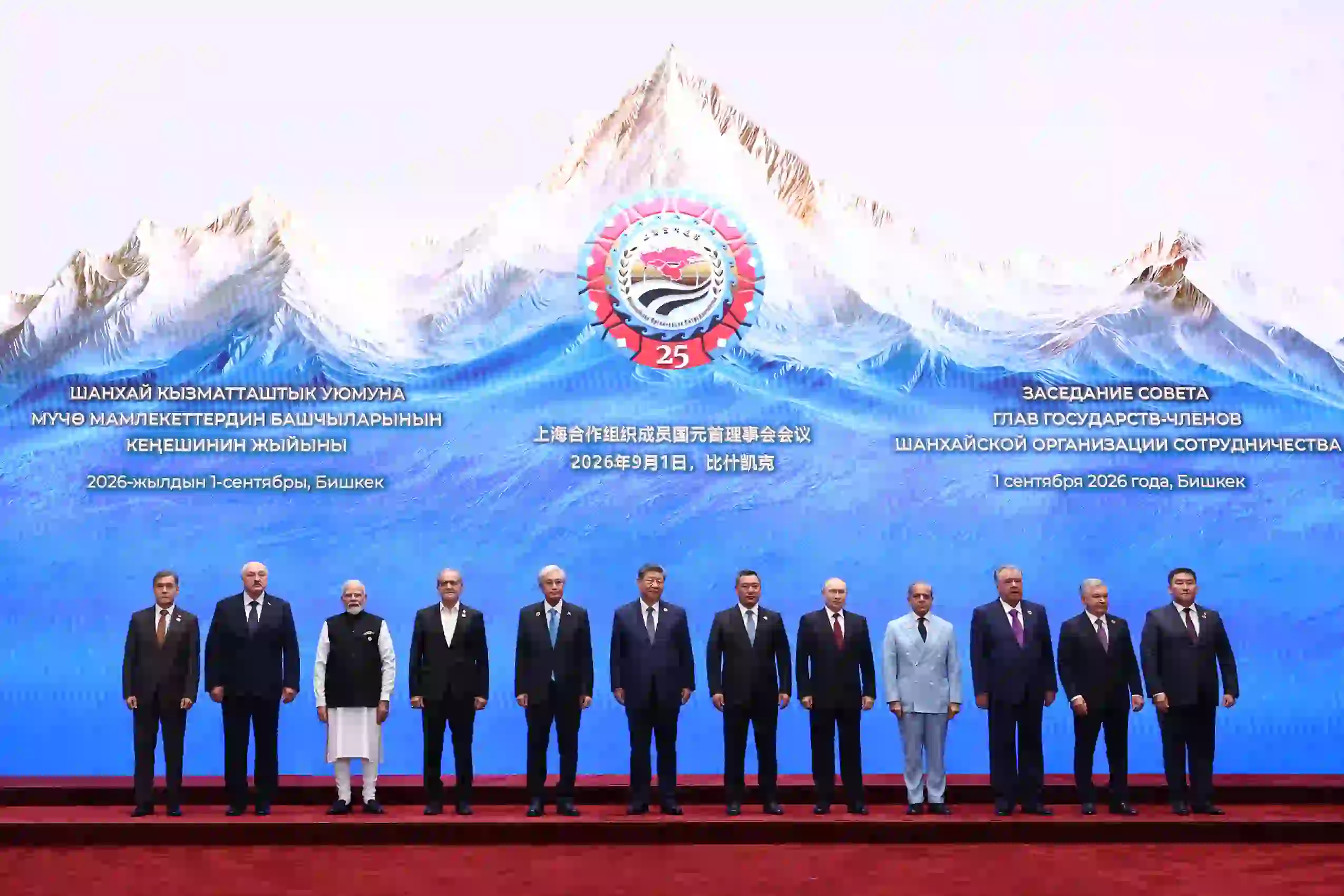
The 26th Summit of the Council of Heads of State of the Shanghai Cooperation Organization was held in Bishkek on September 1, at a time when the organization has entered its 25th year of activity, and simultaneously, US warmongering against Iran and its consequences, especially the closure of the Strait of Hormuz, which has caused an energy crisis and serious disruption in the supply chains of oil, LNG, chemical fertilizers, petrochemical products, etc., had an impact on the summit’s agenda.
Despite recent tensions in the region and US military actions and economic and political pressures against Iran, the Islamic Republic had a prominent and noteworthy presence at the recent SCO summit. The presence of the President of the Islamic Republic of Iran alongside the leaders of China, Russia, India, and other members provided an opportunity to transform Iran’s full membership in the SCO into an instrument of economic, security, and transit diplomacy.
The SCO; Beyond a Security Mechanism
The importance of the Bishkek summit lies in the fact that the SCO is more than ever distancing itself from the image of a purely security mechanism. At this year’s summit, trade, investment, energy, new technologies, ports and logistics, artificial intelligence, and financial cooperation were placed alongside security and the fight against cross-border threats. Twenty-eight documents were also approved, ranging from the Bishkek Declaration and amendments to the organization’s charter to programs for developing ports and logistics centers, cooperation in artificial intelligence, information security, narcotics, and the “Green Technology Corridor.”
This shift is of double importance for Iran; because Tehran’s main advantage in the SCO is its unique geographical position in connecting the Persian Gulf, Central Asia, the Caucasus, Russia, and the Indian subcontinent.
In this framework, the most important part of the Iranian President’s presence was the presentation of a package of economic proposals. At this summit, the President of Iran, while emphasizing the deepening of banking cooperation and wider use of national currencies, proposed the creation of joint payment mechanisms and ultimately the formation of a Shanghai Bank, the establishment of an export and investment insurance union, and the formation of an energy consortium. These proposals indicate that Tehran is attempting, in line with the requirements of its foreign policy, regional and international developments, and sanctions conditions, to transform membership in the SCO from “political membership” into “membership entailing economic benefit.” Notably, Iran’s proposals align with the needs of Russia and some other members to reduce dependence on Western financial infrastructures. However, it should be noted that there is a great distance between the political announcement of a financial mechanism and the creation of an operational institution with capital, regulations, a payment network, and enforcement guarantees.
Economic Proposals and Transit Opportunities
In the transit sector as well, the SCO summit was significant for Iran. Among the important axes that the Bishkek SCO summit focused on were the development of ports and logistics centers and the strengthening of regional connectivity. Iran can benefit from this trend to link the North-South Corridor with the trade networks of East Asia and Central Asia. If Chabahar, southern ports, eastern railways, and routes connecting to Russia and Central Asia are placed in a coherent package, Iran can transform from a country under oppressive sanctions into a “Eurasian connectivity facilitator.”
However, this goal cannot be achieved merely through political declarations; it requires investment, customs regulation reform, completion of railway lines, and reduction of transit costs and time. The approval of the roadmap for the development of ports and logistics centers for the years 2026 to 2030 has practical significance for Tehran in this regard.
Political and Diplomatic Backing of the Summit
From a political and security perspective as well, the Bishkek Declaration held special significance for the Islamic Republic of Iran; because the SCO heads of state openly and officially condemned military attacks against Iran and emphasized the sovereignty and territorial integrity of states. Although the SCO is not an organization like NATO, and its members do not have mutual military commitments in the event of an attack on a member, such a position holds significant diplomatic value for Iran under conditions of military and economic pressure; the main value of this support for Tehran lies in creating political backing, strengthening diplomatic communications, and providing maneuvering space in multilateral institutions.
In this regard, the meetings of the President of the Islamic Republic of Iran with some of the leaders present at the summit, at least two of whom have publicly declared that they do not recognize the recent US sanctions, also complemented this multi-layered approach.
For Iran to truly utilize this capacity, it must accompany economic diplomacy with domestic mechanisms, production competitiveness, standardization, trade facilitation, regulatory stability, and banking connectivity. The experience of negotiations regarding the establishment of the SCO Development Bank also shows that transforming a political agreement into an effective financial institution is a time-consuming and complex process.
Overall, the Bishkek summit should be seen as a point along the path of Iran’s more prominent presence in the SCO. At this meeting, Tehran sent three simultaneous messages: opposition to unilateralism, readiness for the development of economic and transit cooperation, and keeping the diplomatic path open. If Iran’s proposals are transformed into concrete projects, membership in the SCO could become one of the pillars of Iran’s connection to the Eurasian economy. The transfer of the organization’s presidency to Pakistan also creates a new opportunity for Tehran to bring the pursuit of financial, transit, and energy projects closer to the organization’s operational agenda during the 2026-2027 period.





0 Comments