The Dissolution of the SDF and Turkey’s Endless Challenges in Syria

2026/09/03 | Note, Politics, Top News

SCFR Online - Opinion: The dissolution of the SDF, although considered an achievement for Turkey's security, does not put an end to the challenges arising from the Israeli regime's aggression and expansionism, refugees, and Syria's fragility.

Barsam Mohammadi – Expert on regional affairs

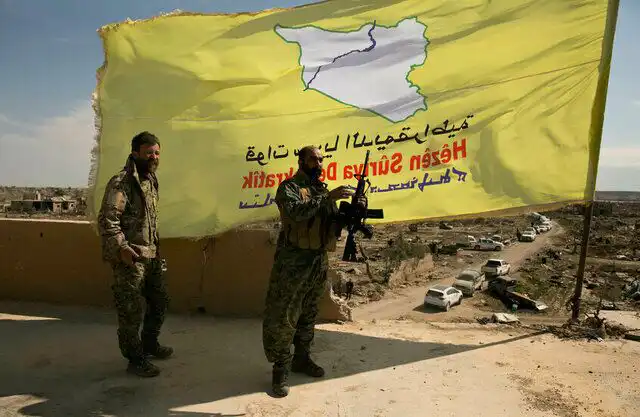
Among experts, analysts, and commentators on regional affairs, there is a prevailing and traditional view that considers the dissolution of the Syrian Democratic Forces (SDF) and its gradual or structural integration into the body of the Syrian central government as a rare strategic victory for Ankara; a development that, in their view, constitutes a fundamental step toward securing Turkey’s southern borders, curbing this movement’s organizational ties with the Kurdistan Workers’ Party (PKK), and eliminating a decade of direct geopolitical threat.

Although this assessment is notable from the perspective of the military balance and the realization of some of Turkey’s short-term objectives, and is portrayed in Turkey’s domestic political and media space as a major achievement in safeguarding its national integrity and security doctrine, there is, on the other hand, a more realistic view; an approach that assesses current developments not as the end of Ankara’s crises and security challenges, but as the beginning of a more complex, more attritional phase with unpredictable variables in the post-war Syrian scene.

The refugee crisis, increasing economic pressures, inevitable dependence on unstable partners, the structural fragility and legitimacy crisis of the new government in Damascus, and finally the decline in the effectiveness of regional neo-conservative discourse, have formed a system of strategic obstacles facing Turkey. This set of challenges has placed Turkey in a position where any miscalculation could neutralize all its previous field and diplomatic achievements.

Confrontation with the Israeli Regime on a New Front and the Emergence of New Red Lines

The most important and decisive challenge facing Ankara in the current circumstances is the emergence of the Israeli regime as an active, interventionist, and deterrent actor in Syria’s field and airspace. Tel Aviv, by attacking bases near Ankara, bombing infrastructure, and deepening covert and overt communication channels with local Kurdish actors, has effectively stood in the way of Turkey’s comprehensive plan to create a centralized, stable Syria aligned with the Ankara axis.

Recent statements by senior Zionist officials indicate the formation of a strategic and structural conflict of interests between Tel Aviv and Ankara. Benjamin Netanyahu has explicitly warned against the transformation of the “status quo in security arrangements” due to Turkey’s military presence. Yechiel Leiter, the regime’s ambassador to the United States, has described Turkey’s extensive deployment in the Levant as crossing red lines, and Gideon Sa’ar, the regime’s Minister of Foreign Affairs, has deemed any consolidation of Turkish military bases deep inside Syrian territory unacceptable.

From Tel Aviv’s perspective, any elimination of centrifugal Kurdish forces that leads to the formation of a national and cohesive sovereignty in Damascus under Turkish influence would alter the balance of power against Zionist interests. Hence, aerial and security confrontation against Ankara’s regional interests has become a serious agenda item for Tel Aviv.

Implementation Ambiguities, Identity transformation, and the legitimacy crisis

The second challenge facing Turkey’s diplomatic and military apparatus is the operational dimension and verification of the SDF dissolution process. Although Turkey’s military structure considers the formal dismantlement of the SDF a positive development, there are deep doubts about structural transformation and the preservation of autonomous combat cores under new names, new quasi-military formations, or autonomous local units.

Sustainable security for Turkey cannot be achieved merely by changing organizational banners; it requires the complete elimination of independent command hierarchies, genuine disarmament, and their unconditional integration into a unified national army; an endeavor that faces numerous obstacles due to field geopolitical complexities.

Furthermore, the new governance structure in Damascus, formed with Ankara’s direct support, faces identity rifts and a pervasive legitimacy crisis in managing tensions. The inability to manage the demands of minorities and religious and ethnic communities, especially in areas such as Suwayda and parts of southern and western Syria, has revealed the vulnerability of the nascent political structure. The persistence of sectarian and ethnic tensions not only distorts the prospect of reproducing political stability but also threatens new waves of insecurity, social instability, and an influx of refugees toward Turkey’s borders.

Deepening the Refugee Crisis and Erosion of Economic Foundations

Beyond geostrategic considerations, the main Achilles’ heel of Turkey’s domestic policy is the presence of over 2.24 million Syrian refugees in various cities across the country. Despite the approaches and promises of the ruling government in Ankara to accelerate the process of their voluntary return following the changes in Damascus, actual statistics indicate a very slow and insufficient trend; with only a limited fraction of this population having returned home so far. The persistence of this presence imposes significant social pressures, ethnic tensions, and heavy welfare costs on the Turkish government.

In the economic sphere, the reconstruction of Syria’s war-ravaged ruins, which according to international estimates will cost between 216 and 400 billion dollars, is beyond Turkey’s financial and infrastructural capacity. While Ankara hoped that by playing a pivotal role in Syria it would pave the way for access to Persian Gulf financial markets, the lack of willingness and extreme caution of Arab capitals in injecting large-scale investments have stalled Turkey’s plans and left its contracting and infrastructure companies facing severe financial constraints.

Another challenge for Ankara is the need to balance among heterogeneous partners with conflicting interests. Turkey is compelled to coordinate with regional mechanisms and major powers such as Russia and Iran to manage security fragility in Syria, while looking to Arab countries for reconstruction capital and relying on NATO and Western flexibility to contain aerial tensions. On the other hand, the ruling elites in Damascus, while benefiting from Turkish support, are also trying to avoid becoming a dependent pawn of Ankara and to consolidate their diplomatic independence in balance with other Middle Eastern actors.

This confluence of interests has exposed Turkey to a sustained miscalculation risk. The attempt to play a role beyond its structural capacities has trapped Ankara in a high-risk situation. The targeted attacks and warning messages from the Israeli regime, as well as the fragility of Syria’s internal environment, have made it clear that the dissolution of the SDF is not the end of the game, but the beginning of an attritional process that will be a difficult test for Turkey’s strategic sustainability and regional diplomacy.
0 Comments

LATEST CONTENT

China’s Rejection of US Sanctions; Strengthening Iran’s Geopolitical Leverage

SCFR Online – Opinion: Concurrent with the official commencement of the United States’ economic war against our country, focusing on sanctions instruments, isolation, and economic pressure, what has now become increasingly important is the lack of alignment of other major global powers, especially China, with this policy.

The Makkah Pact; Reasons for its Formation and Challenges Ahead

SCFR Online – Opinion: The Makkah Pact, signed between Saudi Arabia, Pakistan, and Turkey under the motto “an attack on one is an attack on all,” is viewed by some analysts less as a full-fledged military coalition and more as an attempt to reduce security dependence on an external power and to establish a regional security mechanism.

Implications of the US-Saudi Nuclear Agreement

SCFR Online – Opinion: The new US-Saudi nuclear agreement, despite legal and political ambiguities, could alter previous non-proliferation standards in West Asia and intensify nuclear competition, ushering it into a new phase.

An Analysis of Recent Turkey-Israeli Regime Tensions

SCFR Online – Opinion: Recent developments in Syria indicate an intensification of strategic rivalry between Turkey and the Israeli regime, but mutual considerations and the role of the United States have limited the likelihood of direct war.

Loading

Últimas publicaciones

China’s Rejection of US Sanctions; Strengthening Iran’s Geopolitical Leverage

SCFR Online – Opinion: Concurrent with the official commencement of the United States’ economic war against our country, focusing on sanctions instruments, isolation, and economic pressure, what has now become increasingly important is the lack of alignment of other major global powers, especially China, with this policy.

The Makkah Pact; Reasons for its Formation and Challenges Ahead

SCFR Online – Opinion: The Makkah Pact, signed between Saudi Arabia, Pakistan, and Turkey under the motto “an attack on one is an attack on all,” is viewed by some analysts less as a full-fledged military coalition and more as an attempt to reduce security dependence on an external power and to establish a regional security mechanism.

Implications of the US-Saudi Nuclear Agreement

SCFR Online – Opinion: The new US-Saudi nuclear agreement, despite legal and political ambiguities, could alter previous non-proliferation standards in West Asia and intensify nuclear competition, ushering it into a new phase.

An Analysis of Recent Turkey-Israeli Regime Tensions

SCFR Online – Opinion: Recent developments in Syria indicate an intensification of strategic rivalry between Turkey and the Israeli regime, but mutual considerations and the role of the United States have limited the likelihood of direct war.

Loading

DERNIER CONTENU

China’s Rejection of US Sanctions; Strengthening Iran’s Geopolitical Leverage

SCFR Online – Opinion: Concurrent with the official commencement of the United States’ economic war against our country, focusing on sanctions instruments, isolation, and economic pressure, what has now become increasingly important is the lack of alignment of other major global powers, especially China, with this policy.

The Makkah Pact; Reasons for its Formation and Challenges Ahead

SCFR Online – Opinion: The Makkah Pact, signed between Saudi Arabia, Pakistan, and Turkey under the motto “an attack on one is an attack on all,” is viewed by some analysts less as a full-fledged military coalition and more as an attempt to reduce security dependence on an external power and to establish a regional security mechanism.

Implications of the US-Saudi Nuclear Agreement

SCFR Online – Opinion: The new US-Saudi nuclear agreement, despite legal and political ambiguities, could alter previous non-proliferation standards in West Asia and intensify nuclear competition, ushering it into a new phase.

An Analysis of Recent Turkey-Israeli Regime Tensions

SCFR Online – Opinion: Recent developments in Syria indicate an intensification of strategic rivalry between Turkey and the Israeli regime, but mutual considerations and the role of the United States have limited the likelihood of direct war.

Loading

DERNIER CONTENU

China’s Rejection of US Sanctions; Strengthening Iran’s Geopolitical Leverage

SCFR Online – Opinion: Concurrent with the official commencement of the United States’ economic war against our country, focusing on sanctions instruments, isolation, and economic pressure, what has now become increasingly important is the lack of alignment of other major global powers, especially China, with this policy.

The Makkah Pact; Reasons for its Formation and Challenges Ahead

SCFR Online – Opinion: The Makkah Pact, signed between Saudi Arabia, Pakistan, and Turkey under the motto “an attack on one is an attack on all,” is viewed by some analysts less as a full-fledged military coalition and more as an attempt to reduce security dependence on an external power and to establish a regional security mechanism.

Implications of the US-Saudi Nuclear Agreement

SCFR Online – Opinion: The new US-Saudi nuclear agreement, despite legal and political ambiguities, could alter previous non-proliferation standards in West Asia and intensify nuclear competition, ushering it into a new phase.

An Analysis of Recent Turkey-Israeli Regime Tensions

SCFR Online – Opinion: Recent developments in Syria indicate an intensification of strategic rivalry between Turkey and the Israeli regime, but mutual considerations and the role of the United States have limited the likelihood of direct war.

Loading

DERNIER CONTENU

China’s Rejection of US Sanctions; Strengthening Iran’s Geopolitical Leverage

SCFR Online – Opinion: Concurrent with the official commencement of the United States’ economic war against our country, focusing on sanctions instruments, isolation, and economic pressure, what has now become increasingly important is the lack of alignment of other major global powers, especially China, with this policy.

The Makkah Pact; Reasons for its Formation and Challenges Ahead

SCFR Online – Opinion: The Makkah Pact, signed between Saudi Arabia, Pakistan, and Turkey under the motto “an attack on one is an attack on all,” is viewed by some analysts less as a full-fledged military coalition and more as an attempt to reduce security dependence on an external power and to establish a regional security mechanism.

Implications of the US-Saudi Nuclear Agreement

SCFR Online – Opinion: The new US-Saudi nuclear agreement, despite legal and political ambiguities, could alter previous non-proliferation standards in West Asia and intensify nuclear competition, ushering it into a new phase.

An Analysis of Recent Turkey-Israeli Regime Tensions

SCFR Online – Opinion: Recent developments in Syria indicate an intensification of strategic rivalry between Turkey and the Israeli regime, but mutual considerations and the role of the United States have limited the likelihood of direct war.

Loading