جدیدترین مطالب

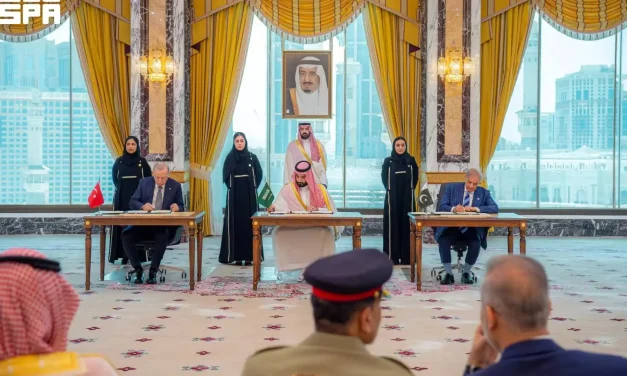
The Makkah Pact; Reasons for its Formation and Challenges Ahead

SCFR Online – Opinion: The Makkah Pact, signed between Saudi Arabia, Pakistan, and Turkey under the motto “an attack on one is an attack on all,” is viewed by some analysts less as a full-fledged military coalition and more as an attempt to reduce security dependence on an external power and to establish a regional security mechanism.
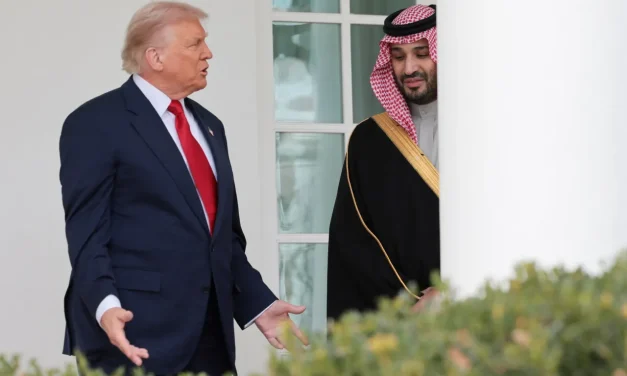
Implications of the US-Saudi Nuclear Agreement

SCFR Online – Opinion: The new US-Saudi nuclear agreement, despite legal and political ambiguities, could alter previous non-proliferation standards in West Asia and intensify nuclear competition, ushering it into a new phase.

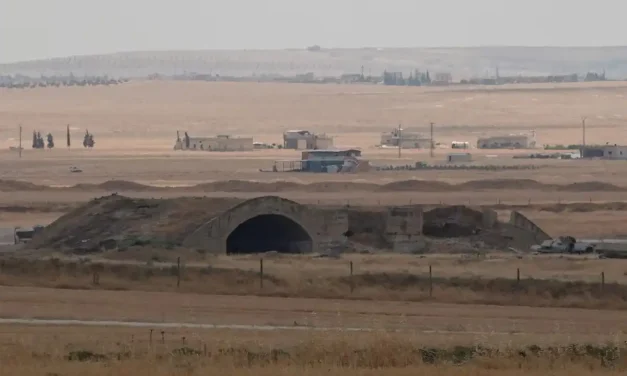
An Analysis of Recent Turkey-Israeli Regime Tensions

SCFR Online – Opinion: Recent developments in Syria indicate an intensification of strategic rivalry between Turkey and the Israeli regime, but mutual considerations and the role of the United States have limited the likelihood of direct war.

Increasing criticism of the extensive Zionist lobby network

SCFR Online – Opinion: An examination of the mechanisms of the Israeli regime’s influence in the United States depicts a complex picture of shared interests, strategic dependencies, and the limitations of this relationship.

Realities of the Tripartite Makkah Pact

SCFR Online – Interview: The signing of the Makkah agreement between Saudi Arabia, Pakistan, and Turkey has raised questions about the future of the region’s security structure and the position of these countries in West Asian equations. Can this agreement become a genuine collective defense mechanism, or does it have more of a political and deterrent function than creating new military capacity?

Strategic Implications of the Reduction of US Weapons Stockpiles

SCFR Online – Opinion: The continuation of the US war against Iran, in addition to increasing operational costs, has called into question the actual capacity of the American arsenal to simultaneously fulfill security commitments on multiple fronts; an issue that affects deterrence, defense production capacity, and Washington’s resource prioritization.

The Formation of a New Order in Relations Between Powers

SCFR Online – Opinion: The Russia-Ukraine war and the war of the United States and the Israeli regime against Iran have been formed with different objectives and actors, but field and political developments indicate that they are not entirely separate from one another.

Loading

Top News

Bahrain’s Objectives behind Normalization of Relations with Syria

Bahrain’s Objectives behind Normalization of Relations with Syria

Strategic Council Online – Interview: An expert on the Middle East affairs, commenting on the targets of the recent measure of the King of Bahrain in appointing the ambassador extraordinary and plenipotentiary to Syria after 10 years said that Manama pursues two main targets in such measure; first, the use of economic benefits in Syria, that is to say participation in the reconstruction of the country, and second, with regard to the profound transformation in the new regional equations, including the Tehran-Riyadh talks and the reduction of US presence in the region, Bahrain does not want to lag behind such equations. In addition, alleviating pressure on the public opinion, due to the normalization of relations with the Zionist regime, can also be one of the objectives of the Zionist regime behind such action.

US Dangerous Ploy to Keep Covering Force in Iraq

US Dangerous Ploy to Keep Covering Force in Iraq

Strategic Council Online – Opinion: Staying of the US covering forces in Iraq in the future could lead to the escalation of the divisions and internal differences in the country.
Tahmoures Gholami – Expert on the US affairs

Normalization of Bahrain-Zionist Regime Relations; a Threat to Persian Gulf Security

Normalization of Bahrain-Zionist Regime Relations; a Threat to Persian Gulf Security

Council Online Strategic – Interview: An expert on the Middle East affairs commenting on the consequences of Bahrain’s decision to normalize relations with the Zionist regime said: Normalization of relations between the small country of Bahrain and the regime will not have much effect on changing the balance of power in favor of Tel Aviv, but in terms of the movements of the Palestinian militants, this hasty relationship is like a poisoned dagger that has stabbed the Palestinian people on the back.

French Middle East Policy & Its Utilitarian Role in Nuclear Talks

French Middle East Policy & Its Utilitarian Role in Nuclear Talks

Strategic Council Online – Opinion: After the conclusion of French weapons deal with the UAE, we witnessed a wave of internal and external critiques which assessed the French military attitude contrary to human rights attitude of the European Union, but due to some reservations, the European Union affiliated institutions remained tight-lipped in this respect.
Dr. Abbass Sarvestani, Graduated in European Studies, Tehran University

U.S. Instrumental Use of Human Rights to Exert Pressure on China

U.S. Instrumental Use of Human Rights to Exert Pressure on China

Strategic Council Online – Opinion: Further to Tiananmen Square incidents in 1989 and afterwards, criticism against Beijing’s attitudes in Xinjiang, Tibet, Hong Kong and other regions in China have been among the U.S. pivots of exerting pressure against China. As tensions increased in other fields during the recent years, the U.S. having resorted to human rights issues, attempted to mount pressures against China.
Mohammad Javad Ghahremani, Expert on Asia Affairs

New German Govt. Policy; Accompanying US in Nord Stream 2 Sanctions

New German Govt. Policy; Accompanying US in Nord Stream 2 Sanctions

Strategic Council Online – Interview: An analyst of international affairs said that the future of the Nord Stream 2 pipeline project is in a state of ambiguity, adding: The new coalition government in Germany, by suspending the operational process of the pipeline, is effectively moving in the direction intended by Washington and trying to use it as a pressure tool to prevent possible Russian measures against Ukraine.

Military Option Plan of the Zionist Regime against Iran; Psychological Warfare Versus Nuclear Talks

Military Option Plan of the Zionist Regime against Iran; Psychological Warfare Versus Nuclear Talks

Strategic Council Online – Opinion: Financial Committee of the Zionist regime parliament (Knesset) on December 23, 2021 added an amendment article to the budget bill for 2022 based on which the sum of $ 2.9 billion was added to the military budget of the Zionist regime for preparedness of the military attack against Iran’s nuclear facilities and installations.
Fatemeh Nekoo La’al Azad, Researcher of International Affairs

Turkey’s Strategy to Increase Presence in Africa, Its Challenges

Turkey’s Strategy to Increase Presence in Africa, Its Challenges

Strategic Council Online – Interview: A professor at the University of Tehran described the change in Turkey-Africa relations as a sign of Ankara’s multidimensional attention and dynamism in its foreign policy towards Africa and the prospect of a hopeful and long-term presence on that continent, adding: Ankara is seeking long-term strategic relations and to impact throughout the African continent.

Requirements of Efficient Economic Diplomacy in Neighborhood Policy

Requirements of Efficient Economic Diplomacy in Neighborhood Policy

Strategic council Online – Opinion: At the end of cold war and development in many concepts related to international relations, diplomacy was also subjected to change. As economic and cultural issues gained importance, monopoly of security and merely political issues was also reached to its ending and have lost their importance. Thus, based on the necessities of international environment, conventional diplomacy was replaced with newer diplomacies like economic diplomacy.
Hossein Sayahi, Researcher of International Issues

Postponement of Elections, Prospects of Political Developments in Libya

Postponement of Elections, Prospects of Political Developments in Libya

Strategic Council Online – Interview: An analyst on Africa affairs said that the hasty holding of the elections in Libya will not lead to any conclusion and could even increase tensions, adding: Although the decision to hold elections in that country was the result of numerous political processes and negotiations, now the elections have been postponed and there is still no clear prospect of holding the elections.

أحدث الوظائف

The Makkah Pact; Reasons for its Formation and Challenges Ahead

SCFR Online – Opinion: The Makkah Pact, signed between Saudi Arabia, Pakistan, and Turkey under the motto “an attack on one is an attack on all,” is viewed by some analysts less as a full-fledged military coalition and more as an attempt to reduce security dependence on an external power and to establish a regional security mechanism.
Implications of the US-Saudi Nuclear Agreement

SCFR Online – Opinion: The new US-Saudi nuclear agreement, despite legal and political ambiguities, could alter previous non-proliferation standards in West Asia and intensify nuclear competition, ushering it into a new phase.

An Analysis of Recent Turkey-Israeli Regime Tensions

SCFR Online – Opinion: Recent developments in Syria indicate an intensification of strategic rivalry between Turkey and the Israeli regime, but mutual considerations and the role of the United States have limited the likelihood of direct war.

Increasing criticism of the extensive Zionist lobby network

SCFR Online – Opinion: An examination of the mechanisms of the Israeli regime’s influence in the United States depicts a complex picture of shared interests, strategic dependencies, and the limitations of this relationship.

Realities of the Tripartite Makkah Pact

SCFR Online – Interview: The signing of the Makkah agreement between Saudi Arabia, Pakistan, and Turkey has raised questions about the future of the region’s security structure and the position of these countries in West Asian equations. Can this agreement become a genuine collective defense mechanism, or does it have more of a political and deterrent function than creating new military capacity?

Strategic Implications of the Reduction of US Weapons Stockpiles

SCFR Online – Opinion: The continuation of the US war against Iran, in addition to increasing operational costs, has called into question the actual capacity of the American arsenal to simultaneously fulfill security commitments on multiple fronts; an issue that affects deterrence, defense production capacity, and Washington’s resource prioritization.

The Formation of a New Order in Relations Between Powers

SCFR Online – Opinion: The Russia-Ukraine war and the war of the United States and the Israeli regime against Iran have been formed with different objectives and actors, but field and political developments indicate that they are not entirely separate from one another.

Loading

Top News

Bahrain’s Objectives behind Normalization of Relations with Syria

Bahrain’s Objectives behind Normalization of Relations with Syria

Strategic Council Online – Interview: An expert on the Middle East affairs, commenting on the targets of the recent measure of the King of Bahrain in appointing the ambassador extraordinary and plenipotentiary to Syria after 10 years said that Manama pursues two main targets in such measure; first, the use of economic benefits in Syria, that is to say participation in the reconstruction of the country, and second, with regard to the profound transformation in the new regional equations, including the Tehran-Riyadh talks and the reduction of US presence in the region, Bahrain does not want to lag behind such equations. In addition, alleviating pressure on the public opinion, due to the normalization of relations with the Zionist regime, can also be one of the objectives of the Zionist regime behind such action.

US Dangerous Ploy to Keep Covering Force in Iraq

US Dangerous Ploy to Keep Covering Force in Iraq

Strategic Council Online – Opinion: Staying of the US covering forces in Iraq in the future could lead to the escalation of the divisions and internal differences in the country.
Tahmoures Gholami – Expert on the US affairs

Normalization of Bahrain-Zionist Regime Relations; a Threat to Persian Gulf Security

Normalization of Bahrain-Zionist Regime Relations; a Threat to Persian Gulf Security

Council Online Strategic – Interview: An expert on the Middle East affairs commenting on the consequences of Bahrain’s decision to normalize relations with the Zionist regime said: Normalization of relations between the small country of Bahrain and the regime will not have much effect on changing the balance of power in favor of Tel Aviv, but in terms of the movements of the Palestinian militants, this hasty relationship is like a poisoned dagger that has stabbed the Palestinian people on the back.

French Middle East Policy & Its Utilitarian Role in Nuclear Talks

French Middle East Policy & Its Utilitarian Role in Nuclear Talks

Strategic Council Online – Opinion: After the conclusion of French weapons deal with the UAE, we witnessed a wave of internal and external critiques which assessed the French military attitude contrary to human rights attitude of the European Union, but due to some reservations, the European Union affiliated institutions remained tight-lipped in this respect.
Dr. Abbass Sarvestani, Graduated in European Studies, Tehran University

U.S. Instrumental Use of Human Rights to Exert Pressure on China

U.S. Instrumental Use of Human Rights to Exert Pressure on China

Strategic Council Online – Opinion: Further to Tiananmen Square incidents in 1989 and afterwards, criticism against Beijing’s attitudes in Xinjiang, Tibet, Hong Kong and other regions in China have been among the U.S. pivots of exerting pressure against China. As tensions increased in other fields during the recent years, the U.S. having resorted to human rights issues, attempted to mount pressures against China.
Mohammad Javad Ghahremani, Expert on Asia Affairs

New German Govt. Policy; Accompanying US in Nord Stream 2 Sanctions

New German Govt. Policy; Accompanying US in Nord Stream 2 Sanctions

Strategic Council Online – Interview: An analyst of international affairs said that the future of the Nord Stream 2 pipeline project is in a state of ambiguity, adding: The new coalition government in Germany, by suspending the operational process of the pipeline, is effectively moving in the direction intended by Washington and trying to use it as a pressure tool to prevent possible Russian measures against Ukraine.

Military Option Plan of the Zionist Regime against Iran; Psychological Warfare Versus Nuclear Talks

Military Option Plan of the Zionist Regime against Iran; Psychological Warfare Versus Nuclear Talks

Strategic Council Online – Opinion: Financial Committee of the Zionist regime parliament (Knesset) on December 23, 2021 added an amendment article to the budget bill for 2022 based on which the sum of $ 2.9 billion was added to the military budget of the Zionist regime for preparedness of the military attack against Iran’s nuclear facilities and installations.
Fatemeh Nekoo La’al Azad, Researcher of International Affairs

Turkey’s Strategy to Increase Presence in Africa, Its Challenges

Turkey’s Strategy to Increase Presence in Africa, Its Challenges

Strategic Council Online – Interview: A professor at the University of Tehran described the change in Turkey-Africa relations as a sign of Ankara’s multidimensional attention and dynamism in its foreign policy towards Africa and the prospect of a hopeful and long-term presence on that continent, adding: Ankara is seeking long-term strategic relations and to impact throughout the African continent.

Requirements of Efficient Economic Diplomacy in Neighborhood Policy

Requirements of Efficient Economic Diplomacy in Neighborhood Policy

Strategic council Online – Opinion: At the end of cold war and development in many concepts related to international relations, diplomacy was also subjected to change. As economic and cultural issues gained importance, monopoly of security and merely political issues was also reached to its ending and have lost their importance. Thus, based on the necessities of international environment, conventional diplomacy was replaced with newer diplomacies like economic diplomacy.
Hossein Sayahi, Researcher of International Issues

Postponement of Elections, Prospects of Political Developments in Libya

Postponement of Elections, Prospects of Political Developments in Libya

Strategic Council Online – Interview: An analyst on Africa affairs said that the hasty holding of the elections in Libya will not lead to any conclusion and could even increase tensions, adding: Although the decision to hold elections in that country was the result of numerous political processes and negotiations, now the elections have been postponed and there is still no clear prospect of holding the elections.

Top News

Bahrain’s Objectives behind Normalization of Relations with Syria

Bahrain’s Objectives behind Normalization of Relations with Syria

Strategic Council Online – Interview: An expert on the Middle East affairs, commenting on the targets of the recent measure of the King of Bahrain in appointing the ambassador extraordinary and plenipotentiary to Syria after 10 years said that Manama pursues two main targets in such measure; first, the use of economic benefits in Syria, that is to say participation in the reconstruction of the country, and second, with regard to the profound transformation in the new regional equations, including the Tehran-Riyadh talks and the reduction of US presence in the region, Bahrain does not want to lag behind such equations. In addition, alleviating pressure on the public opinion, due to the normalization of relations with the Zionist regime, can also be one of the objectives of the Zionist regime behind such action.

US Dangerous Ploy to Keep Covering Force in Iraq

US Dangerous Ploy to Keep Covering Force in Iraq

Strategic Council Online – Opinion: Staying of the US covering forces in Iraq in the future could lead to the escalation of the divisions and internal differences in the country.
Tahmoures Gholami – Expert on the US affairs

Normalization of Bahrain-Zionist Regime Relations; a Threat to Persian Gulf Security

Normalization of Bahrain-Zionist Regime Relations; a Threat to Persian Gulf Security

Council Online Strategic – Interview: An expert on the Middle East affairs commenting on the consequences of Bahrain’s decision to normalize relations with the Zionist regime said: Normalization of relations between the small country of Bahrain and the regime will not have much effect on changing the balance of power in favor of Tel Aviv, but in terms of the movements of the Palestinian militants, this hasty relationship is like a poisoned dagger that has stabbed the Palestinian people on the back.

French Middle East Policy & Its Utilitarian Role in Nuclear Talks

French Middle East Policy & Its Utilitarian Role in Nuclear Talks

Strategic Council Online – Opinion: After the conclusion of French weapons deal with the UAE, we witnessed a wave of internal and external critiques which assessed the French military attitude contrary to human rights attitude of the European Union, but due to some reservations, the European Union affiliated institutions remained tight-lipped in this respect.
Dr. Abbass Sarvestani, Graduated in European Studies, Tehran University

U.S. Instrumental Use of Human Rights to Exert Pressure on China

U.S. Instrumental Use of Human Rights to Exert Pressure on China

Strategic Council Online – Opinion: Further to Tiananmen Square incidents in 1989 and afterwards, criticism against Beijing’s attitudes in Xinjiang, Tibet, Hong Kong and other regions in China have been among the U.S. pivots of exerting pressure against China. As tensions increased in other fields during the recent years, the U.S. having resorted to human rights issues, attempted to mount pressures against China.
Mohammad Javad Ghahremani, Expert on Asia Affairs

New German Govt. Policy; Accompanying US in Nord Stream 2 Sanctions

New German Govt. Policy; Accompanying US in Nord Stream 2 Sanctions

Strategic Council Online – Interview: An analyst of international affairs said that the future of the Nord Stream 2 pipeline project is in a state of ambiguity, adding: The new coalition government in Germany, by suspending the operational process of the pipeline, is effectively moving in the direction intended by Washington and trying to use it as a pressure tool to prevent possible Russian measures against Ukraine.

Military Option Plan of the Zionist Regime against Iran; Psychological Warfare Versus Nuclear Talks

Military Option Plan of the Zionist Regime against Iran; Psychological Warfare Versus Nuclear Talks

Strategic Council Online – Opinion: Financial Committee of the Zionist regime parliament (Knesset) on December 23, 2021 added an amendment article to the budget bill for 2022 based on which the sum of $ 2.9 billion was added to the military budget of the Zionist regime for preparedness of the military attack against Iran’s nuclear facilities and installations.
Fatemeh Nekoo La’al Azad, Researcher of International Affairs

Turkey’s Strategy to Increase Presence in Africa, Its Challenges

Turkey’s Strategy to Increase Presence in Africa, Its Challenges

Strategic Council Online – Interview: A professor at the University of Tehran described the change in Turkey-Africa relations as a sign of Ankara’s multidimensional attention and dynamism in its foreign policy towards Africa and the prospect of a hopeful and long-term presence on that continent, adding: Ankara is seeking long-term strategic relations and to impact throughout the African continent.

Requirements of Efficient Economic Diplomacy in Neighborhood Policy

Requirements of Efficient Economic Diplomacy in Neighborhood Policy

Strategic council Online – Opinion: At the end of cold war and development in many concepts related to international relations, diplomacy was also subjected to change. As economic and cultural issues gained importance, monopoly of security and merely political issues was also reached to its ending and have lost their importance. Thus, based on the necessities of international environment, conventional diplomacy was replaced with newer diplomacies like economic diplomacy.
Hossein Sayahi, Researcher of International Issues

Postponement of Elections, Prospects of Political Developments in Libya

Postponement of Elections, Prospects of Political Developments in Libya

Strategic Council Online – Interview: An analyst on Africa affairs said that the hasty holding of the elections in Libya will not lead to any conclusion and could even increase tensions, adding: Although the decision to hold elections in that country was the result of numerous political processes and negotiations, now the elections have been postponed and there is still no clear prospect of holding the elections.

LATEST CONTENT

The Makkah Pact; Reasons for its Formation and Challenges Ahead

SCFR Online – Opinion: The Makkah Pact, signed between Saudi Arabia, Pakistan, and Turkey under the motto “an attack on one is an attack on all,” is viewed by some analysts less as a full-fledged military coalition and more as an attempt to reduce security dependence on an external power and to establish a regional security mechanism.

Implications of the US-Saudi Nuclear Agreement

SCFR Online – Opinion: The new US-Saudi nuclear agreement, despite legal and political ambiguities, could alter previous non-proliferation standards in West Asia and intensify nuclear competition, ushering it into a new phase.

An Analysis of Recent Turkey-Israeli Regime Tensions

SCFR Online – Opinion: Recent developments in Syria indicate an intensification of strategic rivalry between Turkey and the Israeli regime, but mutual considerations and the role of the United States have limited the likelihood of direct war.

Increasing criticism of the extensive Zionist lobby network

SCFR Online – Opinion: An examination of the mechanisms of the Israeli regime’s influence in the United States depicts a complex picture of shared interests, strategic dependencies, and the limitations of this relationship.

Realities of the Tripartite Makkah Pact

SCFR Online – Interview: The signing of the Makkah agreement between Saudi Arabia, Pakistan, and Turkey has raised questions about the future of the region’s security structure and the position of these countries in West Asian equations. Can this agreement become a genuine collective defense mechanism, or does it have more of a political and deterrent function than creating new military capacity?

Strategic Implications of the Reduction of US Weapons Stockpiles

SCFR Online – Opinion: The continuation of the US war against Iran, in addition to increasing operational costs, has called into question the actual capacity of the American arsenal to simultaneously fulfill security commitments on multiple fronts; an issue that affects deterrence, defense production capacity, and Washington’s resource prioritization.

The Formation of a New Order in Relations Between Powers

SCFR Online – Opinion: The Russia-Ukraine war and the war of the United States and the Israeli regime against Iran have been formed with different objectives and actors, but field and political developments indicate that they are not entirely separate from one another.

Loading

Top News

Bahrain’s Objectives behind Normalization of Relations with Syria

Bahrain’s Objectives behind Normalization of Relations with Syria

Strategic Council Online – Interview: An expert on the Middle East affairs, commenting on the targets of the recent measure of the King of Bahrain in appointing the ambassador extraordinary and plenipotentiary to Syria after 10 years said that Manama pursues two main targets in such measure; first, the use of economic benefits in Syria, that is to say participation in the reconstruction of the country, and second, with regard to the profound transformation in the new regional equations, including the Tehran-Riyadh talks and the reduction of US presence in the region, Bahrain does not want to lag behind such equations. In addition, alleviating pressure on the public opinion, due to the normalization of relations with the Zionist regime, can also be one of the objectives of the Zionist regime behind such action.

US Dangerous Ploy to Keep Covering Force in Iraq

US Dangerous Ploy to Keep Covering Force in Iraq

Strategic Council Online – Opinion: Staying of the US covering forces in Iraq in the future could lead to the escalation of the divisions and internal differences in the country.
Tahmoures Gholami – Expert on the US affairs

Normalization of Bahrain-Zionist Regime Relations; a Threat to Persian Gulf Security

Normalization of Bahrain-Zionist Regime Relations; a Threat to Persian Gulf Security

Council Online Strategic – Interview: An expert on the Middle East affairs commenting on the consequences of Bahrain’s decision to normalize relations with the Zionist regime said: Normalization of relations between the small country of Bahrain and the regime will not have much effect on changing the balance of power in favor of Tel Aviv, but in terms of the movements of the Palestinian militants, this hasty relationship is like a poisoned dagger that has stabbed the Palestinian people on the back.

French Middle East Policy & Its Utilitarian Role in Nuclear Talks

French Middle East Policy & Its Utilitarian Role in Nuclear Talks

Strategic Council Online – Opinion: After the conclusion of French weapons deal with the UAE, we witnessed a wave of internal and external critiques which assessed the French military attitude contrary to human rights attitude of the European Union, but due to some reservations, the European Union affiliated institutions remained tight-lipped in this respect.
Dr. Abbass Sarvestani, Graduated in European Studies, Tehran University

U.S. Instrumental Use of Human Rights to Exert Pressure on China

U.S. Instrumental Use of Human Rights to Exert Pressure on China

Strategic Council Online – Opinion: Further to Tiananmen Square incidents in 1989 and afterwards, criticism against Beijing’s attitudes in Xinjiang, Tibet, Hong Kong and other regions in China have been among the U.S. pivots of exerting pressure against China. As tensions increased in other fields during the recent years, the U.S. having resorted to human rights issues, attempted to mount pressures against China.
Mohammad Javad Ghahremani, Expert on Asia Affairs

New German Govt. Policy; Accompanying US in Nord Stream 2 Sanctions

New German Govt. Policy; Accompanying US in Nord Stream 2 Sanctions

Strategic Council Online – Interview: An analyst of international affairs said that the future of the Nord Stream 2 pipeline project is in a state of ambiguity, adding: The new coalition government in Germany, by suspending the operational process of the pipeline, is effectively moving in the direction intended by Washington and trying to use it as a pressure tool to prevent possible Russian measures against Ukraine.

Military Option Plan of the Zionist Regime against Iran; Psychological Warfare Versus Nuclear Talks

Military Option Plan of the Zionist Regime against Iran; Psychological Warfare Versus Nuclear Talks

Strategic Council Online – Opinion: Financial Committee of the Zionist regime parliament (Knesset) on December 23, 2021 added an amendment article to the budget bill for 2022 based on which the sum of $ 2.9 billion was added to the military budget of the Zionist regime for preparedness of the military attack against Iran’s nuclear facilities and installations.
Fatemeh Nekoo La’al Azad, Researcher of International Affairs

Turkey’s Strategy to Increase Presence in Africa, Its Challenges

Turkey’s Strategy to Increase Presence in Africa, Its Challenges

Strategic Council Online – Interview: A professor at the University of Tehran described the change in Turkey-Africa relations as a sign of Ankara’s multidimensional attention and dynamism in its foreign policy towards Africa and the prospect of a hopeful and long-term presence on that continent, adding: Ankara is seeking long-term strategic relations and to impact throughout the African continent.

Requirements of Efficient Economic Diplomacy in Neighborhood Policy

Requirements of Efficient Economic Diplomacy in Neighborhood Policy

Strategic council Online – Opinion: At the end of cold war and development in many concepts related to international relations, diplomacy was also subjected to change. As economic and cultural issues gained importance, monopoly of security and merely political issues was also reached to its ending and have lost their importance. Thus, based on the necessities of international environment, conventional diplomacy was replaced with newer diplomacies like economic diplomacy.
Hossein Sayahi, Researcher of International Issues

Postponement of Elections, Prospects of Political Developments in Libya

Postponement of Elections, Prospects of Political Developments in Libya

Strategic Council Online – Interview: An analyst on Africa affairs said that the hasty holding of the elections in Libya will not lead to any conclusion and could even increase tensions, adding: Although the decision to hold elections in that country was the result of numerous political processes and negotiations, now the elections have been postponed and there is still no clear prospect of holding the elections.

ÚLTIMAS PUBLICACIONES

The Makkah Pact; Reasons for its Formation and Challenges Ahead

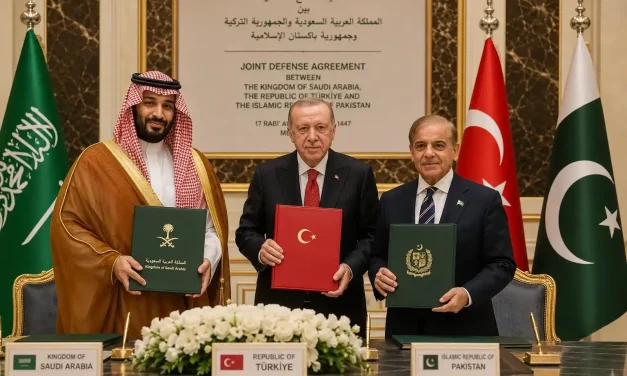
SCFR Online – Opinion: The Makkah Pact, signed between Saudi Arabia, Pakistan, and Turkey under the motto “an attack on one is an attack on all,” is viewed by some analysts less as a full-fledged military coalition and more as an attempt to reduce security dependence on an external power and to establish a regional security mechanism.
Implications of the US-Saudi Nuclear Agreement

SCFR Online – Opinion: The new US-Saudi nuclear agreement, despite legal and political ambiguities, could alter previous non-proliferation standards in West Asia and intensify nuclear competition, ushering it into a new phase.

An Analysis of Recent Turkey-Israeli Regime Tensions

SCFR Online – Opinion: Recent developments in Syria indicate an intensification of strategic rivalry between Turkey and the Israeli regime, but mutual considerations and the role of the United States have limited the likelihood of direct war.

Increasing criticism of the extensive Zionist lobby network

SCFR Online – Opinion: An examination of the mechanisms of the Israeli regime’s influence in the United States depicts a complex picture of shared interests, strategic dependencies, and the limitations of this relationship.

Realities of the Tripartite Makkah Pact

SCFR Online – Interview: The signing of the Makkah agreement between Saudi Arabia, Pakistan, and Turkey has raised questions about the future of the region’s security structure and the position of these countries in West Asian equations. Can this agreement become a genuine collective defense mechanism, or does it have more of a political and deterrent function than creating new military capacity?

Strategic Implications of the Reduction of US Weapons Stockpiles

SCFR Online – Opinion: The continuation of the US war against Iran, in addition to increasing operational costs, has called into question the actual capacity of the American arsenal to simultaneously fulfill security commitments on multiple fronts; an issue that affects deterrence, defense production capacity, and Washington’s resource prioritization.

The Formation of a New Order in Relations Between Powers

SCFR Online – Opinion: The Russia-Ukraine war and the war of the United States and the Israeli regime against Iran have been formed with different objectives and actors, but field and political developments indicate that they are not entirely separate from one another.

Loading

Top News

Bahrain’s Objectives behind Normalization of Relations with Syria

Bahrain’s Objectives behind Normalization of Relations with Syria

Strategic Council Online – Interview: An expert on the Middle East affairs, commenting on the targets of the recent measure of the King of Bahrain in appointing the ambassador extraordinary and plenipotentiary to Syria after 10 years said that Manama pursues two main targets in such measure; first, the use of economic benefits in Syria, that is to say participation in the reconstruction of the country, and second, with regard to the profound transformation in the new regional equations, including the Tehran-Riyadh talks and the reduction of US presence in the region, Bahrain does not want to lag behind such equations. In addition, alleviating pressure on the public opinion, due to the normalization of relations with the Zionist regime, can also be one of the objectives of the Zionist regime behind such action.

US Dangerous Ploy to Keep Covering Force in Iraq

US Dangerous Ploy to Keep Covering Force in Iraq

Strategic Council Online – Opinion: Staying of the US covering forces in Iraq in the future could lead to the escalation of the divisions and internal differences in the country.
Tahmoures Gholami – Expert on the US affairs

Normalization of Bahrain-Zionist Regime Relations; a Threat to Persian Gulf Security

Normalization of Bahrain-Zionist Regime Relations; a Threat to Persian Gulf Security

Council Online Strategic – Interview: An expert on the Middle East affairs commenting on the consequences of Bahrain’s decision to normalize relations with the Zionist regime said: Normalization of relations between the small country of Bahrain and the regime will not have much effect on changing the balance of power in favor of Tel Aviv, but in terms of the movements of the Palestinian militants, this hasty relationship is like a poisoned dagger that has stabbed the Palestinian people on the back.

French Middle East Policy & Its Utilitarian Role in Nuclear Talks

French Middle East Policy & Its Utilitarian Role in Nuclear Talks

Strategic Council Online – Opinion: After the conclusion of French weapons deal with the UAE, we witnessed a wave of internal and external critiques which assessed the French military attitude contrary to human rights attitude of the European Union, but due to some reservations, the European Union affiliated institutions remained tight-lipped in this respect.
Dr. Abbass Sarvestani, Graduated in European Studies, Tehran University

U.S. Instrumental Use of Human Rights to Exert Pressure on China

U.S. Instrumental Use of Human Rights to Exert Pressure on China

Strategic Council Online – Opinion: Further to Tiananmen Square incidents in 1989 and afterwards, criticism against Beijing’s attitudes in Xinjiang, Tibet, Hong Kong and other regions in China have been among the U.S. pivots of exerting pressure against China. As tensions increased in other fields during the recent years, the U.S. having resorted to human rights issues, attempted to mount pressures against China.
Mohammad Javad Ghahremani, Expert on Asia Affairs

New German Govt. Policy; Accompanying US in Nord Stream 2 Sanctions

New German Govt. Policy; Accompanying US in Nord Stream 2 Sanctions

Strategic Council Online – Interview: An analyst of international affairs said that the future of the Nord Stream 2 pipeline project is in a state of ambiguity, adding: The new coalition government in Germany, by suspending the operational process of the pipeline, is effectively moving in the direction intended by Washington and trying to use it as a pressure tool to prevent possible Russian measures against Ukraine.

Military Option Plan of the Zionist Regime against Iran; Psychological Warfare Versus Nuclear Talks

Military Option Plan of the Zionist Regime against Iran; Psychological Warfare Versus Nuclear Talks

Strategic Council Online – Opinion: Financial Committee of the Zionist regime parliament (Knesset) on December 23, 2021 added an amendment article to the budget bill for 2022 based on which the sum of $ 2.9 billion was added to the military budget of the Zionist regime for preparedness of the military attack against Iran’s nuclear facilities and installations.
Fatemeh Nekoo La’al Azad, Researcher of International Affairs

Turkey’s Strategy to Increase Presence in Africa, Its Challenges

Turkey’s Strategy to Increase Presence in Africa, Its Challenges

Strategic Council Online – Interview: A professor at the University of Tehran described the change in Turkey-Africa relations as a sign of Ankara’s multidimensional attention and dynamism in its foreign policy towards Africa and the prospect of a hopeful and long-term presence on that continent, adding: Ankara is seeking long-term strategic relations and to impact throughout the African continent.

Requirements of Efficient Economic Diplomacy in Neighborhood Policy

Requirements of Efficient Economic Diplomacy in Neighborhood Policy

Strategic council Online – Opinion: At the end of cold war and development in many concepts related to international relations, diplomacy was also subjected to change. As economic and cultural issues gained importance, monopoly of security and merely political issues was also reached to its ending and have lost their importance. Thus, based on the necessities of international environment, conventional diplomacy was replaced with newer diplomacies like economic diplomacy.
Hossein Sayahi, Researcher of International Issues

Postponement of Elections, Prospects of Political Developments in Libya

Postponement of Elections, Prospects of Political Developments in Libya

Strategic Council Online – Interview: An analyst on Africa affairs said that the hasty holding of the elections in Libya will not lead to any conclusion and could even increase tensions, adding: Although the decision to hold elections in that country was the result of numerous political processes and negotiations, now the elections have been postponed and there is still no clear prospect of holding the elections.

ÚLTIMAS PUBLICACIONES

The Makkah Pact; Reasons for its Formation and Challenges Ahead

SCFR Online – Opinion: The Makkah Pact, signed between Saudi Arabia, Pakistan, and Turkey under the motto “an attack on one is an attack on all,” is viewed by some analysts less as a full-fledged military coalition and more as an attempt to reduce security dependence on an external power and to establish a regional security mechanism.
Implications of the US-Saudi Nuclear Agreement

SCFR Online – Opinion: The new US-Saudi nuclear agreement, despite legal and political ambiguities, could alter previous non-proliferation standards in West Asia and intensify nuclear competition, ushering it into a new phase.

An Analysis of Recent Turkey-Israeli Regime Tensions

SCFR Online – Opinion: Recent developments in Syria indicate an intensification of strategic rivalry between Turkey and the Israeli regime, but mutual considerations and the role of the United States have limited the likelihood of direct war.

Increasing criticism of the extensive Zionist lobby network

SCFR Online – Opinion: An examination of the mechanisms of the Israeli regime’s influence in the United States depicts a complex picture of shared interests, strategic dependencies, and the limitations of this relationship.

Realities of the Tripartite Makkah Pact

SCFR Online – Interview: The signing of the Makkah agreement between Saudi Arabia, Pakistan, and Turkey has raised questions about the future of the region’s security structure and the position of these countries in West Asian equations. Can this agreement become a genuine collective defense mechanism, or does it have more of a political and deterrent function than creating new military capacity?

Strategic Implications of the Reduction of US Weapons Stockpiles

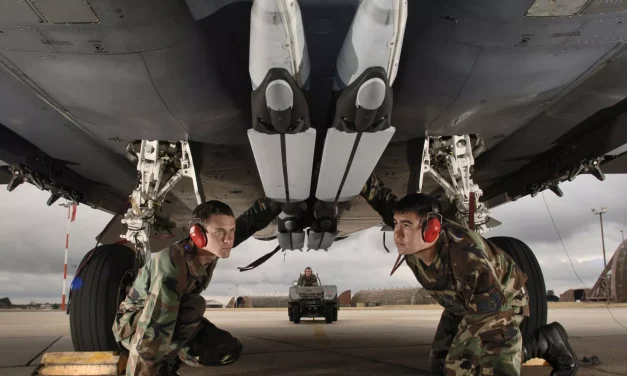
SCFR Online – Opinion: The continuation of the US war against Iran, in addition to increasing operational costs, has called into question the actual capacity of the American arsenal to simultaneously fulfill security commitments on multiple fronts; an issue that affects deterrence, defense production capacity, and Washington’s resource prioritization.

The Formation of a New Order in Relations Between Powers

SCFR Online – Opinion: The Russia-Ukraine war and the war of the United States and the Israeli regime against Iran have been formed with different objectives and actors, but field and political developments indicate that they are not entirely separate from one another.

Loading

Top News

Bahrain’s Objectives behind Normalization of Relations with Syria

Bahrain’s Objectives behind Normalization of Relations with Syria

Strategic Council Online – Interview: An expert on the Middle East affairs, commenting on the targets of the recent measure of the King of Bahrain in appointing the ambassador extraordinary and plenipotentiary to Syria after 10 years said that Manama pursues two main targets in such measure; first, the use of economic benefits in Syria, that is to say participation in the reconstruction of the country, and second, with regard to the profound transformation in the new regional equations, including the Tehran-Riyadh talks and the reduction of US presence in the region, Bahrain does not want to lag behind such equations. In addition, alleviating pressure on the public opinion, due to the normalization of relations with the Zionist regime, can also be one of the objectives of the Zionist regime behind such action.

US Dangerous Ploy to Keep Covering Force in Iraq

US Dangerous Ploy to Keep Covering Force in Iraq

Strategic Council Online – Opinion: Staying of the US covering forces in Iraq in the future could lead to the escalation of the divisions and internal differences in the country.
Tahmoures Gholami – Expert on the US affairs

Normalization of Bahrain-Zionist Regime Relations; a Threat to Persian Gulf Security

Normalization of Bahrain-Zionist Regime Relations; a Threat to Persian Gulf Security

Council Online Strategic – Interview: An expert on the Middle East affairs commenting on the consequences of Bahrain’s decision to normalize relations with the Zionist regime said: Normalization of relations between the small country of Bahrain and the regime will not have much effect on changing the balance of power in favor of Tel Aviv, but in terms of the movements of the Palestinian militants, this hasty relationship is like a poisoned dagger that has stabbed the Palestinian people on the back.

French Middle East Policy & Its Utilitarian Role in Nuclear Talks

French Middle East Policy & Its Utilitarian Role in Nuclear Talks

Strategic Council Online – Opinion: After the conclusion of French weapons deal with the UAE, we witnessed a wave of internal and external critiques which assessed the French military attitude contrary to human rights attitude of the European Union, but due to some reservations, the European Union affiliated institutions remained tight-lipped in this respect.
Dr. Abbass Sarvestani, Graduated in European Studies, Tehran University

U.S. Instrumental Use of Human Rights to Exert Pressure on China

U.S. Instrumental Use of Human Rights to Exert Pressure on China

Strategic Council Online – Opinion: Further to Tiananmen Square incidents in 1989 and afterwards, criticism against Beijing’s attitudes in Xinjiang, Tibet, Hong Kong and other regions in China have been among the U.S. pivots of exerting pressure against China. As tensions increased in other fields during the recent years, the U.S. having resorted to human rights issues, attempted to mount pressures against China.
Mohammad Javad Ghahremani, Expert on Asia Affairs

New German Govt. Policy; Accompanying US in Nord Stream 2 Sanctions

New German Govt. Policy; Accompanying US in Nord Stream 2 Sanctions

Strategic Council Online – Interview: An analyst of international affairs said that the future of the Nord Stream 2 pipeline project is in a state of ambiguity, adding: The new coalition government in Germany, by suspending the operational process of the pipeline, is effectively moving in the direction intended by Washington and trying to use it as a pressure tool to prevent possible Russian measures against Ukraine.

Military Option Plan of the Zionist Regime against Iran; Psychological Warfare Versus Nuclear Talks

Military Option Plan of the Zionist Regime against Iran; Psychological Warfare Versus Nuclear Talks

Strategic Council Online – Opinion: Financial Committee of the Zionist regime parliament (Knesset) on December 23, 2021 added an amendment article to the budget bill for 2022 based on which the sum of $ 2.9 billion was added to the military budget of the Zionist regime for preparedness of the military attack against Iran’s nuclear facilities and installations.
Fatemeh Nekoo La’al Azad, Researcher of International Affairs

Turkey’s Strategy to Increase Presence in Africa, Its Challenges

Turkey’s Strategy to Increase Presence in Africa, Its Challenges

Strategic Council Online – Interview: A professor at the University of Tehran described the change in Turkey-Africa relations as a sign of Ankara’s multidimensional attention and dynamism in its foreign policy towards Africa and the prospect of a hopeful and long-term presence on that continent, adding: Ankara is seeking long-term strategic relations and to impact throughout the African continent.

Requirements of Efficient Economic Diplomacy in Neighborhood Policy

Requirements of Efficient Economic Diplomacy in Neighborhood Policy

Strategic council Online – Opinion: At the end of cold war and development in many concepts related to international relations, diplomacy was also subjected to change. As economic and cultural issues gained importance, monopoly of security and merely political issues was also reached to its ending and have lost their importance. Thus, based on the necessities of international environment, conventional diplomacy was replaced with newer diplomacies like economic diplomacy.
Hossein Sayahi, Researcher of International Issues

Postponement of Elections, Prospects of Political Developments in Libya

Postponement of Elections, Prospects of Political Developments in Libya

Strategic Council Online – Interview: An analyst on Africa affairs said that the hasty holding of the elections in Libya will not lead to any conclusion and could even increase tensions, adding: Although the decision to hold elections in that country was the result of numerous political processes and negotiations, now the elections have been postponed and there is still no clear prospect of holding the elections.

ÚLTIMAS PUBLICACIONES

The Makkah Pact; Reasons for its Formation and Challenges Ahead

SCFR Online – Opinion: The Makkah Pact, signed between Saudi Arabia, Pakistan, and Turkey under the motto “an attack on one is an attack on all,” is viewed by some analysts less as a full-fledged military coalition and more as an attempt to reduce security dependence on an external power and to establish a regional security mechanism.
Implications of the US-Saudi Nuclear Agreement

SCFR Online – Opinion: The new US-Saudi nuclear agreement, despite legal and political ambiguities, could alter previous non-proliferation standards in West Asia and intensify nuclear competition, ushering it into a new phase.

An Analysis of Recent Turkey-Israeli Regime Tensions

SCFR Online – Opinion: Recent developments in Syria indicate an intensification of strategic rivalry between Turkey and the Israeli regime, but mutual considerations and the role of the United States have limited the likelihood of direct war.

Increasing criticism of the extensive Zionist lobby network

SCFR Online – Opinion: An examination of the mechanisms of the Israeli regime’s influence in the United States depicts a complex picture of shared interests, strategic dependencies, and the limitations of this relationship.

Realities of the Tripartite Makkah Pact

SCFR Online – Interview: The signing of the Makkah agreement between Saudi Arabia, Pakistan, and Turkey has raised questions about the future of the region’s security structure and the position of these countries in West Asian equations. Can this agreement become a genuine collective defense mechanism, or does it have more of a political and deterrent function than creating new military capacity?

Strategic Implications of the Reduction of US Weapons Stockpiles

SCFR Online – Opinion: The continuation of the US war against Iran, in addition to increasing operational costs, has called into question the actual capacity of the American arsenal to simultaneously fulfill security commitments on multiple fronts; an issue that affects deterrence, defense production capacity, and Washington’s resource prioritization.

The Formation of a New Order in Relations Between Powers

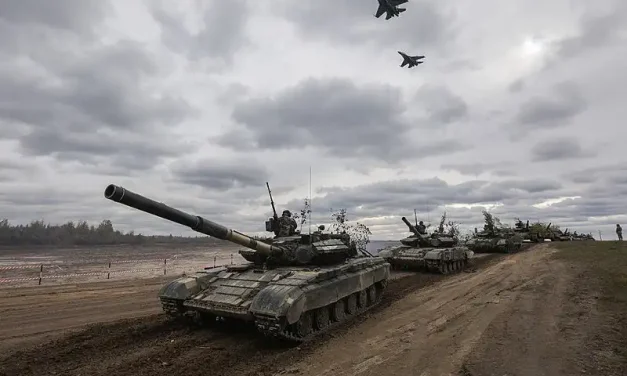
SCFR Online – Opinion: The Russia-Ukraine war and the war of the United States and the Israeli regime against Iran have been formed with different objectives and actors, but field and political developments indicate that they are not entirely separate from one another.

Loading

Top News

Bahrain’s Objectives behind Normalization of Relations with Syria

Bahrain’s Objectives behind Normalization of Relations with Syria

Strategic Council Online – Interview: An expert on the Middle East affairs, commenting on the targets of the recent measure of the King of Bahrain in appointing the ambassador extraordinary and plenipotentiary to Syria after 10 years said that Manama pursues two main targets in such measure; first, the use of economic benefits in Syria, that is to say participation in the reconstruction of the country, and second, with regard to the profound transformation in the new regional equations, including the Tehran-Riyadh talks and the reduction of US presence in the region, Bahrain does not want to lag behind such equations. In addition, alleviating pressure on the public opinion, due to the normalization of relations with the Zionist regime, can also be one of the objectives of the Zionist regime behind such action.

US Dangerous Ploy to Keep Covering Force in Iraq

US Dangerous Ploy to Keep Covering Force in Iraq

Strategic Council Online – Opinion: Staying of the US covering forces in Iraq in the future could lead to the escalation of the divisions and internal differences in the country.
Tahmoures Gholami – Expert on the US affairs

Normalization of Bahrain-Zionist Regime Relations; a Threat to Persian Gulf Security

Normalization of Bahrain-Zionist Regime Relations; a Threat to Persian Gulf Security

Council Online Strategic – Interview: An expert on the Middle East affairs commenting on the consequences of Bahrain’s decision to normalize relations with the Zionist regime said: Normalization of relations between the small country of Bahrain and the regime will not have much effect on changing the balance of power in favor of Tel Aviv, but in terms of the movements of the Palestinian militants, this hasty relationship is like a poisoned dagger that has stabbed the Palestinian people on the back.

French Middle East Policy & Its Utilitarian Role in Nuclear Talks

French Middle East Policy & Its Utilitarian Role in Nuclear Talks

Strategic Council Online – Opinion: After the conclusion of French weapons deal with the UAE, we witnessed a wave of internal and external critiques which assessed the French military attitude contrary to human rights attitude of the European Union, but due to some reservations, the European Union affiliated institutions remained tight-lipped in this respect.
Dr. Abbass Sarvestani, Graduated in European Studies, Tehran University

U.S. Instrumental Use of Human Rights to Exert Pressure on China

U.S. Instrumental Use of Human Rights to Exert Pressure on China

Strategic Council Online – Opinion: Further to Tiananmen Square incidents in 1989 and afterwards, criticism against Beijing’s attitudes in Xinjiang, Tibet, Hong Kong and other regions in China have been among the U.S. pivots of exerting pressure against China. As tensions increased in other fields during the recent years, the U.S. having resorted to human rights issues, attempted to mount pressures against China.
Mohammad Javad Ghahremani, Expert on Asia Affairs

New German Govt. Policy; Accompanying US in Nord Stream 2 Sanctions

New German Govt. Policy; Accompanying US in Nord Stream 2 Sanctions

Strategic Council Online – Interview: An analyst of international affairs said that the future of the Nord Stream 2 pipeline project is in a state of ambiguity, adding: The new coalition government in Germany, by suspending the operational process of the pipeline, is effectively moving in the direction intended by Washington and trying to use it as a pressure tool to prevent possible Russian measures against Ukraine.

Military Option Plan of the Zionist Regime against Iran; Psychological Warfare Versus Nuclear Talks

Military Option Plan of the Zionist Regime against Iran; Psychological Warfare Versus Nuclear Talks

Strategic Council Online – Opinion: Financial Committee of the Zionist regime parliament (Knesset) on December 23, 2021 added an amendment article to the budget bill for 2022 based on which the sum of $ 2.9 billion was added to the military budget of the Zionist regime for preparedness of the military attack against Iran’s nuclear facilities and installations.
Fatemeh Nekoo La’al Azad, Researcher of International Affairs

Turkey’s Strategy to Increase Presence in Africa, Its Challenges

Turkey’s Strategy to Increase Presence in Africa, Its Challenges

Strategic Council Online – Interview: A professor at the University of Tehran described the change in Turkey-Africa relations as a sign of Ankara’s multidimensional attention and dynamism in its foreign policy towards Africa and the prospect of a hopeful and long-term presence on that continent, adding: Ankara is seeking long-term strategic relations and to impact throughout the African continent.

Requirements of Efficient Economic Diplomacy in Neighborhood Policy

Requirements of Efficient Economic Diplomacy in Neighborhood Policy

Strategic council Online – Opinion: At the end of cold war and development in many concepts related to international relations, diplomacy was also subjected to change. As economic and cultural issues gained importance, monopoly of security and merely political issues was also reached to its ending and have lost their importance. Thus, based on the necessities of international environment, conventional diplomacy was replaced with newer diplomacies like economic diplomacy.
Hossein Sayahi, Researcher of International Issues

Postponement of Elections, Prospects of Political Developments in Libya

Postponement of Elections, Prospects of Political Developments in Libya

Strategic Council Online – Interview: An analyst on Africa affairs said that the hasty holding of the elections in Libya will not lead to any conclusion and could even increase tensions, adding: Although the decision to hold elections in that country was the result of numerous political processes and negotiations, now the elections have been postponed and there is still no clear prospect of holding the elections.

ÚLTIMAS PUBLICACIONES

The Makkah Pact; Reasons for its Formation and Challenges Ahead

SCFR Online – Opinion: The Makkah Pact, signed between Saudi Arabia, Pakistan, and Turkey under the motto “an attack on one is an attack on all,” is viewed by some analysts less as a full-fledged military coalition and more as an attempt to reduce security dependence on an external power and to establish a regional security mechanism.

Implications of the US-Saudi Nuclear Agreement

SCFR Online – Opinion: The new US-Saudi nuclear agreement, despite legal and political ambiguities, could alter previous non-proliferation standards in West Asia and intensify nuclear competition, ushering it into a new phase.

An Analysis of Recent Turkey-Israeli Regime Tensions

SCFR Online – Opinion: Recent developments in Syria indicate an intensification of strategic rivalry between Turkey and the Israeli regime, but mutual considerations and the role of the United States have limited the likelihood of direct war.

Increasing criticism of the extensive Zionist lobby network

SCFR Online – Opinion: An examination of the mechanisms of the Israeli regime’s influence in the United States depicts a complex picture of shared interests, strategic dependencies, and the limitations of this relationship.

Realities of the Tripartite Makkah Pact

SCFR Online – Interview: The signing of the Makkah agreement between Saudi Arabia, Pakistan, and Turkey has raised questions about the future of the region’s security structure and the position of these countries in West Asian equations. Can this agreement become a genuine collective defense mechanism, or does it have more of a political and deterrent function than creating new military capacity?

Strategic Implications of the Reduction of US Weapons Stockpiles

SCFR Online – Opinion: The continuation of the US war against Iran, in addition to increasing operational costs, has called into question the actual capacity of the American arsenal to simultaneously fulfill security commitments on multiple fronts; an issue that affects deterrence, defense production capacity, and Washington’s resource prioritization.

The Formation of a New Order in Relations Between Powers

SCFR Online – Opinion: The Russia-Ukraine war and the war of the United States and the Israeli regime against Iran have been formed with different objectives and actors, but field and political developments indicate that they are not entirely separate from one another.

Loading