
Bahman Sayadi – Expert on American affairs
The US war against Iran in Donald Trump’s second presidential term is no longer merely a repetition of the “maximum pressure” policy. Direct war, economic sanctions, military threats, pressure on energy routes, and indirect negotiations have now been placed within a single framework. From this perspective, Washington’s strategy is a combination of economic pressure to erode Tehran’s decision-making capacity and military threat to increase the cost of resistance; however, the experience of war has shown that converting military superiority into a sustainable political outcome is more complex than initiating military operations.
Pressure for a deal, threat for surrender
An analysis published by the American Security Policy Center regarding Trump’s strategy toward Iran, in conjunction with the recent statements of the US President, is based on the perception that military and economic pressure should push Tehran toward accepting a new agreement. This center has also presented its material within the framework of examining Trump’s recent positions and the possibility of new negotiations.
This logic was also seen in Trump’s remarks at the UN General Assembly. On September 22, 2026, he said there is still “a lot of movement” for a deal with Iran, but a day later in another speech he threatened to “destroy” the Islamic Republic if diplomacy fails. The “Responsible Statecraft” think tank has considered these positions an example of the linkage of economic pressure and military threat in Washington’s policy toward Tehran.
This approach creates a strategic contradiction; negotiation increases the possibility of agreement when the other side feels there are real options, while the threat of destruction can distort the negotiating atmosphere; therefore, “pressure for negotiation” and “threat for surrender” do not always reinforce each other.
Economic pressure versus strategic capacity
One of the foundations of Washington’s calculation is sanctions, pressure on oil exports, and restricting Iran’s financial and trade networks. An article about sanctions circumvention networks, citing claims by the US government and institutions, has alleged that Iran’s oil transfer networks, vessel activities, and certain settlement methods have created greater cost and risk for trading companies. These claims should not be treated as a reality independent of the dispute, but as the argument of their publishers.
However, Iran’s resilience is not measured solely by currency indicators or the volume of oil exports. The experience of war has shown that Tehran still possesses considerable capacities in the fields of missiles, drones, electronic warfare, strategic geography, and regional networks, and these very capacities can increase the cost of expanding the war. In contrast, economic pressure also imposes costs on investment, trade, the value of the national currency, the budget, and public welfare, which are manageable and need not be concealed.
Therefore, the main issue is competition over the ability to manage the costs of war, rebuild capacities, and prevent the realization of the other side’s political objective. This very situation transforms the war from a short military confrontation into an attritional and multi-layered competition.
Diplomacy amid war
The statements of President Pezeshkian at the UN General Assembly on September 23 showed that Tehran, while rejecting Washington’s accusations and emphasizing resistance, has not completely closed the door to diplomacy. He rejected the US accusation regarding Iran’s support for terrorism and considered Iran a victim of terrorist attacks, and at the same time emphasized readiness to continue dialogue and political resolution of the crisis from an equal and just position.
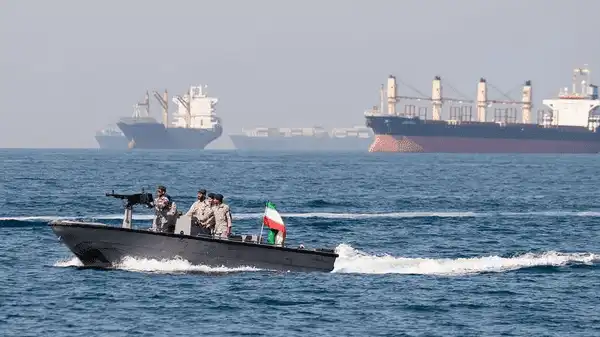
This situation can be considered part of the logic of negotiation in wartime conditions. Tehran distinguishes between “accepting dialogue” and “negotiation under pressure.” Washington, on one hand, has maintained sanctions and threats, and on the other hand, has kept indirect channels open. Recent reports also indicate the continuation of contacts through mediators. On September 30, Iran confirmed the official receipt of the US response to its latest proposal; a proposal that had placed the reopening of the Strait of Hormuz against the lifting of the blockade and part of the sanctions.
Probable scenarios
First scenario: Temporary and limited agreement
In this scenario, the two sides, without resolving all differences, focus on a limited package that could include a relative reduction of military operations, arrangements for the security of shipping and the Strait of Hormuz, some sanctions relief, nuclear monitoring mechanisms, and the resumption of negotiations.
The advantage of this framework is reducing the immediate cost of war without resolving fundamental differences; but the experience of previous understandings has shown that guaranteeing implementation, the order of steps, and the issue of trust are also important. Iran’s seven-day proposal for reopening Hormuz was based on reciprocal steps, but Trump did not accept it, although the negotiation channels did not completely stop afterward.
Continuation of the second scenario: Attrition and limited war
In this situation, neither a final agreement is formed nor does an all-out war continue. Sanctions, cyber and intelligence operations, pressure on shipping, limited attacks, and actions by regional actors continue. This pattern can prevent crossing the threshold of a full-scale war, but it also carries the risk of “normalization of attrition” and affects the region’s economy, energy security, and the calculations of third-party actors.
Third scenario: Expansion of direct and regional war
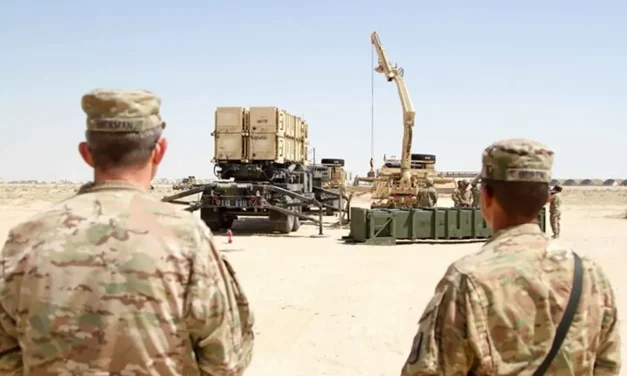
In this scenario, the failure of negotiations or a major military attack can increase the threshold of conflict and lead to more direct and broader attacks. In such a situation, the Strait of Hormuz, US bases, Persian Gulf energy infrastructure, and regional fronts become interconnected.
Its consequences will not be only military and can include disruption in energy, increased oil and gas prices, pressure on shipping, expansion of risk to Iraq, Yemen, the Persian Gulf, and the Red Sea, and increased costs for US allies. In contrast, the continuation of such a situation can also increase its economic and political costs.
Conclusion
At the current juncture, the evidence indicates more the continuation of simultaneous pressure and diplomacy than a definitive choice between “negotiation or war.” America has maintained economic pressure and military threat, but indirect channels with Tehran are still active. Iran has also not rejected negotiation, but has linked it to reciprocal arrangements and the removal of part of the pressures.


0 Comments