

Abbas Younesian – Defense affairs expert
The Changing Nature of Sea Control
Naval power was long measured by large warships, submarines, carrier-based aircraft, and the ability to protect shipping lanes. But recent wars, from the Black Sea to the Persian Gulf and the Red Sea, have shown that unmanned surface vessels can perform reconnaissance, attack, deception, rescue, and logistical support missions at lower cost. A JINSA article on the expansion of war with unmanned military machines to the high seas reports that on September 14, a Ukrainian USV attacked a Russian vessel of the same type in the Black Sea. This analysis also reports America’s use of offensive unmanned vessels against submarine and naval installations in Iran in July.
These developments do not mean large warships have become useless, but they show that their monopoly over exercising sea control has diminished. Cheap and numerous vessels can force the defender to use expensive interceptors, radars, and costly manpower. However, the effectiveness of these vessels depends on identification, communications, guidance, and resistance to electronic warfare. Therefore, the main advantage lies in the combination of small systems, an information network, and manned platforms, and this does not mean the complete replacement of one technology by another.
Ansarullah and the Expansion of the Battlefield to the Waterways
Ansarullah’s attacks on shipping and Saudi infrastructure have exposed the link between coastal war and energy security and global trade. Eurasia Review, in two articles, emphasizes the connection between threats in Hormuz and Bab el-Mandeb. Rising risk at either of these chokepoints, even if it does not lead to a halt in all traffic, can force shipping companies to choose longer routes, accept higher insurance costs, and readjust logistical plans.
JINSA researchers also argue that coastal advance and control of positions near Bab el-Mandeb can expand the threat from long-range missiles and drones to artillery and short-range rockets. The strategic point of this analysis is that the geographic proximity of the attacker to the ship transit route complicates naval defense and increases the need for continuous protection.
America’s Strategy and the Limits of Victory in Hormuz
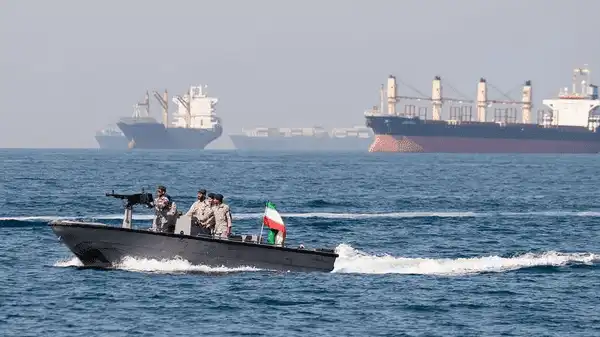
The article “What Was Misunderstood About Victory in the Battle of Hormuz?” in the American Conservative critiques the simplistic notion of controlling the waterway by relying on naval superiority. Naval power can escort ships and target coastal positions, but guaranteeing commercial passage against mines, coastal missiles, drones, and information disruption requires many resources. Even military dominance over the route does not prevent higher insurance rates or the rerouting of ships due to remaining risks.
This difference between military superiority and economic security is of fundamental importance. The International Crisis Group’s report on factors affecting the energy market shows that the consequences of war, in addition to the volume of attacks, also depend on reserves, refining capacity, alternative routes, producers’ reactions, and market expectations. The Responsible Statecraft website also warns that increased tanker traffic through Hormuz does not necessarily mean a return to normal conditions; especially if prices remain high, reserves are depleted, and insecurity continues; therefore, America’s criterion of success is not only the temporary reopening of the route, but the creation of conditions in which trade continues with predictable cost and risk.
Vulnerability of Refineries and the Supply Chain
The article “The Refinery War and the Vulnerability of Modern Society” emphasizes the dependence of energy infrastructure on concentrated facilities and interconnected networks. Refineries, export terminals, pipelines, and storage tanks are large and identifiable targets, and full protection of all their components is difficult. A limited attack on one vital node can disrupt production and exports and, through increased transport and insurance costs, affect distant economies as well.
This vulnerability reinforces the logic of asymmetric warfare. An actor that does not possess a large fleet or equal air power can, through low-cost attacks, mining, unmanned vessels, and threats to coastal infrastructure, force the opposing side to spend far more on defense. However, prolonged disruption of trade also harms the economies of regional countries and may provide the ground for the formation of new coalitions to protect routes, although the success of such initiatives is entirely questionable.
Strategic Implications for Energy Security
The article by the American think tank the Center for Security Policy on the importance of USVs for Taiwan’s security shows that cheap and dispersed platforms can create deterrence and complicate amphibious operations. A similar logic in the Persian Gulf allows actors, alongside missiles and drones, to use low-cost naval tools as well. In contrast, America and its allies are compelled to move from point defense against every means to shared identification networks, distributed interception, and the use of defensive unmanned vessels.
These developments increase, for Iran, the importance of electronic warfare, coastal defense, maritime awareness, and risk management; but the ability to create disruption is not the same as the ability to sustainably control the waterway. Maritime pressure may create bargaining power, but converting it into a political outcome requires diplomacy. Otherwise, the likelihood of the formation of counter-coalitions and the imposition of costs on the regional economy will increase.
Ultimately, the battle of the waterways is not merely a competition of warships and drones, but a competition over preserving or disrupting a network of energy, trade, information, and market trust. Real superiority is formed when military power can guarantee the sustainable security of the flow of goods; a goal that is not easily attainable even for major naval powers.





0 Comments