جدیدترین مطالب

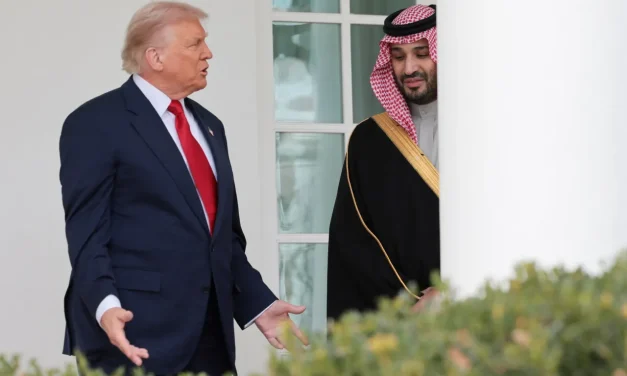
Implications of the US-Saudi Nuclear Agreement

SCFR Online – Opinion: The new US-Saudi nuclear agreement, despite legal and political ambiguities, could alter previous non-proliferation standards in West Asia and intensify nuclear competition, ushering it into a new phase.
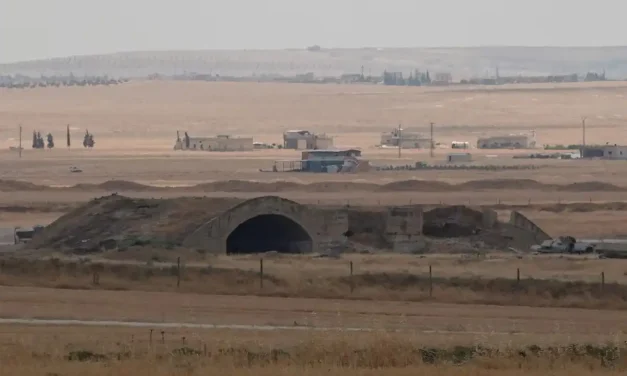
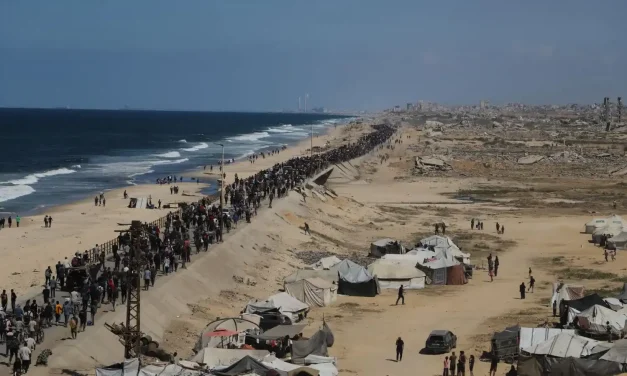
An Analysis of Recent Turkey-Israeli Regime Tensions

SCFR Online – Opinion: Recent developments in Syria indicate an intensification of strategic rivalry between Turkey and the Israeli regime, but mutual considerations and the role of the United States have limited the likelihood of direct war.

Increasing criticism of the extensive Zionist lobby network

SCFR Online – Opinion: An examination of the mechanisms of the Israeli regime’s influence in the United States depicts a complex picture of shared interests, strategic dependencies, and the limitations of this relationship.

Realities of the Tripartite Makkah Pact

SCFR Online – Interview: The signing of the Makkah agreement between Saudi Arabia, Pakistan, and Turkey has raised questions about the future of the region’s security structure and the position of these countries in West Asian equations. Can this agreement become a genuine collective defense mechanism, or does it have more of a political and deterrent function than creating new military capacity?

Strategic Implications of the Reduction of US Weapons Stockpiles

SCFR Online – Opinion: The continuation of the US war against Iran, in addition to increasing operational costs, has called into question the actual capacity of the American arsenal to simultaneously fulfill security commitments on multiple fronts; an issue that affects deterrence, defense production capacity, and Washington’s resource prioritization.

The Formation of a New Order in Relations Between Powers

SCFR Online – Opinion: The Russia-Ukraine war and the war of the United States and the Israeli regime against Iran have been formed with different objectives and actors, but field and political developments indicate that they are not entirely separate from one another.

An Analysis of the Makkah Defense Pact

SCFR Online – Opinion: On Friday, August 7, the heads of state of three countries – Saudi Arabia, Turkey, and Pakistan – signed a text under the title “Makkah Joint Defense Agreement.”

Loading

Top News

Strategic goals of Turkey in its military invasion in the north of Iraq

Strategic goals of Turkey in its military invasion in the north of Iraq

Strategic Council Online—Interview: A university professor says if tensions are de-escalated in Iraq and the central government is able to control the situation including in all military and economic centers, the Turkish government and other trans-regional governments could not be able to exert influence in that country.

Factors Strengthening Position of Resistance among Regional Nations

Factors Strengthening Position of Resistance among Regional Nations

Strategic Council Online – The recent speeches delivered by Sayyed Hassan Nasrallah, Secretary-General of Hezbollah in Lebanon, and Sayyed Abdul Malik Badruddin al-Houthi, the leader of Yemen’s Ansarollah, once again drew attention to the importance of the issue of resistance.
Hassan Hanizadeh – expert on the Middle East affairs

Muslim Brotherhood and Turkey’s Strategic View in Negotiations with Egypt

Muslim Brotherhood and Turkey’s Strategic View in Negotiations with Egypt

Strategic Council Online – A university professor, stressing that Turkey would never move towards eliminating the Muslim Brotherhood and will maintain relationships with them and in some cases use their card to score points, said: Turkey’s view of foreign policy issues is not ideological, but based on interests.

25-Year Cooperation Agreement between China and National interests of Iran

25-Year Cooperation Agreement between China and National interests of Iran

Strategic Council Online- Signing of the 25-year agreement between the Islamic Republic of Iran and China within the past few months, has fanned a lot of debates. Efforts have been made to assess it from different points of view in this short article and to elaborate its consequences for Iran’s national interest.
Arash Raeissinia, Professor of International Relations, Tehran University

Reasons for Change in Saudi Attitude towards Syria

Reasons for Change in Saudi Attitude towards Syria

Strategic Council Online – An expert on the Middle East affairs commenting on news published by the British Guardian newspaper that the process of normalization of relations between Syria and Saudi Arabia after Eid al-Fitr is possible, said: The rift in the triangle of Netanyahu, Trump and Bin Salman has prompted Saudi leaders to seek to change their regional approaches, especially in troubled areas such as Syria and Yemen.

State of Reaction to Israel’s Breach of Russian Red Lines in Syria

State of Reaction to Israel’s Breach of Russian Red Lines in Syria

Strategic Council Online – The recent attacks by Israeli jet fighters on areas in the northwest of Syria are a serious warning for the beginning of a new round of the regime’s disputes with Russia in Syria. Until recently, relations between Russia and the Zionist regime in Syria, according to Moscow’s considerations, were defined on the basis of the principle of coordination in some areas of security and intelligence, but with the recent Zionist regime invasion of areas northwest of Syria, where Russian forces are stationed, the previous coordination will be undermined.
Hamid Khoshayand – Analyst of international affairs

Russia and SWIFT

Russia and SWIFT

Strategic Council Online – A spokesman for the Russian Foreign Ministry recently announced that Russia is preparing to be removed from SWIFT. His remarks came in response to a European Parliament resolution calling for Russia to cut ties with SWIFT if it continues to invade Ukraine. The question now is how feasible is this Russian move? What are its implications for SWIFT and international trade? What are the roots of this decision and how far can the countries involved in SWIFT go with the option of sanctioning and leaving SWIFT?
Reza Majidzadeh – Researcher of development political economy

Alignment of US-Europe Positions in G7 Meeting

Alignment of US-Europe Positions in G7 Meeting

Strategic Council Online – An expert on Europe affairs, with regard to the most important topics raised in the three-day talks of foreign ministers of the Group of Seven in London said: The Coronavirus issue, the containment of China and Russia, and the revival of the Joint Comprehensive Plan of Action (JCPOA) have been among the most important issues of the talks.

Reasons for Zionist Regime’s Concern, Opposition to Palestinian Elections

Reasons for Zionist Regime’s Concern, Opposition to Palestinian Elections

Strategic Council Online – An expert on Palestine affairs, commenting on the recent decision of Mahmoud Abbas, the head of the Palestinian Authority, to postpone the Palestinian elections said: The most important issue that has now led to the suspension of the Palestinian elections was the protest of the Zionists; because they do not want the elections to take place as they know that holding the elections will have serious consequences for them.

Netanyahu end-game and political instability of Zionist Regime

Netanyahu end-game and political instability of Zionist Regime

Strategic Council Online: Pointing out to Benjamin Netanyahu’s failure to form a cabinet, and appointment of Yair Lapid, leader of moderate Yesh Atid party to form the cabinet, a middle-east expert said Lapid has the support of 56 seats out of 120 Knesset MPs but in order to form his cabinet, he still needs to make a coalition with other parties.

أحدث الوظائف

Implications of the US-Saudi Nuclear Agreement

SCFR Online – Opinion: The new US-Saudi nuclear agreement, despite legal and political ambiguities, could alter previous non-proliferation standards in West Asia and intensify nuclear competition, ushering it into a new phase.

An Analysis of Recent Turkey-Israeli Regime Tensions

SCFR Online – Opinion: Recent developments in Syria indicate an intensification of strategic rivalry between Turkey and the Israeli regime, but mutual considerations and the role of the United States have limited the likelihood of direct war.

Increasing criticism of the extensive Zionist lobby network

SCFR Online – Opinion: An examination of the mechanisms of the Israeli regime’s influence in the United States depicts a complex picture of shared interests, strategic dependencies, and the limitations of this relationship.

Realities of the Tripartite Makkah Pact

SCFR Online – Interview: The signing of the Makkah agreement between Saudi Arabia, Pakistan, and Turkey has raised questions about the future of the region’s security structure and the position of these countries in West Asian equations. Can this agreement become a genuine collective defense mechanism, or does it have more of a political and deterrent function than creating new military capacity?

Strategic Implications of the Reduction of US Weapons Stockpiles

SCFR Online – Opinion: The continuation of the US war against Iran, in addition to increasing operational costs, has called into question the actual capacity of the American arsenal to simultaneously fulfill security commitments on multiple fronts; an issue that affects deterrence, defense production capacity, and Washington’s resource prioritization.

The Formation of a New Order in Relations Between Powers

SCFR Online – Opinion: The Russia-Ukraine war and the war of the United States and the Israeli regime against Iran have been formed with different objectives and actors, but field and political developments indicate that they are not entirely separate from one another.

An Analysis of the Makkah Defense Pact

SCFR Online – Opinion: On Friday, August 7, the heads of state of three countries – Saudi Arabia, Turkey, and Pakistan – signed a text under the title “Makkah Joint Defense Agreement.”

Loading

Top News

Strategic goals of Turkey in its military invasion in the north of Iraq

Strategic goals of Turkey in its military invasion in the north of Iraq

Strategic Council Online—Interview: A university professor says if tensions are de-escalated in Iraq and the central government is able to control the situation including in all military and economic centers, the Turkish government and other trans-regional governments could not be able to exert influence in that country.

Factors Strengthening Position of Resistance among Regional Nations

Factors Strengthening Position of Resistance among Regional Nations

Strategic Council Online – The recent speeches delivered by Sayyed Hassan Nasrallah, Secretary-General of Hezbollah in Lebanon, and Sayyed Abdul Malik Badruddin al-Houthi, the leader of Yemen’s Ansarollah, once again drew attention to the importance of the issue of resistance.
Hassan Hanizadeh – expert on the Middle East affairs

Muslim Brotherhood and Turkey’s Strategic View in Negotiations with Egypt

Muslim Brotherhood and Turkey’s Strategic View in Negotiations with Egypt

Strategic Council Online – A university professor, stressing that Turkey would never move towards eliminating the Muslim Brotherhood and will maintain relationships with them and in some cases use their card to score points, said: Turkey’s view of foreign policy issues is not ideological, but based on interests.

25-Year Cooperation Agreement between China and National interests of Iran

25-Year Cooperation Agreement between China and National interests of Iran

Strategic Council Online- Signing of the 25-year agreement between the Islamic Republic of Iran and China within the past few months, has fanned a lot of debates. Efforts have been made to assess it from different points of view in this short article and to elaborate its consequences for Iran’s national interest.
Arash Raeissinia, Professor of International Relations, Tehran University

Reasons for Change in Saudi Attitude towards Syria

Reasons for Change in Saudi Attitude towards Syria

Strategic Council Online – An expert on the Middle East affairs commenting on news published by the British Guardian newspaper that the process of normalization of relations between Syria and Saudi Arabia after Eid al-Fitr is possible, said: The rift in the triangle of Netanyahu, Trump and Bin Salman has prompted Saudi leaders to seek to change their regional approaches, especially in troubled areas such as Syria and Yemen.

State of Reaction to Israel’s Breach of Russian Red Lines in Syria

State of Reaction to Israel’s Breach of Russian Red Lines in Syria

Strategic Council Online – The recent attacks by Israeli jet fighters on areas in the northwest of Syria are a serious warning for the beginning of a new round of the regime’s disputes with Russia in Syria. Until recently, relations between Russia and the Zionist regime in Syria, according to Moscow’s considerations, were defined on the basis of the principle of coordination in some areas of security and intelligence, but with the recent Zionist regime invasion of areas northwest of Syria, where Russian forces are stationed, the previous coordination will be undermined.
Hamid Khoshayand – Analyst of international affairs

Russia and SWIFT

Russia and SWIFT

Strategic Council Online – A spokesman for the Russian Foreign Ministry recently announced that Russia is preparing to be removed from SWIFT. His remarks came in response to a European Parliament resolution calling for Russia to cut ties with SWIFT if it continues to invade Ukraine. The question now is how feasible is this Russian move? What are its implications for SWIFT and international trade? What are the roots of this decision and how far can the countries involved in SWIFT go with the option of sanctioning and leaving SWIFT?
Reza Majidzadeh – Researcher of development political economy

Alignment of US-Europe Positions in G7 Meeting

Alignment of US-Europe Positions in G7 Meeting

Strategic Council Online – An expert on Europe affairs, with regard to the most important topics raised in the three-day talks of foreign ministers of the Group of Seven in London said: The Coronavirus issue, the containment of China and Russia, and the revival of the Joint Comprehensive Plan of Action (JCPOA) have been among the most important issues of the talks.

Reasons for Zionist Regime’s Concern, Opposition to Palestinian Elections

Reasons for Zionist Regime’s Concern, Opposition to Palestinian Elections

Strategic Council Online – An expert on Palestine affairs, commenting on the recent decision of Mahmoud Abbas, the head of the Palestinian Authority, to postpone the Palestinian elections said: The most important issue that has now led to the suspension of the Palestinian elections was the protest of the Zionists; because they do not want the elections to take place as they know that holding the elections will have serious consequences for them.

Netanyahu end-game and political instability of Zionist Regime

Netanyahu end-game and political instability of Zionist Regime

Strategic Council Online: Pointing out to Benjamin Netanyahu’s failure to form a cabinet, and appointment of Yair Lapid, leader of moderate Yesh Atid party to form the cabinet, a middle-east expert said Lapid has the support of 56 seats out of 120 Knesset MPs but in order to form his cabinet, he still needs to make a coalition with other parties.

Top News

Strategic goals of Turkey in its military invasion in the north of Iraq

Strategic goals of Turkey in its military invasion in the north of Iraq

Strategic Council Online—Interview: A university professor says if tensions are de-escalated in Iraq and the central government is able to control the situation including in all military and economic centers, the Turkish government and other trans-regional governments could not be able to exert influence in that country.

Factors Strengthening Position of Resistance among Regional Nations

Factors Strengthening Position of Resistance among Regional Nations

Strategic Council Online – The recent speeches delivered by Sayyed Hassan Nasrallah, Secretary-General of Hezbollah in Lebanon, and Sayyed Abdul Malik Badruddin al-Houthi, the leader of Yemen’s Ansarollah, once again drew attention to the importance of the issue of resistance.
Hassan Hanizadeh – expert on the Middle East affairs

Muslim Brotherhood and Turkey’s Strategic View in Negotiations with Egypt

Muslim Brotherhood and Turkey’s Strategic View in Negotiations with Egypt

Strategic Council Online – A university professor, stressing that Turkey would never move towards eliminating the Muslim Brotherhood and will maintain relationships with them and in some cases use their card to score points, said: Turkey’s view of foreign policy issues is not ideological, but based on interests.

25-Year Cooperation Agreement between China and National interests of Iran

25-Year Cooperation Agreement between China and National interests of Iran

Strategic Council Online- Signing of the 25-year agreement between the Islamic Republic of Iran and China within the past few months, has fanned a lot of debates. Efforts have been made to assess it from different points of view in this short article and to elaborate its consequences for Iran’s national interest.
Arash Raeissinia, Professor of International Relations, Tehran University

Reasons for Change in Saudi Attitude towards Syria

Reasons for Change in Saudi Attitude towards Syria

Strategic Council Online – An expert on the Middle East affairs commenting on news published by the British Guardian newspaper that the process of normalization of relations between Syria and Saudi Arabia after Eid al-Fitr is possible, said: The rift in the triangle of Netanyahu, Trump and Bin Salman has prompted Saudi leaders to seek to change their regional approaches, especially in troubled areas such as Syria and Yemen.

State of Reaction to Israel’s Breach of Russian Red Lines in Syria

State of Reaction to Israel’s Breach of Russian Red Lines in Syria

Strategic Council Online – The recent attacks by Israeli jet fighters on areas in the northwest of Syria are a serious warning for the beginning of a new round of the regime’s disputes with Russia in Syria. Until recently, relations between Russia and the Zionist regime in Syria, according to Moscow’s considerations, were defined on the basis of the principle of coordination in some areas of security and intelligence, but with the recent Zionist regime invasion of areas northwest of Syria, where Russian forces are stationed, the previous coordination will be undermined.
Hamid Khoshayand – Analyst of international affairs

Russia and SWIFT

Russia and SWIFT

Strategic Council Online – A spokesman for the Russian Foreign Ministry recently announced that Russia is preparing to be removed from SWIFT. His remarks came in response to a European Parliament resolution calling for Russia to cut ties with SWIFT if it continues to invade Ukraine. The question now is how feasible is this Russian move? What are its implications for SWIFT and international trade? What are the roots of this decision and how far can the countries involved in SWIFT go with the option of sanctioning and leaving SWIFT?
Reza Majidzadeh – Researcher of development political economy

Alignment of US-Europe Positions in G7 Meeting

Alignment of US-Europe Positions in G7 Meeting

Strategic Council Online – An expert on Europe affairs, with regard to the most important topics raised in the three-day talks of foreign ministers of the Group of Seven in London said: The Coronavirus issue, the containment of China and Russia, and the revival of the Joint Comprehensive Plan of Action (JCPOA) have been among the most important issues of the talks.

Reasons for Zionist Regime’s Concern, Opposition to Palestinian Elections

Reasons for Zionist Regime’s Concern, Opposition to Palestinian Elections

Strategic Council Online – An expert on Palestine affairs, commenting on the recent decision of Mahmoud Abbas, the head of the Palestinian Authority, to postpone the Palestinian elections said: The most important issue that has now led to the suspension of the Palestinian elections was the protest of the Zionists; because they do not want the elections to take place as they know that holding the elections will have serious consequences for them.

Netanyahu end-game and political instability of Zionist Regime

Netanyahu end-game and political instability of Zionist Regime

Strategic Council Online: Pointing out to Benjamin Netanyahu’s failure to form a cabinet, and appointment of Yair Lapid, leader of moderate Yesh Atid party to form the cabinet, a middle-east expert said Lapid has the support of 56 seats out of 120 Knesset MPs but in order to form his cabinet, he still needs to make a coalition with other parties.

LATEST CONTENT

Implications of the US-Saudi Nuclear Agreement

SCFR Online – Opinion: The new US-Saudi nuclear agreement, despite legal and political ambiguities, could alter previous non-proliferation standards in West Asia and intensify nuclear competition, ushering it into a new phase.
An Analysis of Recent Turkey-Israeli Regime Tensions

SCFR Online – Opinion: Recent developments in Syria indicate an intensification of strategic rivalry between Turkey and the Israeli regime, but mutual considerations and the role of the United States have limited the likelihood of direct war.

Increasing criticism of the extensive Zionist lobby network

SCFR Online – Opinion: An examination of the mechanisms of the Israeli regime’s influence in the United States depicts a complex picture of shared interests, strategic dependencies, and the limitations of this relationship.

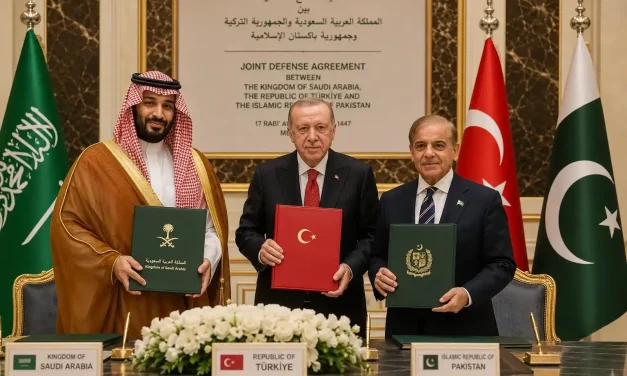
Realities of the Tripartite Makkah Pact

SCFR Online – Interview: The signing of the Makkah agreement between Saudi Arabia, Pakistan, and Turkey has raised questions about the future of the region’s security structure and the position of these countries in West Asian equations. Can this agreement become a genuine collective defense mechanism, or does it have more of a political and deterrent function than creating new military capacity?

Strategic Implications of the Reduction of US Weapons Stockpiles

SCFR Online – Opinion: The continuation of the US war against Iran, in addition to increasing operational costs, has called into question the actual capacity of the American arsenal to simultaneously fulfill security commitments on multiple fronts; an issue that affects deterrence, defense production capacity, and Washington’s resource prioritization.

The Formation of a New Order in Relations Between Powers

SCFR Online – Opinion: The Russia-Ukraine war and the war of the United States and the Israeli regime against Iran have been formed with different objectives and actors, but field and political developments indicate that they are not entirely separate from one another.

An Analysis of the Makkah Defense Pact

SCFR Online – Opinion: On Friday, August 7, the heads of state of three countries – Saudi Arabia, Turkey, and Pakistan – signed a text under the title “Makkah Joint Defense Agreement.”

Loading

Top News

Strategic goals of Turkey in its military invasion in the north of Iraq

Strategic goals of Turkey in its military invasion in the north of Iraq

Strategic Council Online—Interview: A university professor says if tensions are de-escalated in Iraq and the central government is able to control the situation including in all military and economic centers, the Turkish government and other trans-regional governments could not be able to exert influence in that country.

Factors Strengthening Position of Resistance among Regional Nations

Factors Strengthening Position of Resistance among Regional Nations

Strategic Council Online – The recent speeches delivered by Sayyed Hassan Nasrallah, Secretary-General of Hezbollah in Lebanon, and Sayyed Abdul Malik Badruddin al-Houthi, the leader of Yemen’s Ansarollah, once again drew attention to the importance of the issue of resistance.
Hassan Hanizadeh – expert on the Middle East affairs

Muslim Brotherhood and Turkey’s Strategic View in Negotiations with Egypt

Muslim Brotherhood and Turkey’s Strategic View in Negotiations with Egypt

Strategic Council Online – A university professor, stressing that Turkey would never move towards eliminating the Muslim Brotherhood and will maintain relationships with them and in some cases use their card to score points, said: Turkey’s view of foreign policy issues is not ideological, but based on interests.

25-Year Cooperation Agreement between China and National interests of Iran

25-Year Cooperation Agreement between China and National interests of Iran

Strategic Council Online- Signing of the 25-year agreement between the Islamic Republic of Iran and China within the past few months, has fanned a lot of debates. Efforts have been made to assess it from different points of view in this short article and to elaborate its consequences for Iran’s national interest.
Arash Raeissinia, Professor of International Relations, Tehran University

Reasons for Change in Saudi Attitude towards Syria

Reasons for Change in Saudi Attitude towards Syria

Strategic Council Online – An expert on the Middle East affairs commenting on news published by the British Guardian newspaper that the process of normalization of relations between Syria and Saudi Arabia after Eid al-Fitr is possible, said: The rift in the triangle of Netanyahu, Trump and Bin Salman has prompted Saudi leaders to seek to change their regional approaches, especially in troubled areas such as Syria and Yemen.

State of Reaction to Israel’s Breach of Russian Red Lines in Syria

State of Reaction to Israel’s Breach of Russian Red Lines in Syria

Strategic Council Online – The recent attacks by Israeli jet fighters on areas in the northwest of Syria are a serious warning for the beginning of a new round of the regime’s disputes with Russia in Syria. Until recently, relations between Russia and the Zionist regime in Syria, according to Moscow’s considerations, were defined on the basis of the principle of coordination in some areas of security and intelligence, but with the recent Zionist regime invasion of areas northwest of Syria, where Russian forces are stationed, the previous coordination will be undermined.
Hamid Khoshayand – Analyst of international affairs

Russia and SWIFT

Russia and SWIFT

Strategic Council Online – A spokesman for the Russian Foreign Ministry recently announced that Russia is preparing to be removed from SWIFT. His remarks came in response to a European Parliament resolution calling for Russia to cut ties with SWIFT if it continues to invade Ukraine. The question now is how feasible is this Russian move? What are its implications for SWIFT and international trade? What are the roots of this decision and how far can the countries involved in SWIFT go with the option of sanctioning and leaving SWIFT?
Reza Majidzadeh – Researcher of development political economy

Alignment of US-Europe Positions in G7 Meeting

Alignment of US-Europe Positions in G7 Meeting

Strategic Council Online – An expert on Europe affairs, with regard to the most important topics raised in the three-day talks of foreign ministers of the Group of Seven in London said: The Coronavirus issue, the containment of China and Russia, and the revival of the Joint Comprehensive Plan of Action (JCPOA) have been among the most important issues of the talks.

Reasons for Zionist Regime’s Concern, Opposition to Palestinian Elections

Reasons for Zionist Regime’s Concern, Opposition to Palestinian Elections

Strategic Council Online – An expert on Palestine affairs, commenting on the recent decision of Mahmoud Abbas, the head of the Palestinian Authority, to postpone the Palestinian elections said: The most important issue that has now led to the suspension of the Palestinian elections was the protest of the Zionists; because they do not want the elections to take place as they know that holding the elections will have serious consequences for them.

Netanyahu end-game and political instability of Zionist Regime

Netanyahu end-game and political instability of Zionist Regime

Strategic Council Online: Pointing out to Benjamin Netanyahu’s failure to form a cabinet, and appointment of Yair Lapid, leader of moderate Yesh Atid party to form the cabinet, a middle-east expert said Lapid has the support of 56 seats out of 120 Knesset MPs but in order to form his cabinet, he still needs to make a coalition with other parties.

ÚLTIMAS PUBLICACIONES

Implications of the US-Saudi Nuclear Agreement

SCFR Online – Opinion: The new US-Saudi nuclear agreement, despite legal and political ambiguities, could alter previous non-proliferation standards in West Asia and intensify nuclear competition, ushering it into a new phase.
An Analysis of Recent Turkey-Israeli Regime Tensions

SCFR Online – Opinion: Recent developments in Syria indicate an intensification of strategic rivalry between Turkey and the Israeli regime, but mutual considerations and the role of the United States have limited the likelihood of direct war.

Increasing criticism of the extensive Zionist lobby network

SCFR Online – Opinion: An examination of the mechanisms of the Israeli regime’s influence in the United States depicts a complex picture of shared interests, strategic dependencies, and the limitations of this relationship.

Realities of the Tripartite Makkah Pact

SCFR Online – Interview: The signing of the Makkah agreement between Saudi Arabia, Pakistan, and Turkey has raised questions about the future of the region’s security structure and the position of these countries in West Asian equations. Can this agreement become a genuine collective defense mechanism, or does it have more of a political and deterrent function than creating new military capacity?

Strategic Implications of the Reduction of US Weapons Stockpiles

SCFR Online – Opinion: The continuation of the US war against Iran, in addition to increasing operational costs, has called into question the actual capacity of the American arsenal to simultaneously fulfill security commitments on multiple fronts; an issue that affects deterrence, defense production capacity, and Washington’s resource prioritization.

The Formation of a New Order in Relations Between Powers

SCFR Online – Opinion: The Russia-Ukraine war and the war of the United States and the Israeli regime against Iran have been formed with different objectives and actors, but field and political developments indicate that they are not entirely separate from one another.

An Analysis of the Makkah Defense Pact

SCFR Online – Opinion: On Friday, August 7, the heads of state of three countries – Saudi Arabia, Turkey, and Pakistan – signed a text under the title “Makkah Joint Defense Agreement.”

Loading

Top News

Strategic goals of Turkey in its military invasion in the north of Iraq

Strategic goals of Turkey in its military invasion in the north of Iraq

Strategic Council Online—Interview: A university professor says if tensions are de-escalated in Iraq and the central government is able to control the situation including in all military and economic centers, the Turkish government and other trans-regional governments could not be able to exert influence in that country.

Factors Strengthening Position of Resistance among Regional Nations

Factors Strengthening Position of Resistance among Regional Nations

Strategic Council Online – The recent speeches delivered by Sayyed Hassan Nasrallah, Secretary-General of Hezbollah in Lebanon, and Sayyed Abdul Malik Badruddin al-Houthi, the leader of Yemen’s Ansarollah, once again drew attention to the importance of the issue of resistance.
Hassan Hanizadeh – expert on the Middle East affairs

Muslim Brotherhood and Turkey’s Strategic View in Negotiations with Egypt

Muslim Brotherhood and Turkey’s Strategic View in Negotiations with Egypt

Strategic Council Online – A university professor, stressing that Turkey would never move towards eliminating the Muslim Brotherhood and will maintain relationships with them and in some cases use their card to score points, said: Turkey’s view of foreign policy issues is not ideological, but based on interests.

25-Year Cooperation Agreement between China and National interests of Iran

25-Year Cooperation Agreement between China and National interests of Iran

Strategic Council Online- Signing of the 25-year agreement between the Islamic Republic of Iran and China within the past few months, has fanned a lot of debates. Efforts have been made to assess it from different points of view in this short article and to elaborate its consequences for Iran’s national interest.
Arash Raeissinia, Professor of International Relations, Tehran University

Reasons for Change in Saudi Attitude towards Syria

Reasons for Change in Saudi Attitude towards Syria

Strategic Council Online – An expert on the Middle East affairs commenting on news published by the British Guardian newspaper that the process of normalization of relations between Syria and Saudi Arabia after Eid al-Fitr is possible, said: The rift in the triangle of Netanyahu, Trump and Bin Salman has prompted Saudi leaders to seek to change their regional approaches, especially in troubled areas such as Syria and Yemen.

State of Reaction to Israel’s Breach of Russian Red Lines in Syria

State of Reaction to Israel’s Breach of Russian Red Lines in Syria

Strategic Council Online – The recent attacks by Israeli jet fighters on areas in the northwest of Syria are a serious warning for the beginning of a new round of the regime’s disputes with Russia in Syria. Until recently, relations between Russia and the Zionist regime in Syria, according to Moscow’s considerations, were defined on the basis of the principle of coordination in some areas of security and intelligence, but with the recent Zionist regime invasion of areas northwest of Syria, where Russian forces are stationed, the previous coordination will be undermined.
Hamid Khoshayand – Analyst of international affairs

Russia and SWIFT

Russia and SWIFT

Strategic Council Online – A spokesman for the Russian Foreign Ministry recently announced that Russia is preparing to be removed from SWIFT. His remarks came in response to a European Parliament resolution calling for Russia to cut ties with SWIFT if it continues to invade Ukraine. The question now is how feasible is this Russian move? What are its implications for SWIFT and international trade? What are the roots of this decision and how far can the countries involved in SWIFT go with the option of sanctioning and leaving SWIFT?
Reza Majidzadeh – Researcher of development political economy

Alignment of US-Europe Positions in G7 Meeting

Alignment of US-Europe Positions in G7 Meeting

Strategic Council Online – An expert on Europe affairs, with regard to the most important topics raised in the three-day talks of foreign ministers of the Group of Seven in London said: The Coronavirus issue, the containment of China and Russia, and the revival of the Joint Comprehensive Plan of Action (JCPOA) have been among the most important issues of the talks.

Reasons for Zionist Regime’s Concern, Opposition to Palestinian Elections

Reasons for Zionist Regime’s Concern, Opposition to Palestinian Elections

Strategic Council Online – An expert on Palestine affairs, commenting on the recent decision of Mahmoud Abbas, the head of the Palestinian Authority, to postpone the Palestinian elections said: The most important issue that has now led to the suspension of the Palestinian elections was the protest of the Zionists; because they do not want the elections to take place as they know that holding the elections will have serious consequences for them.

Netanyahu end-game and political instability of Zionist Regime

Netanyahu end-game and political instability of Zionist Regime

Strategic Council Online: Pointing out to Benjamin Netanyahu’s failure to form a cabinet, and appointment of Yair Lapid, leader of moderate Yesh Atid party to form the cabinet, a middle-east expert said Lapid has the support of 56 seats out of 120 Knesset MPs but in order to form his cabinet, he still needs to make a coalition with other parties.

ÚLTIMAS PUBLICACIONES

Implications of the US-Saudi Nuclear Agreement

SCFR Online – Opinion: The new US-Saudi nuclear agreement, despite legal and political ambiguities, could alter previous non-proliferation standards in West Asia and intensify nuclear competition, ushering it into a new phase.
An Analysis of Recent Turkey-Israeli Regime Tensions

SCFR Online – Opinion: Recent developments in Syria indicate an intensification of strategic rivalry between Turkey and the Israeli regime, but mutual considerations and the role of the United States have limited the likelihood of direct war.

Increasing criticism of the extensive Zionist lobby network

SCFR Online – Opinion: An examination of the mechanisms of the Israeli regime’s influence in the United States depicts a complex picture of shared interests, strategic dependencies, and the limitations of this relationship.

Realities of the Tripartite Makkah Pact

SCFR Online – Interview: The signing of the Makkah agreement between Saudi Arabia, Pakistan, and Turkey has raised questions about the future of the region’s security structure and the position of these countries in West Asian equations. Can this agreement become a genuine collective defense mechanism, or does it have more of a political and deterrent function than creating new military capacity?

Strategic Implications of the Reduction of US Weapons Stockpiles

SCFR Online – Opinion: The continuation of the US war against Iran, in addition to increasing operational costs, has called into question the actual capacity of the American arsenal to simultaneously fulfill security commitments on multiple fronts; an issue that affects deterrence, defense production capacity, and Washington’s resource prioritization.

The Formation of a New Order in Relations Between Powers

SCFR Online – Opinion: The Russia-Ukraine war and the war of the United States and the Israeli regime against Iran have been formed with different objectives and actors, but field and political developments indicate that they are not entirely separate from one another.

An Analysis of the Makkah Defense Pact

SCFR Online – Opinion: On Friday, August 7, the heads of state of three countries – Saudi Arabia, Turkey, and Pakistan – signed a text under the title “Makkah Joint Defense Agreement.”

Loading

Top News

Strategic goals of Turkey in its military invasion in the north of Iraq

Strategic goals of Turkey in its military invasion in the north of Iraq

Strategic Council Online—Interview: A university professor says if tensions are de-escalated in Iraq and the central government is able to control the situation including in all military and economic centers, the Turkish government and other trans-regional governments could not be able to exert influence in that country.

Factors Strengthening Position of Resistance among Regional Nations

Factors Strengthening Position of Resistance among Regional Nations

Strategic Council Online – The recent speeches delivered by Sayyed Hassan Nasrallah, Secretary-General of Hezbollah in Lebanon, and Sayyed Abdul Malik Badruddin al-Houthi, the leader of Yemen’s Ansarollah, once again drew attention to the importance of the issue of resistance.
Hassan Hanizadeh – expert on the Middle East affairs

Muslim Brotherhood and Turkey’s Strategic View in Negotiations with Egypt

Muslim Brotherhood and Turkey’s Strategic View in Negotiations with Egypt

Strategic Council Online – A university professor, stressing that Turkey would never move towards eliminating the Muslim Brotherhood and will maintain relationships with them and in some cases use their card to score points, said: Turkey’s view of foreign policy issues is not ideological, but based on interests.

25-Year Cooperation Agreement between China and National interests of Iran

25-Year Cooperation Agreement between China and National interests of Iran

Strategic Council Online- Signing of the 25-year agreement between the Islamic Republic of Iran and China within the past few months, has fanned a lot of debates. Efforts have been made to assess it from different points of view in this short article and to elaborate its consequences for Iran’s national interest.
Arash Raeissinia, Professor of International Relations, Tehran University

Reasons for Change in Saudi Attitude towards Syria

Reasons for Change in Saudi Attitude towards Syria

Strategic Council Online – An expert on the Middle East affairs commenting on news published by the British Guardian newspaper that the process of normalization of relations between Syria and Saudi Arabia after Eid al-Fitr is possible, said: The rift in the triangle of Netanyahu, Trump and Bin Salman has prompted Saudi leaders to seek to change their regional approaches, especially in troubled areas such as Syria and Yemen.

State of Reaction to Israel’s Breach of Russian Red Lines in Syria

State of Reaction to Israel’s Breach of Russian Red Lines in Syria

Strategic Council Online – The recent attacks by Israeli jet fighters on areas in the northwest of Syria are a serious warning for the beginning of a new round of the regime’s disputes with Russia in Syria. Until recently, relations between Russia and the Zionist regime in Syria, according to Moscow’s considerations, were defined on the basis of the principle of coordination in some areas of security and intelligence, but with the recent Zionist regime invasion of areas northwest of Syria, where Russian forces are stationed, the previous coordination will be undermined.
Hamid Khoshayand – Analyst of international affairs

Russia and SWIFT

Russia and SWIFT

Strategic Council Online – A spokesman for the Russian Foreign Ministry recently announced that Russia is preparing to be removed from SWIFT. His remarks came in response to a European Parliament resolution calling for Russia to cut ties with SWIFT if it continues to invade Ukraine. The question now is how feasible is this Russian move? What are its implications for SWIFT and international trade? What are the roots of this decision and how far can the countries involved in SWIFT go with the option of sanctioning and leaving SWIFT?
Reza Majidzadeh – Researcher of development political economy

Alignment of US-Europe Positions in G7 Meeting

Alignment of US-Europe Positions in G7 Meeting

Strategic Council Online – An expert on Europe affairs, with regard to the most important topics raised in the three-day talks of foreign ministers of the Group of Seven in London said: The Coronavirus issue, the containment of China and Russia, and the revival of the Joint Comprehensive Plan of Action (JCPOA) have been among the most important issues of the talks.

Reasons for Zionist Regime’s Concern, Opposition to Palestinian Elections

Reasons for Zionist Regime’s Concern, Opposition to Palestinian Elections

Strategic Council Online – An expert on Palestine affairs, commenting on the recent decision of Mahmoud Abbas, the head of the Palestinian Authority, to postpone the Palestinian elections said: The most important issue that has now led to the suspension of the Palestinian elections was the protest of the Zionists; because they do not want the elections to take place as they know that holding the elections will have serious consequences for them.

Netanyahu end-game and political instability of Zionist Regime

Netanyahu end-game and political instability of Zionist Regime

Strategic Council Online: Pointing out to Benjamin Netanyahu’s failure to form a cabinet, and appointment of Yair Lapid, leader of moderate Yesh Atid party to form the cabinet, a middle-east expert said Lapid has the support of 56 seats out of 120 Knesset MPs but in order to form his cabinet, he still needs to make a coalition with other parties.

ÚLTIMAS PUBLICACIONES

Implications of the US-Saudi Nuclear Agreement

SCFR Online – Opinion: The new US-Saudi nuclear agreement, despite legal and political ambiguities, could alter previous non-proliferation standards in West Asia and intensify nuclear competition, ushering it into a new phase.

An Analysis of Recent Turkey-Israeli Regime Tensions

SCFR Online – Opinion: Recent developments in Syria indicate an intensification of strategic rivalry between Turkey and the Israeli regime, but mutual considerations and the role of the United States have limited the likelihood of direct war.

Increasing criticism of the extensive Zionist lobby network

SCFR Online – Opinion: An examination of the mechanisms of the Israeli regime’s influence in the United States depicts a complex picture of shared interests, strategic dependencies, and the limitations of this relationship.

Realities of the Tripartite Makkah Pact

SCFR Online – Interview: The signing of the Makkah agreement between Saudi Arabia, Pakistan, and Turkey has raised questions about the future of the region’s security structure and the position of these countries in West Asian equations. Can this agreement become a genuine collective defense mechanism, or does it have more of a political and deterrent function than creating new military capacity?

Strategic Implications of the Reduction of US Weapons Stockpiles

SCFR Online – Opinion: The continuation of the US war against Iran, in addition to increasing operational costs, has called into question the actual capacity of the American arsenal to simultaneously fulfill security commitments on multiple fronts; an issue that affects deterrence, defense production capacity, and Washington’s resource prioritization.

The Formation of a New Order in Relations Between Powers

SCFR Online – Opinion: The Russia-Ukraine war and the war of the United States and the Israeli regime against Iran have been formed with different objectives and actors, but field and political developments indicate that they are not entirely separate from one another.

An Analysis of the Makkah Defense Pact

SCFR Online – Opinion: On Friday, August 7, the heads of state of three countries – Saudi Arabia, Turkey, and Pakistan – signed a text under the title “Makkah Joint Defense Agreement.”

Loading

Top News

Strategic goals of Turkey in its military invasion in the north of Iraq

Strategic goals of Turkey in its military invasion in the north of Iraq

Strategic Council Online—Interview: A university professor says if tensions are de-escalated in Iraq and the central government is able to control the situation including in all military and economic centers, the Turkish government and other trans-regional governments could not be able to exert influence in that country.

Factors Strengthening Position of Resistance among Regional Nations

Factors Strengthening Position of Resistance among Regional Nations

Strategic Council Online – The recent speeches delivered by Sayyed Hassan Nasrallah, Secretary-General of Hezbollah in Lebanon, and Sayyed Abdul Malik Badruddin al-Houthi, the leader of Yemen’s Ansarollah, once again drew attention to the importance of the issue of resistance.
Hassan Hanizadeh – expert on the Middle East affairs

Muslim Brotherhood and Turkey’s Strategic View in Negotiations with Egypt

Muslim Brotherhood and Turkey’s Strategic View in Negotiations with Egypt

Strategic Council Online – A university professor, stressing that Turkey would never move towards eliminating the Muslim Brotherhood and will maintain relationships with them and in some cases use their card to score points, said: Turkey’s view of foreign policy issues is not ideological, but based on interests.

25-Year Cooperation Agreement between China and National interests of Iran

25-Year Cooperation Agreement between China and National interests of Iran

Strategic Council Online- Signing of the 25-year agreement between the Islamic Republic of Iran and China within the past few months, has fanned a lot of debates. Efforts have been made to assess it from different points of view in this short article and to elaborate its consequences for Iran’s national interest.
Arash Raeissinia, Professor of International Relations, Tehran University

Reasons for Change in Saudi Attitude towards Syria

Reasons for Change in Saudi Attitude towards Syria

Strategic Council Online – An expert on the Middle East affairs commenting on news published by the British Guardian newspaper that the process of normalization of relations between Syria and Saudi Arabia after Eid al-Fitr is possible, said: The rift in the triangle of Netanyahu, Trump and Bin Salman has prompted Saudi leaders to seek to change their regional approaches, especially in troubled areas such as Syria and Yemen.

State of Reaction to Israel’s Breach of Russian Red Lines in Syria

State of Reaction to Israel’s Breach of Russian Red Lines in Syria

Strategic Council Online – The recent attacks by Israeli jet fighters on areas in the northwest of Syria are a serious warning for the beginning of a new round of the regime’s disputes with Russia in Syria. Until recently, relations between Russia and the Zionist regime in Syria, according to Moscow’s considerations, were defined on the basis of the principle of coordination in some areas of security and intelligence, but with the recent Zionist regime invasion of areas northwest of Syria, where Russian forces are stationed, the previous coordination will be undermined.
Hamid Khoshayand – Analyst of international affairs

Russia and SWIFT

Russia and SWIFT

Strategic Council Online – A spokesman for the Russian Foreign Ministry recently announced that Russia is preparing to be removed from SWIFT. His remarks came in response to a European Parliament resolution calling for Russia to cut ties with SWIFT if it continues to invade Ukraine. The question now is how feasible is this Russian move? What are its implications for SWIFT and international trade? What are the roots of this decision and how far can the countries involved in SWIFT go with the option of sanctioning and leaving SWIFT?
Reza Majidzadeh – Researcher of development political economy

Alignment of US-Europe Positions in G7 Meeting

Alignment of US-Europe Positions in G7 Meeting

Strategic Council Online – An expert on Europe affairs, with regard to the most important topics raised in the three-day talks of foreign ministers of the Group of Seven in London said: The Coronavirus issue, the containment of China and Russia, and the revival of the Joint Comprehensive Plan of Action (JCPOA) have been among the most important issues of the talks.

Reasons for Zionist Regime’s Concern, Opposition to Palestinian Elections

Reasons for Zionist Regime’s Concern, Opposition to Palestinian Elections

Strategic Council Online – An expert on Palestine affairs, commenting on the recent decision of Mahmoud Abbas, the head of the Palestinian Authority, to postpone the Palestinian elections said: The most important issue that has now led to the suspension of the Palestinian elections was the protest of the Zionists; because they do not want the elections to take place as they know that holding the elections will have serious consequences for them.

Netanyahu end-game and political instability of Zionist Regime

Netanyahu end-game and political instability of Zionist Regime

Strategic Council Online: Pointing out to Benjamin Netanyahu’s failure to form a cabinet, and appointment of Yair Lapid, leader of moderate Yesh Atid party to form the cabinet, a middle-east expert said Lapid has the support of 56 seats out of 120 Knesset MPs but in order to form his cabinet, he still needs to make a coalition with other parties.

ÚLTIMAS PUBLICACIONES

Implications of the US-Saudi Nuclear Agreement

SCFR Online – Opinion: The new US-Saudi nuclear agreement, despite legal and political ambiguities, could alter previous non-proliferation standards in West Asia and intensify nuclear competition, ushering it into a new phase.

An Analysis of Recent Turkey-Israeli Regime Tensions

SCFR Online – Opinion: Recent developments in Syria indicate an intensification of strategic rivalry between Turkey and the Israeli regime, but mutual considerations and the role of the United States have limited the likelihood of direct war.

Increasing criticism of the extensive Zionist lobby network

SCFR Online – Opinion: An examination of the mechanisms of the Israeli regime’s influence in the United States depicts a complex picture of shared interests, strategic dependencies, and the limitations of this relationship.

Realities of the Tripartite Makkah Pact

SCFR Online – Interview: The signing of the Makkah agreement between Saudi Arabia, Pakistan, and Turkey has raised questions about the future of the region’s security structure and the position of these countries in West Asian equations. Can this agreement become a genuine collective defense mechanism, or does it have more of a political and deterrent function than creating new military capacity?

Strategic Implications of the Reduction of US Weapons Stockpiles

SCFR Online – Opinion: The continuation of the US war against Iran, in addition to increasing operational costs, has called into question the actual capacity of the American arsenal to simultaneously fulfill security commitments on multiple fronts; an issue that affects deterrence, defense production capacity, and Washington’s resource prioritization.

The Formation of a New Order in Relations Between Powers

SCFR Online – Opinion: The Russia-Ukraine war and the war of the United States and the Israeli regime against Iran have been formed with different objectives and actors, but field and political developments indicate that they are not entirely separate from one another.

An Analysis of the Makkah Defense Pact

SCFR Online – Opinion: On Friday, August 7, the heads of state of three countries – Saudi Arabia, Turkey, and Pakistan – signed a text under the title “Makkah Joint Defense Agreement.”

Loading