An Analysis of the Makkah Defense Pact
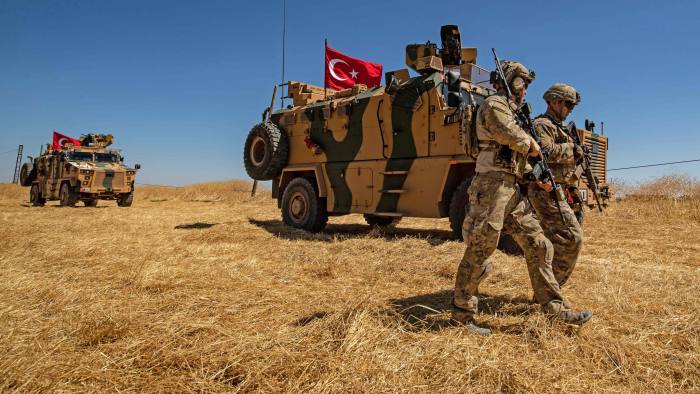
SCFR Online – Opinion: On Friday, August 7, the heads of state of three countries – Saudi Arabia, Turkey, and Pakistan – signed a text under the title “Makkah Joint Defense Agreement.”
Strategic Council Online – Note: The initiative to revive the Hejaz Railway, beyond being a transportation project, constitutes an attempt to redefine geopolitics, the economy, and Turkey’s regional position; however, its realization appears to face significant financial, security, and institutional challenges.
SCFR Online – Opinion: The Strait of Hormuz crisis is no longer merely the consequence of a military confrontation, but rather a sign of the transition from the US-centered maritime order to a new energy security structure involving the participation of emerging and influential powers.
SCFR Online – Opinion: Iran’s active deterrence strategy, while increasing the costs of US intervention, has increasingly exposed the hidden rifts between Washington’s interests and those of the Israeli regime.
SCFR Online – Opinion: The escalation of verbal and strategic tensions between Turkey and the Israeli regime, although not increasing the likelihood of direct war, indicates the formation of a new order in West Asian geopolitical rivalries.
Strategic Council Online – Note: Recent developments in the political geography of West Asia, from rising tensions in the Persian Gulf to missile and drone activities in the Red Sea and the recent warning by Kaja Kallas, the European Union’s foreign policy chief, regarding the threat to freedom of navigation, indicate a key pattern shift; the US-Iran war has moved beyond the scope of a regional and local confrontation and has linked two vital passageways for the global economy: the Strait of Hormuz and the Bab el-Mandeb Strait.
SCFR Online – Opinion: The Ukraine war was not merely a European crisis, but rather the starting point for the rearrangement of the global balance of power and a shift in the strategic behavior of great powers.
SCFR Online – Opinion: Great power competition is now pursued more in trade, currency, technology, and global supply chains than on the battlefields of military confrontation.
Strategic Council Online: Former Iranian ambassador to Iraq pointing to Lebanese Hezbollah’s military response to the recent Zionist regime aggressions, noted: “Expectations were that the Resistance would certainly respond to Israel’s audacity and as put by the Supreme Leader the time for their “hit and run” game is over. It is no longer the case for them to take some action and the nations of the region sit idle and just watch them.”
Strategic Council Online: The United States needs to conduct atomic tests to assess its capabilities and weaknesses to develop its nuclear capabilities. The Comprehensive Test Ban Treaty (CTBT) makes the job difficult.
Dr. Tahmoures Gholami – American Affairs Expert
Strategic Council Online: Both the UAE and Saudi Arabia are facing difficult and complicated conditions at the regional level, and the signs that are reflected outside the region and elsewhere in other countries indicate emergence of a passive state that has faced them with serious doubts as whether continue the Yemen war or not.
Strategic Council Online: On the one hand, Iran is sending a message to the West that Tehran has many different options for coalition making in the Persian Gulf, and on the other hand, the Russians are sending a message to Western countries that if they want to raise the level of tension in the region Moscow is also capable of playing a role in the Persian Gulf.
Shoaib Bahman – Russian Affairs Expert
Strategic Council Online: An expert on regional issues said that the liberation of Khan Sheikhun shows that the Syrian government has the potential to liberate Idlib as well, stressing: “Turkey exercises double standards in this conflict. In terms of stance-taking, it is opposed to these forces but is associated with and supports the Takfiri forces.”
Strategic Council Online: An expert on Middle East affairs says many governments and big regional powers have experienced intervention in Yemen but have failed in the process. As governments and countries bigger than the United Arab Emirates and Saudi Arabia have not been able to dominate Yemen over the past century, they certainly will not be able to do so in the future.
Strategic Council Online: Member of Parliament’s National Security and Foreign Policy Committee says the most important strategic outcome of the Adrian Darya 1 Oil Tanker’s release was that when the Americans have set a limit for Iran, no country would challenge Tehran over Iran’s undisputed interests.
Strategic Council Online: The United States is likely to once again push Russia into an arms race so that Moscow would dedicate a major part of its income to arms spending.
Abdolreza Farajirad – Expert on Geopolitics
Strategic Council Online: An analyst on regional issues pointing to a new US-Turkish plan to create a safe zone in northern Syria said the turn by Turkey towards Iran and Russia is a source of security concern for the White House and the Europeans. Washington is trying, by giving renewed promises, to prevent further Turkish alliance with Iran and Russia and shift the region’s crisis management from Astana Process to Brussels and Washington.
Strategic Council Online: A Subcontinent affairs expert says India’s decision to change its constitution and revoke Kashmir’s Special Status will have negative consequences for the Muslims, noting that the decision could have a serious impact on peaceful coexistence between Muslims and Hindus in India, provide a platform for terrorism by ISIS and al-Qaeda elements in the Kashmir region, and disrupt relations between India and Pakistan.
SCFR Online – Opinion: On Friday, August 7, the heads of state of three countries – Saudi Arabia, Turkey, and Pakistan – signed a text under the title “Makkah Joint Defense Agreement.”
Strategic Council Online – Note: The initiative to revive the Hejaz Railway, beyond being a transportation project, constitutes an attempt to redefine geopolitics, the economy, and Turkey’s regional position; however, its realization appears to face significant financial, security, and institutional challenges.
SCFR Online – Opinion: The Strait of Hormuz crisis is no longer merely the consequence of a military confrontation, but rather a sign of the transition from the US-centered maritime order to a new energy security structure involving the participation of emerging and influential powers.
SCFR Online – Opinion: Iran’s active deterrence strategy, while increasing the costs of US intervention, has increasingly exposed the hidden rifts between Washington’s interests and those of the Israeli regime.
SCFR Online – Opinion: The escalation of verbal and strategic tensions between Turkey and the Israeli regime, although not increasing the likelihood of direct war, indicates the formation of a new order in West Asian geopolitical rivalries.
Strategic Council Online – Note: Recent developments in the political geography of West Asia, from rising tensions in the Persian Gulf to missile and drone activities in the Red Sea and the recent warning by Kaja Kallas, the European Union’s foreign policy chief, regarding the threat to freedom of navigation, indicate a key pattern shift; the US-Iran war has moved beyond the scope of a regional and local confrontation and has linked two vital passageways for the global economy: the Strait of Hormuz and the Bab el-Mandeb Strait.
SCFR Online – Opinion: The Ukraine war was not merely a European crisis, but rather the starting point for the rearrangement of the global balance of power and a shift in the strategic behavior of great powers.
SCFR Online – Opinion: Great power competition is now pursued more in trade, currency, technology, and global supply chains than on the battlefields of military confrontation.
Strategic Council Online: Former Iranian ambassador to Iraq pointing to Lebanese Hezbollah’s military response to the recent Zionist regime aggressions, noted: “Expectations were that the Resistance would certainly respond to Israel’s audacity and as put by the Supreme Leader the time for their “hit and run” game is over. It is no longer the case for them to take some action and the nations of the region sit idle and just watch them.”
Strategic Council Online: The United States needs to conduct atomic tests to assess its capabilities and weaknesses to develop its nuclear capabilities. The Comprehensive Test Ban Treaty (CTBT) makes the job difficult.
Dr. Tahmoures Gholami – American Affairs Expert
Strategic Council Online: Both the UAE and Saudi Arabia are facing difficult and complicated conditions at the regional level, and the signs that are reflected outside the region and elsewhere in other countries indicate emergence of a passive state that has faced them with serious doubts as whether continue the Yemen war or not.
Strategic Council Online: On the one hand, Iran is sending a message to the West that Tehran has many different options for coalition making in the Persian Gulf, and on the other hand, the Russians are sending a message to Western countries that if they want to raise the level of tension in the region Moscow is also capable of playing a role in the Persian Gulf.
Shoaib Bahman – Russian Affairs Expert
Strategic Council Online: An expert on regional issues said that the liberation of Khan Sheikhun shows that the Syrian government has the potential to liberate Idlib as well, stressing: “Turkey exercises double standards in this conflict. In terms of stance-taking, it is opposed to these forces but is associated with and supports the Takfiri forces.”
Strategic Council Online: An expert on Middle East affairs says many governments and big regional powers have experienced intervention in Yemen but have failed in the process. As governments and countries bigger than the United Arab Emirates and Saudi Arabia have not been able to dominate Yemen over the past century, they certainly will not be able to do so in the future.
Strategic Council Online: Member of Parliament’s National Security and Foreign Policy Committee says the most important strategic outcome of the Adrian Darya 1 Oil Tanker’s release was that when the Americans have set a limit for Iran, no country would challenge Tehran over Iran’s undisputed interests.
Strategic Council Online: The United States is likely to once again push Russia into an arms race so that Moscow would dedicate a major part of its income to arms spending.
Abdolreza Farajirad – Expert on Geopolitics
Strategic Council Online: An analyst on regional issues pointing to a new US-Turkish plan to create a safe zone in northern Syria said the turn by Turkey towards Iran and Russia is a source of security concern for the White House and the Europeans. Washington is trying, by giving renewed promises, to prevent further Turkish alliance with Iran and Russia and shift the region’s crisis management from Astana Process to Brussels and Washington.
Strategic Council Online: A Subcontinent affairs expert says India’s decision to change its constitution and revoke Kashmir’s Special Status will have negative consequences for the Muslims, noting that the decision could have a serious impact on peaceful coexistence between Muslims and Hindus in India, provide a platform for terrorism by ISIS and al-Qaeda elements in the Kashmir region, and disrupt relations between India and Pakistan.
Strategic Council Online: Former Iranian ambassador to Iraq pointing to Lebanese Hezbollah’s military response to the recent Zionist regime aggressions, noted: “Expectations were that the Resistance would certainly respond to Israel’s audacity and as put by the Supreme Leader the time for their “hit and run” game is over. It is no longer the case for them to take some action and the nations of the region sit idle and just watch them.”
Strategic Council Online: The United States needs to conduct atomic tests to assess its capabilities and weaknesses to develop its nuclear capabilities. The Comprehensive Test Ban Treaty (CTBT) makes the job difficult.
Dr. Tahmoures Gholami – American Affairs Expert
Strategic Council Online: Both the UAE and Saudi Arabia are facing difficult and complicated conditions at the regional level, and the signs that are reflected outside the region and elsewhere in other countries indicate emergence of a passive state that has faced them with serious doubts as whether continue the Yemen war or not.
Strategic Council Online: On the one hand, Iran is sending a message to the West that Tehran has many different options for coalition making in the Persian Gulf, and on the other hand, the Russians are sending a message to Western countries that if they want to raise the level of tension in the region Moscow is also capable of playing a role in the Persian Gulf.
Shoaib Bahman – Russian Affairs Expert
Strategic Council Online: An expert on regional issues said that the liberation of Khan Sheikhun shows that the Syrian government has the potential to liberate Idlib as well, stressing: “Turkey exercises double standards in this conflict. In terms of stance-taking, it is opposed to these forces but is associated with and supports the Takfiri forces.”
Strategic Council Online: An expert on Middle East affairs says many governments and big regional powers have experienced intervention in Yemen but have failed in the process. As governments and countries bigger than the United Arab Emirates and Saudi Arabia have not been able to dominate Yemen over the past century, they certainly will not be able to do so in the future.
Strategic Council Online: Member of Parliament’s National Security and Foreign Policy Committee says the most important strategic outcome of the Adrian Darya 1 Oil Tanker’s release was that when the Americans have set a limit for Iran, no country would challenge Tehran over Iran’s undisputed interests.
Strategic Council Online: The United States is likely to once again push Russia into an arms race so that Moscow would dedicate a major part of its income to arms spending.
Abdolreza Farajirad – Expert on Geopolitics
Strategic Council Online: An analyst on regional issues pointing to a new US-Turkish plan to create a safe zone in northern Syria said the turn by Turkey towards Iran and Russia is a source of security concern for the White House and the Europeans. Washington is trying, by giving renewed promises, to prevent further Turkish alliance with Iran and Russia and shift the region’s crisis management from Astana Process to Brussels and Washington.
Strategic Council Online: A Subcontinent affairs expert says India’s decision to change its constitution and revoke Kashmir’s Special Status will have negative consequences for the Muslims, noting that the decision could have a serious impact on peaceful coexistence between Muslims and Hindus in India, provide a platform for terrorism by ISIS and al-Qaeda elements in the Kashmir region, and disrupt relations between India and Pakistan.
SCFR Online – Opinion: On Friday, August 7, the heads of state of three countries – Saudi Arabia, Turkey, and Pakistan – signed a text under the title “Makkah Joint Defense Agreement.”
Strategic Council Online – Note: The initiative to revive the Hejaz Railway, beyond being a transportation project, constitutes an attempt to redefine geopolitics, the economy, and Turkey’s regional position; however, its realization appears to face significant financial, security, and institutional challenges.
SCFR Online – Opinion: The Strait of Hormuz crisis is no longer merely the consequence of a military confrontation, but rather a sign of the transition from the US-centered maritime order to a new energy security structure involving the participation of emerging and influential powers.
SCFR Online – Opinion: Iran’s active deterrence strategy, while increasing the costs of US intervention, has increasingly exposed the hidden rifts between Washington’s interests and those of the Israeli regime.
SCFR Online – Opinion: The escalation of verbal and strategic tensions between Turkey and the Israeli regime, although not increasing the likelihood of direct war, indicates the formation of a new order in West Asian geopolitical rivalries.
Strategic Council Online – Note: Recent developments in the political geography of West Asia, from rising tensions in the Persian Gulf to missile and drone activities in the Red Sea and the recent warning by Kaja Kallas, the European Union’s foreign policy chief, regarding the threat to freedom of navigation, indicate a key pattern shift; the US-Iran war has moved beyond the scope of a regional and local confrontation and has linked two vital passageways for the global economy: the Strait of Hormuz and the Bab el-Mandeb Strait.
SCFR Online – Opinion: The Ukraine war was not merely a European crisis, but rather the starting point for the rearrangement of the global balance of power and a shift in the strategic behavior of great powers.
SCFR Online – Opinion: Great power competition is now pursued more in trade, currency, technology, and global supply chains than on the battlefields of military confrontation.
Strategic Council Online: Former Iranian ambassador to Iraq pointing to Lebanese Hezbollah’s military response to the recent Zionist regime aggressions, noted: “Expectations were that the Resistance would certainly respond to Israel’s audacity and as put by the Supreme Leader the time for their “hit and run” game is over. It is no longer the case for them to take some action and the nations of the region sit idle and just watch them.”
Strategic Council Online: The United States needs to conduct atomic tests to assess its capabilities and weaknesses to develop its nuclear capabilities. The Comprehensive Test Ban Treaty (CTBT) makes the job difficult.
Dr. Tahmoures Gholami – American Affairs Expert
Strategic Council Online: Both the UAE and Saudi Arabia are facing difficult and complicated conditions at the regional level, and the signs that are reflected outside the region and elsewhere in other countries indicate emergence of a passive state that has faced them with serious doubts as whether continue the Yemen war or not.
Strategic Council Online: On the one hand, Iran is sending a message to the West that Tehran has many different options for coalition making in the Persian Gulf, and on the other hand, the Russians are sending a message to Western countries that if they want to raise the level of tension in the region Moscow is also capable of playing a role in the Persian Gulf.
Shoaib Bahman – Russian Affairs Expert
Strategic Council Online: An expert on regional issues said that the liberation of Khan Sheikhun shows that the Syrian government has the potential to liberate Idlib as well, stressing: “Turkey exercises double standards in this conflict. In terms of stance-taking, it is opposed to these forces but is associated with and supports the Takfiri forces.”
Strategic Council Online: An expert on Middle East affairs says many governments and big regional powers have experienced intervention in Yemen but have failed in the process. As governments and countries bigger than the United Arab Emirates and Saudi Arabia have not been able to dominate Yemen over the past century, they certainly will not be able to do so in the future.
Strategic Council Online: Member of Parliament’s National Security and Foreign Policy Committee says the most important strategic outcome of the Adrian Darya 1 Oil Tanker’s release was that when the Americans have set a limit for Iran, no country would challenge Tehran over Iran’s undisputed interests.
Strategic Council Online: The United States is likely to once again push Russia into an arms race so that Moscow would dedicate a major part of its income to arms spending.
Abdolreza Farajirad – Expert on Geopolitics
Strategic Council Online: An analyst on regional issues pointing to a new US-Turkish plan to create a safe zone in northern Syria said the turn by Turkey towards Iran and Russia is a source of security concern for the White House and the Europeans. Washington is trying, by giving renewed promises, to prevent further Turkish alliance with Iran and Russia and shift the region’s crisis management from Astana Process to Brussels and Washington.
Strategic Council Online: A Subcontinent affairs expert says India’s decision to change its constitution and revoke Kashmir’s Special Status will have negative consequences for the Muslims, noting that the decision could have a serious impact on peaceful coexistence between Muslims and Hindus in India, provide a platform for terrorism by ISIS and al-Qaeda elements in the Kashmir region, and disrupt relations between India and Pakistan.
SCFR Online – Opinion: On Friday, August 7, the heads of state of three countries – Saudi Arabia, Turkey, and Pakistan – signed a text under the title “Makkah Joint Defense Agreement.”
Strategic Council Online – Note: The initiative to revive the Hejaz Railway, beyond being a transportation project, constitutes an attempt to redefine geopolitics, the economy, and Turkey’s regional position; however, its realization appears to face significant financial, security, and institutional challenges.
SCFR Online – Opinion: The Strait of Hormuz crisis is no longer merely the consequence of a military confrontation, but rather a sign of the transition from the US-centered maritime order to a new energy security structure involving the participation of emerging and influential powers.
SCFR Online – Opinion: Iran’s active deterrence strategy, while increasing the costs of US intervention, has increasingly exposed the hidden rifts between Washington’s interests and those of the Israeli regime.
SCFR Online – Opinion: The escalation of verbal and strategic tensions between Turkey and the Israeli regime, although not increasing the likelihood of direct war, indicates the formation of a new order in West Asian geopolitical rivalries.
Strategic Council Online – Note: Recent developments in the political geography of West Asia, from rising tensions in the Persian Gulf to missile and drone activities in the Red Sea and the recent warning by Kaja Kallas, the European Union’s foreign policy chief, regarding the threat to freedom of navigation, indicate a key pattern shift; the US-Iran war has moved beyond the scope of a regional and local confrontation and has linked two vital passageways for the global economy: the Strait of Hormuz and the Bab el-Mandeb Strait.
SCFR Online – Opinion: The Ukraine war was not merely a European crisis, but rather the starting point for the rearrangement of the global balance of power and a shift in the strategic behavior of great powers.
SCFR Online – Opinion: Great power competition is now pursued more in trade, currency, technology, and global supply chains than on the battlefields of military confrontation.
Strategic Council Online: Former Iranian ambassador to Iraq pointing to Lebanese Hezbollah’s military response to the recent Zionist regime aggressions, noted: “Expectations were that the Resistance would certainly respond to Israel’s audacity and as put by the Supreme Leader the time for their “hit and run” game is over. It is no longer the case for them to take some action and the nations of the region sit idle and just watch them.”
Strategic Council Online: The United States needs to conduct atomic tests to assess its capabilities and weaknesses to develop its nuclear capabilities. The Comprehensive Test Ban Treaty (CTBT) makes the job difficult.
Dr. Tahmoures Gholami – American Affairs Expert
Strategic Council Online: Both the UAE and Saudi Arabia are facing difficult and complicated conditions at the regional level, and the signs that are reflected outside the region and elsewhere in other countries indicate emergence of a passive state that has faced them with serious doubts as whether continue the Yemen war or not.
Strategic Council Online: On the one hand, Iran is sending a message to the West that Tehran has many different options for coalition making in the Persian Gulf, and on the other hand, the Russians are sending a message to Western countries that if they want to raise the level of tension in the region Moscow is also capable of playing a role in the Persian Gulf.
Shoaib Bahman – Russian Affairs Expert
Strategic Council Online: An expert on regional issues said that the liberation of Khan Sheikhun shows that the Syrian government has the potential to liberate Idlib as well, stressing: “Turkey exercises double standards in this conflict. In terms of stance-taking, it is opposed to these forces but is associated with and supports the Takfiri forces.”
Strategic Council Online: An expert on Middle East affairs says many governments and big regional powers have experienced intervention in Yemen but have failed in the process. As governments and countries bigger than the United Arab Emirates and Saudi Arabia have not been able to dominate Yemen over the past century, they certainly will not be able to do so in the future.
Strategic Council Online: Member of Parliament’s National Security and Foreign Policy Committee says the most important strategic outcome of the Adrian Darya 1 Oil Tanker’s release was that when the Americans have set a limit for Iran, no country would challenge Tehran over Iran’s undisputed interests.
Strategic Council Online: The United States is likely to once again push Russia into an arms race so that Moscow would dedicate a major part of its income to arms spending.
Abdolreza Farajirad – Expert on Geopolitics
Strategic Council Online: An analyst on regional issues pointing to a new US-Turkish plan to create a safe zone in northern Syria said the turn by Turkey towards Iran and Russia is a source of security concern for the White House and the Europeans. Washington is trying, by giving renewed promises, to prevent further Turkish alliance with Iran and Russia and shift the region’s crisis management from Astana Process to Brussels and Washington.
Strategic Council Online: A Subcontinent affairs expert says India’s decision to change its constitution and revoke Kashmir’s Special Status will have negative consequences for the Muslims, noting that the decision could have a serious impact on peaceful coexistence between Muslims and Hindus in India, provide a platform for terrorism by ISIS and al-Qaeda elements in the Kashmir region, and disrupt relations between India and Pakistan.
SCFR Online – Opinion: On Friday, August 7, the heads of state of three countries – Saudi Arabia, Turkey, and Pakistan – signed a text under the title “Makkah Joint Defense Agreement.”
Strategic Council Online – Note: The initiative to revive the Hejaz Railway, beyond being a transportation project, constitutes an attempt to redefine geopolitics, the economy, and Turkey’s regional position; however, its realization appears to face significant financial, security, and institutional challenges.
SCFR Online – Opinion: The Strait of Hormuz crisis is no longer merely the consequence of a military confrontation, but rather a sign of the transition from the US-centered maritime order to a new energy security structure involving the participation of emerging and influential powers.
SCFR Online – Opinion: Iran’s active deterrence strategy, while increasing the costs of US intervention, has increasingly exposed the hidden rifts between Washington’s interests and those of the Israeli regime.
SCFR Online – Opinion: The escalation of verbal and strategic tensions between Turkey and the Israeli regime, although not increasing the likelihood of direct war, indicates the formation of a new order in West Asian geopolitical rivalries.
Strategic Council Online – Note: Recent developments in the political geography of West Asia, from rising tensions in the Persian Gulf to missile and drone activities in the Red Sea and the recent warning by Kaja Kallas, the European Union’s foreign policy chief, regarding the threat to freedom of navigation, indicate a key pattern shift; the US-Iran war has moved beyond the scope of a regional and local confrontation and has linked two vital passageways for the global economy: the Strait of Hormuz and the Bab el-Mandeb Strait.
SCFR Online – Opinion: The Ukraine war was not merely a European crisis, but rather the starting point for the rearrangement of the global balance of power and a shift in the strategic behavior of great powers.
SCFR Online – Opinion: Great power competition is now pursued more in trade, currency, technology, and global supply chains than on the battlefields of military confrontation.
Strategic Council Online: Former Iranian ambassador to Iraq pointing to Lebanese Hezbollah’s military response to the recent Zionist regime aggressions, noted: “Expectations were that the Resistance would certainly respond to Israel’s audacity and as put by the Supreme Leader the time for their “hit and run” game is over. It is no longer the case for them to take some action and the nations of the region sit idle and just watch them.”
Strategic Council Online: The United States needs to conduct atomic tests to assess its capabilities and weaknesses to develop its nuclear capabilities. The Comprehensive Test Ban Treaty (CTBT) makes the job difficult.
Dr. Tahmoures Gholami – American Affairs Expert
Strategic Council Online: Both the UAE and Saudi Arabia are facing difficult and complicated conditions at the regional level, and the signs that are reflected outside the region and elsewhere in other countries indicate emergence of a passive state that has faced them with serious doubts as whether continue the Yemen war or not.
Strategic Council Online: On the one hand, Iran is sending a message to the West that Tehran has many different options for coalition making in the Persian Gulf, and on the other hand, the Russians are sending a message to Western countries that if they want to raise the level of tension in the region Moscow is also capable of playing a role in the Persian Gulf.
Shoaib Bahman – Russian Affairs Expert
Strategic Council Online: An expert on regional issues said that the liberation of Khan Sheikhun shows that the Syrian government has the potential to liberate Idlib as well, stressing: “Turkey exercises double standards in this conflict. In terms of stance-taking, it is opposed to these forces but is associated with and supports the Takfiri forces.”
Strategic Council Online: An expert on Middle East affairs says many governments and big regional powers have experienced intervention in Yemen but have failed in the process. As governments and countries bigger than the United Arab Emirates and Saudi Arabia have not been able to dominate Yemen over the past century, they certainly will not be able to do so in the future.
Strategic Council Online: Member of Parliament’s National Security and Foreign Policy Committee says the most important strategic outcome of the Adrian Darya 1 Oil Tanker’s release was that when the Americans have set a limit for Iran, no country would challenge Tehran over Iran’s undisputed interests.
Strategic Council Online: The United States is likely to once again push Russia into an arms race so that Moscow would dedicate a major part of its income to arms spending.
Abdolreza Farajirad – Expert on Geopolitics
Strategic Council Online: An analyst on regional issues pointing to a new US-Turkish plan to create a safe zone in northern Syria said the turn by Turkey towards Iran and Russia is a source of security concern for the White House and the Europeans. Washington is trying, by giving renewed promises, to prevent further Turkish alliance with Iran and Russia and shift the region’s crisis management from Astana Process to Brussels and Washington.
Strategic Council Online: A Subcontinent affairs expert says India’s decision to change its constitution and revoke Kashmir’s Special Status will have negative consequences for the Muslims, noting that the decision could have a serious impact on peaceful coexistence between Muslims and Hindus in India, provide a platform for terrorism by ISIS and al-Qaeda elements in the Kashmir region, and disrupt relations between India and Pakistan.
SCFR Online – Opinion: On Friday, August 7, the heads of state of three countries – Saudi Arabia, Turkey, and Pakistan – signed a text under the title “Makkah Joint Defense Agreement.”
Strategic Council Online – Note: The initiative to revive the Hejaz Railway, beyond being a transportation project, constitutes an attempt to redefine geopolitics, the economy, and Turkey’s regional position; however, its realization appears to face significant financial, security, and institutional challenges.
SCFR Online – Opinion: The Strait of Hormuz crisis is no longer merely the consequence of a military confrontation, but rather a sign of the transition from the US-centered maritime order to a new energy security structure involving the participation of emerging and influential powers.
SCFR Online – Opinion: Iran’s active deterrence strategy, while increasing the costs of US intervention, has increasingly exposed the hidden rifts between Washington’s interests and those of the Israeli regime.
SCFR Online – Opinion: The escalation of verbal and strategic tensions between Turkey and the Israeli regime, although not increasing the likelihood of direct war, indicates the formation of a new order in West Asian geopolitical rivalries.
Strategic Council Online – Note: Recent developments in the political geography of West Asia, from rising tensions in the Persian Gulf to missile and drone activities in the Red Sea and the recent warning by Kaja Kallas, the European Union’s foreign policy chief, regarding the threat to freedom of navigation, indicate a key pattern shift; the US-Iran war has moved beyond the scope of a regional and local confrontation and has linked two vital passageways for the global economy: the Strait of Hormuz and the Bab el-Mandeb Strait.
SCFR Online – Opinion: The Ukraine war was not merely a European crisis, but rather the starting point for the rearrangement of the global balance of power and a shift in the strategic behavior of great powers.
SCFR Online – Opinion: Great power competition is now pursued more in trade, currency, technology, and global supply chains than on the battlefields of military confrontation.
Strategic Council Online: Former Iranian ambassador to Iraq pointing to Lebanese Hezbollah’s military response to the recent Zionist regime aggressions, noted: “Expectations were that the Resistance would certainly respond to Israel’s audacity and as put by the Supreme Leader the time for their “hit and run” game is over. It is no longer the case for them to take some action and the nations of the region sit idle and just watch them.”
Strategic Council Online: The United States needs to conduct atomic tests to assess its capabilities and weaknesses to develop its nuclear capabilities. The Comprehensive Test Ban Treaty (CTBT) makes the job difficult.
Dr. Tahmoures Gholami – American Affairs Expert
Strategic Council Online: Both the UAE and Saudi Arabia are facing difficult and complicated conditions at the regional level, and the signs that are reflected outside the region and elsewhere in other countries indicate emergence of a passive state that has faced them with serious doubts as whether continue the Yemen war or not.
Strategic Council Online: On the one hand, Iran is sending a message to the West that Tehran has many different options for coalition making in the Persian Gulf, and on the other hand, the Russians are sending a message to Western countries that if they want to raise the level of tension in the region Moscow is also capable of playing a role in the Persian Gulf.
Shoaib Bahman – Russian Affairs Expert
Strategic Council Online: An expert on regional issues said that the liberation of Khan Sheikhun shows that the Syrian government has the potential to liberate Idlib as well, stressing: “Turkey exercises double standards in this conflict. In terms of stance-taking, it is opposed to these forces but is associated with and supports the Takfiri forces.”
Strategic Council Online: An expert on Middle East affairs says many governments and big regional powers have experienced intervention in Yemen but have failed in the process. As governments and countries bigger than the United Arab Emirates and Saudi Arabia have not been able to dominate Yemen over the past century, they certainly will not be able to do so in the future.
Strategic Council Online: Member of Parliament’s National Security and Foreign Policy Committee says the most important strategic outcome of the Adrian Darya 1 Oil Tanker’s release was that when the Americans have set a limit for Iran, no country would challenge Tehran over Iran’s undisputed interests.
Strategic Council Online: The United States is likely to once again push Russia into an arms race so that Moscow would dedicate a major part of its income to arms spending.
Abdolreza Farajirad – Expert on Geopolitics
Strategic Council Online: An analyst on regional issues pointing to a new US-Turkish plan to create a safe zone in northern Syria said the turn by Turkey towards Iran and Russia is a source of security concern for the White House and the Europeans. Washington is trying, by giving renewed promises, to prevent further Turkish alliance with Iran and Russia and shift the region’s crisis management from Astana Process to Brussels and Washington.
Strategic Council Online: A Subcontinent affairs expert says India’s decision to change its constitution and revoke Kashmir’s Special Status will have negative consequences for the Muslims, noting that the decision could have a serious impact on peaceful coexistence between Muslims and Hindus in India, provide a platform for terrorism by ISIS and al-Qaeda elements in the Kashmir region, and disrupt relations between India and Pakistan.
SCFR Online – Opinion: On Friday, August 7, the heads of state of three countries – Saudi Arabia, Turkey, and Pakistan – signed a text under the title “Makkah Joint Defense Agreement.”
Strategic Council Online – Note: The initiative to revive the Hejaz Railway, beyond being a transportation project, constitutes an attempt to redefine geopolitics, the economy, and Turkey’s regional position; however, its realization appears to face significant financial, security, and institutional challenges.
SCFR Online – Opinion: The Strait of Hormuz crisis is no longer merely the consequence of a military confrontation, but rather a sign of the transition from the US-centered maritime order to a new energy security structure involving the participation of emerging and influential powers.
SCFR Online – Opinion: Iran’s active deterrence strategy, while increasing the costs of US intervention, has increasingly exposed the hidden rifts between Washington’s interests and those of the Israeli regime.
SCFR Online – Opinion: The escalation of verbal and strategic tensions between Turkey and the Israeli regime, although not increasing the likelihood of direct war, indicates the formation of a new order in West Asian geopolitical rivalries.
Strategic Council Online – Note: Recent developments in the political geography of West Asia, from rising tensions in the Persian Gulf to missile and drone activities in the Red Sea and the recent warning by Kaja Kallas, the European Union’s foreign policy chief, regarding the threat to freedom of navigation, indicate a key pattern shift; the US-Iran war has moved beyond the scope of a regional and local confrontation and has linked two vital passageways for the global economy: the Strait of Hormuz and the Bab el-Mandeb Strait.
SCFR Online – Opinion: The Ukraine war was not merely a European crisis, but rather the starting point for the rearrangement of the global balance of power and a shift in the strategic behavior of great powers.
SCFR Online – Opinion: Great power competition is now pursued more in trade, currency, technology, and global supply chains than on the battlefields of military confrontation.